
Listen to Toddcast with Mark for FREE Here
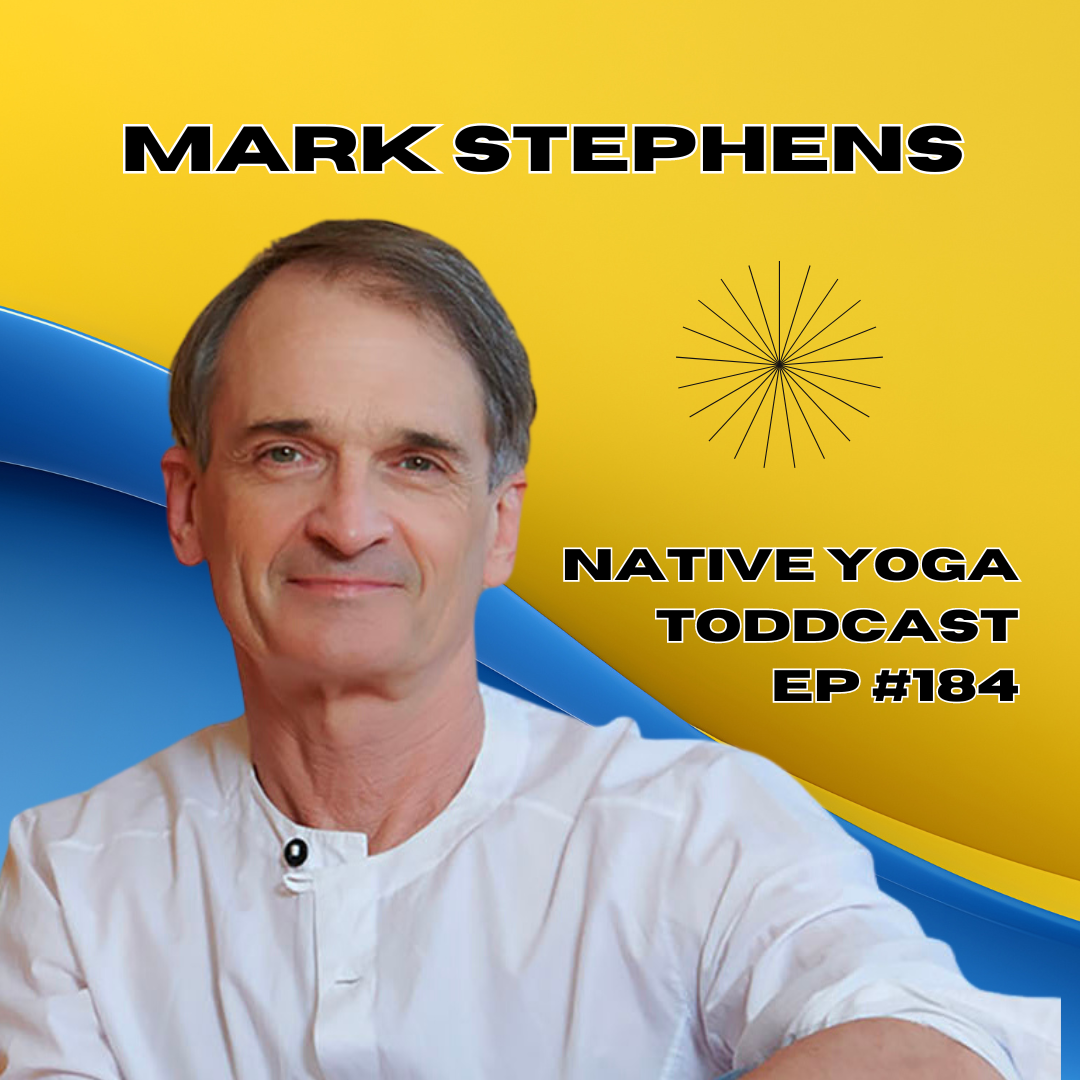
Mark Stephens is a highly respected and influential figure in the world of yoga. He is a prolific author, having written several books on yoga. Mark runs an Online Teaching Yoga Academy and has a podcast called The Yoga Room Podcast. His expertise spans across various domains such as yoga, bodywork, and the integration of therapeutic yoga in different systems including the prison system. He is known for his dynamic approach to teaching, his extensive knowledge of yoga history and anatomy, and his dedication to making yoga accessible to all.
Visit Mark on his website: https://www.markstephensyoga.com/
Key Takeaways:
- Transformative Impact of Yoga: Mark shares how yoga has the power to transform lives, particularly for troubled youths in juvenile systems.
- Adaptability in Yoga Instruction: The importance of understanding individual conditions and intentions when teaching yoga to ensure safety and effectiveness.
- Evolution of Yoga Practices: Insight into the historical context of yoga’s rise in the West, including influential figures and cultural phenomena.
Unlocking Yoga’s Potential: Insights from Mark Stephens’ Journey
Key Takeaways
- Embrace the blend of experiential learning and academic inquiry to deepen yoga practice and teaching.
- Understand the critical importance of anatomical and biomechanical awareness in yoga to prevent long-term injuries.
- Adopt a mindful, individualized approach to yoga practice to respect and honor the diverse needs of students.
A Journey Through Yoga’s Transformation and Impact
In a captivating conversation with Todd McLaughlin from Native Yoga, Mark Stephens, a distinguished yoga instructor and author, shares his profound insights drawn from years of practice, teaching, and a unique life journey. Stephens delves into the intersections of yoga, social activism, and anatomy, shedding light on the evolutionary path of yoga practice and its implications for both teachers and students.
The Power of Experiential Learning
Mark Stephens’ journey is a testament to the powerful combination of lived experience and formal education. Dropping out of school in eighth grade, he was exposed to various life challenges that ultimately shaped his teaching philosophies. Stephens’ first encounter with yoga came through books, leading to a self-practice that later complemented his deep involvement in social justice initiatives.
“I had this experience and thought, ‘Wow, there’s something more here,'” Stephens recalls, speaking about a pivotal moment that nudged him towards yoga. This laid the foundation for his later work in academic and activist settings, particularly in juvenile institutions where he introduced yoga as a transformative tool. His unique background enabled him to connect deeply with the youth, many of whom had complex traumatic backgrounds.
Todd McLaughlin highlights this synergy, noting, “I can see how this would have evolved. You were able to speak that language and understand where they’re coming from.” This approach underscores the importance of blending personal experiences with professional pursuits to create impactful teaching methods.
The Importance of Anatomical and Biomechanical Awareness
One of the standout themes in Stephens’ dialogue is the critical necessity of understanding anatomy and biomechanics in yoga practice. In his book “Yoga Sequencing,” he cautions against certain movements that can lead to long-term injuries. For example, repeatedly transitioning from internal to external hip rotations with full body weight can cause hip joint stress, leading to conditions like femoral neck syndrome.
“That rotation with full weight can introduce forces that stress the femoral neck,” warns Stephens, urging yoga practitioners to be mindful of the nuanced impacts of their movements. This anatomical insight is not widely covered in standard yoga teacher training, which Stephens finds concerning.
Stephens’ anecdote about early influences from teachers like Shiva Rea further enriches this narrative. Rea’s concept that extreme postural practices can be particularly detrimental has been a guiding principle for Stephens: “Shiva first suggested this to me, and I then went deeper into understanding these forces.” This deep dive into biomechanics is part of what makes Stephens’ teaching uniquely grounded in scientific understanding.
Individualized and Mindful Yoga Practice
Another significant theme emerging from Stephens’ discussion is the necessity of an individualized and mindful approach to yoga. He emphasizes respecting each student’s unique conditions while encouraging playful exploration within their practice. His response to students playing with different poses resonates with his teaching philosophy: “Play with it, but be aware there are potential implications.”
Stephens recalls a formative experience in juvenile institutions, where he noticed that the youth often sought quiet and restorative yoga practices rather than high-energy vinyasa flows. This observation led him to tailor his sessions to include more breathwork, guided meditation, and calming postures.
“What they wanted was permission and opportunity to be quiet and still,” he shares, reflecting on the importance of listening to students’ needs. This adaptability is crucial for effective teaching, ensuring that yoga serves as a therapeutic and supportive practice rather than a one-size-fits-all regimen.
Continual Evolution and Learning
Mark Stephens’ practice and teaching methods have continuously evolved, informed by decades of experience and ongoing scholarly inquiry. He remains a proponent of foundational postures that strengthen and support the body’s mechanics, cautioning against extreme contortions.
The implications of his insights are far-reaching, advocating for a shift in how yoga is taught and practiced globally. His emphasis on biomechanics and individualized practice can potentially prevent the long-term injuries seen in many seasoned practitioners.
Overall, Stephens’ journey reveals a layered understanding of yoga – one that honors tradition while embracing scientific and experiential wisdom. By merging academic rigor with lived experience, he illustrates the transformational potential of yoga when practiced mindfully and inclusively. His story is a call to all yoga teachers and practitioners to deepen their awareness and approach practice with both curiosity and care.
Thanks for listening to this episode. Check out: 👇
Free Grow Your Yoga Live Webinar – Every Thursday at 12pm EST
➡️ Click here to receive link
New Student FREE Livestream Yoga Special ~ Try 2 Weeks of Free Unlimited Livestream Yoga Classes at Native Yoga Center. info.nativeyogacenter.com/livestream Sign into the classes you would like to take and you will receive an email 30 minutes prior to join on Zoom. The class is recorded and uploaded to nativeyogaonline.com ➡️ Click Here to Join.
Subscribe to Native Yoga Center and view this podcast on Youtube.
Thank you Bryce Allyn for the show tunes. Check out Bryce’s website: bryceallynband.comand sign up on his newsletter to stay in touch. Listen here to his original music from his bands Boxelder, B-Liminal and Bryce Allyn Band on Spotify.
Please email special requests and feedback to info@nativeyogacenter.com
Enjoy new Native Yoga Center classes uploaded everyday on our online learning hub. Use code FIRSTMONTHFREE at checkout. https://nativeyogacenter.teachable.com/p/today-s-community-class
Native Yoga website: here
YouTube: here
Instagram: @nativeyoga
Twitter: @nativeyoga
Facebook: @nativeyogacenter
LinkedIn: Todd McLaughlin
 Native Yoga Blog