
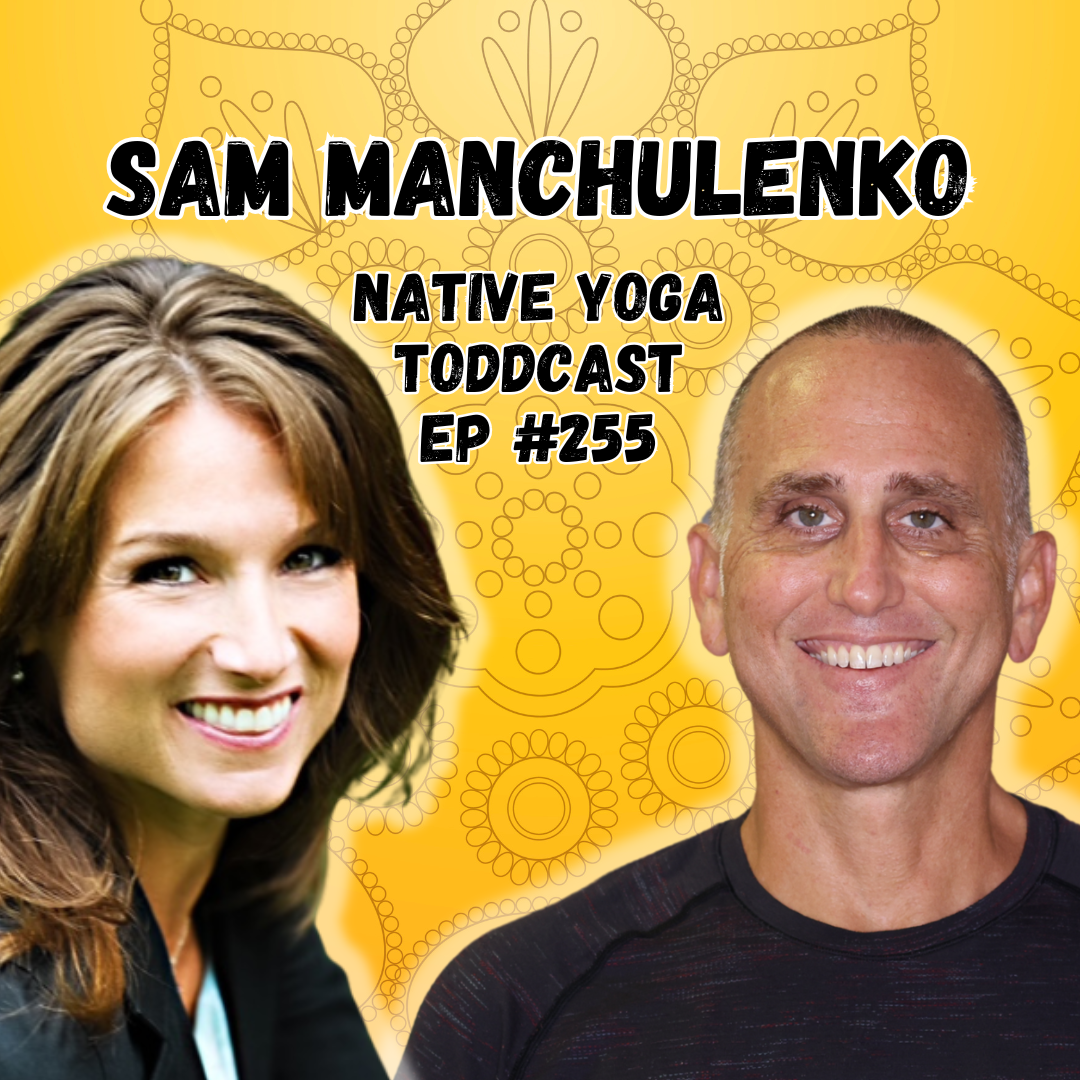
Listen to Toddcast with Sam for FREE here
Sam Manchulenko is a seasoned yoga instructor and spiritual guide based out of Winnipeg, Canada. She is renowned for her expertise in facilitating yoga teacher trainings and workshops that integrate yoga philosophy with practical spiritual tools. Trained under prominent spiritual figures such as Dharma Mittra, Byron Katie, and Eckhart Tolle, Sam offers unique insights into yoga and personal development. She specializes in psychic development, intuitive empowerment, and blending various philosophical teachings to help individuals achieve internal harmony and mindfulness.
Visit Sam: https://www.samtheyogi.com/
Key Takeaways:
- Integration of Practice: Sam highlights the impact of practicing yoga alongside spiritual guides and emphasizes the importance of embodying compassion and curiosity.
- Yoga and Dance Synergy: Discover how both yoga and dance facilitate mindfulness, presence, and the subtle art of offering oneself to a greater purpose.
- Philosophical Insights: Explore the power of detachment and the unconditional love that comes from accepting challenges and darker emotions.
- Psychic Development: Learn about psychic development or intuitive empowerment and how it focuses on attuning to one’s inner vibrations to manifest positivity.
Thanks for listening to this episode. Check out: 👇
8IN8 Ashtanga Yoga for Beginners Course Online– Learn 8 Limb Yoga in 8 Days – Get FREE coupon code for a limited time only (Regular price $88) https://info.nativeyogacenter.com/8in8-ashtanga-yoga-for-beginners-8-limbs-in-8-days/
Vibrational Connection: Tuning Into the Energy Around You
Connecting with High-Vibrational Beings
In the yoga community, the idea of vibrational connection plays a crucial role in personal growth and healing. The transcript highlights the transformative power of being in the presence of someone who embodies the practice, such as Dharma. This is not merely about learning techniques but absorbing the energy and love radiated by such individuals. Sam Manchulenko shares, “There’s this feeling when I’m close to Dharma…That flow of unconditional love that I perceive as coming from him, it just…It’s a wonderful gift to be in.”
This experience underscores an essential element of the practice—the idea that yoga is not only about asanas (poses) but about cultivating an internal state of sattva or peace. Reflecting on her journey, Sam describes how studying with Dharma and others helped her navigate life with greater compassion and curiosity.
Implications and Impact
This insight invites practitioners to seek out environments and relationships that elevate their vibrational frequency, thus impacting the broader spectrum of their life positively. It emphasizes that real growth often comes not from striving alone but from the subtle influences of one’s surroundings and company.
Ego and Imagination: Navigating the Inner Landscape
The Role of Ego in Personal Suffering
The dialogue between Sam and Todd delves deeply into the nature of the ego and its impact on personal well-being. Sam illustrates how mental attachments and beliefs contribute to suffering. “Our attachments are mental,” echoes the teachings of Krishnamurti and Byron Katie, whose work focuses on questioning the validity of these thoughts.
The four questions of Byron Katie’s “The Work” guide practitioners to dismantle the narratives that the ego constructs, offering a pathway from suffering to peace. When asked about a challenging belief, Sam responds with the process: “How do you react? What happens when you believe that thought?…Who would you be without that thought?”
Expanding Imagination as a Tool
Imagination serves as a tool for shifting one’s vibrational reality. Rather than letting past stories define the present, consciously directing imagination towards feeling states one desires can alter one’s vibration. This concept is intertwined with Dharma’s teachings on psychic development, which encourage practitioners to use imagination to align their vibrations with how they wish their world to be.
Implications and Impact
These insights challenge us to become more aware of our mental processes and leverage imagination constructively. By altering our inner dialogues and visualizations, we open doors to healing and connection, transforming the way we engage with ourselves and the world.
Understanding Pain and Presence: Redefining the Experience
The Nature of Pain
The transcript offers a profound perspective on addressing pain through presence. Rather than viewing pain as an enemy, Sam suggests encountering it with love: “The thing that made the pain so intense was the hatred of it…What would it be like to love that part as opposed to being mad at it?”
This reflects Byron Katie’s assertion that pain is often a construct of memories or future anticipations. By anchoring in the present moment and releasing these mental attachments, one can transcend the experience of suffering.
Presence as a Healing Balm
In practicing presence, the conversation highlights the potential for healing by simply allowing what is. Sam points out, “Can you get completely present right in the center of it?…If you stay right in the center, is there still pain?” This shifting of focus from resistance to acceptance presents a subtle yet powerful approach to healing.
Implications and Impact
By reframing pain through the lens of presence, practitioners can soften their inner battles, fostering a deeper state of peace. This approach not only redefines personal suffering but also enriches one’s ability to hold space for others experiencing pain.
Synthesizing Insight and Experience: An Invitation to Practice
This conversation between Todd and Sam Manchulenko beautifully weaves concepts from yoga philosophy with personal insights to transform how we perceive and interact with our inner and outer worlds. The dialogue is instructive, offering practices that encourage vibrational awareness, a compassionate inquiry into the ego, and a loving presence with pain.
Exploring the perspectives of revered teachers like Dharma, Byron Katie, and Eckhart Tolle further enriches the narrative, inviting practitioners to seek a deeper connection to self and spirit through their wisdom. While no singular approach offers all the answers, merging these teachings in a personal practice can facilitate profound inner change.
As we continue to navigate our realities with these insights, we are reminded of the transformational power of vibration, imagination, and presence. These core elements can shift our experiences, guiding us toward a life that is both authentic and interconnected—a testament to the enduring wisdom of yoga as a holistic, heart-centered journey.
Practice with Native Yoga Online – New classes EVERY day – Use Code FIRSTMONTHFREE https://nativeyogacenter.teachable.com/p/today-s-community-class
Subscribe to Native Yoga Center and view this podcast on Youtube.
Thank you Bryce Allyn for the show tunes. Check out Bryce’s website: bryceallynband.comand sign up on his newsletter to stay in touch. Listen here to his original music from his bands Boxelder, B-Liminal and Bryce Allyn Band on Spotify.
Please email special requests and feedback to info@nativeyogacenter.com
https://info.nativeyogacenter.com/8in8-ashtanga-yoga-for-beginners-8-limbs-in-8-days/
Native Yoga website: here
YouTube: here
Instagram: @nativeyoga
Twitter: @nativeyoga
Facebook: @nativeyogacenter
LinkedIn: Todd McLaughlin




 Native Yoga Blog