Mounia Hammouda | From Corporate Executive to Yoga & Spiritual Transformation in Morocco

Listen to Toddcast with Mounia for FREE here

Mounia Hammouda is a Moroccan yoga instructor and the founder of Shidomind Yoga, based in Casablanca. With a rich background in high-level executive roles across multinationals in Morocco, New York, Canada, and West Africa, Mounia transitioned from the corporate world to follow her passion for yoga. She possesses deep expertise in yoga philosophy, having studied extensively in India at the esteemed Yoga Institute in Mumbai. Mounia is an advocate for personal transformation, emphasizing the balance between mind, body, and spirit, and she is dedicated to promoting the depth and authenticity of yoga beyond its commercialized image.

Visit Mounia: https://shidomindyoga.com/

Key Takeaways:

  • Mounia Hammouda transitioned from a high-stress corporate life to teaching yoga, seeking deeper meaning and personal growth.
  • She believes yoga is a profound tool for cultivating spiritual and personal transformation, beyond its commercialized perception as a physical activity.
  • Morocco’s vibrant culture and rich history have played an influential role in Mounia’s spiritual exploration and teachings.
  • Yoga has deepened Mounia’s faith in God, providing her with greater insight and comfort in her spirituality.
  • Shidomind Yoga emphasizes the mental and spiritual benefits of yoga, fostering a holistic approach to personal development.

The Life-Altering Power of Yoga: A Spiritual and Personal Revolution

In a world that often equates success with a relentless chase for status and wealth, an authentic return to self-discovery and inner peace can feel revolutionary. Mounia Hammouda, a yoga teacher from Morocco, shares insights from her transformation through yoga, emphasizing the journey from career-centric existence to a life of balanced self-awareness and spirituality.

Reflecting on the transition from treating yoga as a mere physical exercise to embracing it as a tool for profound mental and spiritual growth, Mounia remarked, “I was executing roles, missions like a soldier… without at any moment in my life settling, stopping, taking a pose and questioning myself.” This revelation unveils yoga’s underestimated role as a bridge to deeper self-awareness and a richer spiritual existence.

For Mounia, the transformational journey didn’t happen overnight. Instead, it was a process of evolving understanding, deeply connected to her study of yoga’s philosophical roots. Her story underscores the vast potential of yoga to revolutionize personal and spiritual lives by offering a fresh lens through which to view one’s relationship with work, family, and the broader universe. As she eloquently puts it, “Yoga is such an amazing transformational tool and philosophy and system.”

Spiritual Roots: Yoga’s Impact on Religious Beliefs

The dialogue with Mounia revealed an unexpected, albeit significant, realization—yoga’s influence on her relationship with personal faith. As a Muslim, she found that yoga not only deepened her understanding of spirituality but also enhanced her faith in God. “Yoga has straightened my faith in God and has brought me much closer to my religion,” she confided, highlighting yoga’s universal capacity to enrich existing belief systems without contradiction.

Despite the commercialized facade that yoga often bears, its authentic practice beckons deeper spiritual connectivity for practitioners. Mounia’s practice and teaching integrate these underexplored aspects, focusing not only on physical poses but on the holistic mind-body-spirit harmony. Interestingly, in contexts where yoga could be misconstrued as opposing religious doctrines, Mounia finds it aligning and reinforcing her spiritual beliefs. Her embracing of yoga as a complementary addition to faith offers an enlightening perspective, especially in cultures where this harmony might be questioned.

Prioritizing Self-Care: The Rediscovered Importance of Time

Central to Mounia’s transformation is her realignment of priorities, notably making space for self-care—a shift too often ignored in the race for professional success. She reflects on the vital nature of personal time and awareness with an emphasis on how these foster wisdom and balance. “Time, when used in consciousness, leads to wisdom,” Mounia states, underscoring the importance of intentional living.

As someone who once prioritized corporate advancement over personal fulfillment, Mounia’s story brings to light the often-unrecognized role of comprehensive self-care in achieving holistic well-being. By stepping back and focusing on her own needs, she not only improved her relationships but also discovered a renewed sense of purpose. This component of self-love is vital, as Mounia urges others to respect their energies and nurture their internal worlds, warning against relegating personal well-being to the last priority.

By seeing the outcome of neglect as harsh on both individual mental health and relationships, Mounia sets a compelling example for how yoga can serve as a catalyst for this necessary shift. As life’s demands threaten to usurp one’s essence, yoga stands as a clarion call back to wholeness, reminding us of the importance of placing individual needs at the forefront.

Mounia’s narrative richly illustrates a truth many may resonate with: the intertwining paths of yoga, spirituality, and personal self-realization offer powerful tools for unlocking life-changing perspectives. By engaging with yoga not merely as a physical discipline, but as an integrative practice affecting all dimensions of life, individuals can access significant internal shifts. Mounia’s vision of yoga as “the seed that we nourish to reach a balanced mindset for personal growth” speaks to the potential for expansive personal evolution. Her journey reflects a broader opportunity for transformation for those willing to explore yoga’s deeper truths—shedding light on the intersection between disciplined practice, spiritual depth, and genuine self-appreciation.

Check out: 👇
8IN8 Ashtanga Yoga for Beginners Course Online– Learn 8 Limb Yoga in 8 Days – Get FREE coupon code for a limited time only (Regular price $88) https://info.nativeyogacenter.com/8in8-ashtanga-yoga-for-beginners-8-limbs-in-8-days/

Practice with Native Yoga Online – New classes EVERY day – Use Code FIRSTMONTHFREE https://nativeyogacenter.teachable.com/p/today-s-community-class

Subscribe to Native Yoga Center and view this podcast on Youtube.

Thank you Bryce Allyn for the show tunes. Check out Bryce’s website: bryceallynband.comand sign up on his newsletter to stay in touch. Listen here to his original music from his bands Boxelder, B-Liminal and Bryce Allyn Band on Spotify.

Please email special requests and feedback to info@nativeyogacenter.com

https://info.nativeyogacenter.com/8in8-ashtanga-yoga-for-beginners-8-limbs-in-8-days

Support the show

Native Yoga website: here
YouTube: here
Instagram: @nativeyoga 
Twitter: @nativeyoga 
Facebook: @nativeyogacenter 
LinkedIn: Todd McLaughlin 
Nikunja Vilasi Das | The Heart of Yoga – Bridging Hatha Motion into Bhakti Devotion

Listen to Toddcast with Nikunja for FREE here

Nikunja Vilasi Das is a dedicated practitioner and teacher in the field of Bhakti Yoga. Born in California, he was introduced to yoga at an early age, with his mother being a yoga teacher. He currently resides in Miami, Florida, where he serves at the Sacred Vedic Arts Bhakti Yoga center. Nikunja Vilasi Das is committed to spreading the teachings of Bhakti Yoga, integrating his diverse experiences in various yoga disciplines, including Hatharaja Yoga and Kriya Yoga. He holds reverence for his spiritual masters and strives to bridge traditional yoga practices with contemporary life.

Visit Nico: https://www.nicoyoga108.com/

Key Takeaways:

  • Bhakti Yoga is centered around the devotion to Krishna and the practice of chanting the Hare Krishna Maha Mantra as a means of purification and self-realization.
  • Nikunja Vilasi Das argues that while modern yoga practices can become overly materialistic, true growth involves spiritual discipline and guidance from a realized master.
  • Understanding the role of Bhakti Yoga as the most accessible form of yoga today, particularly due to its simplicity and ability to foster a personal relationship with the divine.
  • The Hare Krishna Maha Mantra serves as a direct connection to divine consciousness, engaging all senses in spiritual practice and offering a profound experience of inner peace.
  • Being around and learning from a realized spiritual guide like Sri Dharma Mittra can profoundly impact one’s spiritual evolution, promoting authenticity in practice versus performative stereotypes.

Embracing Bhakti Yoga in a Modern World: A Journey into Divine Connection

In the vibrant landscape of modern yoga, where styles and philosophies abound, the voice of Bhakti Yoga stands distinct in its simplicity and depth. Bhakti Yoga, the yoga of love and devotion, transcends the superficial layers often associated with contemporary practices. This deep engagement offers individuals not just techniques, but a profound inner transformation that aligns the heart and mind with a higher spiritual reality. Through insightful dialogue, as reflected in the conversation between yoga teacher and podcast host, Todd McLaughlin, and Bhakti Yoga practitioner, Nikunja Vilasi Das, we explore the path of Bhakti Yoga and its unique place within today’s spiritual journey.

The Simplicity and Depth of Bhakti Yoga

Bhakti Yoga is celebrated for its simplicity and accessibility. Unlike other yoga paths that demand rigorous physical discipline or esoteric knowledge, Bhakti Yoga centers on a singular, powerful act—chanting. Nikunja highlights that the Hare Krishna Mahamantra serves as a direct bridge to divine consciousness. As he notes, “Chanting is the beginning of everything,” emphasizing the profound impact of this vocal and vibrational practice.

The practice invites individuals to engage all senses through their spiritual journey. By listening to the mantra, practitioners experience a form of intimacy with the divine. Nikunja explains, “The Lord is non-different than his names. He is there when you’re chanting.” This auditory engagement reflects a unique feedback loop, enhancing spiritual concentration and devotion. The mantra becomes a living presence, knitting together the practitioner’s external and internal world in divine harmony.

Navigating Modern Yoga Culture with Ancient Wisdom

In a world dominated by consumerism and superficial wellness trends, Bhakti Yoga offers an anchor to authenticity. The dialogue reflects a stark contrast between contemporary yoga’s commodification and the humble yet profound tenets of Bhakti. Nikunja shares his observations, mentioning, “The modern yoga culture, to be honest, is just so bogus,” pointing to the pervasive distractions that dilute yoga’s essence.

One compelling aspect of Bhakti is its inclusivity and focus on internal transformation over external achievement. Regardless of one’s external circumstances or social engagements, the practice remains centered on serving the divine. Nikunja’s experiences, particularly how bhakti weaves into daily life and social interactions, reinforce the theme of yoga as a deeply personal journey. By integrating timeless principles into public spaces and living a life of service, practitioners like Nikunja embody yoga’s true spirit, challenging the superficial paradigms often seen today.

The Transformative Power of Devotion and Service

The transcript underscores service as an integral part of the Bhakti path. Service to the divine and community defines a bhakta’s role, transcending mere ritual to become a way of life. Nikunja elucidates how living and serving within the temple structure amplifies his spiritual journey. He says, “I’m here to answer any questions you have and really be your eternal well-wisher,” placing service at the heart of his practice.

This focus on service fosters a connectivity that transcends religious boundaries, resonating with universal human aspirations for love and understanding. As Nikunja interacts with varied audiences through teaching and community involvement, he illustrates how the acts of service and devotion naturally extend beyond personal practice to influence broader society. The paradigm shift from self-centric to service-centric yoga redefines success as spiritual alignment and contribution, rather than personal accolades.

An Invitation to Inner Exploration

At its core, Bhakti Yoga invites individuals into a journey of spontaneous and sincere connection with the divine, integrating heart and spirit beyond the confines of the material world. Practitioners like Nikunja exemplify its transformative power, not only living the principles but also reaching out to enlighten and uplift others. By integrating ancient wisdom with contemporary relevance, Bhakti Yoga provides a profound blueprint for those seeking depth and authenticity in their spiritual path, reminding us all that, ultimately, it is not the complexity of the practice that brings fulfillment, but the purity of o

Check out: 👇
8IN8 Ashtanga Yoga for Beginners Course Online– Learn 8 Limb Yoga in 8 Days – Get FREE coupon code for a limited time only (Regular price $88) https://info.nativeyogacenter.com/8in8-ashtanga-yoga-for-beginners-8-limbs-in-8-days/

Practice with Native Yoga Online – New classes EVERY day – Use Code FIRSTMONTHFREE https://nativeyogacenter.teachable.com/p/today-s-community-class

Subscribe to Native Yoga Center and view this podcast on Youtube.

Thank you Bryce Allyn for the show tunes. Check out Bryce’s website: bryceallynband.comand sign up on his newsletter to stay in touch. Listen here to his original music from his bands Boxelder, B-Liminal and Bryce Allyn Band on Spotify.

Please email special requests and feedback to info@nativeyogacenter.com

https://info.nativeyogacenter.com/8in8-ashtanga-yoga-for-beginners-8-limbs-in-8-days

Support the show

Native Yoga website: here
YouTube: here
Instagram: @nativeyoga 
Twitter: @nativeyoga 
Facebook: @nativeyogacenter 
LinkedIn: Todd McLaughlin 
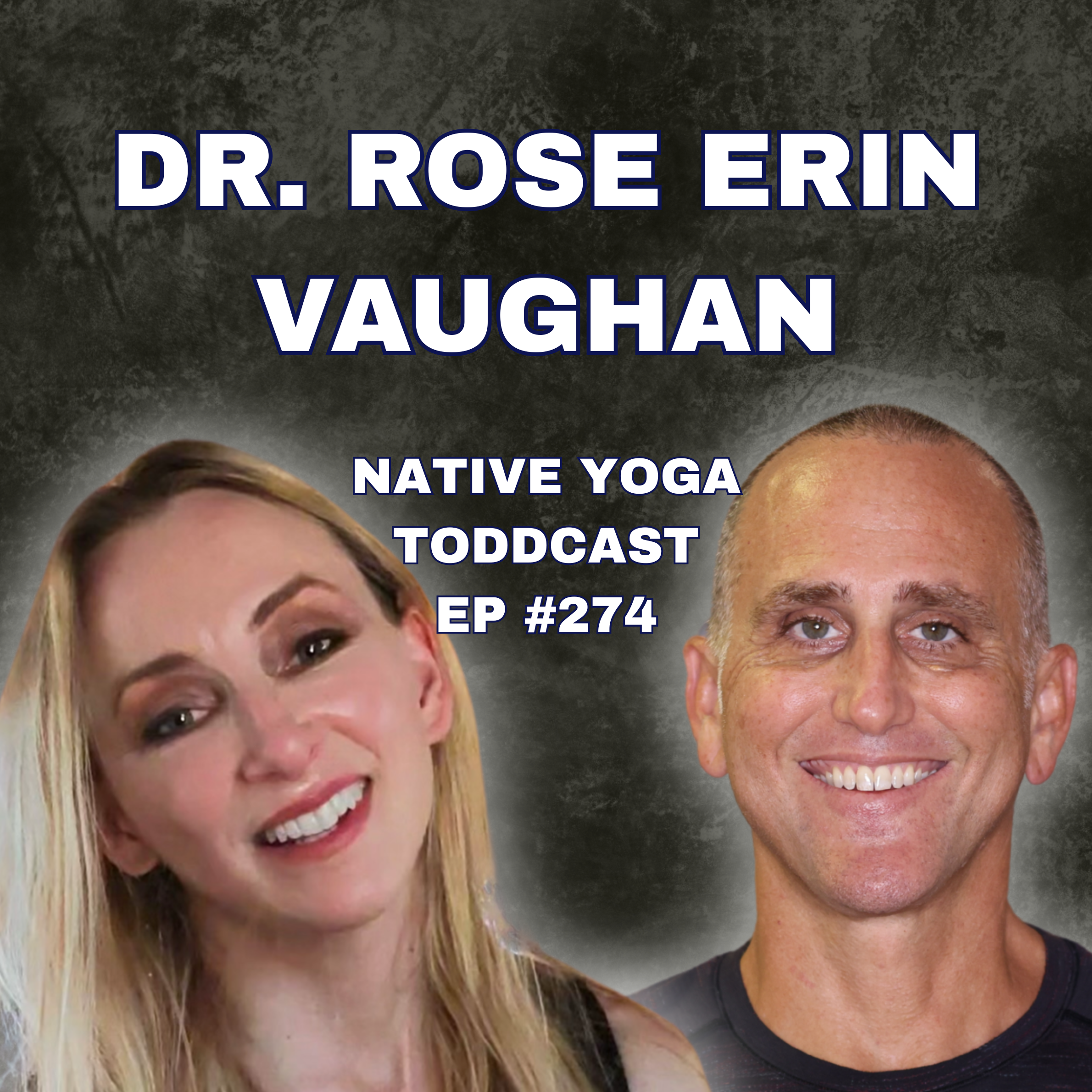
Dr. Rose Erin Vaughan | Meridian Yoga – Merging Acupuncture, Energy Channels & Ancient Wisdom

Listen to Toddcast with Dr. Rose Erin for FREE here

Dr. Rose Erin Vaughan is a prominent and multi-disciplined expert in the fields of acupuncture, yoga, and meridian therapy. With a robust background in Ashtanga and Dharma yoga, massage therapy, and acupuncture, Dr. Vaughan has masterfully integrated her deep knowledge of anatomy and energy channels into her practice and teachings. She is particularly renowned for her work in merging the practices of yoga and acupuncture, resulting in a unique therapeutic discipline focused on Yin yoga teacher trainings and advanced acupressure techniques. Dr. Vaughan is also a celebrated author of several books, including “Science of Self” and her detailed guides on energy lines and meridians.

Visit Dr. Rose Erin: https://www.scienceofselfytt.com/

Key Takeaways:

  • Dr. Vaughan’s development of the Meridian Yoga technique integrates acupuncture and yoga for a holistic therapeutic approach.
  • The importance of experiential learning in understanding and feeling energy channels like meridians and chakras is emphasized throughout Dr. Vaughan’s teachings.
  • Acupuncture and yoga practices should focus on seeking root causes of physical imbalance rather than merely addressing pain.
  • Incorporating ancient practices, such as those from the “Hatha Yoga Pradipika,” into modern yoga sequences enhances meditative and energetic experiences.
  • Regular mantra practice, like the Gayatri Mantra, can refine the practitioner’s focus and intention, grounding their yoga and meditation sessions.

The Fusion of Yoga and Acupuncture: A Synergistic Approach

As we dive into the insightful conversation between Todd and Dr. Rose Erin Vaughan, it’s clear that the melding of yoga and acupuncture is more than a novel approach; it’s a transformative practice. Dr. Vaughan brilliantly synthesizes these ancient traditions to create what can only be described as a holistic healing experience. Her method is grounded in personal experience, as she recounts how her skepticism faded as she deeply engaged with both yoga and acupuncture.

“When I did the first teacher training, I wasn’t quite clear if anyone was going to understand it or feel what I had felt. But they did, and it really inspired me to keep developing it and to make the book,” Dr. Vaughan reflects. This underscores the transformative potential of combining these disciplines. It’s not just about physical healing; it’s about understanding the interconnected anatomy and energy pathways within our bodies.

Dr. Vaughan’s narrative reveals that facilitating this blend requires more than just technical knowledge — it demands a personal and experiential relationship with the body’s energy systems. It’s not merely about memorizing meridian points; it involves feeling these pathways, turning theoretical lines into authentic, livable experiences.

Experiential Learning as a Cornerstone

Experiential learning is a cornerstone of Dr. Vaughan’s teaching practices, and this profound focus is woven throughout her narrative. By training her students to not only understand but also feel the energy lines and meridians, she fosters an authentic learning environment that transcends traditional educational methods.

Dr. Vaughan describes this experiential necessity succinctly: “I want to get people to really try to feel something instead of following the instructions.” This idea challenges the conventional approach, encouraging students to trust their intuition and bodily sensations rather than relying solely on textbook definitions. By doing so, students are empowered to discover their own interpretations and experiences, thereby personalizing their learning journey.

The transformative power of this approach is echoed in her reflections on her expansive reading and understanding of human anatomy: “I have done some cadaver dissection which I found really, really, really fascinating… you can appreciate more the complexity of the body down to the microscopic level.” The implication is clear – direct interaction deepens understanding in ways that static study cannot replicate.

Embracing Adaptation and Evolution in Practice

As the dialogue progresses, Dr. Vaughan speaks to the nuance and evolution of traditional yoga practices, integrating them into contemporary therapeutic techniques. Her commitment to education and ongoing learning is palpable, as she champions a dynamic, evolving practice that honors both historical roots and modern innovation.

Reflecting on her evolving practice, Dr. Vaughan shares, “I’ve been working with that for a few years… I think it’s really good now.” She alludes to the Master Sequence, a blend of learned traditional poses integrated with new insights from her years of practice and study. Her efforts signify a respect for tradition alongside a willingness to explore new methodologies.

The adaptation of traditional teachings, such as those found in the Hatha Yoga Pradipika, to align with contemporary needs highlights a larger trend in holistic health practices. Dr. Vaughan’s teaching methodologies encourage embracing both depth and fluidity, enabling practitioners to explore the energies within themselves and the larger world.

Moving Forward: Insight and Evolution

Throughout her conversation with Todd, Dr. Rose Erin Vaughan conveys a message of growth, integration, and profound insight. From the systematic blend of yoga and acupuncture to the prioritization of experiential learning, her approach is both comprehensive and deeply personal. Her teachings advocate for a harmony that honors historical lineage while expanding into new therapeutic horizons.

Her insights remind us that true healing stems not only from an understanding of techniques but also from a commitment to personal exploration and mindful evolution. For Dr. Vaughan, the practice of yoga coupled with the holistic power of acupuncture is less about mastering forms and more about developing an intuitive awareness that guides both healer and student toward greater self-knowledge and overall wellness.

In a world characterized by constant change, her philosophy offers a refreshing embrace of tradition while charting new paths for those eager to deepen their understanding of both body and mind. With each student she inspires and each teaching she evolves, Dr. Vaughan’s contributions pave the way for a future where these ancient practices continue to illuminate the path to health and happiness.

Check out: 👇
8IN8 Ashtanga Yoga for Beginners Course Online– Learn 8 Limb Yoga in 8 Days – Get FREE coupon code for a limited time only (Regular price $88) https://info.nativeyogacenter.com/8in8-ashtanga-yoga-for-beginners-8-limbs-in-8-days/

Practice with Native Yoga Online – New classes EVERY day – Use Code FIRSTMONTHFREE https://nativeyogacenter.teachable.com/p/today-s-community-class

Subscribe to Native Yoga Center and view this podcast on Youtube.

Thank you Bryce Allyn for the show tunes. Check out Bryce’s website: bryceallynband.comand sign up on his newsletter to stay in touch. Listen here to his original music from his bands Boxelder, B-Liminal and Bryce Allyn Band on Spotify.

Please email special requests and feedback to info@nativeyogacenter.com

https://info.nativeyogacenter.com/8in8-ashtanga-yoga-for-beginners-8-limbs-in-8-days

Support the show

Native Yoga website: here
YouTube: here
Instagram: @nativeyoga 
Twitter: @nativeyoga 
Facebook: @nativeyogacenter 
LinkedIn: Todd McLaughlin 
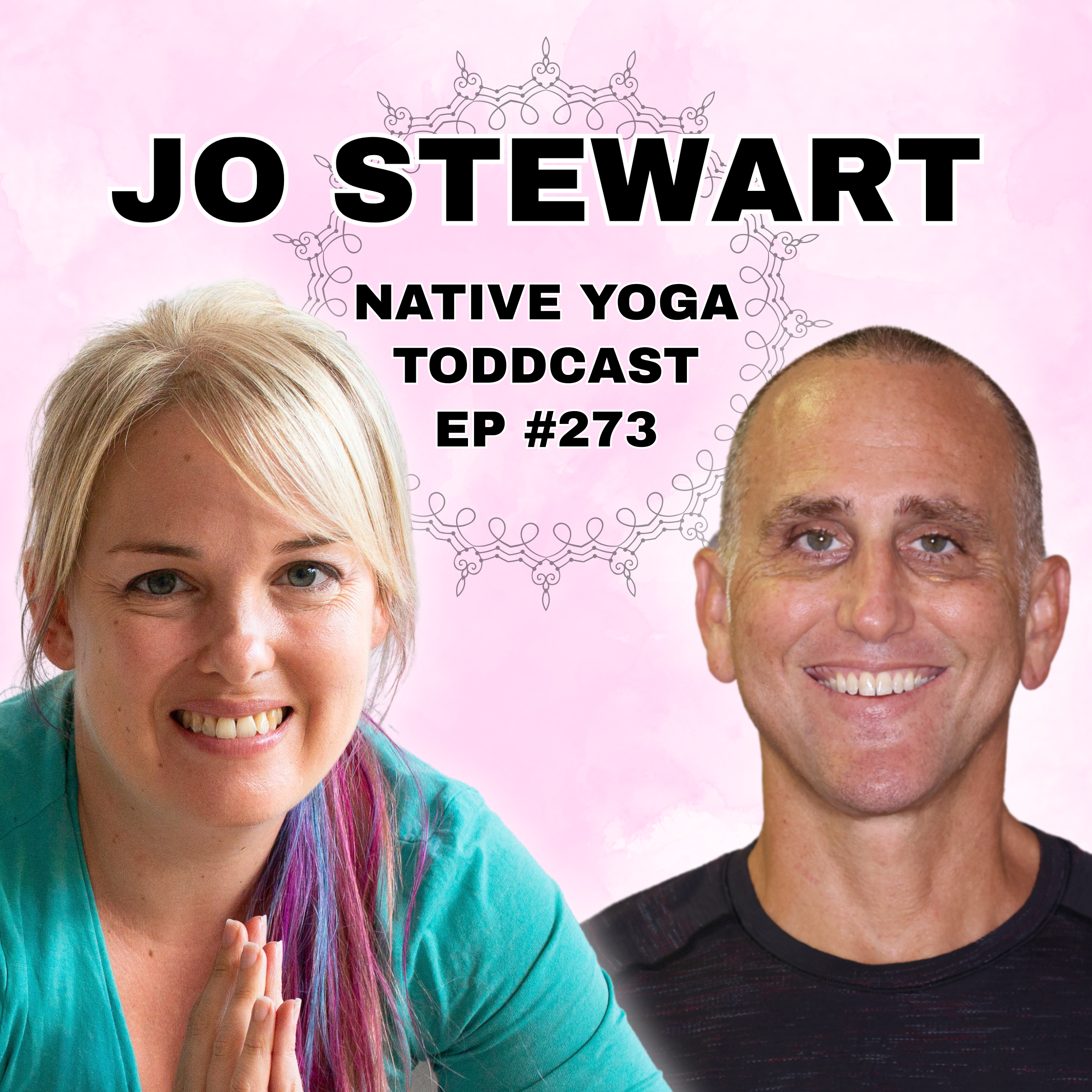
Jo Stewart | Artist Turned Aerial Yoga Revolutionary

Listen to Toddcast with Jo for FREE here

Jo Stewart is an esteemed yoga teacher based in Melbourne, Australia, with over 20 years of experience in teaching yoga. Her journey began with art-infused Zen philosophy and later transitioned her artistry into a full-time vocation of yoga instruction. Jo specializes in Iyengar and aerial yoga, and she has recently authored a book titled “The Eight Limbs of Aerial Yoga Book.” She is also the host of the Flow Artist Podcast and is committed to fostering inclusivity and accessibility in yoga practices. Jo operates her own studio, which she meticulously designed to combine her love for yoga and teaching.Thanks for listening to this episode. 

Visit Jo here: https://gardenofyoga.com.au/

Key Takeaways:

  • Jo Stewart’s yoga path is deeply intertwined with art and Zen philosophy, leading her to a long-standing teaching career.
  • Her book, “The Eight Limbs of Aerial Yoga Book,” integrates traditional yoga principles with modern aerial yoga, providing inclusive and adaptable methods.
  • Building a sustainable yoga business requires understanding of personal and entrepreneurial limits, with Jo advocating for balance and carefully managed growth.
  • Jo promotes aerial yoga as an accessible practice that encourages playfulness and therapeutic benefits, supporting diverse student needs, including those with PTSD or chronic pain.
  • The role of podcasts and platforms in fostering meaningful connections and enhancing professional growth in the yoga community is discussed.

Merging Traditional Yoga Philosophy with Innovative Aerial Practices

Jo Stewart’s journey into the world of yoga began with a serendipitous introduction to Iyengar yoga in the 1990s, an era when yoga was much less mainstream than today. However, it was her exploration of aerial yoga that marked a transformative milestone in her career. The intrigue of combining tactile yoga philosophy, specifically the eight limbs outlined by Patanjali, with the contemporary practice of aerial yoga offered her a fresh perspective. Stewart shares, “If we’re calling it aerial yoga, we really have to ground it in that philosophy. Otherwise, it could just be called aerial fitness or aerial dance.”

Her commitment to integrating these profound teachings with aerial movements is both pioneering and deeply rooted in historical context. Drawing upon ancient practices where ropes were used for suspended inversions, Stewart emphasizes the historical credence of aerial yoga. Her work, “Eight Limbs of Aerial Yoga,” serves as a comprehensive guide that brings to light this unique blend, emphasizing both the physical and mental engagements integral to the practice.

This intersection of traditional philosophy and modern aerial applications enables practitioners to experience an expansive range of movements while maintaining a meditative and connected state of mind. For Stewart, this approach is essential to ensuring that aerial yoga remains true to its roots while evolving to meet modern needs.

Advocating for Accessible and Therapeutic Yoga

A significant theme explored by Jo Stewart is the accessibility and therapeutic potential of yoga. She views aerial yoga as a medium to reach a broader demographic, extending beyond the typical associations with young, flexible, and circus-level performers. Highlighting the versatility of aerial yoga, Stewart explains, “It can actually be more adaptable than a traditional floor-based practice because you’ve got this super helpful prop that brings the level of the floor up to you.”

The hammock acts as a supportive tool, making challenging poses more accessible and safe for a wide range of bodies and abilities. This is particularly beneficial for individuals dealing with conditions such as PTSD or chronic pain. Stewart recounts that her oldest student has been 85 years old, and her classes frequently accommodate neurodivergent students, indicating the far-reaching potential of aerial yoga.

By offering such inclusivity, Stewart’s approach dispels common misconceptions around yoga’s accessibility. Her work fights against the stereotype that aerial yoga is only for the acrobatic and instead presents it as a nurturing practice that supports one’s physical and mental well-being. This theme resonates deeply in her book, as she strives to showcase the potential for joy and healing accessible to all through aerial practice.

Establishing a Sustainable Yoga Practice

Jo Stewart shares candid insights into the practicalities of running a yoga business, emphasizing the importance of combining passion with sustainability. From her experience of converting a personal space into a teaching studio to navigating the constraints of class sizes, Stewart illustrates the intricacies involved in transforming a love for yoga into a viable career.

Stewart offers sage advice to upcoming yoga practitioners, urging them to “have your own thing going,” which includes building a personal brand and maintaining multiple streams of revenue, such as workshops, private classes, and teaching at various venues. This balanced approach helps mitigate the uncertainty and financial instability that can come with relying solely on studio or gym positions.

Moreover, Stewart’s reflections on the significance of teacher trainings, especially in the aerial domain, highlight the responsibility practitioners have toward their students’ safety and learning experience. By participating in structured training, teachers can ensure they are equipped to offer safe and mindful instruction, particularly when it comes to the more dynamic modalities of aerial yoga.

Rather than idolizing the romanticized idea of a yoga teacher’s life, Stewart’s transparent recounting of her journey aligns with the reality many teachers face, emphasizing resilience, adaptability, and continuous learning.

While Jo Stewart’s work in yoga is rooted in history and tradition, she boldly steps forward with innovations that make her practices both therapeutic and widely accessible. She projects an inspiring vision of yoga—one that is deeply connected to ancient philosophies yet courageously open to contemporary interpretations. Stewart’s narrative is a beacon for other educators aiming to blend traditional wisdom with modern methodologies to create a more inclusive world of yoga.

Check out: 👇
8IN8 Ashtanga Yoga for Beginners Course Online– Learn 8 Limb Yoga in 8 Days – Get FREE coupon code for a limited time only (Regular price $88) https://info.nativeyogacenter.com/8in8-ashtanga-yoga-for-beginners-8-limbs-in-8-days/

Practice with Native Yoga Online – New classes EVERY day – Use Code FIRSTMONTHFREE https://nativeyogacenter.teachable.com/p/today-s-community-class

Subscribe to Native Yoga Center and view this podcast on Youtube.

Thank you Bryce Allyn for the show tunes. Check out Bryce’s website: bryceallynband.comand sign up on his newsletter to stay in touch. Listen here to his original music from his bands Boxelder, B-Liminal and Bryce Allyn Band on Spotify.

Please email special requests and feedback to info@nativeyogacenter.com

https://info.nativeyogacenter.com/8in8-ashtanga-yoga-for-beginners-8-limbs-in-8-days

Support the show

Native Yoga website: here
YouTube: here
Instagram: @nativeyoga 
Twitter: @nativeyoga 
Facebook: @nativeyogacenter 
LinkedIn: Todd McLaughlin 
Jessica Rigal: Uniting Trauma Care, Ashtanga Yoga & Meditation

Listen to Toddcast with Jessica for FREE here

Jessica Rigal is a seasoned clinical social worker with over 20 years of experience specializing in trauma care, particularly in hospitals. Raised amidst a milieu of activism and scientific inquiry in New York City during the 60s and 70s, Jessica was introduced to meditation early on, a practice that has become central to her professional and personal life. She studied pre-med and journalism and holds an advanced degree from the New School of Social Research. Jessica is an advocate of blending meditation with Ashtanga yoga, and she actively practices and teaches these methods, emphasizing their therapeutic benefits.

Visit Jessica here: https://yogabyjessica.com/

Key Takeaways:

  • Jessica Rigal’s life reflects a unique blend of activism, scientific curiosity, and holistic healing practices.
  • Meditation and yoga are central to Jessica’s approach, offering profound tools for recovery and personal growth.
  • Listening to the body and maintaining a mindfulness practice can be crucial in overcoming physical limitations and improving mental health.
  • Jessica emphasizes a flexible approach to both yoga and life, focusing on finding joy in the present and accepting each moment as it comes.
  • The idea of practice as a reflection of daily life, rather than a set series of poses, invites listeners to integrate mindfulness into every aspect of their being.

The Intersection of Ashtanga Yoga and Zen Meditation

In the dynamic landscape of mindfulness practices, the convergence of Ashtanga yoga and Zen meditation offers a powerful blend of physical and mental wellness. Jessica Rigal, a practitioner balancing both disciplines, emphasizes the seamless integration of these practices as a pathway to profound self-discovery and healing.

Rigal’s journey with Ashtanga yoga began unexpectedly at the age of 55, under the guidance of Manju Jois. The notion of dropping back into a challenging pose, despite her initial fears, unveiled a moment of transformation. “It just cracked me wide open,” she recalls, highlighting how the experience unlocked a reservoir of emotions stored in the body. This illustrates the potential of yoga as a tool not just for physical flexibility, but for emotional release and mental clarity.

The conversation also touched upon the complementary nature of Zen meditation, which Rigal has engaged with since childhood. This form of meditation, characterized by its non-goal-oriented approach, aligns harmoniously with the principles of yoga. Together, these practices foster a state of being where one can “live in the shunya, the emptiness,” as Rigal describes it, embracing the unpredictable nature of life much like jazz music—improvised and unscripted.

The broader implication of this integration challenges the conventional boundaries within mindfulness practices. It prompts an exploration of how these traditions, when combined, can offer a more holistic approach to understanding the self. The synthesis of the physical rigor of yoga and the contemplative depth of meditation encourages practitioners to look beyond mere physical accomplishments and delve deeper into the nuances of presence and awareness.

Enhancing Mindfulness Through Nature

Interacting with nature emerges as a recurring theme in enhancing mindfulness, a point eloquently illustrated by Rigal’s “manatee meditation.” Observing the gentle movements of a manatee, as she shares, is a reminder of the power of awe in anchoring oneself to the present moment. Modern neuroscience supports this notion, suggesting that awe-inspiring experiences can bring one back to the immediacy of the “now.”

“Go take a walk in nature,” Rigal recommends, especially when one struggles to quiet the mind. This practice not only grounds individuals but also facilitates a connection to the larger world, fostering a sense of belonging and peace. The Merlin app, as discussed in the transcript, is a perfect tool for such nature walks, offering an enhanced experience by identifying bird songs, allowing for a deeper engagement with one’s environment.

Within the context of a bustling life, especially one filled with the demands of a healthcare professional, this practice becomes indispensable. For Rigal, who navigates the complexities of working within hospital settings, these moments of connection to nature serve as vital touchpoints for balance and rejuvenation.

The impact of this practice extends beyond individual wellness, suggesting that through nature and presence, communities can foster environments that cultivate understanding and compassion. It embodies a mindful way of living that recognizes the importance of slowing down and appreciating the world around us—principles at the heart of both yoga and meditation.

Embracing Pain as a Pathway to Mindfulness

Pain, both physical and emotional, is an inevitable part of the human experience, as discussed in the transcript. Yet, it offers profound opportunities for practicing mindfulness and acceptance. Rigal shares candidly about her personal journey with pain, particularly the challenges of aging and physical limitations.

The discussion reveals a pivotal understanding: embracing pain does not equate to suffering. Instead, it becomes an avenue toward deeper awareness and self-reflection. “Don’t allow that to define you,” she urges, highlighting the importance of not being consumed by labels or societal definitions of pain and limitation.

Through her practice under Greg Tebb, Rigal learns to “clean out” pain without forcing the body, underlining a process of mindful engagement rather than aggressive pursuit of relief. This approach resonates with the broader theme of yoga and meditation as practices of living rather than doing.

The implications for practitioners and healthcare providers are significant. It suggests a shift from a purely outcome-based approach to one that recognizes the value of process and presence. It encourages viewing pain as a teacher rather than an adversary, opening pathways for healing that are both compassionate and sustainable.

In the conversation with Jessica Rigal, we discover an intricate tapestry of mindfulness practices that together offer a wholistic approach to wellness. Her experiences underscore the transformative power of yoga and meditation when practiced with intention and openness. The dialogue with nature, the acceptance of pain, and the embodiment of these practices in everyday life challenge us to reconsider our approach to mind-body spirituality. Herein lies the essence of Rigal’s message—a call for presence, a step into the unknown, much like jazz, and the serenity found in simply being.

Thanks for listening to this episode. Check out: 👇
8IN8 Ashtanga Yoga for Beginners Course Online– Learn 8 Limb Yoga in 8 Days – Get FREE coupon code for a limited time only (Regular price $88) https://info.nativeyogacenter.com/8in8-ashtanga-yoga-for-beginners-8-limbs-in-8-days/

Practice with Native Yoga Online – New classes EVERY day – Use Code FIRSTMONTHFREE https://nativeyogacenter.teachable.com/p/today-s-community-class

Subscribe to Native Yoga Center and view this podcast on Youtube.

Thank you Bryce Allyn for the show tunes. Check out Bryce’s website: bryceallynband.comand sign up on his newsletter to stay in touch. Listen here to his original music from his bands Boxelder, B-Liminal and Bryce Allyn Band on Spotify.

Please email special requests and feedback to info@nativeyogacenter.com

https://info.nativeyogacenter.com/8in8-ashtanga-yoga-for-beginners-8-limbs-in-8-days

Support the show

Native Yoga website: here
YouTube: here
Instagram: @nativeyoga 
Twitter: @nativeyoga 
Facebook: @nativeyogacenter 
LinkedIn: Todd McLaughlin 
Sky Swisa | Global Yoga Journey, Healing Trauma & Holistic Wellness

Listen to Toddcast with Sky for FREE here

Join Todd McLaughlin for a heartfelt and inspiring conversation with Sky Swisa, founder of Ananda Sky Yoga and a truly global yoga teacher.

With a rich multicultural background spanning Russia, Israel, China, and the USA, Sky brings a unique perspective to holistic health and wellness. From working in the diamonds industry in Shanghai to becoming fluent in Mandarin, Hebrew, Russian, and English, her journey into yoga began at age 14. She later completed teacher training in Navakarna Yoga and studied under legendary instructor Dharma Mittra in New York.

In this episode, Sky shares her personal path through cultural experiences, teacher training, and the integration of yoga with other healing practices like lymphatic massage. Todd and Sky explore how yoga, community, and spiritual practices help navigate life’s biggest challenges — including personal trauma, grief, loss of loved ones, and mental health.

They discuss the evolving nature of yoga practice, the importance of grounding and self-discovery, building supportive community, and adopting a non-judgmental approach to diet and personal growth. Sky emphasizes continual evolution in our practices and perspectives so we can stay aligned with our true selves.

Key Takeaways:

  • How a multicultural background and global experiences shape a deeper approach to yoga and wellness
  • Integrating yoga with holistic practices for mental and physical well-being
  • The transformative power of community and spiritual practice during times of tragedy and trauma
  • Why a non-judgmental mindset around diet and personal choices matters in the yoga world
  • The value of lifelong growth and updating our perspectives as we evolve

Whether you’re a yoga practitioner, teacher, or simply on a path of personal growth, this episode offers powerful insights into resilience, healing, and living with greater awareness.

Visit Sky: https://www.anandaskyyoga.com/

Discovering Balance: Yoga, Life Transitions, and the Quest for Inner Peace

Exploring the intersection of cultural diversity, personal challenges, and the philosophy of yoga provides profound insights into what it means to live a balanced and purposeful life. In a recent engaging conversation with Sky Swisa, a multifaceted yoga instructor and therapist, these themes became central as she shared her unique journey, intertwining her Russian-Israeli heritage, her immersion in global yoga practices, and her personal evolution through adversity.

Cross-Cultural Yoga Journey: Expanding Horizons and Deepening Practice

Sky Swisa’s life vividly illustrates how a multicultural background can enrich a yoga journey, providing a broader perspective and deeper understanding of holistic practices. Teaching yoga in Southern California, Sky embraces experiences drawn from her time living in Russia, Israel, and China. “Yes, I am a Russian Israeli…” she shares, highlighting how her roots and travels have influenced her approach to yoga and life.

In China, Sky honed her manual therapy skills and embraced diverse yoga methodologies that transcend traditional boundaries, characterizing it as “beyond the traditional yoga philosophy.” Her multicultural voyage not only adds layers to her personal practice but also informs her teaching, cultivating an inclusive environment for her students.

This cross-cultural perspective underscores the importance of openness in yoga, as it allows practitioners to explore the multifaceted nature of the discipline holistically, embracing different philosophies, techniques, and personal journeys. As Sky succinctly puts it, “Life just happens… Our job is to stay kind, stay present, and… bring compassion to everything we do.”

Coping with Challenges: Yoga as a Path to Healing

Sky’s story is also profoundly shaped by personal loss and the quest for healing. Her journey illuminates the transformative power of yoga in navigating life’s darkest moments, including the tragedy of her mother’s suicide. Reflecting on her experience, she shares, “That left me with so many questions… Who am I?” This life-altering event catalyzed her deeper immersion into yoga, offering solace and strength.

Embracing practices like Ashtanga and Navakarna yoga helped Sky find equilibrium and reclaim her sense of self. “I literally think it saved me,” she explains, crediting yoga with helping her reconnect with life after experiencing profound sorrow and questions of identity. Sky’s approach underscores yoga’s restorative potential and its ability to ground individuals facing life’s adversities.

Sky’s journey inspires not only those seeking personal growth but also those dealing with grief or seeking stability amid chaos. Her emphasis on yoga as an agent of healing encourages others to leverage the practice as a lifelong companion in their personal evolution.

Dietary Choices and Yoga: Navigating Controversial Terrains

A significant theme in Sky’s narrative is the yoga community’s complex relationship with dietary practices. After twenty years as a vegan, Sky reflects on the evolving dialogue surrounding diet within the yoga sphere. “Seeing both angles kind of like fight each other… it takes you so much away from your truth,” she comments, advocating for personal authenticity over dogmatic beliefs.

The often-polarizing debate between vegan and carnivorous diets has amplified within various communities, but Sky’s approach is one of understanding and respect. By emphasizing personal health and ethical farming, she encourages a more nuanced discussion that acknowledges the diversity intrinsic to personal wellness. This perspective fosters a supportive environment where practitioners can make informed dietary choices reflective of their individual needs and ethical considerations.

Sky’s insights invite a reconceptualization of dietary dogma, broadening the conversation to embrace sustainability, personal wellness, and ethical considerations, ultimately converging on a yoga philosophy rooted in balance and mindfulness.

In tracing Sky Swisa’s expansive journey through life and yoga, the tapestry of unique experiences, challenges, and insights is richly woven. Her story serves as a powerful testament to the resilience, adaptability, and interconnectedness that define the human experience. As she continues to share her wisdom and authenticity, others are inspired to explore their pathways, deepened by cultural richness, personal evolution, and empowered by an open-hearted yoga practice.

Thanks for listening to this episode. Check out: 👇
8IN8 Ashtanga Yoga for Beginners Course Online– Learn 8 Limb Yoga in 8 Days – Get FREE coupon code for a limited time only (Regular price $88) https://info.nativeyogacenter.com/8in8-ashtanga-yoga-for-beginners-8-limbs-in-8-days/

Practice with Native Yoga Online – New classes EVERY day – Use Code FIRSTMONTHFREE https://nativeyogacenter.teachable.com/p/today-s-community-class

Subscribe to Native Yoga Center and view this podcast on Youtube.

Thank you Bryce Allyn for the show tunes. Check out Bryce’s website: bryceallynband.comand sign up on his newsletter to stay in touch. Listen here to his original music from his bands Boxelder, B-Liminal and Bryce Allyn Band on Spotify.

Please email special requests and feedback to info@nativeyogacenter.com

https://info.nativeyogacenter.com/8in8-ashtanga-yoga-for-beginners-8-limbs-in-8-days/

Support the show

Native Yoga website: here
YouTube: here
Instagram: @nativeyoga 
Twitter: @nativeyoga 
Facebook: @nativeyogacenter 
LinkedIn: Todd McLaughlin 
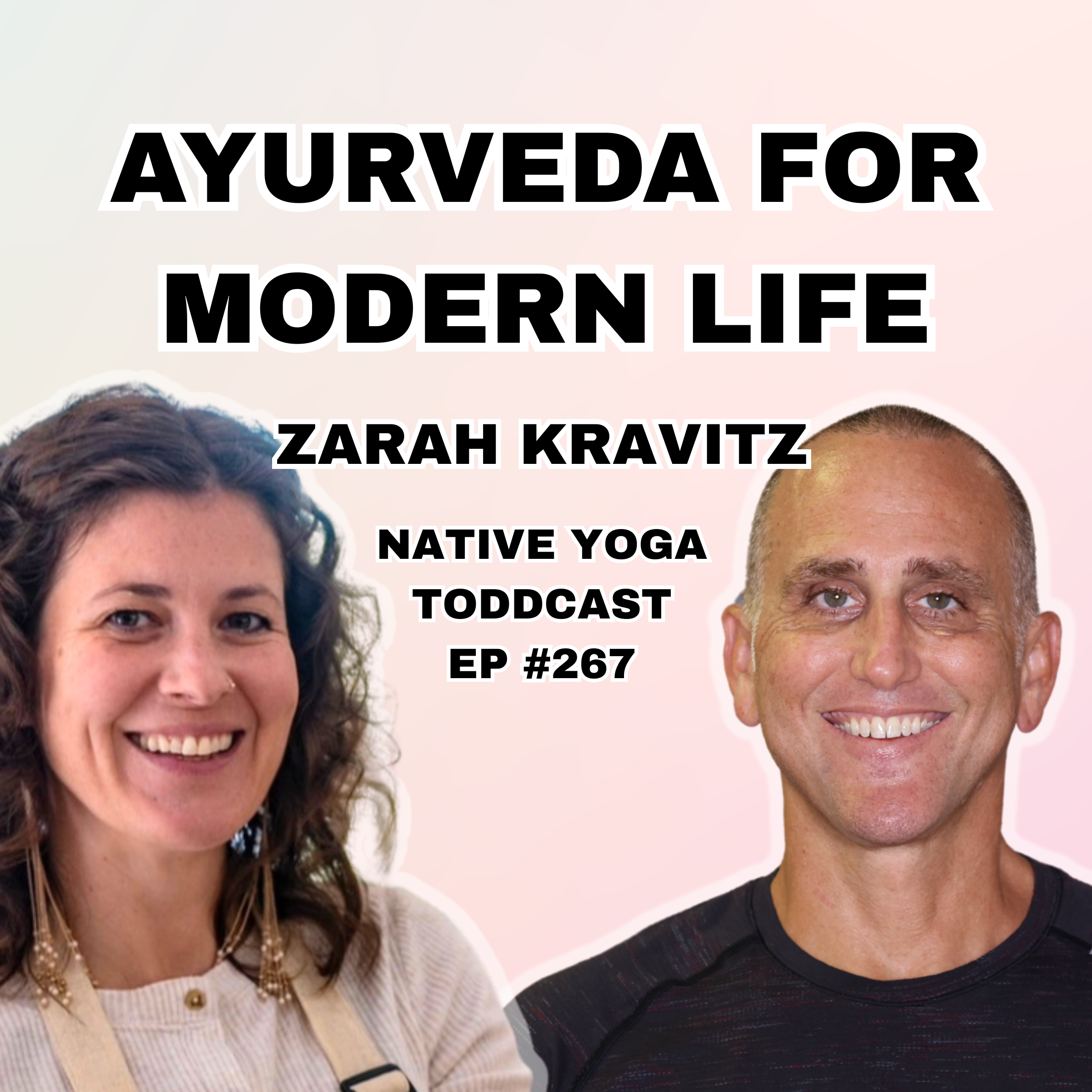
Zarah Kravitz | Ayurveda for Modern Life: Postpartum Healing, Seasonal Eating & Yoga

Listen to Toddcast with Zarah for FREE here

Zarah Kravitz is an esteemed Ayurvedic practitioner and yoga teacher currently residing in Southern California. Originally from New Jersey, Zarah moved to New Mexico at a young age and grew up in Santa Fe and Albuquerque before settling in San Diego. 

She possesses a deep-rooted passion for Ayurveda and yoga, having studied extensively with renowned experts, including Dr. Vasant Lad at The Ayurvedic Institute. Zarah is also an emerging entrepreneur, co-founding Mama Rest—a postpartum nourishment service providing Ayurvedic meals for new mothers. 

Additionally, Zarah continues to share her passion for yoga and holistic living by teaching yoga classes and offering a specialized cooking course tailored around bioregional and seasonal eating.

Visit Zarah: https://www.yogaonstate.com/ayurveda-on-state & on IG https://www.instagram.com/zarahkravitz/

Key Takeaways:

  • Integrative Health: Zarah highlights the importance of Ayurveda in creating a holistic health approach, emphasizing the need for understanding one’s own body and constitution to promote optimal health.
  • Postpartum Nutrition: Through her venture Mama Rest, Zarah underlines the significance of tailored nutritional support for postpartum mothers using Ayurvedic principles.
  • Ayurveda & Modern Living: She discusses how Ayurveda can be adapted to fit modern lifestyles by promoting seasonal and local food consumption to enhance digestion and overall vitality.
  • Yoga & Spiritual Practice: Zarah shares her journey into yoga, focusing on its transformative power when combined with Ayurveda, and the benefits of community singing practices like Kirtan.

The Fusion of Ayurveda and Yoga: A Pathway to Holistic Health

In a world buzzing with diet trends and wellness fads, the age-old traditions of Ayurveda and yoga provide a grounded, holistic approach to health. Zarah Kravitz’s journey, as outlined in her conversation with Todd, highlights the interconnection of these practices, which she discovered through her “deep inner quest” for a nutritious and balanced life.

As Kravitz discusses, her pursuit began with a questioning of dietary norms catalyzed by her family’s lifestyle. Over time, she transitioned from a devout vegan to embracing Ayurvedic wisdom. This shift allowed her to integrate a more inclusive approach, stating, “Ayurveda’s approach to health goes beyond diet; it encompasses the whole person, recognizing that we are not just what we eat, but what we can digest.”

Ayurveda, with its roots in ancient Indian wisdom, promotes understanding the individual’s constitution (or ‘dosha’) and adapting lifestyles accordingly. Kravitz emphasizes the value of recognizing unique needs, illustrating that not everyone benefits from the same diets. This philosophy transcends mere nutritional guidelines, making Ayurveda a versatile tool for addressing broader wellness goals.

In Kravitz’s experience, both yoga and Ayurveda offer a “wholeness and fullness” in facilitating personal transformation, making them integral to one’s wellness journey. Her practice with Dharma Mitra instilled values of purity and mindfulness in consumption, transcending beyond the physical to encompass a spiritual significance, hence embodying a truly holistic lifestyle.

Seasonal Living: Aligning Health with Nature’s Rhythms

Eating locally and seasonally is not just a dietary choice but a philosophy that aligns us with natural cycles, promoting both personal well-being and ecological balance. Zarah Kravitz’s appreciation for seasonal living stems from her belief in its natural harmonizing capabilities. By attending farmers markets regularly, she finds inspiration in what is both available and vibrant, aligning her meals with the seasons.

Kravitz underscores this approach, explaining that “connecting with local, seasonal produce not only inspires creativity in the kitchen but fosters a deeper relationship with nature and our bodies.” This philosophy is backed by Ayurveda’s teachings, which prioritize foods that naturally grow in one’s environment as they are believed to resonate more effectively with individual bodies.

The broader implications of such practices suggest a potential shift in consumer habits towards sustainable and ecological consciousness. By emphasizing local produce, there’s a reduced reliance on long-distance food transportation, resulting in a smaller carbon footprint. Furthermore, this method could inspire a larger movement towards community-supported agriculture (CSA), which Kravitz advocates as a thoughtful alternative for acquiring fresh, seasonal foods.

Postpartum Ayurvedic Care: A Lifeline for New Mothers

Incorporating Ayurveda into postpartum care is another significant area of application that Kravitz is passionate about. Her enterprise, Mama Rest, born out of personal planning and experience, provides tailored Ayurvedic nutrition to new mothers, addressing their unique needs in the delicate postpartum period. This attention to postpartum care underscores a critical, yet often overlooked phase of maternal health.

Ayurvedic postpartum practices, as Kravitz describes, are not just about nourishment but encompass a range of rituals aimed at restoring balance: “Everything is soothing and grounding, designed to ease the transition… offering daily teas, digestible sweet foods, and specific meals that cater to the mother’s needs and birth experience.”

This comprehensive approach suggests a paradigm shift in maternal care by emphasizing holistic support over traditional postnatal practices. The anticipation is that such personalized care could significantly alleviate common postpartum challenges and support the well-being of both mother and child, thus fostering a healthier transition into motherhood.

Revisiting Ancient Wisdom for Modern Wellness

The stories and insights shared by Zarah Kravitz reflect a profound integration of ancient practices into contemporary life, offering a transformative approach to health. Her journey from questioning dietary norms to embracing the fullness of Ayurveda and yoga illustrates the potential of these practices in offering individualized pathways to wellness.

Her exploration of seasonal eating reinforces a need to reconnect with nature, highlighting both health benefits and ecological responsibilities. Meanwhile, her emphasis on postpartum care introduces a critical dialogue on maternal health, honoring the nuances of motherhood with age-old wisdom.

In essence, Kravitz’s life and work exemplify the endless possibilities these intertwined traditions of yoga and Ayurveda offer for holistic healing and transformation, a message that resonates deeply in today’s wellness-oriented society.

🎧 Practice with Native Yoga:
8IN8 Ashtanga Yoga Course (FREE coupon):
https://info.nativeyogacenter.com/8in8-ashtanga-yoga-for-beginners-8-limbs-in-8-days/

Daily Online Classes (Code: FIRSTMONTHFREE):
https://nativeyogacenter.teachable.com/p/today-s-community-class

About the Podcast:
The Native Yoga Toddcast explores yoga, meditation, mindfulness, and personal growth through conversations with teachers, creators, and thought leaders.

https://info.nativeyogacenter.com/8in8-ashtanga-yoga-for-beginners-8-limbs-in-8-days/

Support the show

Native Yoga website: here
YouTube: here
Instagram: @nativeyoga 
Twitter: @nativeyoga 
Facebook: @nativeyogacenter 
LinkedIn: Todd McLaughlin 
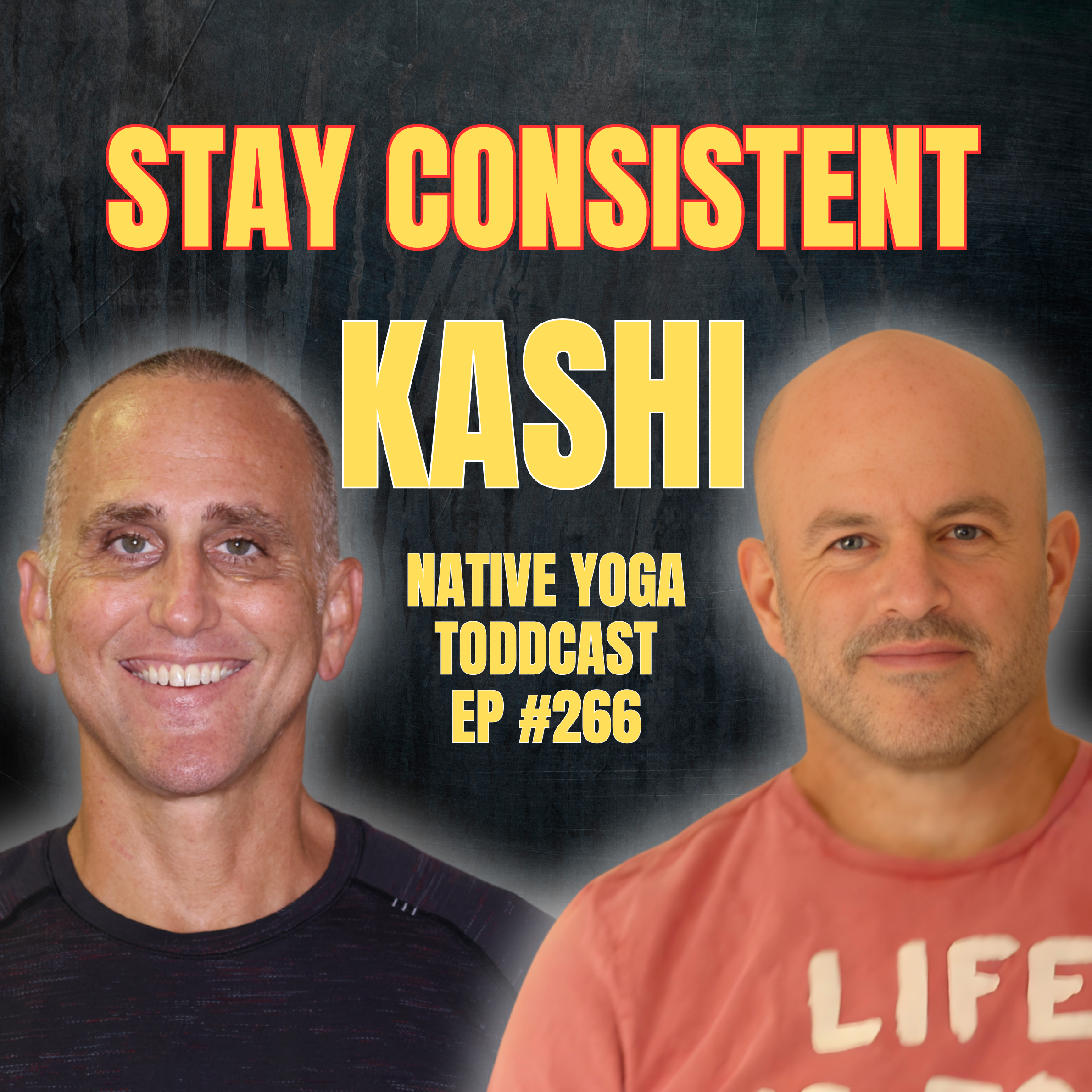
Kashi: Building a Consistent Yoga Practice That Lasts

Listen to Toddcast with Kashi for FREE here

In this episode, I sit down with Kashi, a longtime yoga practitioner and former monk, to explore the deeper layers of yoga philosophy and what it really means to live the practice. From his early days in Israel to years spent studying in India, Kashi shares a powerful journey shaped by discipline, self-inquiry, and a commitment to understanding the roots of yoga.

We dive into how yoga extends far beyond the physical, touching on themes of community, personal transformation, and the role of philosophy in navigating modern life. A central part of our conversation explores trauma-sensitive yoga and how supportive environments can help people reconnect, heal, and feel seen through shared experience.

Kashi also reflects on his transition from monastic life to becoming a householder, offering an honest perspective on change, identity, and staying true to your path even when it challenges expectations. We discuss the relevance of classic yoga texts like the Bhagavad Gita and how their teachings can still guide us through uncertainty, growth, and everyday life.

This episode is for anyone seeking a deeper connection to their practice, a better understanding of yoga philosophy, or a grounded perspective on how to stay consistent and authentic on the path.

What You’ll Learn:
• Why community plays a key role in healing and growth
• How yoga supports trauma awareness and emotional resilience
• The importance of discipline and long-term practice
• How yoga philosophy applies to modern life
• What it means to evolve while staying true to yourself

Listen if you’re interested in: yoga philosophy, trauma-sensitive yoga, meditation, personal growth, and building a sustainable yoga practice.

Listen to Kashi’s lecture on BG here

Check out Kashi’s retreat here

Listen & subscribe for more conversations on yoga, healing, and personal growth.

Embracing Community for Healing and Growth

In the dialogue with Todd, Kashi reveals the profound effect community has, especially in contexts of healing from trauma. Working with the organization Brothers and Sisters in Yoga, he discovered that community involvement provides veterans with PTSD a vital sense of belonging and understanding. Kashi emphasizes, “The community is the most powerful thing. We really consciously center this non-profit organization around the idea of community.”

This theme resonates with the broader natural human need for connection and support. Community offers a safe space for individuals to voice their experiences and be truly heard, creating a network of empathy and understanding. The collective spirit found within yoga communities allows participating individuals not only to heal but to aid others in their healing journey. The support network of a community can redefine individual struggles into collective resilience, emphasizing the importance of community in personal and shared healing.

Spiritual Journeys and Transformations

Kashi shares an introspective narrative of his life from a secular upbringing to embracing monastic life, and finally, to a life beyond the Swami title. Initially, driven by philosophical curiosity and personal conflict, he delved deep into monastic life, finding guidance under revered teachers like Swami Caitanyananda. “I wanted to be one of us,” he reflects on choosing monastic life, signaling the sincerity and devotion that accompanied his path.

However, after decades spent as a novice monk and then a Swami, he discerned a growing disconnect between his spiritual commitments and personal authenticity. Courageously, he chose to “live without identity, without being somebody,” shedding the titles despite their associated status and respect. He candidly shares, “I needed a lot of courage to do it. It was not easy at all… I will just wish them love. That’s it.” Kashi exemplifies how spiritual growth often demands bold self-reflection and an embrace of inner truths, even when it means challenging societal norms or personal expectations.

The Everlasting Relevance of the Bhagavad Gita

Kashi’s exploration of the Bhagavad Gita reveals the timelessness of its teachings. Emphasizing the depth contained within, he articulates how understanding the context in which sacred texts were written enhances their contemporary applicability. Kashi notes, “Scriptures remain the same, but you are different every time you read it.”

This idea echoes the sentiment that sacred texts like the Bhagavad Gita hold layers of wisdom applicable to any era. Whether one perceives Krishna as a divine figure, a historical persona, or an embodiment of self-identity, the teachings inspire introspection and ethical living. They provide guiding principles that resonate as true pathways for navigating life’s enduring challenges. Kashi demonstrates that revisiting these texts can offer fresh insights, corroborating the notion of them as wells of ever-renewable wisdom.

Kashi’s journey illustrates profound lessons in spiritual evolution, the importance of community, and the application of ancient wisdom in contemporary life. Through his experiences, he brings forth a modern yet timeless understanding of yoga—not merely as physical practice but a holistic approach to living authentically, healing collectively, and continuously seeking inner truth amid life’s uncertainties.

🎧 Practice with Native Yoga:
8IN8 Ashtanga Yoga Course (FREE coupon):
https://info.nativeyogacenter.com/8in8-ashtanga-yoga-for-beginners-8-limbs-in-8-days/

Daily Online Classes (Code: FIRSTMONTHFREE):
https://nativeyogacenter.teachable.com/p/today-s-community-class

About the Podcast:
The Native Yoga Toddcast explores yoga, meditation, mindfulness, and personal growth through conversations with teachers, creators, and thought leaders.

https://info.nativeyogacenter.com/8in8-ashtanga-yoga-for-beginners-8-limbs-in-8-days/

Support the show

Native Yoga website: here
YouTube: here
Instagram: @nativeyoga 
Twitter: @nativeyoga 
Facebook: @nativeyogacenter 
LinkedIn: Todd McLaughlin 
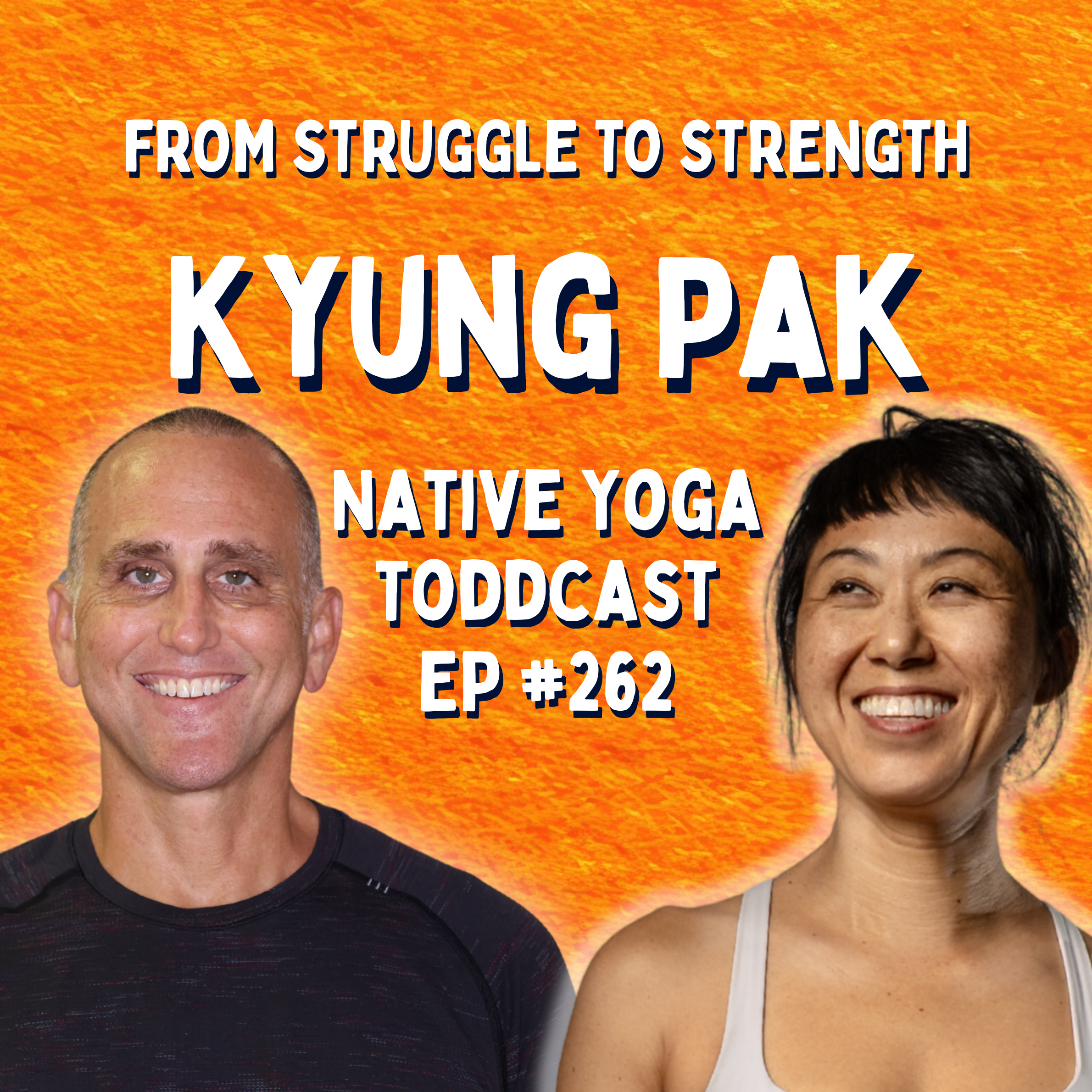
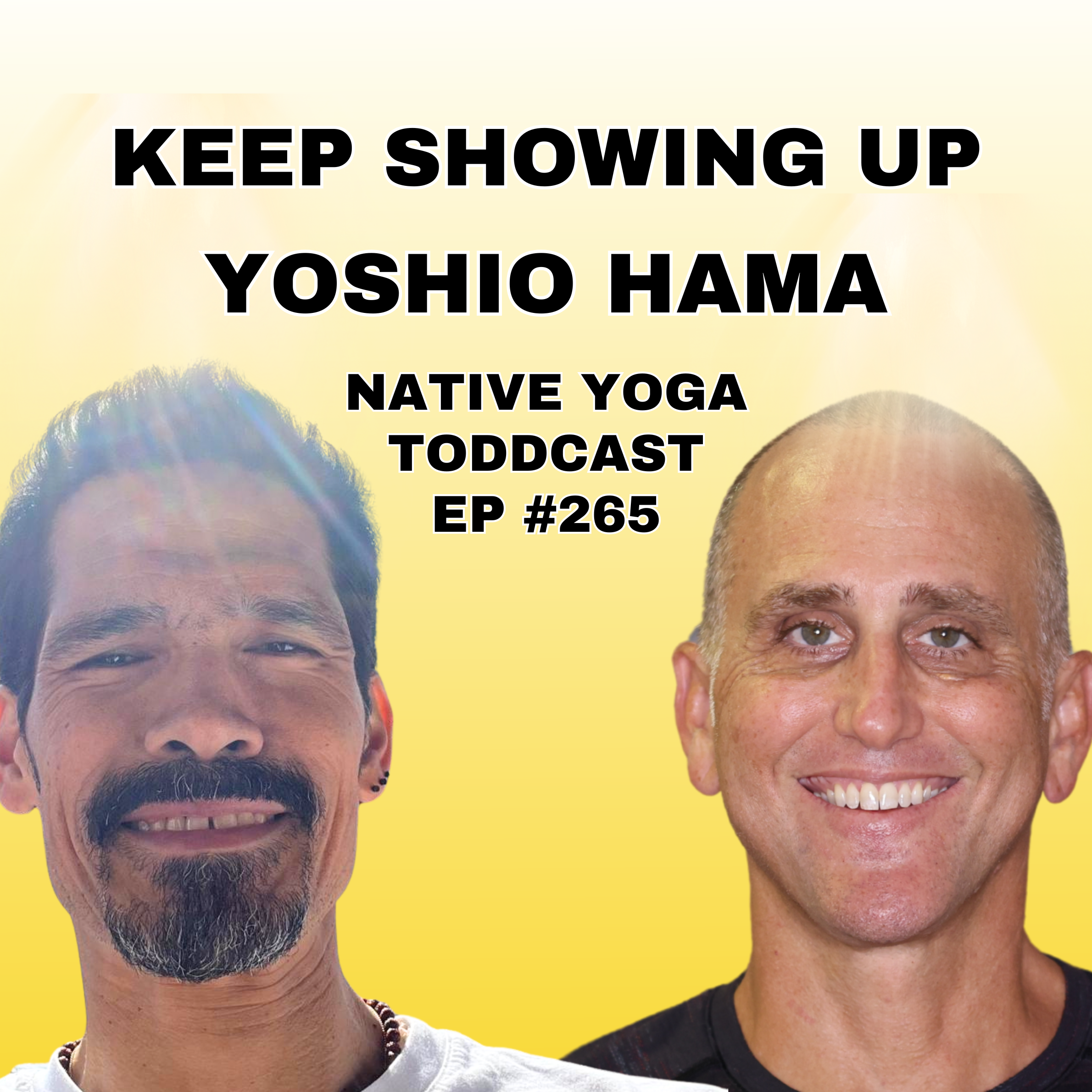
Yoshio Hama: Why Discipline Matters More Than Motivation

Listen to Toddcast with Yoshio for FREE here

In this episode, Yoshio Hama shares why discipline—not motivation—is the key to a lasting yoga practice.

If you’ve ever struggled to stay consistent, felt too busy to practice, or found your motivation fading, this conversation offers a grounded and honest perspective on what it really takes to keep showing up.

Todd McLaughlin and Yoshio dive into the deeper meaning of tapas (inner fire), how practice evolves over time, and the reality of maintaining commitment through life’s challenges. This isn’t about perfection—it’s about building a sustainable, lifelong relationship with yoga.

You’ll learn:
• Why discipline matters more than motivation
• How to stay consistent when life gets busy
• The role of tapas in personal growth
• How your yoga practice evolves over time
• Practical insights for maintaining a daily practice

Whether you’re new to yoga or have been practicing for years, this episode will help you reconnect with your purpose and keep moving forward—one practice at a time.

Visit Yoshio: https://www.instagram.com/activemeditation/

Listen & subscribe for more conversations on yoga, healing, and personal growth.

The Transformative Power of Rhythmic Exploration in Yoga

Yoshio Hama passionately shares his journey of blending yoga practice with music, highlighting the concept that music and rhythm hold the potential to elevate the mind to a higher state of consciousness. Drawing from personal experiences, he discusses how drumming, particularly its cultural significance in traditions such as Capoeira and the Naya Bingi in Rastafarian practice, shapes his yoga journey.

In the transcript, Hama reflects, “When you connect with your heart, then you tune into a frequency.” This symbolic connection between rhythm and the heart’s beat illustrates how music can become a meditative practice that aligns with yoga’s foundational principles. The endorsement of music as a universal language that transcends cultural barriers underscores its value as a tool for liberation. “Music is always the universal language that tunes us into a higher frequency,” emphasizes Hama, revealing a profound resonance that can bring diverse communities together through shared vibrations.

Passion and Curiosity: Essential Fuels for Growth

Reflections on the importance of passion and relentless curiosity permeate the conversation, emphasizing their role as catalysts for personal evolution in both yoga and life. Yoshio Hama recounts, “A master probably like my father…he was a master, a real,” acknowledging that true mastery involves the perpetual pursuit of knowledge and growth. The transcript illuminates the idea that passion is not taught but rather cultivated through lived experiences and internal drive.

Hama articulates the challenges faced when trying to balance life’s many demands with continued personal development, “As a father, we encounter a lot of challenges.” This challenge often necessitates wake-ups at “Brahma time in between 4 and 6” to maintain the “tapas,” the inner fire needed to sustain a fruitful practice. His story inspires the notion that passion and curiosity can serve as dynamic engines propelling individuals through life’s obstacles toward greater achievement and fulfillment.

A Holistic Lifestyle: Conduits for Mind-Body-Spirit Alignment

Explorations into diet and lifestyle further supplement the broader narrative of integration—how different practices contribute to a holistic sense of wellbeing. Yoshio highlights dietary practices that align with yogic philosophy, specifically engagement with fruitarianism as a means of attuning the body’s internal energies. “It was a realistic like wow. These guys are in a different level,” Hama comments, connecting dietary choices to spiritual evolution.

The conversation often returns to the impact of cultural context on lifestyle choices, providing a vivid illustration of how environments shape our living. From the vibrant streets of Venezuela to the serene spiritual practices in Jamaica and Japan, Yoshio’s experiences substantiate the supportive energy that communities can offer when individuals seek mindful living. His reference to moving “like a school of fish all together” points to the power of communal harmony, which in yoga is as crucial as individual practice.

Beyond cultural specifics, the conversation encourages a broad acceptance of varied paths to spiritual contentment, something that Dharmayogis like Yoshio have found invaluable. “Different Roads, same destination,” reflects the universal pursuit of heightened consciousness, hinting at the potential every individual possesses to forge a meaningful life through his or her unique set of insights, provided they maintain openness to life’s diversity.

The undertaken discourse effectively bridges the gaps between personal spiritual practice and the universal need for community. Yoshio Hama exemplifies how individual quests, anchored by passion, music, and holistic lifestyles, foster a harmonious existence. This journey, fraught with discovery and growth, is the bedrock of an enriched, balanced life. Through such discussions, practitioners and enthusiasts alike gain deeper insights into the symbiotic relationship between mindful living, rhythmic expression, and ongoing self-realization.

🎧 Practice with Native Yoga:
8IN8 Ashtanga Yoga Course (FREE coupon):
https://info.nativeyogacenter.com/8in8-ashtanga-yoga-for-beginners-8-limbs-in-8-days/

Daily Online Classes (Code: FIRSTMONTHFREE):
https://nativeyogacenter.teachable.com/p/today-s-community-class

About the Podcast:
The Native Yoga Toddcast explores yoga, meditation, mindfulness, and personal growth through conversations with teachers, creators, and thought leaders.

https://info.nativeyogacenter.com/8in8-ashtanga-yoga-for-beginners-8-limbs-in-8-days/

Support the show

Native Yoga website: here
YouTube: here
Instagram: @nativeyoga 
Twitter: @nativeyoga 
Facebook: @nativeyogacenter 
LinkedIn: Todd McLaughlin 
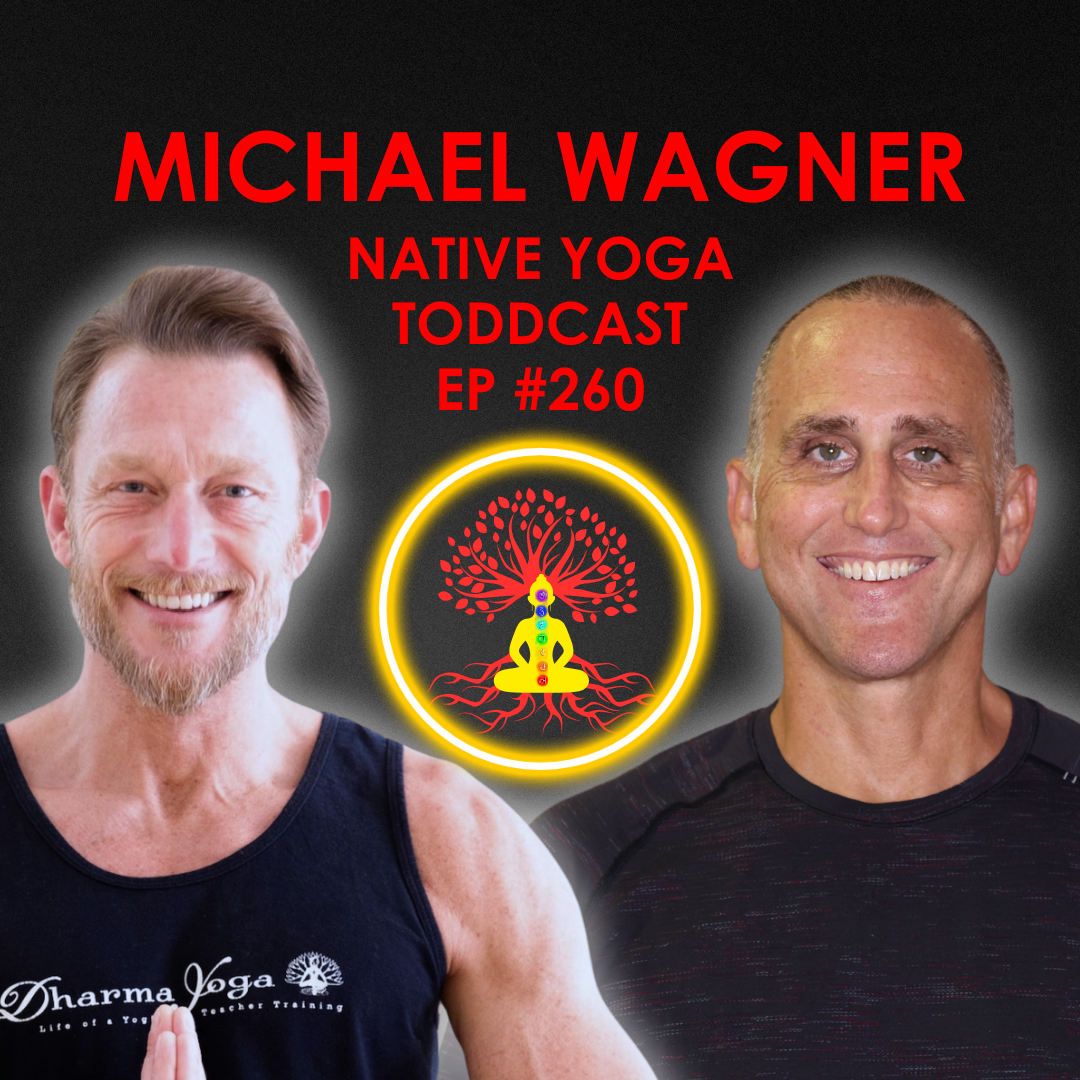
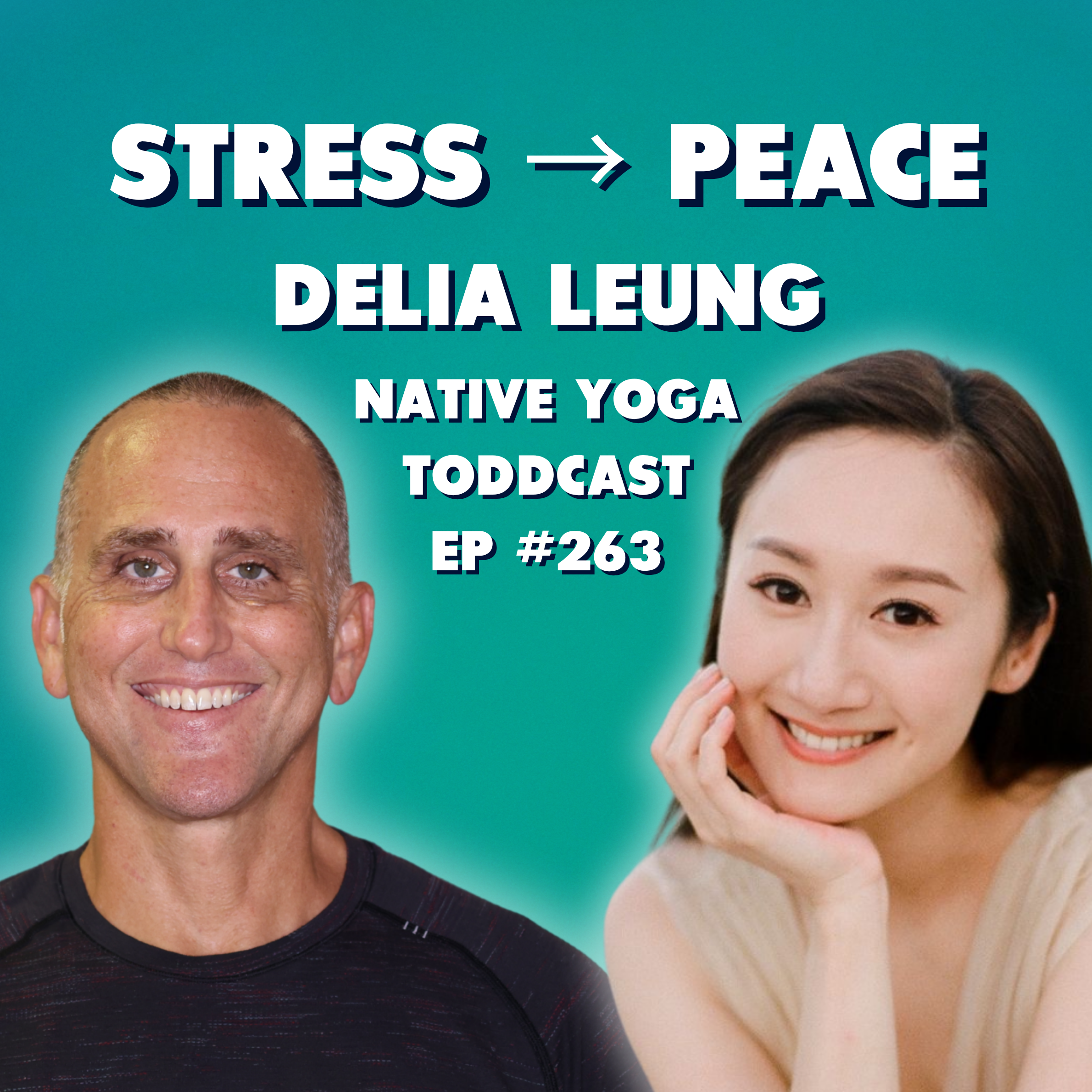
Delia Leung | From Finance to Dharma Yoga (Finding Peace in a High-Stress World)

Listen to Toddcast with Delia for FREE here

Delia Leung is an accomplished yoga instructor based in Hong Kong, who owns a boutique yoga studio and teaches Dharma yoga both at her studio and corporate environments like Google. She has a diverse academic background with a Bachelor’s degree in Psychology, a law degree, and a Master’s in Buddhist Studies. Her journey includes significant professional experience in finance, law, and trading. Delia has studied under the guidance of Dharma Mittra in New York and integrates her rich educational and life experiences into her yoga teachings, focusing on blending spirituality with practical applications.

Visit Delia on IG: https://www.instagram.com/delia.indrayoga/

Key Takeaways:

  • Delia Leung’s path from a finance career to becoming a respected yoga teacher highlights the potential to combine professional skills with personal passions.
  • Delia emphasizes the importance of planting seeds of spirituality and mindfulness even in corporate environments like Google, to aid tech-savvy employees in stress management.
  • The conversation includes insights into how yoga and meditation can profoundly benefit physical and mental resilience, especially among older practitioners.
  • Delia discusses the essence of practicing discernment in one’s spiritual and personal development, a key teaching in Buddhist philosophy.
  • The podcast highlights the unique cultural and spiritual practices in Bhutan, showcasing how such environments contribute to the metric of happiness.

Integrating Yoga and Mindfulness into Corporate Culture

In today’s fast-paced corporate world, one might not immediately associate spirituality with places like Google, or other major companies, especially in bustling cities like Hong Kong. Yet, Delia Leung, a yoga teacher who engages with corporate entities such as Google, offers a fresh perspective on integrating yoga into everyday work life. “When I go into a workplace like Google,” Delia explains, “people will not expect any spiritual lineage or aspects of teachings.” Despite these expectations, Delia skillfully introduces mindfulness and meditation to her mainly tech-savvy audience, known colloquially as Googlers.

The art of balancing these sessions lies in what Delia refers to as “skillful means.” This Buddhist teaching principle emphasizes adapting one’s teaching to suit the learners’ context and perception, thereby planting seeds of wisdom and compassion in an accessible manner. These tailored sessions offer a sanctuary for employees amidst their landscapes of “Gemini and AI,” creating an environment where mindfulness and professional responsibilities coexist.

Cultural Intersectionality: Language, Learning, and Personal Growth

Delia’s journey from learning psychology and law to studying Buddhist philosophy illustrates the beautiful intersection of diverse cultural and academic disciplines. At an interplay of language and learning, Delia offers classes in both Cantonese and English. “In English, it’s more like universal; it’s more international,” she says, reflecting on how different languages resonate with distinct parts of the self and culture. This duality not only helps her engage with varied demographics but also enriches her personal and professional growth.

In a culturally rich city like Hong Kong, where Western and Eastern influences merge, Delia’s international exposure provides her with unique insights that shape her teachings. Her academic paths, bridging psychology, law, and Buddhist studies, illustrate how intersecting ideologies and cultural experiences can foster a profound understanding of self and community.

Beyond Verbal Communication: Connecting Through Energy

Another vital lesson from Delia’s journey involves human connection that transcends language—through shared energy and authenticity. Her anecdotal experience with a former client from her trading days—who later joined her yoga practice—is a testament to this. He found resonance with the idea that on the yoga mat, they were equals, connected through mutual energy rather than hierarchical divides. Delia highlights that “the way how he trusted me is beyond the way how he trusted me back then in banking.”

This connection surpasses linguistic cues and speaks to the depth of non-verbal understanding, a theme reiterated in her desire to bridge differences among her multifaceted clientele. Through collective mindfulness and shared spiritual practices, Delia cultivates spaces where individuals are encouraged to shed societal masks and engage from a place of authenticity.

Life as a Continuous Learning and Sharing Experience

Inspired by the blending of her lived experiences, Delia embarks on facilitating others’ journeys in places like Bhutan, where broader cultural approaches to happiness and community underscore her teachings. In recounting her travels, Delia notes the devotion of the Bhutanese to environmental sustainability and community welfare—principles she witnesses in action when the King promotes not cutting trees as an expression of national happiness. This is an emblem of how interconnectedness, humility, and communal care manifest in day-to-day life.

Delia wraps her experiences in Hong Kong with the shared human journey of understanding and practicing discernment—the ability to question and evaluate one’s path. Whether through yoga, Buddhist teachings, or daily interactions, this practice leads to continual self-growth and deeper understanding of the world. “Everyone is the same,” Delia reflects, highlighting interconnectedness as a central human truth.

In the journey toward greater awareness and mindfulness, Delia actively navigates modern life, always engaged in learning, sharing, and uplifting others through her varied influences and paths. Her personal narrative proves how integrating diverse cultural experiences and practices can offer insights into leading a life of balance and harmony.

Thanks for listening to this episode. Check out: 👇
8IN8 Ashtanga Yoga for Beginners Course Online– Learn 8 Limb Yoga in 8 Days – Get FREE coupon code for a limited time only (Regular price $88) https://info.nativeyogacenter.com/8in8-ashtanga-yoga-for-beginners-8-limbs-in-8-days/

Practice with Native Yoga Online – New classes EVERY day – Use Code FIRSTMONTHFREE https://nativeyogacenter.teachable.com/p/today-s-community-class

Subscribe to Native Yoga Center and view this podcast on Youtube.

Thank you Bryce Allyn for the show tunes. Check out Bryce’s website: bryceallynband.comand sign up on his newsletter to stay in touch. Listen here to his original music from his bands Boxelder, B-Liminal and Bryce Allyn Band on Spotify.

Please email special requests and feedback to info@nativeyogacenter.com

https://info.nativeyogacenter.com/8in8-ashtanga-yoga-for-beginners-8-limbs-in-8-days/

Support the show

Native Yoga website: here
YouTube: here
Instagram: @nativeyoga 
Twitter: @nativeyoga 
Facebook: @nativeyogacenter 
LinkedIn: Todd McLaughlin