
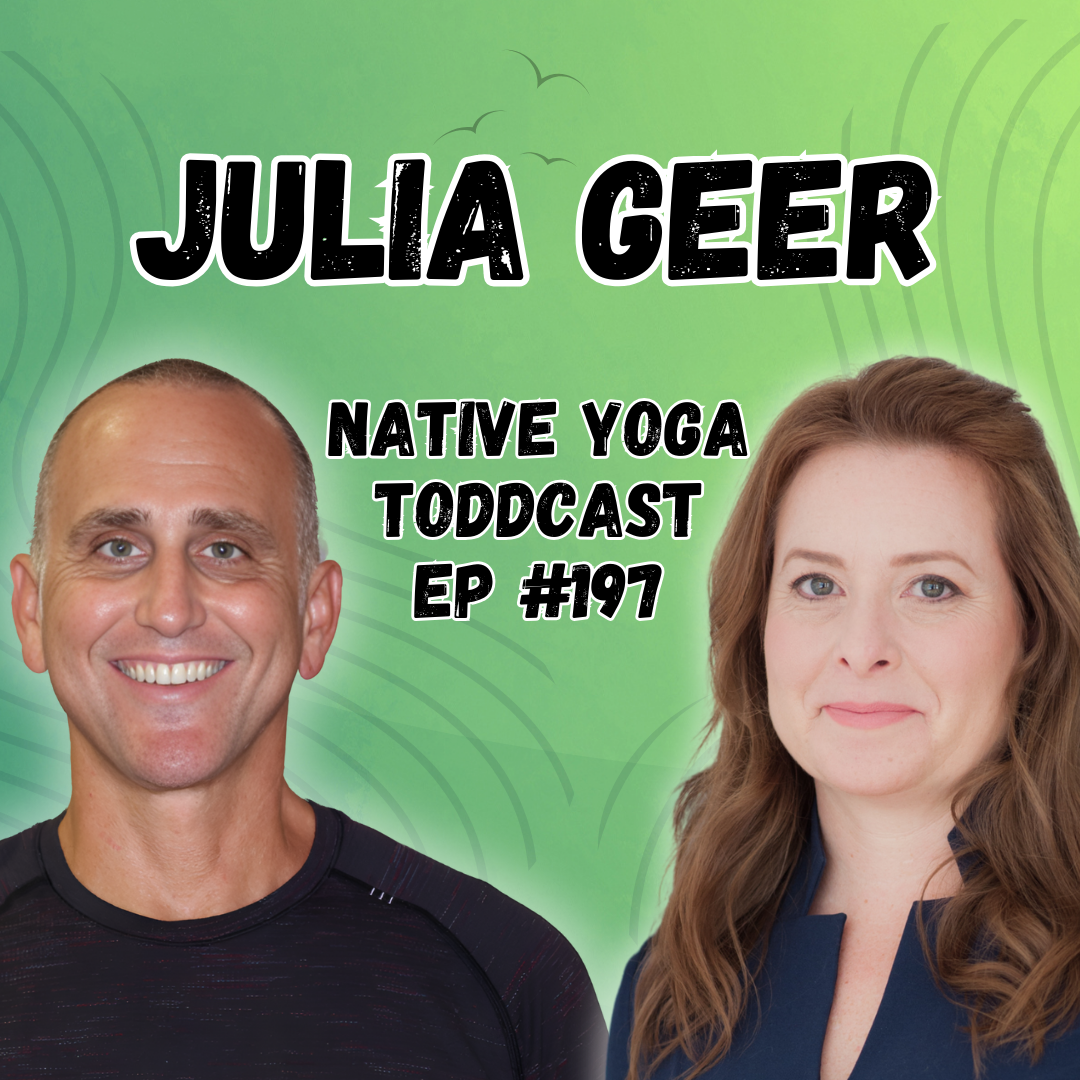
Listen to Toddcast with Julia for FREE here
Julia Geer is a seasoned yoga therapist and Ayurvedic health counselor with a strong background in holistic health practices. She began her yoga journey in 1997 and has since become a certified yoga therapist recognized by the International Association of Yoga Therapists (IAYT). Julia is also trained by renowned mindfulness teachers Jack Kornfield and Tara Brach. Beyond her expertise in yoga and Ayurveda, Julia has an undergrad degree in management and technology and brings unique insights to how artificial intelligence intersects with health and wellness. Her professional journey spans over 18 years in tech and healthcare, focusing on integrating AI technologies.
Visit her on her website: https://www.thegeershift.com/
Key Takeaways:
- Julia Geer’s transition from yoga enthusiast to a certified yoga therapist with a focus on holistic and integrative health.
- The distinctions between yoga, yoga therapeutics, and yoga therapy, and how these practices integrate into Western healthcare.
- The role of AI in healthcare and how yoga and Ayurveda can support practitioners in this transformative time.
- Practical applications of yoga therapy, such as aiding clients with chronic conditions like COPD.
Unlocking the Future Intersection of Yoga and Technology
- Understanding the nuances between yoga, yoga therapeutics, and yoga therapy is crucial to embracing holistic wellness.
- Artificial intelligence, when integrated thoughtfully, can significantly support the practice and teaching of yoga.
- Maintaining humanity and ethics in the technological age is essential for preserving the integrity of yoga practices.
Embarking on a dialogue that bridges the gap between the ancient wisdom of yoga and the burgeoning field of artificial intelligence (“AI”), this thought-provoking conversation between Todd and Julia Geer traverses the nuanced realm of therapeutic practices while casting light on the potential of AI as a supportive tool.
Exploring Yoga, Yoga Therapeutics, and Yoga Therapy
The tapestry of yoga is rich with tradition and complexity, and navigating its different branches requires a detailed compass. Within this discourse, the distinction between general yoga practice, yoga therapeutics, and the specialized field of yoga therapy emerges as a prominent theme. Julia Geer, an esteemed yoga therapist, unravels these intricacies: “Yoga as a tradition is anyone showing up on a path towards wellness…whereas yoga therapy is tailored to the individual for specific conditions that have specific wellness goals.”
Yoga therapy stretches beyond the basic framework of yoga, demanding between 800 to 1,000 hours of rigorous training, or even a two-year master’s degree, as Geer points out. It equips practitioners to integrate into multidisciplinary care teams, empowering them to precisely support clients with specific health conditions. Geer emphasizes this personalized nature:
“[Yoga therapy] is truly now part of many multidisciplinary care teams…as an equal and important part of that care team.”
Thus, the dynamic conversation delves into how yoga, in its therapeutic form, is gaining traction in the west, emphasizing the importance of education and understanding within both the yoga and broader healthcare community.
The Role of AI in Modernizing Yoga Practices
Artificial intelligence stands on the brink of revolutionizing various facets of life, including the domain of yoga. Geer’s unique position, with her background in technology intertwined with ancient holistic practices, provides valuable insights into leveraging AI to augment yoga instruction and practice.
This intersection offers the potential for AI to function as an enabler, increasing access to yoga therapy’s benefits. Geer suggests:
“What artificial intelligence can do is create space in my day so that I can sit and meditate…or go for a walk in nature.”
The discussion touches on AI as an assistant for repetitive tasks, creative brainstorming, and even generating insights for personalized wellness strategies. The breadth of this capability showcases AI’s ability to add efficiency and innovation to yoga practices without overshadowing the essence of human connectivity and intuition.
However, amid this technological infusion, maintaining discernment and ensuring critical thinking are vital. As Geer notes,
“Critical thinking, creativity, and discernment are going to continue to be very important skills…as we are interacting with all of these technologies.”
Presenting AI as both a challenge and a tool invites yoga practitioners and educators to harness its capabilities with deliberate mindfulness, ensuring technology serves as a bridge rather than a barrier to genuine human interaction.
The Ethical Compass in Enhancing Human Connectivity with AI
As AI pervades our daily lives, establishing a profound ethical compass is imperative, especially within the sacred spaces of yoga practice. Both Geer and Todd steer the conversation toward questions of humanity and ethics amid the rising tide of technology.
Geer articulates concerns regarding potential pitfalls, such as the emergence of virtual companions capable of substituting genuine human interaction. Yet, she envisions a balanced world:
“Learn to live in a world with AI and it is possible to keep your humanity in the process.”
This evocative statement underlines the importance of anchoring AI application in strong ethical values to navigate potential vulnerabilities and enhance rather than erode the profundity of human connection. The conversation poetically encapsulates how yoga’s timeless principles can be employed to critically assess and integrate AI’s role without compromising the rich legacy of yoga practices.
This dynamic dialogue offers an engaging exploration of crucial themes—transforming the way yoga therapy is perceived and practiced while thoughtfully implementing AI as an aid rather than an encroachment. By understanding and respecting the bridges between AI innovation and ancient yoga wisdom, we can craft a harmonious path forward, rich with possibilities for growth and well-being in a complex world.
Thanks for listening to this episode. Check out: 👇
8IN8 Ashtanga Yoga for Beginners Course Online– Learn 8 Limb Yoga in 8 Days – Get FREE coupon code for a limited time only (Regular price $88) https://info.nativeyogacenter.com/8in8-ashtanga-yoga-for-beginners-8-limbs-in-8-days/
New Student FREE Livestream Special ~ 2 Weeks of Free Unlimited Livestream Yoga Classes at Native Yoga Center https://info.nativeyogacenter.com/livestream/
Practice with Native Yoga Online – New classes EVERY day – Use Code FIRSTMONTHFREE https://nativeyogacenter.teachable.com/p/today-s-community-class
Subscribe to Native Yoga Center and view this podcast on Youtube.
Thank you Bryce Allyn for the show tunes. Check out Bryce’s website: bryceallynband.comand sign up on his newsletter to stay in touch. Listen here to his original music from his bands Boxelder, B-Liminal and Bryce Allyn Band on Spotify.
Please email special requests and feedback to info@nativeyogacenter.com
https://info.nativeyogacenter.com/8in8-ashtanga-yoga-for-beginners-8-limbs-in-8-days/
Enjoy new Native Yoga Center classes uploaded everyday on our online learning hub. Use code FIRSTMONTHFREE at checkout. https://nativeyogacenter.teachable.com/p/today-s-community-class
Native Yoga website: here
YouTube: here
Instagram: @nativeyoga
Twitter: @nativeyoga
Facebook: @nativeyogacenter
LinkedIn: Todd McLaughlin
 Native Yoga Blog