
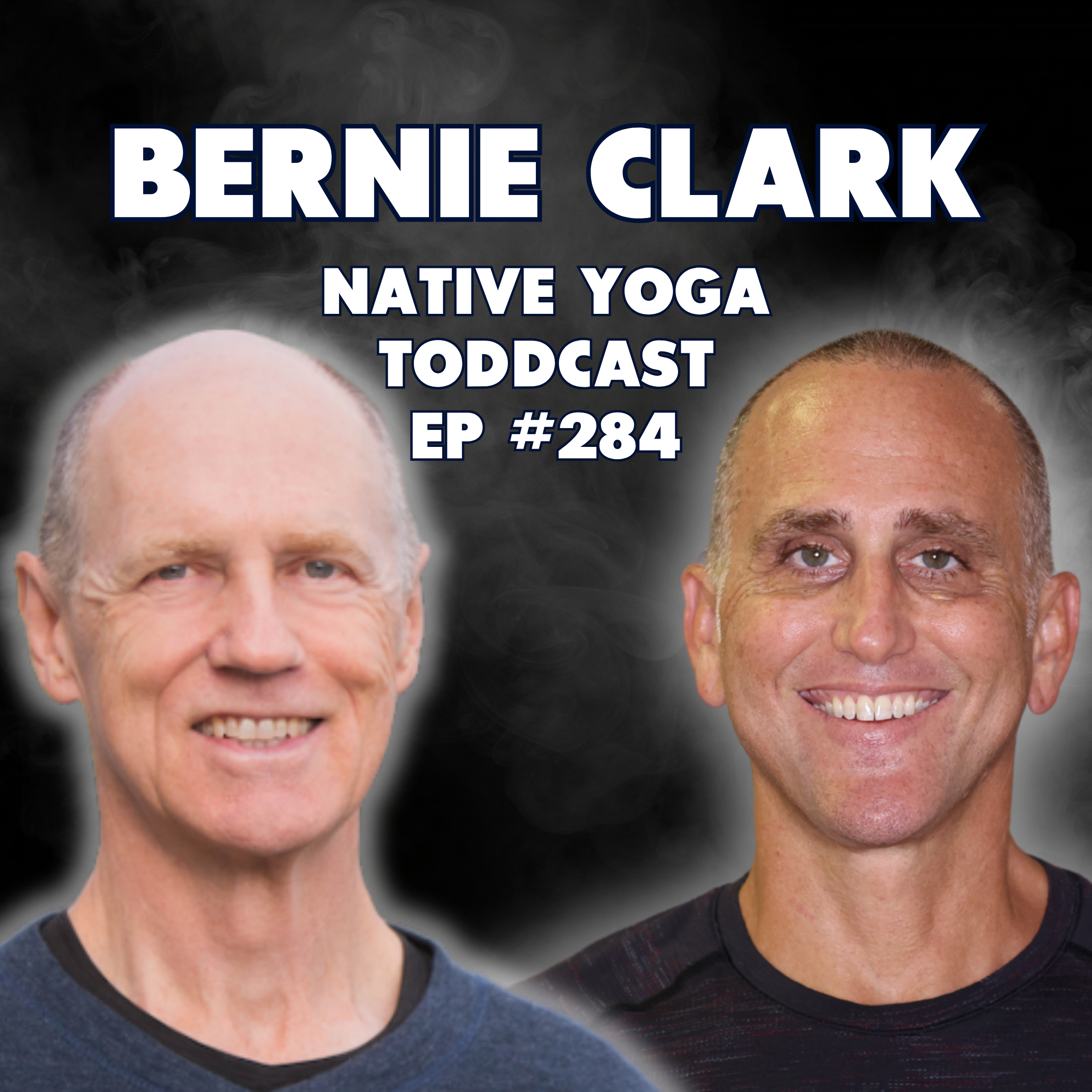
Listen to Toddcast with Bernie for FREE here
Bernie Clark is a renowned yoga teacher and author with a deep expertise in Yin Yoga. With several influential books, such as “Your Body, Your Yoga,” “Your Spine, Your Yoga,” and “Your Upper Body, Your Yoga,” Bernie has extensively researched the intersection of anatomy and yoga practice. A student of many disciplines, including the teachings of Paul Grilley and Stuart McGill, Bernie advocates for a functional approach to yoga that emphasizes the importance of understanding individual anatomical differences and the body’s unique needs. His insights have made significant contributions to the understanding of yoga as both a science and an art.
Visit Bernie: https://yinyoga.com/
Key Takeaways:
- Divergence in Yoga Practices: Bernie Clark discusses the importance of understanding individual anatomical differences, which suggests a shift from aesthetics towards a functional understanding of yoga.
- Stability Before Mobility: Emphasizing Stuart McGill’s teachings, the episode highlights the necessity to prioritize stability for safe movements before exploring mobility under load during yoga practice.
- Functional vs. Aesthetic Yoga: Bernie advocates for a functional approach to yoga that focuses on individual intention and sensation rather than uniformity in physical appearance.
- Pain Interpretation: Discussion on the complexities of pain, urging caution with definitive causes of pain in yoga practice, emphasizing inquiry and personal awareness over standard adjustments.
- Insightful Realizations: Bernie shares reflections on the overemphasis on extreme poses and the cultural fascination with flexibility, urging a more balanced, health-centric approach to yoga.
The Role of Individual Anatomy in Yoga Practice
In yoga, understanding individual anatomical differences can revolutionize how practitioners approach their practice. Bernie Clark, a renowned expert in the field of yoga anatomy, emphasizes the significance of recognizing human variation. As Clark notes, “We’re all different. Just because one person can put both feet behind their head doesn’t mean you will ever be able to do that because of the nature of the bones.” This recognition of individuality challenges the traditional, one-size-fits-all approach to yoga.
Clark shares his personal journey of evolving from a conventional Ashtanga style yogi who pushed himself hard, eventually leading to physical injury. He discusses how meeting Paul Grilley changed his perspective, especially regarding tension and compression in yoga poses. “If you’re not paying attention to what sensations you’re generating during your yoga practice, you may never know that you’ve actually reached the physiological limit,” Clark says.
By placing emphasis on anatomical differences, Clark suggests that the teaching of yoga can become more nuanced and tailored to individual needs, rather than imposing standardized postures or expectations. This approach not only promotes safer practices but also respects the unique physiological make-up of each practitioner.
Striking a Balance: Mobility vs. Stability
Bernie Clark delves deeply into the often overlooked concept of balancing mobility with stability in yoga practice. Referring to the teachings of Stuart McGill, he stresses the importance of prioritizing stability, especially when the spine is under load. Clark explains, “If you want to put a big load on your joint, you want to bring it to neutral and stiffen it.” This principle emphasizes that stability forms the foundation for safe mobility, especially in challenging yoga postures.
Clark warns against the cultural tendency to prioritize flexibility, citing, “In yoga, we get that completely backwards. We prize mobility over everything else.” However, real progress and safety come from establishing stability first. “You want to start with first, safety. Build the stability and then work for mobility,” Clark advises. This perspective encourages practitioners to develop a yoga routine that emphasizes foundational stability, ensuring longevity and reducing the risk of injury.
Understanding this balance allows practitioners to appreciate the craft of yoga beyond the attainment of seemingly advanced postures, leading to a healthier, well-rounded practice that supports lifelong engagement.
From Aesthetic to Functional: A New Approach to Yoga Practice
The yoga world often gets fixated on aesthetics—how a pose looks rather than the function it serves. Bernie Clark addresses this issue head-on, advocating a shift towards functional yoga practices. He challenges the traditional aesthetic-driven instruction methods, explaining, “An aesthetic approach says knee over the second toe back, foot turned in 45 degrees… but a functional approach is what’s the point of down dog? Why are you putting your students in down dog?”
Clark encourages yoga practitioners and teachers to look beyond the visual aspects of yoga poses. Instead, he promotes understanding the underlying intentions—whether it’s targeting specific muscle groups or improving range of motion—and assessing what each practitioner feels individually. “Let’s modify this pose. Maybe we’ll come into a square pose or a butterfly pose. Now see if you’re feeling it in the targeted area,” he recommends.
This approach reframes the narrative from achieving a fixed pose to exploring and responding to personal experience and body signals during practice. It leads to a more mindful practice that aligns with the true essence of yoga, which is personal growth and well-being rather than external achievements.
Reflecting on the depths of Bernie Clark’s teachings, it becomes evident that yoga is more than a series of physical postures. It’s a practice grounded in understanding anatomy, recognizing individual differences, and promoting a holistic approach to health and well-being. By adopting these principles, one can not only enhance their yoga practice but also align more closely with the core principles of yoga, fostering a practice that is as safe as it is transformative.
Check out: 👇
8IN8 Ashtanga Yoga for Beginners Course Online– Learn 8 Limb Yoga in 8 Days – Get FREE coupon code for a limited time only (Regular price $88) https://info.nativeyogacenter.com/8in8-ashtanga-yoga-for-beginners-8-limbs-in-8-days/
Practice with Native Yoga Online – New classes EVERY day – Use Code FIRSTMONTHFREE https://nativeyogacenter.teachable.com/p/today-s-community-class
Subscribe to Native Yoga Center and view this podcast on Youtube.
Thank you Bryce Allyn for the show tunes. Check out Bryce’s website: bryceallynband.comand sign up on his newsletter to stay in touch. Listen here to his original music from his bands Boxelder, B-Liminal and Bryce Allyn Band on Spotify.
Please email special requests and feedback to info@nativeyogacenter.com
https://info.nativeyogacenter.com/8in8-ashtanga-yoga-for-beginners-8-limbs-in-8-days
Enjoy new Native Yoga Center classes uploaded everyday on our online learning hub. Use code FIRSTMONTHFREE at checkout. https://nativeyogacenter.teachable.com/p/today-s-community-class
Native Yoga website: here
YouTube: here
Instagram: @nativeyoga
Twitter: @nativeyoga
Facebook: @nativeyogacenter
LinkedIn: Todd McLaughlin

