
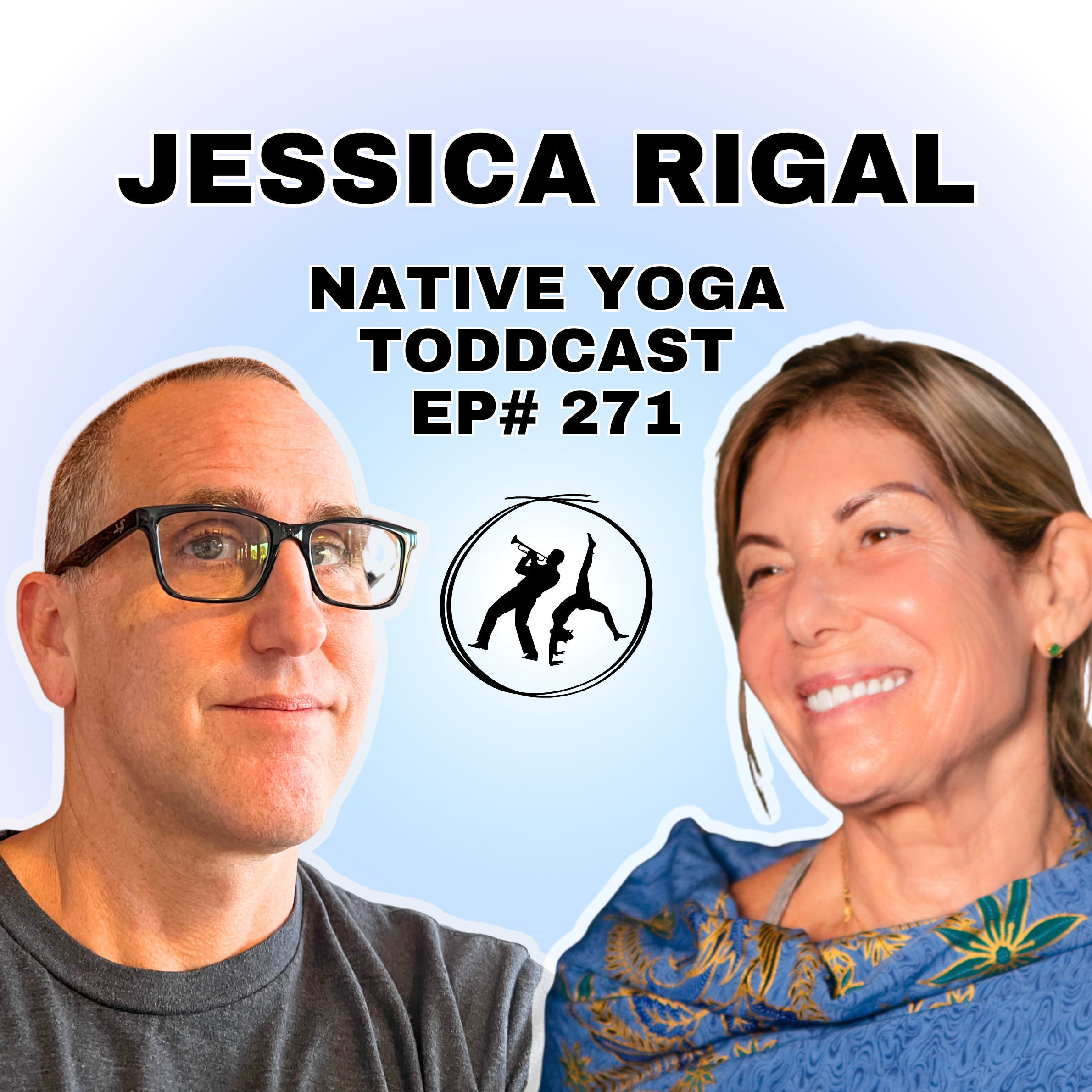
Listen to Toddcast with Jessica for FREE here
Jessica Rigal is a seasoned clinical social worker with over 20 years of experience specializing in trauma care, particularly in hospitals. Raised amidst a milieu of activism and scientific inquiry in New York City during the 60s and 70s, Jessica was introduced to meditation early on, a practice that has become central to her professional and personal life. She studied pre-med and journalism and holds an advanced degree from the New School of Social Research. Jessica is an advocate of blending meditation with Ashtanga yoga, and she actively practices and teaches these methods, emphasizing their therapeutic benefits.
Visit Jessica here: https://yogabyjessica.com/
Key Takeaways:
- Jessica Rigal’s life reflects a unique blend of activism, scientific curiosity, and holistic healing practices.
- Meditation and yoga are central to Jessica’s approach, offering profound tools for recovery and personal growth.
- Listening to the body and maintaining a mindfulness practice can be crucial in overcoming physical limitations and improving mental health.
- Jessica emphasizes a flexible approach to both yoga and life, focusing on finding joy in the present and accepting each moment as it comes.
- The idea of practice as a reflection of daily life, rather than a set series of poses, invites listeners to integrate mindfulness into every aspect of their being.
The Intersection of Ashtanga Yoga and Zen Meditation
In the dynamic landscape of mindfulness practices, the convergence of Ashtanga yoga and Zen meditation offers a powerful blend of physical and mental wellness. Jessica Rigal, a practitioner balancing both disciplines, emphasizes the seamless integration of these practices as a pathway to profound self-discovery and healing.
Rigal’s journey with Ashtanga yoga began unexpectedly at the age of 55, under the guidance of Manju Jois. The notion of dropping back into a challenging pose, despite her initial fears, unveiled a moment of transformation. “It just cracked me wide open,” she recalls, highlighting how the experience unlocked a reservoir of emotions stored in the body. This illustrates the potential of yoga as a tool not just for physical flexibility, but for emotional release and mental clarity.
The conversation also touched upon the complementary nature of Zen meditation, which Rigal has engaged with since childhood. This form of meditation, characterized by its non-goal-oriented approach, aligns harmoniously with the principles of yoga. Together, these practices foster a state of being where one can “live in the shunya, the emptiness,” as Rigal describes it, embracing the unpredictable nature of life much like jazz music—improvised and unscripted.
The broader implication of this integration challenges the conventional boundaries within mindfulness practices. It prompts an exploration of how these traditions, when combined, can offer a more holistic approach to understanding the self. The synthesis of the physical rigor of yoga and the contemplative depth of meditation encourages practitioners to look beyond mere physical accomplishments and delve deeper into the nuances of presence and awareness.
Enhancing Mindfulness Through Nature
Interacting with nature emerges as a recurring theme in enhancing mindfulness, a point eloquently illustrated by Rigal’s “manatee meditation.” Observing the gentle movements of a manatee, as she shares, is a reminder of the power of awe in anchoring oneself to the present moment. Modern neuroscience supports this notion, suggesting that awe-inspiring experiences can bring one back to the immediacy of the “now.”
“Go take a walk in nature,” Rigal recommends, especially when one struggles to quiet the mind. This practice not only grounds individuals but also facilitates a connection to the larger world, fostering a sense of belonging and peace. The Merlin app, as discussed in the transcript, is a perfect tool for such nature walks, offering an enhanced experience by identifying bird songs, allowing for a deeper engagement with one’s environment.
Within the context of a bustling life, especially one filled with the demands of a healthcare professional, this practice becomes indispensable. For Rigal, who navigates the complexities of working within hospital settings, these moments of connection to nature serve as vital touchpoints for balance and rejuvenation.
The impact of this practice extends beyond individual wellness, suggesting that through nature and presence, communities can foster environments that cultivate understanding and compassion. It embodies a mindful way of living that recognizes the importance of slowing down and appreciating the world around us—principles at the heart of both yoga and meditation.
Embracing Pain as a Pathway to Mindfulness
Pain, both physical and emotional, is an inevitable part of the human experience, as discussed in the transcript. Yet, it offers profound opportunities for practicing mindfulness and acceptance. Rigal shares candidly about her personal journey with pain, particularly the challenges of aging and physical limitations.
The discussion reveals a pivotal understanding: embracing pain does not equate to suffering. Instead, it becomes an avenue toward deeper awareness and self-reflection. “Don’t allow that to define you,” she urges, highlighting the importance of not being consumed by labels or societal definitions of pain and limitation.
Through her practice under Greg Tebb, Rigal learns to “clean out” pain without forcing the body, underlining a process of mindful engagement rather than aggressive pursuit of relief. This approach resonates with the broader theme of yoga and meditation as practices of living rather than doing.
The implications for practitioners and healthcare providers are significant. It suggests a shift from a purely outcome-based approach to one that recognizes the value of process and presence. It encourages viewing pain as a teacher rather than an adversary, opening pathways for healing that are both compassionate and sustainable.
In the conversation with Jessica Rigal, we discover an intricate tapestry of mindfulness practices that together offer a wholistic approach to wellness. Her experiences underscore the transformative power of yoga and meditation when practiced with intention and openness. The dialogue with nature, the acceptance of pain, and the embodiment of these practices in everyday life challenge us to reconsider our approach to mind-body spirituality. Herein lies the essence of Rigal’s message—a call for presence, a step into the unknown, much like jazz, and the serenity found in simply being.
Thanks for listening to this episode. Check out: 👇
8IN8 Ashtanga Yoga for Beginners Course Online– Learn 8 Limb Yoga in 8 Days – Get FREE coupon code for a limited time only (Regular price $88) https://info.nativeyogacenter.com/8in8-ashtanga-yoga-for-beginners-8-limbs-in-8-days/
Practice with Native Yoga Online – New classes EVERY day – Use Code FIRSTMONTHFREE https://nativeyogacenter.teachable.com/p/today-s-community-class
Subscribe to Native Yoga Center and view this podcast on Youtube.
Thank you Bryce Allyn for the show tunes. Check out Bryce’s website: bryceallynband.comand sign up on his newsletter to stay in touch. Listen here to his original music from his bands Boxelder, B-Liminal and Bryce Allyn Band on Spotify.
Please email special requests and feedback to info@nativeyogacenter.com
https://info.nativeyogacenter.com/8in8-ashtanga-yoga-for-beginners-8-limbs-in-8-days
Native Yoga website: here
YouTube: here
Instagram: @nativeyoga
Twitter: @nativeyoga
Facebook: @nativeyogacenter
LinkedIn: Todd McLaughlin

