
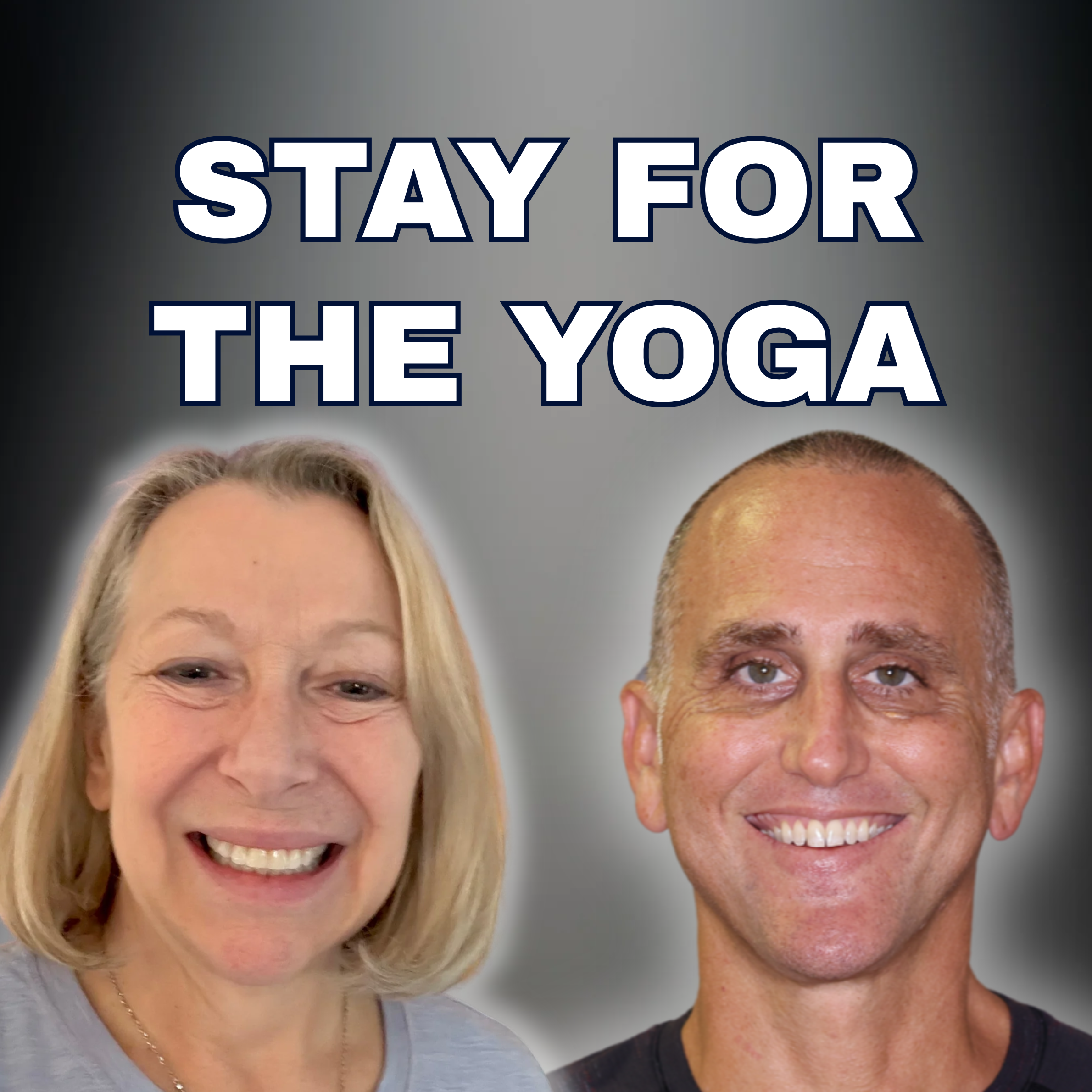
A 28-year yoga veteran on studio closures, Sanskrit, and why the real practice isn’t going anywhere.
Yoga studios are closing. The ones that stay open are adding Pilates reformers, barre, and anything else that pays the rent. If you’ve walked past an empty storefront that used to be your favorite studio, you’ve probably wondered: is yoga still popular?
I asked that exact question to open this week’s episode of Native Yoga Toddcast. My guest, Cheryl Oliver, has watched yoga rise and change since 1998. Her answer surprised me, and it gave me a lot to think about as a studio owner and teacher.
Who is Cheryl Oliver?
Cheryl teaches yoga, Sanskrit, and Vedic chanting at Authentic Yoga + Teacher Training in Scottsdale, Arizona. She ran a yoga studio for 15 years and has led 200- and 300-hour teacher trainings since 2009.
Like a lot of us, she came in through the physical door. In 1998 she was a gym group-fitness instructor. Her fitness director asked who wanted to learn to teach yoga, so she raised her hand. She took 18 hours of training over one weekend and taught her first class that Monday.
That class made her curious, and the curiosity kept leading her deeper:
- A Pilates studio outside Philadelphia that taught Ashtanga’s primary series
- Workshops with Richard Freeman, Tim Miller, and David Swenson
- Nearly 20 years of daily Mysore-style Ashtanga practice in Arizona
- Sanskrit, which opened up the Yoga Sutras and the wider world of yogic philosophy
- Vedic chanting with her teacher of 24 years, who studied directly with T.K.V. Desikachar for 40 years
She calls it “Come for the stretching, stay for the yoga.”
6 ideas from our conversation
1. Yoga and making money pull in opposite directions
Cheryl asked a question I keep coming back to: should yoga ever have become an industry at all? To keep the lights on, studios reached for goat yoga, beer yoga, and yoga-plus-anything. She doesn’t blame anyone for it. But in her words, “the more that you water down the product, the more that you’re going to get people who want a watered-down product.”
2. Teacher training became a career change, not a calling
In recent years, Cheryl has had applicants deciding between cosmetology school and yoga teacher training. Many had never practiced. I’ve had the same calls at Native Yoga. It’s like signing up for culinary school when all you’ve made is boxed mac and cheese. The yoga has to come first, and the teaching second.
3. Chanting Sanskrit is a yoga practice in itself
Sanskrit study trains dharana, or concentration: you focus on the syllable you’re chanting while staying ready for the next one. Chanting is also pranayama, because long and short lines need steady breath support. Cheryl explained that in Sanskrit, the sound of a word’s name is believed to carry the same vibration as the thing itself. Chanting about healing invites healing.
4. Revealed knowledge is closer than you think
Vedic philosophy has two levels of knowledge. Shruti means “that which is heard”: wisdom the rishis received in deep meditation, never credited to a human author. Smriti means “that which is remembered,” like Patanjali’s Yoga Sutras. Cheryl’s take is that every time we listen to our intuition, we have a small moment of shruti.
5. The drop and the ocean
This was one of the clearest explanations of Advaita Vedanta I’ve ever heard. Imagine that on the day you’re born, you’re given one drop of the ocean to carry in a vial your whole life. Is the drop the ocean? It’s smaller, but it’s exactly the same water. That drop is your atman, the ocean is Brahman, and at the end of your life, the drop returns to the ocean.
Cheryl calls herself a skeptic, and she says yoga never asks you to believe anything. It’s a science. You form a hypothesis, do the practice, notice the results, and decide for yourself.
6. A credential is not an education
Cheryl has been registered with Yoga Alliance for over 20 years, and her programs far exceed its standards. Students still ask for it, but she’s honest that it has mostly taken her money. Every studio owner knows the RYT 200 who auditions badly and the uncredentialed teacher who’s wonderful. As Jason Crandell put it, no one can take away your education.
What we’ve lost is the real teacher-student relationship, which has been traded for autopay and a favorite time slot. Cheryl acknowledges the power abuses in many lineages and urges care in choosing a teacher. Still, she says her relationship with her own teacher is one of the great gifts of her life.
So, is yoga still popular?
Yes, but it will be popular with the people who truly want to do yoga. Cheryl’s advice to studios is to use the workout to bring people in the door, then feed them. Find out what they need, offer the practices that help, and truly serve them. When students feel they’re learning something they can’t get anywhere else, they stay. They tell their friends, and that’s how a sangha grows.
That’s exactly why I’ve moved more of my teaching online. A drop-in class at a set time can’t give you a relationship with a teacher or a path you follow step by step. A course can.
My online courses at Native Yoga Online are built for people who came for the stretching and want to stay for the yoga. You can practice at your own pace, from anywhere, with a teacher who has been on this path since 2001. And you can come back to the material as many times as you need.
Explore the courses on Teachable →
Listen, watch, and connect
- Listen: Native Yoga Toddcast on Buzzsprout (Episode 298)
- Watch: Native Yoga Center on YouTube
- Cheryl Oliver: authenticyogascottsdale.com and Instagram @cheryl_aytt. She welcomes questions by phone, email, or DM.
- Practice with me online: nativeyogacenter.teachable.com
- Studio: nativeyogacenter.com and @NativeYoga
How did you come to yoga, and what made you stay? Tell me in the comments.

