Janne Kontala ~ Exploring Bhagavad Gita’s Impact on Modern Yoga Practices

Listen to podcast with Janne for FREE Here

In this enlightening episode, the Toddcast welcomes back Janne Kontala, an esteemed yoga scholar, to delve deeper into the profound teachings of the Bhagavad Gita. Building on their previous discussion on contemporary yoga, Janne and the host engage in a thought-provoking conversation that sheds light on the intricate layers of the Bhagavad Gita and its relevance to modern yoga practitioners.

Visit Janne on his website here: https://www.jayananda.info/23233

Key Takeaways:

  • Historical Context and Relevance of the Bhagavad Gita: The Bhagavad Gita remains a cornerstone of yoga philosophy, presenting practical wisdom applicable to both ancient and modern practitioners.
  • Jnana Yoga: Focuses on self-knowledge and intellectual inquiry, essential for those seeking deeper understanding through meditation and study of sacred texts.
  • Karma Yoga: Offers a path for active individuals by transforming daily actions into a spiritual practice through selflessness and duty.
  • Bhakti Yoga: Emphasizes devotion and personal connection to the divine, transcending mere intellectual understanding.
  • Integration of Yogic Paths: The Bhagavad Gita’s teachings harmonize Jnana, Karma, and Bhakti Yoga, allowing practitioners to adapt their spiritual practice to their individual nature and lifestyle.
Exploring the Depths of the Bhagavad Gita: A Journey of Yoga and Wisdom

Key Takeaways:

  1. The Bhagavad Gita provides a comprehensive understanding of yoga, seamlessly integrating Jnana Yoga, Karma Yoga, and Bhakti Yoga.
  2. Bhakti Yoga teaches the importance of focusing devotion on a higher power and reorienting oneself away from self-centeredness.
  3. The concept of personal and impersonal aspects of the divine as detailed in the Bhagavad Gita offers a nuanced perspective on spiritual practices.

The Bhagavad Gita, a timeless spiritual classic, offers profound insights into yoga and self-realization. In this enlightening conversation with Janne Kontala, we delve into three significant themes: the pragmatic synthesis of Jnana Yoga and Karma Yoga, the essence of Bhakti Yoga, and the integration of the personal and impersonal divine.

Synthesizing Jnana Yoga and Karma Yoga

Exploring the synthesis of Jnana Yoga and Karma Yoga, Janne Kontala sheds light on how these paths can intersect in meaningful ways. Jnana Yoga, often thought of as the path of wisdom or intellect, is traditionally about self-knowledge and understanding.

Kontala explains, “Jnana Yoga is about knowledge of self. Who am I? The answer to this question is relevant for everyone.” For many practitioners, this manifests through intensive study and meditation, aiming to achieve equanimity and uncover the true nature of the self, or Atman.

Conversely, Karma Yoga is the yoga of action. It’s about performing one’s duties and activities selflessly, without attachment to the results. The Bhagavad Gita’s approach to Karma Yoga is intrinsically practical. As Kontala notes, “Karma Yoga is action yoga. This is what you do if you have ambition and if you are active in the world.”

The interplay between these two forms of yoga is crucial. The Bhagavad Gita posits that Karma Yoga can serve as a preparatory stage for Jnana Yoga. By cultivating selflessness through action, practitioners gradually purify the mind, making it fit for the deeper, reflective practices of Jnana Yoga. This synthesis underscores the Gita’s pragmatic approach, where life’s daily activities themselves become a vehicle for spiritual growth.

The Profound Depth of Bhakti Yoga

Bhakti Yoga, often translated as the path of devotion, offers another layer of profound engagement with the divine. It highlights the emotional and relational aspects of spirituality, where devotion and love towards a higher power become central themes.

As Kontala elaborates, “Bhakti is about devotion to God, and deliberately cultivating favorable feelings towards the divine.” This devotion is not about mere sentimentality but involves a profound reorientation of oneself, replacing self-centeredness with God-centeredness.

The anecdote from the conversation reveals the practical side of Bhakti Yoga: individuals devoted to their daily tasks, such as cooking, do so as acts of service to the divine. The practice of offering food to Krishna before consumption exemplifies this. It’s a powerful reminder that spirituality need not be secluded to meditation or study but can be a part of everyday actions.

This approach has a transformative effect. Bhakti Yoga’s emphasis on devotion and surrender to a higher power can provide a sense of purpose and connection, often described as bringing about a magnetic pull towards spiritual reality. Kontala puts it succinctly, “Replacing yourself as the center and putting God instead is the challenge, but also the powerful key of Bhakti Yoga.”

Navigating the Personal and Impersonal Divine

A particularly captivating aspect of the Bhagavad Gita is its seamless integration of the personal and impersonal aspects of the divine. This thematic element offers a nuanced perspective that enriches our understanding of spirituality.

In the transcript, Kontala highlights a formative moment where the Bhagavad Gita’s teachings resolved a personal intellectual conflict: “The Bhagavad Gita’s 12th chapter explains that the personal and impersonal conceptions of God do not exclude one another. This was revelatory for me.”

This apparent duality—seeing God as both a personal being (Bhagavan) and an impersonal force (Brahman)—offers a reconciliatory vision for spiritual seekers. The one undivided Absolute encompasses a relational aspect, where one can have an intimate connection with God, as illustrated in Arjuna’s relationship with Krishna. Meanwhile, the impersonal divine reflects the infinite, formless essence that pervades all existence. These features do not compromise the unitary nature of the Absolute, but offer different ways of approaching the divine, based on the inclinations of the seekers.

The Gita elegantly harmonizes these views, suggesting that both perspectives are valid and can coexist. For practitioners, this means that the divine can be experienced in multiple dimensions, enhancing the depth and richness of their spiritual journey.

The Bhagavad Gita, with its extensive commentaries and scholarly interpretations, remains a living text that continues to inspire and guide. Its layered teachings on Jnana Yoga, Karma Yoga, and Bhakti Yoga provide a holistic view of spiritual practice. By advocating for a balanced approach that integrates action, knowledge, and devotion, the Gita makes profound wisdom accessible to practitioners in all walks of life. This interplay between personal effort and divine grace resonates deeply, showing that the path to enlightenment is both intimate and infinite.

Thanks for listening to this episode. Check out: 👇
Free Grow Your Yoga Live Webinar – Every Thursday at 12pm EST
➡️ Click here to receive link

New Student FREE Livestream Yoga Special ~ Try 2 Weeks of Free Unlimited Livestream Yoga Classes  at Native Yoga Center. info.nativeyogacenter.com/livestream Sign into the classes you would like to take and you will receive an email 30 minutes prior to join on Zoom. The class is recorded and uploaded to nativeyogaonline.com  ➡️  Click Here to Join. 

Subscribe to Native Yoga Center and view this podcast on Youtube.

Thank you Bryce Allyn for the show tunes. Check out Bryce’s website: bryceallynband.comand sign up on his newsletter to stay in touch. Listen here to his original music from his bands Boxelder, B-Liminal and Bryce Allyn Band on Spotify.

Please email special requests and feedback to info@nativeyogacenter.com

Enjoy new Native Yoga Center classes uploaded everyday on our online learning hub. Use code FIRSTMONTHFREE at checkout. https://nativeyogacenter.teachable.com/p/today-s-community-class

Support the Show.

Native Yoga website: here
YouTube: here
Instagram: @nativeyoga 
Twitter: @nativeyoga 
Facebook: @nativeyogacenter 
LinkedIn: Todd McLaughlin 
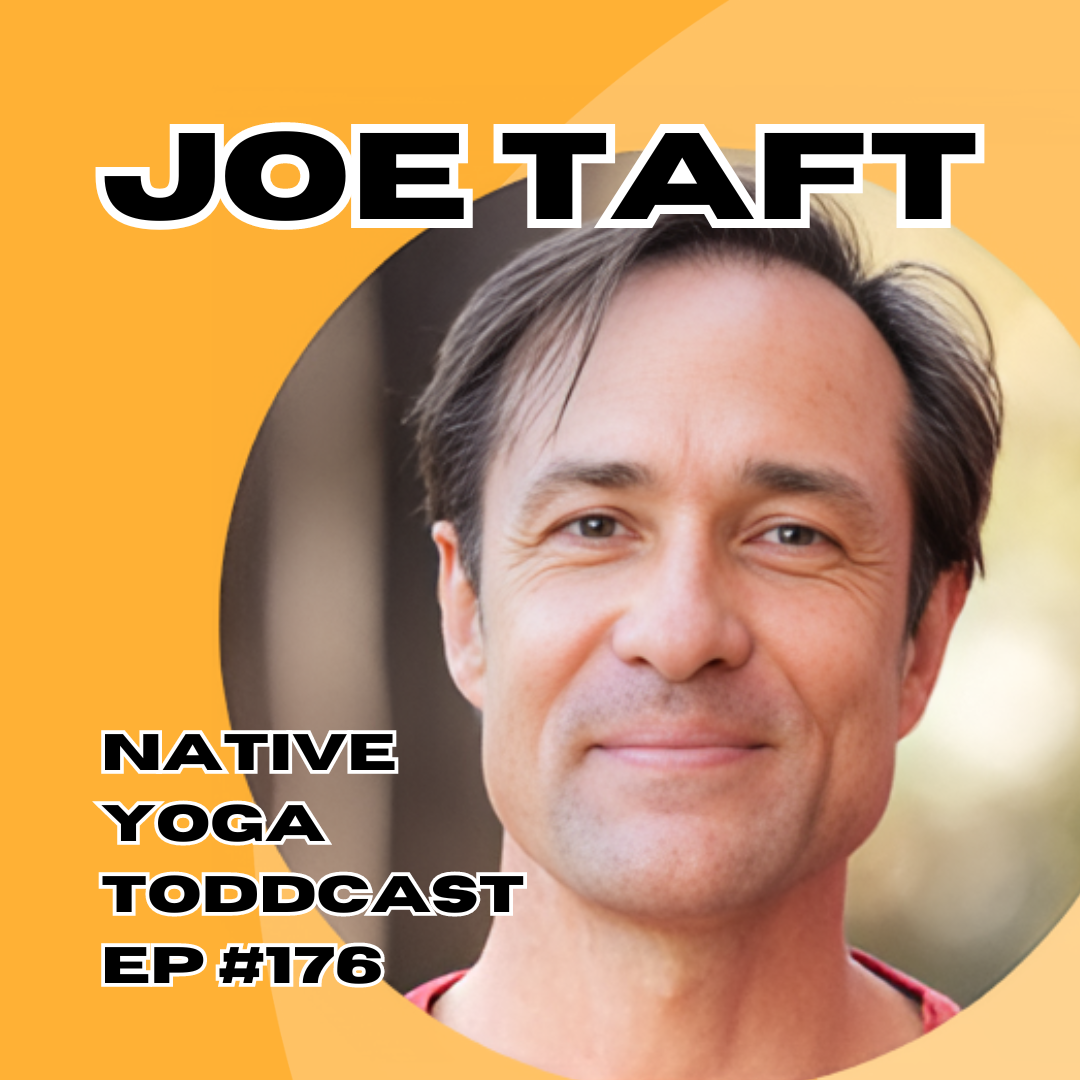
Joe Taft ~ Unpacking Mythology: The Hidden Layers of Yoga Stories

Listen to podcast with Joe for FREE Here

Joe Taft is a seasoned yoga instructor based in Asheville, North Carolina. With a professional background in kayaking, Joe transitioned into yoga to manage his back pain from the sport’s physical strain. He initially trained under Mary Kay West and was deeply involved in Anusara Yoga, where he achieved full certification. Joe’s practice combines various yoga philosophies and physical movements to create a balanced and harmonious practice for his students.

Visit Joe on his website: https://joetaftyoga.com/
Follow him on IG: https://www.instagram.com/joe_taft_yoga/

Key Takeaways:

  • Transition from Kayaking to Yoga: Joe Taft discusses how the physical strain from professional kayaking led him to yoga for pain relief and holistic healing.
  • Influences and Training: Joe’s initial training with Mary Kay West and his involvement with Anusara Yoga helped shape his teaching philosophy.
  • Philosophy and Spirituality: The conversation touches on Joe’s balancing of his Christian upbringing with non-dual Tantra philosophies, offering a unique perspective on spiritual practices.
  • The Role of Mythology: Joe emphasizes the importance of mythology in understanding consciousness and self-awareness through stories and practices.

The Power of Embracing Dual Philosophies in Yoga

One of the standout themes from the insightful conversation between Todd McLaughlin and Joe Taft is the robust embrace of dual philosophies. This duality is beautifully reflected in the profound simplicity with which Joe embodies both his Christian upbringing and his deep dive into the non-dualist Tantra philosophy. Joe explains, “Although I had a lot of things I had to work through…I feel really fortunate about that.” This shows a significant personal transformation, suggesting an intrinsic value in understanding and integrating conflicting belief systems.

These integrative philosophies enhance a yoga practitioner’s depth of understanding and expose them to a variety of spiritual practices and ethical considerations. Joe mentions, “We don’t really believe that things are good or bad. Because, I mean, how many times has something happened to you? And you’re like, oh, my gosh, that was the worst thing that ever happened to me. And then like, two months later, you’re like, oh, my gosh, that was the best thing that ever happened to me.” This viewpoint emphasizes the importance of recognizing the fluidity and connectivity of diverse experiences, both positive and negative.

The personal journey Joe has been through, alongside cultural and religious influences, shows that dual philosophies offer a comprehensive understanding of life’s complexities. Here lies the essence of practicing spiritually grounded yoga – acknowledging the stillness of Shiva while dancing with the ever-changing Shakti.

The Intersection of Physical Practice and Philosophical Beliefs

A significant part of this transformative conversation is the deep intersection between the physical practices of yoga and the underpinning philosophical beliefs. This connection manifests in Joe’s journey from suffering debilitating back pain due to his kayaking career to finding relief and purpose in yoga. His story “…my back was excruciating. Like there were mornings when I couldn’t get out of bed or I had to get out really slowly. And that process kind of got me into yoga,” vividly shows the physical struggles leading to spiritual awakenings.

Joe’s foray into yoga started intuitively, aligned with self-discovery and experimentation, which later formalized under the mentorship of teachers like Mary Kay West. His transition demonstrates how physical ailments can pave the way for deeper philosophical engagements and teachings.

On the other hand, Todd’s narrative of discovering yoga through the physicality of Bikram Yoga parallels Joe’s journey. Both highlight the transformative power yoga has in aligning the mind, body, and spirit. Todd states, “I can feel surfing in my body anywhere anytime,” showcasing how physical activity, like surfing, can be mirrored in yoga practices, providing a continuous link to physical and spiritual wellness.

These narratives illustrate that the physical practice of yoga is not just about physical health but equally about spiritual and philosophical growth. Practitioners like Joe and Todd find a harmonious balance between physical exertion and spiritual understanding, thus embodying the true essence of yoga.

Personal and Historical Contexts Shaping Spiritual Journeys

Exploring personal and historical contexts opens another layer of insight into one’s spiritual journey, as seen in Joe’s and Todd’s experiences. Joe’s journey from eastern North Carolina to becoming fully immersed in the practice and teaching of yoga is laden with personal anecdotes and experiences. He reflects, “I had this opportunity to experience fundamentalist Christianity…shaped my way to become a yoga teacher.” This reveals how historical and geographical influences are pivotal in shaping our spiritual outlooks and practices.

Similarly, Todd’s background in Catholicism, subsequent engagement with Krishna consciousness, and finally establishing a life around yoga practice encapsulates the impact of historical and personal contexts. He mentions, “…when I started going toward the east, say, and I’m interesting, I’m just starting to have this reconnection again where I’m like, I want to, I want to know about all of it.” This is a striking example of how historical religious contexts intertwined with personal experiences lead to evolving spiritual pursuits.

Joe also emphasizes the value of stories and mythology in understanding deeper life themes. Emphasizing the mythological elements in yoga, he states, “I believe in mythology…as a zip file.” This analogy illustrates that personal history and mythology contribute significantly to spiritual growth and understanding, driving home that background and stories deeply influence our personal philosophies and practices.

Recapping the key points, this conversation authentically captures the essence of spiritual growth through a dual approach, the intersection of physical practice and philosophy, and the profound influence of personal and historical contexts. Through these lenses, we can appreciate that life’s complexities and spiritual understandings are interwoven with our experiences and that embracing this can lead to a richer, more fulfilling practice of yoga and life.

For those inclined to delve deeper into these themes and explore yoga from both a holistic and academic perspective, seeking guidance from experienced teachers like Joe Taft, engaging in mythology, and integrating physical practices with philosophical reflections create a well-rounded, spiritually enriching journey.

Thanks for listening to this episode. Check out: 👇
Free Grow Your Yoga Live Webinar – Every Thursday at 12pm EST
➡️ Click here to receive link

New Student FREE Livestream Yoga Special ~ Try 2 Weeks of Free Unlimited Livestream Yoga Classes  at Native Yoga Center. info.nativeyogacenter.com/livestream Sign into the classes you would like to take and you will receive an email 30 minutes prior to join on Zoom. The class is recorded and uploaded to nativeyogaonline.com  ➡️  Click Here to Join. 

Subscribe to Native Yoga Center and view this podcast on Youtube.

Thank you Bryce Allyn for the show tunes. Check out Bryce’s website: bryceallynband.comand sign up on his newsletter to stay in touch. Listen here to his original music from his bands Boxelder, B-Liminal and Bryce Allyn Band on Spotify.

Please email special requests and feedback to info@nativeyogacenter.com

Enjoy new Native Yoga Center classes uploaded everyday on our online learning hub. Use code FIRSTMONTHFREE at checkout. https://nativeyogacenter.teachable.com/p/today-s-community-class

Support the Show.

Native Yoga website: here
YouTube: here
Instagram: @nativeyoga 
Twitter: @nativeyoga 
Facebook: @nativeyogacenter 
LinkedIn: Todd McLaughlin

Josh Biro ~ Secrets of Success: Balancing Yoga Practice and Business Mastery

Click here to listen to Toddcast with Josh for FREE here

In this enlightening episode of the Native Yoga Toddcast, host Todd McLaughlin is joined by Josh Biro, the dynamic founder of Yogapreneur Collective. Josh dives deep into the integration of yoga practices with entrepreneurial ventures, providing invaluable insights for yoga studio owners and business enthusiasts. With a background embedded in both yoga and business from an early age, Josh shares his transformative journey from a reluctant yogi to a thriving entrepreneur. The conversation is rich with practical advice on reconciling the seemingly contrasting worlds of yoga and business, and offers a fresh perspective on adapting to the ever-evolving landscape of yoga entrepreneurship.

Visit Josh on his website: https://yogapreneurcollective.com/
Subscribe to his YouTube channel: https://www.youtube.com/@yogapreneurcollective

Key Takeaways:

  • Integration of Yoga and Business: Josh highlights the importance of reconciling yoga practices with business operations to create a sustainable and impactful yoga studio.
  • Cashflow Management: The necessity of managing cashflow effectively to maintain and grow a yoga business is stressed as the foundation of operational success.
  • Technology and AI in Yoga Businesses: Insights on leveraging AI and automation to enhance efficiency, customer service, and market adaptability, without losing the human touch.

Unlocking the Secrets to Yoga Business Success: Insights from Josh Biro

The world of yoga and business might seem at odds with each other at a glance. Yet, there is a growing synergy between the two, especially when it comes to operating a successful yoga studio. Todd McLaughlin recently hosted Josh Biro on the Native Yoga Toddcast, delving into the intersection of yoga philosophy and business acumen. Here, we unearth the rich insights Josh shared, highlighting the importance of mindset, technology, and sustainable growth in achieving success in the yoga business.

Integrating Yogic Philosophy with Business Mindset

One of the most compelling discussions revolved around the reconciliation between yoga and business. Josh, the founder of Yogapreneur Collective, emphasized the need to balance passion for yoga with solid business practices. He noted, “Yoga plus business people would even say like, well, those go together…Yogi’s tend to be excellent business people once they personally reconcile the fact that the business is not at odds with their yoga practice.”

Josh relayed his personal story of transitioning from a yoga practitioner to a successful studio owner. His journey highlighted the necessity of loving not just yoga, but the business elements that sustain it. This requires shifting from a mindset of being a “small business owner” to becoming a “yoga entrepreneur.”

Key Insight: Success hinges on shifting from mere practice to fully embracing business strategies. A yoga studio is more than a space for practice—it’s a community hub that requires strategic planning and robust management.

Leveraging Artificial Intelligence for Operational Excellence

AI is revolutionizing how yoga studios operate, making it a hot topic among yoga entrepreneurs. Josh elaborated on the transformative potential of AI, illustrating that the technology’s ability to automate and streamline operations affords studio owners more time to focus on the human aspects of their business.

For example, Josh mentioned, “You can now upload that into AI…what would have taken a data analysts like two days of moving things around…to cross reference through everything you can do in five minutes?” This remarkable efficiency increase enables studios to better serve their clients while focusing on growth.

Tools like chatbots, automated follow-ups, and highly tailored marketing emails can significantly enhance customer interaction without burdening the staff. This is echoed in Josh’s assertion: “Imagine I can go into your website and I can just like have a conversation with your website to get the information I need.”

Broader Implications: AI can help balance efficiency and personal touch, critical for nurturing the customer relationship in a yoga community. Embracing these tools enables yoga businesses to scale without compromising service quality.

Sustainable Growth and Community Building

Surviving and thriving in the yoga business involves sustainable growth and a strong sense of community. Josh stressed the importance of focusing on cash flow, equating it to the “breath” in business. He illuminated that many studios falter not from a lack of interest but due to poor financial planning.

“Cash flow, strictly speaking, it’s trying to make a sale or trying to get more dollars per person or trying to make it more accessible in pricing or whatever,” he detailed. Continuous growth requires understanding local market demands and pricing accordingly. This ensures studios can offer competitive salaries to attract and retain top-tier teachers, echoing Josh’s point, “If you want the best teachers, the A players, you’re going to have to pay them.”

The interview further discussed community-centric approaches as vital for resilience, especially post-COVID. Josh observed, “In the yoga world, we’ve kind of accidentally devalued what we were doing in our attempt to make things accessible and inclusive.” To counter this, studios need to convey the true value of in-person experiences, reinforcing the importance of community and practice space.

Strategic Advice: Creating a sustainable yoga business involves meticulous financial management and community building. Recognizing the intrinsic value of yoga and pricing services to reflect this can create lasting success.

As we integrate yoga philosophy with entrepreneurial efficiency, the future of yoga businesses looks exceedingly promising. Entrepreneurs like Josh Biro encapsulate the path forward: merging a deep love for yoga with a savvy business approach. By harnessing the power of AI and focusing on sustainable growth, yoga studios can thrive amid ever-evolving challenges.

Josh imparted inspiring wisdom, underscoring the fact that whether you’re a studio owner or an aspiring yogapreneur, embracing both change and tradition creates a balanced, flourishing practice and business. The real essence lies in love for the journey—yoga practitioners nurturing a business and entrepreneurs finding profundity in yoga.

This convergence promises a dynamic future, one where studios not only become places of physical practice but epicenters of communal progress and well-being.

Thanks for listening to this episode. Check out: 👇
Free Grow Your Yoga Live Webinar – Every Thursday at 12pm EST
➡️ Click here to receive link

New Student FREE Livestream Yoga Special ~ Try 2 Weeks of Free Unlimited Livestream Yoga Classes  at Native Yoga Center. info.nativeyogacenter.com/livestream Sign into the classes you would like to take and you will receive an email 30 minutes prior to join on Zoom. The class is recorded and uploaded to nativeyogaonline.com  ➡️  Click Here to Join. 

Subscribe to Native Yoga Center and view this podcast on Youtube.

Thank you Bryce Allyn for the show tunes. Check out Bryce’s website: bryceallynband.comand sign up on his newsletter to stay in touch. Listen here to his original music from his bands Boxelder, B-Liminal and Bryce Allyn Band on Spotify.

Please email special requests and feedback to info@nativeyogacenter.com

Enjoy new Native Yoga Center classes uploaded everyday on our online learning hub. Use code FIRSTMONTHFREE at checkout. https://nativeyogacenter.teachable.com/p/today-s-community-class

Support the Show.

Native Yoga website: here
YouTube: here
Instagram: @nativeyoga 
Twitter: @nativeyoga 
Facebook: @nativeyogacenter 
LinkedIn: Todd McLaughlin

Michael Johnson ~ Discovering the Timeless “Now” in Yoga Practice

Listen to podcast with Michael Johnson for FREE here

Michael Johnson is a prominent yoga and philosophy instructor based in Asheville, North Carolina. He is the founder of Clear Light Yoga and a respected teacher at both the Asheville Yoga Center and the Ayurvedic Institute. With over 20 years of experience, Michael specializes in yoga philosophy, Sanskrit, and meditation. Through his 200-hour yoga philosophy teacher training program, Michael inspires students to delve deep into the ancient texts and principles of yoga, making these complex ideas accessible and applicable to modern life.

Visit Michael on his website: https://www.clearlightyoga.com/

Key Takeaways:

  • The Essence of Yoga: Yoga is about controlling the mental activities to avoid being controlled by them. This is a path to self-control and understanding one’s true nature.
  • Philosophical Integration: Understanding Sanskrit and the Yoga Sutras is crucial to grasping yoga philosophy. Different translations can lead to varied interpretations and levels of understanding.
  • Non-Theistic Bhakti: Bhakti Yoga, traditionally theistic, can also be practiced in a non-theistic manner, focusing on devotion to ideals rather than deities.
  • Practical Application: Michael shares real-life applications of yoga philosophy, from daily interpersonal interactions to handling extreme situations like cyber threats.

Expanding Your Yoga Journey: A Comprehensive Insight into Yoga Philosophy with Michael Johnson

The world of yoga extends far beyond physical postures and breath control. In this insightful dialog from the Native Yoga Toddcast, seasoned yoga philosopher Michael Johnson delves into the depths of yoga philosophy, painting a vivid picture of its profound impact on personal growth and self-awareness. Through exploring the Yoga Sutras of Patanjali, the nuances of Sanskrit, and the integration of Ayurveda, Johnson provides a masterclass in the foundational principles that underpin yoga’s philosophical teachings.

Key Takeaways:

  • Understanding Yoga Sutras: Delving into Yoga Sutra 1.2, “Yoga Chitta Vritti Nirodha,” offers varied interpretations—both as the cessation and control of mental fluctuations.
  • Real-world Application: Johnson shares personal anecdotes demonstrating the practical application of bhakti yoga and maintaining integrity in challenging times.
  • Non-theistic Bhakti Yoga: Johnson presents a unique perspective on practicing non-theistic bhakti yoga, encouraging humility and ongoing learning.

Yoga Philosophy Unveiled: Insights from Michael Johnson

Mastering the Yoga Sutras: Unpacking “Yoga Chitta Vritti Nirodha”

Understanding the Yoga Sutras of Patanjali requires delving deeply into its Sanskrit roots. In the conversation, Michael Johnson describes how he first encountered Yoga Sutra 1.2: “Yoga Chitta Vritti Nirodha”. This critical sutra, often translated in myriad ways, reveals that yoga is about either the cessation or the control of the fluctuations of the mind. Johnson explains:

“Many people will translate ‘Yoga Chitta Vritti Nirodha’ as ‘yoga is the cessation of mental activities,’ leading to the assumption that the mind’s fluctuations must stop for yoga to be practiced.”

Johnson, however, brings attention to an alternative interpretation:

“Another way to translate that would be ‘yoga is controlling the mental activities,’ suggesting that Purusha (pure consciousness) isn’t independently available to perceive but actually requires mental activities to experience knowing and being.”

The distinction, though seemingly subtle, drastically changes one’s approach to yoga. Instead of striving for a seemingly impossible cessation of thoughts, practitioners can focus on learning to harness and control these thoughts, thus optimizing their practice and making yoga more accessible.

Integrating Philosophy into Practice: Real-life Application

Johnson’s discussion goes beyond theory, illustrating how these ancient teachings can be applied in contemporary settings. He underscores the importance of staying authentic and true to one’s values, even amidst threats and challenges. He shares a personal incident where someone threatened him and how he coped:

“Someone using cyberthreats threatened to hunt me down and kill me. Though going through legal routes felt unsatisfying, I had to detach from the outcome and focus on my integrity and actions. By abiding in my true form, I could navigate this threat without being overcome by fear or anger.”

This anecdote exemplifies the practical application of bhakti yoga in sustaining personal integrity and emotional health. It underscores yoga philosophy’s potential to provide not just a spiritual but a practical framework for dealing with life’s trials.

Embracing Non-Theistic Bhakti Yoga

Johnson’s fresh perspective on bhakti yoga deviates from traditional theistic approaches, presenting a non-theistic pathway that aligns with scientific reasoning and inclusivity. He elaborates:

“Ishwara is described in the Yoga Sutra as an absence of mental afflictions, not as a deity you surrender to but as an ideal you can approximate in your life.”

By focusing on bhakti as devotion to higher ideals rather than deities, Johnson makes yoga philosophy more approachable for a diverse audience. In his teachings, he emphasizes principles like humility, continuous learning, and authentic practice, liberating yoga from rigid doctrinal confines.

“I might be a rare example of bhakti yoga in the world, a non-theistic approach to bhakti that inspires me. It allows me to be transparent and scientific in my approach, while not being hostile to theistic practitioners.”

This perspective not only diversifies yoga’s appeal but also fosters a more inclusive environment where individuals from various backgrounds can find meaning and solace.

Expanding Horizons: Enriching Your Yoga Practice with Philosophy

Michael Johnson’s approach to yoga philosophy is a testament to the depth and versatility of yoga itself. His insights emphasize that yoga is not just a set of physical exercises but a holistic practice encompassing mental discipline, ethical living, and personal growth. By understanding key sutras, applying philosophical principles to real-life situations, and embracing non-theistic approaches to bhakti, practitioners can profoundly enrich their yoga journey.

In teaching philosophy-focused trainings, Johnson aims to bridge the gap between traditional teachings and modern-day relevance. His teachings highlight the importance of continuous learning, humility, and inclusivity in the quest for self-control and personal integrity.

By integrating these profound narratives and philosophical insights, yoga practitioners can deepen their understanding and appreciation of yoga, making it a powerful tool not just for personal transformation but also for navigating life’s inevitable challenges.

In bringing these themes together, Johnson not only honors the rich, historical context of yoga philosophy but also paves the way for its practical and inclusive modern application. His teachings inspire and challenge us to look beyond the surface, urging a deep-seated, authentic exploration of what it truly means to practice and live yoga.

Thanks for listening to this episode. Check out: 👇
Free Grow Your Yoga Live Webinar – Every Thursday at 12pm EST
➡️ Click here to receive link

New Student FREE Livestream Yoga Special ~ Try 2 Weeks of Free Unlimited Livestream Yoga Classes  at Native Yoga Center. info.nativeyogacenter.com/livestream Sign into the classes you would like to take and you will receive an email 30 minutes prior to join on Zoom. The class is recorded and uploaded to nativeyogaonline.com  ➡️  Click Here to Join. 

Subscribe to Native Yoga Center and view this podcast on Youtube.

Thank you Bryce Allyn for the show tunes. Check out Bryce’s website: bryceallynband.comand sign up on his newsletter to stay in touch. Listen here to his original music from his bands Boxelder, B-Liminal and Bryce Allyn Band on Spotify.

Please email special requests and feedback to info@nativeyogacenter.com

Enjoy new Native Yoga Center classes uploaded everyday on our online learning hub. Use code FIRSTMONTHFREE at checkout. https://nativeyogacenter.teachable.com/p/today-s-community-class

Support the Show.

Native Yoga website: here
YouTube: here
Instagram: @nativeyoga 
Twitter: @nativeyoga 
Facebook: @nativeyogacenter 
LinkedIn: Todd McLaughlin