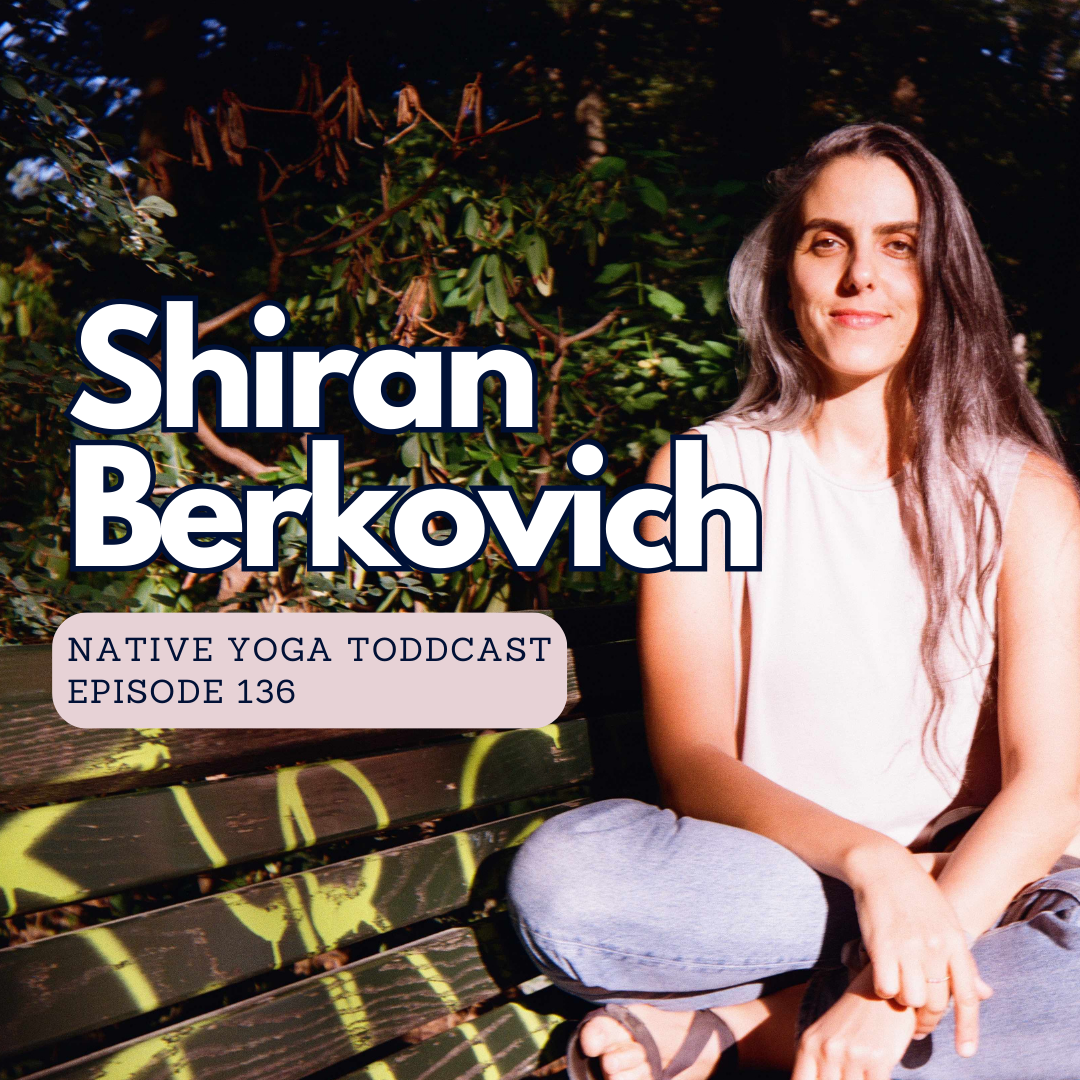
Shiran Berkovich – Exploring the Intersection of Art and Yoga

Shiran Berkovich is an art instructor, professional artist, and Ashtanga yoga teacher based in Berlin, Germany. She views the world through the lens of an artist and a yogini, and her work explores the connection between art and yoga. You can find her on her website, https://www.choreographyonpaper.com/, and on Instagram @shiranhb https://www.instagram.com/shiranhb/.
Photo credit 📷 Tom Borchwardt @desfux https://www.instagram.com/desfux/?hl=en

During this conversation Shiran speaks about:

  • Shiran views the world through the lens of an artist and a yogini, finding inspiration in people’s emotions and physical expressions.
  • Berlin offers a sense of space, affordability, and a vibrant art scene, making it an attractive place for artists and yogis.
  • Drawing allows for a deeper observation of the world and helps to cultivate a sense of interconnectedness and acceptance.
  • Shiran’s journey as an artist and yogini has led her to a place of openness and acceptance, allowing her to recover from eating disorders and deepen her connection with others.

Exploring the Intersection of Art and Yoga: A Journey of Self-Discovery

Welcome to Native Yoga Toddcast. I’m so delighted to bring Shiran Berkovich on to the channel today. She lives in Berlin, Germany. She is an art instructor, a professional artist, and an Astanga yoga teacher. She speaks about how she views the world through the lens of an artist and a Yogini. And you can find her on her website, which is www.choreographyonpaper.com. You can find her on Instagram, definitely do go look up Shiran because her art is just so powerful and incredible. Her Instagram handle is @sharonhb. I also want to give a huge shout out to my most recent subscriber who offered financial support for this show. Thank you. Thank you. Thank you, you know who you are. Thank you. Thank you. Thank you much. Appreciate it. All right, let’s go ahead and get started here with Shiran. Because she has so many beautiful, amazing, and insightful things to say I just can’t wait for you to hear this. So let’s begin.

Introduction to the Main Themes

In this thought-provoking conversation with Shiran Berkovich, we delve into the fascinating intersection of art and yoga. Shiran, an art instructor and Astanga yoga teacher, shares her unique perspective on how she views the world through the lens of an artist and a Yogini. Throughout our discussion, we explore the themes of observation, interconnectedness, and the illusion of reality. Shiran’s insights shed light on the profound connection between the practice of art and the practice of yoga, and how they can both lead to self-discovery and personal growth.

Observing the World Through the Eyes of an Artist

Shiran’s journey as an artist began at a young age, with a natural inclination towards drawing and a fascination with people and their expressions. She explains that her passion for drawing stems from her curiosity about how people’s emotions and personalities are reflected in their physical appearance. This deep observation of the world around her is a fundamental aspect of her artistic process and her yoga practice. She believes that drawing allows her to experience everything as if it were the first time, fostering a sense of curiosity and wonder. This ability to see the world with fresh eyes is a gift that drawing has brought into her life.

The Illusion of Reality and the Concept of Separation

As we explore the illusion of reality, Shiran highlights the concept of separation as a key element. She explains that our perception of reality is often clouded by the belief that we are separate from everything else. Drawing and yoga both challenge this notion by encouraging us to observe and understand the interconnectedness of all things. Shiran emphasizes that nothing can exist in isolation and that everything is in constant flux. Through drawing, she has learned to appreciate the abstract nature of the world and the role she plays in creating divisions and relationships between objects. This understanding aligns with the teachings of yoga philosophy, which emphasize the interconnectedness of all beings and the illusion of separateness.

The Practice of Art and Yoga as Tools for Self-Discovery

Shiran shares how her practice of art and yoga has been instrumental in her journey of self-discovery. She explains that both practices offer a unique opportunity to deepen our observation and understanding of ourselves and the world around us. Drawing allows us to see things differently and to communicate with our visual sense, while yoga takes us inward and helps us develop awareness and stillness of the mind. Through these practices, Shiran has learned to accept her human side and to embrace her imperfections. She emphasizes the importance of self-compassion and the need to let go of the ideals and expectations that can hinder personal growth.

Implications and Potential Impact of the Themes

The themes explored in this conversation have profound implications for our lives and our society as a whole. By embracing the interconnectedness of all things and letting go of the illusion of separateness, we can cultivate a sense of unity and compassion. This shift in perspective can lead to greater acceptance of ourselves and others, fostering healthier relationships and a more harmonious world. The practice of art and yoga can serve as powerful tools for self-discovery, helping us to connect with our inner selves and find peace amidst the chaos of daily life.

Conclusion and Future Outlook

In conclusion, the intersection of art and yoga offers a rich and transformative journey of self-discovery. Through observation, interconnectedness, and the acceptance of our human nature, we can cultivate a deeper understanding of ourselves and the world around us. The practice of art and yoga provides a unique opportunity to explore these themes and to tap into our innate creativity and wisdom. As we continue on this path, let us embrace the beauty of imperfection and the power of self-compassion, knowing that true growth and transformation come from within. Let us continue to explore the depths of our being and to share our unique gifts with the world, creating a ripple effect of love and understanding.

Thanks for listening to this episode. Check out: 👇
Free Grow Your Yoga Live Webinar – Every Thursday at 12pm EST
➡️ Click here to receive link

New Student FREE Livestream Yoga Special ~ Try 2 Weeks of Free Unlimited Livestream Yoga Classes  at Native Yoga Center. info.nativeyogacenter.com/livestream Sign into the classes you would like to take and you will receive an email 30 minutes prior to join on Zoom. The class is recorded and uploaded to nativeyogaonline.com  ➡️  Click Here to Join. 

Practice to a New Yoga Class every day with our nativeyogaonline.com course called Today’s Community Class with code FIRSTMONTHFREE.

Native Yoga Teacher Training 2024– In Studio and Livestream – for info delivered to your email click this link here: ➡️ https://info.nativeyogacenter.com/native-yoga-teacher-training-2023/

Subscribe to Native Yoga Center and view this podcast on Youtube.

Thank you Bryce Allyn for the show tunes. Check out Bryce’s website: bryceallynband.comand sign up on his newsletter to stay in touch. Listen here to his original music from his bands Boxelder, B-Liminal and Bryce Allyn Band on Spotify.

Please email special requests and feedback to info@nativeyogacenter.comSupport the show

Native Yoga website: here
YouTube: here
Instagram: @nativeyoga 
Twitter: @nativeyoga 
Facebook: @nativeyogacenter 
LinkedIn: Todd McLaughlin
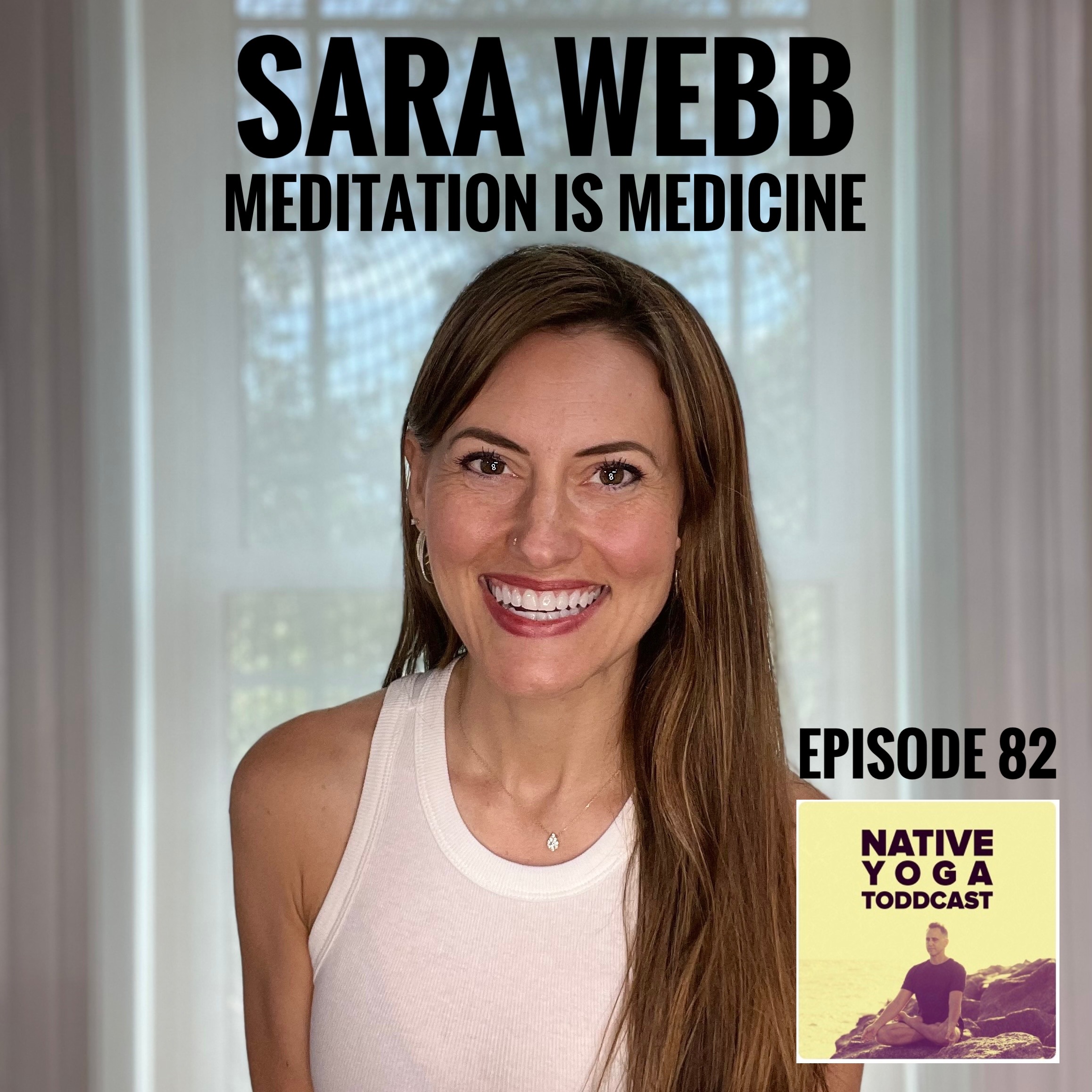
Sara Webb – Meditation is Medicine

Engage your listening senses with this conversation I had the pleasure of having with Sara Webb. Sara Webb is an author, inspirational speaker, and meditation healer empowering seekers to go from stress to success. Her life mission is to inspire people to access the power within themselves by teaching pocket-sized meditation techniques to improve daily happiness so people can bring the best versions of themselves to their own lives.

Visit Sara’s website at www.sarawebbsays.com
Check out Sara’s new book here: Amazon – Balboa Press – Barnes & Noble

Listen to the full conversation for free here.

During this conversation we discussed:

  • the importance of daily meditation
  • her passion for public speaking in the corporate environment
  • how to build trust after being harmed
  • how Sara has been able to recover from little “t” and BIG “T” trauma in her life
  • the role recovery has played in her healing journey
  • her books and her writing process
  • the importance of yoga practice in her life

And so MUCH more!

Remember to visit Sara’s website at www.sarawebbsays.com
Also don’t forget to check out Sara’s new book here: Amazon – Balboa Press – Barnes & Noble

Below is an excerpt form the conversation I had with Sara.

Todd McLaughlin

What is an example of a public speaking event that you’ve done recently.

Sara Webb

I’ve done all manner of things. I do a lot of corporate events, working directly with business owners and managers in order to help their staff deal with stress. I mean, a lot of times, we don’t realize the great power that we have with our breath. 

If we can realize that when we’re in that fight or flight mode, that we’re not breathing properly, we’re not breathing from the belly. That’s a physiological, ancient physiology that we have carried over from when we were hunters and gatherers. You know, this autonomic nervous system that we have breeds for us, and beats our hearts and controls our sweat glands and salivary glands and blinking. But when the sympathetic nervous system is activated, that’s what we typically call the “fight or flight.” We begin chest breathing from the upper part of our chest, which is really great if we need to actually fight or flee. 

But when it’s traffic and deadlines, and our bosses and our spouses and our kids, it can really build up and flood our blood with cortisol. We’ve heard some about that, and people are now pushing pills to get rid of cortisol when really, if we could just get in touch with what’s going on in our bodies, and learn how to belly breathe we can fix this problem. This is such an easy, portable, free way to tap into what’s going on in our bodies. And then people can learn how to process stress and actually ground themselves in where they are, especially in the workplace. 

We have to work around people who maybe aren’t our favorite people. And so I do a lot of corporate trainings during the week. My wife is a dentist and so I got started doing that at her corporate gatherings. I do conferences and private conferences. I’ve done sweet 16 parties. I mean, I’ve spoken at sober retreats, you name it, I’ve done it. And I really just enjoy interacting with people in that way. Where they always come away and they say, wow, I really think I learned something new. I think that there’s a couple of simple facts that most people don’t understand about meditation. 

Because as I mentioned, that’s my real passion. I kind of trick people into learning about meditation by talking about stress, because meditation is that wonderful way for us to get rid of our stress. And I am just such a seeker, I wanted to know, why is it that meditation works. And I’ll give you a couple of facts….. all around us at every single moment, it doesn’t matter if we’re on top of the hill, or in a busy street the scientists have calculated that we have access to about several billions of bits of data. And the human brain is pretty amazing and can process around 11 million bits per second. But we’re only conscious of between 40 and 50 of the 11 million bits per second that our brains and our bodies have access to. So I did the math there, that means we’re conscious of .04% of everything that’s actually being processed by our brains and our bodies. And 99.96% of everything that’s available to us is being processed by our subconscious. 

Now we have five senses. And we have 11 million sensory receptors, the 10 million or so of the sensory receptors are dedicated to one sense, our eye site. So if you want to access to 99.96% of information that’s already inside of you shut off access to 10 million of the 11 million sensory receptors, ie. close your eyes and go inside. That’s where the magic is, that’s where the subconscious can begin to bubble up. 

Because we’re literally getting into the brainwaves where our subconscious lives, if we only stay in beta and beta is stressed, then we’re not going to ever be able to have access to that. The only time during waking hours when we drop into that subconscious state, which is the theta wave in between alpha and delta, which is where most meditation is. Deep sleep is theta. 

When some people are stressed, they like to drive, or they like to go and work on something that is repetitive. That’s because when we drop into repetitive things our subconscious is in control because you don’t have to think about it anymore. That allows the subconscious to bubble up, but our eyes are still open. And so think about how much more powerful it is to actually close the eyes, and then go inside.

Todd McLaughlin

Yeah, good point. That’s interesting. Can you give me an example or an idea of when you decided or felt that you wanted to heal the trauma that you had experienced? Was there some sort of catalyst that I mean, I’m guessing that there probably was something inside that said, “Okay, I realized something has happened. But I’d prefer just not to look at it.” What was the catalyst that helped you to turn that corner and feel like you wanted to be brave and process and heal and go through the therapy to come out the other side?

Sara Webb

Great question. I mean, I’ve always known about what happened. It’s just that I repressed it, I told my sister I did not go to the police, I barely told anyone much less dealt with it myself. When I began to get sober, which started in the end of 2018, I didn’t actually succeed with continuous sobriety until the end of 2019. So it took me a little over a year, almost a year and a half to actually be sober, and then an event would happen and we have this in the general collective that like, alcohol can be used to de-stress, which is an absolute lie. It actually causes stress in the body. So it took me a little while, but once I started playing with sobriety and had bouts of sobriety, I realized most poignantly that I needed alcohol in order to be intimate with my now ex husband. And I knew what even though I was gay, through college and a little bit after college, I called myself bisexual, and I only dated women, but I repressed that because I wanted to have a baby and I knew that my very strict Southern Baptist parents would not accept me for who I am. And to this day, they do not accept me for who I am. So in answer to your question, yeah, when when we get sober a lot of people deal with anger that is kind of unexplained. They’re just not really sure why, but it’s because we have been repressing by drinking. And then we have no outlet to numb with. I didn’t have that initially. 

But what I did have was when I got re-married, and we started blending households, because I have a biological child, she has two you know, that’s, that’s no joke. And I started noticing that my go to response was anger, which, and I put out a reel on this recently, you know, usually anger is, is not actually a primary emotion, it’s a secondary emotion. And it indicates that there’s hurt underneath either sadness or fear usually. 

So I started seeing a transpersonal interpersonal hypnotherapist in order to deal with the anger. And that’s when memory surfaced. And I was able to deal with them in a really beautiful way. It wasn’t immediate, and it certainly wasn’t easy. But healing requires injury and healing hurt. The result is always worth it.

Todd McLaughlin

Wow. Well, I appreciate you being so honest and sharing your story. That’s incredible. I think it’s empowering, because I know that there’s obviously a lot of us who probably have experienced trauma. Well, I guess, like you said, there’s the “big T” and the “little t.” So would you say that everybody has had some sort of “little t” trauma? Like, for example, someone made fun of us on the playground? A million or two different things that have happened could have happened. How many of us have experienced the “big T” trauma? What do you think the percentages are? I mean, like half the world, a third of the world, one in 100? Because I just wonder that sometimes it seems like I don’t know that anybody could get through life without having some type of “big T” experience. But maybe that’s because if I do have experience, then I think well, maybe probably everyone has. Perhaps it’s a smaller minority a smaller group of people that have. Do you have any insights into that?

Sara Webb

I wish I had the statistics! I’m definitely going to look it up. But even if we just look at, like, reports of sexual trauma with women, it’s one in three. And I didn’t report and I know a lot of other people who didn’t. So if you just look at that, it’s a high percentage. And and let’s not diminish that “little T” trauma. 

Because it’s all relative, and vibrationally, if we just look at it. So everything that happens in our lives before the development of the prefrontal cortex would start around the age of 10. So everything from pretty much ages, like four to eight is when our brains are in that meditative state, we haven’t gone up into beta. Around the age of 10, is when we really fully start to inhabit beta. 

Everything before that our brains take in as beliefs, basic beliefs about how the world is so for somebody like me, I saw people drinking, I grew up outside of New Orleans. I mean, drinking is just what people do. And I’m sure that’s for a lot of the world, you know, it’s just it’s very common. And so one of the beliefs that I had is that alcohol is safe. And if you have a “little T” trauma, “big T” trauma, some uncle that habitually made fun of you, a person on the playground who did something that could be seen as traumatic when it’s done, even once or twice, we can carry that vibration that belief with us into our adulthood and continue to attract those things into our lives. Because it’s something that we need to heal.

So it doesn’t matter if it’s seemingly small, it might be perpetuating itself as to a lack of abundance in our lives or a thinking that no one likes us. Then that can continue to play out in the workplace. And, you know, social groups, it doesn’t matter where it is. Because we’re basically here to heal.

Thanks for reading this blog post from this podcast episode. Check out: 👇
Native Yoga Teacher Training – In Studio and Livestream – for info delivered to your email click this link here: https://info.nativeyogacenter.com/native-yoga-teacher-training-2023/

https://info.nativeyogacenter.com/native-yoga-teacher-training-2023/

New Student Livestream Special ~ Try 2 Weeks of Free Unlimited Livestream Yoga Classes  at Native Yoga Center. Sign into the classes you would like to take and you will receive an email 30 minutes prior to join on Zoom. The class is recorded and uploaded to nativeyogaonline.com ~ Click Here to join.

New Student FREE 30 Minute Yoga Meet & Greet ~ Are you new to Native Yoga Center and have questions that you would like us to address? Whether you are coming to In Studio, Livestream or Online Recorded Classes we offer a one time complimentary 30 minute zoom meeting to answer any questions you may have. Schedule a time that is convenient for you. Click Here

Native Yoga website: nativeyogacenter.com
Online Yoga Class Library: nativeyogaonline.com
Thai Massage info: palmbeachthaimassage.com
Native Yoga Blog: toddasanayoga.com
Instagram: @nativeyoga
YouTube channel: Native Yoga Center

Listen to the podcast here on our Podcast website: Native Yoga Toddcast

Please email special requests and feedback to info@nativeyogacenter.com
Please share this episode with your friends, rate & review and join us next time.
