Tawanya Norwood ~ Achieving Greatness: Balancing Motherhood, Military, and Mindfulness

Listen to Toddcast with Tawanya for FREE Here

Tawanya Norwood is a U.S. Marine and a passionate advocate for yoga, blending her military discipline with the mindfulness of yoga practice. Originally from Miami Dade County, Tawanya has served in the military for seven years, currently stationed at the Pentagon. She has an academic background in sociology, graduating from the University of Florida, and works on the social media team for the Marine Corps, leveraging her skills developed from her yoga journey. Tawanya is also a dedicated mother and an inspiration figure aiming to bridge the gap between military service and holistic wellness.

Follow Tawanya on Instagram: https://www.instagram.com/th33besticanbe/?hl=en

Key Takeaways:

  • The Intersection of Yoga and Military Life: Tawanya uniquely blends the discipline of the Marines with the mindfulness of yoga, demonstrating resilience and self-awareness.
  • Inspirational Roots: Motivation drawn from early life challenges and influential figures like Eric Thomas continues to drive her success.
  • Power of Affirmations: Emphasizing the role of positive self-talk and visualization in achieving excellence, as observed in Olympic athletes.
  • Evolving Military Practices: The integration of yoga and stretching in military training highlights a progressive approach to soldier wellness.

The Intersection of Yoga and Military Life

Finding Balance Through Yoga in the Military

In the high-stakes environment of the military, stress management and physical fitness are paramount. For Tawanya Norwood, a dedicated Marine, yoga has been an essential tool in maintaining her mental and physical well-being. When asked about her initial foray into yoga, Tawanya recalls discovering it in high school as a means to enhance her flexibility and recovery from track workouts. This early exposure blossomed into a deeper practice after college, where she attended free sessions at a public library:

“My first experience was actually at a public library… I liked the environment, and in particular, I liked the respect that they put on the stretching.”

This notion of respect for one’s body through yoga parallels the discipline instilled in military training. Despite the initial surprise of her fellow recruits during boot camp, Tawanya integrated her practice seamlessly into her routine, even receiving support from her superiors who recognized the benefits of yoga for mental resilience and physical flexibility.

“Surprisingly, we actually practice yoga as a group, like, they brought someone in who could teach it to us… the Marine Corps is evolving as the people within it are evolving.”

For Tawanya, practicing yoga in the military wasn’t just about the poses; it was about creating a balance between the rigorous demands of the military and the holistic benefits of yoga. Yoga provided an avenue for stress relief and mental clarity, fostering a deeper connection with her fellow marines and contributing to a culture of wellness within the military framework.

Self-Discovery and Overcoming Societal Barriers

Tawanya’s journey from Miami Dade County to the halls of the Pentagon is a testament to overcoming societal barriers and personal challenges. Growing up in the rough neighborhood of Liberty City, she was exposed to significant adversity, including violence and economic instability. These experiences ignited a determination to break the cycle of poverty and provide a better future for her family.

“I didn’t want that to continue. So when I thought about what could do that, for some reason the military popped up.”

Joining the Marines at the age of 28, Tawanya leveraged her education in sociology to understand the psychological and communal aspects of her training. This maturity allowed her to navigate the challenges of boot camp with resilience. Moreover, her commitment to yoga and her experiences traveling the world with the military has fueled her desire to inspire others who come from similar backgrounds.

“I still have the dreams that I had when I started because for me, those were my true dreams… reach back and give back to who I want.”

Tawanya’s story exemplifies the power of self-belief and the pursuit of one’s best self despite facing societal and personal hurdles. Her vision of using her platform to inspire and motivate others, particularly those from disadvantaged backgrounds, underscores an enduring commitment to personal and communal upliftment.

The Synergy Between Christian Faith and Yoga

Navigating the intersection of Christian faith and yoga, Tawanya has found a harmonious balance that enriches both her spiritual and physical practices. The concern that yoga could conflict with Christian beliefs is something she addresses with sensitivity and insight. For Tawanya, the essence of yoga is its intentionality and the focus it brings to one’s meditative practices.

“I like to say that I practice Christian yoga because my practice, what I like to focus on, what I like to instruct people about is faith-based stuff or meditating on positive things… the Bible talks about meditations, about what you focus on.”

This perspective allows Tawanya to integrate biblical principles and Christian meditations into her yoga practice, bridging the gap between physical wellness and spiritual integrity. Her approach encourages others to see yoga not as a conflicting practice but as a complementary one that can enhance their religious experience.

“I think when I wrote the post on Facebook, one of the bigger points I made is like, it’s about what you focus on when you’re in the pose.”

By leveraging her platform to promote this understanding, Tawanya demonstrates how yoga can be adaptable and inclusive, providing a space for individuals to express their spirituality in diverse ways. Her leadership in this area is paving the way for broader acceptance and integration of holistic practices within the framework of Christian faith.

Recap of Key Insights

The journey of Tawanya Norwood from a challenging childhood in Miami to a dedicated Marine and passionate yoga practitioner highlights several compelling themes. Through the lens of yoga, Tawanya has found balance and resilience amid the rigorous demands of military life, demonstrating that physical discipline and mental well-being can coexist harmoniously. Her story of overcoming societal barriers to pursue her goals serves as a powerful example of determination and self-belief, inspiring others to strive for their best selves despite their circumstances. Finally, Tawanya’s ability to blend her Christian faith with her yoga practice illustrates the adaptability and inclusivity of yoga, offering a model for how spiritual practices can coexist and even enhance one another. Through her experiences, Tawanya continues to motivate and uplift those around her, using her unique journey as a testament to the power of perseverance, faith, and holistic well-being.

Thanks for listening to this episode. Check out: 👇
Free Grow Your Yoga Live Webinar – Every Thursday at 12pm EST
➡️ Click here to receive link

New Student FREE Livestream Yoga Special ~ Try 2 Weeks of Free Unlimited Livestream Yoga Classes  at Native Yoga Center. info.nativeyogacenter.com/livestream Sign into the classes you would like to take and you will receive an email 30 minutes prior to join on Zoom. The class is recorded and uploaded to nativeyogaonline.com  ➡️  Click Here to Join. 

Subscribe to Native Yoga Center and view this podcast on Youtube.

Thank you Bryce Allyn for the show tunes. Check out Bryce’s website: bryceallynband.comand sign up on his newsletter to stay in touch. Listen here to his original music from his bands Boxelder, B-Liminal and Bryce Allyn Band on Spotify.

Please email special requests and feedback to info@nativeyogacenter.com

Enjoy new Native Yoga Center classes uploaded everyday on our online learning hub. Use code FIRSTMONTHFREE at checkout. https://nativeyogacenter.teachable.com/p/today-s-community-class

Support the show

Native Yoga website: here
YouTube: here
Instagram: @nativeyoga 
Twitter: @nativeyoga 
Facebook: @nativeyogacenter 
LinkedIn: Todd McLaughlin
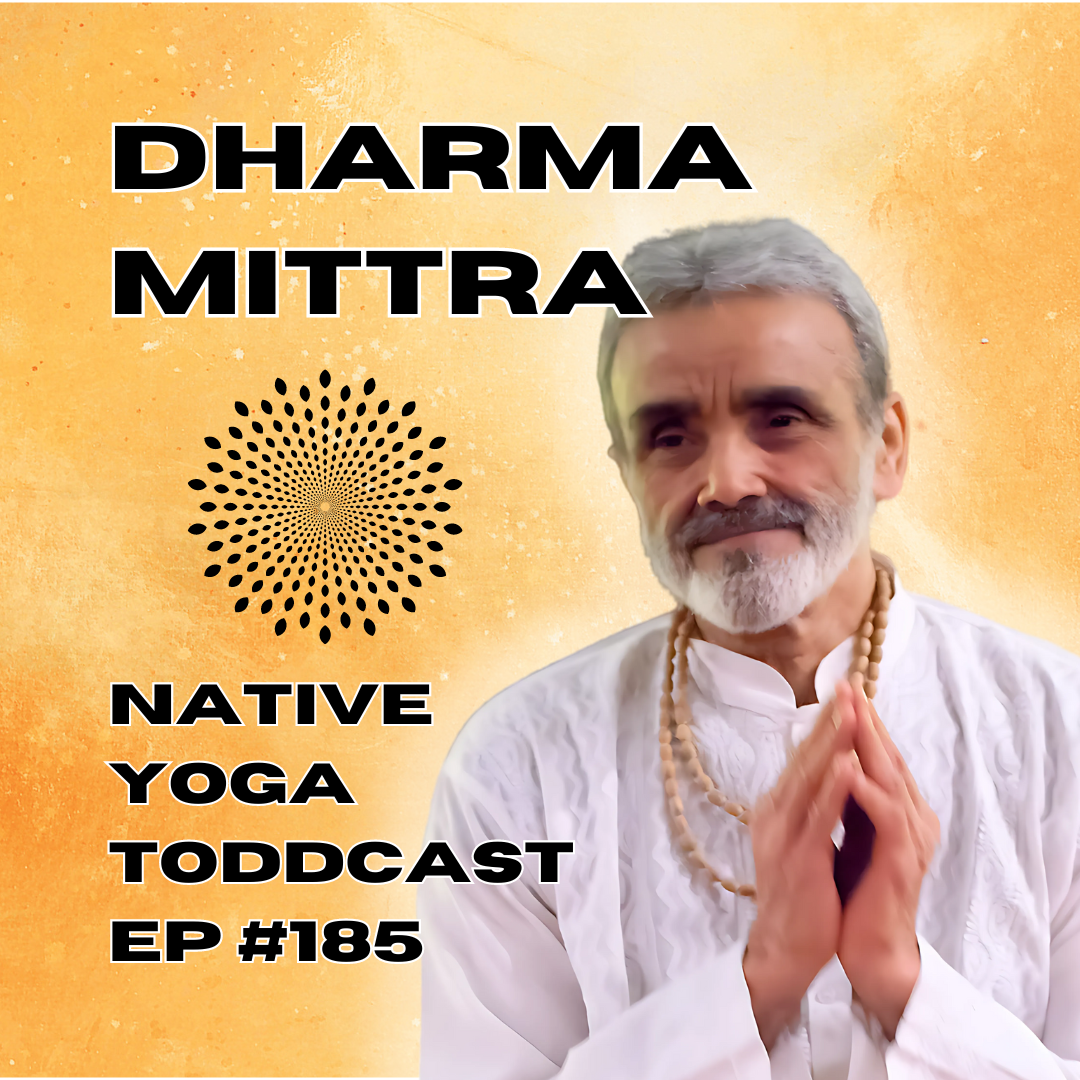
Dharma Mittra – Living the Yogi Life: Secrets of Spiritual Growth and Mental Power

Listen to Toddcast with Dharma for Free here

Dharma Mittra is a world-renowned yoga teacher with over six decades of experience in the practice and teaching of yoga. Originally a professional bodybuilder and athlete, Dharma Mittra’s journey into yoga has profoundly changed his life and the lives of countless students globally. He is known for his dedication to the traditional teachings of yoga and for creating the famous “Master Yoga Chart of 908 Postures.” Dharma Mittra’s work emphasizes compassion, the spiritual aspects of yoga, and the importance of a disciplined vegetarian diet. He continues to inspire and educate yogis through his classes, workshops, and writings.

Visit Dharma on his website: https://www.dharmayogacenter.com/

Key Takeaways:

  • Importance of a Guru: Dharma Mittra emphasizes the transformative role a guru plays in one’s spiritual journey and overall well-being.
  • Integration of Yoga Practices: The episode discusses how integrating physical postures and spiritual intentions can lead to holistic health and mental clarity.
  • Compassion and Nonviolence: Dharma shares his thoughts on practicing ahimsa (nonviolence) and how to deal with the suffering seen in the world.
  • Dealing with Injuries: Practical advice is given on preventing yoga-related injuries and how even setbacks can offer valuable lessons.

Embarking on a Spiritual Journey through Yoga: Insights from Dharma Mittra

Key Insights

  • Mentorship and Transformation: Meeting a guru can profoundly impact one’s life, guiding them out of difficulties toward spiritual awakening.
  • Balance of Physical and Spiritual Practices: The harmonious blend of physical postures and spiritual intent in yoga can significantly enhance personal well-being and spiritual growth.
  • Navigating the Modern World with Yoga Wisdom: Balancing authenticity in yoga practice amidst commercial pressures can be achieved through kindness and unconditional service.

The Importance of a Guru in Spiritual Transformation

Understanding the Role of a Guru

Dharma Mittra’s profound reflections emphasized the critically transformative role a guru plays in one’s spiritual journey. His recounting of his initial encounter with his guru underlined this notion vividly:

“This was amazing. I met my guru… I was really in bad shape, very sick. So also I received instructions about what the life is, what means to have a guru world is. Anyway, my first experience was already changing my life completely.”

A guru’s guidance extends beyond mere mentorship; it’s a catalyst for a complete life overhaul. Dharma shares, “If it wasn’t my guru, I would be in terrible trouble today. Maybe I was not even alive, depressed.” This highlights that the essence of having a guru is not just about learning techniques, but it’s about having a lighthouse during life’s turbulent storms.

Impact on Physical and Spiritual Well-being

The changes Dharma Mittra experienced after meeting his guru were also physical, as he shared, “I received instructions about what the life is, what means to have a guru world is. Anyway, my first experience was already changing my life completely. The way I eat, the way I see things… That was my starting life. Was a new life.”

The teachings of his guru uplifted his physical health and fortified his resolve, underscoring the profound intertwining of physical well-being with spiritual growth. Dharma’s journey from a sick bodybuilder to a rejuvenated yoga practitioner showcases the holistic benefits imparted by a guru.

The Marriage of Physical Postures and Spiritual Intent

Yoga Asanas Beyond Physical Fitness

Yoga postures, or asanas, are central to the physical practice of yoga. However, Dharma Mittra emphasizes their deeper role in spiritual development. He explains, “I concentrate more on the postures. The guru said, you have to follow your tendency if your body is fit for posture, do postures… they will bring you good health and some mental powers.”

Physical postures act as a conduit for deeper spiritual practices and mental clarity. They are not merely for physical fitness but serve to prepare the body and mind for higher spiritual pursuits. Dharma’s own journey attests to this, as he overcame severe health issues through the disciplined practice of asanas.

The Caution and Compassion in Practice

Dharma highlights the importance of mindfulness in performing physical postures: “We have to be very cautious. We have to have a good teaching not to allow you to do some of defensive poses… So be very careful… The injuries teach us something. Be careful.”

His wisdom underscores the necessity of aligning one’s practice with careful instruction to avoid injury—a reflection of true ahimsa (non-violence) towards oneself. Dharma’s approach is holistic, advocating for a balance that nurtures both the body and the spirit.

Navigating Commercial Challenges in Yoga with Authenticity

Balancing Business and Authentic Practice

For many yoga practitioners turned teachers, maintaining authenticity while running a sustainable business can be challenging. Dharma’s guidance here is profound: “I always had money hidden under the radiator… Just be nice to your students. Don’t be too strict because I cannot extend your expiration day.”

Dharma’s approach to business is deeply rooted in selfless service and compassion. By creating an inclusive and supportive environment, he fosters a strong communal bond that transcends the mere transactional nature of business. His model emphasizes kindness and understanding, ensuring that the essence of yoga—the connection and compassion—remains intact.

Thriving Amidst Modern Pressures

Reflecting on his experiences, Dharma reminds us that financial stability and spiritual practice need not be mutually exclusive. He recounts, “I have full class. And then I moved to another place… Anyway, in one week, I have full class. Just be nice to your students… amazing. Don’t have to worry about money.”

Even amidst pressures to commercialize, maintaining a genuine, service-oriented approach can lead to both spiritual fulfillment and material success. Dharma’s story is a testament to upholding the purity of yoga practice while navigating the demands of the modern world.

Integrating Compassion and Modern Understanding

Dharma Mittra’s wise counsel on ahimsa (non-violence) in a world filled with violence resonates deeply with contemporary concerns. He offers insights into the eternal nature of suffering and the importance of compassion:

“Remember, we are here for a long time, at least 6 billion years. There are younger souls… They are greedy. They act with demonic nature because they are younger soul.”

Despite witnessing widespread suffering, he encourages practicing compassion while also understanding its spiritual necessity. His teachings are a call to embrace empathy while maintaining the awareness of the grand tapestry of karma and spiritual evolution.

Yoga practice, as Dharma beautifully puts it, can be a form of prayer, “Every action we do, it can be a prayer. Depends on your mental intention… Everything is for you, for only one purpose, to get healthy so that the mind can concentrate on spiritual good things.”

This intertwining of physical practice with spiritual intent provides a comprehensive understanding of yoga’s true essence, making it not just a physical endeavor, but a path of profound spiritual discovery.

Ultimately, Dharma Mittra’s journey and teachings offer invaluable insights for modern yoga practitioners. By emphasizing the importance of a guru, the delicate balance of physical and spiritual practices, and maintaining authenticity amid commercial pressures, his wisdom serves as a guiding light for those navigating their own yoga journeys. Resting one’s mind on the infinite, as Dharma advocates, and embracing a life of continuous movement and service, ensures a path of ongoing spiritual evolution and fulfillment.

Thanks for listening to this episode. Check out: 👇
Free Grow Your Yoga Live Webinar – Every Thursday at 12pm EST
➡️ Click here to receive link

New Student FREE Livestream Yoga Special ~ Try 2 Weeks of Free Unlimited Livestream Yoga Classes  at Native Yoga Center. info.nativeyogacenter.com/livestream Sign into the classes you would like to take and you will receive an email 30 minutes prior to join on Zoom. The class is recorded and uploaded to nativeyogaonline.com  ➡️  Click Here to Join. 

Subscribe to Native Yoga Center and view this podcast on Youtube.

Thank you Bryce Allyn for the show tunes. Check out Bryce’s website: bryceallynband.comand sign up on his newsletter to stay in touch. Listen here to his original music from his bands Boxelder, B-Liminal and Bryce Allyn Band on Spotify.

Please email special requests and feedback to info@nativeyogacenter.com

Enjoy new Native Yoga Center classes uploaded everyday on our online learning hub. Use code FIRSTMONTHFREE at checkout. https://nativeyogacenter.teachable.com/p/today-s-community-class

Support the show

Native Yoga website: here
YouTube: here
Instagram: @nativeyoga 
Twitter: @nativeyoga 
Facebook: @nativeyogacenter 
LinkedIn: Todd McLaughlin
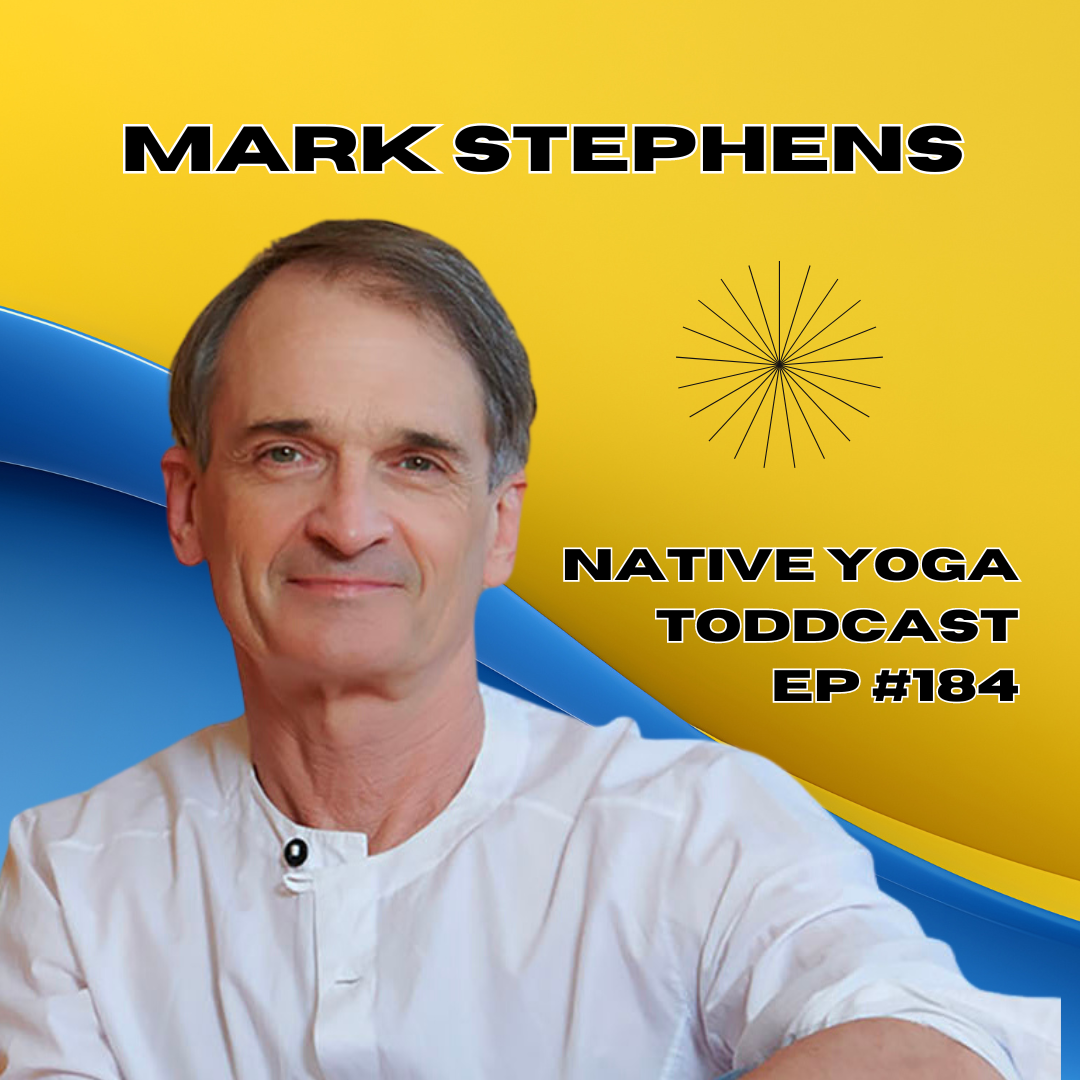
Mark Stephens ~ The Evolution of Yoga Sequencing and Adjustment Techniques

Listen to Toddcast with Mark for FREE Here

Mark Stephens is a highly respected and influential figure in the world of yoga. He is a prolific author, having written several books on yoga. Mark runs an Online Teaching Yoga Academy and has a podcast called The Yoga Room Podcast. His expertise spans across various domains such as yoga, bodywork, and the integration of therapeutic yoga in different systems including the prison system. He is known for his dynamic approach to teaching, his extensive knowledge of yoga history and anatomy, and his dedication to making yoga accessible to all.

Visit Mark on his website: https://www.markstephensyoga.com/

Key Takeaways:

  • Transformative Impact of Yoga: Mark shares how yoga has the power to transform lives, particularly for troubled youths in juvenile systems.
  • Adaptability in Yoga Instruction: The importance of understanding individual conditions and intentions when teaching yoga to ensure safety and effectiveness.
  • Evolution of Yoga Practices: Insight into the historical context of yoga’s rise in the West, including influential figures and cultural phenomena.

Unlocking Yoga’s Potential: Insights from Mark Stephens’ Journey

Key Takeaways

  • Embrace the blend of experiential learning and academic inquiry to deepen yoga practice and teaching.
  • Understand the critical importance of anatomical and biomechanical awareness in yoga to prevent long-term injuries.
  • Adopt a mindful, individualized approach to yoga practice to respect and honor the diverse needs of students.

A Journey Through Yoga’s Transformation and Impact

In a captivating conversation with Todd McLaughlin from Native Yoga, Mark Stephens, a distinguished yoga instructor and author, shares his profound insights drawn from years of practice, teaching, and a unique life journey. Stephens delves into the intersections of yoga, social activism, and anatomy, shedding light on the evolutionary path of yoga practice and its implications for both teachers and students.

The Power of Experiential Learning

Mark Stephens’ journey is a testament to the powerful combination of lived experience and formal education. Dropping out of school in eighth grade, he was exposed to various life challenges that ultimately shaped his teaching philosophies. Stephens’ first encounter with yoga came through books, leading to a self-practice that later complemented his deep involvement in social justice initiatives.

“I had this experience and thought, ‘Wow, there’s something more here,'” Stephens recalls, speaking about a pivotal moment that nudged him towards yoga. This laid the foundation for his later work in academic and activist settings, particularly in juvenile institutions where he introduced yoga as a transformative tool. His unique background enabled him to connect deeply with the youth, many of whom had complex traumatic backgrounds.

Todd McLaughlin highlights this synergy, noting, “I can see how this would have evolved. You were able to speak that language and understand where they’re coming from.” This approach underscores the importance of blending personal experiences with professional pursuits to create impactful teaching methods.

The Importance of Anatomical and Biomechanical Awareness

One of the standout themes in Stephens’ dialogue is the critical necessity of understanding anatomy and biomechanics in yoga practice. In his book “Yoga Sequencing,” he cautions against certain movements that can lead to long-term injuries. For example, repeatedly transitioning from internal to external hip rotations with full body weight can cause hip joint stress, leading to conditions like femoral neck syndrome.

“That rotation with full weight can introduce forces that stress the femoral neck,” warns Stephens, urging yoga practitioners to be mindful of the nuanced impacts of their movements. This anatomical insight is not widely covered in standard yoga teacher training, which Stephens finds concerning.

Stephens’ anecdote about early influences from teachers like Shiva Rea further enriches this narrative. Rea’s concept that extreme postural practices can be particularly detrimental has been a guiding principle for Stephens: “Shiva first suggested this to me, and I then went deeper into understanding these forces.” This deep dive into biomechanics is part of what makes Stephens’ teaching uniquely grounded in scientific understanding.

Individualized and Mindful Yoga Practice

Another significant theme emerging from Stephens’ discussion is the necessity of an individualized and mindful approach to yoga. He emphasizes respecting each student’s unique conditions while encouraging playful exploration within their practice. His response to students playing with different poses resonates with his teaching philosophy: “Play with it, but be aware there are potential implications.”

Stephens recalls a formative experience in juvenile institutions, where he noticed that the youth often sought quiet and restorative yoga practices rather than high-energy vinyasa flows. This observation led him to tailor his sessions to include more breathwork, guided meditation, and calming postures.

“What they wanted was permission and opportunity to be quiet and still,” he shares, reflecting on the importance of listening to students’ needs. This adaptability is crucial for effective teaching, ensuring that yoga serves as a therapeutic and supportive practice rather than a one-size-fits-all regimen.

Continual Evolution and Learning

Mark Stephens’ practice and teaching methods have continuously evolved, informed by decades of experience and ongoing scholarly inquiry. He remains a proponent of foundational postures that strengthen and support the body’s mechanics, cautioning against extreme contortions.

The implications of his insights are far-reaching, advocating for a shift in how yoga is taught and practiced globally. His emphasis on biomechanics and individualized practice can potentially prevent the long-term injuries seen in many seasoned practitioners.

Overall, Stephens’ journey reveals a layered understanding of yoga – one that honors tradition while embracing scientific and experiential wisdom. By merging academic rigor with lived experience, he illustrates the transformational potential of yoga when practiced mindfully and inclusively. His story is a call to all yoga teachers and practitioners to deepen their awareness and approach practice with both curiosity and care.

Thanks for listening to this episode. Check out: 👇
Free Grow Your Yoga Live Webinar – Every Thursday at 12pm EST
➡️ Click here to receive link

New Student FREE Livestream Yoga Special ~ Try 2 Weeks of Free Unlimited Livestream Yoga Classes  at Native Yoga Center. info.nativeyogacenter.com/livestream Sign into the classes you would like to take and you will receive an email 30 minutes prior to join on Zoom. The class is recorded and uploaded to nativeyogaonline.com  ➡️  Click Here to Join. 

Subscribe to Native Yoga Center and view this podcast on Youtube.

Thank you Bryce Allyn for the show tunes. Check out Bryce’s website: bryceallynband.comand sign up on his newsletter to stay in touch. Listen here to his original music from his bands Boxelder, B-Liminal and Bryce Allyn Band on Spotify.

Please email special requests and feedback to info@nativeyogacenter.com

Enjoy new Native Yoga Center classes uploaded everyday on our online learning hub. Use code FIRSTMONTHFREE at checkout. https://nativeyogacenter.teachable.com/p/today-s-community-class

Support the show

Native Yoga website: here
YouTube: here
Instagram: @nativeyoga 
Twitter: @nativeyoga 
Facebook: @nativeyogacenter 
LinkedIn: Todd McLaughlin

Cator Shachoy – TMJ Relief: Integrating Yoga and Mindfulness Techniques

Listen to Toddcast with Cator for FREE here

Cator Shachoy is a distinguished yoga therapist, mindfulness instructor, and craniosacral therapist based in the San Francisco Bay Area. She holds a degree from the Iyengar Yoga Institute in San Francisco and has trained under notable teachers like Judith Lassiter and Michael Shea. Cator is also an accomplished author with her latest book titled “The TMJ Handbook: A Therapeutic Guide to Relieving Jaw Tension and Pain with Yoga and Mindfulness.” With over 35 years of experience in yoga, meditation, and bodywork, Cator blends her expertise to help individuals achieve holistic wellness.

Cator’s website: https://catorshachoy.com/
Follow Cator on IG: https://www.instagram.com/catorshachoy/

Key Takeaways:

  • Holistic Healing for TMJ: Cator integrates Iyengar yoga, craniosacral therapy, and mindfulness to create effective strategies for managing TMJ disorders, emphasizing a holistic approach to wellness.
  • Influence of Chronic Illness: Cator’s journey into yoga and healing was significantly influenced by her struggle with chronic fatigue syndrome, showcasing the transformative power of alternative healing practices.
  • Role of Trauma and Stress: The discussion highlights how unresolved trauma and stress can manifest physically, and how mindfulness and yoga can help manage these effects.


Unleashing the Power of Yoga Therapy: Insights from Cator Shachoy

Key Takeaways:

  • Exploring the intersection of yoga, meditation, and bodywork in relieving TMJ-related issues.
  • Understanding the concept of vayu and how subtle energy movements influence physical health.
  • The evolving landscape of yoga therapy and the importance of continuous practice and self-discovery.

In a recent episode of the Native Yoga Toddcast, Cator Shachoy, a distinguished yoga therapist, mindfulness teacher, and cranial sacral practitioner, shared her journey and insights that bridge the profound realms of yoga, meditation, and bodywork. Shachoy’s rich history in therapeutic practices, combined with her holistic approach, brought forward a refreshing perspective on managing TMJ disorders and finding equilibrium in life through mindfulness and physical alignment.

The Intersection of Yoga, Meditation, and Bodywork

Cator Shachoy’s journey into the world of yoga and holistic healing finds its roots in her personal struggle with chronic illness post-college. She recalls a transformational moment stepping into her first yoga class in Boston in the early 90s. “I walked into the room… Was like, Oh, this is what I want to do with my life,” she reminisces. This natural gravitation towards healing led her to explore not just yoga, but a combination of meditation and energy healing practices.

Cranial sacral therapy became a pivotal part of her practice. Shachoy explains, “As a cranial practitioner, I’m trained to work with jaw tension… And cranial sacral really stood out to me as a technique that was essentially energy work but more grounded.” This holistic method enabled her to address multifaceted issues like TMJ disorders, where traditional medicine often falls short. By integrating her deep knowledge of Iyengar yoga and cranial sacral therapy, Shachoy helps clients manage their conditions through a balanced approach that promotes personal autonomy and deeper awareness of their bodies.

Understanding Vayu: The Subtle Movements of Energy

A fascinating concept that Shachoy delves into is the idea of vayu, derived from Ayurveda, referring to the subtle winds or energies that move within the body. This ancient understanding found practical application in her teachings and practices. The vayu, as explained by her mentors, primarily influences physiological functions and therefore the structural balance within the body.

For instance, Shachoy recounts a workshop where participants explored the relationship between different parts of the body through the lens of vayu. “Ramana would say… The apana Vayu, the lower breath needs to be freed up. And when that’s freed up, the thoracic breath frees up, and that’s what’s freeing the congestion in the head,” she elaborates. This reliance on ancient wisdom juxtaposed with contemporary therapeutic practices enables a comprehensive approach to healing, making it particularly effective for conditions like TMJ.

By recognizing these subtle energy movements, one can witness a holistic form of alignment that’s not just about physical posture but also about the flow of energy—a concept that’s both grounding and expansive, reflecting the interconnectedness of body and mind.

The Evolving Landscape of Yoga Therapy

Yoga therapy’s landscape is continually evolving, and educators like Shachoy play a crucial role in this transformation. Her blend of traditional Iyengar principles with modern therapeutic applications presents a robust framework for addressing complex issues. Reflecting on her experiences at the Iyengar Institute in San Francisco, she observes, “There’s some tremendous benefits to the training, for sure, and there’s some really big shadows.” This critical assessment showcases the need for a dynamic and adaptive approach to teaching and practicing yoga.

Additionally, meditation remains a cornerstone of Shachoy’s practice. Her extensive retreats, including intensive Vajrayana Buddhist training, have shaped her perspective on integrating mindfulness with physical therapy. “For me, meditation is a lot of deep listening to my own rhythms,” she explains, underscoring the importance of aligning mental and physical practices to foster holistic well-being. Her commitment to long-term retreats and regular practice reflects a philosophy deeply embedded in continuous self-discovery and adaptation.

Moreover, addressing practical concerns like TMJ through her newly published book, “The TMJ Handbook,” highlights the effectiveness of these integrated practices. The book offers practical advice on leveraging yoga, mindfulness, and cranial sacral therapy to manage and alleviate TMJ-related discomfort, reinforcing her dedication to empowering individuals on their healing journeys.

Shachoy’s multifaceted approach shines a light on the indispensable role of integrated practices for holistic health. She encourages self-awareness and active participation in one’s healing process—a principle that resonates deeply amidst the complexities of modern life. Whether it’s through understanding the subtle nuances of vayu or embracing a balanced practice of meditation and physical alignment, her wisdom offers a pathway to not just manage but thrive beyond physical and mental challenges.

By bringing ancient wisdom and modern science into harmonious dialogue, practitioners like Cator Shachoy demonstrate that true healing is an evolving journey of continuous learning and mindful practice. The seeds of these practices, 

Thanks for listening to this episode. Check out: 👇
Free Grow Your Yoga Live Webinar – Every Thursday at 12pm EST
➡️ Click here to receive link

New Student FREE Livestream Yoga Special ~ Try 2 Weeks of Free Unlimited Livestream Yoga Classes  at Native Yoga Center. info.nativeyogacenter.com/livestream Sign into the classes you would like to take and you will receive an email 30 minutes prior to join on Zoom. The class is recorded and uploaded to nativeyogaonline.com  ➡️  Click Here to Join. 

Subscribe to Native Yoga Center and view this podcast on Youtube.

Thank you Bryce Allyn for the show tunes. Check out Bryce’s website: bryceallynband.comand sign up on his newsletter to stay in touch. Listen here to his original music from his bands Boxelder, B-Liminal and Bryce Allyn Band on Spotify.

Please email special requests and feedback to info@nativeyogacenter.com

Enjoy new Native Yoga Center classes uploaded everyday on our online learning hub. Use code FIRSTMONTHFREE at checkout. https://nativeyogacenter.teachable.com/p/today-s-community-class

Support the show

Native Yoga website: here
YouTube: here
Instagram: @nativeyoga 
Twitter: @nativeyoga 
Facebook: @nativeyogacenter 
LinkedIn: Todd McLaughlin