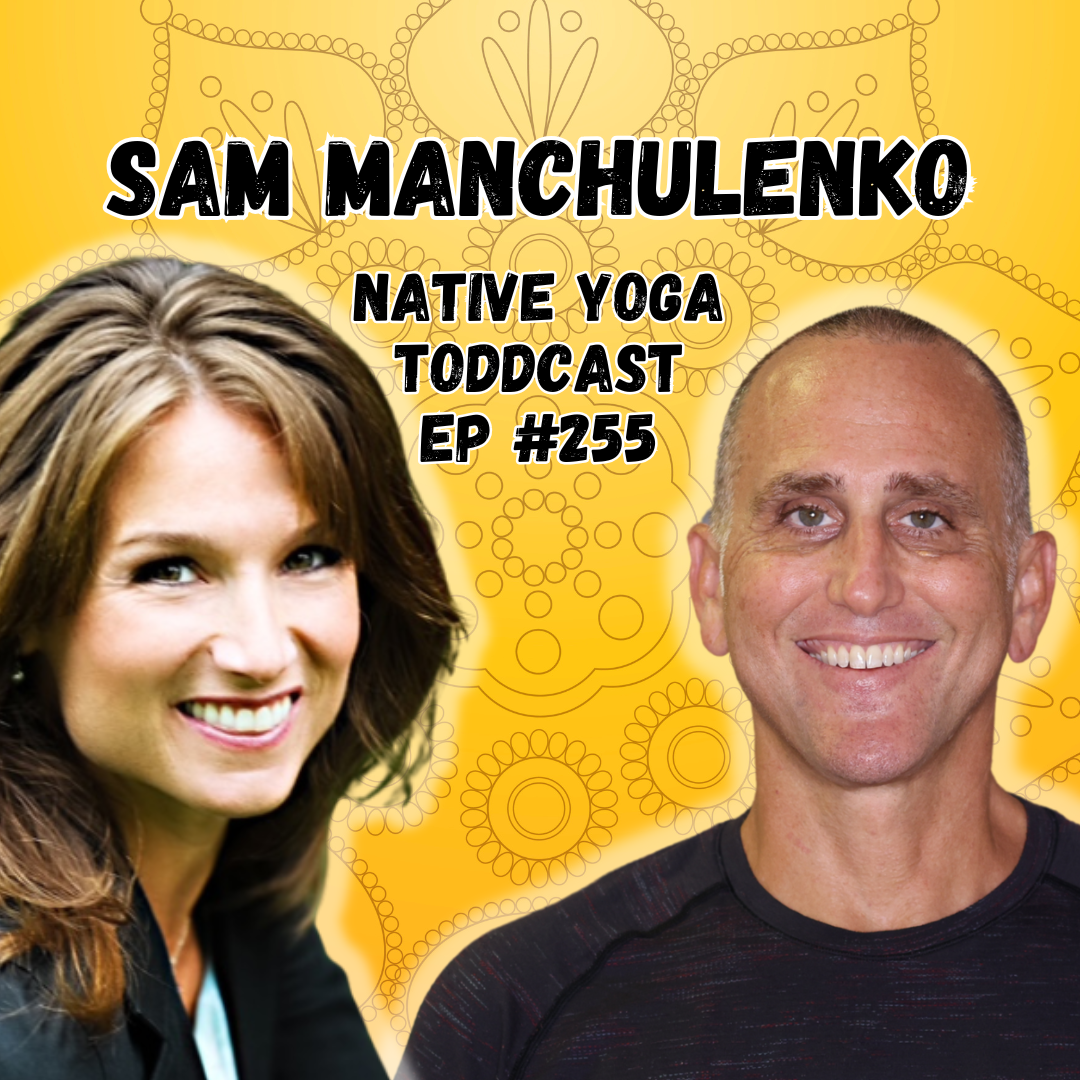
Sathu Jois | Ashtanga Lineage, Joyful Practice & the Future of Yoga

Listen to Toddcast with Sathu for FREE here

Sathu Jois is a dedicated Ashtanga yoga teacher rooted in a rich lineage as the granddaughter of Pattabhi Jois and daughter of Manju Jois. Immersed in yoga from birth, she deepened her practice during the COVID-19 pandemic while studying with her father. A former dance major, Sathu blends discipline and joy in her teaching and is currently pursuing a master’s degree in Yoga Therapy and Philosophy at Loyola Marymount University, with hopes of working with veterans.

Visit Sathu: https://joissathu.com/

Key Takeaways:

  • Sathu Jois combines her Ashtanga lineage with modern yoga therapy to cater to a diverse range of students, including those with therapeutic needs.
  • The integration of joy and exploration in yoga practice can help soften strict perceptions and promote a holistic approach to personal and communal growth.
  • Sathu’s work aims to support veterans by applying yoga’s transformative tools to relieve physical and mental stress.
  • Understanding the female cycle and the impact of daily variances reflects in Sathu’s yoga practice and her teaching philosophy.
  • Sathu aspires to create a community-focused yoga retreat and farm, embodying the spirit of inclusivity and joy.

Transformative Power of Yoga: A Journey with Sathu Jois

Yoga is often celebrated for its physical benefits, but its potential to bring about profound personal transformation and joy is unparalleled. This notion is wholeheartedly embraced by Sathu Jois, the granddaughter of renowned yogi Pattabhi Jois, and a burgeoning yoga teacher herself. Sathu’s journey into the intricate world of yoga started young, rooted in her family’s storied lineage. “The way my dad taught me was to have a lot of fun,” Sathu reflects, recalling her early introduction to yoga. Encouraged through playful exploration rather than rigid discipline, she found her own path. During COVID-19, she rediscovered yoga’s calming presence amid uncertainty, developing “a lot of tools” that would anchor her through life’s challenges.

Sathu’s experiences reveal the cyclical dance of stepping away and returning to yoga, a space where healing unfolds. “I found that it was giving me a lot of tools,” she reveals, describing how yoga breathed calm into her high school anxiety. This profound transformation underscores yoga’s inherent ability to offer solace and understanding amid life’s chaos.

Bridging Traditional Practices with Contemporary Therapeutic Approaches

An evolving discourse in the contemporary wellness sphere is the synthesis of traditional yoga practices with modern therapeutic approaches. Sathu delves into this dynamic, emphasizing the importance of adaptability. As someone deeply rooted in Ashtanga yoga, she advocates for flexibility in practice structures, especially when tailoring programs for individuals with unique needs, such as veterans or those undergoing significant life transitions. “We really just try to use the picking for more therapeutic uses,” she notes, illustrating how yoga’s inherent fluidity can meet practitioners wherever they are on their journey.

This notion is further expanded upon through her exploration of yoga’s potential in therapeutic contexts. “Ashtanga would be a great practice for [veterans] because they need a yoga practice where they can sweat,” Sathu explains, emphasizing the vitality of adaption. Bridging traditional Ashtanga with therapeutic elements creates a unique healing space, encouraging engagement with the practice on an individualized basis. The intentional incorporation of therapeutic yoga principles into traditional Ashtanga practices underscores a movement toward inclusivity and accessibility in the yoga community.

Building Community and Connection through Yoga

At its core, yoga fosters a sense of unity and connection, a theme that resonates deeply with Sathu. Her practice and teaching approach are imbued with an enthusiasm for creating joyous, inclusive environments. This is particularly evident in her reflections on teaching alongside her father, Manju Jois. Their sessions are marked not by verbal commands, but by a profound, intuitive understanding—”we only ever communicate with eyes,” she shares, encapsulating a wordless yet profound connection.

Her vision of yoga as a unifying force is perhaps best illustrated through her work with veterans—an endeavor close to her heart. Sathu’s personal experiences with veterans have illuminated yoga’s potential to offer comfort and understanding to those who have served. “The least we could do to give back to them is offer them some peace,” she states, recognizing yoga’s role in facilitating emotional release and acceptance. This commitment to service reflects a broader ethos of community care and outreach, further enriching the practice and its impact.

Sathu’s aspirations extend beyond the mat, envisioning a future where yoga’s philosophy and practice cultivate profound, lasting connections. Her dream of a farm-based community, complete with a yoga shala and café, mirrors her belief in yoga’s potential to create a nurturing hub for growth and exploration—an ethos that she carries through each class she teaches.

Sathu Jois’s story is a vibrant tapestry of tradition and evolution, colored by the jubilant pursuit of healing and connection through yoga. Her journey reflects the profound potential of yoga as both a personal anchor and a universal connector, illuminating paths of joy and understanding in its wake. By weaving traditional practices with therapeutic insights, and embracing community-oriented service, yoga stands as a beacon of transformation amidst life’s myriad challenges. In Sathu’s own words, it invites us all to “explore your likes and your dislikes,” gently guiding us toward a deeper understanding of ourselves and the world around us.

Thanks for listening to this episode. Check out: 👇
8IN8 Ashtanga Yoga for Beginners Course Online– Learn 8 Limb Yoga in 8 Days – Get FREE coupon code for a limited time only (Regular price $88) https://info.nativeyogacenter.com/8in8-ashtanga-yoga-for-beginners-8-limbs-in-8-days/

Practice with Native Yoga Online – New classes EVERY day – Use Code FIRSTMONTHFREE https://nativeyogacenter.teachable.com/p/today-s-community-class

Subscribe to Native Yoga Center and view this podcast on Youtube.

Thank you Bryce Allyn for the show tunes. Check out Bryce’s website: bryceallynband.comand sign up on his newsletter to stay in touch. Listen here to his original music from his bands Boxelder, B-Liminal and Bryce Allyn Band on Spotify.

Please email special requests and feedback to info@nativeyogacenter.com

Support the show

Native Yoga website: here
YouTube: here
Instagram: @nativeyoga 
Twitter: @nativeyoga 
Facebook: @nativeyogacenter 
LinkedIn: Todd McLaughlin
Christiane Coste Cacho | Ashtanga Yoga, Motherhood & Social Justice

Listen to Toddcast with Christiane for FREE here

Christiane Coste Cacho is an accomplished yoga instructor and social justice advocate. With a background in classical ballet and a Master’s in Human Rights Studies from Columbia University, Christiane has seamlessly merged her passion for movement with her dedication to humanitarian work. She has worked with Freedom House, focusing on activists and journalists at risk in Latin America, while also delving into academia as a professor. Christiane now runs a successful yoga studio in Seattle with her husband, Brendan Smullen, where they emphasize community-driven yoga practice that is inclusive and socially responsible.

Visit Christiane: https://www.theyogashalaseattle.com/

Key Takeaways:

  • The Role of Yoga in Resilience: Christiane explains how yoga helped her process the challenging emotional impacts of her work in human rights and social justice, providing a somatic outlet for stress relief.
  • Community-Centric Business Model: Emphasizing inclusivity through sliding scale payments and constant support for diverse communities is a key aspect of their studio’s success.
  • Navigating Cultural Crossroads: Insights into balancing Mexican cultural values with life in the U.S., especially in understanding family dynamics and respect for the elderly.
  • Motherhood and Practice Evolution: Motherhood has shaped Christiane’s approach to yoga, advocating for adaptations in practice that honor one’s current life stage and physical capabilities.

The Transformational Role of Yoga: A Safe Space Amidst Life’s Challenges

In the compelling dialogue between Christiane Coste Cacho and the interviewer, we are ushered into the profound impact that yoga has on one’s life beyond physical well-being. Christiane describes yoga as her haven during tumultuous times working with survivors of torture and journalists at risk in Mexico and Central America. Yoga, especially Ashtanga, provided Christiane with a structured, yet liberating practice that allowed her to navigate and process the intense emotions she encountered in her human rights work.

Reflecting on her introduction to yoga, Christiane states, “The practice just became like a safe space for me to explore and process a lot of what I was witnessing.” This assertion highlights yoga’s therapeutic potential beyond fitness, offering practitioners a tool to cultivate mental resilience against life’s adversities. Moreover, her experience aligns with the growing recognition of yoga as a complementary practice to therapy, offering an embodied approach to healing and mental well-being.

Christiane’s journey is a testament to the transformational capacity of yoga, suggesting that its relevance stretches far beyond the mat, intertwining with every aspect of life to foster a sense of balance and introspection.

Blending Roles with Balance: From Motherhood to Business

Marrying personal aspirations with professional endeavors is often a balancing act. This theme of equilibrium is another pillar of Christiane’s discussion, where she shares insights on harmonizing multiple demanding roles: yoga teacher, mother, and advocate for social justice. The conversation delves into Christiane’s approach to balancing these roles, underscoring the importance of kindness, acceptance, and adaptability.

In addressing the challenges of navigating life’s transitions, Christiane emphasizes the importance of realistic expectations and compassionate acceptance of one’s current situation. She mentions, “Accepting what is and accepting it with kindness and joy, instead of wanting things to be either different as they were before,” as a core practice that keeps her grounded. This mindset serves as a useful guide for anyone juggling various roles, advocating for a compassionate approach to self and others.

Christiane also speaks to her partnership with her husband, Brendan, highlighting the value of shared values and mutual support in managing both family dynamics and their yoga studio in Seattle. This unity strengthens their business, allowing them to support their community while growing personally.

Cultural Insights and Community Connection: Embracing Diversity in Yoga

Christiane’s narrative extends beyond personal and professional themes, weaving in rich cultural insights stemming from her experience as a cross-cultural individual. Living between Mexico and the U.S., she has embraced diverse cultural values and integrated them into her life and work. Her reflections offer a glimpse into the vibrant interplay of Mexican cultural values, emphasizing family and community support, which contrasts with her U.S. experiences.

When discussing Mexican culture, Christiane highlights the profound respect for family and community, noting, “Family is everything in many ways… just the joyfulness of the culture.” This cultural richness translates into the community-driven model of their yoga studio, embracing diversity and fostering a supportive environment for students.

The interview also touches on the broader implications of these cultural elements as they relate to fostering a kinder, more connected world. By encouraging inclusive spaces and celebrating cultural diversity, Christiane’s work accentuates the role of community in creating positive social impact, echoing a broader societal call for inclusivity and understanding.

The discussion with Christiane Coste Cacho offers multifaceted insights into the synergies between yoga, social justice, and a multicultural lifestyle. It underscores the importance of yoga as a powerful tool for personal and communal transformation, advocating for its integrative role in navigating various life’s transitions. Christiane’s personal journey and reflections extend beyond her individual experiences, inviting others to consider how to navigate their path with resilience, empathy, and acceptance.

Thanks for listening to this episode. Check out: 👇
8IN8 Ashtanga Yoga for Beginners Course Online– Learn 8 Limb Yoga in 8 Days – Get FREE coupon code for a limited time only (Regular price $88) https://info.nativeyogacenter.com/8in8-ashtanga-yoga-for-beginners-8-limbs-in-8-days/

Practice with Native Yoga Online – New classes EVERY day – Use Code FIRSTMONTHFREE https://nativeyogacenter.teachable.com/p/today-s-community-class

Subscribe to Native Yoga Center and view this podcast on Youtube.

Thank you Bryce Allyn for the show tunes. Check out Bryce’s website: bryceallynband.comand sign up on his newsletter to stay in touch. Listen here to his original music from his bands Boxelder, B-Liminal and Bryce Allyn Band on Spotify.

Please email special requests and feedback to info@nativeyogacenter.com

https://info.nativeyogacenter.com/8in8-ashtanga-yoga-for-beginners-8-limbs-in-8-days/

Support the show

Native Yoga website: here
YouTube: here
Instagram: @nativeyoga 
Twitter: @nativeyoga 
Facebook: @nativeyogacenter 
LinkedIn: Todd McLaughlin

Robert Moses | Advaita Vedanta: Reality, Illusion, and the Nature of Consciousness

Listen to Toddcast with Robert for FREE here

Robert Moses is a renowned expert in yoga philosophy and Advaita Vedanta. With over five decades of experience in studying and teaching Vedanta, Robert has become a respected figure in the field. He has been closely associated with influential teachers such as Eddie Stern and is the founder of the website Namarupa.org. Robert’s extensive travels and his appreciation of luminaries like Ramana Maharishi have enriched his understanding and teachings in yoga, Vedanta, and pranayama practices.

Visit Robert here: https://namarupa.org/

Key Takeaways:

  • Advaita Vedanta Philosophy: Advaita Vedanta posits that all perceived separation is an illusion; there is only one supreme consciousness.
  • Impact of Vedanta: Robert Moses illustrates how the teachings of Vedanta have profoundly transformed his understanding of identity and consciousness.
  • Yoga Practices: The discussion highlights how pranayama and meditation are tools to maintain balance, calm, and awareness in everyday life.
  • On Suffering and Empathy: Advaita Vedanta acknowledges suffering but encourages empathy while recognizing it as part of the illusory world.
  • Personal Growth: Regular practice, combined with understanding karma, faith, and consciousness, leads to profound self-awareness and peace.

Unveiling the Essence of Advaita Vedanta

Advaita Vedanta, often translated as “non-dualistic” Vedanta, offers a fascinating lens through which to view our existence. As Robert Moses passionately elaborates in his conversation with Todd, this philosophical viewpoint suggests that the universe we perceive is not the entirety of reality—rather, it is a misrepresentation. “Advaita Vedanta is a philosophical system which says all of that is only caused by…an illusory sense of separation that does not exist.” Moses’s encounter with Advaita Vedanta began at the age of 21 through the impactful writings of Ramana Maharshi. It catalyzed a shift in his understanding, challenging the traditional perception of the universe. This realization posits that beneath what our senses perceive lays a single, timeless consciousness from which individual experiences emerge.

The implications of such a worldview are profound. By considering each individual’s awareness as a part of a singular consciousness, one begins to dissolve the barriers created by individual identities. Moses expounds, “Advaita Vedanta says…trying to explain the experience of being from that point of view…without which we cannot be what we are…which is not an individual.” This perspective encourages an exploration of self that transcends the superficial dualities imposed by our everyday experiences and societal constructs.

Pranayama: A Pathway to Inner Equanimity

Pranayama emerges as a key practice for cultivating balance and mental stability—a tool that supports the journey toward understanding non-duality. Early in his practice, Moses sought to “stop his thought process,” but he quickly discovered the futility of seeking control over the natural flow of consciousness. Instead, pranayama provided a framework to stabilize these fluctuations. He describes pranayama as a way “to stabilize the nervous system as much as possible with the idea that it should become stable and strong.”

Through his practice, Moses realized the importance of pranayama in harmonizing the mind and body, offering an internal robustness that withstands external trials. The discussion reflects a shift from the initial desire for extraordinary experiences to appreciating the simple act of maintaining a daily practice. According to Moses, “Over the years, it sort of went from I want to get here to basically, I just want to be here.” Pranayama, therefore, stands as a reminder of the importance of presence—breathing not just to live, but to engage with the universe’s rhythm.

Engaging with Duality in a Non-Dual Understanding

The transcript also touches on an intriguing paradox: how to navigate the dual nature of existence while embracing non-dual consciousness. This conversation often surfaces when discussing roles such as a renunciate versus a householder. Moses addresses this by emphasizing that these paths are merely reflections of our karmic makeup, saying, “Advaita says you don’t have to be one or the other.”

Yet, the tension remains palpable as individuals grapple with real-world issues—like injustice and inequality—while attempting to reconcile them with a non-dual philosophy that transcends dichotomies. Moses shares, “We need to feel empathy and understanding of the suffering…Vedanta doesn’t say you don’t have these feelings.” His words reflect a balance: acknowledging dual experience while striving to comprehend its unity.

This theme suggests a call to personal responsibility in engaging with the world. Even as Advaita Vedanta teaches the illusion of separation, the lived experience requires us to act within the confines of perceived duality, resolving karma, and aiming for a greater understanding.

The Journey of Integration and Awareness

The discourse between Todd and Robert Moses gracefully navigates the nuances of Advaita Vedanta and its implications for both personal and collective consciousness. It opens a path to understanding that is less about achieving an end goal and more about embracing a continuous, reflective practice. Each individual’s journey, marked by diversity in experiences and roles, contributes to a broader tapestry of universal consciousness.

By reflecting on dying as much as living, and embracing empathy alongside equanimity, practitioners of Advaita Vedanta engage dynamically with life’s complexities. Moses’s insights offer a valuable lesson: that the practice is not about altering the fabric of reality but about weaving our awareness into the vast, interconnected whole that binds consciousness.

Through Vicki Clark’s commendations and Todd’s inquisitive engagement, Moses presents a lived experience that honors both the philosophical teachings and their practical applications. This dialogue provides a window into how Advaita Vedanta can serve as a guide for navigating life’s myriad experiences, fostering an understanding of unity that transcends perceived differences.

Moses’s journey serves as an inspiring testament to a life dedicated to exploration, sharing his understanding and continuing to inspire a broader audience through accessible teachings and practices.

Thanks for listening to this episode. Check out: 👇
8IN8 Ashtanga Yoga for Beginners Course Online– Learn 8 Limb Yoga in 8 Days – Get FREE coupon code for a limited time only (Regular price $88) https://info.nativeyogacenter.com/8in8-ashtanga-yoga-for-beginners-8-limbs-in-8-days/

Practice with Native Yoga Online – New classes EVERY day – Use Code FIRSTMONTHFREE https://nativeyogacenter.teachable.com/p/today-s-community-class

Subscribe to Native Yoga Center and view this podcast on Youtube.

Thank you Bryce Allyn for the show tunes. Check out Bryce’s website: bryceallynband.comand sign up on his newsletter to stay in touch. Listen here to his original music from his bands Boxelder, B-Liminal and Bryce Allyn Band on Spotify.

Please email special requests and feedback to info@nativeyogacenter.com

https://info.nativeyogacenter.com/8in8-ashtanga-yoga-for-beginners-8-limbs-in-8-days/

Support the show

Native Yoga website: here
YouTube: here
Instagram: @nativeyoga 
Twitter: @nativeyoga 
Facebook: @nativeyogacenter 
LinkedIn: Todd McLaughlin

Simon Borg-Olivier: From Tradition to Innovation in Yoga

Listen to Toddcast with Simon for FREE here

Simon Borg-Olivier is a renowned yoga practitioner, physiotherapist, and movement expert with over four decades of experience. He is known for his innovative integration of traditional yoga practices with modern physiotherapy principles. Having studied under legendary yoga masters such as B.K.S. Iyengar and other prominent instructors, he has developed a unique teaching philosophy that emphasizes breathwork, movement, and the inner workings of the body. Simon is a passionate educator, sharing his expertise through various courses, workshops, and online platforms.

Visit Simon here: https://simonborgolivier.com/

Key Takeaways:

  • Simon Borg-Olivier stresses the importance of moving from your core and breathing less to achieve a meditative state and optimal body function.
  • The Five Dimensional Synergy Flow integrates principles from yoga, martial arts, and indigenous practices, emphasizing natural movement and breath.
  • Emphasizing health, happiness, and longevity over physical aesthetics is crucial in yoga practice according to Simon.
  • Misconceptions about breathwork and stretching can lead to ineffective and sometimes harmful practices.

The Breath of Life: Moving Beyond Traditional Practice

Breathing Naturally for Optimal Health

Simon Borg-Olivier’s teaching philosophy revolves around minimizing breath to enhance vitality. According to him, breathing less can improve blood flow and reduce stress, contrary to the common belief that heavy breathing equates to better health.

“One of the most important things that I learned was…breathe less, not more is the essence of my practice,” Simon shares, highlighting a paradigm shift in understanding how breath affects our physiological and psychological states.

By advocating for reduced breathing, Simon aims to cultivate a balance between the sympathetic and parasympathetic nervous systems, which fosters relaxation while maintaining energy. This nuanced understanding is essential for practitioners dealing with chronic stress or tension.

The Role of Breath in Movement Therapy

Breathing naturally and less intensely is critical, particularly for those with chronic pain. Simon advises, “The two most important things about breathing are to breathe less…but you need to maximize the use and control of your muscles of breathing.” This involves an integration of expanded awareness and precise muscle control, offering a gateway to more profound relaxation and health benefits.

Revolutionizing Yoga Education: A Call for Authentic Practice

Evolving Landscape of Yoga Instruction

Simon observes a shift in yoga education, particularly as the internet democratizes information. While this decentralization offers broad access to yogic wisdom, it also poses risks of dilution and misinformation. “You can become a yoga teacher in one month or even less online…a lot of yoga has lost its credibility,” he warns.

This evolution calls for practitioners and teachers to critically engage with content, seeking depth over superficial certifications. Simon underscores the importance of long-term mentorship, like his own journey, studying under masters spanning continents.

The Misconceptions of Modern Practice

Simon emphasizes a move away from striving for aesthetic perfection in yoga poses. He argues that effective practice should focus on internal sensations rather than external appearances. For instance, attempting advanced poses prematurely can be counterproductive. “Look after your body…the only one we’ve got…learn how your body works,” advises Simon, encouraging a mindful approach that prioritizes health and longevity over transient achievements.

Five-Dimensional Synergy: The Evolution of Movement

Understanding Five-Dimensional Flow

A central concept developed by Simon is the “Five-Dimensional Synergy Flow,” an innovative approach that synthesizes principles from global movement traditions. This method emphasizes moving from your core and letting “your trunk…move in five distinct ways.”

By doing so, Simon combines yoga, martial arts, and dance into exercises that not only enhance flexibility and strength but do so in a balanced and less strenuous manner. His approach challenges conventional perceptions of static poses, advocating for dynamic flow that respects the natural architecture of the body.

Implications for Longevity and Quality of Life

Simon’s approach carries profound implications for personal well-being. By focusing on movement from the core and integrating breath naturally, practitioners can cultivate a routine that supports longevity and health. “Move actively, move from your core…breathe naturally,” he advises, a tradition that aligns movement with physiological rhythms.

This holistic system encourages people to listen to their bodies, fostering a practice that evolves alongside them, alleviating chronic conditions, and enhancing life quality.

Continuation of Learning: Wisdom in Practice

Throughout the discussion, Simon’s insights invite readers to rethink their practices and explore beyond traditional bounds. His teachings echo a philosophy of continual adaptation and learning—a mentality that applies not just to yoga but to all aspects of life.

As practitioners, acknowledging that we are perpetual students allows growth to flourish. Simon advises, “Keep learning, exploring all our lives…to give health, happiness, and longevity to ourselves and others.” His teachings illuminate a pathway for deep introspection and proactive living, inspiring a community of mindful movers around the globe.

This interplay of tradition with modern insights paves the way for sustained vitality and a truly integrative lifestyle. Whether a seasoned practitioner or a newcomer, embracing these perspectives encourages a richer, more fulfilling engagement with both movement and life.

Thanks for listening to this episode. Check out: 👇
8IN8 Ashtanga Yoga for Beginners Course Online– Learn 8 Limb Yoga in 8 Days – Get FREE coupon code for a limited time only (Regular price $88) https://info.nativeyogacenter.com/8in8-ashtanga-yoga-for-beginners-8-limbs-in-8-days/

Practice with Native Yoga Online – New classes EVERY day – Use Code FIRSTMONTHFREE https://nativeyogacenter.teachable.com/p/today-s-community-class

Subscribe to Native Yoga Center and view this podcast on Youtube.

Thank you Bryce Allyn for the show tunes. Check out Bryce’s website: bryceallynband.comand sign up on his newsletter to stay in touch. Listen here to his original music from his bands Boxelder, B-Liminal and Bryce Allyn Band on Spotify.

Please email special requests and feedback to info@nativeyogacenter.com

https://info.nativeyogacenter.com/8in8-ashtanga-yoga-for-beginners-8-limbs-in-8-days/

Support the show

Native Yoga website: here
YouTube: here
Instagram: @nativeyoga 
Twitter: @nativeyoga 
Facebook: @nativeyogacenter 
LinkedIn: Todd McLaughlin