Hanuman Chalisa CD Release

Hanuman_chalisa_cd_low

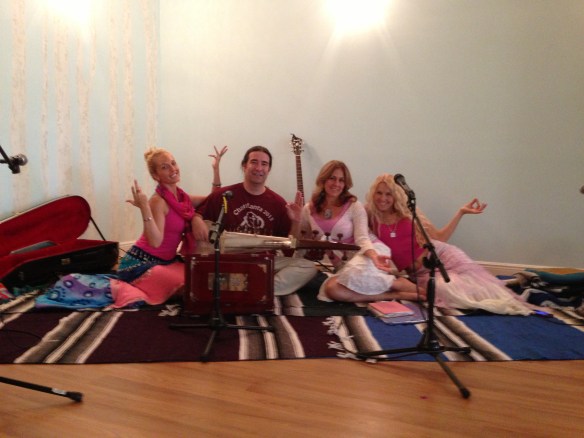
Hanuman Chalisa CD now available at Native Yoga Center and at our online store: 

This CD was recorded at Sacred Heart Studios in Jupiter, Florida on 12/12/2012.  It is a dream come true for me to make it into a professional studio and have the opportunity to record this song. Several years ago I had the chance to hear Tim Miller sing the Hanuman Chalisa in a way that completely rearranged my understanding of devotional music. Tim’s inspiration in singing this song encouraged me to learn it as well and play it every Tuesday on Hanuman day the same way he does at his shala in Encinitas. After a couple of years of practice it gives me great joy to present this recording. Jai Hanuman!!

Native Yoga Paddle Adventure Tour

Come and join us on Saturday night, September 29th, for paddling adventure in Jupiter on the Full Moon. It should be a beautiful evening and JOC is giving a discount for all Native Yoga Center students who would like to participate. If you have your own paddle board or kayak you can join in for free. All ages are welcome. Come and enjoy nature in all of its splendor. 🙂

Indian Taxi Cab Wisdom

Guru Purnima
July 3rd, 2012
 

Images
Today is Guru Purnima. This holiday is to celebrate the Guru and it is honored on the full moon in the month of July. It is a widely practiced holiday amongst Buddhist and Hindu culture and is in place to give honor and respect to the spiritual teachers of the global community. 

In Sanskrit, the word “Gu” is translated as darkness or ignorance. The word “Ru” means dispeller or remover. Therefore one who removes darkness and ignorance is considered Guru. The Guru/disciple relationship is regarded as a necessary part of life to help guide us through the many challenges that we face. On Guru Purnima, disciples offer puja (worship or offering) to pay respect to the Guru through devotion in the form of flowers, song and/or prayer.

When I began the practice of yoga I longed to meet a genuine Guru. I had been reading several accounts of travelers going to India to meet spiritual guides and had taken diksha (initiation) into the Guru/disciple relationship. I was completely intrigued by this concept. I had heard accounts of different experiences where people felt as if their lives began to open in a direction where they experienced peace and acceptance of their experiences in life. During this time sparked interest in discovering what my purpose was. The main story that stuck with me was the adage that “when one is ready, the Guru will appear.” I began to trust that this was true and to try to let go of the wanting right away. This in itself is a large part of why there is dissatisfaction and confusion to begin with. Wanting things to happen right now without facing the difficulty that comes with working through our issues can be the catalyst for confusion. Hence, the understanding of the journey with patience in practice began.

Fast forward to the first time Tamara and I traveled to India. We had heard amazing things about a man named Shri K. Pattabhi Jois who taught yoga in a town called Mysore in South India. Over several years of hearing accounts about him and after speaking with many people who had traveled to India to practice with him we became inspired to go and visit him ourselves. It was eight years ago and we had just finished a month of Ashtanga practice with Rolf Naujokat in Kho Phangan, Thailand. We made the journey from Thailand to India by boat, plane and car and began practice at his shala in Mysore. Right away he struck us as an extremely compassionate and gentle man. He also carried a “light” about him that was quite intense and direct. He could command complete respect with his voice and presence and then with a look melt you with the innocence of a child all within a moment.  This sparked so much intrigue and interest for me to get to know him more.   At the end of each class his students would line up and kneel down and touch his feet. I was so unsure what to make of this act. This was a foreign concept to me being raised in American culture, creating a unique challenge and  an internal struggle regarding my own sense of surrender. 

Several weeks went by and one morning I felt the inspiration to join in line.  As I got close my palms began to sweat and I felt a bit nervous. Why was I so nervous? I kept asking myself this question because it didn’t seem like such a big deal, I am just showing respect for my teacher.  My turn came and I knelt down and touched my hands to his feet and placed my forehead on the ground just below. I looked up at Guruji  and he had such a gentle smile on his face and this resonated deeply within.  Now an even stranger feeling came over me…I immediately broke down into tears. This feeling of catharsis was a necessity to move forward with surrender and humility. Feeling a bit shy, I slowly retreated and tried to remain as quiet as possible to try to assimilate this experience. It was at that point that I began to understand and appreciate the depth of the Guru. It is because of that point, that I continue to aim to cultivate this type of respect for the teacher. It is through the practice of humility as a student that we can truly appreciate the grace of the teacher.

Guruji passed away several years ago. Yet his teaching and his presence is alive and thriving today. There are several senior Ashtanga teachers who were dedicated students of Guruji that continue to teach and instruct through this method. By virtue of dedication to practicing yoga, which is really quite simple, the essence of the Guru remains alive. Yesterday, following practice with Rolf, there was such an ease of conversation that it felt that there was really no need for conversation. A simple namaskar(hands in prayer and gentle bow) and a smile can convey everything. When we begin to contemplate what Guru yoga is and how it applies to our own lives it can bring up a lot of inquiry and question. I feel this is a completely personal journey for each individual and that there is no exact formula that works exactly right for each person. By the same token, there is a wonderful formula that can work for every person and it begins with humility. On our first trip to India I had asked a taxi driver, “do you have a Guru?” He replied, “Everyone is Guru. We can learn something from everyone if we choose to truly listen.” This is profound Indian taxi cab wisdom. My teacher Tim has often said something that seems to sum it up nicely. He says “My goal as a teacher is to inspire a passion for practice. The practice itself, done consistently and accurately, is the real teacher.” This is a wonderful outlook! 

0images

Temples, Spice and Rain

Temples, Spice and Rain

It was a Friday and we woke up early and practiced Lead Primary series with Rolf.  He counted with such fluidity and ease through the Primary Series. Practicing to Rolf’s count is just like practicing with Guruji.  It was a pleasure to listen and move with every count and coordinate the movement to his timing.  The choreography of the ashtanga vinyasa method is so complete and exact it is a great to experience in detachment and inward focus.  Those of you interested in learning more about Rolf can by visiting his website at www.yogabones.org.

Following practice and breakfast we prepared for our trip to Ponda to visit some of the famous temples we have heard about.  We left the beaches of Goa and travelled through the capital city of Panaji we past the lowland river and estuary region of Goa and began to climb in elevation the tropical hillside of the inland region. The country side is a dense jungle of coconut palms, bananas, mangos, cashews, and Flame of the Forest trees. In the local Konkani language the names of these trees in order of above are called Naal, Keli, Ambo, Caju and Pongaro. There are several plants and trees that are unique to Goa and also some that have been introduced by the Portuguese. Interestingly enough, the Portuguese introduced the green chilies, which is now an essential ingredient of the Indian Curry.

The first temple we stopped at was a Sai Baba Temple in Raybandir. Sai Baba of Shirdi is considered a saint in India and he is much revered across the country and also throughout the world. He had no love for perishable things and his sole concern was self-realization. He taught a moral code of love, forgiveness, philanthropy, charity, contentment, inner peace, and devotion to God and guru. Sai Baba opposed all persecution based on religion, caste or creed. He was an opponent of all religious orthodoxy existent in Christian, Hindu and Muslim circles. Although Sai Baba himself led the life of an ascetic, he advised his followers to lead an ordinary family life which rings true for me. 

What we really enjoyed about this temple which was quite unusual, was that there was no one there.  There were tables in the entry with some flowers and incense available to offer as pujas yet there was no one in sight.  This created a very quiet and spacious feel when inside. Common practice is to sit on the floor with crossed legs and avoid placing the soles of the feet toward the front of the room. Most Indians are completely at home sitting with crossed legs which we often call “Indian style” sitting. In sanskrit this is called Sukhasana.  This translates as easy pose and literally means “good axle hole.” Imagine you have a wheel that has the axle hole placed exactly in the center.  This creates a smooth and even rotation. Crossed leg sitting can become very easy yet for many of us westerners used to sitting in chairs, sukhasana quickly turns into “dukhasana or suffering pose.” Yet another reason the yoga practice is so beneficial. 

We continued onward inland and when we reached the crest of a steep hill, turned right and made a steep descent down a winding rode alongside someones pineapple patch to arrive at the Balaji Temple in Sansthan. Balaji is another name for Venkateswara which means “the lord who destroys the sins of the people.” He is an incarnation of Vishnu, who in the Trimurti (“three forms”) of Hindu culture serves as the aspect of sustenance and preservation. The great thing about visiting during the “off season” is all of these sites are very quiet.  Only a few people are visiting allows for a peaceful stroll around the temple. I was told that this temple is a smaller version of a famous Balaji Temple in Andhra Pradesh for which thousands of pilgrims will visit within a day. We offered pujas to the brahmin at the entrance for which he gave me some blessed water to drink and also an ayurvedic herb to chew on which had a mouth numbing quality. We also bought some prasad which literally means “a gracious gift.” Prasad is usually a food that is first offered to the deity and then given to the follower to serve as “a good sign.”  Beside the temple was an ashram where devotees could stay and at the top of the ashram was a beautiful statue of Shankaracharya. Shankara was born in 788 A.D. and is considered one of the greatest philosophers in India and is given credit for establishing the tradition of Advaita Vedanta. Advaita (literally meaning non-duality) is a system of thought where the identity of the Self (Atman) and the Whole (Brahman) are one. Realization of this identity leads to liberation. Practitioners of this understanding subscribe to the notion of jivanmukti which means “living liberation.” In other words, it is possible to become fully enlightened within the framework of human existence.  Whereas dualistic philosophy states videha mukti which means “liberation without the body.” In other words, it isn’t until the time we pass, or death, that we are able to realize full liberation from the confines of illusion within our consciousness. 

Next we are off to the famous and enchanting Mangesh Temple in Mangeshi. This is temple dedicated to Lord Shiva and has an interesting history. Its original location was in a village called Kushasthali or now known as Cortalim as named by invading Portuguese. In 1560, the Portuguese started Christian conversion and hence the Mangesh Linga was moved from Kushasthali inland to its current home in Mangeshi. The former location was demolished and a Christian church now stands in its place. In 1739 the current temple was built to greater grandeur and by the time the Portuguese had moved into this area their religious zeal declined and they began to become tolerant of other religions.

The temple is simple and yet exhibits an elegant structure. I had read before hand that westerners were not allowed to go into the temple any more because of lack of respect for proper dress code. Women must cover their legs and shoulders and men must wear long pants.  It is also imperative that no one enters if they are under the influence of intoxicants.  So I was quite pleased when we followed the rules and were allowed entry. No photography is permitted inside which leaves the inner sanctum to ones imagination. We sat on the floor with quite a few other Hindu families and enjoyed the excitement that the temple inspires.  We offered some pujas gave some American coins to an interested resident brahmin within the temple. We bought some japa malas (108 beads strung together) from him and listened to his history of the temple. 

I had promised Ethan that we would only go to three temples today. I bartered for five and he tried for one so we compromised in the middle with three. So when Ulhas dropped us in front of the fourth temple for the day I was excited when the family was keen to jump out of the van and dodge some traffic to visit the Shri Ganesh Temple at Farmagudi in Ponda. Ganesha is elephant headed and boyish body incarnation of Lord Shiva who is widely revered as the Remover of Obstacles. We removed our shoes at the steps below and entered through the doorway. Once inside there was a large Ganesh statue locked behind the entryway doors. Oil lamps were lit all around and grand garlands of flowers adorned his body. The smell of incense was strong and permeated the halls. The tradition is to walk clockwise around the the square building that houses the statue. On the back of the wall that would be to the back of the idol devotees press their forehead against the wall.  Because thousands of people have done this millions of times the wall gets worn away and leaves the most interesting texture and abstract artistic color. I followed suit and rested my face on the wall and it put the most interesting and bizarre sensation on my forehead. I tried to wipe it off because it felt unique and it was gone just as quick. A scientist would probably say that some bacteria caused irritation for which I won’t argue, however it was something to note. We exited the temple and hopped back in the van and gave some time to let it all soak in.

It was time for lunch at this point in which we went to the more well worn tourist path of the Sahakari Spice Farm in Curti Ponda. We enjoyed some tasty vegetarian curries, butter naan(Indian bread) and washed it down with lemongrass tea. The spice farm offers a tour through their spice fields which are a jungle of different plant species. At this point we were more interested in walking around by ourselves which we did to enjoy the forest at our own pace.

We joined back up at the van with Ulhas and began our journey back to the beaches of Candolim. It was a pleasant ride from the heights of the hinterland back down to the busyness of the coastal surrounds. The longer we spend in India the more we begin to settle into the pace and culture. When we first arrived everything is moving in a way that was unfamiliar and then each day brings a new discovery, a wonderful meal, a temple visit, an introduction into a different perspective that slowly becomes more familiar. I am beginning to have that feeling like I would like to live here. I mention this to Tamara and she just looks at me with that smile that reminds me to just enjoy the moment. Each moment we have where we are right now is the perfect moment to enjoy our own temple within and spice of life around. As we keep traveling a large rain storm begins to wash everything down. The heat breaks and makes for the perfect environment to sit back and enjoy.

The_long_road_native_yoga

Tamara_native_yogaEthan_native_yogaGoa_native_yogaSai_baba_of_shirdiSai_baba_native_yoga_2Sai_baba_native_yogaNative_yoga_sai_baba_temple_goBalaji_temple_native_yogaShankaracharya_native_yogaMangesh_temple_native_yogaMangesh_temple_2_native_yogaMangesh_temple_3_native_yogaMangeshi_native_yogaMangesh_temple_street_native_yGanesh_native_yogaGanesh_ponda_native_yogaGanesh_tam_and_ethan_native_yoSahakari_native_yogaSahakari_ethan_native_yogaSahakari_2_native_yoga

Goan Monsoon Wedding

Goan Monsoon Wedding

The owner of the SRI restaurant in Vagator, Goa is named Richard.  He is a very nice man with a kind smile and meditative nature. He practices Mysore with us every morning and he is very dedicated and persistent. Last week he gave us an invitation to an Indian wedding.  We felt honored.  I had never seen one before but have been fascinated by the many films that are available documenting the intricate nature of these events.

It was a rainy Saturday and we could not rally Ethan to come to the ceremony.  Tam stayed home with him as I made the taxi drive from Candolim and arrived at the Shri Swami Siddheshwar Mandap in Anjuna, Goa. There were cars and busses parked all along the roadway as we approached. Once we arrived I could hear the sound of loud percussion and amplified keyboard playing traditional music being blazed through the air.  Immediately my senses heightened and there was a palpable excitement amongst those entering the temple.  

I walked up to the entrance of the temple to find it completely filled with chairs facing a stage where the bride and groom were seated.  As I walked closer I soon realized that “I am the only tourist here” and I felt the looks of the locals…I had been discovered! I quickly looked to see if people were wearing shoes to know if I should wear mine in or not.  I took a couple of steps back and assessed the situation.  I made my plan and casually made my way through the crowd as I found my seat.  As I approached a man smiled and extended his hand to welcome me.  A young girl had a plate of sugar and she extended it toward me to enjoy and I put into my mouth.   The colorful music was cranked loud and this was a great enhancement to the mood in the room. I loved it.  The colors popped and were so vivid and sparkling that it was mesmerizing. The women were dressed so meticulously with adornments of every type, I found it quite easy as an onlooker to sit back and absorb the steady stream of stimulus. The men were more simply dressed,  all in slacks and collared shirts neatly tucked and sandals.  The men in the wedding party went a bit above the rest wore traditional dhotis which are long shirts and pants tapered at the ankle underneath.

The ceremony itself seemed to consist of several different formalities that left me wondering what was happening. There were no words spoken that I could tell. I imagined it was going to be like a western wedding in the sense that there would be a celebrant who would offer some words to officiate. It is quite possible that there were other segments of the ceremony that I had missed. Each of the attending family members went up to the the bride and groom and offered presents and good wishes.

As the ceremony was close to ending I sat and watched the caterers set up the food table and some women heated oil for cooking chapatis. I saw Richard from afar and also Dani whom is from Spain and also here practicing, which made me feel a bit more at ease to see friendly familiar faces. After the ceremony each attendee got in line and took pictures with the bride and groom.  He asked me to join them and I was able to present a simple present to the bride.  

Img_0473

After some pictures began the feast.  They had the most delicious vegetarian Indian food on offer and I quickly made an ample plate full.  The food here is certainly spicy.  I do love spicy food and in my opinion this meal took the cake.  I had so much sweat pouring off my upper lip and my whole body heated up instantly. My one mistake… I didn’t bring my own water and I am not daring enough to drink the tap water here! 

The entire experience was rich in color, sound, aroma and flavor. I often wonder, “do I find this culture so interesting simply because it is different from my own?” Often when things become familiar the excitement of newness wears thin and it is easy to lose interest. Yet here I am so enthralled with the celebration, music and the attire.  The energy seems to be amplified times 100.  Yet perhaps for the local this is “just another wedding I have to attend.”  I suppose this all comes down to how we choose to embrace the moment. Being in India helps me to embrace and celebrate the moment!

How a Snake becomes a Crocodile

How a Snake becomes a Crocodile

We awoke this morning to the sound of heavy rain. It is Wednesday and were definitely moving a bit slow this morning. All packed up for practice we put on our rain coats and got out our umbrellas and began the walk uphill through the muddy alleyway between the houses. The hard rain coming down forms a little river that flows through the alley and we are careful to navigate around the cow patties and rocks. And so todays’ adventure begins… A man named Ulhas has been driving us each day to the shala. Ulhas is a very helpful and friendly Indian man and most importantly he is quite a punctual driver! He shows up promptly at 6:30am and awaits our arrival with open doors and a large smile. There are so few tourists here during this time of year that he seems very happy to have the regular fare. He takes us along the road from Candolim up toward Anjuna and then just a bit further up to Vagator. It takes approximately 20 minutes every day which is actually a great ride because it gives a chance to see the locals engaging in their morning rituals.

Shiva_in_vagator

Exiting the vehicle upon arrival the blue Shiva statue greets us on our way into the shala. We promptly take off all of our rain gear and step up the 3 steps to the raised practice space. Rolf and Marci arrive at 7:00am. Right now there are about 10-14 students practicing each day. During the busy dry season it is said that Rolf and Marci have about 130 people practicing Mysore in four shifts of about 35 each shift running for about 5-6 hours daily! I say all of this for one, to point out how remarkable it is that they have this many students who travel from all around the globe to study with them and second that there are so few students with him during monsoon. We feel quite lucky to be getting so much personal attention! All of this special help is extending our practice time to between 2 1/2 to 3 hours each day. Both challenging and amazing. Some of the more difficult postures that we will normally gloss over a bit when practicing on our own have now become intense explorations of discovery. Discovery of how we tend to compensate by using areas which are strong to mask and avoid areas which are untapped and weak. Much to our delight (I think) Rolf and Marci have this knack for seeing this right away from anywhere in the room and immediately get us to target the areas we are avoiding and then persist with this development to the point of shear exhaustion. And just when you think you have made your way through the posture thoroughly they will say,”O.K. let’s try that again… O.K. you practice this one or two more times by yourself and then I will come over and help you once more!” Oh Joy!!

Native_yoga_vagator

Today, Tamara went into Bhekasana(Frog pose) for the 3rd try and right when she came out of it I heard Rolf say, “Tamara, you do again, I come and help you.” I started to laugh and she looked to me laughing as well as if to say, you laugh now, it is your turn next! In second series, Karandavasana is Duck posture, this pose in my opinion is the nemesis pose to all Ashtangi’s. You go up into a forearm balance of Feather of a Peacock. Then fold your legs into lotus pose while balancing. Then slowly round your spine while gently landing your shins onto the upper arm bones. From there you hold for 5 breaths. Next is the clincher… lift the lotus above the hips and unfold the lotus back into forearm balance. Only to gracefully land into chaturanga. I imagine this to be like climbing the Himalayas just within these few vinyasas. I have been working on this pose for several years now and am feeling slow progress but still much exploration is needed! Fortunately for me Rolf is gifted in adjusting this pose. I worked with this pose for a while and soon my arms felt like noodles cooked in hot sauce… burning and limp. The next pose is Nakrasana (Crocodile pose) and as I am giving it my best Rolf yelled out, “it is crocodile pose not SNAKE pose!!” This got the whole room to chuckle a bit. Add to this that there are numerous baby kittens moving about the room and they love to climb on top of you while you are in postures, this also adds a little bit of humor to it all. These animals I do not mind, however the many ants and mosquitos swarming I could do without! Great opportunity to exercise inner focus and mind over matter. With the rain there is much humidity and so much sweat that there is literally more water dripping off of our bodies than there is landing on the floor from the leaky roof. After all is done for today. We roll up our mats with a sense of amazement. Mysore practice is truly amazing as it allows us to work individually yet within a framework that is so solid and sound. This practice comes from a tradition of excellence and this is yoga as practiced in India! There is much to be said for Tradition!!!

Native_yogaNative_yoga_india

Monsoon Surfing

Monsoon Surfing

The ocean is taboo during monsoon season. The fisherman are not allowed to go out and fish for two months during the monsoon. This allows for the fisheries to replenish and also because the seas are very rough compared to other months. It is said many tourists drown here each year and hence this perpetuates the myth. I wonder if it is that many of the tourists that visit here may not be strong swimmers to begin with or perhaps they indulge in a few too many Kingfishers?

Native_yoga_surf_yoga

Originally when we had planned to travel to Goa it was purely to practice the yoga with Rolf and Marci and have the chance to explore India again. I had always seen photos of Goan beaches and the water has always been flat as a pancake. I thought I would look into it and low and behold I was finding that there is surf in Goa! Just my luck this only happens during monsoon season and guess what, Virgin Atlantic allows you to bring a surfboard for free(completely unheard of)!?! So of course now I am traveling to India with a surfboard!

When we arrived my board got left behind in London and at that point I thought my chances of seeing it again were pretty slim. We are staying about 500 meters from the beach and as soon as we got settled we went down to the beach and it was a solid 4-5 foot and offshore winds and I thought I had stumbled upon a hidden gem.

Img_1573

To my amazement the next day my board arrived, but so did the rains and onshore winds. Each day for the past week I have been checking the waves religiously and it has been one big washing machine, close out, mush ball, onshore surf session after another. To add to it, upon arrival I have had so many people tell me that the ocean is so dangerous and don’t go out in the waves. All I have heard is this person has drown and that person never came back and and watching this big soupy mess made me think there might be sea dragons living out there! To me the waves look just like at home with a solid swell and to be honest not that big of a deal. The stories however just never let up.

One morning when I was feeling very hopeful I walked down with my board under arm and when I saw the conditions I was completely uninspired. Again, big, messy surf and to add to it I am the only lonely surfer on this entire stretch. All the locals hang out on the beach but no one ever goes swimming. So I decided well at least if I am going to go out it needs to be decent. When I was walking back an Indian woman said “did you go out in the water?” I replied “no” and once again came another story! The only catch here is I have felt this before. When I was in Indonesia on a surf trip to Bali and surfing waves of so much more extreme consequence I was told to never wear green in the water! If you wear green it is very bad luck and to ocean gods will do you in. There is also this thing called superstition. I am not one to give in to superstition. Yet when a whole culture believes it to be true it really gets you thinking. There is also the opposing side that says live in the moment and experience this reality. Tourists here come to party and end up being completely disrespectful to the local community. What it boils down to is this is not a surfing culture! So here comes American guy with surfboard under arm and heading down to go “monsoon surfing”!

Img_1575

The last three days the sun has come out and the weather has been spectacular. What a difference. I have never seen rain like this in my life and then to have it turn back around to beautiful sunny skies…there is hope!

Img_1576

After practice with Rolf in the morning I went down to the beach again and I knew that today was going to be the day I was going to go for it. The waves were still mushy from the onshore wind and they were only about head high out the back so it seemed reasonable. Tam and Ethan followed me down there and we walked past another heard of cows hanging out under the coconut palm trees on the way. The life guard shack was open about 800 meters down the beach and they had the red flags up along the beach so I knew I better get in quick before someone came up to me and said I wasn’t allowed in the water. I jumped in and began to paddle out. The set up is a classic victory at sea beach break, wave after wave of whitewater, duck dive after duck dive to try to make it out. I seemed to be paddling in place and in no time at all I heard the whistle blow and and turned to see the lifeguard waving me in. I took my moment and turned, caught a wave and rode it up onto the shore. I ran up to him and to my surprise he changed his mind and said all was o.k. for me to continue. I must have passed the test and went back out!

Finally, I had my first surf session in India! Sloppy and messy yes, but so much fun. It felt so good to be in the warm water and I feel I was probably the only one surfing for miles! To me, yoga is surfing and surfing is yoga. Merging these two wonderful arts into this travel experience makes me so thankful to be alive!!

Jai Hanuman

Jai Hanuman!

Img_1527_-_version_2

We had the chance to visit the Maruti Temple in the city of Panaji here in Goa. It is a beautiful temple located on top of the Altinho hillock overlooking the Fontainhas district on Panaji which is the capital of Goa. Upon entering we had the opportunity to purchase some flowers (pujas) from the local vendors. One of the ways that we can express devotion is to place an offering or pujas before the object of devotion. Quite simply it is a gift given with good intentions and given selflessly to express gratitude and appreciation. While in one of the smaller temples a tiny sweet Indian woman entered and smiled very graciously. She seemed happy to see us and although there was a language barrier we attempted to communicate. The Hanuman Chalisa was written in Hindi on the wall of the temple and she chanted it for us. So much joy can be found in attempting to understand others’ culture and beliefs. All too often it is easy to see something different from what we know and criticize it or just shy away. By simply opening up to the differences we can begin to see that really there is no difference. This is one reason I love the Hanuman Chalisa. Many thanks to our teacher Tim Miller for opening our eyes to the practice of singing the Hanuman Chalisa.

The Hanuman Chalisa is a devotional song sung in the Awadhi language, composed by Tulasidas, a Hindu poet-saint who lived between 1532-1623 CE. The Hanuman Chalisa is inspired by one of the great epic stories originating in India called the Ramayana. It was composed sometime between the 4th to 5th century B.C. It is a beautiful tale primarily of devotional characteristic. Rama, Sita and Hanuman are three of the main characters in the story. Rama is portrayed as the epitome of virtue. Sita, his wife, is portrayed as the epitome of female purity and virtue. Hanuman is the half man, half monkey character who is portrayed as the pinnacle of devotion and selfless service. He has immeasurable strength and is the ultimate devotee of Rama.


The ancient mystics of India have long recognized the benefit of cultivating intense love and devotion to aid in the process of realizing unity with the Divine. We are often very self centered and lack a sense of caring and compassion for others. When we live like this we diminish our capacity to feel and experience a sense of harmony with our selves and our environment at large. The yoga practice aids us in cultivating a personal aspect of greater evolution and helps to shift the emphasis of being alone in a world of many to being a part of many that are all a world of one.

Img_1532Img_1522

If we are to make a cake, several ingredients go into the recipe. When we combine the ingredients together and add heat we are left with a delicious treat. Each ingredient needs the other to complete the qualities that make up “cake.” Yoga is made the same way. When we are to enter into the practice of yoga there are several ingredients that create a rich and rewarding experience. We have posture, breath, devotion, love, wisdom and selfless action. We can derive great benefit from cultivating just one of these qualities or practices. However when we begin to incorporate a multitude of these qualities into our lives, we begin to weave a seamless tapestry of moment to moment awareness that is unparalleled to what we think we already know.

Img_1530

In other words, yoga practice is much more than practicing asana or posture. It is possible to realize that by extending compassion to others in our speech, thought and deed we are really just enhancing our own relationship with ourselves. When we practice “actionless action,” or karma yoga, we perform action without any attachment to the result of our action. Through this simultaneous merging of qualities our yoga practice becomes what many of us were originally attracted to in the first place. Peace, tranquility, equanimity and transcendence.