Michael Johnson ~ Discovering the Timeless “Now” in Yoga Practice

Listen to podcast with Michael Johnson for FREE here

Michael Johnson is a prominent yoga and philosophy instructor based in Asheville, North Carolina. He is the founder of Clear Light Yoga and a respected teacher at both the Asheville Yoga Center and the Ayurvedic Institute. With over 20 years of experience, Michael specializes in yoga philosophy, Sanskrit, and meditation. Through his 200-hour yoga philosophy teacher training program, Michael inspires students to delve deep into the ancient texts and principles of yoga, making these complex ideas accessible and applicable to modern life.

Visit Michael on his website: https://www.clearlightyoga.com/

Key Takeaways:

  • The Essence of Yoga: Yoga is about controlling the mental activities to avoid being controlled by them. This is a path to self-control and understanding one’s true nature.
  • Philosophical Integration: Understanding Sanskrit and the Yoga Sutras is crucial to grasping yoga philosophy. Different translations can lead to varied interpretations and levels of understanding.
  • Non-Theistic Bhakti: Bhakti Yoga, traditionally theistic, can also be practiced in a non-theistic manner, focusing on devotion to ideals rather than deities.
  • Practical Application: Michael shares real-life applications of yoga philosophy, from daily interpersonal interactions to handling extreme situations like cyber threats.

Expanding Your Yoga Journey: A Comprehensive Insight into Yoga Philosophy with Michael Johnson

The world of yoga extends far beyond physical postures and breath control. In this insightful dialog from the Native Yoga Toddcast, seasoned yoga philosopher Michael Johnson delves into the depths of yoga philosophy, painting a vivid picture of its profound impact on personal growth and self-awareness. Through exploring the Yoga Sutras of Patanjali, the nuances of Sanskrit, and the integration of Ayurveda, Johnson provides a masterclass in the foundational principles that underpin yoga’s philosophical teachings.

Key Takeaways:

  • Understanding Yoga Sutras: Delving into Yoga Sutra 1.2, “Yoga Chitta Vritti Nirodha,” offers varied interpretations—both as the cessation and control of mental fluctuations.
  • Real-world Application: Johnson shares personal anecdotes demonstrating the practical application of bhakti yoga and maintaining integrity in challenging times.
  • Non-theistic Bhakti Yoga: Johnson presents a unique perspective on practicing non-theistic bhakti yoga, encouraging humility and ongoing learning.

Yoga Philosophy Unveiled: Insights from Michael Johnson

Mastering the Yoga Sutras: Unpacking “Yoga Chitta Vritti Nirodha”

Understanding the Yoga Sutras of Patanjali requires delving deeply into its Sanskrit roots. In the conversation, Michael Johnson describes how he first encountered Yoga Sutra 1.2: “Yoga Chitta Vritti Nirodha”. This critical sutra, often translated in myriad ways, reveals that yoga is about either the cessation or the control of the fluctuations of the mind. Johnson explains:

“Many people will translate ‘Yoga Chitta Vritti Nirodha’ as ‘yoga is the cessation of mental activities,’ leading to the assumption that the mind’s fluctuations must stop for yoga to be practiced.”

Johnson, however, brings attention to an alternative interpretation:

“Another way to translate that would be ‘yoga is controlling the mental activities,’ suggesting that Purusha (pure consciousness) isn’t independently available to perceive but actually requires mental activities to experience knowing and being.”

The distinction, though seemingly subtle, drastically changes one’s approach to yoga. Instead of striving for a seemingly impossible cessation of thoughts, practitioners can focus on learning to harness and control these thoughts, thus optimizing their practice and making yoga more accessible.

Integrating Philosophy into Practice: Real-life Application

Johnson’s discussion goes beyond theory, illustrating how these ancient teachings can be applied in contemporary settings. He underscores the importance of staying authentic and true to one’s values, even amidst threats and challenges. He shares a personal incident where someone threatened him and how he coped:

“Someone using cyberthreats threatened to hunt me down and kill me. Though going through legal routes felt unsatisfying, I had to detach from the outcome and focus on my integrity and actions. By abiding in my true form, I could navigate this threat without being overcome by fear or anger.”

This anecdote exemplifies the practical application of bhakti yoga in sustaining personal integrity and emotional health. It underscores yoga philosophy’s potential to provide not just a spiritual but a practical framework for dealing with life’s trials.

Embracing Non-Theistic Bhakti Yoga

Johnson’s fresh perspective on bhakti yoga deviates from traditional theistic approaches, presenting a non-theistic pathway that aligns with scientific reasoning and inclusivity. He elaborates:

“Ishwara is described in the Yoga Sutra as an absence of mental afflictions, not as a deity you surrender to but as an ideal you can approximate in your life.”

By focusing on bhakti as devotion to higher ideals rather than deities, Johnson makes yoga philosophy more approachable for a diverse audience. In his teachings, he emphasizes principles like humility, continuous learning, and authentic practice, liberating yoga from rigid doctrinal confines.

“I might be a rare example of bhakti yoga in the world, a non-theistic approach to bhakti that inspires me. It allows me to be transparent and scientific in my approach, while not being hostile to theistic practitioners.”

This perspective not only diversifies yoga’s appeal but also fosters a more inclusive environment where individuals from various backgrounds can find meaning and solace.

Expanding Horizons: Enriching Your Yoga Practice with Philosophy

Michael Johnson’s approach to yoga philosophy is a testament to the depth and versatility of yoga itself. His insights emphasize that yoga is not just a set of physical exercises but a holistic practice encompassing mental discipline, ethical living, and personal growth. By understanding key sutras, applying philosophical principles to real-life situations, and embracing non-theistic approaches to bhakti, practitioners can profoundly enrich their yoga journey.

In teaching philosophy-focused trainings, Johnson aims to bridge the gap between traditional teachings and modern-day relevance. His teachings highlight the importance of continuous learning, humility, and inclusivity in the quest for self-control and personal integrity.

By integrating these profound narratives and philosophical insights, yoga practitioners can deepen their understanding and appreciation of yoga, making it a powerful tool not just for personal transformation but also for navigating life’s inevitable challenges.

In bringing these themes together, Johnson not only honors the rich, historical context of yoga philosophy but also paves the way for its practical and inclusive modern application. His teachings inspire and challenge us to look beyond the surface, urging a deep-seated, authentic exploration of what it truly means to practice and live yoga.

Thanks for listening to this episode. Check out: 👇
Free Grow Your Yoga Live Webinar – Every Thursday at 12pm EST
➡️ Click here to receive link

New Student FREE Livestream Yoga Special ~ Try 2 Weeks of Free Unlimited Livestream Yoga Classes  at Native Yoga Center. info.nativeyogacenter.com/livestream Sign into the classes you would like to take and you will receive an email 30 minutes prior to join on Zoom. The class is recorded and uploaded to nativeyogaonline.com  ➡️  Click Here to Join. 

Subscribe to Native Yoga Center and view this podcast on Youtube.

Thank you Bryce Allyn for the show tunes. Check out Bryce’s website: bryceallynband.comand sign up on his newsletter to stay in touch. Listen here to his original music from his bands Boxelder, B-Liminal and Bryce Allyn Band on Spotify.

Please email special requests and feedback to info@nativeyogacenter.com

Enjoy new Native Yoga Center classes uploaded everyday on our online learning hub. Use code FIRSTMONTHFREE at checkout. https://nativeyogacenter.teachable.com/p/today-s-community-class

Support the Show.

Native Yoga website: here
YouTube: here
Instagram: @nativeyoga 
Twitter: @nativeyoga 
Facebook: @nativeyogacenter 
LinkedIn: Todd McLaughlin

Rod Stryker – The Essence of Tantra & Exploring The Four Desires

Listen to Native Yoga Toddcast Episode #171 with Rod Stryker here

Discover the insights and transformative power of yoga and Tantra with world renowned teacher Rod Stryker. Host Todd explores Stryker’s journey from his first experience at age five to his profound teachings today. Learn about the nuances of Yoga Nidra, the sacred practice of revitalizing temples, and the four desires shaping our purpose. This episode delves into the depths of meditation, relaxation, and finding balance in modern life. Perfect for those seeking a deeper understanding of yoga’s spiritual and practical applications.

Visit Rod on his website: https://www.rodstryker.com/

Key Takeaways:

  • The Journey of Yoga Practice: Rod Stryker recounts his introduction to yoga at a young age and how influential texts and teachers shaped his path.
  • Understanding Tantra: Stryker articulates the principles of Tantra, highlighting its worldview and practices aimed at uncovering the sacred within.
  • Sacred Energy and Temples: Stryker describes initiatives of reinfusing energy into sacred spaces, promoting a reciprocal relationship with these spiritual environments.
  • Yoga Nidra’s Importance: An in-depth look into Yoga Nidra, its stages, and why it’s crucial for addressing modern-day restlessness and achieving true relaxation.
  • The Four Desires: A guide to discovering one’s life purpose, balancing essential desires, and aligning them with spiritual goals.

Unearthing the Sacred: Rod Stryker on Yoga, Tantra, and the Art of Stillness

The Path of Yoga and Early Beginnings

Rod Stryker’s yoga journey began in the most unexpected way—a book pulled from a shelf at his grand uncle’s house when he was just five years old. Stryker recalls, “seeing this guy doing yoga postures… left a powerful impression.” This early encounter set the stage for his formal practice at the age of 19, when he found Iyengar’s “Light on Yoga.” This seminal text powered his passion. Stryker shares, “I started doing shoulder stand for half an hour… my nervous system was so, uh, had reached such a deep level of healing.”

His initial practice, modeled meticulously on Iyengar’s teachings, highlights a foundational truth in yoga: the body becomes a map for exploring deeper layers of self-control and realization. Stryker eloquently states, “The practice is the teacher… something inside of us is lit through practice.” This reflection emphasizes the formative nature of practice itself as a guide, notwithstanding the advantages of having a direct teacher.

The Wisdom and Practice of Tantra

The breadth of tantra is profound and dense, a body of knowledge aiming to uncover the sacred in the mundane. Stryker elucidates, “Tantra says that everything is sacred… technique that unfolds the experience.” He draws parallels with Taoism to explain how tantric practices engage householders, emphasizing that life should be enriched through sacred practices rather than ascetic renunciation.

Tantra’s Dual Aspect: Worldview and Technique

Rod Stryker passionately outlines tantra’s overarching principles. He describes it primarily as “a body of knowledge” that perceives the world as inherently sacred, even in its mundane aspects. This worldview diverges sharply from more renunciate philosophies by encouraging practitioners to embrace and elevate their everyday lives through sacred practices.

Techniques and Purpose

Tantric techniques aren’t just about acquiring esoteric knowledge but are practical tools for living a fulfilled and balanced life. Reflecting on his pilgrimages to India, Stryker mentions a unique practice aimed at “giving the gift of Prana back to temples to bring them back to life.” This act of replenishing sacred spaces underscores tantra’s belief in interconnection, wherein the practitioner’s inner vitality extends outward to rejuvenate the world.

Yoga Nidra and the Modern Mind

In today’s fast-paced world, relaxation and mental clarity are hard to come by. This is where yoga nidra offers profound solutions. Striker recalls his early experiences, “His voice would lead these journeys… I was somewhere else.” His initial encounter with yoga nidra under a skilled teacher still influences his teaching methods today.

Yoga Nidra as a Gateway to Inner Peace

The importance of yoga nidra lies in its ability to promote deep relaxation, making stillness accessible. Stryker underscores its relevance, given the “prevalence of anxiety and depression” in contemporary society. Unlike traditional meditation techniques that emphasize concentration, yoga nidra employs deep relaxation as its gateway. “You’re systematically letting go… to get into the experience of absorption.”

Beyond Relaxation: The Depth of Yoga Nidra

Yoga nidra goes beyond mere relaxation to touch deeper aspects of self-awareness. There are “four stages of the experience of yoga nidra,” Stryker explains, from breath awareness and physical relaxation to deeper subconscious interactions and finally, a state of profound grace. He emphasizes, “The fourth stage is just grace… the full flowering of Yoga Nidra,” delineating a structured yet profound approach to this practice. The nuanced understanding of these stages offers a transformative potential for practitioners, moving them from relaxation to a profound state of consciousness.

Recapitulating the Key Insights and Broader Implications

Rod Stryker’s thoughtful reflections on yoga, tantra, and yoga nidra offer a roadmap to integrating ancient wisdom into modern life. His teachings emphasize the sacred in daily existence, using practices to both navigate and elevate our day-to-day experiences. Key insights from the discussion reveal the necessity of balance in practice, maintaining a fluid transition between learning from direct experience and the invaluable guidance of a seasoned teacher.

Stryker advocates the notion that personal practice truly guides us towards inner connections and self-realization. He emphasizes, “We’re never done learning,” a reminder that the journey of yoga and self-discovery is ongoing. Rod Stryker’s narrative encourages us to maintain our curiosity and dedication, to find the sacred in the mundane, and to use our practices as means to contribute positively to the world around us.

Let’s take Stryker’s advice into our daily lives: “Stop your noise. Get still. Find love, share love.” This potent message, distilled from ancient teachings, holds immense relevance today, encouraging us to look within, find our true essence, and share it with compassion and humility in these often tumultuous times.

Thanks for listening to this episode. Check out: 👇
Free Grow Your Yoga Live Webinar – Every Thursday at 12pm EST
➡️ Click here to receive link

New Student FREE Livestream Yoga Special ~ Try 2 Weeks of Free Unlimited Livestream Yoga Classes  at Native Yoga Center. info.nativeyogacenter.com/livestream Sign into the classes you would like to take and you will receive an email 30 minutes prior to join on Zoom. The class is recorded and uploaded to nativeyogaonline.com  ➡️  Click Here to Join. 

Practice to a New Yoga Class every day with our nativeyogaonline.com course called Today’s Community Class with code FIRSTMONTHFREE.

Subscribe to Native Yoga Center and view this podcast on Youtube.

Thank you Bryce Allyn for the show tunes. Check out Bryce’s website: bryceallynband.comand sign up on his newsletter to stay in touch. Listen here to his original music from his bands 

Support the Show.

Native Yoga website: here
YouTube: here
Instagram: @nativeyoga 
Twitter: @nativeyoga 
Facebook: @nativeyogacenter 
LinkedIn: Todd McLaughlin

Liz Corwin – The Power of Peace: Journey of a Navy Fighter Pilot & Yogi

Listen to podcast with Liz for FREE Here

In this episode, Liz Corwin, a former Navy F-18 pilot and current Navy reservist, shares her journey from being a fighter pilot to becoming a yoga teacher. She discusses the importance of authenticity in teaching yoga and offers insights on how to create a safe and inclusive environment for military members in yoga classes. Liz also talks about the transformative power of motherhood and the impact it has had on her yoga practice. She shares her favorite retreat experiences and highlights the importance of creating a container for retreats while allowing the group dynamics to shape the experience.

Visit Liz on her website: https://www.walkaboutyoga.com/

Key Takeaways:

  • Authenticity is key in teaching yoga, and it is important to be true to yourself as a teacher.
  • When teaching military members, it is essential to create a safe and inclusive environment by being direct and using clear language.
  • Motherhood has brought a new perspective to Liz’s yoga practice and has made her more aware of her body and its capabilities.
  • Retreats provide an opportunity for personal growth and transformation, and it is important to create a container while allowing the group dynamics to shape the experience.
  • Supporting military families is crucial, as they also need the support and opportunities for growth and well-being.

A Glimpse Into the Life of a Yoga-Teaching Navy Pilot

The intersection of military precision and the fluidity of yoga may not be an obvious one, but Liz Corwin, a former Navy F-18 pilot and current Navy reservist turned yoga instructor, embodies this duality seamlessly. In a captivating dialogue, Liz reveals insights about her life experiences, from the adrenaline of flight school to the tranquility of yoga, her devotion to military service, and the challenges of motherhood. This deep dive uncovers the layers of Liz’s life, where she merges the structured world of aeronautics with the flexibility of yoga, reminding us that growth lies in the balance between pushing boundaries and seeking inner peace.

Key Takeaways:

  • Embodying the complementarity of military discipline and yoga’s mindfulness can lead to a profound understanding of personal and collective peace.
  • Authenticity in teaching, whether it stems from a military or civilian background, resonates deeply and creates a bridge between people of diverse experiences.
  • Navigating the identity as a protector and the quest for individual and global peace requires a complex reflection and acceptance of one’s contributions to both.

From Fighter Jets to Yoga Mats: The Intersection of Discipline and Mindfulness

Within the realms of military rigor and the patience of yoga lies an unexpected symbiosis. Liz Corwin’s evolution from a Navy F-18 pilot to a dedicated yoga teacher presents a narrative that deftly blends the high stakes of combat flights with the grounding practice of yoga. It resonates with the fundamental truth that one can inhabit multiple worlds—those of adrenaline-inducing adventures and those of reflective tranquility. Liz describes her affinity for the thrill and demands of flying jets as a former Navy pilot, a passion that’s undeniably intertwined with her presence and stillness as a yogi. As she recounts, “every cat shot was just as exciting as the first time,” illustrating that even the most thrilling experiences demand a counterbalance, one that she found in the meditative practice of yoga.

The broader implications of this blend of worlds are significant. Liz’s story exemplifies how individuals can construct a harmonious life that honors their multifaceted nature. It challenges the binary perception of rigid discipline versus fluid mindfulness, instead showcasing a sustainable model where disciplined training can coexist with—and even enhance—mindful living.

Harnessing the Power of Authentic Presence in Teaching

Throughout the conversation, the theme of authenticity emerges as a centerpiece, particularly in teaching. Whether instructing a military-focused yoga class or guiding a studio session with civilians, Liz emphasizes the importance of genuine connection. “Be authentic…your audience will recognize that,” she advises, stressing that this acknowledgment forges trust and fosters an inclusive environment. Yet, achieving this authenticity takes introspection and work, with Liz noting the necessity of feeling competent and grounded in one’s own body and teaching style before connecting authentically with others.

The discourse on authenticity in teaching extends beyond the personal. It resonates in the broader context of the educational and wellness communities, where practitioners are continually seeking ways to connect and engage with their audiences meaningfully. Liz presents authenticity not as a fixed endpoint but as an evolving quest that’s both personal and communal, offering a roadmap for teachers and leaders who aspire to leave a lasting impact.

Remerging Peace and Defense: The Dualistic Identity of a Military Yoga Instructor

One of the most poignant and complex themes discussed is Liz’s dual identity as a service member and a proponent of peace. As a reservist and a warrior for peace through the practice of yoga, Liz tackles the dichotomy head-on. The conversation explores the intrinsic human desire for peace that underlies military actions and frames this pursuit as a deeply rooted human endeavor, reflective of the same values sought through yoga. Liz’s contemplation of her role, acknowledging her initial motivations for joining the navy driven by the allure of adventure and brotherhood, reveals a nuanced understanding of the multifacited nature of military service.

This topic touches upon a universal truth about human nature and society’s need to protect while striving for tranquility. Liz’s reflection invites us to consider the role that each person plays in this balance—how we all contribute to the quest for peace, and how we navigate the complexities inherent in the desire to both defend and harmonize.

In a world increasingly fraught with conflicts and divisions, Liz embodies a message that insists peace and defense can be two sides of the same coin. Her commitment to both serves as an emblematic tribute to all those who commit to this delicate balance. Liz’s insights offer a beacon of hope that we can all learn from, teaching us that service, in its truest form, comes in many guises and is driven by an unwavering pursuit of a world where understanding and coexistence are paramount.

Thanks for listening to this episode. Check out: 👇
Free Grow Your Yoga Live Webinar – Every Thursday at 12pm EST
➡️ Click here to receive link

New Student FREE Livestream Yoga Special ~ Try 2 Weeks of Free Unlimited Livestream Yoga Classes  at Native Yoga Center. info.nativeyogacenter.com/livestream Sign into the classes you would like to take and you will receive an email 30 minutes prior to join on Zoom. The class is recorded and uploaded to nativeyogaonline.com  ➡️  Click Here to Join. 

Practice to a New Yoga Class every day with our nativeyogaonline.com course called Today’s Community Class with code FIRSTMONTHFREE.

Subscribe to Native Yoga Center and view this podcast on Youtube.

Thank you Bryce Allyn for the show tunes. Check out Bryce’s website: bryceallynband.comand sign up on his newsletter to stay in touch. Listen here to his original music from his bands Boxelder, B-Liminal and Bryce Allyn Band on Spotify.

Please email special requests and feedback to info@nativeyogacenter.com

Support the Show.

Native Yoga website: here
YouTube: here
Instagram: @nativeyoga 
Twitter: @nativeyoga 
Facebook: @nativeyogacenter 
LinkedIn: Todd McLaughlin
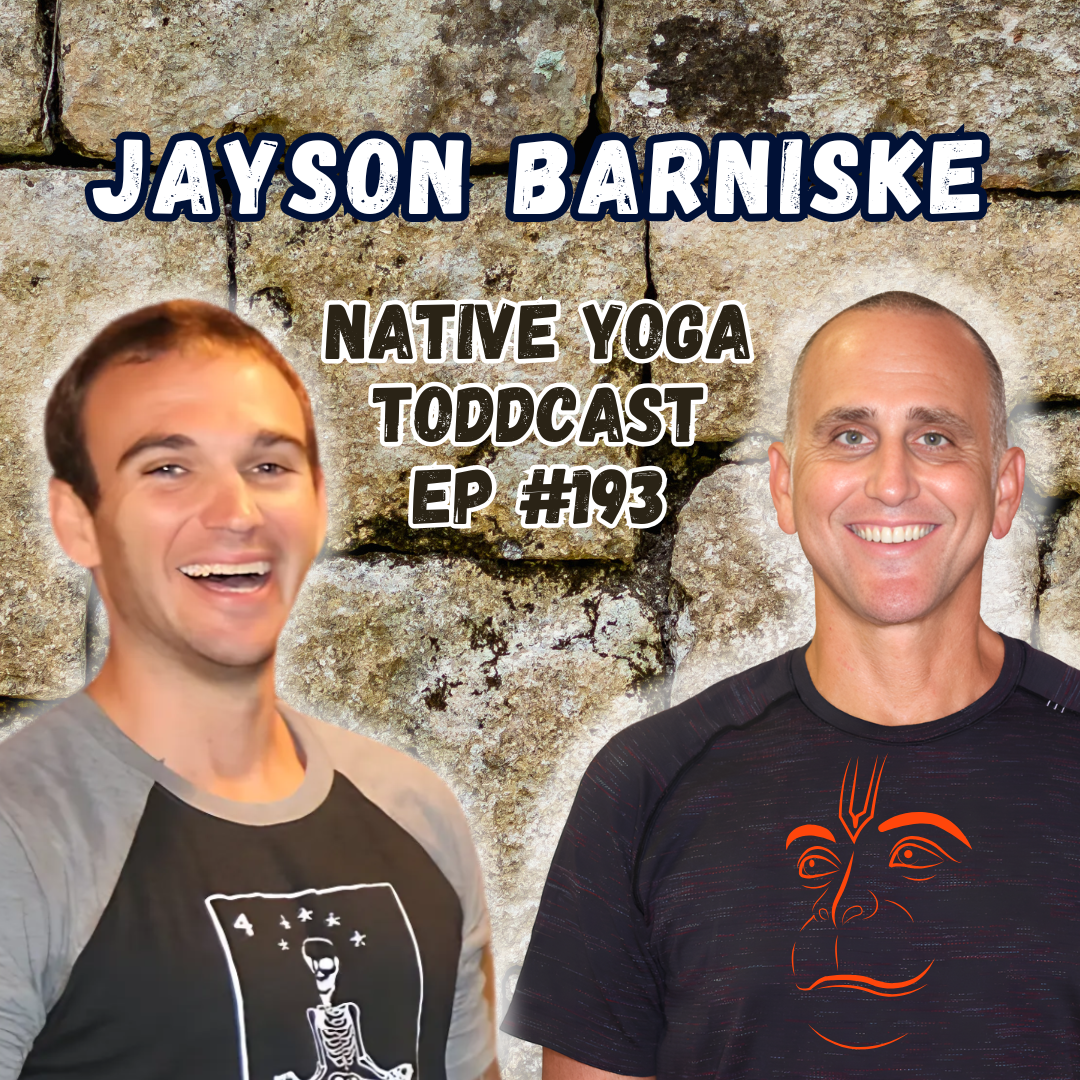
Dr. Jivasu ~ The Science of Bliss: Understanding the Biological Basis of Spiritual Experiences

Listen to podcast with Dr. Jivasu for FREE Here

In this insightful episode, we are introduced to the multifaceted Dr. Jivasu, whose journey from a pediatrician to a spiritual teacher is as profound as it is enlightening. Touching on everything from Kundalini experiences to the foundational elements of Soma Yoga, Dr. Jivasu provides a glimpse into the deep connections between our physical existence and the universal forces of energy and consciousness.

Visit Dr. Jivasu on his website: https://www.jivasu.org/
Follow him here on IG: https://www.instagram.com/jivasumd/
On Youtube here: https://www.youtube.com/@SomawithJivasu

Key Takeaways:

  • Dr. Jivasu had a transformative Kundalini experience that has shaped his life and teachings since 1984.
  • Soma, Dr. Jivasu’s program, is a holistic approach to health and fulfillment, integrating practices from various yoga traditions and Chinese medicine with a focus on science and biology.
  • The concept of Soma parenting emphasizes nurturing children according to their unique temperaments while providing emotional safety and encouraging their inherent potentials.
  • Dr. Jivasu’s philosophy is grounded in reclaiming the individual’s intrinsic biological rhythm, aiming to unclog the body and mind from traumas and conditioning.

Embracing Somatic Wisdom: Nurturing Body and Mind for Holistic Health and Fulfillment

Our lives are complex tapestries woven from the threads of experiences, relationships, and the quest for inner peace and fulfillment. In an engaging dialogue with Dr. Jivasu, listeners are invited into an exploration of somatic wisdom and holistic health, bridging ancient wisdom, modern medicine, and a transformative approach to life.

Key Takeaways:

  • Dr. Jivasu’s transformative experiences and the development of Soma Yoga emphasize the body’s potential as a source of healing and fulfillment.
  • Soma Parenting acknowledges the individual temperaments of children, focusing on nurturing their innate potential.
  • The interconnectedness of emotional, mental health problems, and environmental crises are discussed, with somatic practices suggested as personal pathways to global healing.

From Kundalini Awakening to Somatic Practices

Dr. Jivasu’s journey from a pediatrician to spiritual explorer presents a fascinating interplay between traditional medical training and profound spiritual experiences. He recounts a pivotal moment of intense physical and existential transformation, which he describes as a Kundalini awakening. This experience catalyzed a shift in his perspective, inspiring him to delve deeper into the intersections of health, energy, and spirituality.

“I felt a massive, massive surge of energy in my body… everything seemed rather painting-like as it had no real substance as it was made up of paper.”

This testimony highlights the transformative power of mind-body experiences. Dr. Jivasu’s subsequent development of Soma Yoga is grounded in this recognition of the body as a conduit for energy and consciousness. Soma Yoga is characterized by intuition-led movements, where one’s internal sense informs physical postures, suggesting profound implications for our understanding of health and self-healing.

The Science of Soma: A Biological Perspective on Spiritual Practices

Dr. Jivasu’s Soma teachings bridge the gap between science and spirituality without relying on mystical or metaphysical concepts. He emphasizes the body’s intrinsic capability for bliss and creativity, supported by its biochemistry and neurobiology.

“Our body and brain is the largest pharmacy containing all the molecules, hormones, and chemicals which will give us peace, passion, and bliss.”

This assertion underpins the emergence of Soma Yoga and Soma Parenting programs, underscoring a science-backed approach to spiritual practices. By tapping into the body’s natural pharmacy of happiness-inducing chemicals, Dr. Jivasu’s methodologies offer tangible pathways towards fulfillment and well-being. His ideas echo a shift in the holistic health paradigm, where spiritual experiences are understood through the lens of biological science.

Nurturing Future Generations: The Roots and Wings of Soma Parenting

In discussing Soma Parenting, Dr. Jivasu presents a compelling vision for nurturing children’s innate potential. He envisions a dual approach: rooting children in emotional safety and cultivating their unique temperaments, allowing them to develop like gardeners—observing and protecting rather than sculpting.

“So because children have to be rooted in a family, in a culture… they give them wings. So when a time comes, they could fly in the freedom in the vast space on their own.”

This perspective is a refreshing take on parenting and education, marrying the need for stability with the freedom for authentic self-expression. The broader implications of such an approach can significantly impact societal attitudes towards child rearing, with potential ripple effects on future generations’ mental and emotional health.

Reclaiming Personal Space: The Practice of Somatic Breathing

In a practical demonstration of his teachings, Dr. Jivasu guides listeners through somatic breathing—a practice aimed at reclaiming one’s peripersonal space and enhancing presence and self-awareness. By directing attention to the breath and synchronizing it with the movement of the arms, the exercise becomes a meditation in motion, expanding one’s sense of presence beyond the physical body.

“Feel that arc or circle, because that is your personal space… Your asmita peeling it for another minute and then are slowly opening of rise.”

The practice illustrates the intimate relationship between mind, body, and space, suggesting a holistic approach to personal well-being that can be integrated into everyday life.

As we navigate through the complexity of modern life, perspectives like Dr. Jivasu’s offer a beacon of hope. Through intuitive embodiment, nurturing of innate potential, and a conscious connection with our surroundings, we find the essence of holistic health and fulfillment—a call to return to our fundamental nature and unlock the reservoir of tranquility that resides within.

Thanks for listening to this episode. Check out: 👇
Free Grow Your Yoga Live Webinar – Every Thursday at 12pm EST
➡️ Click here to receive link

New Student FREE Livestream Yoga Special ~ Try 2 Weeks of Free Unlimited Livestream Yoga Classes  at Native Yoga Center. info.nativeyogacenter.com/livestream Sign into the classes you would like to take and you will receive an email 30 minutes prior to join on Zoom. The class is recorded and uploaded to nativeyogaonline.com  ➡️  Click Here to Join. 

Practice to a New Yoga Class every day with our nativeyogaonline.com course called Today’s Community Class with code FIRSTMONTHFREE.

Subscribe to Native Yoga Center and view this podcast on Youtube.

Thank you Bryce Allyn for the show tunes. Check out Bryce’s website: bryceallynband.comand sign up on his newsletter to stay in touch. Listen here to his original music from his bands Boxelder, B-Liminal and Bryce Allyn Band on Spotify.

Please email special requests and feedback to info@nativeyogacenter.com

Support the Show.

Native Yoga website: here
YouTube: here
Instagram: @nativeyoga 
Twitter: @nativeyoga 
Facebook: @nativeyogacenter 
LinkedIn: Todd McLaughlin

Susan Marrufo – Exploring the Intersection of Yoga and Sacred Sexuality

Listen to podcast with Susan for FREE here

In this episode of the Native Yoga Toddcast, host Todd McLaughlin interviews Susan Marrufo on the topics of yoga, sacred sexuality, and death. 
Susan shares her personal journey and how she discovered the connection between these three subjects. She explains that yoga, for her, is a system for self-realization and direct knowledge of the truth of being. 
Susan delves into the practice of self-inquiry and the importance of questioning our beliefs and identities to uncover our true nature.

Visit Susan on her website: https://www.samarasacenter.com/

Key Takeaways:

  • Yoga is a system for self-realization and direct knowledge of the truth of being.
  • Self-inquiry is a powerful practice that involves questioning our beliefs and identities to uncover our true nature.
  • Sacred sexuality is about exploring intimacy and healing in the context of relationships, using sexual energy consciously to deepen connection and experience communion with the divine.
  • Tantra encompasses both classical teachings and Neo Tantra practices, with classical Tantra focusing on a small percentage of sexual practices.
  • Integrating these experiences into everyday life and relationships is essential for personal growth and spiritual development.

Exploring the Depths of Yoga: A Path to Self-Realization When we hear the word “yoga,” we often think of physical postures and exercise. However, yoga is much more than that. Susan Marrufo, a yoga teacher and practitioner, views yoga as a system for self-realization and direct knowledge of the truth. She practices Jnana yoga, the yoga of direct knowledge, which involves the direct experience of one’s true nature. This practice involves asking the question, “Who am I?” and listening to the silence for the answer.

For Susan, yoga is a journey of self-inquiry and introspection. It is about questioning our beliefs, letting go of attachments, and discovering the truth of our being. Through her own practice and teaching, she guides others to find their own answers and connect with their true selves.

Sacred Sexuality: Exploring Intimacy and Energy Sacred sexuality is an integral part of Susan’s journey and the curriculum she teaches in her Yoga, Sex, and Death course. It is about exploring intimacy and working with one’s own energy to create a deeper connection with oneself and others. Sacred sexuality is not solely focused on physical pleasure or procreation but involves conscious merging and dissolving into love.

In sacred sexuality, the energy of the second chakra rises up to the heart, creating a merging and dissolution of the self. This can be a transformative and blissful experience, but it can also be scary for many people. The fear of losing oneself and the vulnerability that comes with intimacy can create unconscious patterns and defense mechanisms that hinder true connection.

Through conscious practices and energy work, individuals can expand their energetic container and learn to hold space for intimacy and vulnerability. This involves exploring and healing any trauma or blockages in the body, allowing for a deeper connection with oneself and others.

Death: A Portal to Transformation Death is often seen as the end of life, but in the context of yoga and self-realization, it is a portal to transformation and a reminder of the impermanence of existence. Just as yoga and sacred sexuality involve merging and dissolving, death is the ultimate dissolution of the self.

In the Yoga, Sex, and Death course, Susan explores the connection between death and yoga. She emphasizes that death is not something to be feared but embraced as an opportunity for growth and transformation. By facing the reality of death, individuals can let go of attachments and illusions, leading to a deeper understanding of the true nature of existence.

Conclusion: Embracing the Depths of Yoga, Sacred Sexuality, and Death Yoga, sacred sexuality, and death are interconnected aspects of the human experience. They serve as portals to self-realization, intimacy, and transformation. Through yoga, individuals can embark on a journey of self-inquiry and direct knowledge, exploring the depths of their being. Sacred sexuality offers a conscious practice of intimacy and energy work, allowing for a deeper connection with oneself and others. Death, often seen as the end, is an opportunity for growth and a reminder of the impermanence of life.

By embracing these aspects and delving into their depths, individuals can cultivate a deeper understanding of themselves and their connection to the divine. It is through this exploration that true transformation and self-realization can be achieved.

So, let us embark on this journey together, embracing the depths of yoga, sacred sexuality, and death, and discovering the profound wisdom and liberation they offer.

Thanks for listening to this episode. Check out: 👇
Free Grow Your Yoga Live Webinar – Every Thursday at 12pm EST
➡️ Click here to receive link

New Student FREE Livestream Yoga Special ~ Try 2 Weeks of Free Unlimited Livestream Yoga Classes  at Native Yoga Center. info.nativeyogacenter.com/livestream Sign into the classes you would like to take and you will receive an email 30 minutes prior to join on Zoom. The class is recorded and uploaded to nativeyogaonline.com  ➡️  Click Here to Join. 

Practice to a New Yoga Class every day with our nativeyogaonline.com course called Today’s Community Class with code FIRSTMONTHFREE.

Subscribe to Native Yoga Center and view this podcast on Youtube.

Thank you Bryce Allyn for the show tunes. Check out Bryce’s website: bryceallynband.comand sign up on his newsletter to stay in touch. Listen here to his original music from his bands Boxelder, B-Liminal and Bryce Allyn Band on Spotify.

Please email special requests and feedback to info@nativeyogacenter.com

Support the show

Native Yoga website: here
YouTube: here
Instagram: @nativeyoga 
Twitter: @nativeyoga 
Facebook: @nativeyogacenter 
LinkedIn: Todd McLaughlin
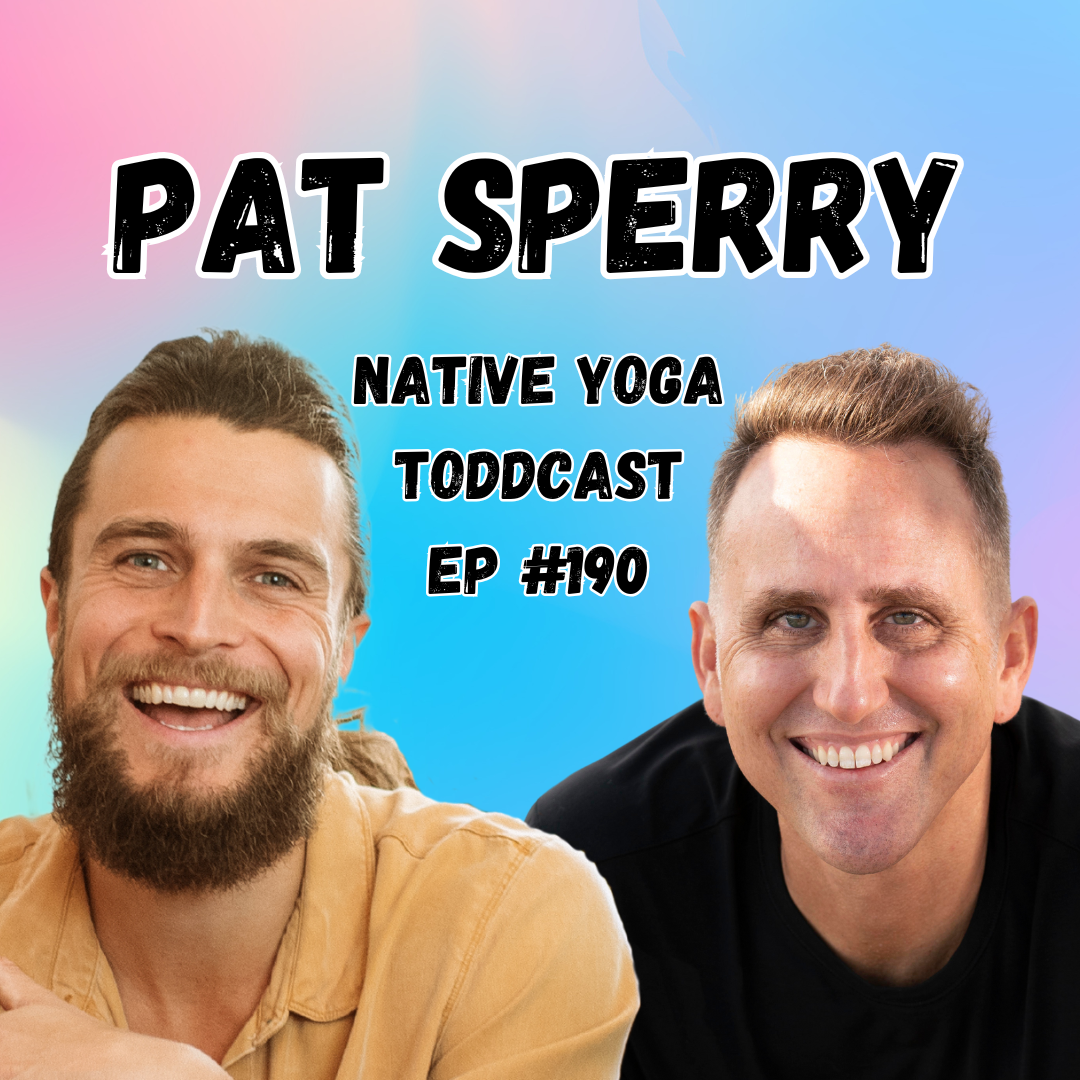
Cindy Lusk ~ Intersection of Yoga Philosophy and Social Psychology

Listen to podcast with Cindy Lusk for FREE here

Cindy Lusk is an experienced yoga teacher, author, and meditation instructor. She has a diverse background in yoga practice and has studied with renowned teachers such as Richard Freeman and John Friend. Cindy is the author of the book “Align and Refine: The Journey of Yoga and Meditation,” which aims to make yoga philosophy accessible and easy to understand for beginners. She is passionate about integrating yoga philosophy into daily life and helping individuals connect with their hearts and minds.

Visit Cindy on her website here: https://cindylusk.com/
Purchase her ne book here: https://www.amazon.com/Align-Refine-Journey-Yoga-Meditation/dp/B0CPMT9L1D/

Key Takeaways:

  • Cindy Lusk’s background in social psychology led her to explore yoga philosophy as a means of addressing social issues and understanding human behavior.
  • The intersection of classical yoga and Tantra provides a comprehensive understanding of consciousness and the human experience.
  • Meditation allows individuals to connect with their hearts and minds, leading to personal transformation and a greater sense of interconnectedness.

The Journey of Yoga and Meditation: Insights from Cindy Lusk

Introduction

Welcome to the Native Yoga Toddcast, where we bring you inspirational speakers in the field of yoga, massage, bodywork, and beyond. In this episode, we have the pleasure of meeting Cindy Lusk, author of “Align and Refine: The Journey of Yoga and Meditation.” Cindy’s goal is to make yoga philosophy approachable and easy to understand for beginners. With her diverse background in yoga practice and studies with renowned teachers, Cindy offers valuable insights into the transformative power of yoga and meditation. Let’s dive into our conversation with Cindy and explore the wisdom she has gained over the years.

Key Takeaways

  • Cindy’s journey from studying social psychology to becoming a yoga teacher highlights the importance of addressing issues at the heart and mind level.
  • The intersection of classical yoga and tantra provides a deeper understanding of consciousness and the potential for personal and societal transformation.
  • Meditation is a powerful practice that can be easily integrated into daily life, leading to profound effects on well-being and self-awareness.

Exploring the Intersection of Yoga Philosophy

Cindy’s journey into yoga philosophy began with a curiosity about the connection between yoga practice and personal transformation. She found herself drawn to the teachings of Richard Freeman, who introduced her to the Ashtanga method. However, as she delved deeper into yoga philosophy, she felt a disconnect between the renunciant path advocated by classical yoga and her own experiences as a householder. This led her to explore tantra, which offered a more inclusive and integrated approach to spirituality.

In tantra, the concept of higher consciousness is emphasized, recognizing that everything is a manifestation of the divine. This perspective allows individuals to amplify their lives as householders and live in alignment with their highest selves. By integrating the teachings of classical yoga and tantra, Cindy found a more holistic understanding of yoga philosophy that resonated with her own experiences and values.

The Power of Meditation

Meditation plays a central role in Cindy’s approach to yoga and spirituality. She believes that meditation is often misunderstood and seen as a practice that takes away from life. However, she argues that meditation can be easily integrated into daily life and has profound effects on one’s well-being and self-awareness.

Through her studies with Paul Muller-Ortega, Cindy learned the practice of Neelakantha meditation, a mantra-based meditation technique. This practice allows individuals to deepen their awareness and connect with their hearts, leading to a greater sense of peace and clarity. By regularly meditating, one can refine their consciousness and recognize the divinity within themselves and others.

Addressing Racism and Social Issues

Cindy’s background in social psychology and her experiences growing up during a time of racial tension have shaped her perspective on addressing social issues. She believes that personal transformation is a crucial step in creating societal change. By working on ourselves and connecting with our hearts, we can shift our consciousness and treat others as divine beings.

However, Cindy acknowledges that addressing racism requires more than just individual transformation. Structural issues within society must also be addressed. It is important to recognize our unconscious biases and work towards creating a more inclusive and equitable world. By integrating the teachings of yoga philosophy into our lives, we can contribute to the collective shift in consciousness needed to bring about lasting change.

Conclusion

Cindy Lusk’s journey through yoga and meditation offers valuable insights into the transformative power of these practices. By integrating the teachings of classical yoga and tantra, Cindy provides a holistic understanding of yoga philosophy that is accessible and applicable to modern life. Through meditation, individuals can deepen their awareness and connect with their hearts, leading to personal growth and a greater sense of peace. By addressing social issues and working towards personal and societal transformation, we can create a more inclusive and equitable world. Let us embrace the journey of yoga and meditation and discover the profound impact it can have on our lives and the world around us.

Note: This article is based on the Native Yoga Toddcast episode featuring Cindy Lusk. The content has been adapted and expanded for a thought leadership article format.

Thanks for listening to this episode. Check out: 👇
Free Grow Your Yoga Live Webinar – Every Thursday at 12pm EST
➡️ Click here to receive link

New Student FREE Livestream Yoga Special ~ Try 2 Weeks of Free Unlimited Livestream Yoga Classes  at Native Yoga Center. info.nativeyogacenter.com/livestream Sign into the classes you would like to take and you will receive an email 30 minutes prior to join on Zoom. The class is recorded and uploaded to nativeyogaonline.com  ➡️  Click Here to Join. 

Practice to a New Yoga Class every day with our nativeyogaonline.com course called Today’s Community Class with code FIRSTMONTHFREE.

Native Yoga Teacher Training 2024– In Studio and Livestream – for info delivered to your email click this link here: ➡️ https://info.nativeyogacenter.com/native-yoga-teacher-training-2023/

Subscribe to Native Yoga Center and view this podcast on Youtube.

Thank you Bryce Allyn for the show tunes. Check out Bryce’s website: bryceallynband.comand sign up on his newsletter to stay in touch. Listen here to his original music from his bands Boxelder, B-Liminal and Bryce Allyn Band on Spotify.

Please email special requests and feedback to info@nativeyogacenter.com

Native Yoga website: here
YouTube: here
Instagram: @nativeyoga 
Twitter: @nativeyoga 
Facebook: @nativeyogacenter 
LinkedIn: Todd McLaughlin

Gil Hedley – Unveiling the Nerve Tree: A Journey into the Intricacies of the Human Body

Listen to podcast with Gil Hedley for FREE here

Gil Hedley is a dedicated anatomy professional and teacher who has dedicated his life to studying the human body through cadaver dissection. He is known for his integral approach to anatomy, focusing on the interconnectedness of the body and the importance of understanding the whole person. Gil  has been teaching anatomy workshops and dissection courses for over 25 years. He is passionate about helping people develop a deep understanding and connection with their own bodies.

Visit Gil on his website: https://www.gilhedley.com/

Key Takeaways:

  • Gil Hedley’s integral approach to anatomy focuses on the interconnectedness of the body and the importance of understanding the whole person.
  • The nervous system is a complex and interconnected network that extends throughout the entire body, and it is essential for self-regulation and overall well-being.
  • By developing a deep connection with the body and understanding its intricate structures, individuals can take control of their own nervous system and cultivate a sense of empowerment.
  • Gil’s Nerve Tour aims to educate and inspire individuals in the yoga, massage, and bodywork communities to deepen their understanding of the nervous system and its role in overall health and well-being.

Navigating the Intricacies of Anatomy: Insights from Master Teacher Gil Hedley

Embarking on an intellectual voyage through the intricate landscapes of human anatomy, the enthusiasm and expertise of master teacher Gil Hedley, Ph.D., illuminate the path. With the emergence of his latest endeavor, “The Nerve Tour,” the fusion of anatomical precision and philosophical inquiry is brought to life, providing a transformational experience for learners of all backgrounds.

Key Takeaways:

  • The nervous system is an organ – an idea that redefines traditional views and underscores the interconnectedness of body tissues.
  • Engaging teaching methods and the importance of excitement in learning can empower and inspire both the teacher and the learner.
  • The dynamic between philosophical ethics and hands-on anatomical experience cultivates a holistic understanding of human nature and embodiment.

The Nerve Tree: A Living, Breathing Organ

When Gil Hedley speaks about the nervous system, he employs the formidable term “nerve tree,” infusing a palpable sense of life into what is often perceived as an abstract concept. This imagery is not only poetic but also scientifically resonant; Hedley’s work dismantles the notion of the nervous system as a mechanical schematic. Instead, he presents it as a complex, interwoven organ integrated seamlessly into the body’s fabric.

“The nervous system is a mental abstract convention… what we actually have is the human body, an embryo, differentiated into all kinds of textures and structures that remain one,” Hedley explains. His description invites listeners to envision nerves not merely as isolated pathways but as elements of a greater organism, akin to branches intertwined with leaves and flowers. This perspective shifts our understanding from compartmentalized parts to a more holistic view of the human form, a view that recognizes the inextricable link between structure and function.

The implications of this approach are vast, suggesting that any endeavor to heal, improve, or understand the human body must address it as a cohesive unit rather than a collection of separate systems. Hedley’s painstaking dissections and visual documentation of the “nerve tree” elevate the discourse around bodily connectivity, offering a road map for professionals seeking to enhance their therapeutic practices.

The Art of Embodied Teaching

Gil Hedley’s commitment to an engaging and vibrant pedagogical experience is evident in his approach. A far cry from the staid lectures that characterize many academic settings, Hedley’s style is steeped in the freedom of thought and expression that he experienced firsthand during his formative years as an educator. “When I saw the way Tom [Myers] taught, and Ron was also hysterical and engaging… I could do this. And then a rolfer also was a huge influence on me,” shares Hedley.

Through storytelling, humor, and movement, Hedley creates a learning environment synonymous with growth and community. This methodology not only imparts knowledge but also fosters an atmosphere where learners can connect deeply with the material and, consequently, with themselves. The educational journey becomes a shared adventure, engaging the cognitive and the intuitive, and ultimately facilitating a transformation that resonates beyond the confines of the traditional classroom.

The Fusion of Anatomy and Philosophy

Perhaps what sets Hedley apart most prominently is his proficiency in marrying anatomical expertise with philosophical reflection. With a Ph.D. in Theological Ethics, Hedley is not content to relay anatomical facts alone; he endeavors to explore and share the profound ethical considerations that come with a deeply embodied awareness of the human form.

“Our lives depend on it… how are we spending it, and we can spend it in a way that enhances our experience,” he asserts, questioning the quality with which we live each day. Hedley’s philosophical inquiry prompts a recognition that understanding the body in its entirety can fundamentally alter our way of being in the world. The acknowledgement of this connection equips anyone involved in bodywork with a more profound sense of purpose – it elucidates the ethic behind the anatomy.


Summing up the wisdom gleaned from Gil Hedley’s perspective offers a fresh lens through which we can view the landscape of human anatomy. The nervous system, an intricate nerve tree, beckons us to appreciate our wholeness rather than succumb to fragmentary views. In teaching, leading with excitement and communal growth facilitates deeper learning and personal transformation. Moreover, marrying the precision of anatomy with the breadth of philosophy bestows us with a richer, more meaningful approach to understanding ourselves and our embodied existence. These insights not only illuminate the path for those in the bodywork and healing professions but also invigorate the journey for all explorers of inner space, affirming that an intimate connection with our anatomy is a profound act of self-awareness and autonomy.

Thanks for listening to this episode. Check out: 👇
Free Grow Your Yoga Live Webinar – Every Thursday at 12pm EST
➡️ Click here to receive link

New Student FREE Livestream Yoga Special ~ Try 2 Weeks of Free Unlimited Livestream Yoga Classes  at Native Yoga Center. info.nativeyogacenter.com/livestream 
Sign into the classes you would like to take and you will receive an email 30 minutes prior to join on Zoom. The class is recorded and uploaded to nativeyogaonline.com  ➡️  Click Here to Join. 

Practice to a New Yoga Class every day with our nativeyogaonline.com course called Today’s Community Class with code FIRSTMONTHFREE.

Native Yoga Teacher Training 2024– In Studio and Livestream – for info delivered to your email click this link here: ➡️ https://info.nativeyogacenter.com/native-yoga-teacher-training-2023/

Subscribe to Native Yoga Center and view this podcast on Youtube.

Thank you Bryce Allyn for the show tunes. Check out Bryce’s website: bryceallynband.comand sign up on his newsletter to stay in touch. Listen here to his original music from his bands Boxelder, B-Liminal and Bryce Allyn Band on Spotify.

Please email special requests and feedback to info@nativeyogaenter.com

Support the show

Native Yoga website: here
YouTube: here
Instagram: @nativeyoga 
Twitter: @nativeyoga 
Facebook: @nativeyogacenter 
LinkedIn: Todd McLaughlin
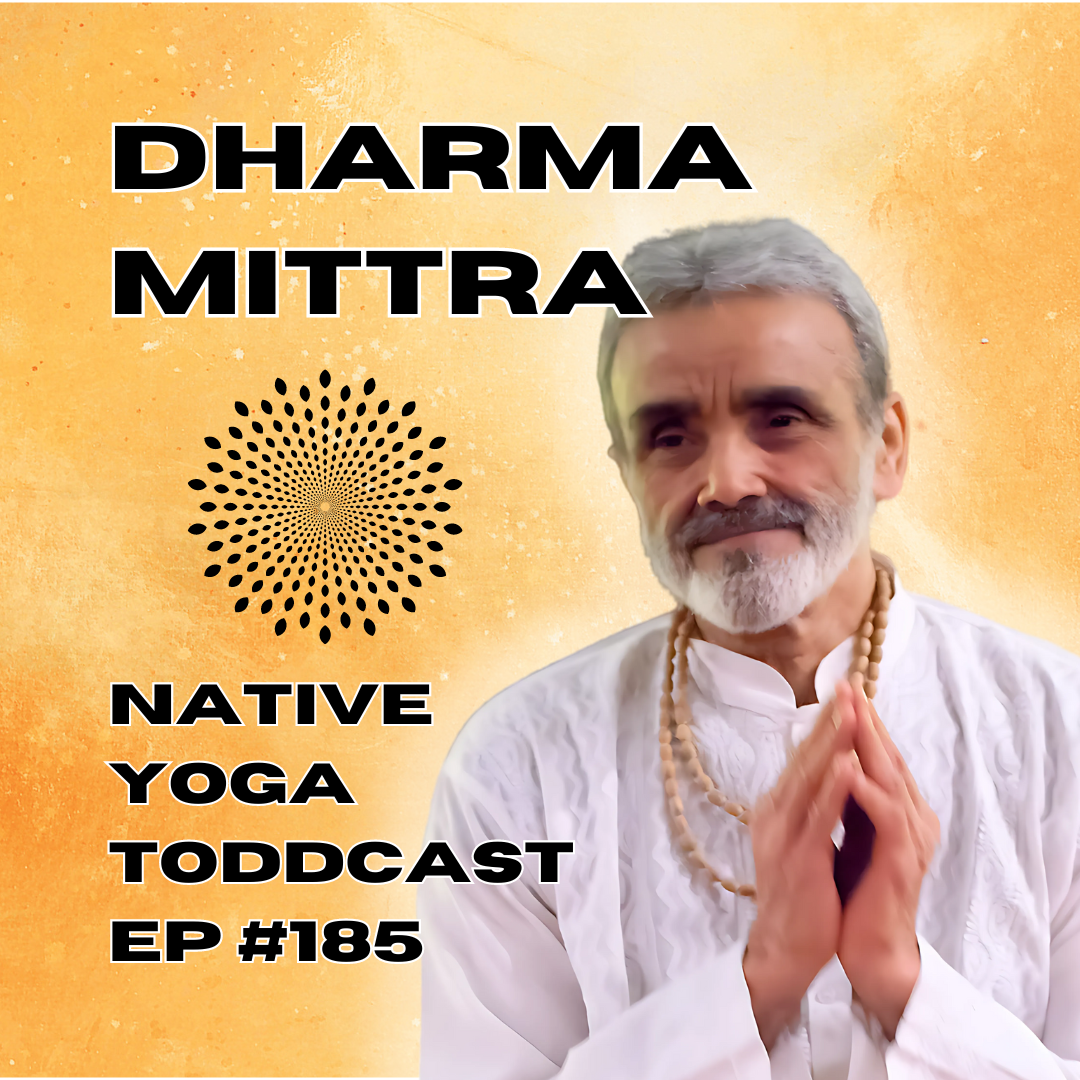
Laura Rodgers – Creating a Peaceful World: How Yoga and Meditation Can Foster Global Harmony

Listen to podcast with Laura for FREE here

In this episode of the Native Yoga Toddcast, Laura Rodgers joins as a special guest. Laura shares her journey with yoga and meditation, starting from her background as a dancer and how she found yoga as a pivot from dance. She discusses her initial experiences with yoga and how it evolved over time, incorporating meditation and mindfulness practices. 

She emphasizes the importance of consistency in meditation and the benefits of integrating yoga and meditation into daily life. The episode concludes with a discussion on the importance of listening and understanding different perspectives in today’s world.

Key Takeaways:

  • Laura’s yoga journey began as a dancer, and she found yoga to be a wonderful transition from the dance world, focusing on inner feeling and breathing.
  • Meditation became an integral part of Laura’s practice, and she explored various styles and attended retreats to deepen her understanding.
  • Silence in meditation retreats can be challenging but also provides an opportunity to observe and learn from one’s thoughts and emotions.
  • Laura emphasizes the importance of self-compassion and forgiveness in the meditation practice, allowing oneself to be human and learning from experiences.

Native Yoga Toddcast: Exploring the Power of Yoga and Meditation

Key Takeaways:

  • Yoga and meditation can be powerful tools for personal growth and self-discovery.
  • The practice of yoga can help individuals transition from a focus on external validation to an inner sense of peace and well-being.
  • Meditation can provide insights into our own minds and help us cultivate a more compassionate and loving attitude towards ourselves and others.

The Journey of Yoga and Meditation

In this episode of the Native Yoga Toddcast, Laura Rodgers, an avid yoga and meditation practitioner, shares her journey and experiences with yoga and meditation. She discusses how she discovered yoga after a career-ending injury as a dancer and how it became a transformative practice for her. Initially, Laura saw yoga as a physical practice, but over time, she delved deeper into the philosophy and different types of yoga.

Laura’s first lightbulb moment with yoga came when she realized that it offered a different approach to movement and self-expression compared to dance. Instead of focusing on external validation and performance, yoga encouraged her to turn inward and connect with her breath and body. This shift in perspective allowed her to find relaxation and inner peace.

As Laura continued her yoga practice, she also began exploring meditation. She encountered meditation and mindfulness techniques in her yoga classes and retreats, as well as during a week-long intensive program called the Hoffman Process. This experience deepened her understanding of meditation and sparked a passion for exploring different meditation practices and attending retreats.

The Power of Meditation

Meditation has become an integral part of Laura’s daily routine. She starts her day with a variety of practices, including reading, chanting, and pranayama (breathwork), before settling into her meditation practice. While she initially relied on guided meditations, she eventually transitioned to sitting in silence and exploring her own mind.

Through her meditation practice, Laura has gained insights into her own thought patterns and emotions. She has learned to welcome and be present with uncomfortable feelings and thoughts, rather than trying to banish them. This acceptance and self-compassion have allowed her to navigate challenges with more ease and openness.

Laura emphasizes the importance of consistency in meditation practice and the benefits of having a teacher or mentor to guide and support one’s journey. She also highlights the value of integrating mindfulness into daily life, not just during formal meditation sessions. By cultivating mindfulness, individuals can bring a sense of presence and awareness to their interactions and experiences throughout the day.

The Evolution of Yoga Practice

Over the years, Laura’s yoga practice has evolved and diversified. While she initially gravitated towards restorative yoga, she has since explored various styles, including vinyasa flow and Ashtanga. She appreciates the different benefits and experiences that each style offers and enjoys incorporating a variety of practices into her routine.

Laura emphasizes the importance of finding a practice that works for each individual and encourages experimentation and exploration. She believes that yoga is a personal journey and that there is no one-size-fits-all approach. By listening to one’s body and honoring its needs, individuals can find a practice that supports their physical, mental, and emotional well-being.

Philanthropy and Giving Back

Laura is passionate about giving back and supporting causes that align with her values. She has been involved in philanthropic efforts focused on bringing yoga and meditation to underserved populations. She has supported programs that introduce meditation into schools, hospitals, and communities, with the aim of promoting well-being and healing.

In addition to her work in the field of yoga and meditation, Laura is also involved in organizations that address social justice issues. She believes in the importance of understanding different perspectives and fostering dialogue to create positive change in the world. By actively listening and seeking to understand others, she hopes to contribute to a more compassionate and inclusive society.

When it comes to current world events, Laura acknowledges the complexity and challenges of the global landscape. While she does not have a definitive answer on whether there is more or less violence in the world, she believes that there is a growing movement towards peace and healing. She emphasizes the importance of understanding and compassion in addressing conflicts and challenges.

Laura approaches current world events by being intentional about the information she consumes. She sets aside dedicated time to stay informed but avoids excessive exposure to graphic images or sensationalized news. By focusing on reliable sources and maintaining a balanced perspective, she aims to cultivate a sense of peace and understanding within herself.

Conclusion

Laura’s journey with yoga and meditation has been transformative, leading her to explore different practices and share the benefits with others. She emphasizes the importance of finding a practice that resonates with each individual and encourages mindfulness in daily life. Through her philanthropic efforts, she seeks to bring the healing power of yoga and meditation to underserved communities. As she navigates current world events, she remains committed to understanding different perspectives and fostering compassion and understanding.

Thanks for listening to this episode. Check out: 👇
Free Grow Your Yoga Live Webinar – Every Thursday at 12pm EST
➡️ Click here to receive link

New Student FREE Livestream Yoga Special ~ Try 2 Weeks of Free Unlimited Livestream Yoga Classes  at Native Yoga Center. info.nativeyogacenter.com/livestream 
Sign into the classes you would like to take and you will receive an email 30 minutes prior to join on Zoom. The class is recorded and uploaded to nativeyogaonline.com  ➡️  Click Here to Join. 

Practice to a New Yoga Class every day with our nativeyogaonline.com course called Today’s Community Class with code FIRSTMONTHFREE.

Native Yoga Teacher Training 2024– In Studio and Livestream – for info delivered to your email click this link here: ➡️ https://info.nativeyogacenter.com/native-yoga-teacher-training-2023/

Subscribe to Native Yoga Center and view this podcast on Youtube.

Thank you Bryce Allyn for the show tunes. Check out Bryce’s website: bryceallynband.comand sign up on his newsletter to stay in touch. Listen here to his original music from his bands Boxelder, B-Liminal and Bryce Allyn Band on Spotify.

Please email special requests and feedback to info@nativeyogacenter.com

Support the show

Native Yoga website: here
YouTube: here
Instagram: @nativeyoga 
Twitter: @nativeyoga 
Facebook: @nativeyogacenter 
LinkedIn: Todd McLaughlin

Marko Mikkilä – Non-Dual Philosophy and Mystical Experiences in Yoga

Marko Mikkilä is a PhD student in philosophy at Turku University in Finland. He is also a yogi and a practitioner of Eastern philosophy. Marko has been practicing yoga for many years and has a deep understanding of non-dual philosophy.

During this conversation Marko  delves into the concept of non-dualism and its application in everyday life. He explains how non-dualism can help individuals heal from trauma and find a sense of liberation. Overall, Marko emphasizes the importance of integrating awakening experiences into all aspects of life and the need for a philosophical framework to understand and navigate these experiences.

Key Takeaways:

  • Non-dualism is the belief that everything is made of one substance, often referred to as consciousness.
  • Non-dualism can be understood as the collapsing of the subject-object separation, where there is just perceiving happening.
  • Awakening to one’s essence nature involves recognizing that we are not identified with the body-mind and that trauma can be observed without clinging to it.
  • Non-dualism can help individuals let go of the story and experience uncomfortable feelings or sensations without attachment.

Native Yoga Toddcast: Exploring Non-Dualism and Awakening with Marko Mikkilä

Welcome to Native Yoga Toddcast, where we bring you inspirational speakers in the field of yoga, massage, bodywork, and beyond. In this episode, host Todd McLaughlin sits down with Marko Mikkilä, a yogi, philosopher, and PhD student from Finland. Together, they delve into the concept of non-dualism and its implications for personal growth and healing. Join us as we explore the depths of awakening and the power of presence.

Introduction: The Beauty of Non-Dualism

In this episode of Native Yoga Toddcast, we have the pleasure of speaking with Marko Mikkilä, a yogi, philosopher, and PhD student from Finland. Marko shares his journey into yoga and philosophy, and how he discovered the transformative power of non-dualism. He explains that non-dualism is the belief that everything is made of one substance, often referred to as consciousness. It is a worldview that challenges the notion of separation and invites us to see the interconnectedness of all things. Marko emphasizes that non-dualism is not just a philosophy, but a way of experiencing life.

The Path to Awakening: From Martial Arts to Yoga

Marko’s journey into yoga began in his 20s when he started practicing Japanese and Chinese martial arts. As he delved deeper into the internal practices of martial arts, he became interested in Eastern philosophy, particularly Taoism and Zen Buddhism. This led him to explore yoga as a means of deepening his understanding of the mind-body connection. Marko initially practiced Ashtanga yoga, but over time, he realized that the prescribed practice was creating more agitation in his nervous system. He began experimenting with different approaches, such as incorporating resting poses into his practice, and eventually found a more balanced and sustainable way of practicing.

The Non-Dual Movement: Awakening to Our True Nature

Marko introduces us to the concept of the non-dual movement, which encompasses various non-dual religious philosophies from around the world. These philosophies share the belief that there is no separation between self and other, and that everything is ultimately connected. Non-dualism can be understood in different ways, such as the idea that everything is made of consciousness or the collapsing of the subject-object separation. Marko explains that non-dualism can also be applied to our relationship with a higher power, where we recognize that we are not separate from the divine, but rather a part of it.

Mystical Experiences and the Awakening Process

Marko discusses the role of mystical experiences in the awakening process. He explains that mystical experiences can range from profound paradigm shifts to subtle moments of intuition or telepathy. These experiences can be transformative, but they are not the ultimate goal of awakening. The goal is to recognize our true nature as awareness or consciousness and to integrate this realization into all aspects of our lives. Marko emphasizes that awakening is not about seeking new experiences or powers, but about letting go of identification with the body-mind and embracing the present moment.

Healing Trauma through Non-Dualism

Marko explores how non-dualism can be applied to the healing of trauma. He explains that when we awaken to our true nature, we no longer identify with the body-mind, including the trauma stored within it. This shift in identification allows us to observe our traumatic experiences without getting caught up in them. We can approach trauma with a sense of detachment and acceptance, allowing it to move through us without resistance. Marko acknowledges that healing trauma is a complex process, but non-dualism can provide a framework for understanding and integrating these experiences.

The Integration of Awakening: From Mystical Experiences to Liberation

Marko highlights the importance of integrating awakening experiences into all spheres of life. He explains that the initial awakening is just the beginning of the journey, and the real challenge lies in embodying that awakening in our everyday lives. This integration involves letting go of attachment to experiences, pleasant or unpleasant, and recognizing the underlying awareness that remains constant amidst the ever-changing phenomena. Marko shares examples of awakened beings who have fully integrated their awakening and live ordinary lives without seeking power or recognition.

Conclusion: Embracing Non-Dualism for Personal Growth

In this thought-provoking conversation, Marko Mikkilä invites us to explore the depths of non-dualism and its potential for personal growth and healing. He emphasizes that non-dualism is not just a philosophy, but a way of experiencing life. By recognizing our true nature as awareness or consciousness, we can let go of identification with the body-mind and embrace the present moment. Marko’s insights remind us of the interconnectedness of all things and the transformative power of awakening. As we continue on our own journeys, may we embrace the beauty of non-dualism and cultivate a deeper sense of presence and connection in our lives.

Note: This article is based on a conversation with Marko Mikkilä on the Native Yoga Toddcast. All quotes are verbatim and direct from the transcript of the episode.

Thanks for listening to this episode. Check out: 👇
Free Grow Your Yoga Live Webinar – Every Thursday at 12pm EST
➡️ Click here to receive link

New Student FREE Livestream Yoga Special ~ Try 2 Weeks of Free Unlimited Livestream Yoga Classes  at Native Yoga Center. info.nativeyogacenter.com/livestream Sign into the classes you would like to take and you will receive an email 30 minutes prior to join on Zoom. The class is recorded and uploaded to nativeyogaonline.com  ➡️  Click Here to Join. 

Practice to a New Yoga Class every day with our nativeyogaonline.com course called Today’s Community Class with code FIRSTMONTHFREE.

Native Yoga Teacher Training 2024– In Studio and Livestream – for info delivered to your email click this link here: ➡️ https://info.nativeyogacenter.com/native-yoga-teacher-training-2023/

Subscribe to Native Yoga Center and view this podcast on Youtube.

Thank you Bryce Allyn for the show tunes. Check out Bryce’s website: bryceallynband.comand sign up on his newsletter to stay in touch. Listen here to his original music from his bands Boxelder, B-Liminal and Bryce Allyn Band on Spotify.

Please email special requests and feedback to info@nativeyogacenter.comSupport the show

Native Yoga website: here
YouTube: here
Instagram: @nativeyoga 
Twitter: @nativeyoga 
Facebook: @nativeyogacenter 
LinkedIn: Todd McLaughlin