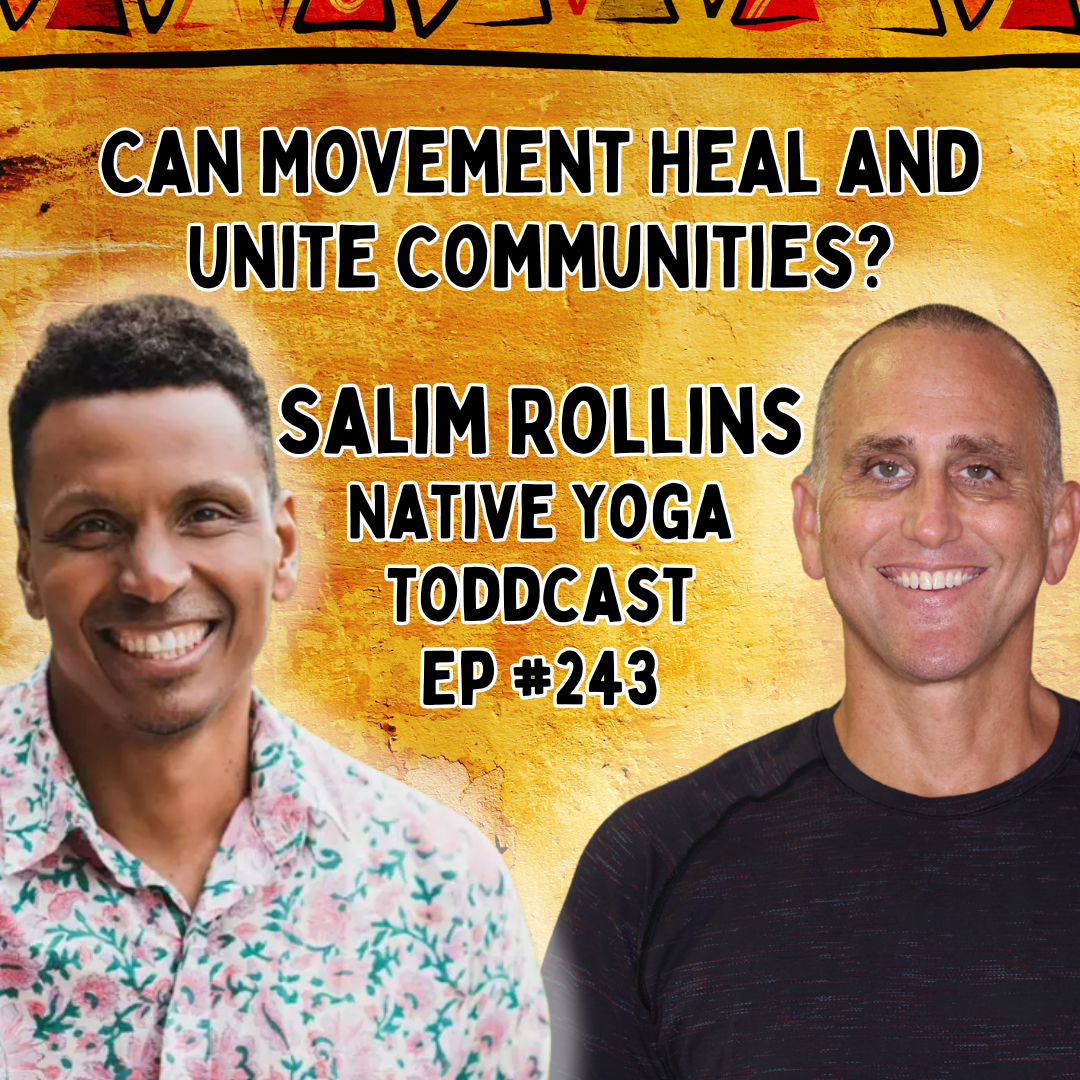
Salim Rollins | Finding Freedom Through Yoga, Capoeira, and Culture in Africa

Listen to Toddcast with Salim for FREE here

Salim Rollins is a yoga and capoeira teacher based in Nairobi, Kenya, where he co-directs Synergy Yoga with Francisco Morales. Blending Eastern philosophies with African and Brazilian traditions, he leads transformative retreats and workshops. Deeply respected in his community, Salim inspires others through his commitment to wellness, cultural connection, and empowering African youth to embrace their heritage through movement, mindfulness, and self-discovery.

Visit Salim here: https://synergy.yoga/

Key Takeaways:

  • Salim Rollins shares his move from the U.S. to Kenya, drawn by cultural roots and the enriching environment to raise his children.
  • His exploration into yoga began in high school, evolving as a practitioner and teacher after experiencing the blending of yoga with capoeira.
  • The episode highlighted the philosophical depth of capoeira as an art form from Africa that underwent a cultural metamorphosis in Brazil.
  • Salim detailed his innovative retreat ‘Bush to Beach,’ combining Kenyan safari with cultural immersion and wellness activities like yoga and Thai bodywork.

Discovering Synergy: Yoga and Capoeira Across Continents

Understanding the Cultural Connection

In a world increasingly focused on globalization, the crossing of cultural boundaries fosters mutual understanding and growth. Salim Rollins, a prominent figure residing in Nairobi, Kenya, exemplifies this union by connecting African roots and international awareness through the introduction of Capoeira, an Afro-Brazilian martial art, in African communities.

Rollins describes Capoeira as not merely a martial art but “the art of liberation, the art of resistance.” Its roots, steeped in a history of survival and resistance among African enslaved peoples in Brazil, strike a profound chord when taught in Nairobi. Here, Salim integrates his cultural heritage into this art form, creating a bridge over centuries that connects contemporary African youths to their ancestral past.

Salim’s work also highlights the potential of Capoeira as a tool for cultural reclamation and self-empowerment, akin to other cultural expressions like yoga, which he practices deeply. He shares, “I think being in a country as well where it’s not hyper-racialized… influences their self-esteem, their vision for what and who they can become as people.” Both Capoeira and yoga serve as vehicles that transcend mere physical practice—they are pathways to understanding identity and building community.

Adaptive Practices in Capoeira and Yoga

Both Capoeira and yoga adapt to the needs of their practitioners, offering solace and strength in equal measure. Salim recounts finding his first true teacher in New York and how yoga provided balance during his intense Capoeira training. This adaptability is central to the transcultural journey of both practices. Yoga has famously spread from India to gain worldwide prominence, a narrative echoed in Capoeira’s journey from Africa to Brazil and back.

The flexibility of Capoeira is evident in its duality—”We like to call it the art of liberation… it brings together music, percussive music, call and response songs. The physical movements are very graceful,” Salim explains. While it maintains its martial roots, Capoeira’s game aspect indicates a cultural shift towards inclusion and artistic expression, showing its ability to transform according to contemporary cultural contexts, just as yoga has.

Salim’s portrayal of Capoeira’s return to Africa is reminiscent of yoga practitioners in the West seeking authenticity by studying in India. Just as yoga adapts its practice to align with modern lifestyles, Capoeira, through Salim’s efforts, reintegrates into African communities while honoring the essence of its origins. “It’s not a definitive one way or the other,” Salim notes, emphasizing Capoeira’s adaptable nature in being both playful and profound.

Collaborative Spirit: Building Global Communities

Collaboration and community-building lie at the heart of both yoga and Capoeira, and Salim Rollins embodies these values through his work fostering connections between diverse communities. His collaboration with Francisco Morales of Synergy Yoga exemplifies this, with their retreats offering profound cultural experiences and personal growth through the combination of yoga and Capoeira.

Salim eloquently describes integrating Capoeira into Kenyan communities as a process that “ignites this thing that’s already within… they understand it as theirs in an essential way.” His work with Capoeira illuminates a vital aspect of these practices: empowerment through community and heritage. By facilitating retreats and educational experiences, Salim and Francisco create spaces that encourage dialogue, understanding, and mutual respect among participants from around the globe.

Conversations between practitioners can often spark new insights and foster a deeper understanding of one’s own identity and the world. Salim suggests that through “genuine conversation and sometimes talking to someone who may have a different perspective,” one can truly understand the value of cultural exchange.

Both Capoeira and yoga, as global practices, allow for unique collaborations and the sharing of diverse perspectives. They encourage practitioners to learn from each other—an approach echoed in Synergy Yoga’s philosophy of partnership and collaboration. Through retreats that are more than just physical practice—they are journeys that honor culture, community, and personal growth—these ancient traditions continue to evolve in their expression and reach.

As experiences like Salim’s show, the intersections of yoga and Capoeira across continents invite a deeper exploration of tradition, cultural exchange, and personal identity. Unlocking the potential of these practices to foster understanding and connection across borders holds promise for a more inclusive and interconnected world.

Thanks for listening to this episode. Check out: 👇
8IN8 Ashtanga Yoga for Beginners Course Online– Learn 8 Limb Yoga in 8 Days – Get FREE coupon code for a limited time only (Regular price $88) https://info.nativeyogacenter.com/8in8-ashtanga-yoga-for-beginners-8-limbs-in-8-days/

Practice with Native Yoga Online – New classes EVERY day – Use Code FIRSTMONTHFREE https://nativeyogacenter.teachable.com/p/today-s-community-class

Subscribe to Native Yoga Center and view this podcast on Youtube.

Thank you Bryce Allyn for the show tunes. Check out Bryce’s website: bryceallynband.comand sign up on his newsletter to stay in touch. Listen here to his original music from his bands Boxelder, B-Liminal and Bryce Allyn Band on Spotify.

Please email special requests and feedback to info@nativeyogacenter.com

Support the show

Native Yoga website: here
YouTube: here
Instagram: @nativeyoga 
Twitter: @nativeyoga 
Facebook: @nativeyogacenter 
LinkedIn: Todd McLaughlin
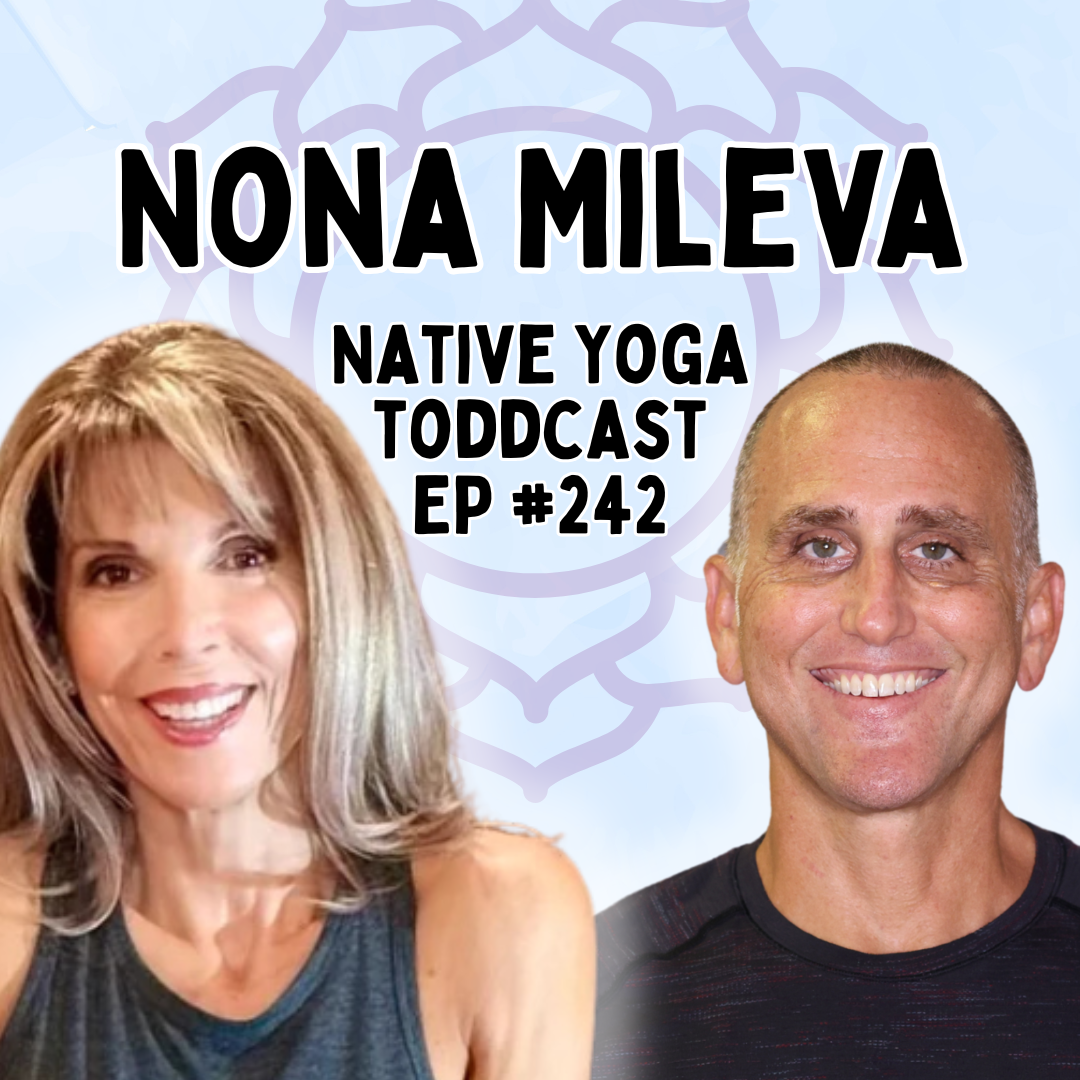
Nona Mileva on Sanskrit & Yoga: How Ancient Language Transforms Modern Practice

Listen to Toddcast with Nona for FREE here

Nona Mileva is a seasoned yoga instructor with a deep-rooted passion for the Sanskrit language and its role in yoga practice. She serves as a dedicated teacher at the Native Yoga Center, offering classes in vinyasa flow and restorative yoga. With a background in psychology and somatic studies, Nona integrates her expansive knowledge into her teaching. She is actively involved in facilitating Sanskrit study groups and is a committed student of Sanskrit, guided by influential scholars and practitioners like Edwin Bryant and Antonia Ruppel.

Visit Nona here: https://www.wellyoga.net/

Key Takeaways:

  • Sanskrit serves as a vital element in understanding and practicing yoga, offering a gateway to deeper spiritual and intellectual exploration.
  • Nona’s expertise as a yoga therapist and Sanskrit scholar bridges the gap between ancient language studies and contemporary therapeutic practices.
  • Learning Sanskrit can enhance the understanding of yoga’s philosophical roots, providing insight into texts and concepts that are often misunderstood in translation.
  • Nona emphasizes the importance of proper pronunciation in Sanskrit, drawing a parallel to the precision required in yoga practice.

The Intersection of Sanskrit and Yoga: Unveiling a Timeless Synergy

Sanskrit: The Cosmic Language of Yoga

Sanskrit, long revered as the sacred language of ancient Indian texts and rituals, is much more than a linguistic artifact of the past. It is a living, breathing component of yoga, intricately woven into the very fabric of practice and philosophy. As Nona Mileva eloquently asserts, “Sanskrit is a reflection of a higher cosmic intelligence and order,” embodying a complex linguistic framework that continues to captivate and challenge its practitioners.

Nona’s journey with Sanskrit began as an endeavor to deepen her yoga practice, illustrating how the language transcends traditional boundaries, enriching one’s understanding of yoga’s multifaceted nature. “Sanskrit is not like any modern language,” she explains. “It is not only the sacred language of Brahmins…there’s a vast corpus of texts that offer practical knowledge, like tree sutras or even how to distill alcohol.”

For yoga practitioners, embracing Sanskrit can widen the scope of their practice, from mastering asana names in their native context to chanting mantras that resonate with cosmic vibration. As Nona observed, engaging earnestly with Sanskrit allows for a richer, more profound connection to yoga, echoing Todd’s sentiment that “maybe like I was trying to imagine…Sanskrit there’s like a much wider cosmos of possibility.”

Psychological Flexibility and Resilience through Yoga and Sanskrit

The integration of Sanskrit with yoga promotes psychological resilience, offering powerful tools for navigating life’s challenges. Nona points out, “Committing to a practice like this…makes you in a way, psychologically flexible as well.” By cultivating a deeper connection to the language, practitioners can draw on its inherent structures to foster mental discipline and emotional regulation.

This psychotherapeutic aspect aligns with contemporary psychological approaches such as Acceptance and Commitment Therapy (ACT). As Nona explains, “The underlying notion…is that life is suffering. Get acquainted with challenges, and develop resilience.” By embracing the cyclical nature of Eastern philosophy embodied in Sanskrit, individuals may find themselves better equipped to find meaning amidst life’s trials.

The inherent discipline required to learn Sanskrit translates into therapeutic benefits, “rewiring the brain,” and fostering what Nona describes as existential resilience. This echoes Todd’s apt metaphor, viewing the universe through the lens of elaborate cosmic constructs, where “Sanskrit offers a wider cosmos of possibility.” Through this lens, yoga practitioners can attain a more holistic sense of well-being and purpose.

Breaking Down the Complexity: Making Sanskrit Accessible

Despite Sanskrit’s intricate nature, Nona advocates for demystifying the language to make it more accessible to practitioners. Starting with basic asana names or simple mantras like “Om,” one can begin to peel back the layers of complexity. “You show them how to inhale and lift the arms up…before you progress,” Nona advises, emphasizing a patient, step-by-step approach akin to climbing a mountain.

For many Western practitioners, the key is not to get overwhelmed by Sanskrit’s vastness but to engage with it meaningfully. Nona recounts how she once dismissed Sanskrit, only to revisit it later with a newfound respect and commitment. “Only because something is vast doesn’t mean we should never touch it,” she reminds us, advocating for a shift away from instant gratification towards more purposeful exploration.

This sense of intentional practice not only enriches the individual but aligns with broader teaching philosophies. Nona mentions, “We teach best what we must need to learn,” highlighting the symbiosis of teaching and learning inherent in both yoga and Sanskrit. By respecting the language’s structure, practitioners uphold the integrity of tradition, reinforced by grammarians like Panini, much like the codification of Patanjali’s Yoga Sutras.

In exploring the inextricable links between Sanskrit and yoga, Nona and Todd illuminate a path toward holistic integration, where linguistic depth meets spiritual practice. Acknowledging the complexity and profundity of Sanskrit not only enhances yoga practice but touches upon the broader themes of life, resilience, and the search for meaning. This dialogue challenges practitioners to approach both yoga and Sanskrit with an open, receptive mindset, celebrating each step of the journey, however small.

Thanks for listening to this episode. Check out: 👇
8IN8 Ashtanga Yoga for Beginners Course Online– Learn 8 Limb Yoga in 8 Days – Get FREE coupon code for a limited time only (Regular price $88) https://info.nativeyogacenter.com/8in8-ashtanga-yoga-for-beginners-8-limbs-in-8-days/

Practice with Native Yoga Online – New classes EVERY day – Use Code FIRSTMONTHFREE https://nativeyogacenter.teachable.com/p/today-s-community-class

Subscribe to Native Yoga Center and view this podcast on Youtube.

Thank you Bryce Allyn for the show tunes. Check out Bryce’s website: bryceallynband.comand sign up on his newsletter to stay in touch. Listen here to his original music from his bands Boxelder, B-Liminal and Bryce Allyn Band on Spotify.

Please email special requests and feedback to info@nativeyogacenter.com

https://info.nativeyogacenter.com/8in8-ashtanga-yoga-for-beginners-8-limbs-in-8-days/

Enjoy new Native Yoga Center classes uploaded everyday on our online learning hub. Use code FIRSTMONTHFREE at checkout. https://nativeyogacenter.teachable.com/p/today-s-community-class

Support the show

Native Yoga website: here
YouTube: here
Instagram: @nativeyoga 
Twitter: @nativeyoga 
Facebook: @nativeyogacenter 
LinkedIn: Todd McLaughlin
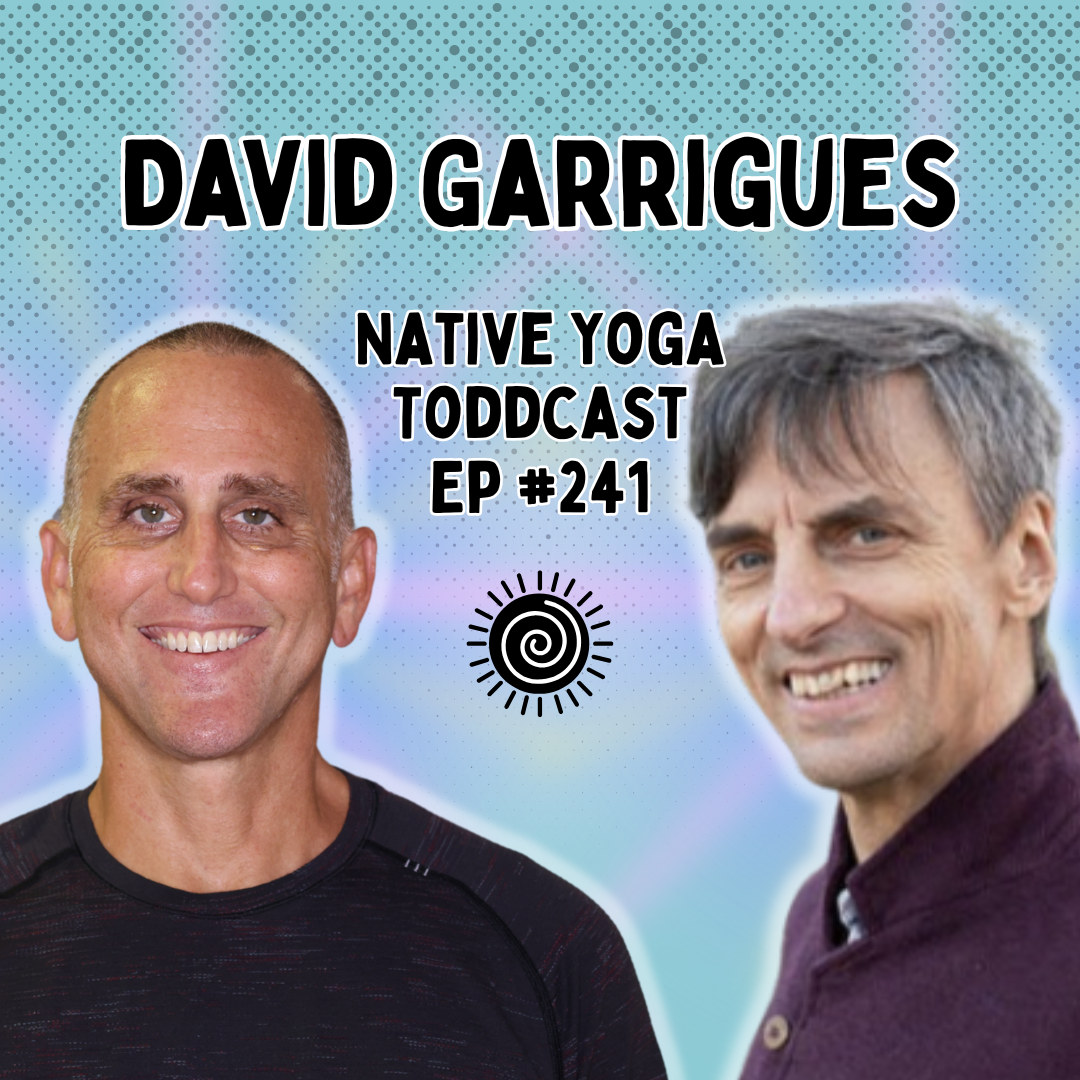
David Garrigues: Breaking Boundaries in Ashtanga Yoga and Modern Practice

Listen to Toddcast with David for FREE here

David Garrigues is a highly respected Ashtanga Yoga teacher known for his deep commitment to practice and exploration of the ancient traditions of yoga. With a career spanning several decades, David began his journey into yoga at the age of 16, evolving from self-practice of sun salutations to studying under renowned teachers. He has trained with prominent figures like Pattabhi Jois, and he integrates unique insights into yoga’s physical, spiritual, and historical aspects to create a comprehensive teaching methodology. As an innovative educator, David places a strong emphasis on safe practices and personalization in yoga.

Visit David here: https://davidgarrigues.com/

Key Takeaways:

  • Personal Practice: David began practicing yoga at a young age, which set the foundation for his lifelong journey in Ashtanga Yoga.
  • Transformation through Teaching: His experiences with influential teachers brought significant change and development in his practice and teaching style.
  • Safety and Personalization: David emphasizes creating a safe and inclusive environment through personalized and step-by-step instruction.
  • Artistic Expression in Yoga: His approach to yoga teaching integrates creativity, viewing it as an art form and a means of personal expression.

Exploring the Roots of Personal Yoga Journeys

In the world of yoga, navigating the delicate balance between tradition and personal interpretation is a journey that has engaged countless practitioners. This dynamic was vividly detailed in a recent conversation between Todd and David Garrigues, where core themes of authenticity, growth, and personal evolution were beautifully intertwined. David’s journey, which began with self-learned sun salutations at the age of 16, highlights an evolving relationship with yoga. His connection with the practice was initially described as mystical: “And I even wrote a paper about it in high school that was called the World is a Sacrament,” illustrating that his journey was not born in a classroom but in the personal landscapes of life.

This exploratory approach is mirrored in his later experiences with teachers like Marie Svoboda in Seattle. It was here that he truly embarked on a more structured path while maintaining a deep sense of individuality. As David recounted, “when I met her, like, no, it was, it was unbelievable actually,” underscoring how a grounded, teacher-guided practice can transform personal passion into disciplined growth. Through each narrative, the emphasis on remaining rooted in one’s journey, underpinned by both reverence for tradition and personal creativity, becomes apparent.

Embracing Limits While Cultivating Potential

In yoga practice and life, understanding and embracing one’s limitations is not a ceiling but a gateway to deeper satisfaction and authenticity. This theme surfaced prominently when Todd and David discussed the notion of limits within yoga. David’s insights from the “Yoga Vashista” reflect this understanding: “A wise person knows what is and is not possible through self-effort.” Far from a defeatist perspective, recognizing these boundaries can be profoundly liberating.

The conversation explored the depression and disillusionment that can arise when one believes in limitless potential without acknowledging personal challenges. “It’s a terrible feeling about yourself,” Todd reflected, highlighting a widespread sentiment among practitioners. In contrast, accepting personal limitations allows for a more tailored and fulfilling practice where “something very good is open to us,” as David beautifully articulated. The conversation suggests that within acknowledged constraints, there lies an opportunity for authentic expression and joy—a theme universal to anyone striving for balance and fulfillment.

Creating a Path: From Tradition to Personal Innovation

David Garrigues’ journey through yoga has always been about carving a singular path that honors the practice’s traditional roots while infusing it with personal flair and modern innovations. His dedication to “doing it the way I want to” showcases a commitment to forging a personalized path within the larger Ashtanga yoga tradition. Despite initial resistance from the traditional Ashtanga community, David’s innovative methods have anchored his approach, allowing him to adapt yoga for an inclusive and modern audience.

The development of his “Asana Kitchen” series and his commitment to accessible, in-depth yoga education epitomize this approach. As he described, “they’re like artistic creations to me.” These platforms not only showcase yoga’s technical aspects but also encourage practitioners to explore and adapt techniques to their unique needs. David’s narrative and practice philosophies remind the yoga community that respecting tradition while welcoming personal innovation can make the practice dynamic and life-affirming.

Transparency, Honesty, and Evolving Practices

In a constantly evolving yoga landscape, maintaining transparency and honesty about one’s practices can inspire others on similar paths. David acknowledges the complexities of teaching and adapting traditional practices to suit modern sensibilities while ensuring practitioners’ safety and well-being. This commitment to honesty is further embodied in his decision to create a formal teacher training program, which distinguishes itself by recognizing Ashtanga’s traditional structure while embracing modern teaching methodologies.

His decision to continue down a less conventional path, despite “battling” against entrenched traditional norms, illustrates a broader theme of resilience and authenticity in navigating contemporary yoga landscapes. David poignantly captures this sentiment, reflecting, “I’m sincere in trying my very hard, you know, my very, very best to interpret Ashtanga in a safe and inclusive way that still gets at the gold that’s there.” This perspective encourages practitioners to honor their path while adapting to meet diverse needs and contexts.

Ultimately, the exchange between Todd and David Garrigues in this transcript underscores a legacy of grounded authenticity, acknowledging personal limitations, respecting tradition, and remaining open to innovation. In doing so, it paints a vibrant picture of a living, breathing practice that inspires others to find joy and satisfaction along their unique paths of personal and communal growth.

Thanks for listening to this episode. Check out: 👇
8IN8 Ashtanga Yoga for Beginners Course Online– Learn 8 Limb Yoga in 8 Days – Get FREE coupon code for a limited time only (Regular price $88) https://info.nativeyogacenter.com/8in8-ashtanga-yoga-for-beginners-8-limbs-in-8-days/

Practice with Native Yoga Online – New classes EVERY day – Use Code FIRSTMONTHFREE https://nativeyogacenter.teachable.com/p/today-s-community-class

Subscribe to Native Yoga Center and view this podcast on Youtube.

Thank you Bryce Allyn for the show tunes. Check out Bryce’s website: bryceallynband.comand sign up on his newsletter to stay in touch. Listen here to his original music from his bands Boxelder, B-Liminal and Bryce Allyn Band on Spotify.

Please email special requests and feedback to info@nativeyogacenter.com

https://info.nativeyogacenter.com/8in8-ashtanga-yoga-for-beginners-8-limbs-in-8-days/

Support the show

Native Yoga website: here
YouTube: here
Instagram: @nativeyoga 
Twitter: @nativeyoga 
Facebook: @nativeyogacenter 
LinkedIn: Todd McLaughlin

Liz Albanis | The Inner Fire of Healing: Yoga, Pilates & Resilience

Listen to Toddcast with Liz for FREE here

Liz Albanis is an experienced wellness professional based in Canberra, Australia. With a background blending yoga, Pilates, and fitness, she has dedicated her career to harnessing the therapeutic potential of these disciplines, especially for mental health challenges such as PTSD. Liz is known for her trauma-informed approach to yoga, having studied extensively with esteemed mentors like Sarah Powers and John Olgavy. She offers personalized wellness programs through her own platform, Liz Albanis Wellness, and hosts the podcast “Yoga for Trauma – The Inner Fire of Yoga.”

Visit Liz here: https://www.lizalbaniswellness.com.au/

Key Takeaways:

  • Trauma-Informed Approach: Liz emphasizes the importance of trauma-informed practices in yoga to cater to individuals with mental health challenges.
  • Diverse Yoga Practices: Transitioning from Bikram to Iyengar and LifeForce Yoga, Liz illustrates how different styles can support mental well-being.
  • Personalized Care: The episode highlights the significance of personalized programs in addressing individual needs and injuries in yoga.
  • Creating Safe Spaces: Liz shares practical tips on making yoga environments inclusive and non-triggering for trauma survivors.
  • Resilience Through Yoga: Personal anecdotes reveal how yoga empowered Liz to quit smoking and cope with PTSD.

Trauma-Informed Yoga: Transforming Healing Practices

In the realm of yoga, traditional practices are evolving to be more inclusive and recognizing the profound impact that trauma can have on practitioners. Trauma-informed yoga is emerging as a valuable modality for individuals experiencing PTSD and other mental health challenges. Liz Albanis shares her personal journey with yoga, highlighting its therapeutic potential, especially for those recovering from trauma. Trauma-informed yoga classes focus on creating a welcoming environment where individuals feel secure, respecting personal boundaries and potential triggers such as physical adjustments or environmental factors like candles and scents.

Albanis illustrates, “My advice is if you use candles, advertise it…it’s not for everyone.” This awareness acknowledges that past experiences, like those related to fire in her case, can shape current reality and emotional responses for students. By making these adjustments, yoga instructors offer a compassionate approach to practice that can significantly improve the mental health outcomes of their students.

The broader implication of this approach is an increased accessibility and mental health support through yoga—the integration of trauma-informed practices benefits not only individuals with unique challenges but also enhances the general teaching methodology, fostering a nurturing space for all.

Personalized Yoga Practices: Tailoring Wellness

Personalized yoga practices stand at the forefront of adaptability in wellness approaches. As Liz Albanis demonstrates in her diverse career, creating custom yoga plans based on individual requirements can aid in overcoming physical limitations, psychological barriers, and lifestyle challenges. She discusses her transition to personalized practices due to her own experiences of injury and post-hospitalization rehabilitation needs.

Albanis shares, “I develop private work one on one to develop a personalized practice…there’s so many contraindications.” This personalized approach allows for flexibility within the practice, which can be particularly beneficial for individuals dealing with chronic conditions or those who have experienced trauma. Personalized yoga practices can address specific mental health requirements, offering unique programs like the Life Force Yoga techniques discussed by Albanis, which are designed to incorporate mindfulness and targeted emotional healing.

Such tailored practices promote a more inclusive yoga environment, emphasizing the importance of understanding and addressing each person’s distinct needs. This adaptability makes yoga more accessible and supportive, particularly for those who might otherwise find a standard class format challenging or intimidating.

The Power of the Beginner’s Mind in Yoga Teaching

An essential philosophy that resonates throughout Liz Albanis’ narrative is the concept of maintaining a “beginner’s mind.” This principle urges yoga teachers and practitioners to continually learn, adapt, and challenge preconceived notions of their practice. Albanis encourages educators to remain open to new ideas and methods, thus fostering a teaching landscape that is both dynamic and inclusive.

Albanis reflects, “Try to have a beginner’s mind…we can get to a place where we feel like we know it all.” She advocates that this mindset not only enhances the quality of teaching but also invites a richer, more comprehensive understanding of yoga’s vast potential. This approach encourages flexibility, curiosity, and a willingness to embrace a spectrum of teaching methodologies that can lead to improved outcomes across the board.

The implications of applying the beginner’s mind are expansive. It not only enriches the teacher-student relationship but also paves the way for innovative practices, ensuring that yoga remains a vital and adaptive tool for physical, emotional, and mental well-being.

Yoga stands as a beacon for those seeking solace from the rigors of mental health challenges and trauma. It is a practice that, when adapted with sensitivity and care, can nurture healing, resilience, and growth. Liz Albanis’ journey exemplifies the transformative power of yoga, advocating for trauma-informed approaches, and recognizing the profound potential of personalized practices. By continually adopting a beginner’s mind, we open ourselves to a deeper connection with ourselves and those we guide in practice.

Thanks for listening to this episode. Check out: 👇
8IN8 Ashtanga Yoga for Beginners Course Online– Learn 8 Limb Yoga in 8 Days – Get FREE coupon code for a limited time only (Regular price $88) https://info.nativeyogacenter.com/8in8-ashtanga-yoga-for-beginners-8-limbs-in-8-days/

Practice with Native Yoga Online – New classes EVERY day – Use Code FIRSTMONTHFREE https://nativeyogacenter.teachable.com/p/today-s-community-class

Subscribe to Native Yoga Center and view this podcast on Youtube.

Thank you Bryce Allyn for the show tunes. Check out Bryce’s website: bryceallynband.comand sign up on his newsletter to stay in touch. Listen here to his original music from his bands Boxelder, B-Liminal and Bryce Allyn Band on Spotify.

Please email special requests and feedback to info@nativeyogacenter.com

https://info.nativeyogacenter.com/8in8-ashtanga-yoga-for-beginners-8-limbs-in-8-days/

Support the show

Native Yoga website: here
YouTube: here
Instagram: @nativeyoga 
Twitter: @nativeyoga 
Facebook: @nativeyogacenter 
LinkedIn: Todd McLaughlin

Emi Tull | From Japan to London: Yoga, Dharma & Spiritual Awakening

Listen to Toddcast with Emi for FREE here

Emi Tull is a seasoned yoga instructor renowned for her transformative journey from a professional dancer to a Dharma Yoga teacher. Born in Japan and now living in London, Tull’s dedication to yoga, particularly under the guidance of Sri Dharma Mittra, highlights her deep spiritual commitment. She is celebrated for teaching across various prestigious studios in London, passionately sharing the teachings and spiritual intricacies of Dharma Yoga, and engaging her community in kirtan and mantra chanting.

Visit Emi here: https://lifetohappiness.com/

Key Takeaways:

  • Emi Tull’s journey from a dancer in Japan to a respected Dharma Yoga instructor in London underscores the importance of spiritual connection and perseverance.
  • Language and cultural challenges are part of Emi’s unique journey, leading to deeper insights and personal growth within her yoga practice.
  • The transformative power of kirtan and mantra chanting is integral to Emi’s spiritual evolution, emphasizing the emotional depth and community connection these practices foster.
  • Despite yoga’s physical focus in Western countries, Emi advocates balancing spiritual and physical practices within yoga teaching.
  • The experience of aging and evolving within one’s yoga practice is natural, and Emi underscores the significance of this acceptance in fostering a lifelong commitment to yoga.

Unveiling the Subtle Art of Dharma Yoga Through Emi Tull’s Lens

In the realm of yoga, Emi Tull stands out with her profound journey from Japan to New York and eventually London, fortifying her credentials in Dharma Yoga and amplifying its reach. This article delves into three compelling themes from Emi Tull’s journey: her transformational path and spiritual connection, the interplay between cultural backgrounds and soul depths, and the graceful acceptance of aging within yoga practice.

Emi Tull’s Transformational Path: From Dance to Yoga

Emi’s story unfolds with an intriguing shift from a dance career to a yoga vocation, a transition laden with unexpected connections and new beginnings. Relocating from Japan to New York, lured by the prospects of a dance career, Emi unknowingly walked past the yoga studio of her future mentor, Sri Dharma Mittra. Yet, her actual introduction to yoga was ensconced in a series of seemingly unrelated events and deep emotional responses, illustrating how spiritual paths often diverge unexpectedly only to realign fortuitously later.

She recounts, “Yoga is much later…I didn’t know and I met my husband after ten years of the New York State. Straight after I moved…from New York to London I got [in a] bike accident and twisted both ankles so I couldn’t dance anymore.” Her initiation into yoga wasn’t a mere career pivot; it was a profound transformation that substituted dance with yoga, propelled by an innate yearning set aflame upon discovering Sri Dharma Mittra’s teachings.

This echoes the broader implication that life’s unpredictable events can pivot us toward our true calling, where initial setbacks transform into spiritual accelerators. Emi’s narrative encourages embracing the unexpected as potential signposts directing one toward deeper life purposes and spiritual awakenings.

Cultural Richness and the Depth of Soul: A Spiritual Perspective

The cultural tapestry in Emi’s life—from her Japanese roots, which greatly value respect and tradition, to her Western experiences—plays a significant role in shaping her teachings and interactions. Emmy attests, “Yes, in Japan we have those being respectful to elders, and teachers are very high…depends on us all. Even the people coming from, let’s say, Italy from the…in England, some of them are very respectful.”

This observation delves into the broader theme of how cultural embedding enhances or complicates the spiritual journey. Emi’s notion of deeper soul connections transcending cultural lines implies an interplay between cultural richness and the innate spiritual depth one brings into yoga practice. This perspective invites further consideration on how, despite cultural variances, individuals ultimately resonate on deeper levels based on their soul’s journey and maturity.

The broader implication here is the intricate dance between our cultural backgrounds and our spiritual expressions; neither is strictly deterministic, allowing for a rich spectrum of experiences within the universal pursuit of spiritual truth.

Acceptance of Aging: The Embrace of Spiritual Maturity over Physicality

In Emi’s narrative, aging is not seen as a detriment to her practice but as an invitation to deepen her spiritual understanding and teaching legacy. She embraces the natural progression of life while her focus gradually shifts from the perfection of physical forms to enriching her spiritual teachings.

She candidly shares, “…but for me, I don’t mind going older and cannot do stuff. That’s fine. I won’t be able to do [what I used to] at 86 years old and then I have children. But I think my student will forgive me.” Her acceptance of aging contradicts the modern, often media-driven narrative that prioritizes eternal youth and physical perfection.

This narrative shift signifies a profound acceptance and a philosophical embrace of the core essence of yoga: union with self, beyond the superficial confines of physical prowess. For instructors and practitioners alike, this is a potent reminder that spiritual maturity adds more value to teaching than physicality, aligning with the ultimate spiritual quest in yoga—the connection with self and others beyond physical forms.

Emi Tull’s journey is a testament to the extraordinary ways life’s occurrences can propel us toward our authentic path, enriching our spiritual and professional lives. Her understanding of culture and spirituality provides layers of depth, necessitating a broader appreciation for how diverse origins intersect with spiritual teachings in yoga. Moreover, her graceful navigation of aging within her practice shifts the focus from a relentless pursuit of physical perfection to realizing the soulful depths of yoga’s diverse teachings. Her story underscores the timeless value in pursuing a practice characterized by spiritual respect, cultural sensitivity, and an unyielding acceptance of the natural life journey.

Thanks for listening to this episode. Check out: 👇
8IN8 Ashtanga Yoga for Beginners Course Online– Learn 8 Limb Yoga in 8 Days – Get FREE coupon code for a limited time only (Regular price $88) https://info.nativeyogacenter.com/8in8-ashtanga-yoga-for-beginners-8-limbs-in-8-days/

Practice with Native Yoga Online – New classes EVERY day – Use Code FIRSTMONTHFREE https://nativeyogacenter.teachable.com/p/today-s-community-class

Subscribe to Native Yoga Center and view this podcast on Youtube.

Thank you Bryce Allyn for the show tunes. Check out Bryce’s website: bryceallynband.comand sign up on his newsletter to stay in touch. Listen here to his original music from his bands Boxelder, B-Liminal and Bryce Allyn Band on Spotify.

Please email special requests and feedback to info@nativeyogacenter.com

https://info.nativeyogacenter.com/8in8-ashtanga-yoga-for-beginners-8-limbs-in-8-days/

Support the show

Native Yoga website: here
YouTube: here
Instagram: @nativeyoga 
Twitter: @nativeyoga 
Facebook: @nativeyogacenter 
LinkedIn: Todd McLaughlin