Unknown's avatar

About nativeyoga

I love Ashtanga Yoga and co-direct Native Yoga Center in Juno Beach, Florida with my wife Tamara.

Simon Borg-Olivier: From Tradition to Innovation in Yoga

Listen to Toddcast with Simon for FREE here

Simon Borg-Olivier is a renowned yoga practitioner, physiotherapist, and movement expert with over four decades of experience. He is known for his innovative integration of traditional yoga practices with modern physiotherapy principles. Having studied under legendary yoga masters such as B.K.S. Iyengar and other prominent instructors, he has developed a unique teaching philosophy that emphasizes breathwork, movement, and the inner workings of the body. Simon is a passionate educator, sharing his expertise through various courses, workshops, and online platforms.

Visit Simon here: https://simonborgolivier.com/

Key Takeaways:

  • Simon Borg-Olivier stresses the importance of moving from your core and breathing less to achieve a meditative state and optimal body function.
  • The Five Dimensional Synergy Flow integrates principles from yoga, martial arts, and indigenous practices, emphasizing natural movement and breath.
  • Emphasizing health, happiness, and longevity over physical aesthetics is crucial in yoga practice according to Simon.
  • Misconceptions about breathwork and stretching can lead to ineffective and sometimes harmful practices.

The Breath of Life: Moving Beyond Traditional Practice

Breathing Naturally for Optimal Health

Simon Borg-Olivier’s teaching philosophy revolves around minimizing breath to enhance vitality. According to him, breathing less can improve blood flow and reduce stress, contrary to the common belief that heavy breathing equates to better health.

“One of the most important things that I learned was…breathe less, not more is the essence of my practice,” Simon shares, highlighting a paradigm shift in understanding how breath affects our physiological and psychological states.

By advocating for reduced breathing, Simon aims to cultivate a balance between the sympathetic and parasympathetic nervous systems, which fosters relaxation while maintaining energy. This nuanced understanding is essential for practitioners dealing with chronic stress or tension.

The Role of Breath in Movement Therapy

Breathing naturally and less intensely is critical, particularly for those with chronic pain. Simon advises, “The two most important things about breathing are to breathe less…but you need to maximize the use and control of your muscles of breathing.” This involves an integration of expanded awareness and precise muscle control, offering a gateway to more profound relaxation and health benefits.

Revolutionizing Yoga Education: A Call for Authentic Practice

Evolving Landscape of Yoga Instruction

Simon observes a shift in yoga education, particularly as the internet democratizes information. While this decentralization offers broad access to yogic wisdom, it also poses risks of dilution and misinformation. “You can become a yoga teacher in one month or even less online…a lot of yoga has lost its credibility,” he warns.

This evolution calls for practitioners and teachers to critically engage with content, seeking depth over superficial certifications. Simon underscores the importance of long-term mentorship, like his own journey, studying under masters spanning continents.

The Misconceptions of Modern Practice

Simon emphasizes a move away from striving for aesthetic perfection in yoga poses. He argues that effective practice should focus on internal sensations rather than external appearances. For instance, attempting advanced poses prematurely can be counterproductive. “Look after your body…the only one we’ve got…learn how your body works,” advises Simon, encouraging a mindful approach that prioritizes health and longevity over transient achievements.

Five-Dimensional Synergy: The Evolution of Movement

Understanding Five-Dimensional Flow

A central concept developed by Simon is the “Five-Dimensional Synergy Flow,” an innovative approach that synthesizes principles from global movement traditions. This method emphasizes moving from your core and letting “your trunk…move in five distinct ways.”

By doing so, Simon combines yoga, martial arts, and dance into exercises that not only enhance flexibility and strength but do so in a balanced and less strenuous manner. His approach challenges conventional perceptions of static poses, advocating for dynamic flow that respects the natural architecture of the body.

Implications for Longevity and Quality of Life

Simon’s approach carries profound implications for personal well-being. By focusing on movement from the core and integrating breath naturally, practitioners can cultivate a routine that supports longevity and health. “Move actively, move from your core…breathe naturally,” he advises, a tradition that aligns movement with physiological rhythms.

This holistic system encourages people to listen to their bodies, fostering a practice that evolves alongside them, alleviating chronic conditions, and enhancing life quality.

Continuation of Learning: Wisdom in Practice

Throughout the discussion, Simon’s insights invite readers to rethink their practices and explore beyond traditional bounds. His teachings echo a philosophy of continual adaptation and learning—a mentality that applies not just to yoga but to all aspects of life.

As practitioners, acknowledging that we are perpetual students allows growth to flourish. Simon advises, “Keep learning, exploring all our lives…to give health, happiness, and longevity to ourselves and others.” His teachings illuminate a pathway for deep introspection and proactive living, inspiring a community of mindful movers around the globe.

This interplay of tradition with modern insights paves the way for sustained vitality and a truly integrative lifestyle. Whether a seasoned practitioner or a newcomer, embracing these perspectives encourages a richer, more fulfilling engagement with both movement and life.

Thanks for listening to this episode. Check out: 👇
8IN8 Ashtanga Yoga for Beginners Course Online– Learn 8 Limb Yoga in 8 Days – Get FREE coupon code for a limited time only (Regular price $88) https://info.nativeyogacenter.com/8in8-ashtanga-yoga-for-beginners-8-limbs-in-8-days/

Practice with Native Yoga Online – New classes EVERY day – Use Code FIRSTMONTHFREE https://nativeyogacenter.teachable.com/p/today-s-community-class

Subscribe to Native Yoga Center and view this podcast on Youtube.

Thank you Bryce Allyn for the show tunes. Check out Bryce’s website: bryceallynband.comand sign up on his newsletter to stay in touch. Listen here to his original music from his bands Boxelder, B-Liminal and Bryce Allyn Band on Spotify.

Please email special requests and feedback to info@nativeyogacenter.com

https://info.nativeyogacenter.com/8in8-ashtanga-yoga-for-beginners-8-limbs-in-8-days/

Support the show

Native Yoga website: here
YouTube: here
Instagram: @nativeyoga 
Twitter: @nativeyoga 
Facebook: @nativeyogacenter 
LinkedIn: Todd McLaughlin
Santina Giardina-Chard: Breaking Free from Addiction Through Ashtanga Yoga & Gestalt Therapy

Listen to Toddcast with Santina for FREE here

Santina Giardina-Chard is a dedicated Ashtanga yoga teacher, having mastered all levels up to the fourth series. Alongside her yoga practice, Santina is a certified gestalt therapist with a master’s degree, tirelessly working with clients to explore how their past influences their present experiences and relationships. Her holistic approach combines yoga and gestalt therapy to offer profound insights into personal development and self-awareness.

Visit Santina here: https://insanyoga.com/

Key Takeaways:

  • Integration of Yoga and Therapy: Santina illustrates how Ashtanga yoga and gestalt therapy synergize to promote self-awareness and personal growth.
  • Freedom Through Deep Self-Contact: The practice of turning towards personal challenges and emotions with curiosity can lead to liberation from past patterns.
  • Phenomenological Observation: Understanding one’s physical and emotional reactions in the present moment is essential for overcoming past influences.
  • Horizontal Relationship Dynamics: Gestalt therapy emphasizes creating a non-hierarchical, safe space for exploration and healing.
  • Continual Learning in Practice: Both yoga and gestalt therapy require ongoing personal development to effectively support others.

The Intersection of Ashtanga Yoga and Gestalt Therapy: A Path to Self-Discovery

Santina Giardina-Chard, an accomplished Ashtanga yoga teacher and Gestalt therapist, offers a unique perspective on the integration of these disciplines, fostering a transformative journey of self-discovery and healing. Throughout her conversation with Todd, she shares her evolution from a struggling addict to a liberated practitioner who embraces the complexity of human experience.

Drawing from her own story, Santina delves into the synergy between yoga and therapy. While Ashtanga yoga helped “clean up” her life by providing a structured, disciplined practice, it was Gestalt Therapy that enabled her to truly understand her inner world. “Ashtanga,” she expresses, “is a laboratory. Everything’s happening there. It’s all coming to the surface.”

Her narrative highlights the importance of not merely practicing yoga for physical postures but for what they reveal about the self. She notes, “People think they’re coming for postures, but it’s not. They want contact… something new arises in me that I didn’t know about myself.”

Santina explores the role of the therapist and yoga teacher as facilitators who create a safe, non-hierarchical space for individuals to face themselves. She emphasizes the Gestalt concept of engaging in field dialogue, stating, “I notice your eyes, I notice your lips… and that’s what happens in the Mysore Room. I say something, and the organism, not the posture, is being impacted.”

Paradox of Change: Embracing Authenticity and Presence

Central to Santina’s approach is the paradoxical theory of change found in Gestalt Therapy. She explains, “We don’t change by trying to change. We change by allowing ourselves to be as we are.” This concept underscores the importance of authenticity and presence, countering the pervasive drive for self-improvement through forceful change.

Santina recounts her personal struggles with addiction and eating disorders. Her turning point came upon realizing that seeking external change often led to deeper internal conflicts. Instead, accepting and observing her present state allowed for organic transformation. “I’m close with myself,” she reflects, “I’m wondering what it is for you to get marutchyasana D… I want you to check out really what it means to you.”

This approach transforms both psychotherapy and yoga into practices of deep listening and inquiry, where one’s internal and external realities are acknowledged and respected. Her insight resonates with Krishnamurti’s teachings on freedom and self-awareness, highlighting the necessity of turning towards emotions rather than fleeing from them. “In that moment,” Santina shares, “the resistance towards myself drops.”

Emotional Anatomy: Organizing the Inner Landscape

Santina introduces the conceptual framework of “emotional anatomy,” wherein the body’s organization reflects accumulated life experiences. This theme is crucial in understanding how one’s past informs present behaviors and reactions, often subconsciously. She articulates, “The student in front of you is an organization of how they’ve experienced their life.”

Her work focuses on unveiling this organization, allowing individuals to observe their interruptions and choose how to respond. She notes, “Shame is still there… but that’s from the past. It’s not now.” By facing these interruptions authentically, one reclaims the power to shape their narrative and regain agency over their life.

Santina’s perspective resonates through the transcript, illustrating how individual growth emerges from this acknowledgment and acceptance of one’s “unfinished business.” Through Gestalt Therapy, she provides tools for addressing these lingering influences. Her philosophy creates an empowering framework for students and clients alike.

Embracing Freedom through Self-Understanding

Engaging with her unique blend of Ashtanga yoga and Gestalt Therapy, Santina Giardina-Chard unveils a path toward genuine self-understanding and freedom. Her commitment to fostering an environment of safety, inquiry, and acceptance underscores the importance of exploring one’s internal landscape. Rejecting the urge to change externally without understanding internally, she embraces the process of becoming through gentle, patient inquiry.

Santina’s narrative demonstrates that true freedom lies not in achieving complex postures or attaining an idealized state, but in understanding and meeting oneself with compassion and curiosity. As she powerfully concludes, “You want to be free now. You can’t be free if you’re always in the same unfinished business… look deeply, you want to be free.”

Through Santina’s insights and teachings, we can appreciate the profound transformative power inherent in merging physical practice with psychological exploration. This work illuminates a path to healing that harmoniously integrates body, mind, and soul, providing a beacon of hope for those seeking a deeper connection with their authentic selves.

Thanks for listening to this episode. Check out: 👇
8IN8 Ashtanga Yoga for Beginners Course Online– Learn 8 Limb Yoga in 8 Days – Get FREE coupon code for a limited time only (Regular price $88) https://info.nativeyogacenter.com/8in8-ashtanga-yoga-for-beginners-8-limbs-in-8-days/

Practice with Native Yoga Online – New classes EVERY day – Use Code FIRSTMONTHFREE https://nativeyogacenter.teachable.com/p/today-s-community-class

Subscribe to Native Yoga Center and view this podcast on Youtube.

Thank you Bryce Allyn for the show tunes. Check out Bryce’s website: bryceallynband.comand sign up on his newsletter to stay in touch. Listen here to his original music from his bands Boxelder, B-Liminal and Bryce Allyn Band on Spotify.

Please email special requests and feedback to info@nativeyogacenter.com

https://info.nativeyogacenter.com/8in8-ashtanga-yoga-for-beginners-8-limbs-in-8-days/

Support the show

Native Yoga website: here
YouTube: here
Instagram: @nativeyoga 
Twitter: @nativeyoga 
Facebook: @nativeyogacenter 
LinkedIn: Todd McLaughlin

Brendan Smullen: How Ashtanga Yoga Evolves with Life, Parenthood & Community

Listen to Toddcast with Brendan for FREE here

Brendan Smullen is a certified Ashtanga yoga teacher and co-owner of a yoga studio in Seattle, where he and his partner specialize in Ashtanga and progressive variants of this practice. With a rich background in both traditional and Rocket yoga, Brendan is known for fostering inclusive and community-driven yoga experiences. Through his teaching, Brendan emphasizes discipline, practice consistency, and the importance of community in the yoga journey. He has studied with notable instructors, including Christina Martini and Manju Jois, blending traditional teachings with innovative modifications to support diverse practitioners.

Visit Brendan here: https://www.theyogashalaseattle.com/

Key Takeaways:

  • Yoga practice adapts to life changes, such as new parenthood, requiring flexibility and understanding rather than strict adherence to routine.
  • Strong partnerships, whether in personal or professional life, can enhance the teaching and practice of yoga through shared goals and mutual support.
  • Creating a vibrant yoga community involves fostering environments where organic connections and support systems, like meal trains, can flourish.
  • Modifying traditional Ashtanga practices allows for greater accessibility and inclusivity, supporting a diverse range of practitioners.
  • Sustainability in yoga practice benefits from an emphasis on personal practice and self-guided sessions, steering away from dependency on external motivation.

Cultivating Community in Yoga Studios

In the realm of yoga, creating a supportive and inclusive community is invaluable. As evidenced by Brendan Smullen’s experiences, cultivating a close-knit environment enhances the yoga journey for both practitioners and instructors. Smullen touches upon the natural development of community gatherings, describing how coffee meet-ups evolved from simple interactions: “Because that space was like assigned as like the office hours… it just became sort of a community event.”

This organic cultivation of community not only aids in breaking down barriers between students and teachers but also enriches the support network within the studio. Such initiatives can lead to profound personal connections, where “folks will come up with [ideas] natively” and the shared experiences form “a lot of trust and a lot of, a lot of giving.” Smullen exemplifies how fostering these environments can become a platform for collective resilience, underscoring the importance of inclusivity and genuine interaction within yoga communities.

Navigating Family and Professional Life

Combining family life with professional endeavors is both challenging and rewarding. For Brendan Smullen, integrating his yoga practice with his responsibilities as a new parent and studio owner demonstrates the delicate balancing act many face. Within the interview, Smullen discusses how he and his partner manage parental duties alongside their teaching schedules, illustrating, “We have…our studio is principally Ashtanga, so I’m teaching four hours most mornings… and then helping her when she teaches in the evenings.”

This collaboration between partners highlights the potential for mutual support, yet it also speaks to the need for mindful communication and shared objectives. As Smullen points out, “There’s a shared mission that you have that kind of also anchors the relationship.” The overarching sentiment is one of teamwork, where shared responsibilities can create a symbiotic environment, enriching both personal and professional facets of life.

Additionally, Brendan mentions how community support extends into personal life, like creating a “meal train” to ease family challenges, thereby strengthening community bonds. The synthesis of familial, professional, and community life champions the notion of interdependence, emphasizing that such integration can lead to profound personal and collective growth.

Evolving Ashtanga Practice

The practice of Ashtanga yoga, with its deep historical roots, often requires adaptations to meet the needs of its practitioners. Brendan Smullen shares insights into personalizing Ashtanga to suit both life changes and individual physical needs. This customization is crucial, as Smullen explains, “Your legs don’t need to be fully straight in order to emphasize a hamstring stretch,” offering that even with a mainly structured practice, there is room for personalized adjustments.

Furthermore, Smullen addresses the balance between tradition and accessibility: “The approach with Ashtanga in the self-guided environment…is honestly the best way to establish a practice.” This reflects a commitment to maintaining the integrity of the practice while acknowledging individual limitations or life circumstances, such as parenting or seasonal influences. Through thoughtful adjustments, Smullen illustrates how even a traditional practice can remain sustainable and fulfilling. He emphasizes, “I’ve softened on some things… I’m only doing a portion of…my intermediate advanced series practice,” highlighting the importance of flexibility within one’s practice.

This theme of adaptability aligns with Brendan’s personal journey, illustrating how life’s ebbs and flows can dictate practice intensity and focus. As such, flexibility in practice becomes a model for handling life’s broader shifts—showcasing yoga’s enduring relevance in personal development.

Embracing a yoga practice that reflects our lives’ dynamic nature fosters both personal resilience and community cohesion. Brendan Smullen’s experiences underscore the potent synergy of community-building within yoga, the nuanced balance of integrating family with work, and the adaptability required to sustain a lifelong practice. His journey serves as a testament to yoga’s ability to transform lives, nurturing both individuality and collective spirit. As he details, a sensitive approach to practice and community interaction offers avenues for enduring peace and growth amid life’s inevitable transitions.

Thanks for listening to this episode. Check out: 👇
8IN8 Ashtanga Yoga for Beginners Course Online– Learn 8 Limb Yoga in 8 Days – Get FREE coupon code for a limited time only (Regular price $88) https://info.nativeyogacenter.com/8in8-ashtanga-yoga-for-beginners-8-limbs-in-8-days/

Practice with Native Yoga Online – New classes EVERY day – Use Code FIRSTMONTHFREE https://nativeyogacenter.teachable.com/p/today-s-community-class

Subscribe to Native Yoga Center and view this podcast on Youtube.

Thank you Bryce Allyn for the show tunes. Check out Bryce’s website: bryceallynband.comand sign up on his newsletter to stay in touch. Listen here to his original music from his bands Boxelder, B-Liminal and Bryce Allyn Band on Spotify.

Please email special requests and feedback to info@nativeyogacenter.com

https://info.nativeyogacenter.com/8in8-ashtanga-yoga-for-beginners-8-limbs-in-8-days/

Enjoy new Native Yoga Center classes uploaded everyday on our online learning hub. Use code FIRSTMONTHFREE at checkout. https://nativeyogacenter.teachable.com/p/today-s-community-class

Support the show

Native Yoga website: here
YouTube: here
Instagram: @nativeyoga 
Twitter: @nativeyoga 
Facebook: @nativeyogacenter 
LinkedIn: Todd McLaughlin
Angelica Govaert: How Meditation, Quantum Physics & Yoga Build a Thriving Online Career

Listen to Toddcast with Angelica for FREE here

In this episode, we sit down with Angelica Govaert — aka Yogalebrity — a yoga teacher and digital entrepreneur with 40+ years of practice. She blends meditation, quantum physics, and business strategy to help yoga teachers thrive online.

Angelica has created multiple successful courses, including a best-selling program on yoga assists, and leads the Empowered Yoga Teacher Project. Her marketing expertise also earned her a spot in Russell Brunson’s Inner Circle.

Join us as Angelica shares her journey, key lessons, and what it takes to succeed as a modern yoga professional. A must-listen for yoga teachers and wellness entrepreneurs ready to elevate their impact.

Visit Angelica here: https://www.angelicagovaert.com/

Key Takeaways:

  • Visualization and Meditation: Angelica highlights how Joe Dispenza’s techniques enabled her to overcome imposter syndrome and visualize her path to success, aligning her daily actions with her goals.
  • Building an Online Business: She underscores the necessity of financial investment and strategic planning when establishing an online presence, stressing that creating content is crucial for sustained growth.
  • The Importance of Marketing: Angelica offers insights into the power of smart marketing over having a superior product, sharing her experiences with social media and ClickFunnels to substantiate her points.

Embracing Gratitude and Mindset for Success

In the intricate world of personal development and business growth, Angelica Govaert, widely recognized as Yogalebrity, sheds light on the powerful intersection between mindset and success. As highlighted in the opening exchange with her interviewer, Angelica emphasizes, “Happiness is a daily practice…a lot of it has to do with gratitude.” This perspective isn’t just a mantra but a strategic approach to life itself.

Angelica draws inspiration from Joe Dispenza’s teachings, pointing out how meditation and visualization can reshape reality. “I literally rewired my neuro network to see myself in a completely different way,” she notes, attributing her transformation to consistent meditation practices. By adopting this methodology, Angelica has not just transformed her personal outlook but also set herself on a path to professional success.

The broader implication of Angelica’s mindset underscores a proactive approach to challenges. Her belief in the power of gratitude and visualization suggests a paradigm where success is less a destination and more a journey shaped by daily decisions and mental frameworks.

Navigating the Online Yoga Business

Transitioning from in-person yoga teachings to an online platform poses unique challenges and opportunities. Angelica provides a candid account of her journey, detailing the financial and strategic steps necessary for success. “I don’t think you can build an online business with no money,” she candidly remarks, emphasizing the importance of strategic investment in training and platforms.

Her choice of ClickFunnels as a tool for scaling her business highlights the strategic considerations that drive her success. With platforms described as a blend of affordability and functionality, Angelica’s experience underscores the importance of choosing the right digital tools. “I like ClickFunnels…you can scale with it and you can use it to run really high-level ads,” she shares, offering insights into her strategic thinking.

Angelica’s approach to online success isn’t purely technical. Her narrative is one of resilience and adaptability. She advises consistently creating content and viewing social media trends as opportunities rather than obstacles. By adopting a methodical approach to content creation and investing in her growth, Angelica’s experience serves as a blueprint for aspiring online yoga teachers.

Overcoming Imposter Syndrome and Fostering Authentic Growth

Imposter syndrome, often rooted in perfectionism, is a common barrier for many professionals. Angelica’s reflections offer an enlightening perspective on embracing imperfection as a path to authenticity. “A lot of these people come in and they have multiple certifications…it’s that they’re perfectionists,” she observes, dismantling the myth that credentials alone equate to readiness.

Her advice to “post every day, two times a day for 90 days minimum” underscores the value she places on persistence over perfection. By sharing her own journey of making “thousands of videos,” Angelica advocates for a focus on continuous improvement rather than immediate success.

The broader implications of her insights suggest that success in any field, particularly one as personal as yoga teaching, involves balancing aspirations with a willingness to learn through action. Angelica’s journey illustrates a path where embracing imperfections becomes a powerful driver for growth, fostering a more authentic and impactful presence both online and offline.

Angelica Govaert’s journey offers a unique lens on the evolving landscape of yoga teaching. Her reflections on gratitude, strategic business practices, and personal growth provide a robust framework for aspiring digital entrepreneurs and yoga teachers alike. By navigating the digital space with authenticity and a learner’s mindset, practitioners can unlock new opportunities for influence and impact, setting a precedent for a future where personal well-being and professional success are inextricably linked.

Thanks for listening to this episode. Check out: 👇
8IN8 Ashtanga Yoga for Beginners Course Online– Learn 8 Limb Yoga in 8 Days – Get FREE coupon code for a limited time only (Regular price $88) https://info.nativeyogacenter.com/8in8-ashtanga-yoga-for-beginners-8-limbs-in-8-days/

Practice with Native Yoga Online – New classes EVERY day – Use Code FIRSTMONTHFREE https://nativeyogacenter.teachable.com/p/today-s-community-class

Subscribe to Native Yoga Center and view this podcast on Youtube.

Thank you Bryce Allyn for the show tunes. Check out Bryce’s website: bryceallynband.comand sign up on his newsletter to stay in touch. Listen here to his original music from his bands Boxelder, B-Liminal and Bryce Allyn Band on Spotify.

Please email special requests and feedback to info@nativeyogacenter.com

https://info.nativeyogacenter.com/8in8-ashtanga-yoga-for-beginners-8-limbs-in-8-days/

Support the show

Native Yoga website: here
YouTube: here
Instagram: @nativeyoga 
Twitter: @nativeyoga 
Facebook: @nativeyogacenter 
LinkedIn: Todd McLaughlin
Steve Burgess: Exploring Past Lives, Reincarnation & the Power of Hypnotic Trance

Listen to Toddcast with Steve for FREE here

Steve Burgess is a renowned hypnotherapist specializing in past life regression. With 33 years of experience, Steve has facilitated over 15,000 sessions and conducts workshops around the globe, including in the UK, Norway, Canada, and the US. He brings a unique blend of therapeutic and spiritual approaches to hypnotherapy, gaining deep insights for his clients into their current lives from past life experiences. Steve is also an accomplished author with three published books, highlighting his profound understanding and experiences in the field of regression therapy.

Register for Workshop here:https://www.nativeyogacenter.com/ap-past-life-regression-group-workshop-w-steve-burgess-saturday-december-6th-15pm.php

Visit Steve on his website: https://steveburgesshypnosis.com/

Key Takeaways:

  • Regression therapy utilizes hypnosis to access the subconscious, revealing past life experiences that can offer insights into current life issues.
  • Hypnosis is a natural, trance-like state, similar to everyday experiences like daydreaming or focused activities, and is integral to past life regression.
  • While belief in reincarnation can enrich the experience, an open mind is sufficient to engage in past life regression workshops.
  • Regression therapy can uncover emotional traumas from not only past lives but also from the present life and ancestral experiences.

Unveiling Past Life Regression: A Journey Through Time

The concept of past life regression is as fascinating as it is mysterious. Central to this discussion is Steve Burgess, a seasoned hypnotherapist whose expertise in regression therapy spans over three decades. Burgess’s methodology is not just about curiosity, but about healing emotional traumas that anchor our present issues. This exploration offers an understanding of how our past lives interplay with our current existence, making regression a potent tool for self-discovery and healing.

Journey into Hypnotherapy: Unlocking the Subconscious Mind

Understanding Trance and Its Natural Occurrence

Burgess elucidates the natural state of trance, commonly misunderstood as something akin to sleep or a hypnotic stupor. “Trance is what we call the hypnotic state,” he explains. “It’s completely natural… like when we’re daydreaming or driving on autopilot.” This understanding is crucial, dispelling myths and allowing individuals to approach hypnotherapy with an open mind.

Hypnotherapy serves as a gateway to the subconscious, unlocking profound insights which are not easily accessed in our conscious state. Burgess’s process involves guiding individuals to a relaxed trance state, where the subconscious mind becomes accessible, often likened to an “iceberg” where the deeper portion holds the key to our true selves. The implications here are vast; by understanding that trance is part of our daily lives, more people might be open to leveraging hypnotherapy for personal growth and resolution of deep-seated issues.

The Intersection of Past Lives and Emotional Healing

Therapeutic Benefits Beyond Fascination

While many might initially approach past life regression out of curiosity, the therapeutic implications are profound. Burgess shares numerous accounts where regression therapy unraveled the roots of psychological and emotional issues. “Every issue has emotional causes,” he notes, describing his systematic approach to uncovering traumas ranging from this life, past lives, and even ancestral experiences.

In one compelling narrative, a client’s regression into a past life during World War II revealed the emotional scars that contributed to his present-day anxieties. Such sessions offer not only catharsis but transformative healing. Burgess’s insights present a new layer to therapeutic practices, highlighting the importance of addressing our deep-seated histories for holistic healing. For skeptics, these cases underline the session’s validity, as accessing past life memories can powerfully impact current psychological and emotional well-being.

Hypnotherapy’s Role in Personal Growth and Awareness

Positive Affirmations and Personal Empowerment

Burgess provides actionable advice on utilizing hypnotherapy for positive change, emphasizing the importance of carefully crafted affirmations. “Your affirmation should be in the now and positive,” he suggests, urging a focus on what individuals intend to manifest in their lives. The interplay of affirmation and visualization can indeed shape one’s subconscious intentions, leading to tangible transformations.

For those seeking to integrate hypnotherapy into daily routines, exploring resources like Burgess’s YouTube channel presents an accessible start. By recognizing the capabilities of the subconscious mind, individuals can actively curate their desired realities, facilitated by hypnotherapy’s deep-reaching methods. This process extends beyond personal agendas, offering a path for clearer understanding and improved quality of life.

Embracing the Mystique of Past Life Regression

The exploration into our past lives through regression therapy poses more than intellectual curiosity; it becomes a vital tool for personal empowerment. Burgess’s experience showcases how regression therapy unveils the unseen influences crafted by past traumas, offering profound healing avenues that traditional therapeutic methods may overlook. His insights confirm that through the natural process of trance, we can unlock an unprecedented understanding of ourselves, bridging the chasm between past influences and present realities.

By embracing hypnotherapy’s transformative power, individuals can translate past experiences into wisdom and healing. Breaking free from the chains of subconscious traumas, past life regression therapy invites a brave exploration of self-discovery, revealing a tapestry of connections that define and enrich our lives across time.

Thanks for listening to this episode. Check out: 👇
8IN8 Ashtanga Yoga for Beginners Course Online– Learn 8 Limb Yoga in 8 Days – Get FREE coupon code for a limited time only (Regular price $88) https://info.nativeyogacenter.com/8in8-ashtanga-yoga-for-beginners-8-limbs-in-8-days/

Practice with Native Yoga Online – New classes EVERY day – Use Code FIRSTMONTHFREE https://nativeyogacenter.teachable.com/p/today-s-community-class

Subscribe to Native Yoga Center and view this podcast on Youtube.

Thank you Bryce Allyn for the show tunes. Check out Bryce’s website: bryceallynband.comand sign up on his newsletter to stay in touch. Listen here to his original music from his bands Boxelder, B-Liminal and Bryce Allyn Band on Spotify.

Please email special requests and feedback to info@nativeyogacenter.com

Support the show

Native Yoga website: here
YouTube: here
Instagram: @nativeyoga 
Twitter: @nativeyoga 
Facebook: @nativeyogacenter 
LinkedIn: Todd McLaughlin
Ishan Shivanand: How Yoga Rewires the Mind & Heals Modern Mental Health

Listen to Toddcast with Ishan for FREE here

Ishan Shivanand is a revered Acharya in the Shiv Yog lineage, born and raised in an ashram under the guidance of Avadut Shivanand. He spent over two decades immersed in traditional yogic practices, focusing on enlightenment through the Shiv Yog parampara. Ishan is now an influential global speaker and mental health researcher, advocating for integrative wellness modalities like yoga and meditation. His work focuses on cognitive development, yoga’s role in mental health, and resilience training, contributing significantly through published peer-reviewed studies and public speaking.

Visit Ishan here: https://ishanshivanand.com/

Key Takeaways:

  • Ishan Shivanand’s journey from an ashram upbringing to a leader in global wellness highlights the transformative power of traditional yoga practices, focusing on enlightenment and mental health.
  • Yoga, as envisioned by ancient practitioners, is rooted deeply in cognitive and consciousness enhancement rather than mere physical exercise.
  • Ishan’s large-scale meditation research provides scientific evidence of yoga’s positive impact on stress, anxiety, depression, and the overall quality of life, advocating for its integration into more Western health and educational systems.
  • Resilience training, as introduced by Ishan, offers children and vulnerable populations tools for emotional regulation and stress management through meditation and breathwork.

Cognitive Science Meets Ancient Yogic Wisdom

In a world increasingly governed by scientific validation, the intersection of yoga and cognitive science emerges as a compelling narrative. Ishan Shivanand, an accomplished yogi with deep roots in the Shiv Yoga lineage, emphasizes the profound cognitive aspects inherent in yoga practice. “Yoga is much more an exercise of the mind than it is of the body,” he asserts, advocating for a greater understanding of the mind-body connection beyond mere physical postures.

The transcript reveals Shivanand’s perspective on overcoming mental health challenges through cognitive applications of yoga. He challenges the misconception prevalent in Western cultures that view yoga solely as physical exercise. He underscores the richness of ancient texts like the Patanjali Yoga Sutras, which delve deeply into consciousness and mind training. This cognitive approach can redefine mental health paradigms by offering sustainable, low-cost, and scalable wellness models as alternatives to purely pharmaceutical interventions. The adoption of integrative modalities rooted in yoga could revolutionize personal and societal health narratives, enhancing quality of life through self-awareness and conscious living.

Building Resilience with Yogic Techniques

Resilience training in the context of yoga offers a novel strategy for navigating modern life’s complexities. The conversation centers around the use of traditional yogic practices to build emotional and mental resilience. According to Shivanand, “Resilience training focuses upon concepts. And that is yoga; YOG is non-theological.” His curriculum teaches breath regulation, selective thought awareness, and emotional mastery, equipping practitioners with the tools to remain centered amid chaos.

The dialogue differentiates between stress management and resilience building, highlighting the universal applicability of the latter. By introducing resilience programs in high-stress environments such as educational institutions and hospitals, yoga offers a proactive approach to mental well-being. Shivanand notes, “What stress does is it makes you doom, prophesize anxiety… We need these children to stay in the present,” indicating a broader societal need to foster environments conducive to mental clarity and emotional stability. Such initiatives could mitigate the prevalent mental health crises and enhance collective consciousness by teaching individuals to harness their inner strength.

Awakening Conscious Leaders Through Yoga

The potential of yoga to influence leadership and societal structures is a recurrent theme. Shivanand envisions the emergence of “Buddhas in boardrooms,” where enlightenment transcends personal practice to inform ethical leadership. He argues for an integrative effort encompassing scholars, faith leaders, elected officials, and community influencers towards a shared goal of societal transformation.

“Do we want fame, or do we want change?” reflects a poignant question posed during the conversation, encapsulating the choice between superficial recognition and substantive impact. Shivanand calls for a collaborative effort to elevate collective consciousness, suggesting that broadening the educational system’s spiritual and cognitive foundations could replace prevailing materialistic narratives. He passionately articulates, “We need enlightened leaders, leaders who care more about consciousness, leaders who care more about humanity as a species.”

This holistic expansion champions a move away from individualistic pursuits towards nurturing a world where leaders use yogic principles to guide progressive and compassionate global policies. The dialogue reiterates that a mindful pursuit of enlightenment—for both individuals and societies—holds transformative power far exceeding conventional success metrics.

The discourse with Ishan Shivanand illuminates yoga as an ever-relevant philosophy with the potential to address modern-day challenges such as mental health crises, leadership vacuums, and educational shortcomings. By advocating cognitive and spiritual dimensions of yoga, Shivanand presents not merely an ancient practice but a sophisticated, adaptable framework for holistic development and resilience. Through strategic integration into various sectors, these insights could catalyze a global shift, fostering environments where enlightened awareness becomes the cornerstone of personal and collective evolution.

Thanks for listening to this episode. Check out: 👇
8IN8 Ashtanga Yoga for Beginners Course Online– Learn 8 Limb Yoga in 8 Days – Get FREE coupon code for a limited time only (Regular price $88) https://info.nativeyogacenter.com/8in8-ashtanga-yoga-for-beginners-8-limbs-in-8-days/

Practice with Native Yoga Online – New classes EVERY day – Use Code FIRSTMONTHFREE https://nativeyogacenter.teachable.com/p/today-s-community-class

Subscribe to Native Yoga Center and view this podcast on Youtube.

Thank you Bryce Allyn for the show tunes. Check out Bryce’s website: bryceallynband.comand sign up on his newsletter to stay in touch. Listen here to his original music from his bands Boxelder, B-Liminal and Bryce Allyn Band on Spotify.

Please email special requests and feedback to info@nativeyogacenter.com

https://info.nativeyogacenter.com/8in8-ashtanga-yoga-for-beginners-8-limbs-in-8-days/

Support the show

Native Yoga website: here
YouTube: here
Instagram: @nativeyoga 
Twitter: @nativeyoga 
Facebook: @nativeyogacenter 
LinkedIn: Todd McLaughlin
Mahaya: How Authentic Connection Heals Trauma, Anxiety & Emotional Pain

Listen to Toddcast with Mahaya for FREE here

Mahaya is an experienced healer specializing in transformational modalities such as yoga, body work, breath work, and the unique relational practice known as “circling.” Based on Vancouver Island, Canada, Mahaya’s journey in the healing arts began in her twenties as she sought relief from a personal life of suffering. For more than two decades, Mahaya has embraced a wide range of disciplines, including spiritual community living and exploration of psychedelics for therapeutic purposes. Now, she creates spaces of intimacy and connection to aid others on their self-discovery paths.

Visit Mahaya here: https://www.mahayahealingarts.com/

Key Takeaways:

  • Mahaya’s journey highlights an evolution from personal suffering to becoming a healer through exploration of various modalities such as yoga and breath work.
  • The practice of circling emphasizes authentic relating, creating a safe space for individuals to understand how they connect with others.
  • The pandemic brought Mahaya face-to-face with authentic relating online, catalyzing her growth and reducing her social anxiety.
  • Mahaya’s work now integrates presence and mindfulness into everyday life, transforming professional interactions into an extension of her mindfulness practice.
  • Her story is a powerful testament to the potential for healing and transformation when individuals are open to exploring diverse methodologies.

Unveiling Personal Growth Through Circling and Authentic Relating

The narrative shared by Mahaya highlights an inspiring journey of profound personal growth achieved through the practice of circling and authentic relating. Being on the path of healing for over two decades, Mahaya shares how shifting her focus from individual practices to community-based interactions transformed her life.

With a background deeply rooted in various therapeutic modalities, Mahaya explains her transition to circling, a method of relational meditation that encourages vulnerability and curiosity. “It’s fascinating,” she states, noting how the presence of others within a circle can gently coax underlying insecurities and fears into the open. By vocalizing such feelings and perceiving real-time feedback, individuals engrain a deeper sense of self-awareness and social empathy.

Mahaya’s candid reflections uncover the essence of relational meditation: coming into a space with others to explore emotions and thoughts while navigating interpersonal dynamics. At a point where she previously felt isolated and misaligned, Mahaya emphasizes how this practice helped her become confident and comfortable within her own skin.

“We call it relational meditation because just like in meditation, what we’re doing in this practice, first of all, we check with ourselves,” she explains. Starting with introspection and then broadening to observe interactions with others helped her turn fear into curiosity, laying the foundation for fulfilling connections.

Holistic Healing: A Journey From Isolation to Interconnection

Mahaya’s extensive history with yoga, bodywork, and breathwork illustrates a holistic approach to healing that combines mind, body, and spirit integration. Her narrative underscores how embracing these modalities was a personal pursuit at first, aimed at reclaiming her health and mental clarity. Yoga, in particular, served as a pivotal step in rediscovering passion and empowerment.

She describes how she initiated yoga teacher training for self-healing rather than as a career ambition. “When I asked myself, like, what is it that I actually love doing? I’m like, well, at least I know I feel better in yoga classes,” she reflects. Becoming a yoga teacher allowed her to reconnect with her inner joy, leading to unexpected transformative experiences in both her life and those of her students.

Beyond yoga, she delved into breathwork and touched upon the transformative potential of conscious connected breathwork and psychedelic substances. These practices offered a bridge to transcendent states, where she could reconnect with deeper truths beyond her present challenges.

Her exploration culminates in realizing that even though such practices aided in individual healing, the relational component was missing. Through exploring multilayered interactions in circling, Mahaya learned to navigate interpersonal relationships with newfound grace and authenticity.

Creating Safe Spaces in the Journey of Relational Healing

The application of these healing practices goes beyond individual transformation to creating community spaces where everyone can embark on their own journey of healing. Mahaya articulates the importance of facilitating environments that nurture intimacy and connection, transcending the superficial chatter that often plagues human interactions.

Her compassionate approach advocates providing a platform where each participant is seen, heard, and valued. Reflecting on her practices, Mahaya asserts, “It’s all based on presence.” Engaging participants in awareness and mindfulness not only enriches her client interactions but equally enhances her own lived experience.

Within these spaces, Mahaya thrives on the opportunity to fuel deeper connections. She indicates that facilitating these circles and sharing the principles of psychosomatic therapy nourish her own journey as much as those she guides. It’s a symbiotic relationship that underscores the interconnectedness and interdependence of human healing and flourishing.

In fostering inclusive spaces, Mahaya exemplifies how individuals can catalyze transformation collectively, emphasizing that relational dynamics profoundly impact personal and communal evolution.

Awakening to Authenticity: Continuing the Journey

Mahaya’s story converges on a powerful narrative of stepping into one’s own selfhood with courage and understanding. Her journey from uncertainty and isolation to an empathetic, connective presence highlights how integrating relational practices can redefine our interactions and inner landscapes.

This exploration of circling and relational healing emphasizes the potential within each of us to reshape our narratives when we are willing to uncover and share our authentic selves. As Mahaya illustrates, seemingly small acts of honesty and vulnerability can inspire monumental shifts, strengthening the foundation upon which we build meaningful relationships.

Her journey is an invitation to embrace life holistically, fostering spaces where vulnerability intertwines with bravery, and individuality harmonizes with collective consciousness. Through this integration, the path forward is illuminated with possibilities for deeper, more fulfilling human connections and personal transformation.

Thanks for listening to this episode. Check out: 👇
8IN8 Ashtanga Yoga for Beginners Course Online– Learn 8 Limb Yoga in 8 Days – Get FREE coupon code for a limited time only (Regular price $88) https://info.nativeyogacenter.com/8in8-ashtanga-yoga-for-beginners-8-limbs-in-8-days/

Practice with Native Yoga Online – New classes EVERY day – Use Code FIRSTMONTHFREE https://nativeyogacenter.teachable.com/p/today-s-community-class

Subscribe to Native Yoga Center and view this podcast on Youtube.

Thank you Bryce Allyn for the show tunes. Check out Bryce’s website: bryceallynband.comand sign up on his newsletter to stay in touch. Listen here to his original music from his bands Boxelder, B-Liminal and Bryce Allyn Band on Spotify.

Please email special requests and feedback to info@nativeyogacenter.com

https://info.nativeyogacenter.com/8in8-ashtanga-yoga-for-beginners-8-limbs-in-8-days/

Support the show

Native Yoga website: here
YouTube: here
Instagram: @nativeyoga 
Twitter: @nativeyoga 
Facebook: @nativeyogacenter 
LinkedIn: Todd McLaughlin
Andrew Eppler: Uncovering the Mysteries of Mysore and the True Roots of Ashtanga Yoga

Listen to Toddcast with Andrew for FREE here

Andrew Eppler is a renowned yoga practitioner and documentarian with a deep-rooted connection to Ashtanga yoga. Having begun his yoga journey at the age of 14 under the guidance of his father, Andrew quickly became engrossed in the world of Mysore-style Ashtanga, which has profoundly shaped his life. Known for his insightful documentary “Mysore Yoga Traditions,” Andrew has worked tirelessly to document and highlight the roots and evolution of yoga practices. He is also the driving force behind the Mysore Yoga conference, which invites practitioners to dive deeper into the cultural and practical aspects of yoga.

Visit Andrew here: https://www.mysoreyogatraditions.com/

Key Takeaways:

  • Andrew Eppler’s yoga journey began at a young age, significantly influenced by his father’s connections and the transformative practice of Ashtanga yoga.
  • The development and creation of Ashtanga yoga involve a rich tapestry of cultural, historical, and personal influences, with significant contributions from Indian royalty and yoga masters.
  • Andrew’s documentary, “Mysore Yoga Traditions,” seeks to uncover the mythical and historical roots of Ashtanga yoga, blending modern practice with ancient traditions.
  • Engaging with Sanskrit and understanding its numerical and musical intricacies is crucial in truly grasping the depths of yoga philosophy.

Exploring Mysore’s Rich Heritage: A Culmination of History and Modernity

The interview with Andrew Eppler reveals a world where tradition and modernity intertwine, shedding light on the rich heritage of Mysore Yoga traditions. Eppler’s journey, beginning at age 14 under the influence of an Ashtanga practitioner visiting Oklahoma, ultimately led him to Mysore, the cornerstone of his exploration into yoga’s roots. This personal connection and subsequent pilgrimage highlight the allure and enigma of Yoga’s spiritual homeland.

Eppler recounts how the Mysore Yoga Traditions documentary began with an intention to document his teacher BNS Iyengar’s teachings, but it evolved into an exploration of a broader community. “When this guy crosses over, it would be a shame not to document all these teachings that he has,” remarks Eppler. Initially hesitant, Iyengar eventually contributed to the project in a broader context, showing the complexity of capturing such an authentic tapestry of history and cultural depth.

Preserving Mysore’s Ancient Knowledge: Challenges and Responsibilities

The preservation of historical manuscripts emerges as a crucial theme in Eppler’s narrative, particularly the elusive Yoga Korunta. The mystery of such ancient texts is underscored by the meticulous care required to maintain them against the ravages of time. “They will sometimes let you hold them in your hands. They’re delicate,” Eppler shares, conveying the tangible connection to a rich, yet fragile, cultural inheritance.

Eppler’s encounters with the principal of the Maharaja’s Sanskrit College opened a treasure trove of information, exemplifying the serendipity often experienced in India. This chance meeting led to unprecedented access. “We hit the jackpot,” he exclaims, underscoring the importance of seizing such unforeseen opportunities. The role of yoga practitioners worldwide in supporting these preservation efforts is gently urged, suggesting a collective responsibility towards these ancient teachings.

The Evolution of Ashtanga Yoga: From Personalized Practice to Global Movement

A deeply insightful segment of Eppler’s conversation reflects on the evolution of Yoga practice. He acknowledges the visionary work of Pattabhi Jois, credited with structuring Ashtanga Yoga’s primary series, while retaining respect for its roots. “Krishnamacharya taught Vinyasa flow… a precise drill designed to create impressive practitioners,” he notes, highlighting the discipline’s journey through time and its adaptation to contemporary needs.

Eppler also addresses the broader cultural influences that shaped modern yoga. He notes the contributions of Mysore’s royal family and King Krishnaraja Wadiyar, whose vision enabled Krishnamacharya’s teachings to flourish. This historical context reveals the adaptability of Yoga – an ancient practice now accommodating the modern seeker on a pragmatic path to self-discovery, while maintaining respect for tradition.

Harmonizing Tradition and Innovation in Yoga’s Dynamic Journey

Eppler’s vivid recounting of his experiences in Mysore emphasizes the dynamic interplay between tradition and innovation. His dedication to preserving the authenticity of teaching while acknowledging necessary adaptations presents a balanced view, highlighting how practitioners today can remain true to core values while embracing evolution.

The forthcoming documentary, “Kings and Yogis,” promises to delve deeper into the rich history shared by Mysore’s kings and Yogis, illuminating a tapestry that demonstrates the seamless integration of heritage and novelty. “The tradition of yoga in Mysore is old. It’s beautiful and very rich,” Eppler affirms, inviting a broader understanding of how these ancient teachings continue to inform and inspire modern practice.

In conclusion, Andrew Eppler’s insights serve as a compelling reminder of the profound legacy of Mysore Yoga traditions. Aspiring Yogis and seasoned practitioners alike are encouraged to explore this intricate history – a reminder of the enduring power of yoga as both an ancient spiritual practice and a continually evolving modern discipline.

Thanks for listening to this episode. Check out: 👇
8IN8 Ashtanga Yoga for Beginners Course Online– Learn 8 Limb Yoga in 8 Days – Get FREE coupon code for a limited time only (Regular price $88) https://info.nativeyogacenter.com/8in8-ashtanga-yoga-for-beginners-8-limbs-in-8-days/

Practice with Native Yoga Online – New classes EVERY day – Use Code FIRSTMONTHFREE https://nativeyogacenter.teachable.com/p/today-s-community-class

Subscribe to Native Yoga Center and view this podcast on Youtube.

Thank you Bryce Allyn for the show tunes. Check out Bryce’s website: bryceallynband.comand sign up on his newsletter to stay in touch. Listen here to his original music from his bands Boxelder, B-Liminal and Bryce Allyn Band on Spotify.

Please email special requests and feedback to info@nativeyogacenter.com

Support the show

Native Yoga website: here
YouTube: here
Instagram: @nativeyoga 
Twitter: @nativeyoga 
Facebook: @nativeyogacenter 
LinkedIn: Todd McLaughlin
Salim Rollins | Finding Freedom Through Yoga, Capoeira, and Culture in Africa

Listen to Toddcast with Salim for FREE here

Salim Rollins is a yoga and capoeira teacher based in Nairobi, Kenya, where he co-directs Synergy Yoga with Francisco Morales. Blending Eastern philosophies with African and Brazilian traditions, he leads transformative retreats and workshops. Deeply respected in his community, Salim inspires others through his commitment to wellness, cultural connection, and empowering African youth to embrace their heritage through movement, mindfulness, and self-discovery.

Visit Salim here: https://synergy.yoga/

Key Takeaways:

  • Salim Rollins shares his move from the U.S. to Kenya, drawn by cultural roots and the enriching environment to raise his children.
  • His exploration into yoga began in high school, evolving as a practitioner and teacher after experiencing the blending of yoga with capoeira.
  • The episode highlighted the philosophical depth of capoeira as an art form from Africa that underwent a cultural metamorphosis in Brazil.
  • Salim detailed his innovative retreat ‘Bush to Beach,’ combining Kenyan safari with cultural immersion and wellness activities like yoga and Thai bodywork.

Discovering Synergy: Yoga and Capoeira Across Continents

Understanding the Cultural Connection

In a world increasingly focused on globalization, the crossing of cultural boundaries fosters mutual understanding and growth. Salim Rollins, a prominent figure residing in Nairobi, Kenya, exemplifies this union by connecting African roots and international awareness through the introduction of Capoeira, an Afro-Brazilian martial art, in African communities.

Rollins describes Capoeira as not merely a martial art but “the art of liberation, the art of resistance.” Its roots, steeped in a history of survival and resistance among African enslaved peoples in Brazil, strike a profound chord when taught in Nairobi. Here, Salim integrates his cultural heritage into this art form, creating a bridge over centuries that connects contemporary African youths to their ancestral past.

Salim’s work also highlights the potential of Capoeira as a tool for cultural reclamation and self-empowerment, akin to other cultural expressions like yoga, which he practices deeply. He shares, “I think being in a country as well where it’s not hyper-racialized… influences their self-esteem, their vision for what and who they can become as people.” Both Capoeira and yoga serve as vehicles that transcend mere physical practice—they are pathways to understanding identity and building community.

Adaptive Practices in Capoeira and Yoga

Both Capoeira and yoga adapt to the needs of their practitioners, offering solace and strength in equal measure. Salim recounts finding his first true teacher in New York and how yoga provided balance during his intense Capoeira training. This adaptability is central to the transcultural journey of both practices. Yoga has famously spread from India to gain worldwide prominence, a narrative echoed in Capoeira’s journey from Africa to Brazil and back.

The flexibility of Capoeira is evident in its duality—”We like to call it the art of liberation… it brings together music, percussive music, call and response songs. The physical movements are very graceful,” Salim explains. While it maintains its martial roots, Capoeira’s game aspect indicates a cultural shift towards inclusion and artistic expression, showing its ability to transform according to contemporary cultural contexts, just as yoga has.

Salim’s portrayal of Capoeira’s return to Africa is reminiscent of yoga practitioners in the West seeking authenticity by studying in India. Just as yoga adapts its practice to align with modern lifestyles, Capoeira, through Salim’s efforts, reintegrates into African communities while honoring the essence of its origins. “It’s not a definitive one way or the other,” Salim notes, emphasizing Capoeira’s adaptable nature in being both playful and profound.

Collaborative Spirit: Building Global Communities

Collaboration and community-building lie at the heart of both yoga and Capoeira, and Salim Rollins embodies these values through his work fostering connections between diverse communities. His collaboration with Francisco Morales of Synergy Yoga exemplifies this, with their retreats offering profound cultural experiences and personal growth through the combination of yoga and Capoeira.

Salim eloquently describes integrating Capoeira into Kenyan communities as a process that “ignites this thing that’s already within… they understand it as theirs in an essential way.” His work with Capoeira illuminates a vital aspect of these practices: empowerment through community and heritage. By facilitating retreats and educational experiences, Salim and Francisco create spaces that encourage dialogue, understanding, and mutual respect among participants from around the globe.

Conversations between practitioners can often spark new insights and foster a deeper understanding of one’s own identity and the world. Salim suggests that through “genuine conversation and sometimes talking to someone who may have a different perspective,” one can truly understand the value of cultural exchange.

Both Capoeira and yoga, as global practices, allow for unique collaborations and the sharing of diverse perspectives. They encourage practitioners to learn from each other—an approach echoed in Synergy Yoga’s philosophy of partnership and collaboration. Through retreats that are more than just physical practice—they are journeys that honor culture, community, and personal growth—these ancient traditions continue to evolve in their expression and reach.

As experiences like Salim’s show, the intersections of yoga and Capoeira across continents invite a deeper exploration of tradition, cultural exchange, and personal identity. Unlocking the potential of these practices to foster understanding and connection across borders holds promise for a more inclusive and interconnected world.

Thanks for listening to this episode. Check out: 👇
8IN8 Ashtanga Yoga for Beginners Course Online– Learn 8 Limb Yoga in 8 Days – Get FREE coupon code for a limited time only (Regular price $88) https://info.nativeyogacenter.com/8in8-ashtanga-yoga-for-beginners-8-limbs-in-8-days/

Practice with Native Yoga Online – New classes EVERY day – Use Code FIRSTMONTHFREE https://nativeyogacenter.teachable.com/p/today-s-community-class

Subscribe to Native Yoga Center and view this podcast on Youtube.

Thank you Bryce Allyn for the show tunes. Check out Bryce’s website: bryceallynband.comand sign up on his newsletter to stay in touch. Listen here to his original music from his bands Boxelder, B-Liminal and Bryce Allyn Band on Spotify.

Please email special requests and feedback to info@nativeyogacenter.com

Support the show

Native Yoga website: here
YouTube: here
Instagram: @nativeyoga 
Twitter: @nativeyoga 
Facebook: @nativeyogacenter 
LinkedIn: Todd McLaughlin
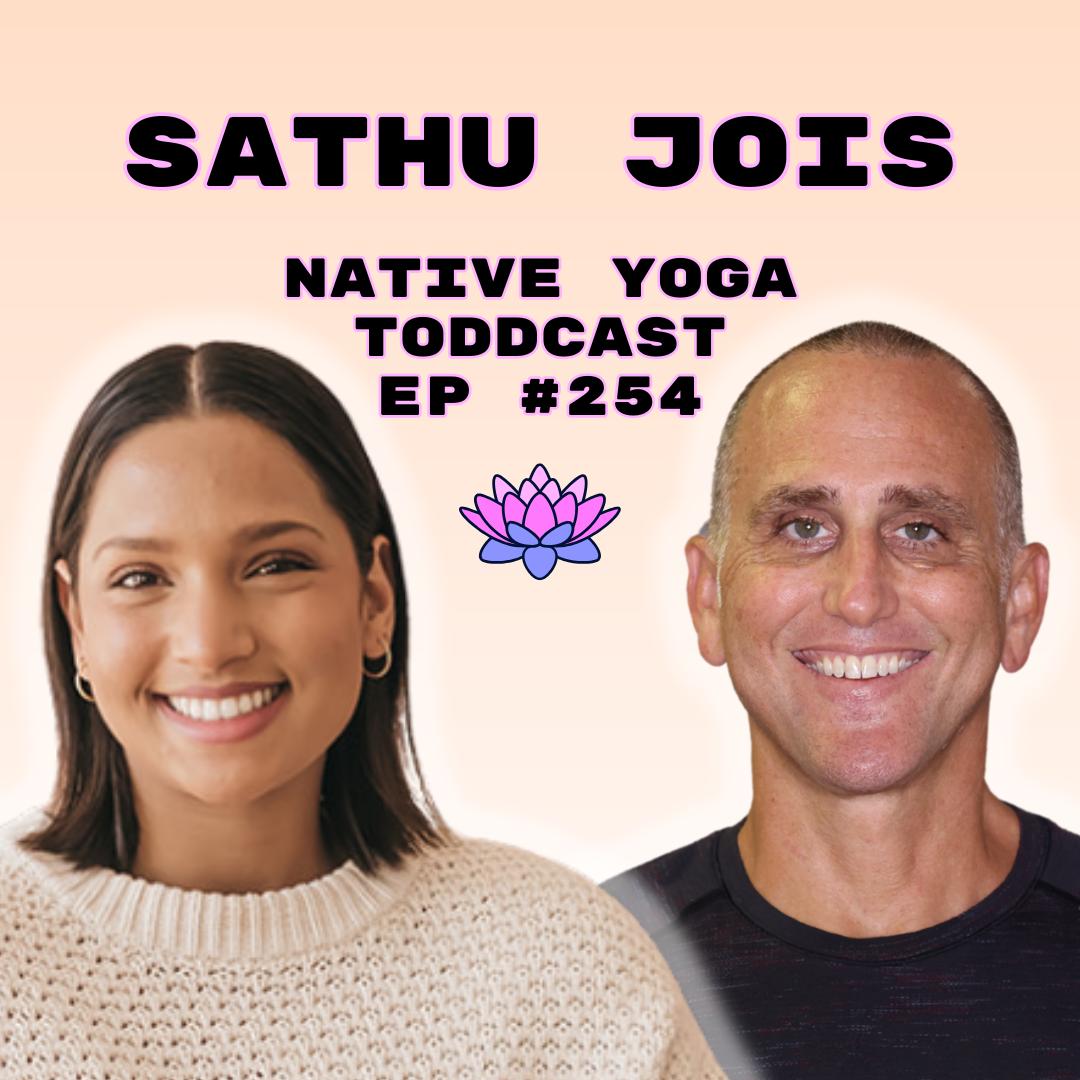
Nona Mileva on Sanskrit & Yoga: How Ancient Language Transforms Modern Practice

Listen to Toddcast with Nona for FREE here

Nona Mileva is a seasoned yoga instructor with a deep-rooted passion for the Sanskrit language and its role in yoga practice. She serves as a dedicated teacher at the Native Yoga Center, offering classes in vinyasa flow and restorative yoga. With a background in psychology and somatic studies, Nona integrates her expansive knowledge into her teaching. She is actively involved in facilitating Sanskrit study groups and is a committed student of Sanskrit, guided by influential scholars and practitioners like Edwin Bryant and Antonia Ruppel.

Visit Nona here: https://www.wellyoga.net/

Key Takeaways:

  • Sanskrit serves as a vital element in understanding and practicing yoga, offering a gateway to deeper spiritual and intellectual exploration.
  • Nona’s expertise as a yoga therapist and Sanskrit scholar bridges the gap between ancient language studies and contemporary therapeutic practices.
  • Learning Sanskrit can enhance the understanding of yoga’s philosophical roots, providing insight into texts and concepts that are often misunderstood in translation.
  • Nona emphasizes the importance of proper pronunciation in Sanskrit, drawing a parallel to the precision required in yoga practice.

The Intersection of Sanskrit and Yoga: Unveiling a Timeless Synergy

Sanskrit: The Cosmic Language of Yoga

Sanskrit, long revered as the sacred language of ancient Indian texts and rituals, is much more than a linguistic artifact of the past. It is a living, breathing component of yoga, intricately woven into the very fabric of practice and philosophy. As Nona Mileva eloquently asserts, “Sanskrit is a reflection of a higher cosmic intelligence and order,” embodying a complex linguistic framework that continues to captivate and challenge its practitioners.

Nona’s journey with Sanskrit began as an endeavor to deepen her yoga practice, illustrating how the language transcends traditional boundaries, enriching one’s understanding of yoga’s multifaceted nature. “Sanskrit is not like any modern language,” she explains. “It is not only the sacred language of Brahmins…there’s a vast corpus of texts that offer practical knowledge, like tree sutras or even how to distill alcohol.”

For yoga practitioners, embracing Sanskrit can widen the scope of their practice, from mastering asana names in their native context to chanting mantras that resonate with cosmic vibration. As Nona observed, engaging earnestly with Sanskrit allows for a richer, more profound connection to yoga, echoing Todd’s sentiment that “maybe like I was trying to imagine…Sanskrit there’s like a much wider cosmos of possibility.”

Psychological Flexibility and Resilience through Yoga and Sanskrit

The integration of Sanskrit with yoga promotes psychological resilience, offering powerful tools for navigating life’s challenges. Nona points out, “Committing to a practice like this…makes you in a way, psychologically flexible as well.” By cultivating a deeper connection to the language, practitioners can draw on its inherent structures to foster mental discipline and emotional regulation.

This psychotherapeutic aspect aligns with contemporary psychological approaches such as Acceptance and Commitment Therapy (ACT). As Nona explains, “The underlying notion…is that life is suffering. Get acquainted with challenges, and develop resilience.” By embracing the cyclical nature of Eastern philosophy embodied in Sanskrit, individuals may find themselves better equipped to find meaning amidst life’s trials.

The inherent discipline required to learn Sanskrit translates into therapeutic benefits, “rewiring the brain,” and fostering what Nona describes as existential resilience. This echoes Todd’s apt metaphor, viewing the universe through the lens of elaborate cosmic constructs, where “Sanskrit offers a wider cosmos of possibility.” Through this lens, yoga practitioners can attain a more holistic sense of well-being and purpose.

Breaking Down the Complexity: Making Sanskrit Accessible

Despite Sanskrit’s intricate nature, Nona advocates for demystifying the language to make it more accessible to practitioners. Starting with basic asana names or simple mantras like “Om,” one can begin to peel back the layers of complexity. “You show them how to inhale and lift the arms up…before you progress,” Nona advises, emphasizing a patient, step-by-step approach akin to climbing a mountain.

For many Western practitioners, the key is not to get overwhelmed by Sanskrit’s vastness but to engage with it meaningfully. Nona recounts how she once dismissed Sanskrit, only to revisit it later with a newfound respect and commitment. “Only because something is vast doesn’t mean we should never touch it,” she reminds us, advocating for a shift away from instant gratification towards more purposeful exploration.

This sense of intentional practice not only enriches the individual but aligns with broader teaching philosophies. Nona mentions, “We teach best what we must need to learn,” highlighting the symbiosis of teaching and learning inherent in both yoga and Sanskrit. By respecting the language’s structure, practitioners uphold the integrity of tradition, reinforced by grammarians like Panini, much like the codification of Patanjali’s Yoga Sutras.

In exploring the inextricable links between Sanskrit and yoga, Nona and Todd illuminate a path toward holistic integration, where linguistic depth meets spiritual practice. Acknowledging the complexity and profundity of Sanskrit not only enhances yoga practice but touches upon the broader themes of life, resilience, and the search for meaning. This dialogue challenges practitioners to approach both yoga and Sanskrit with an open, receptive mindset, celebrating each step of the journey, however small.

Thanks for listening to this episode. Check out: 👇
8IN8 Ashtanga Yoga for Beginners Course Online– Learn 8 Limb Yoga in 8 Days – Get FREE coupon code for a limited time only (Regular price $88) https://info.nativeyogacenter.com/8in8-ashtanga-yoga-for-beginners-8-limbs-in-8-days/

Practice with Native Yoga Online – New classes EVERY day – Use Code FIRSTMONTHFREE https://nativeyogacenter.teachable.com/p/today-s-community-class

Subscribe to Native Yoga Center and view this podcast on Youtube.

Thank you Bryce Allyn for the show tunes. Check out Bryce’s website: bryceallynband.comand sign up on his newsletter to stay in touch. Listen here to his original music from his bands Boxelder, B-Liminal and Bryce Allyn Band on Spotify.

Please email special requests and feedback to info@nativeyogacenter.com

https://info.nativeyogacenter.com/8in8-ashtanga-yoga-for-beginners-8-limbs-in-8-days/

Enjoy new Native Yoga Center classes uploaded everyday on our online learning hub. Use code FIRSTMONTHFREE at checkout. https://nativeyogacenter.teachable.com/p/today-s-community-class

Support the show

Native Yoga website: here
YouTube: here
Instagram: @nativeyoga 
Twitter: @nativeyoga 
Facebook: @nativeyogacenter 
LinkedIn: Todd McLaughlin