Janne Kontala ~ Exploring Bhagavad Gita’s Impact on Modern Yoga Practices

Listen to podcast with Janne for FREE Here

In this enlightening episode, the Toddcast welcomes back Janne Kontala, an esteemed yoga scholar, to delve deeper into the profound teachings of the Bhagavad Gita. Building on their previous discussion on contemporary yoga, Janne and the host engage in a thought-provoking conversation that sheds light on the intricate layers of the Bhagavad Gita and its relevance to modern yoga practitioners.

Visit Janne on his website here: https://www.jayananda.info/23233

Key Takeaways:

  • Historical Context and Relevance of the Bhagavad Gita: The Bhagavad Gita remains a cornerstone of yoga philosophy, presenting practical wisdom applicable to both ancient and modern practitioners.
  • Jnana Yoga: Focuses on self-knowledge and intellectual inquiry, essential for those seeking deeper understanding through meditation and study of sacred texts.
  • Karma Yoga: Offers a path for active individuals by transforming daily actions into a spiritual practice through selflessness and duty.
  • Bhakti Yoga: Emphasizes devotion and personal connection to the divine, transcending mere intellectual understanding.
  • Integration of Yogic Paths: The Bhagavad Gita’s teachings harmonize Jnana, Karma, and Bhakti Yoga, allowing practitioners to adapt their spiritual practice to their individual nature and lifestyle.
Exploring the Depths of the Bhagavad Gita: A Journey of Yoga and Wisdom

Key Takeaways:

  1. The Bhagavad Gita provides a comprehensive understanding of yoga, seamlessly integrating Jnana Yoga, Karma Yoga, and Bhakti Yoga.
  2. Bhakti Yoga teaches the importance of focusing devotion on a higher power and reorienting oneself away from self-centeredness.
  3. The concept of personal and impersonal aspects of the divine as detailed in the Bhagavad Gita offers a nuanced perspective on spiritual practices.

The Bhagavad Gita, a timeless spiritual classic, offers profound insights into yoga and self-realization. In this enlightening conversation with Janne Kontala, we delve into three significant themes: the pragmatic synthesis of Jnana Yoga and Karma Yoga, the essence of Bhakti Yoga, and the integration of the personal and impersonal divine.

Synthesizing Jnana Yoga and Karma Yoga

Exploring the synthesis of Jnana Yoga and Karma Yoga, Janne Kontala sheds light on how these paths can intersect in meaningful ways. Jnana Yoga, often thought of as the path of wisdom or intellect, is traditionally about self-knowledge and understanding.

Kontala explains, “Jnana Yoga is about knowledge of self. Who am I? The answer to this question is relevant for everyone.” For many practitioners, this manifests through intensive study and meditation, aiming to achieve equanimity and uncover the true nature of the self, or Atman.

Conversely, Karma Yoga is the yoga of action. It’s about performing one’s duties and activities selflessly, without attachment to the results. The Bhagavad Gita’s approach to Karma Yoga is intrinsically practical. As Kontala notes, “Karma Yoga is action yoga. This is what you do if you have ambition and if you are active in the world.”

The interplay between these two forms of yoga is crucial. The Bhagavad Gita posits that Karma Yoga can serve as a preparatory stage for Jnana Yoga. By cultivating selflessness through action, practitioners gradually purify the mind, making it fit for the deeper, reflective practices of Jnana Yoga. This synthesis underscores the Gita’s pragmatic approach, where life’s daily activities themselves become a vehicle for spiritual growth.

The Profound Depth of Bhakti Yoga

Bhakti Yoga, often translated as the path of devotion, offers another layer of profound engagement with the divine. It highlights the emotional and relational aspects of spirituality, where devotion and love towards a higher power become central themes.

As Kontala elaborates, “Bhakti is about devotion to God, and deliberately cultivating favorable feelings towards the divine.” This devotion is not about mere sentimentality but involves a profound reorientation of oneself, replacing self-centeredness with God-centeredness.

The anecdote from the conversation reveals the practical side of Bhakti Yoga: individuals devoted to their daily tasks, such as cooking, do so as acts of service to the divine. The practice of offering food to Krishna before consumption exemplifies this. It’s a powerful reminder that spirituality need not be secluded to meditation or study but can be a part of everyday actions.

This approach has a transformative effect. Bhakti Yoga’s emphasis on devotion and surrender to a higher power can provide a sense of purpose and connection, often described as bringing about a magnetic pull towards spiritual reality. Kontala puts it succinctly, “Replacing yourself as the center and putting God instead is the challenge, but also the powerful key of Bhakti Yoga.”

Navigating the Personal and Impersonal Divine

A particularly captivating aspect of the Bhagavad Gita is its seamless integration of the personal and impersonal aspects of the divine. This thematic element offers a nuanced perspective that enriches our understanding of spirituality.

In the transcript, Kontala highlights a formative moment where the Bhagavad Gita’s teachings resolved a personal intellectual conflict: “The Bhagavad Gita’s 12th chapter explains that the personal and impersonal conceptions of God do not exclude one another. This was revelatory for me.”

This apparent duality—seeing God as both a personal being (Bhagavan) and an impersonal force (Brahman)—offers a reconciliatory vision for spiritual seekers. The one undivided Absolute encompasses a relational aspect, where one can have an intimate connection with God, as illustrated in Arjuna’s relationship with Krishna. Meanwhile, the impersonal divine reflects the infinite, formless essence that pervades all existence. These features do not compromise the unitary nature of the Absolute, but offer different ways of approaching the divine, based on the inclinations of the seekers.

The Gita elegantly harmonizes these views, suggesting that both perspectives are valid and can coexist. For practitioners, this means that the divine can be experienced in multiple dimensions, enhancing the depth and richness of their spiritual journey.

The Bhagavad Gita, with its extensive commentaries and scholarly interpretations, remains a living text that continues to inspire and guide. Its layered teachings on Jnana Yoga, Karma Yoga, and Bhakti Yoga provide a holistic view of spiritual practice. By advocating for a balanced approach that integrates action, knowledge, and devotion, the Gita makes profound wisdom accessible to practitioners in all walks of life. This interplay between personal effort and divine grace resonates deeply, showing that the path to enlightenment is both intimate and infinite.

Thanks for listening to this episode. Check out: 👇
Free Grow Your Yoga Live Webinar – Every Thursday at 12pm EST
➡️ Click here to receive link

New Student FREE Livestream Yoga Special ~ Try 2 Weeks of Free Unlimited Livestream Yoga Classes  at Native Yoga Center. info.nativeyogacenter.com/livestream Sign into the classes you would like to take and you will receive an email 30 minutes prior to join on Zoom. The class is recorded and uploaded to nativeyogaonline.com  ➡️  Click Here to Join. 

Subscribe to Native Yoga Center and view this podcast on Youtube.

Thank you Bryce Allyn for the show tunes. Check out Bryce’s website: bryceallynband.comand sign up on his newsletter to stay in touch. Listen here to his original music from his bands Boxelder, B-Liminal and Bryce Allyn Band on Spotify.

Please email special requests and feedback to info@nativeyogacenter.com

Enjoy new Native Yoga Center classes uploaded everyday on our online learning hub. Use code FIRSTMONTHFREE at checkout. https://nativeyogacenter.teachable.com/p/today-s-community-class

Support the Show.

Native Yoga website: here
YouTube: here
Instagram: @nativeyoga 
Twitter: @nativeyoga 
Facebook: @nativeyogacenter 
LinkedIn: Todd McLaughlin 

Janne Kontala – Is Contemporary Yoga at a Dead End?

Janne Kontala discusses the state of contemporary yoga and its potential dead end. He explores the historical development of modern yoga and its focus on physicality and individual practice. Janne emphasizes the importance of integrating yoga into all aspects of life and suggests studying the Bhagavad Gita for a deeper understanding of yoga philosophy.

Visit Janne on his website: https://www.jayananda.info/
Contact him on his email at: janne.kontala@gmail.com
Email Janne to learn more about his upcoming Bhagavad Gita course.

Key Takeaways:

  • Contemporary yoga often focuses on physicality and individual practice, which can lead to a disconnect from the rest of life.
  • The Bhagavad Gita offers valuable insights into how to integrate yoga into all aspects of life and engage in selfless action.
  • Yoga is not just a private practice but can be applied in daily life through karma yoga and bhakti yoga.
  • The goal of yoga is to overcome suffering, achieve liberation, and understand one’s true essence as pure consciousness.

Janne Kontala is a yoga teacher and scholar with a PhD in religious studies. He has been practicing and studying yoga since 1986 and has a deep understanding of yoga philosophy and its application in daily life.

The Evolution and Future of Yoga: Exploring the Themes of Contemporary Yoga

Introduction

In recent years, the practice of yoga has gained immense popularity worldwide. From physical fitness to mental well-being, people are turning to yoga as a holistic approach to improve their overall health. However, as the popularity of yoga grows, there is a need to examine the direction in which contemporary yoga is heading. Is it at a dead end? In this thought-provoking article, we will explore the main themes discussed in a conversation with Janne Kontala, a renowned yoga teacher and scholar. By delving into the transcript of the conversation, we will analyze the implications and potential impact of these themes on the future of yoga.

The Evolution of Yoga

The conversation with Janne Kontala sheds light on the evolution of yoga over the years. He explains that contemporary yoga has seen a shift from its traditional roots to a more commercialized and market-driven approach. The emergence of various yoga brands and styles has led to a diversification of the practice, making it more accessible to a wider audience. However, this diversification has also led to a dilution of the original teachings and philosophy of yoga. Janne emphasizes the importance of understanding the traditional texts and incorporating them into modern yoga practices to maintain the authenticity and depth of the practice.

Janne also highlights the influence of photography and marketing in shaping the perception of yoga. The emphasis on physical appearance and the need to project a certain image has become prevalent in contemporary yoga. This focus on the external aspects of yoga has led to a disconnect between the practice on the mat and its integration into daily life. Janne suggests that a more holistic approach is needed, where yoga is not just a private exercise but a way of life that encompasses all aspects of our being.

The Role of Yoga Philosophy

Yoga philosophy plays a crucial role in understanding the deeper meaning and purpose of the practice. Janne emphasizes the importance of studying the traditional texts, such as the Bhagavad Gita, to gain a deeper understanding of yoga philosophy. He explains that the Bhagavad Gita offers valuable insights into how to apply yoga in the midst of everyday life and society. The text explores various paths of yoga, including Karma Yoga (the yoga of selfless action), Bhakti Yoga (the yoga of devotion), and Jnana Yoga (the yoga of knowledge). These paths provide different approaches to spiritual growth and self-realization, catering to individuals with different inclinations and temperaments.

Janne suggests that incorporating yoga philosophy into our daily lives can help us cultivate mindfulness, detachment from results, and a sense of service to others. By practicing Karma Yoga, we can learn to perform our duties and engage in the world without attachment to the outcomes. Bhakti Yoga teaches us to cultivate love and devotion in our actions, recognizing the divine presence in all beings. Jnana Yoga encourages us to seek knowledge and develop a deeper understanding of ourselves and the nature of reality. By integrating these philosophical teachings into our yoga practice, we can transform our lives and create a more meaningful and purposeful existence.

The Goal of Yoga

The ultimate goal of yoga, as discussed in the conversation, is to overcome suffering and attain liberation. Janne explains that all strands of yoga share the common aim of freeing oneself from the cycle of rebirth and achieving a state of permanent bliss and enlightenment. This goal is often described in different ways, such as union with the divine, self-realization, or the realization of one’s true nature. While the paths to this goal may vary, the underlying aspiration remains the same.

Janne highlights three key components of the goal of yoga: freedom from suffering, liberation from the cycle of rebirth, and understanding one’s deepest essence. The practice of yoga is seen as a means to overcome ignorance and selfishness, leading to a state of profound peace and self-realization. While the path to this goal may be challenging and require dedicated practice, it is attainable for those who are committed to the journey.

Conclusion and Future Outlook

In conclusion, the conversation with Janne Kontala sheds light on the current state of contemporary yoga and its potential future. While modern yoga has made the practice more accessible and popularized it on a global scale, there is a need to reconnect with the deeper teachings and philosophy of yoga. By incorporating yoga philosophy into our practice and daily lives, we can cultivate mindfulness, detachment, and a sense of service to others. The Bhagavad Gita, with its emphasis on Karma Yoga, Bhakti Yoga, and Jnana Yoga, provides valuable guidance for integrating yoga into all aspects of our lives.

Moving forward, it is essential to strike a balance between the physical aspects of yoga and its spiritual and philosophical dimensions. By embracing the holistic nature of yoga, we can experience the transformative power of the practice and create a more harmonious and fulfilling existence. As the popularity of yoga continues to grow, it is crucial to maintain the authenticity and depth of the practice, ensuring that it remains a powerful tool for personal growth and self-realization.

The future of yoga lies in our ability to integrate its teachings into our daily lives and to share its wisdom with others. By embracing the principles of mindfulness, selflessness, and knowledge, we can navigate the challenges of the modern world and find inner peace and fulfillment. As we embark on this journey, let us remember that yoga is not just a physical exercise but a path to self-discovery and spiritual awakening.

Thanks for listening to this episode. Check out: 👇
Free Grow Your Yoga Live Webinar – Every Thursday at 12pm EST
➡️ Click here to receive link

New Student FREE Livestream Yoga Special ~ Try 2 Weeks of Free Unlimited Livestream Yoga Classes  at Native Yoga Center. info.nativeyogacenter.com/livestream Sign into the classes you would like to take and you will receive an email 30 minutes prior to join on Zoom. The class is recorded and uploaded to nativeyogaonline.com  ➡️  Click Here to Join. 

Practice to a New Yoga Class every day with our nativeyogaonline.com course called Today’s Community Class with code FIRSTMONTHFREE.

Native Yoga Teacher Training 2024– In Studio and Livestream – for info delivered to your email click this link here: ➡️ https://info.nativeyogacenter.com/native-yoga-teacher-training-2023/

Subscribe to Native Yoga Center and view this podcast on Youtube.

Thank you Bryce Allyn for the show tunes. Check out Bryce’s website: bryceallynband.comand sign up on his newsletter to stay in touch. Listen here to his original music from his bands Boxelder, B-Liminal and Bryce Allyn Band on Spotify.

Please email special requests and feedback to info@nativeyogacenter.comSupport the show

Native Yoga website: here
YouTube: here
Instagram: @nativeyoga 
Twitter: @nativeyoga 
Facebook: @nativeyogacenter 
LinkedIn: Todd McLaughlin
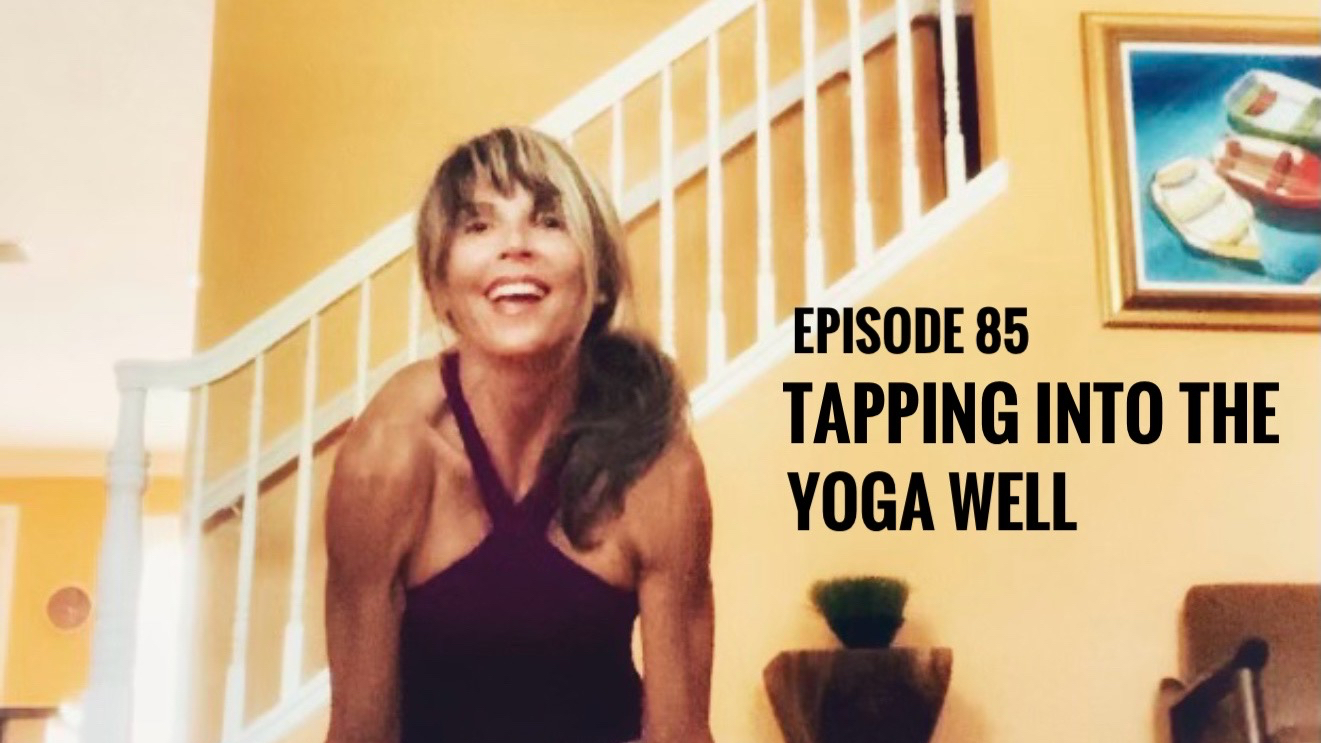
Nona Mileva – Tapping into the Yoga Well

Check out this discussion I had with Nona Mileva. Visit Nona at her website wellyoga.net. Nona is a Certified Life, Wellness and Health Coach, Yoga Teacher and Educator, based in Jupiter, FL, United States. She works with a wide range of clients, from variuos backgrounds and age, via in person,  phone or Zoom sessions. Her coaching is holistic. It entails all aspects of the client’s life – emotional, psychological, physical, spiritual , as it authentically reflects the most important human needs. She focuses on the therapeutic modalities and applications of Yoga as a practice and discipline that enhances health and wellbeing. 

You can listen to the full podcast episode for free here.

Todd McLaughlin 

I’m so happy to have Nona Mileva here visiting in Native Yoga Center. We get to do an in person podcast! Nona, How are you doing today?

Nona Mileva

I am good. Thank you so much for having me. Good to see you.

TM

Same as well, I got to meet you, Nona, because you came into Native Yoga Center very enthusiastically inquiring about yoga teacher training a few years ago. You completed our 300 hour Yoga Teacher Training which brought you into like the RYT 500. realm. And you also are involved in teaching in Stuart at a place called District 108, in Stuart, Florida. Also at the Powerhouse Gym in Stuart. You also teach therapeutic yoga in some of the local retirement communities. You have recently completed getting your PhD in health psychology. And you’re currently working toward Yoga Therapy Certification. Which you said will be completed in December 2022. So you’ve been very busy…. And that’s something that I really admire about you is you love to study. You put a lot of time and energy into reading and studying. And you’re you’ve expressed a lot of interest and enthusiasm for the history and the philosophy of yoga. And so that’s why I’m really excited to have you here today. Because I can just pick your brain a bit and see what kind of like “Top hits” have made it onto your playlist for yoga philosophy and yoga history. And so on that note, what is something that you have read about and or practiced or studied recently that’s caught your attention that you’re excited about?

NM

How I love how you you’re beginning this conversation? Thank you for the intro firstly. Yes, I have been busy. And this is just, what can I say, my mode of functioning, learning, being always curious about things and topics. So my latest educational conquests, so to speak, or interests have been since COVID. Which, as you know, was to some extent, a traumatic experience. Then from a different perspective, it opened new doors. It made us more creative, looking for opportunities to keep doing what we love doing, which for us is yoga, obviously if we are talking about it. I have begun studying and doing a yoga philosophy course, of course is online, with Professor Edwin Bryant. He’s one of the most renowned names among Hindu researchers and philosophers and translators in the field. He’s at Rutgers University in…. I think it’s New Jersey or New York. So what he started doing is to record all his lectures, and then putting them up online for free. 

TM

Wow!

NM

Absolutely amazing, isn’t it? 

TM

Yeah. 

NM

Yeah. It always amazes me when people share their knowledge with such immense generosity. So that got me into the groove of daily or twice a week. Sit down through those lectures or just doing my thing and listening to them. And pretty much it’s all the six directionals, the schools of various philosophical discourse and the man is a very knowledgeable teacher and scholar. He knows a lot about everything. His focus is bhakti. He is initiated in this tradition. 

TM

So can you explain bhakti to us?

NM

In the discourse of yoga, bhakti yoga is the yoga of devotion. It’s the kind of yoga that is being practiced as a devotional yoga. Practitioners direct their attention, their energy towards a benevolent worship of a deity. In this case, usually Krishna is the the subject of the affection. There is lots of mantra and chanting. There’s lots of dancing and singing, praising, praising the Bhagavan. So think of the Bhagavata Purana, those ancient texts. All the Krishna stories, by the way, they’re amazing, amazingly entertaining and interesting stories. If anyone really wants to learn more about them, just go read them. They’re with tremendous sense of humor also created so many years ago. Yeah, so we would sit through those, he would just open the texts, and to about 300 people there, either live or from the recorded lectures will be listening and then following the stories, he would stop you with comments. And this, this goes for every subject. Whether you want to learn about like Patanjali’s Yoga Sutras, whether you want to learn about Vedanta sutras, or Nyaya but more the stories of Krishna. So that’s what I kept doing for about a year, then he started doing live svadhyaya sessions every Friday. 

TM

I’m imagining that there might be someone listening that doesn’t know any of the Sanskrit terms. So that’s why it might just stop you every now and again and let you define some of the words. So if someone’s listening, that’s like a brand new listener slash just coming into the yoga fold. There’s a lot of Sanskrit terms that once you start to learn them, it gets easier and easier. Once you learn one, you learn another and before you know it, you can listen to these really in depth conversations about the yoga history and philosophy and know exactly what’s going on. But in the beginning, it’s really common to feel like a “fish out of water,” or have no idea what they’re talking about. So on that note, can you define what svadhyaya is to keep everyone up to speed?

NM

Yes and once you get to actually work with those terms, it becomes kind of a second nature. And you don’t think that yes, there are people who still haven’t gotten there. So apologies again. So the idea is the concept of studying. So it could be defined as a studying about the self. That’s the obtaining of self knowledge through a variety of practices. But it is it does become by itself a practice. It could be even a spiritual practice. So you get to define it as for example, spending time with the sacred texts. So you sit down and you study, you read the text from the Upanishads, or from the later Puranas, or you open Patanjali yoga sutras and this is your weekend. Yeah, this is your weekend. What are you doing? I’m doing yoga psychology, how I’m just staring at Patanjali, sutra number, whatever. Trying to figure it out to study is that concept of the bhaktis. For the wisdom, another, I’m drawing attention. I’m throwing another Sanskrit word in Sangha, which means pretty much your social group. Yeah. What is your community? Yeah, let’s hang together with like minded people. Yep. And do our thing. What is our thing? We’re reading the scriptures. Yeah. Or in my case, I’m listening to someone much more knowledgeable. And they read it. And he’s reading the scriptures. He’s commenting on them, we get to ask questions.

TM

Was that the difference? So actually, let me back up a little bit. Is that something that anyone listening can go to Edwin Bryant’s

Website. And by the way, at the end of the podcast, I will be happy to provide you with all the resources and links and the names that I’m throwing in here. So you can post it through your audience and I’ll be so happy for people actually go there and look up at this stuff because there’s so much available in the way of information out there that we just are not aware of. Yeah. So EdwinBryant.org, very cool website. It’s connected to the Rutgers University. As a matter of fact, the last study I did with him was on the Bhagavad Gita. I think it was… I forgot which ones, my memories also don’ serve me always. But starting four weeks from now, we are he’s doing a six week or an eight week course on Bhagavata Purana. He loves the back story. So that kind of yoga, devotional yoga, the yoga of love there. There’s a lot of kindness and love and compassion about this concept. I just was even listening to someone who has devoted pretty much his life and passion to that. Yeah, I think it’s amazing.

TM

It is amazing. 

NM

It obviously takes cultivating it over a long period of time. Little by little before you know it, you understand these stories a little better. It makes sense. And that’s cool. 

TM

So it sounds like the interaction process with that particular training method you enjoyed. Was that the first way you started listening to his philosophy teachings not interactive? And then that the svadhyaya ones was where you could maybe type in questions into the chat box. Is that how that was going down?

NM

Yeah. So you can do either, you can buy the pre recorded lectures, the lectures for students. We are a neutral audience, we have no access to the direct communication, we watch the recordings. But because the content is all out there, you can watch it at any time you want to watch it. The Friday sessions are live sessions, but he also records them and then post them online. So if you miss a Friday because you really want to go for that happy hour Friday, then you can watch it or listen to it the next day.

Listen to the full episode with Nona for free on our podcast site here.

Thanks for reading this blog post from this podcast episode. Check out: 👇
Native Yoga Teacher Training – In Studio and Livestream – for info delivered to your email click this link here: https://info.nativeyogacenter.com/native-yoga-teacher-training-2023/

https://info.nativeyogacenter.com/native-yoga-teacher-training-2023/

New Student Livestream Special ~ Try 2 Weeks of Free Unlimited Livestream Yoga Classes  at Native Yoga Center. Sign into the classes you would like to take and you will receive an email 30 minutes prior to join on Zoom. The class is recorded and uploaded to nativeyogaonline.com ~ Click Here to join.

New Student FREE 30 Minute Yoga Meet & Greet ~ Are you new to Native Yoga Center and have questions that you would like us to address? Whether you are coming to In Studio, Livestream or Online Recorded Classes we offer a one time complimentary 30 minute zoom meeting to answer any questions you may have. Schedule a time that is convenient for you. Click Here

Native Yoga website: nativeyogacenter.com
Online Yoga Class Library: nativeyogaonline.com
Thai Massage info: palmbeachthaimassage.com
Native Yoga Blog: toddasanayoga.com
Instagram: @nativeyoga
YouTube channel: Native Yoga Center

Listen to the podcast here on our Podcast website: Native Yoga Toddcast

Please email special requests and feedback to info@nativeyogacenter.com
Please share this episode with your friends, rate & review and join us next time.
