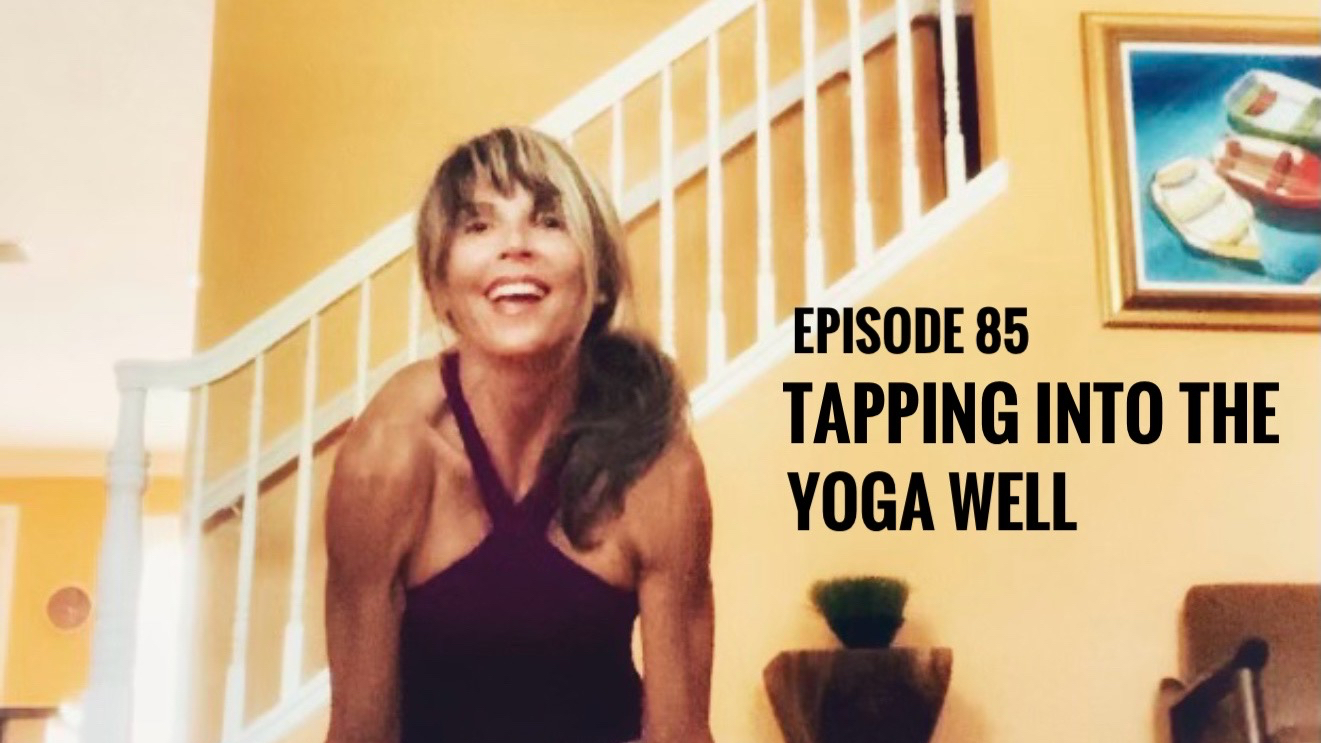
Nona Mileva – Tapping into the Yoga Well

Check out this discussion I had with Nona Mileva. Visit Nona at her website wellyoga.net. Nona is a Certified Life, Wellness and Health Coach, Yoga Teacher and Educator, based in Jupiter, FL, United States. She works with a wide range of clients, from variuos backgrounds and age, via in person,  phone or Zoom sessions. Her coaching is holistic. It entails all aspects of the client’s life – emotional, psychological, physical, spiritual , as it authentically reflects the most important human needs. She focuses on the therapeutic modalities and applications of Yoga as a practice and discipline that enhances health and wellbeing. 

You can listen to the full podcast episode for free here.

Todd McLaughlin 

I’m so happy to have Nona Mileva here visiting in Native Yoga Center. We get to do an in person podcast! Nona, How are you doing today?

Nona Mileva

I am good. Thank you so much for having me. Good to see you.

TM

Same as well, I got to meet you, Nona, because you came into Native Yoga Center very enthusiastically inquiring about yoga teacher training a few years ago. You completed our 300 hour Yoga Teacher Training which brought you into like the RYT 500. realm. And you also are involved in teaching in Stuart at a place called District 108, in Stuart, Florida. Also at the Powerhouse Gym in Stuart. You also teach therapeutic yoga in some of the local retirement communities. You have recently completed getting your PhD in health psychology. And you’re currently working toward Yoga Therapy Certification. Which you said will be completed in December 2022. So you’ve been very busy…. And that’s something that I really admire about you is you love to study. You put a lot of time and energy into reading and studying. And you’re you’ve expressed a lot of interest and enthusiasm for the history and the philosophy of yoga. And so that’s why I’m really excited to have you here today. Because I can just pick your brain a bit and see what kind of like “Top hits” have made it onto your playlist for yoga philosophy and yoga history. And so on that note, what is something that you have read about and or practiced or studied recently that’s caught your attention that you’re excited about?

NM

How I love how you you’re beginning this conversation? Thank you for the intro firstly. Yes, I have been busy. And this is just, what can I say, my mode of functioning, learning, being always curious about things and topics. So my latest educational conquests, so to speak, or interests have been since COVID. Which, as you know, was to some extent, a traumatic experience. Then from a different perspective, it opened new doors. It made us more creative, looking for opportunities to keep doing what we love doing, which for us is yoga, obviously if we are talking about it. I have begun studying and doing a yoga philosophy course, of course is online, with Professor Edwin Bryant. He’s one of the most renowned names among Hindu researchers and philosophers and translators in the field. He’s at Rutgers University in…. I think it’s New Jersey or New York. So what he started doing is to record all his lectures, and then putting them up online for free. 

TM

Wow!

NM

Absolutely amazing, isn’t it? 

TM

Yeah. 

NM

Yeah. It always amazes me when people share their knowledge with such immense generosity. So that got me into the groove of daily or twice a week. Sit down through those lectures or just doing my thing and listening to them. And pretty much it’s all the six directionals, the schools of various philosophical discourse and the man is a very knowledgeable teacher and scholar. He knows a lot about everything. His focus is bhakti. He is initiated in this tradition. 

TM

So can you explain bhakti to us?

NM

In the discourse of yoga, bhakti yoga is the yoga of devotion. It’s the kind of yoga that is being practiced as a devotional yoga. Practitioners direct their attention, their energy towards a benevolent worship of a deity. In this case, usually Krishna is the the subject of the affection. There is lots of mantra and chanting. There’s lots of dancing and singing, praising, praising the Bhagavan. So think of the Bhagavata Purana, those ancient texts. All the Krishna stories, by the way, they’re amazing, amazingly entertaining and interesting stories. If anyone really wants to learn more about them, just go read them. They’re with tremendous sense of humor also created so many years ago. Yeah, so we would sit through those, he would just open the texts, and to about 300 people there, either live or from the recorded lectures will be listening and then following the stories, he would stop you with comments. And this, this goes for every subject. Whether you want to learn about like Patanjali’s Yoga Sutras, whether you want to learn about Vedanta sutras, or Nyaya but more the stories of Krishna. So that’s what I kept doing for about a year, then he started doing live svadhyaya sessions every Friday. 

TM

I’m imagining that there might be someone listening that doesn’t know any of the Sanskrit terms. So that’s why it might just stop you every now and again and let you define some of the words. So if someone’s listening, that’s like a brand new listener slash just coming into the yoga fold. There’s a lot of Sanskrit terms that once you start to learn them, it gets easier and easier. Once you learn one, you learn another and before you know it, you can listen to these really in depth conversations about the yoga history and philosophy and know exactly what’s going on. But in the beginning, it’s really common to feel like a “fish out of water,” or have no idea what they’re talking about. So on that note, can you define what svadhyaya is to keep everyone up to speed?

NM

Yes and once you get to actually work with those terms, it becomes kind of a second nature. And you don’t think that yes, there are people who still haven’t gotten there. So apologies again. So the idea is the concept of studying. So it could be defined as a studying about the self. That’s the obtaining of self knowledge through a variety of practices. But it is it does become by itself a practice. It could be even a spiritual practice. So you get to define it as for example, spending time with the sacred texts. So you sit down and you study, you read the text from the Upanishads, or from the later Puranas, or you open Patanjali yoga sutras and this is your weekend. Yeah, this is your weekend. What are you doing? I’m doing yoga psychology, how I’m just staring at Patanjali, sutra number, whatever. Trying to figure it out to study is that concept of the bhaktis. For the wisdom, another, I’m drawing attention. I’m throwing another Sanskrit word in Sangha, which means pretty much your social group. Yeah. What is your community? Yeah, let’s hang together with like minded people. Yep. And do our thing. What is our thing? We’re reading the scriptures. Yeah. Or in my case, I’m listening to someone much more knowledgeable. And they read it. And he’s reading the scriptures. He’s commenting on them, we get to ask questions.

TM

Was that the difference? So actually, let me back up a little bit. Is that something that anyone listening can go to Edwin Bryant’s

Website. And by the way, at the end of the podcast, I will be happy to provide you with all the resources and links and the names that I’m throwing in here. So you can post it through your audience and I’ll be so happy for people actually go there and look up at this stuff because there’s so much available in the way of information out there that we just are not aware of. Yeah. So EdwinBryant.org, very cool website. It’s connected to the Rutgers University. As a matter of fact, the last study I did with him was on the Bhagavad Gita. I think it was… I forgot which ones, my memories also don’ serve me always. But starting four weeks from now, we are he’s doing a six week or an eight week course on Bhagavata Purana. He loves the back story. So that kind of yoga, devotional yoga, the yoga of love there. There’s a lot of kindness and love and compassion about this concept. I just was even listening to someone who has devoted pretty much his life and passion to that. Yeah, I think it’s amazing.

TM

It is amazing. 

NM

It obviously takes cultivating it over a long period of time. Little by little before you know it, you understand these stories a little better. It makes sense. And that’s cool. 

TM

So it sounds like the interaction process with that particular training method you enjoyed. Was that the first way you started listening to his philosophy teachings not interactive? And then that the svadhyaya ones was where you could maybe type in questions into the chat box. Is that how that was going down?

NM

Yeah. So you can do either, you can buy the pre recorded lectures, the lectures for students. We are a neutral audience, we have no access to the direct communication, we watch the recordings. But because the content is all out there, you can watch it at any time you want to watch it. The Friday sessions are live sessions, but he also records them and then post them online. So if you miss a Friday because you really want to go for that happy hour Friday, then you can watch it or listen to it the next day.

Listen to the full episode with Nona for free on our podcast site here.

Thanks for reading this blog post from this podcast episode. Check out: 👇
Native Yoga Teacher Training – In Studio and Livestream – for info delivered to your email click this link here: https://info.nativeyogacenter.com/native-yoga-teacher-training-2023/

https://info.nativeyogacenter.com/native-yoga-teacher-training-2023/

New Student Livestream Special ~ Try 2 Weeks of Free Unlimited Livestream Yoga Classes  at Native Yoga Center. Sign into the classes you would like to take and you will receive an email 30 minutes prior to join on Zoom. The class is recorded and uploaded to nativeyogaonline.com ~ Click Here to join.

New Student FREE 30 Minute Yoga Meet & Greet ~ Are you new to Native Yoga Center and have questions that you would like us to address? Whether you are coming to In Studio, Livestream or Online Recorded Classes we offer a one time complimentary 30 minute zoom meeting to answer any questions you may have. Schedule a time that is convenient for you. Click Here

Native Yoga website: nativeyogacenter.com
Online Yoga Class Library: nativeyogaonline.com
Thai Massage info: palmbeachthaimassage.com
Native Yoga Blog: toddasanayoga.com
Instagram: @nativeyoga
YouTube channel: Native Yoga Center

Listen to the podcast here on our Podcast website: Native Yoga Toddcast

Please email special requests and feedback to info@nativeyogacenter.com
Please share this episode with your friends, rate & review and join us next time.
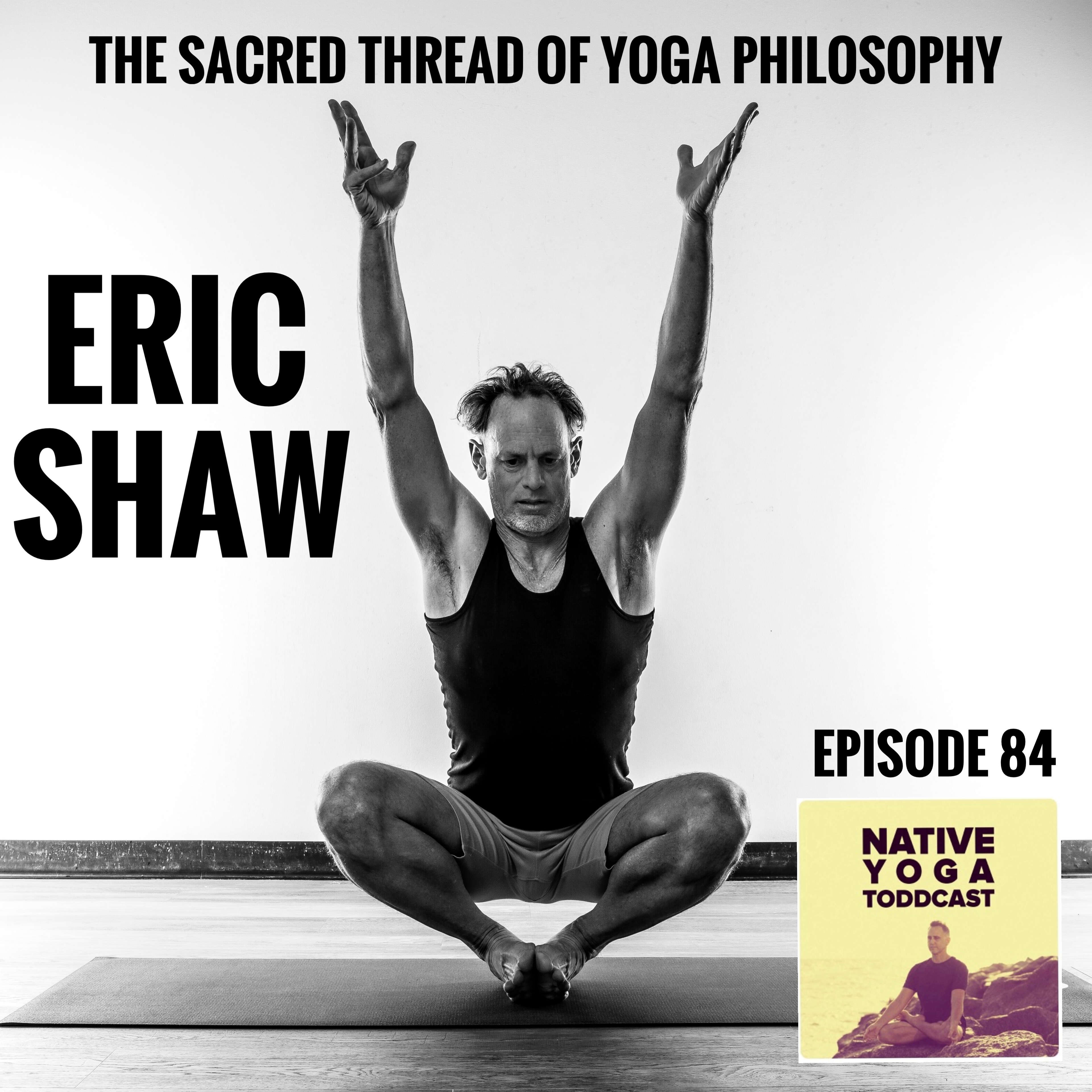
Conversation with Eric Shaw ~ The Sacred Thread of Yoga Philosophy

Ever wonder if there is more to yoga than yoga postures? Join my guest Eric Shaw for a discussion around his new book called Sacred Thread: A Comprehensive Yoga Timeline: 2000 Events that Shaped Yoga History.  Eric’s teachings and passions have been influenced significantly by his teachers, in particular Shandor Remete and Rod Stryker. You can visit Eric on his website at prasanayoga.com and you can purchase a copy of Eric’s new book on Amazon here.

During this conversation we discussed:

  • the history and philosophy of yoga
  • the timeline associated with modern yoga
  • the origins of yoga in relation to the archeological findings at Mohenjo-daro
  • Eric’s experience with Iyengar yoga
  • What yoga was like on the West Coast of USA during its peak
  • Yoga as a global realization vs. a cultural specific identity

and quite a few more topics.

You can listen to the full podcast episode with Eric Shaw on our podcast site here.

Todd McLaughlin

I am so excited to have the opportunity to join in conversation with Eric Shaw today. Please find him on his website, prasanayoga.com. You can click the link in the description to easily access his work. He is the author of a book called BKS Iyengar and the Making of Modern Yoga. And he has also just released a new book called Sacred Thread: A Comprehensive Yoga Timeline: 2000 Events That Shaped Yoga History. 

Eric Shaw

Yeah, yes. 

TM

Thank you, Eric. And I’m so happy to have this chance to speak with you. I love yoga philosophy. And you’ve done a lot study. And on that note, can you fill me and the listener in….have you gotten your doctorate degree yoga studies?

ES

No, I’ve done a lot of a lot of academic work. I started a doctoral program in 2004, finished my studies in 2011 and pretty much got the knowledge base that I desired at that time. I was able to parlay that into practical purposes. It’s kind of like I feel like it’s something I want to do that is like climbing Mount Everest. 

But yeah, I didn’t get it done at that point in my life. I could talk all day about why it didn’t happen. Yet I did get a master’s degree out of it and I got a knowledge base. It was quite useful for me for writing work and lecturing work in the yoga world.

TM

Nice. Well, when you had to write a thesis for your masters, what did you base your thesis on?

ES

I based it on the life of BKS Iyengar. I did a very deep study of him. Partly because his followers were so prominent in the Bay Area where I was working in San Francisco. And because that system, according to my training was so alien to me. I was so confronted by it. Iyengar’s system, as everyone knows who studied it, it’s arguably the most comprehensive yoga system out there. You know, unless you went to some ancient system, perhaps as far as the modern systems go, it’s complexity, it’s philosophy, it’s understanding the body and the way that it’s set up structurally to function. The Iyengar view of function in yoga is very clear and vastly articulated. So the people who teach it, have a pedagogy, a pedagogical style, a teaching style, which is strangely aggressive. That’s to say, all those things were quite confronting to me when I arrived in the Bay Area in 2004. After training in Kripalu Yoga and other forms of yoga, which were much more meditative, and much more I thought holistic based. Pranayama based in spiritual aims. Here I was faced with this very physical culturalist yoga, which some people from that tradition might argue with me as characterizing it that way. But to me, it was so body centric and so awesomeness centric. That I think it’s kind of strange to say in the year 2022, because yoga has become more and more and more body centric. I mean, it’s been a processes happening for hundreds of years. But it seems like it’s only been accelerated. It’s come into the American context. But for me, that was difficult. And part of my working that out, to write this mono focal paper on my anger.

TM

Wow! Let me back up so I can get a timeline of your history of practice. When did you start practicing yoga? What was your first introduction to the yoga world?

ES

It’s kind of an interesting, funny story, given my history. My parents were ministers. And they were very open minded liberal ministers. They come from the west coast. So it’s very much different from the south where I’m living now. Yeah, yeah. Me talking about Christianity in this part of the world. But where I came from, they were liberals, they were, you know, anti war protesters. They were raging leftist. So I did get a political orientation in my Christian experience, but it wasn’t a right wing one, it was a radical left wing. So that was my background. And so there was a certain openness there to intellectuality at all levels. So when I told my parents I was an atheist, they didn’t bat an eye. When I told my parents that I was into Eastern traditions and studying Buddhism and meditation, they didn’t bat an eye, you know. So that became my practice very early on in my early 20s, and very much a life saving practice, because my mind was kind of out of control. And it may still sound that way. But meditation helped me control my life. And I dove right into meditation and have maintained that practice to this very day. 

TM

Got it. 

ES

So like, I did some early investigation in Buddhist traditions. And it wasn’t till the early 90s that I joined Siddha Yoga, which is the Hindu tradition, I actually did that in the midst of a time I was studying Christianity and a Religious Studies degree in many Minneapolis, Minnesota. But that kind of opened the Hindu world to me a little bit. And then when I started practicing Hatha Yoga in 2000, then I started to investigate Hinduism more properly and understand how different it was from the Buddhist tradition. How much richer, how much more embracing of the human experience and all of its aspects and even culture in all of its aspects. And so it was incredibly compelling to me, given my background and it pretty much became a gestalt experience for me, I just dove right into it.

TM

Wow. You made mention of the appreciation for Iyengar tradition and Iyengar’s guru being Krishnamacharya. Did you investigate other practices with any other teachers under that lineage?

ES

Yeah, actually with quite a few. I mean, the Bay Area, as I said, was a hotbed of strong Iyengar teachers. So it was easy to study with strong teachers who not only came to town to teach, but who were residents there. So my chief preceptor was Tony Briggs and he had a relationship to Shandor Remete, who was my primary teacher. A teacher I’d met actually was still in Portland, Oregon and before 2004 started studying with Matt Hewish at the time, who was a primary follower of Shandor. Strange to talk about Shandor in the Iyengar context, because few people even know that he studied with Iyengar. He actually stayed with him for 20 years, extremely long time and he was actually the president of the Iyengar Federation in Australia. But he made a jump to  embrace of martial arts and Bharatanatyam yoga, or rather Indian dance and he integrated into practices that he claimed to have learned at the Chidambaram temple in India into a new form that he called Shadow yoga. He’s continued to evolve his forms and change the names of them, but I learned from him and his teaching was profound and very vinyasa based, very movement based. But he was an Iyengar teacher. And then Tony. Tony had worked with Shandor, or so that was my connection with Tony. But Tony was a classic Iyengar teacher. I mean, he was gonna put you in a pose and hold you there and break it down into all its constituent parts in which muscles are engaged, and released and yada, yada, yada. So that training and another with Ramadan Patel and other big names in the Bay Area helped me understand asana and the alignment perspective, which I feel is, is very, very important. I mean, it’s at so many levels. But then I also worked with Paul Grilley, who was into kind of destroying the whole alignment concept. So I got a lot of a lot of input around yogic philosophy and yoga practice in those years that are invaluable.

TM

Amazing, just to touch upon what you just mentioned, I’ve enjoyed watching Paul Grilley’s work around anatomy and yin yoga, can you explain how Paul’s philosophy shatter that existing idea of alignment that you were studying? Can you tell me what that means? Or what that sounds like?

ES

Yeah, yeah. And it’s a good story. I think for anybody who wants to be a serious practitioner of yoga, I think it’s important to understand alignment principles, particularly from the Iyengar perspective, but it’s also very important to understand their limits. And Paul has done the spade work, he’s done the deep work in defining those limits. And I’m just shocked that so few people know his work, because it’s utterly revolutionary. Even if you don’t have Iyengar as a conversation partner for it. So Paul Grilley, you know, he’s ostensibly known for his work in yin yoga. And that’s how I first understood him and met him in yoga was my actually my teaching practice early on, because he was one of the first major teachers I met in Portland, Oregon. I wrote a small profile for him for a local yoga magazine, and we got to be friends. Then he was in an early video company making videos on yoga, you know, and when DVD still existed. A group of people there in San Francisco, who I met and hung out with, and then Paul was a part of that group, and he came down to do yoga videos there. And so he wrote, when I was there in San Francisco, and he recorded his Yoga Anatomy DVD, in which he distills all of his knowledge around bony limits in the body. So it’s the skeletal structure of the body, which determines which poses you can get and in which you can’t. And that’s, I know, that’s a very black and white statement. But it’s actually quite true that the soft tissue, of course, creates limits that we can push through in the attempt to attain any given Asana. And that’s what Iyengar practices are based on. That there is a limitless potential to achieve anything in yoga. Paul Grilley’s work debunked that theory in a way showing that bone structure does create limitation as to how far we can push into a posture. What he really determined and demonstrated directly in that DVD by comparing different human bodies, that the length of your bones, the orientation of the bones, in a given joint, the way it spirals out of that joint, the way it engages with the next joint in the chain determines whether or not any given poses even available. And that’s for a yoga teacher, who is attempting to guide students of different shapes and sizes into positions, proposes knowledge that is absolutely critical. Particularly if you’ve been trained in Iyengar yoga, because it does not integrate that knowledge. In fact, it’s kind of philosophically opposed to it.

Listen to the full episode with Eric Shaw for free on our podcast site here.

Thanks for reading this blog post from this podcast episode. Check out: 👇
Native Yoga Teacher Training – In Studio and Livestream – for info delivered to your email click this link here: https://info.nativeyogacenter.com/native-yoga-teacher-training-2023/

https://info.nativeyogacenter.com/native-yoga-teacher-training-2023/

New Student Livestream Special ~ Try 2 Weeks of Free Unlimited Livestream Yoga Classes  at Native Yoga Center. Sign into the classes you would like to take and you will receive an email 30 minutes prior to join on Zoom. The class is recorded and uploaded to nativeyogaonline.com ~ Click Here to join.

New Student FREE 30 Minute Yoga Meet & Greet ~ Are you new to Native Yoga Center and have questions that you would like us to address? Whether you are coming to In Studio, Livestream or Online Recorded Classes we offer a one time complimentary 30 minute zoom meeting to answer any questions you may have. Schedule a time that is convenient for you. Click Here

Native Yoga website: nativeyogacenter.com
Online Yoga Class Library: nativeyogaonline.com
Thai Massage info: palmbeachthaimassage.com
Native Yoga Blog: toddasanayoga.com
Instagram: @nativeyoga
YouTube channel: Native Yoga Center

Listen to the podcast here on our Podcast website: Native Yoga Toddcast

Please email special requests and feedback to info@nativeyogacenter.com
Please share this episode with your friends, rate & review and join us next time.

Carley Smith – Yoga & Healthy Eating with the Fairy Gutmother

I had an amazing conversation with Carley Smith about gut health during this podcast. 
Carley Smith, aka Fairy Gutmother, is a Nutritional Therapist, Certified GAPS Practitioner, and Registered Yoga Teacher. Carley became interested in health and nutrition after being diagnosed with Lyme disease and using food as medicine emphasizing gut health to help heal. 

Visit Carley’s website at fairygutmother.com You can also follow here on IG here.

During our conversation she spoke about:

  • How she was able to heal herself from Lyme disease through 
  • how she was able to learn what foods are best for her
  • how yoga has played an integral part in her healing process
  • why she is passionate about helping others
  • and so much more!

Below is a portion of the transcript from our conversation. Remember you can listen to the full episode for free here.

Todd McLaughlin

I’m so excited to have Carley Smith here with me in studio today. And Carley is a nutritional therapist, a certified GAPS practitioner and a registered yoga teacher. And she will explain what the GAPS practitioner is here in a moment. But Carley, thank you so much for coming in.

Carley Smith

Thank you so much for having me.

TM

Well, it’s a pleasure. I’ve had the chance to meet you from taking classes here. I then learned that your career is helping people with gut health and that you have a website called https://www.fairygutmother.com. Correct? And also, we can find you at the same handle on Instagram @fairygutmother. I’m guessing the other social media channels are under the same name very as well? So on that note, can you tell me what your specialty is what what you focus on when helping people?

CS

Sure. So I work with people to help them restore their health through the gut. That is through diet and lifestyle changes. I truly believe gut health is the foundation for our health. It’s where nearly the entire immune system is located. So basically helping people to optimize the health of the microbiome, putting, you know, bringing in different foods that help do that. And then supplements as well.

TM

Nice. And you’re also a registered yoga teacher. So are you currently teaching classes?

CS

I’m not currently teaching but I do weave yoga into my protocols with my clients. I think it blends very nicely in with gut health, because it’s kind of that lifestyle aspect. I tell people gut health is not just a diet, it’s a lifestyle. Stress is just as damaging on the gut as junk food. And that’s what clinical research actually says. So I love the way that yoga brings in that way to mitigate our stress levels, but also kind of gives the gut a little internal massage, helping to kind of increase that motility and just overall health of the gut.

TM

Nice. Have you always been, air quote a “health nut?” Or did you have something happen to you in life that kind of pushed you in the direction of paying extra attention to your health?

CS

Yes. So I’ve always been interested in health and nutrition and I always thought I was healthy but I ended up getting Lyme disease in 2014. Well, I’ll back up, I was probably sick for a year or two before that I finally found out and was diagnosed in 2014. But my whole experience was why I completely shifted the way that I view health and wellness. And like I said, I thought I was healthy. But after learning about gut health where nearly your entire immune system is located, and you know, I implemented a gut healing protocol. I was able to completely reverse my symptoms from Lyme. Based on just focusing on gut health completely changed my perspective on health and wellness, and what’s important and what actually is healthy as it relates to the gut.

TM

Wow, when you were diagnosed with Lyme disease, what was the treatment that was prescribed to you via the Western field?

CS

So at that time, it was mainly just antibiotics. So you go on a heavy dose of antibiotics for a prolonged period of time. And that’s basically the route I took at that time. I really wasn’t aware of any alternative therapies that are out there. So now I’m so much more aware of different modalities and treatments that are available for Lyme. But at that time, it was just straight antibiotics. And then that felt like it was doing more harm on my body than good. Because you’re obviously you’re killing the good and the bad bacteria with that. So I went off of all that medicine. And that’s when I started doing research and learning about gut health.

TM

Nice. What did you start implementing? What were some of the first things that you began to utilize in your research and study?

CS

So the first thing I did was the GAPS diet, which stands for Gut and Psychology Syndrome. And so that’s really all about healing the gut. It’s an elimination and reintroduction diet. So you’re eating a lot of nourishing foods that help to heal the gut lining, and then obviously, eventually repopulate the gut with beneficial bacteria. So you’re cutting out a lot of, obviously, any processed foods and sugar, things like that. But you’re really just focusing on bone broth, which was a huge part of my healing journey, animal meats and proteins and cooked vegetables. Foods that are going to be very easy to digest. And then as time goes on, you can slowly start incorporating more foods and more raw foods.

TM

What were the main symptoms that you felt when you had Lyme disease? It sounds like you had Lyme disease for over a year before diagnosed? What were the symptoms you were feeling? When that was happening before you even knew what was going on?

CS

Yeah, I mean, it honestly felt like my body was abducted by an alien. Like I had absolutely no control over my emotions. I forgot where I lived, driving home from work. And that’s really when I had to kind of just confine myself to my apartment. I couldn’t really leave. I was scared. Like a brain fraught with fog. I was like completely disoriented. I had no clue or recollection of where I lived. I didn’t know where to turn to or where I was. There was a whole neurological and cognitive dysfunction and I was just completely affected. 

TM

Are those common symptoms that most people that have Lyme disease experience? 

CS

Yes! A lot of brain fog, mental illness and loss of cognitive function. That’s a very big part of Lyme disease. And that I think is one of the hardest things about Lyme is that it is so difficult to diagnose and why it’s so misdiagnosed. Because there are so many symptoms of Lyme, in connection with that I also had a lot of issues with my hormones. So I was menstrual bleeding for about four months straight, and no one could figure out what was going on. The doctor just eventually told me to go lay at home in bed with my feet up. And that’s not a very common symptom. So I think it’s hard to, for people to get diagnosed, because there’s so many different things that people experience. I never noticed a tick bite, or anything like that. The thought is that perhaps I had that several years ago, and then a long period of stress weakened my immune system. And that’s when the disease flourished.

TM

When you started taking the antibiotics, did you feel a little better? Did that work on some level?

CS

It might have a little bit, initially, but I really was so sick that I couldn’t tell. And then there were so many other issues that kept popping up from the side effects of the antibiotics, that it felt like they were doing more harm than good. So it was hard to kind of pinpoint and truly that dietary change of shifting more towards a gut healing protocol was where I felt the biggest shift in my health. My memory was one of the first things to come back. I started to think more clearly I felt like I had a better control over my emotions. I was able to recall more information and just just felt better overall.

TM

I’m just I’m trying to replay what you said. So you started with bone broth and eliminated almost everything else. You start off with bone broth as the basis for the diet? And then you said slowly implementing easily digestible foods like animal protein? And greens as well and vegetables, fruits, or no? Are you trying to eliminate carbs, the sugar from the carbs and that type of thing? 

CS

Yeah, so it’s basically on the veggie side, it was a lot of winter squashes, and everything is cooked. I know…. nothing raw, it’s a little bit harder to digest those foods, than the cooked meats and vegetables. That was a big thing, the animal proteins, what you’re looking to do with the proteins in the bone broth is really extract all those nutrients that help to support and heal the gut lining. So with those animal fats, and proteins are one of the most important things that you can do to help with that.

TM

So being a yogi, and into yoga culture, where we are pressed in the direction of a “Ahimsa”, or non violence and vegetarian diet. And what are your thoughts regarding implementing animal proteins? In relation to that theory and approach that one should be vegetarian?

CS

Yes, so you can absolutely still focus on gut health, with a more vegetarian approach. And I have a recipe for a vegetarian broth on my website. And basically, what you’re thinking, what you want to think about is pulling those nutrients from those vegetables that are helpful in healing the gut lining, and one of those is L glutamine. You can even just buy L glutamine in a powder form. And that’s very helpful in maintaining the integrity of the gut lining. So you can make a broth with lots of those vegetables like carrots, and beets, very high and L glutamine. Thinking again, about extracting those nutrients. One of the biggest proponents for gut health or components of gut health is fiber. So fiber feeds the good bacteria in the gut. So once the gut is healed, and a way to maintain that optimal gut health is just by, you know, adding in more fiber into your diet. In fact, the entire plate really should be plant based, lots of fiber, and then you can fill in, you know, the remaining parts of that. But as far as the animal base, I mean, for me that really helped. Those animal fats and proteins were one of the biggest things I think that helped my cognitive function and repair the gut lining. But if that’s not something that fits in, and I will note that it’s important to make sure that you’re sourcing those sustainably and that the animals are pasture raised and grass fed. Work with a local farmer and rancher is super important. But if that’s not something that works for you, that doesn’t mean that you still can’t heal the gut. There are other ways to get those nutrients.

Listen to the full episode here.

Thanks for reading this blog post from this podcast episode. Check out: 👇
Native Yoga Teacher Training – In Studio and Livestream – for info delivered to your email click this link here: https://info.nativeyogacenter.com/native-yoga-teacher-training-2023/

https://info.nativeyogacenter.com/native-yoga-teacher-training-2023/

New Student Livestream Special ~ Try 2 Weeks of Free Unlimited Livestream Yoga Classes  at Native Yoga Center. Sign into the classes you would like to take and you will receive an email 30 minutes prior to join on Zoom. The class is recorded and uploaded to nativeyogaonline.com ~ Click Here to join.

New Student FREE 30 Minute Yoga Meet & Greet ~ Are you new to Native Yoga Center and have questions that you would like us to address? Whether you are coming to In Studio, Livestream or Online Recorded Classes we offer a one time complimentary 30 minute zoom meeting to answer any questions you may have. Schedule a time that is convenient for you. Click Here

Native Yoga website: nativeyogacenter.com
Online Yoga Class Library: nativeyogaonline.com
Thai Massage info: palmbeachthaimassage.com
Native Yoga Blog: toddasanayoga.com
Instagram: @nativeyoga
YouTube channel: Native Yoga Center

Listen to the podcast here on our Podcast website: Native Yoga Toddcast

Please email special requests and feedback to info@nativeyogacenter.com
Please share this episode with your friends, rate & review and join us next time.