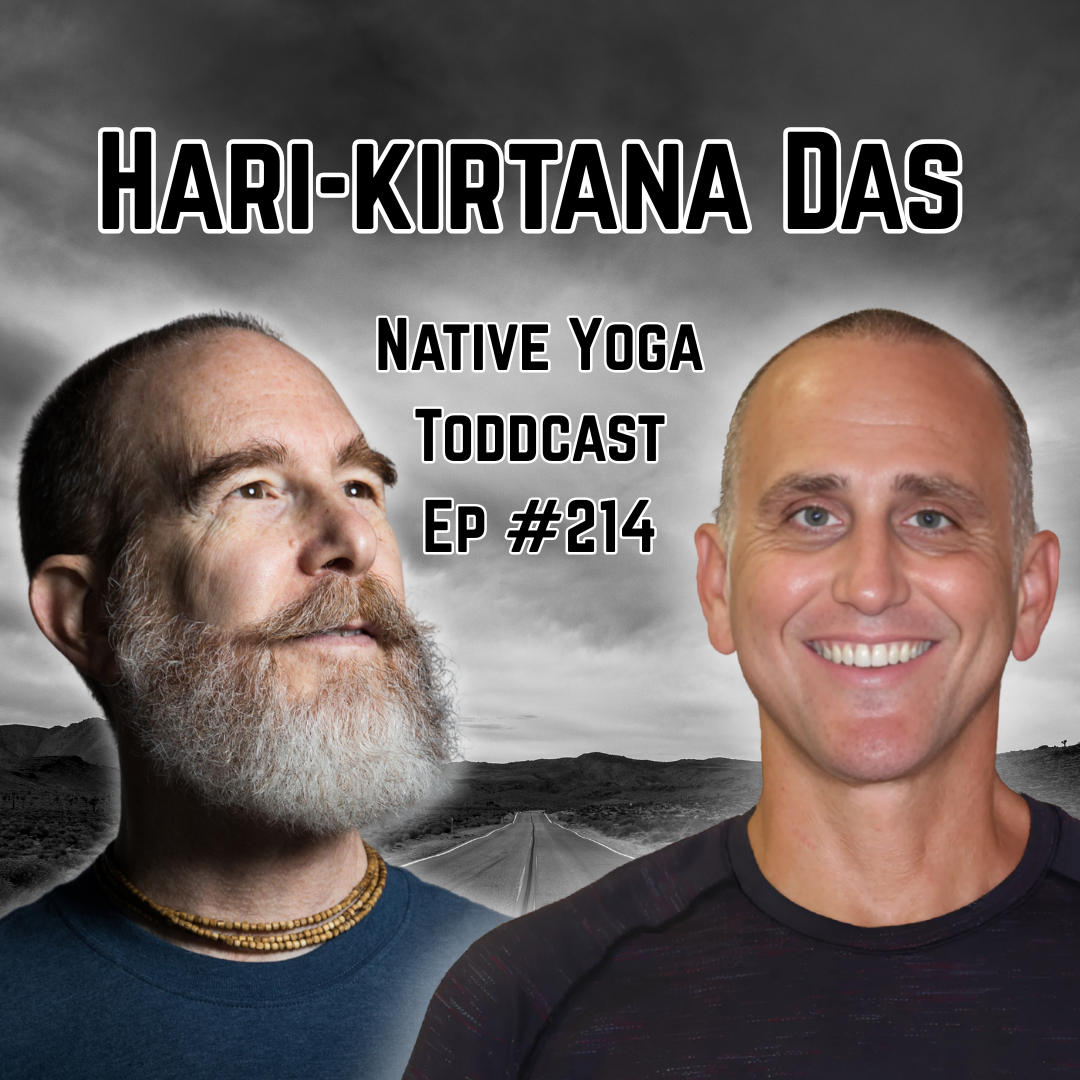
Hari-kirtana Das ~ Dharma Decoded: Discover Your True Calling Through Ancient Wisdom

Listen to Toddcast with Hari-kirtanan Das for FREE here

Hari-kirtana Das, a teacher and author, specializes in the spiritual philosophy of the Bhagavad Gita. A former monk in the Krishna Consciousness tradition, he has spent decades translating Bhakti Yoga principles into practical teachings. Author of Journey into the Bhagavad Gita, he offers workshops and courses exploring the Gita’s timeless wisdom.

Finding Your Dharma course here: https://hari-kirtana.com/finding-your-dharma/

Free download of the first chapter: https://hari-kirtana.com/books/

Key Takeaways:

  • The Initial Challenge of the Bhagavad Gita: Das recounts his early struggles in understanding the Bhagavad Gita, eventually finding clarity through guided group study and philosophical inquiry.
  • Modes of Material Nature: A significant Gita teaching, the three modes of nature—goodness, passion, and ignorance—play a crucial role in defining human behavior and consciousness.
  • Dharma Definitions: Insight into the dual nature of Dharma, distinguishing between Svadharma (individual’s duty) and Sanatana Dharma (eternal duty) and how this guides personal and spiritual pursuits.
  • Karma Yoga: Explores how actions can be offerings to a higher purpose, connecting individual spiritual practice with a broader philosophical context.

Harmony in Dharma: Aligning Individual and Universal Purpose

The Bhagavad Gita, a time-honored spiritual text, serves as a beacon for self-realization and understanding one’s true nature. In a recent discussion with Hari-kirtana Das, author of Journey into the Bhagavad Gita, the concept of ‘Dharma’ emerged as a pivotal theme. Dharma, in its multifaceted definition, illustrates the intrinsic duty or nature of beings. Das elucidates, “Dharma also means one’s essential nature, or the essential nature of a person, place, or thing.”

Dharma’s duality—comprising ‘Svadharma’ (personal duty) and ‘Sanatana Dharma’ (eternal duty)—requires harmonization. As Das reveals, “Harmonizing those two things is the art of yoga.” This alignment fosters an understanding of one’s actions within the wider tapestry of life, affirming that self-awareness is paramount to achieving genuine fulfillment. This principle stands as a guide for individuals yearning to find their unique path while grounding themselves in a deeper, universal context.

Karma Yoga: Beyond Good Deeds

Karma Yoga, a central practice within the Bhagavad Gita, emphasizes the importance of action without attachment to results. Misunderstanding it as merely performing good deeds, many fail to grasp its profound nature. Das clarifies, “Karma Yoga means that we’re acting in the world and offering the results of our actions to something higher than ourselves.”

The crux of Karma Yoga is detachment from the fruits of one’s labor, transforming every action into an offering to the divine. As Das articulates, acknowledging the interconnectedness of life can propel individuals toward liberation: “Make your practice an expression of gratitude for this gift of this body.” This approach fosters a profound connection with a higher power, nurturing spiritual growth while navigating daily life.

The Three Qualities of Material Nature: A Lens for Understanding

The Bhagavad Gita introduces the three qualities of material nature—Satva (goodness), Rajas (passion), and Tamas (ignorance). These qualities, intricately influencing human behavior, act as lenses to perceive the world and actions within it. Das states, “It’s like discovering that I was in the Matrix.”

Recognizing these qualities empowers individuals to respond adeptly to situations. As Das illustrates, understanding whether anger stems from a place of truth or falsehood allows for a tailored response, facilitating conflict resolution and personal growth. This nuanced comprehension of human interactions underscores the Bhagavad Gita’s relevance, providing timeless wisdom applicable in modern contexts.

In essence, the teachings of the Bhagavad Gita, as explored by Hari-kirtana Das, resonate with timeless wisdom. The integration of ‘Svadharma’ and ‘Sanatana Dharma’ offers a pathway to understanding one’s role in the universal order. Meanwhile, Karma Yoga’s tenets elevate everyday actions into a spiritual practice, while the three qualities of nature provide insight into human behavior. These themes collectively illuminate a holistic approach to life, fostering spiritual growth, self-discovery, and alignment with the cosmic rhythm.

Thanks for listening to this episode. Check out: 👇
8IN8 Ashtanga Yoga for Beginners Course Online– Learn 8 Limb Yoga in 8 Days – Get FREE coupon code for a limited time only (Regular price $88) https://info.nativeyogacenter.com/8in8-ashtanga-yoga-for-beginners-8-limbs-in-8-days/

Practice with Native Yoga Online – New classes EVERY day – Use Code FIRSTMONTHFREE https://nativeyogacenter.teachable.com/p/today-s-community-class

Subscribe to Native Yoga Center and view this podcast on Youtube.

Thank you Bryce Allyn for the show tunes. Check out Bryce’s website: bryceallynband.comand sign up on his newsletter to stay in touch. Listen here to his original music from his bands Boxelder, B-Liminal and Bryce Allyn Band on Spotify.

Please email special requests and feedback to info@nativeyogacenter.com

https://info.nativeyogacenter.com/8in8-ashtanga-yoga-for-beginners-8-limbs-in-8-days/

Enjoy new Native Yoga Center classes uploaded everyday on our online learning hub. Use code FIRSTMONTHFREE at checkout. https://nativeyogacenter.teachable.com/p/today-s-community-class

Support the show

Native Yoga website: here
YouTube: here
Instagram: @nativeyoga 
Twitter: @nativeyoga 
Facebook: @nativeyogacenter 
LinkedIn: Todd McLaughlin

Janne Kontala ~ Exploring Bhagavad Gita’s Impact on Modern Yoga Practices

Listen to podcast with Janne for FREE Here

In this enlightening episode, the Toddcast welcomes back Janne Kontala, an esteemed yoga scholar, to delve deeper into the profound teachings of the Bhagavad Gita. Building on their previous discussion on contemporary yoga, Janne and the host engage in a thought-provoking conversation that sheds light on the intricate layers of the Bhagavad Gita and its relevance to modern yoga practitioners.

Visit Janne on his website here: https://www.jayananda.info/23233

Key Takeaways:

  • Historical Context and Relevance of the Bhagavad Gita: The Bhagavad Gita remains a cornerstone of yoga philosophy, presenting practical wisdom applicable to both ancient and modern practitioners.
  • Jnana Yoga: Focuses on self-knowledge and intellectual inquiry, essential for those seeking deeper understanding through meditation and study of sacred texts.
  • Karma Yoga: Offers a path for active individuals by transforming daily actions into a spiritual practice through selflessness and duty.
  • Bhakti Yoga: Emphasizes devotion and personal connection to the divine, transcending mere intellectual understanding.
  • Integration of Yogic Paths: The Bhagavad Gita’s teachings harmonize Jnana, Karma, and Bhakti Yoga, allowing practitioners to adapt their spiritual practice to their individual nature and lifestyle.
Exploring the Depths of the Bhagavad Gita: A Journey of Yoga and Wisdom

Key Takeaways:

  1. The Bhagavad Gita provides a comprehensive understanding of yoga, seamlessly integrating Jnana Yoga, Karma Yoga, and Bhakti Yoga.
  2. Bhakti Yoga teaches the importance of focusing devotion on a higher power and reorienting oneself away from self-centeredness.
  3. The concept of personal and impersonal aspects of the divine as detailed in the Bhagavad Gita offers a nuanced perspective on spiritual practices.

The Bhagavad Gita, a timeless spiritual classic, offers profound insights into yoga and self-realization. In this enlightening conversation with Janne Kontala, we delve into three significant themes: the pragmatic synthesis of Jnana Yoga and Karma Yoga, the essence of Bhakti Yoga, and the integration of the personal and impersonal divine.

Synthesizing Jnana Yoga and Karma Yoga

Exploring the synthesis of Jnana Yoga and Karma Yoga, Janne Kontala sheds light on how these paths can intersect in meaningful ways. Jnana Yoga, often thought of as the path of wisdom or intellect, is traditionally about self-knowledge and understanding.

Kontala explains, “Jnana Yoga is about knowledge of self. Who am I? The answer to this question is relevant for everyone.” For many practitioners, this manifests through intensive study and meditation, aiming to achieve equanimity and uncover the true nature of the self, or Atman.

Conversely, Karma Yoga is the yoga of action. It’s about performing one’s duties and activities selflessly, without attachment to the results. The Bhagavad Gita’s approach to Karma Yoga is intrinsically practical. As Kontala notes, “Karma Yoga is action yoga. This is what you do if you have ambition and if you are active in the world.”

The interplay between these two forms of yoga is crucial. The Bhagavad Gita posits that Karma Yoga can serve as a preparatory stage for Jnana Yoga. By cultivating selflessness through action, practitioners gradually purify the mind, making it fit for the deeper, reflective practices of Jnana Yoga. This synthesis underscores the Gita’s pragmatic approach, where life’s daily activities themselves become a vehicle for spiritual growth.

The Profound Depth of Bhakti Yoga

Bhakti Yoga, often translated as the path of devotion, offers another layer of profound engagement with the divine. It highlights the emotional and relational aspects of spirituality, where devotion and love towards a higher power become central themes.

As Kontala elaborates, “Bhakti is about devotion to God, and deliberately cultivating favorable feelings towards the divine.” This devotion is not about mere sentimentality but involves a profound reorientation of oneself, replacing self-centeredness with God-centeredness.

The anecdote from the conversation reveals the practical side of Bhakti Yoga: individuals devoted to their daily tasks, such as cooking, do so as acts of service to the divine. The practice of offering food to Krishna before consumption exemplifies this. It’s a powerful reminder that spirituality need not be secluded to meditation or study but can be a part of everyday actions.

This approach has a transformative effect. Bhakti Yoga’s emphasis on devotion and surrender to a higher power can provide a sense of purpose and connection, often described as bringing about a magnetic pull towards spiritual reality. Kontala puts it succinctly, “Replacing yourself as the center and putting God instead is the challenge, but also the powerful key of Bhakti Yoga.”

Navigating the Personal and Impersonal Divine

A particularly captivating aspect of the Bhagavad Gita is its seamless integration of the personal and impersonal aspects of the divine. This thematic element offers a nuanced perspective that enriches our understanding of spirituality.

In the transcript, Kontala highlights a formative moment where the Bhagavad Gita’s teachings resolved a personal intellectual conflict: “The Bhagavad Gita’s 12th chapter explains that the personal and impersonal conceptions of God do not exclude one another. This was revelatory for me.”

This apparent duality—seeing God as both a personal being (Bhagavan) and an impersonal force (Brahman)—offers a reconciliatory vision for spiritual seekers. The one undivided Absolute encompasses a relational aspect, where one can have an intimate connection with God, as illustrated in Arjuna’s relationship with Krishna. Meanwhile, the impersonal divine reflects the infinite, formless essence that pervades all existence. These features do not compromise the unitary nature of the Absolute, but offer different ways of approaching the divine, based on the inclinations of the seekers.

The Gita elegantly harmonizes these views, suggesting that both perspectives are valid and can coexist. For practitioners, this means that the divine can be experienced in multiple dimensions, enhancing the depth and richness of their spiritual journey.

The Bhagavad Gita, with its extensive commentaries and scholarly interpretations, remains a living text that continues to inspire and guide. Its layered teachings on Jnana Yoga, Karma Yoga, and Bhakti Yoga provide a holistic view of spiritual practice. By advocating for a balanced approach that integrates action, knowledge, and devotion, the Gita makes profound wisdom accessible to practitioners in all walks of life. This interplay between personal effort and divine grace resonates deeply, showing that the path to enlightenment is both intimate and infinite.

Thanks for listening to this episode. Check out: 👇
Free Grow Your Yoga Live Webinar – Every Thursday at 12pm EST
➡️ Click here to receive link

New Student FREE Livestream Yoga Special ~ Try 2 Weeks of Free Unlimited Livestream Yoga Classes  at Native Yoga Center. info.nativeyogacenter.com/livestream Sign into the classes you would like to take and you will receive an email 30 minutes prior to join on Zoom. The class is recorded and uploaded to nativeyogaonline.com  ➡️  Click Here to Join. 

Subscribe to Native Yoga Center and view this podcast on Youtube.

Thank you Bryce Allyn for the show tunes. Check out Bryce’s website: bryceallynband.comand sign up on his newsletter to stay in touch. Listen here to his original music from his bands Boxelder, B-Liminal and Bryce Allyn Band on Spotify.

Please email special requests and feedback to info@nativeyogacenter.com

Enjoy new Native Yoga Center classes uploaded everyday on our online learning hub. Use code FIRSTMONTHFREE at checkout. https://nativeyogacenter.teachable.com/p/today-s-community-class

Support the Show.

Native Yoga website: here
YouTube: here
Instagram: @nativeyoga 
Twitter: @nativeyoga 
Facebook: @nativeyogacenter 
LinkedIn: Todd McLaughlin 

Janne Kontala – Is Contemporary Yoga at a Dead End?

Janne Kontala discusses the state of contemporary yoga and its potential dead end. He explores the historical development of modern yoga and its focus on physicality and individual practice. Janne emphasizes the importance of integrating yoga into all aspects of life and suggests studying the Bhagavad Gita for a deeper understanding of yoga philosophy.

Visit Janne on his website: https://www.jayananda.info/
Contact him on his email at: janne.kontala@gmail.com
Email Janne to learn more about his upcoming Bhagavad Gita course.

Key Takeaways:

  • Contemporary yoga often focuses on physicality and individual practice, which can lead to a disconnect from the rest of life.
  • The Bhagavad Gita offers valuable insights into how to integrate yoga into all aspects of life and engage in selfless action.
  • Yoga is not just a private practice but can be applied in daily life through karma yoga and bhakti yoga.
  • The goal of yoga is to overcome suffering, achieve liberation, and understand one’s true essence as pure consciousness.

Janne Kontala is a yoga teacher and scholar with a PhD in religious studies. He has been practicing and studying yoga since 1986 and has a deep understanding of yoga philosophy and its application in daily life.

The Evolution and Future of Yoga: Exploring the Themes of Contemporary Yoga

Introduction

In recent years, the practice of yoga has gained immense popularity worldwide. From physical fitness to mental well-being, people are turning to yoga as a holistic approach to improve their overall health. However, as the popularity of yoga grows, there is a need to examine the direction in which contemporary yoga is heading. Is it at a dead end? In this thought-provoking article, we will explore the main themes discussed in a conversation with Janne Kontala, a renowned yoga teacher and scholar. By delving into the transcript of the conversation, we will analyze the implications and potential impact of these themes on the future of yoga.

The Evolution of Yoga

The conversation with Janne Kontala sheds light on the evolution of yoga over the years. He explains that contemporary yoga has seen a shift from its traditional roots to a more commercialized and market-driven approach. The emergence of various yoga brands and styles has led to a diversification of the practice, making it more accessible to a wider audience. However, this diversification has also led to a dilution of the original teachings and philosophy of yoga. Janne emphasizes the importance of understanding the traditional texts and incorporating them into modern yoga practices to maintain the authenticity and depth of the practice.

Janne also highlights the influence of photography and marketing in shaping the perception of yoga. The emphasis on physical appearance and the need to project a certain image has become prevalent in contemporary yoga. This focus on the external aspects of yoga has led to a disconnect between the practice on the mat and its integration into daily life. Janne suggests that a more holistic approach is needed, where yoga is not just a private exercise but a way of life that encompasses all aspects of our being.

The Role of Yoga Philosophy

Yoga philosophy plays a crucial role in understanding the deeper meaning and purpose of the practice. Janne emphasizes the importance of studying the traditional texts, such as the Bhagavad Gita, to gain a deeper understanding of yoga philosophy. He explains that the Bhagavad Gita offers valuable insights into how to apply yoga in the midst of everyday life and society. The text explores various paths of yoga, including Karma Yoga (the yoga of selfless action), Bhakti Yoga (the yoga of devotion), and Jnana Yoga (the yoga of knowledge). These paths provide different approaches to spiritual growth and self-realization, catering to individuals with different inclinations and temperaments.

Janne suggests that incorporating yoga philosophy into our daily lives can help us cultivate mindfulness, detachment from results, and a sense of service to others. By practicing Karma Yoga, we can learn to perform our duties and engage in the world without attachment to the outcomes. Bhakti Yoga teaches us to cultivate love and devotion in our actions, recognizing the divine presence in all beings. Jnana Yoga encourages us to seek knowledge and develop a deeper understanding of ourselves and the nature of reality. By integrating these philosophical teachings into our yoga practice, we can transform our lives and create a more meaningful and purposeful existence.

The Goal of Yoga

The ultimate goal of yoga, as discussed in the conversation, is to overcome suffering and attain liberation. Janne explains that all strands of yoga share the common aim of freeing oneself from the cycle of rebirth and achieving a state of permanent bliss and enlightenment. This goal is often described in different ways, such as union with the divine, self-realization, or the realization of one’s true nature. While the paths to this goal may vary, the underlying aspiration remains the same.

Janne highlights three key components of the goal of yoga: freedom from suffering, liberation from the cycle of rebirth, and understanding one’s deepest essence. The practice of yoga is seen as a means to overcome ignorance and selfishness, leading to a state of profound peace and self-realization. While the path to this goal may be challenging and require dedicated practice, it is attainable for those who are committed to the journey.

Conclusion and Future Outlook

In conclusion, the conversation with Janne Kontala sheds light on the current state of contemporary yoga and its potential future. While modern yoga has made the practice more accessible and popularized it on a global scale, there is a need to reconnect with the deeper teachings and philosophy of yoga. By incorporating yoga philosophy into our practice and daily lives, we can cultivate mindfulness, detachment, and a sense of service to others. The Bhagavad Gita, with its emphasis on Karma Yoga, Bhakti Yoga, and Jnana Yoga, provides valuable guidance for integrating yoga into all aspects of our lives.

Moving forward, it is essential to strike a balance between the physical aspects of yoga and its spiritual and philosophical dimensions. By embracing the holistic nature of yoga, we can experience the transformative power of the practice and create a more harmonious and fulfilling existence. As the popularity of yoga continues to grow, it is crucial to maintain the authenticity and depth of the practice, ensuring that it remains a powerful tool for personal growth and self-realization.

The future of yoga lies in our ability to integrate its teachings into our daily lives and to share its wisdom with others. By embracing the principles of mindfulness, selflessness, and knowledge, we can navigate the challenges of the modern world and find inner peace and fulfillment. As we embark on this journey, let us remember that yoga is not just a physical exercise but a path to self-discovery and spiritual awakening.

Thanks for listening to this episode. Check out: 👇
Free Grow Your Yoga Live Webinar – Every Thursday at 12pm EST
➡️ Click here to receive link

New Student FREE Livestream Yoga Special ~ Try 2 Weeks of Free Unlimited Livestream Yoga Classes  at Native Yoga Center. info.nativeyogacenter.com/livestream Sign into the classes you would like to take and you will receive an email 30 minutes prior to join on Zoom. The class is recorded and uploaded to nativeyogaonline.com  ➡️  Click Here to Join. 

Practice to a New Yoga Class every day with our nativeyogaonline.com course called Today’s Community Class with code FIRSTMONTHFREE.

Native Yoga Teacher Training 2024– In Studio and Livestream – for info delivered to your email click this link here: ➡️ https://info.nativeyogacenter.com/native-yoga-teacher-training-2023/

Subscribe to Native Yoga Center and view this podcast on Youtube.

Thank you Bryce Allyn for the show tunes. Check out Bryce’s website: bryceallynband.comand sign up on his newsletter to stay in touch. Listen here to his original music from his bands Boxelder, B-Liminal and Bryce Allyn Band on Spotify.

Please email special requests and feedback to info@nativeyogacenter.comSupport the show

Native Yoga website: here
YouTube: here
Instagram: @nativeyoga 
Twitter: @nativeyoga 
Facebook: @nativeyogacenter 
LinkedIn: Todd McLaughlin