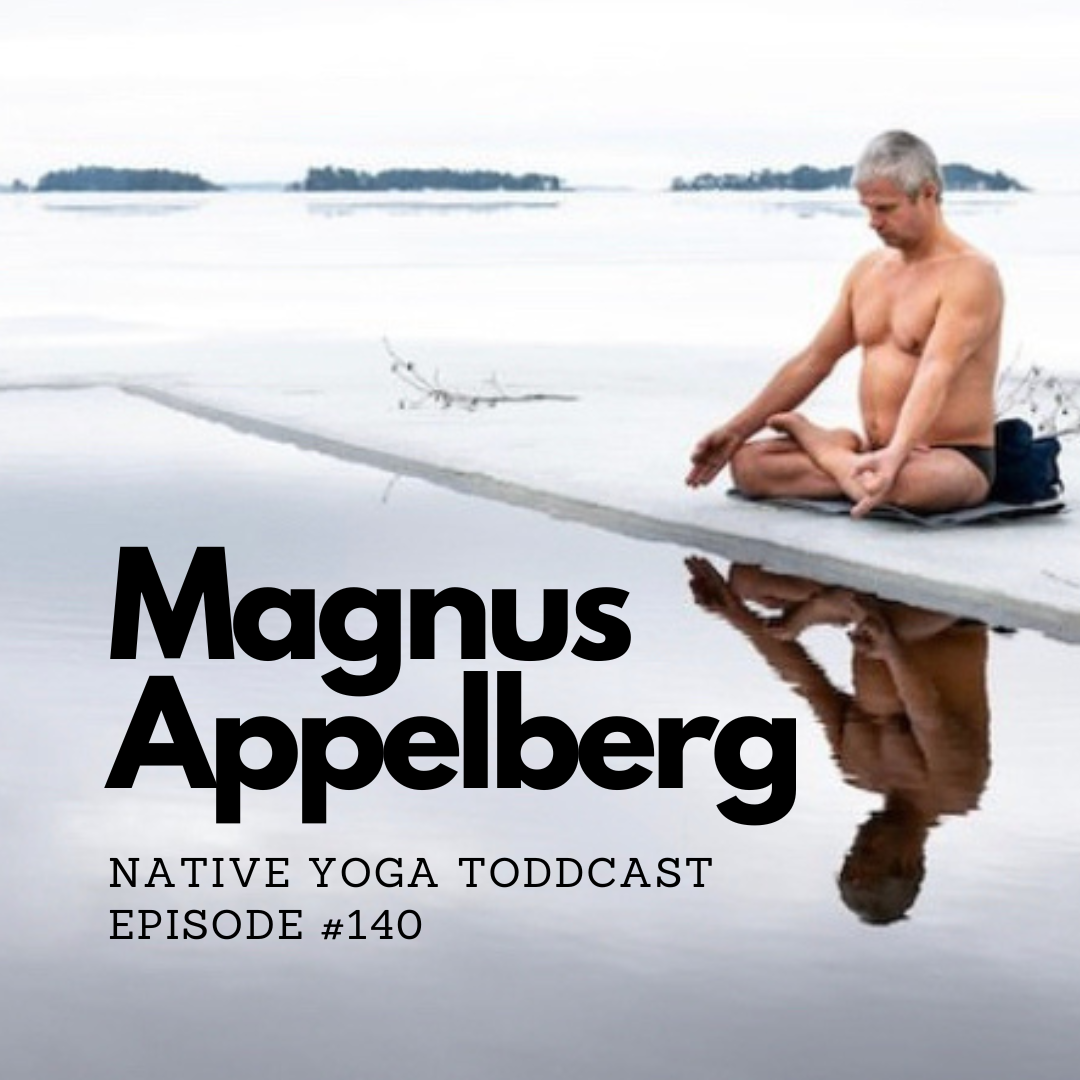
Magnus Appelberg – Discover the Power of Cold Water Plunging

Magnus Appelberg is a yoga practitioner and cold exposure enthusiast based in Finland. He has been practicing Ashtanga Yoga for 23 years and has a deep understanding of breath control and its effects on the body. Magnus is known for his ability to withstand extreme cold temperatures and has even set a personal record of staying in ice-cold water for one hour. He shares his knowledge and experiences through his website and courses, helping others eliminate stress and pain and reach a new level of focus and well-being.


Visit Magnus on his website: https://www.coldexposurecourse.com/
Follow him on IG at: @icelabmethod https://www.instagram.com/icelabmethod/

Key Takeaways:

  • Cold exposure can have physiological and mental benefits, including increased dopamine levels and reduced anxiety.
  • Breath control plays a crucial role in adapting to cold temperatures and maintaining a relaxed state.
  • The practice of cold exposure can help cultivate a sense of curiosity and openness to uncomfortable situations.

Exploring the Power of Cold Water Plunging: A Conversation with Magnus Appelberg

Welcome to Native Yoga Toddcast. In this episode, we have the pleasure of speaking with Magnus Appelberg, a resident of Finland who has delved deep into the world of cold water plunging, Ashtanga yoga, and Vipassana meditation. Magnus shares his experiences and insights on how these practices have transformed his life and offers valuable lessons on adaptation, breath control, and mental resilience. Join us as we dive into the world of cold therapy and discover the incredible benefits it can bring.

Introduction to the Main Themes

In this thought-provoking conversation with Magnus Appelberg, we explore the fascinating world of cold water plunging and its impact on physical and mental well-being. Magnus, who lives on an island in the archipelago of Finland, shares his journey of practicing Ashtanga yoga, Vipassana meditation, and cold exposure. He discusses the process of adaptation to cold water, the importance of breath control, and the mental resilience required to face the challenges of extreme temperatures. Magnus also highlights the connection between cold exposure and mental health, shedding light on the potential benefits of this practice for anxiety and depression.

The Power of Adaptation and Breath Control

Magnus emphasizes the importance of adaptation when it comes to cold water plunging. He explains that while it may seem impossible to stay in freezing water for an extended period, the body can adapt to the cold over time. By gradually increasing exposure and practicing breath control, individuals can build up their tolerance and stay in the cold water for longer durations. Magnus shares his personal experience of increasing his cold water immersion from 30 minutes to an impressive one hour. He attributes his success to slow, long exhalations and the cultivation of a relaxed state in the face of extreme temperatures.

The Bohr Effect and the Role of Carbon Dioxide

One of the key concepts Magnus explores is the Bohr effect, which he describes as the relationship between carbon dioxide and oxygen in the blood. He explains that breathing less and exhaling for longer periods can increase carbon dioxide levels, leading to a greater release of oxygen to the cells. This understanding challenges the common belief that breathing deeper and more vigorously increases oxygenation. Magnus suggests that by breathing less and cultivating a higher tolerance for carbon dioxide, individuals can achieve a more relaxed state and improve their overall well-being.

Mental Resilience and the Power of Cold Exposure

Magnus highlights the mental resilience required to face the challenges of cold water plunging. He explains that the extreme conditions force individuals to stay present and confront their fears and anxieties. By practicing breath control and staying calm, individuals can adapt to the discomfort and find a sense of stillness in the midst of the cold. Magnus shares his own experience of overcoming fear-based emotions and becoming more comfortable in uncomfortable situations. He suggests that the practice of cold exposure can help individuals develop a greater sense of curiosity and openness, allowing them to approach challenging situations with a more positive mindset.

The Intersection of Yoga and Cold Exposure

As an avid practitioner of Ashtanga yoga, Magnus discusses the intersection of yoga and cold exposure. He explains that his yoga practice has evolved over the years, with a focus on breath control and core movement. By incorporating breath control techniques into his cold exposure practice, Magnus has found a deeper connection between the two disciplines. He suggests that breath control can serve as a portal to meditation, allowing individuals to cultivate a sense of stillness and presence in both yoga and cold exposure. Magnus encourages individuals to find their own unique approach to practice, emphasizing that there is no one-size-fits-all solution.

Conclusion and Future Outlook

In conclusion, our conversation with Magnus Appelberg has shed light on the transformative power of cold water plunging, breath control, and mental resilience. Magnus’s personal experiences and insights offer valuable lessons for individuals seeking to explore the benefits of cold exposure. By embracing discomfort, cultivating curiosity, and staying present, individuals can tap into their inner strength and adapt to challenging situations. As the field of cold therapy continues to gain popularity, it is important to approach it with an open mind and a willingness to explore the limits of our physical and mental capabilities. With further research and understanding, cold exposure may hold the key to unlocking new levels of well-being and personal growth.

Note: This thought leadership article is based on a transcript from the Native Yoga Toddcast episode featuring Magnus Appelberg. All quotes used in this article are verbatim and direct quotes from the transcript.

Thanks for listening to this episode. Check out: 👇
Free Grow Your Yoga Live Webinar – Every Thursday at 12pm EST
➡️ Click here to receive link

New Student FREE Livestream Yoga Special ~ Try 2 Weeks of Free Unlimited Livestream Yoga Classes  at Native Yoga Center. info.nativeyogacenter.com/livestream Sign into the classes you would like to take and you will receive an email 30 minutes prior to join on Zoom. The class is recorded and uploaded to nativeyogaonline.com  ➡️  Click Here to Join. 

Practice to a New Yoga Class every day with our nativeyogaonline.com course called Today’s Community Class with code FIRSTMONTHFREE.

Native Yoga Teacher Training 2024– In Studio and Livestream – for info delivered to your email click this link here: ➡️ https://info.nativeyogacenter.com/native-yoga-teacher-training-2023/

Subscribe to Native Yoga Center and view this podcast on Youtube.

Thank you Bryce Allyn for the show tunes. Check out Bryce’s website: bryceallynband.comand sign up on his newsletter to stay in touch. Listen here to his original music from his bands Boxelder, B-Liminal and Bryce Allyn Band on Spotify.

Please email special requests and feedback to info@nativeyogacenter.com

Support the show

Native Yoga website: here
YouTube: here
Instagram: @nativeyoga 
Twitter: @nativeyoga 
Facebook: @nativeyogacenter 
LinkedIn: Todd McLaughlin

Celest Pereira ~ Physiotherapist and Yoga Teacher Discusses the Benefits of Functional Neurology

Celest Pereira, a physiotherapist and yoga teacher, discusses the importance of focusing on one main project instead of trying to juggle multiple streams of income. She emphasizes the need to prioritize and avoid spreading oneself too thin. Celest also explains the concept of functional neurology and how it can be used to evaluate and treat various physical issues.  Celest also shares insights on breathing techniques, pain perception, and the power of positive self-talk.

Visit Celest on her website: https://www.celestpereira.com/
On Instagram here: https://www.instagram.com/celestpereiraphysio/
On YouTube here: https://www.youtube.com/c/CelestPereiraYoga

Key Takeaways:

  • Diversifying movement patterns is important for optimal brain mapping and overall physical well-being.
  • Pain is an output of the brain and can be influenced by our thoughts and beliefs.
  • Functional neurology can help improve movement and reduce pain by addressing the underlying neurological issues.

Introduction

In a world where self-employment and multiple streams of income are often glorified, it’s important to take a step back and reevaluate our approach. As a physiotherapist and yoga teacher, I have learned that focusing on one main project and giving it our full attention can lead to more success and fulfillment. In this thought leadership article, we will explore the power of functional neurology and mindful movement in promoting physical and mental well-being. We will delve into the concept of functional neurology, discuss the importance of diversifying our exercise routines, and examine the role of breathing techniques in optimizing our movement patterns. Through verbatim quotes from a recent podcast interview, we will gain insights into the mind of Celest Pereira, a renowned physiotherapist and yoga teacher, and explore the implications and potential impact of these themes.

Functional Neurology and the Power of the Brain

Functional neurology is a field that focuses on the relationship between the brain and the body. Celest Pereira, a physiotherapist and yoga teacher, explains that every process in our body is governed by the central nervous system, which includes the brain and spinal cord. She emphasizes that the brain plays a crucial role in movement and physical well-being. Pereira shares her experience of working with clients who have various physical issues and how evaluating their nervous system online has led to positive results. She highlights the importance of looking at the body holistically and understanding that seemingly unrelated problems can manifest as pain in the body. Pereira’s approach challenges the traditional allopathic model of focusing solely on the area of pain and encourages a more comprehensive evaluation of the body.

“Every single thing that you do, think, say, every process in your body, it’s all governed from the central nervous system, everything.”

Diversifying Exercise Routines for Optimal Results

Pereira challenges the myth that having multiple streams of income is necessary for success as a self-employed professional. She shares her personal experience of trying to juggle multiple projects and realizing that it is not sustainable in the long run. Pereira explains that focusing on one main project and letting that be the main thing you work on can lead to better results. She encourages individuals to evaluate their exercise routines and diversify their training schedules. Pereira emphasizes the importance of exploring different movements and not getting stuck in a rigid routine. She uses the example of climbing and how she enjoys incorporating various activities like yoga, dancing, and weightlifting into her fitness regimen. Pereira’s approach highlights the need for individuals to find what works best for their bodies and to listen to their own needs and preferences.

“We should be working extremely hard and we should be able to pause and step away from it and think, okay, now time to get inspiration. So that when I go back to the thing, there is something left in the tank.”

The Power of Breathing Techniques and Mindful Movement

Pereira challenges the notion that the feet should always be parallel in yoga poses. She explains that while finding a neutral alignment can be useful, it is important to explore different movements and positions to allow the brain to map all the possibilities. Pereira emphasizes the importance of lunging, both in yoga and in the gym, and encourages individuals to move their feet out of parallel positions. She shares her own experience of teaching yoga and the shift to online platforms during the pandemic. Pereira highlights the benefits of connecting with people from around the world and the importance of finding inspiration and rest to maintain a sustainable practice.

“We can also shorten the time it takes to achieve things in the body by going to the neural tissue first.”

Implications and Potential Impact

The insights shared by Celest Pereira shed light on the power of functional neurology and mindful movement in promoting physical and mental well-being. By understanding the relationship between the brain and the body, individuals can optimize their movement patterns and address underlying issues that may contribute to pain or discomfort. Pereira’s approach challenges traditional notions of exercise and encourages individuals to listen to their bodies, diversify their routines, and find what works best for them. By incorporating breathing techniques and mindful movement, individuals can enhance their overall well-being and improve their physical performance.

The implications of these concepts are significant, as they offer a new perspective on how we approach movement and exercise. By focusing on the brain-body connection and understanding the role of the nervous system, individuals can make more informed choices about their fitness routines. This knowledge can empower individuals to take control of their physical health and explore new possibilities for movement and self-expression.

Conclusion and Future Outlook

In conclusion, the power of functional neurology and mindful movement lies in their ability to optimize physical and mental well-being. By understanding the brain-body connection and incorporating breathing techniques and mindful movement into our routines, we can enhance our overall health and performance. The insights shared by Celest Pereira highlight the importance of listening to our bodies, diversifying our exercise routines, and challenging traditional notions of movement. As we continue to explore the potential of functional neurology and mindful movement, we can expect to see a shift in how we approach fitness and well-being. By embracing these concepts, we can unlock our full potential and live healthier, more fulfilling lives.

Thanks for listening to this episode. Check out: 👇
Free Grow Your Yoga Live Webinar – Every Thursday at 12pm EST
➡️ Click here to receive link

New Student FREE Livestream Yoga Special ~ Try 2 Weeks of Free Unlimited Livestream Yoga Classes  at Native Yoga Center. info.nativeyogacenter.com/livestream Sign into the classes you would like to take and you will receive an email 30 minutes prior to join on Zoom. The class is recorded and uploaded to nativeyogaonline.com  ➡️  Click Here to Join. 

Practice to a New Yoga Class every day with our nativeyogaonline.com course called Today’s Community Class with code FIRSTMONTHFREE.

Native Yoga Teacher Training 2024– In Studio and Livestream – for info delivered to your email click this link here: ➡️ https://info.nativeyogacenter.com/native-yoga-teacher-training-2023/

Subscribe to Native Yoga Center and view this podcast on Youtube.

Thank you Bryce Allyn for the show tunes. Check out Bryce’s website: bryceallynband.comand sign up on his newsletter to stay in touch. Listen here to his original music from his bands Boxelder, B-Liminal and Bryce Allyn Band on Spotify.

Please email special requests and feedback to info@nativeyogacenter.com