Marko Mikkilä – Non-Dual Philosophy and Mystical Experiences in Yoga

Marko Mikkilä is a PhD student in philosophy at Turku University in Finland. He is also a yogi and a practitioner of Eastern philosophy. Marko has been practicing yoga for many years and has a deep understanding of non-dual philosophy.

During this conversation Marko  delves into the concept of non-dualism and its application in everyday life. He explains how non-dualism can help individuals heal from trauma and find a sense of liberation. Overall, Marko emphasizes the importance of integrating awakening experiences into all aspects of life and the need for a philosophical framework to understand and navigate these experiences.

Key Takeaways:

  • Non-dualism is the belief that everything is made of one substance, often referred to as consciousness.
  • Non-dualism can be understood as the collapsing of the subject-object separation, where there is just perceiving happening.
  • Awakening to one’s essence nature involves recognizing that we are not identified with the body-mind and that trauma can be observed without clinging to it.
  • Non-dualism can help individuals let go of the story and experience uncomfortable feelings or sensations without attachment.

Native Yoga Toddcast: Exploring Non-Dualism and Awakening with Marko Mikkilä

Welcome to Native Yoga Toddcast, where we bring you inspirational speakers in the field of yoga, massage, bodywork, and beyond. In this episode, host Todd McLaughlin sits down with Marko Mikkilä, a yogi, philosopher, and PhD student from Finland. Together, they delve into the concept of non-dualism and its implications for personal growth and healing. Join us as we explore the depths of awakening and the power of presence.

Introduction: The Beauty of Non-Dualism

In this episode of Native Yoga Toddcast, we have the pleasure of speaking with Marko Mikkilä, a yogi, philosopher, and PhD student from Finland. Marko shares his journey into yoga and philosophy, and how he discovered the transformative power of non-dualism. He explains that non-dualism is the belief that everything is made of one substance, often referred to as consciousness. It is a worldview that challenges the notion of separation and invites us to see the interconnectedness of all things. Marko emphasizes that non-dualism is not just a philosophy, but a way of experiencing life.

The Path to Awakening: From Martial Arts to Yoga

Marko’s journey into yoga began in his 20s when he started practicing Japanese and Chinese martial arts. As he delved deeper into the internal practices of martial arts, he became interested in Eastern philosophy, particularly Taoism and Zen Buddhism. This led him to explore yoga as a means of deepening his understanding of the mind-body connection. Marko initially practiced Ashtanga yoga, but over time, he realized that the prescribed practice was creating more agitation in his nervous system. He began experimenting with different approaches, such as incorporating resting poses into his practice, and eventually found a more balanced and sustainable way of practicing.

The Non-Dual Movement: Awakening to Our True Nature

Marko introduces us to the concept of the non-dual movement, which encompasses various non-dual religious philosophies from around the world. These philosophies share the belief that there is no separation between self and other, and that everything is ultimately connected. Non-dualism can be understood in different ways, such as the idea that everything is made of consciousness or the collapsing of the subject-object separation. Marko explains that non-dualism can also be applied to our relationship with a higher power, where we recognize that we are not separate from the divine, but rather a part of it.

Mystical Experiences and the Awakening Process

Marko discusses the role of mystical experiences in the awakening process. He explains that mystical experiences can range from profound paradigm shifts to subtle moments of intuition or telepathy. These experiences can be transformative, but they are not the ultimate goal of awakening. The goal is to recognize our true nature as awareness or consciousness and to integrate this realization into all aspects of our lives. Marko emphasizes that awakening is not about seeking new experiences or powers, but about letting go of identification with the body-mind and embracing the present moment.

Healing Trauma through Non-Dualism

Marko explores how non-dualism can be applied to the healing of trauma. He explains that when we awaken to our true nature, we no longer identify with the body-mind, including the trauma stored within it. This shift in identification allows us to observe our traumatic experiences without getting caught up in them. We can approach trauma with a sense of detachment and acceptance, allowing it to move through us without resistance. Marko acknowledges that healing trauma is a complex process, but non-dualism can provide a framework for understanding and integrating these experiences.

The Integration of Awakening: From Mystical Experiences to Liberation

Marko highlights the importance of integrating awakening experiences into all spheres of life. He explains that the initial awakening is just the beginning of the journey, and the real challenge lies in embodying that awakening in our everyday lives. This integration involves letting go of attachment to experiences, pleasant or unpleasant, and recognizing the underlying awareness that remains constant amidst the ever-changing phenomena. Marko shares examples of awakened beings who have fully integrated their awakening and live ordinary lives without seeking power or recognition.

Conclusion: Embracing Non-Dualism for Personal Growth

In this thought-provoking conversation, Marko Mikkilä invites us to explore the depths of non-dualism and its potential for personal growth and healing. He emphasizes that non-dualism is not just a philosophy, but a way of experiencing life. By recognizing our true nature as awareness or consciousness, we can let go of identification with the body-mind and embrace the present moment. Marko’s insights remind us of the interconnectedness of all things and the transformative power of awakening. As we continue on our own journeys, may we embrace the beauty of non-dualism and cultivate a deeper sense of presence and connection in our lives.

Note: This article is based on a conversation with Marko Mikkilä on the Native Yoga Toddcast. All quotes are verbatim and direct from the transcript of the episode.

Thanks for listening to this episode. Check out: 👇
Free Grow Your Yoga Live Webinar – Every Thursday at 12pm EST
➡️ Click here to receive link

New Student FREE Livestream Yoga Special ~ Try 2 Weeks of Free Unlimited Livestream Yoga Classes  at Native Yoga Center. info.nativeyogacenter.com/livestream Sign into the classes you would like to take and you will receive an email 30 minutes prior to join on Zoom. The class is recorded and uploaded to nativeyogaonline.com  ➡️  Click Here to Join. 

Practice to a New Yoga Class every day with our nativeyogaonline.com course called Today’s Community Class with code FIRSTMONTHFREE.

Native Yoga Teacher Training 2024– In Studio and Livestream – for info delivered to your email click this link here: ➡️ https://info.nativeyogacenter.com/native-yoga-teacher-training-2023/

Subscribe to Native Yoga Center and view this podcast on Youtube.

Thank you Bryce Allyn for the show tunes. Check out Bryce’s website: bryceallynband.comand sign up on his newsletter to stay in touch. Listen here to his original music from his bands Boxelder, B-Liminal and Bryce Allyn Band on Spotify.

Please email special requests and feedback to info@nativeyogacenter.comSupport the show

Native Yoga website: here
YouTube: here
Instagram: @nativeyoga 
Twitter: @nativeyoga 
Facebook: @nativeyogacenter 
LinkedIn: Todd McLaughlin

Janne Kontala – Is Contemporary Yoga at a Dead End?

Janne Kontala discusses the state of contemporary yoga and its potential dead end. He explores the historical development of modern yoga and its focus on physicality and individual practice. Janne emphasizes the importance of integrating yoga into all aspects of life and suggests studying the Bhagavad Gita for a deeper understanding of yoga philosophy.

Visit Janne on his website: https://www.jayananda.info/
Contact him on his email at: janne.kontala@gmail.com
Email Janne to learn more about his upcoming Bhagavad Gita course.

Key Takeaways:

  • Contemporary yoga often focuses on physicality and individual practice, which can lead to a disconnect from the rest of life.
  • The Bhagavad Gita offers valuable insights into how to integrate yoga into all aspects of life and engage in selfless action.
  • Yoga is not just a private practice but can be applied in daily life through karma yoga and bhakti yoga.
  • The goal of yoga is to overcome suffering, achieve liberation, and understand one’s true essence as pure consciousness.

Janne Kontala is a yoga teacher and scholar with a PhD in religious studies. He has been practicing and studying yoga since 1986 and has a deep understanding of yoga philosophy and its application in daily life.

The Evolution and Future of Yoga: Exploring the Themes of Contemporary Yoga

Introduction

In recent years, the practice of yoga has gained immense popularity worldwide. From physical fitness to mental well-being, people are turning to yoga as a holistic approach to improve their overall health. However, as the popularity of yoga grows, there is a need to examine the direction in which contemporary yoga is heading. Is it at a dead end? In this thought-provoking article, we will explore the main themes discussed in a conversation with Janne Kontala, a renowned yoga teacher and scholar. By delving into the transcript of the conversation, we will analyze the implications and potential impact of these themes on the future of yoga.

The Evolution of Yoga

The conversation with Janne Kontala sheds light on the evolution of yoga over the years. He explains that contemporary yoga has seen a shift from its traditional roots to a more commercialized and market-driven approach. The emergence of various yoga brands and styles has led to a diversification of the practice, making it more accessible to a wider audience. However, this diversification has also led to a dilution of the original teachings and philosophy of yoga. Janne emphasizes the importance of understanding the traditional texts and incorporating them into modern yoga practices to maintain the authenticity and depth of the practice.

Janne also highlights the influence of photography and marketing in shaping the perception of yoga. The emphasis on physical appearance and the need to project a certain image has become prevalent in contemporary yoga. This focus on the external aspects of yoga has led to a disconnect between the practice on the mat and its integration into daily life. Janne suggests that a more holistic approach is needed, where yoga is not just a private exercise but a way of life that encompasses all aspects of our being.

The Role of Yoga Philosophy

Yoga philosophy plays a crucial role in understanding the deeper meaning and purpose of the practice. Janne emphasizes the importance of studying the traditional texts, such as the Bhagavad Gita, to gain a deeper understanding of yoga philosophy. He explains that the Bhagavad Gita offers valuable insights into how to apply yoga in the midst of everyday life and society. The text explores various paths of yoga, including Karma Yoga (the yoga of selfless action), Bhakti Yoga (the yoga of devotion), and Jnana Yoga (the yoga of knowledge). These paths provide different approaches to spiritual growth and self-realization, catering to individuals with different inclinations and temperaments.

Janne suggests that incorporating yoga philosophy into our daily lives can help us cultivate mindfulness, detachment from results, and a sense of service to others. By practicing Karma Yoga, we can learn to perform our duties and engage in the world without attachment to the outcomes. Bhakti Yoga teaches us to cultivate love and devotion in our actions, recognizing the divine presence in all beings. Jnana Yoga encourages us to seek knowledge and develop a deeper understanding of ourselves and the nature of reality. By integrating these philosophical teachings into our yoga practice, we can transform our lives and create a more meaningful and purposeful existence.

The Goal of Yoga

The ultimate goal of yoga, as discussed in the conversation, is to overcome suffering and attain liberation. Janne explains that all strands of yoga share the common aim of freeing oneself from the cycle of rebirth and achieving a state of permanent bliss and enlightenment. This goal is often described in different ways, such as union with the divine, self-realization, or the realization of one’s true nature. While the paths to this goal may vary, the underlying aspiration remains the same.

Janne highlights three key components of the goal of yoga: freedom from suffering, liberation from the cycle of rebirth, and understanding one’s deepest essence. The practice of yoga is seen as a means to overcome ignorance and selfishness, leading to a state of profound peace and self-realization. While the path to this goal may be challenging and require dedicated practice, it is attainable for those who are committed to the journey.

Conclusion and Future Outlook

In conclusion, the conversation with Janne Kontala sheds light on the current state of contemporary yoga and its potential future. While modern yoga has made the practice more accessible and popularized it on a global scale, there is a need to reconnect with the deeper teachings and philosophy of yoga. By incorporating yoga philosophy into our practice and daily lives, we can cultivate mindfulness, detachment, and a sense of service to others. The Bhagavad Gita, with its emphasis on Karma Yoga, Bhakti Yoga, and Jnana Yoga, provides valuable guidance for integrating yoga into all aspects of our lives.

Moving forward, it is essential to strike a balance between the physical aspects of yoga and its spiritual and philosophical dimensions. By embracing the holistic nature of yoga, we can experience the transformative power of the practice and create a more harmonious and fulfilling existence. As the popularity of yoga continues to grow, it is crucial to maintain the authenticity and depth of the practice, ensuring that it remains a powerful tool for personal growth and self-realization.

The future of yoga lies in our ability to integrate its teachings into our daily lives and to share its wisdom with others. By embracing the principles of mindfulness, selflessness, and knowledge, we can navigate the challenges of the modern world and find inner peace and fulfillment. As we embark on this journey, let us remember that yoga is not just a physical exercise but a path to self-discovery and spiritual awakening.

Thanks for listening to this episode. Check out: 👇
Free Grow Your Yoga Live Webinar – Every Thursday at 12pm EST
➡️ Click here to receive link

New Student FREE Livestream Yoga Special ~ Try 2 Weeks of Free Unlimited Livestream Yoga Classes  at Native Yoga Center. info.nativeyogacenter.com/livestream Sign into the classes you would like to take and you will receive an email 30 minutes prior to join on Zoom. The class is recorded and uploaded to nativeyogaonline.com  ➡️  Click Here to Join. 

Practice to a New Yoga Class every day with our nativeyogaonline.com course called Today’s Community Class with code FIRSTMONTHFREE.

Native Yoga Teacher Training 2024– In Studio and Livestream – for info delivered to your email click this link here: ➡️ https://info.nativeyogacenter.com/native-yoga-teacher-training-2023/

Subscribe to Native Yoga Center and view this podcast on Youtube.

Thank you Bryce Allyn for the show tunes. Check out Bryce’s website: bryceallynband.comand sign up on his newsletter to stay in touch. Listen here to his original music from his bands Boxelder, B-Liminal and Bryce Allyn Band on Spotify.

Please email special requests and feedback to info@nativeyogacenter.comSupport the show

Native Yoga website: here
YouTube: here
Instagram: @nativeyoga 
Twitter: @nativeyoga 
Facebook: @nativeyogacenter 
LinkedIn: Todd McLaughlin
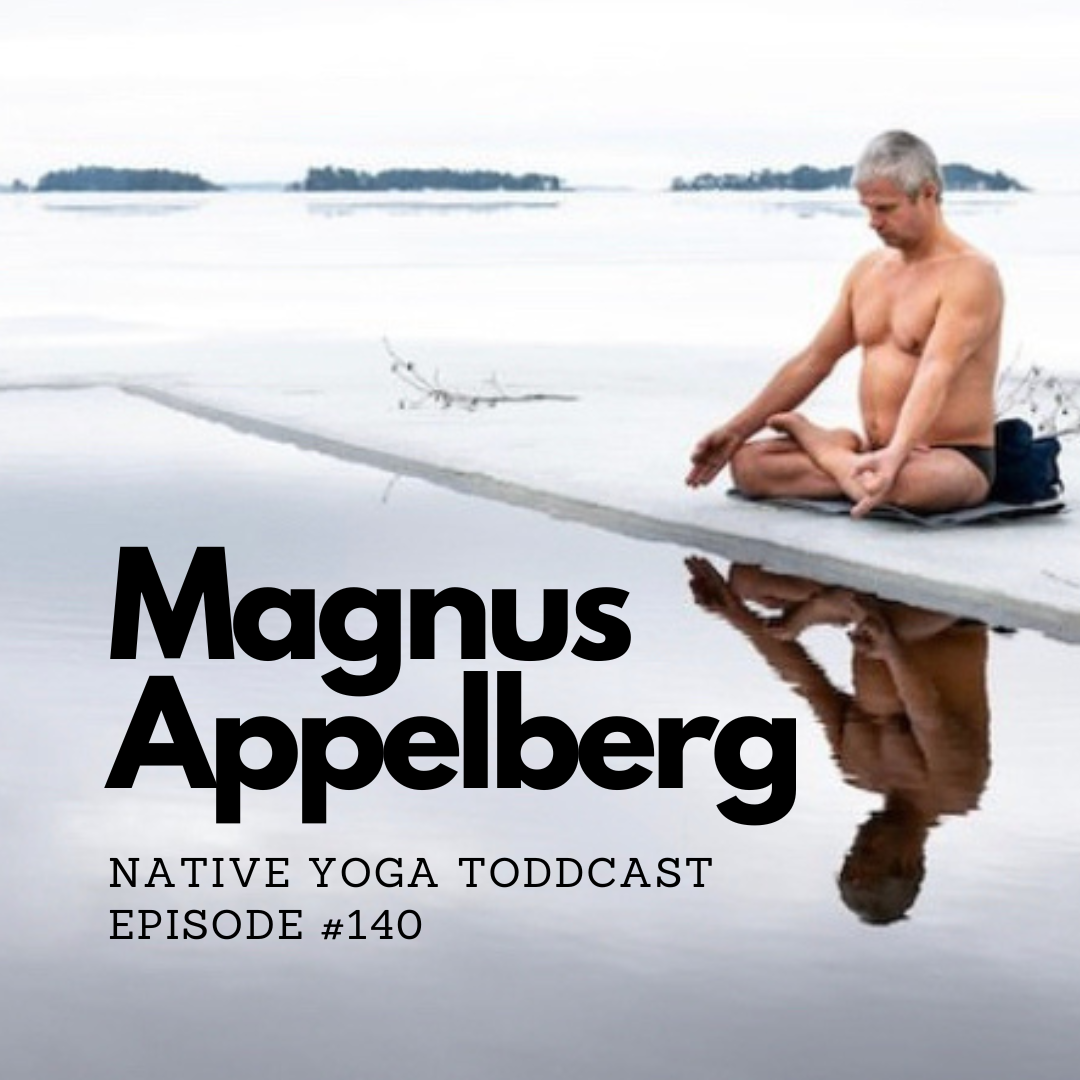
Magnus Appelberg – Discover the Power of Cold Water Plunging

Magnus Appelberg is a yoga practitioner and cold exposure enthusiast based in Finland. He has been practicing Ashtanga Yoga for 23 years and has a deep understanding of breath control and its effects on the body. Magnus is known for his ability to withstand extreme cold temperatures and has even set a personal record of staying in ice-cold water for one hour. He shares his knowledge and experiences through his website and courses, helping others eliminate stress and pain and reach a new level of focus and well-being.


Visit Magnus on his website: https://www.coldexposurecourse.com/
Follow him on IG at: @icelabmethod https://www.instagram.com/icelabmethod/

Key Takeaways:

  • Cold exposure can have physiological and mental benefits, including increased dopamine levels and reduced anxiety.
  • Breath control plays a crucial role in adapting to cold temperatures and maintaining a relaxed state.
  • The practice of cold exposure can help cultivate a sense of curiosity and openness to uncomfortable situations.

Exploring the Power of Cold Water Plunging: A Conversation with Magnus Appelberg

Welcome to Native Yoga Toddcast. In this episode, we have the pleasure of speaking with Magnus Appelberg, a resident of Finland who has delved deep into the world of cold water plunging, Ashtanga yoga, and Vipassana meditation. Magnus shares his experiences and insights on how these practices have transformed his life and offers valuable lessons on adaptation, breath control, and mental resilience. Join us as we dive into the world of cold therapy and discover the incredible benefits it can bring.

Introduction to the Main Themes

In this thought-provoking conversation with Magnus Appelberg, we explore the fascinating world of cold water plunging and its impact on physical and mental well-being. Magnus, who lives on an island in the archipelago of Finland, shares his journey of practicing Ashtanga yoga, Vipassana meditation, and cold exposure. He discusses the process of adaptation to cold water, the importance of breath control, and the mental resilience required to face the challenges of extreme temperatures. Magnus also highlights the connection between cold exposure and mental health, shedding light on the potential benefits of this practice for anxiety and depression.

The Power of Adaptation and Breath Control

Magnus emphasizes the importance of adaptation when it comes to cold water plunging. He explains that while it may seem impossible to stay in freezing water for an extended period, the body can adapt to the cold over time. By gradually increasing exposure and practicing breath control, individuals can build up their tolerance and stay in the cold water for longer durations. Magnus shares his personal experience of increasing his cold water immersion from 30 minutes to an impressive one hour. He attributes his success to slow, long exhalations and the cultivation of a relaxed state in the face of extreme temperatures.

The Bohr Effect and the Role of Carbon Dioxide

One of the key concepts Magnus explores is the Bohr effect, which he describes as the relationship between carbon dioxide and oxygen in the blood. He explains that breathing less and exhaling for longer periods can increase carbon dioxide levels, leading to a greater release of oxygen to the cells. This understanding challenges the common belief that breathing deeper and more vigorously increases oxygenation. Magnus suggests that by breathing less and cultivating a higher tolerance for carbon dioxide, individuals can achieve a more relaxed state and improve their overall well-being.

Mental Resilience and the Power of Cold Exposure

Magnus highlights the mental resilience required to face the challenges of cold water plunging. He explains that the extreme conditions force individuals to stay present and confront their fears and anxieties. By practicing breath control and staying calm, individuals can adapt to the discomfort and find a sense of stillness in the midst of the cold. Magnus shares his own experience of overcoming fear-based emotions and becoming more comfortable in uncomfortable situations. He suggests that the practice of cold exposure can help individuals develop a greater sense of curiosity and openness, allowing them to approach challenging situations with a more positive mindset.

The Intersection of Yoga and Cold Exposure

As an avid practitioner of Ashtanga yoga, Magnus discusses the intersection of yoga and cold exposure. He explains that his yoga practice has evolved over the years, with a focus on breath control and core movement. By incorporating breath control techniques into his cold exposure practice, Magnus has found a deeper connection between the two disciplines. He suggests that breath control can serve as a portal to meditation, allowing individuals to cultivate a sense of stillness and presence in both yoga and cold exposure. Magnus encourages individuals to find their own unique approach to practice, emphasizing that there is no one-size-fits-all solution.

Conclusion and Future Outlook

In conclusion, our conversation with Magnus Appelberg has shed light on the transformative power of cold water plunging, breath control, and mental resilience. Magnus’s personal experiences and insights offer valuable lessons for individuals seeking to explore the benefits of cold exposure. By embracing discomfort, cultivating curiosity, and staying present, individuals can tap into their inner strength and adapt to challenging situations. As the field of cold therapy continues to gain popularity, it is important to approach it with an open mind and a willingness to explore the limits of our physical and mental capabilities. With further research and understanding, cold exposure may hold the key to unlocking new levels of well-being and personal growth.

Note: This thought leadership article is based on a transcript from the Native Yoga Toddcast episode featuring Magnus Appelberg. All quotes used in this article are verbatim and direct quotes from the transcript.

Thanks for listening to this episode. Check out: 👇
Free Grow Your Yoga Live Webinar – Every Thursday at 12pm EST
➡️ Click here to receive link

New Student FREE Livestream Yoga Special ~ Try 2 Weeks of Free Unlimited Livestream Yoga Classes  at Native Yoga Center. info.nativeyogacenter.com/livestream Sign into the classes you would like to take and you will receive an email 30 minutes prior to join on Zoom. The class is recorded and uploaded to nativeyogaonline.com  ➡️  Click Here to Join. 

Practice to a New Yoga Class every day with our nativeyogaonline.com course called Today’s Community Class with code FIRSTMONTHFREE.

Native Yoga Teacher Training 2024– In Studio and Livestream – for info delivered to your email click this link here: ➡️ https://info.nativeyogacenter.com/native-yoga-teacher-training-2023/

Subscribe to Native Yoga Center and view this podcast on Youtube.

Thank you Bryce Allyn for the show tunes. Check out Bryce’s website: bryceallynband.comand sign up on his newsletter to stay in touch. Listen here to his original music from his bands Boxelder, B-Liminal and Bryce Allyn Band on Spotify.

Please email special requests and feedback to info@nativeyogacenter.com

Support the show

Native Yoga website: here
YouTube: here
Instagram: @nativeyoga 
Twitter: @nativeyoga 
Facebook: @nativeyogacenter 
LinkedIn: Todd McLaughlin
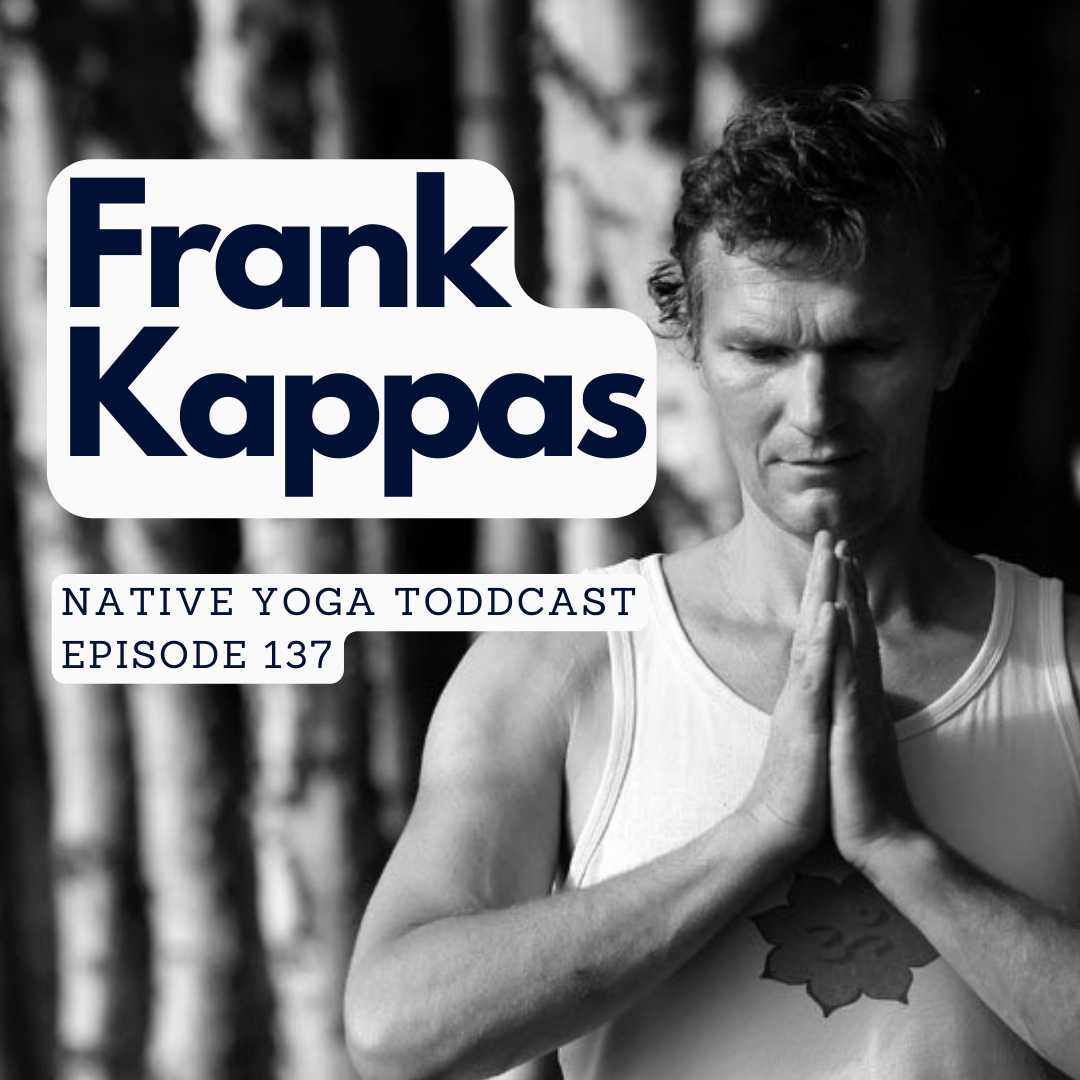
Frank Kappas – Embracing Vulnerability and Connection in Yoga

Frank Kappas is an Ashtanga Yoga teacher based in Finland. He has been practicing yoga since 1996 and has studied with renowned teachers such as Petri Räisänen and Lino Miele. Frank is also interested in other modalities such as Vipassana meditation and bodywork, which he incorporates into his teaching and practice.

Visit Frank on his website https://www.frankkappas.fi/
Follow Frank on IG @frank.kappas.ashtanga.yoga https://www.instagram.com/frank.kappas.ashtanga.yoga/

Key takeaways:

  • Finding a structure in yoga practice can be helpful, but it’s important to also create your own internal structure.
  • Vipassana meditation can provide valuable insights into the mind and body, but it can be challenging to apply those insights in everyday life.
  • Being present and connecting with oneself and others is a continuous practice that requires self-awareness and vulnerability.
  • Taking care of oneself is essential when taking care of others, especially as a parent.
  • Stiffness and strength can be beneficial in yoga practice and can help prevent injuries.

Exploring the Depths of Yoga and Self-Discovery: A Conversation with Frank Kappas

Welcome to the Native Yoga Toddcast, where we dive deep into the world of yoga, meditation, and self-discovery. In this episode, I had the pleasure of speaking with Frank Kappas, an Ashtanga Yoga teacher from Finland. We discussed his journey into yoga, the challenges he has faced, and the profound insights he has gained along the way. Join us as we explore the transformative power of yoga and the importance of staying present in a chaotic world.

Introduction to the Main Themes

In this thought-provoking conversation with Frank Kappas, we delve into the essence of yoga and its impact on our lives. Frank shares his personal journey into yoga, from his background as an artist to his discovery of Ashtanga Yoga. He emphasizes the importance of finding a practice that works for us and the value of staying present in our daily lives. Frank also touches on the role of vulnerability and self-care in our yoga practice, as well as the connection between yoga and other modalities such as Vipassana meditation and bodywork.

The Power of Structure and Self-Exploration

Frank highlights the significance of structure in his early yoga practice, particularly in the Ashtanga tradition. He explains how having a set sequence and a dedicated practice helped him find stability and focus. However, he also acknowledges the need for self-exploration and the maturation process that comes with it. Frank shares his own journey of discovering the balance between structure and self-discovery, and how it has shaped his approach to teaching and practicing yoga.

Embracing Vulnerability and Connection

One of the key themes that emerges from our conversation is the importance of vulnerability and connection. Frank discusses how his own experiences as a parent and his exploration of Vipassana meditation have deepened his understanding of himself and others. He emphasizes the need to be present and open, even in the face of challenges, and how this can lead to a greater sense of empathy and connection with those around us.

The Role of Sensitivity and Bodywork

Frank also shares his passion for bodywork and its connection to his yoga practice. He explains how bodywork, such as Thai massage and Alexander Technique, has enhanced his understanding of the body and its sensations. He emphasizes the importance of sensitivity and touch in his work, and how it can create a deeper connection with oneself and others.

Processing the Challenges of the World

In light of recent events in the world, Frank reflects on the challenges we face as a global community. He acknowledges the difficulty of processing the violence and suffering that exists, and the tendency to contract and protect ourselves. However, he also highlights the importance of working on ourselves and cultivating compassion and understanding. Frank encourages us to explore our own patterns and reactions, and to strive for a deeper sense of connection and empathy.

Conclusion and Future Outlook

In conclusion, my conversation with Frank Kappas has shed light on the transformative power of yoga and self-exploration. Through his own journey, Frank has discovered the value of structure, vulnerability, and connection. He reminds us of the importance of staying present and open, even in the face of challenges, and how this can lead to a greater sense of empathy and understanding. As we navigate the complexities of the world, Frank’s insights serve as a reminder to continually work on ourselves and strive for a deeper connection with ourselves and others.

As we move forward, let us embrace the teachings of yoga and the wisdom of those who have walked the path before us. Let us continue to explore, learn, and grow, both on and off the mat. And let us remember that the true power of yoga lies in its ability to transform not only ourselves but also the world around us.

Thanks for listening to this episode. Check out: 👇
Free Grow Your Yoga Live Webinar – Every Thursday at 12pm EST
➡️ Click here to receive link

New Student FREE Livestream Yoga Special ~ Try 2 Weeks of Free Unlimited Livestream Yoga Classes  at Native Yoga Center. info.nativeyogacenter.com/livestream Sign into the classes you would like to take and you will receive an email 30 minutes prior to join on Zoom. The class is recorded and uploaded to nativeyogaonline.com  ➡️  Click Here to Join. 

Practice to a New Yoga Class every day with our nativeyogaonline.com course called Today’s Community Class with code FIRSTMONTHFREE.

Native Yoga Teacher Training 2024– In Studio and Livestream – for info delivered to your email click this link here: ➡️ https://info.nativeyogacenter.com/native-yoga-teacher-training-2023/

Subscribe to Native Yoga Center and view this podcast on Youtube.

Thank you Bryce Allyn for the show tunes. Check out Bryce’s website: bryceallynband.comand sign up on his newsletter to stay in touch. Listen here to his original music from his bands Boxelder, B-Liminal and Bryce Allyn Band on Spotify.

Please email special requests and feedback to info@nativeyogacenter.comSupport the show

Native Yoga website: here
YouTube: here
Instagram: @nativeyoga 
Twitter: @nativeyoga 
Facebook: @nativeyogacenter 
LinkedIn: Todd McLaughlin

Lotta Sebzda – Demonstrating Age is Just a Number in Yoga

Lotta Sebzda, a 57 year old Swedish Ashtanga yoga practitioner and hairdresser, shares her love for Ashtanga yoga and her journey with the practice. She discusses the benefits of a consistent practice, the importance of listening to your body, and the joy of teaching workshops. Lota also talks about the evolution of social media and its impact on the yoga community.

Follow Lotta on Instagram at @lottasebzdayoga https://www.instagram.com/lottasebzdayoga/

Listen to full episode of podcast for free here: https://nativeyogacenter.buzzsprout.com/950785/13635446-lotta-sebzda-demonstrating-age-is-just-a-number-in-yoga


Key Takeaways:

  • Ashtanga yoga is a consistent practice that can be done anywhere and provides different experiences each day.
  • Age is just a number in yoga, and it’s never too late to start or continue your practice.
  • It’s important to listen to your body and modify poses as needed to avoid injury.
  • Social media has made yoga more accessible and allows for connection and inspiration within the yoga community.

The Evolution of Ashtanga Yoga: A Conversation with Lotta Sebzda

In this thought leadership article, we explore the main themes discussed in a podcast interview with Lotta Sebzda, a renowned Ashtanga yoga practitioner. Through a detailed analysis of the transcript, we delve into the evolution of Ashtanga yoga, the benefits of the practice, and the impact of social media on the yoga community.

Introduction

In a recent podcast interview, I had the pleasure of speaking with Lotta Sebzda, a dedicated Ashtanga yoga practitioner with over 25 years of experience. Lotta shared her journey with Ashtanga yoga, her love for the practice, and her insights into the physical and mental benefits it offers. We discussed the evolution of Ashtanga yoga, the role of social media in the yoga community, and the importance of finding joy and contentment in one’s practice. In this article, we will explore these themes in detail, using verbatim quotes from the interview to provide a comprehensive and insightful analysis.

The Evolution of Ashtanga Yoga

Lotta Sebzda began her Ashtanga yoga journey over two decades ago, and she has been practicing the same sequence ever since. She explained that the beauty of Ashtanga yoga lies in its consistency and repetition. Each day’s practice is unique, offering new challenges and opportunities for growth. Lotta emphasized that Ashtanga yoga is not about achieving perfection or mastering advanced poses; it is about showing up on the mat every day and embracing the practice as it is. She shared her love for the traditional Mysore style of teaching, where students practice at their own pace and receive individualized attention from the teacher. Lotta believes that the Mysore style allows for a deeper connection with the practice and a greater understanding of one’s body and mind.

The Benefits of Ashtanga Yoga

Ashtanga yoga offers a multitude of physical and mental benefits. Lotta explained that the practice helps to build strength, flexibility, and balance. It also improves focus, concentration, and mental clarity. Lotta shared her personal experience of how Ashtanga yoga helped her regain her strength and immune system after experiencing health issues. She emphasized that the practice is adaptable to individual needs and abilities, and it can be modified to suit different body types and levels of fitness. Lotta also highlighted the importance of breath control in Ashtanga yoga, as it helps to calm the mind and create a meditative state during the practice.

The Impact of Social Media on the Yoga Community

The rise of social media has had a significant impact on the yoga community, and Lotta shared her thoughts on this phenomenon. She acknowledged the benefits of social media in making yoga more accessible to a wider audience and connecting practitioners from around the world. However, she also expressed concerns about the potential negative effects of social media on the practice. Lotta emphasized the importance of maintaining a balanced perspective and not comparing oneself to others based on their social media presence. She encouraged practitioners to focus on their own journey and to find joy and contentment in their practice, regardless of their level or ability.

Finding Joy and Contentment in the Practice

Throughout our conversation, Lotta emphasized the importance of finding joy and contentment in the practice of Ashtanga yoga. She encouraged practitioners to approach their practice with a sense of curiosity and playfulness, rather than striving for perfection or achievement. Lotta shared her own experience of how the practice has brought her immense joy and fulfillment, and she encouraged others to cultivate a similar mindset. She reminded us that yoga is a lifelong journey, and that the true essence of the practice lies in the process, rather than the end result.

Conclusion and Future Outlook

In conclusion, my conversation with Lotta Sebzda provided valuable insights into the evolution of Ashtanga yoga, the benefits of the practice, and the impact of social media on the yoga community. Lotta’s passion for Ashtanga yoga and her dedication to the practice were evident throughout our discussion. Her words serve as a reminder to all practitioners to approach their practice with an open mind, a sense of joy, and a commitment to self-care. As the yoga community continues to evolve, it is important to stay true to the essence of the practice and to find joy and contentment in the journey.

Thanks for listening to this episode. Check out: 👇
Free Grow Your Yoga Live Webinar – Every Thursday at 12pm EST
➡️ Click here to receive link

New Student FREE Livestream Yoga Special ~ Try 2 Weeks of Free Unlimited Livestream Yoga Classes  at Native Yoga Center. info.nativeyogacenter.com/livestream Sign into the classes you would like to take and you will receive an email 30 minutes prior to join on Zoom. The class is recorded and uploaded to nativeyogaonline.com  ➡️  Click Here to Join.

Practice to a New Yoga Class every day with our nativeyogaonline.com course called Today’s Community Class with code FIRSTMONTHFREE.

Native Yoga Teacher Training 2024– In Studio and Livestream – for info delivered to your email click this link here: ➡️ https://info.nativeyogacenter.com/native-yoga-teacher-training-2023/

Subscribe to Native Yoga Center and view this podcast on Youtube.

Thank you Bryce Allyn for the show tunes. Check out Bryce’s website: bryceallynband.comand sign up on his newsletter to stay in touch. Listen here to his original music from his bands Boxelder, B-Liminal and Bryce Allyn Band on Spotify.

Please email special requests and feedback to info@nativeyogacenter.com