Steve Burgess: Exploring Past Lives, Reincarnation & the Power of Hypnotic Trance

Listen to Toddcast with Steve for FREE here

Steve Burgess is a renowned hypnotherapist specializing in past life regression. With 33 years of experience, Steve has facilitated over 15,000 sessions and conducts workshops around the globe, including in the UK, Norway, Canada, and the US. He brings a unique blend of therapeutic and spiritual approaches to hypnotherapy, gaining deep insights for his clients into their current lives from past life experiences. Steve is also an accomplished author with three published books, highlighting his profound understanding and experiences in the field of regression therapy.

Register for Workshop here:https://www.nativeyogacenter.com/ap-past-life-regression-group-workshop-w-steve-burgess-saturday-december-6th-15pm.php

Visit Steve on his website: https://steveburgesshypnosis.com/

Key Takeaways:

  • Regression therapy utilizes hypnosis to access the subconscious, revealing past life experiences that can offer insights into current life issues.
  • Hypnosis is a natural, trance-like state, similar to everyday experiences like daydreaming or focused activities, and is integral to past life regression.
  • While belief in reincarnation can enrich the experience, an open mind is sufficient to engage in past life regression workshops.
  • Regression therapy can uncover emotional traumas from not only past lives but also from the present life and ancestral experiences.

Unveiling Past Life Regression: A Journey Through Time

The concept of past life regression is as fascinating as it is mysterious. Central to this discussion is Steve Burgess, a seasoned hypnotherapist whose expertise in regression therapy spans over three decades. Burgess’s methodology is not just about curiosity, but about healing emotional traumas that anchor our present issues. This exploration offers an understanding of how our past lives interplay with our current existence, making regression a potent tool for self-discovery and healing.

Journey into Hypnotherapy: Unlocking the Subconscious Mind

Understanding Trance and Its Natural Occurrence

Burgess elucidates the natural state of trance, commonly misunderstood as something akin to sleep or a hypnotic stupor. “Trance is what we call the hypnotic state,” he explains. “It’s completely natural… like when we’re daydreaming or driving on autopilot.” This understanding is crucial, dispelling myths and allowing individuals to approach hypnotherapy with an open mind.

Hypnotherapy serves as a gateway to the subconscious, unlocking profound insights which are not easily accessed in our conscious state. Burgess’s process involves guiding individuals to a relaxed trance state, where the subconscious mind becomes accessible, often likened to an “iceberg” where the deeper portion holds the key to our true selves. The implications here are vast; by understanding that trance is part of our daily lives, more people might be open to leveraging hypnotherapy for personal growth and resolution of deep-seated issues.

The Intersection of Past Lives and Emotional Healing

Therapeutic Benefits Beyond Fascination

While many might initially approach past life regression out of curiosity, the therapeutic implications are profound. Burgess shares numerous accounts where regression therapy unraveled the roots of psychological and emotional issues. “Every issue has emotional causes,” he notes, describing his systematic approach to uncovering traumas ranging from this life, past lives, and even ancestral experiences.

In one compelling narrative, a client’s regression into a past life during World War II revealed the emotional scars that contributed to his present-day anxieties. Such sessions offer not only catharsis but transformative healing. Burgess’s insights present a new layer to therapeutic practices, highlighting the importance of addressing our deep-seated histories for holistic healing. For skeptics, these cases underline the session’s validity, as accessing past life memories can powerfully impact current psychological and emotional well-being.

Hypnotherapy’s Role in Personal Growth and Awareness

Positive Affirmations and Personal Empowerment

Burgess provides actionable advice on utilizing hypnotherapy for positive change, emphasizing the importance of carefully crafted affirmations. “Your affirmation should be in the now and positive,” he suggests, urging a focus on what individuals intend to manifest in their lives. The interplay of affirmation and visualization can indeed shape one’s subconscious intentions, leading to tangible transformations.

For those seeking to integrate hypnotherapy into daily routines, exploring resources like Burgess’s YouTube channel presents an accessible start. By recognizing the capabilities of the subconscious mind, individuals can actively curate their desired realities, facilitated by hypnotherapy’s deep-reaching methods. This process extends beyond personal agendas, offering a path for clearer understanding and improved quality of life.

Embracing the Mystique of Past Life Regression

The exploration into our past lives through regression therapy poses more than intellectual curiosity; it becomes a vital tool for personal empowerment. Burgess’s experience showcases how regression therapy unveils the unseen influences crafted by past traumas, offering profound healing avenues that traditional therapeutic methods may overlook. His insights confirm that through the natural process of trance, we can unlock an unprecedented understanding of ourselves, bridging the chasm between past influences and present realities.

By embracing hypnotherapy’s transformative power, individuals can translate past experiences into wisdom and healing. Breaking free from the chains of subconscious traumas, past life regression therapy invites a brave exploration of self-discovery, revealing a tapestry of connections that define and enrich our lives across time.

Thanks for listening to this episode. Check out: 👇
8IN8 Ashtanga Yoga for Beginners Course Online– Learn 8 Limb Yoga in 8 Days – Get FREE coupon code for a limited time only (Regular price $88) https://info.nativeyogacenter.com/8in8-ashtanga-yoga-for-beginners-8-limbs-in-8-days/

Practice with Native Yoga Online – New classes EVERY day – Use Code FIRSTMONTHFREE https://nativeyogacenter.teachable.com/p/today-s-community-class

Subscribe to Native Yoga Center and view this podcast on Youtube.

Thank you Bryce Allyn for the show tunes. Check out Bryce’s website: bryceallynband.comand sign up on his newsletter to stay in touch. Listen here to his original music from his bands Boxelder, B-Liminal and Bryce Allyn Band on Spotify.

Please email special requests and feedback to info@nativeyogacenter.com

Support the show

Native Yoga website: here
YouTube: here
Instagram: @nativeyoga 
Twitter: @nativeyoga 
Facebook: @nativeyogacenter 
LinkedIn: Todd McLaughlin

Dr. Michael Shea ~ Polyvagal Theory in Yoga and Meditation

In this episode of the Native Yoga Toddcast, host Todd welcomes back Dr. Michael Shea for a discussion on polyvagal theory in yoga and meditation. They explore the importance of the vagus nerve, an information highway that connects the brain to every organ system in the body. Dr. Shea explains how the vagus nerve plays a crucial role in our sense of safety and how trauma can impact its functioning. They delve into the concepts of top-down and bottom-up approaches in therapy and the role of yoga and meditation in regulating the nervous system. The episode highlights the significance of turning inward and finding love in the present moment as a means of healing and self-discovery.

Visit Michael on his website: https://www.sheaheart.com/

Key Takeaways:

  • The vagus nerve is a vital information highway that connects the brain to every organ system in the body, providing sensory impressions and information about our state of safety.
  • Trauma can disrupt the functioning of the vagus nerve, leading to heightened stress responses or withdrawal and numbing behaviors.
  • Yoga and meditation can help regulate the vagus nerve and promote a greater sense of safety and well-being.
  • The yamas and niyamas, ethical principles in yoga, provide a moral code that can guide our relationships with others and ourselves, supporting the turn inward and self-discovery.

The Power of Polyvagal Theory in Yoga and Meditation

Key Takeaways:

  • Polyvagal theory is based on the vagus nerve, which is an information highway that connects the brain to every organ system in the body.
  • The vagus nerve is responsible for transmitting information about the body’s state and sensations to the brain, allowing us to make conscious choices and feel safe.
  • Trauma can disrupt the vagal pathways and affect our ability to sense and respond to our body’s signals of safety.
  • Yoga and meditation can help clarify and strengthen the vagal pathways, leading to a greater sense of safety and improved well-being.

Understanding Polyvagal Theory

Polyvagal theory is a neurologically based model that focuses on the vagus nerve, which serves as an information highway between the brain and the body. The vagus nerve connects to every organ system in the body, allowing for the transmission of physiological and metabolic data to the brain. This information is crucial for our overall health and well-being.

The vagus nerve also plays a role in our ability to sense and perceive our body’s sensations. It provides us with conscious perception of information and sensations, allowing us to make choices and navigate our world more effectively. This is particularly important when it comes to our sense of safety.

The primary association of the vagus nerve is with safety. It provides the brain with information about the state of our organs and the sensations we experience in our body. This information helps us determine whether we are safe or in danger. When the vagus nerve is functioning optimally, we have a greater sense of safety and can navigate our world with confidence.

The Impact of Trauma on the Vagus Nerve

Trauma can disrupt the vagal pathways and affect our ability to sense and respond to our body’s signals of safety. There are different types of trauma, including physical abuse, developmental trauma, sexual abuse, and PTSD. Each type of trauma can have a unique impact on our vagal response.

When trauma is triggered, our body can enter a state of sympathetic arousal, characterized by an accelerated heart rate and increased stress response. However, depending on the severity of our trauma history, we may also experience a withdrawal response associated with the older part of the vagus nerve. This response can lead to a numbing out or dissociation from the world, as our body’s way of protecting itself.

Understanding our trauma response and how it affects our vagal pathways is crucial for healing and finding a sense of safety. Yoga and meditation can play a significant role in this process by helping us develop a greater awareness of our body’s sensations and providing tools to regulate our nervous system.

The Role of Yoga and Meditation in Polyvagal Theory

Yoga and meditation offer a bottom-up approach to healing and regulating the vagal pathways. By turning inward and focusing on our body’s sensations, we can develop a greater sense of safety and connection to ourselves. This somatic awareness allows us to override the stress response and activate the relaxation response associated with the vagus nerve.

The practice of yoga and meditation can help us refine our relationship with our body and breath. Through asana and pranayama, we can release unnecessary tension and develop a deeper connection to our physical and energetic bodies. This physical awareness is essential for grounding and finding a sense of safety.

Pratyahara, the withdrawal of the senses, and dharana, concentration, further support the turn inward. By withdrawing our attention from the external world and focusing on the present moment, we can cultivate a calm and peaceful state of mind. This inward focus allows us to develop an open-hearted sense of self and connection to others.

Meditation, the culmination of the yogic practice, expands our consciousness beyond the confines of the mind. It allows us to experience a deeper connection to ourselves and the world around us. Through meditation, we can tap into a sense of awe and love that transcends our individual experiences.

Embracing Love and Healing

Polyvagal theory and the practice of yoga and meditation offer us a path to healing and finding a sense of safety in our lives. By understanding the impact of trauma on our vagal pathways and developing a greater awareness of our body’s sensations, we can navigate our world with more ease and resilience.

It is never too late to seek love and healing, regardless of our past experiences. The practice of yoga and meditation provides us with the tools to turn inward, cultivate self-compassion, and develop a deeper connection to ourselves and others. By embracing love and healing in the present moment, we can rewrite our narrative and create a more fulfilling and joyful life.

In conclusion, polyvagal theory and the practice of yoga and meditation offer us a powerful framework for understanding and healing trauma. By turning inward and developing a greater awareness of our body’s sensations, we can regulate our nervous system and find a sense of safety. Through the practice of yoga and meditation, we can cultivate self-compassion, expand our consciousness, and embrace love and healing in our lives.

Thanks for listening to this episode. Check out: 👇
Free Grow Your Yoga Live Webinar – Every Thursday at 12pm EST
➡️ Click here to receive link

New Student FREE Livestream Yoga Special ~ Try 2 Weeks of Free Unlimited Livestream Yoga Classes  at Native Yoga Center. info.nativeyogacenter.com/livestream Sign into the classes you would like to take and you will receive an email 30 minutes prior to join on Zoom. The class is recorded and uploaded to nativeyogaonline.com  ➡️  Click Here to Join. 

Practice to a New Yoga Class every day with our nativeyogaonline.com course called Today’s Community Class with code FIRSTMONTHFREE.

Subscribe to Native Yoga Center and view this podcast on Youtube.

Thank you Bryce Allyn for the show tunes. Check out Bryce’s website: bryceallynband.comand sign up on his newsletter to stay in touch. Listen here to his original music from his bands Boxelder, B-Liminal and Bryce Allyn Band on Spotify.

Please email special requests and feedback to info@nativeyogacenter.com

Support the Show.

Native Yoga website: here
YouTube: here
Instagram: @nativeyoga 
Twitter: @nativeyoga 
Facebook: @nativeyogacenter 
LinkedIn: Todd McLaughlin

Marko Mikkilä – Non-Dual Philosophy and Mystical Experiences in Yoga

Marko Mikkilä is a PhD student in philosophy at Turku University in Finland. He is also a yogi and a practitioner of Eastern philosophy. Marko has been practicing yoga for many years and has a deep understanding of non-dual philosophy.

During this conversation Marko  delves into the concept of non-dualism and its application in everyday life. He explains how non-dualism can help individuals heal from trauma and find a sense of liberation. Overall, Marko emphasizes the importance of integrating awakening experiences into all aspects of life and the need for a philosophical framework to understand and navigate these experiences.

Key Takeaways:

  • Non-dualism is the belief that everything is made of one substance, often referred to as consciousness.
  • Non-dualism can be understood as the collapsing of the subject-object separation, where there is just perceiving happening.
  • Awakening to one’s essence nature involves recognizing that we are not identified with the body-mind and that trauma can be observed without clinging to it.
  • Non-dualism can help individuals let go of the story and experience uncomfortable feelings or sensations without attachment.

Native Yoga Toddcast: Exploring Non-Dualism and Awakening with Marko Mikkilä

Welcome to Native Yoga Toddcast, where we bring you inspirational speakers in the field of yoga, massage, bodywork, and beyond. In this episode, host Todd McLaughlin sits down with Marko Mikkilä, a yogi, philosopher, and PhD student from Finland. Together, they delve into the concept of non-dualism and its implications for personal growth and healing. Join us as we explore the depths of awakening and the power of presence.

Introduction: The Beauty of Non-Dualism

In this episode of Native Yoga Toddcast, we have the pleasure of speaking with Marko Mikkilä, a yogi, philosopher, and PhD student from Finland. Marko shares his journey into yoga and philosophy, and how he discovered the transformative power of non-dualism. He explains that non-dualism is the belief that everything is made of one substance, often referred to as consciousness. It is a worldview that challenges the notion of separation and invites us to see the interconnectedness of all things. Marko emphasizes that non-dualism is not just a philosophy, but a way of experiencing life.

The Path to Awakening: From Martial Arts to Yoga

Marko’s journey into yoga began in his 20s when he started practicing Japanese and Chinese martial arts. As he delved deeper into the internal practices of martial arts, he became interested in Eastern philosophy, particularly Taoism and Zen Buddhism. This led him to explore yoga as a means of deepening his understanding of the mind-body connection. Marko initially practiced Ashtanga yoga, but over time, he realized that the prescribed practice was creating more agitation in his nervous system. He began experimenting with different approaches, such as incorporating resting poses into his practice, and eventually found a more balanced and sustainable way of practicing.

The Non-Dual Movement: Awakening to Our True Nature

Marko introduces us to the concept of the non-dual movement, which encompasses various non-dual religious philosophies from around the world. These philosophies share the belief that there is no separation between self and other, and that everything is ultimately connected. Non-dualism can be understood in different ways, such as the idea that everything is made of consciousness or the collapsing of the subject-object separation. Marko explains that non-dualism can also be applied to our relationship with a higher power, where we recognize that we are not separate from the divine, but rather a part of it.

Mystical Experiences and the Awakening Process

Marko discusses the role of mystical experiences in the awakening process. He explains that mystical experiences can range from profound paradigm shifts to subtle moments of intuition or telepathy. These experiences can be transformative, but they are not the ultimate goal of awakening. The goal is to recognize our true nature as awareness or consciousness and to integrate this realization into all aspects of our lives. Marko emphasizes that awakening is not about seeking new experiences or powers, but about letting go of identification with the body-mind and embracing the present moment.

Healing Trauma through Non-Dualism

Marko explores how non-dualism can be applied to the healing of trauma. He explains that when we awaken to our true nature, we no longer identify with the body-mind, including the trauma stored within it. This shift in identification allows us to observe our traumatic experiences without getting caught up in them. We can approach trauma with a sense of detachment and acceptance, allowing it to move through us without resistance. Marko acknowledges that healing trauma is a complex process, but non-dualism can provide a framework for understanding and integrating these experiences.

The Integration of Awakening: From Mystical Experiences to Liberation

Marko highlights the importance of integrating awakening experiences into all spheres of life. He explains that the initial awakening is just the beginning of the journey, and the real challenge lies in embodying that awakening in our everyday lives. This integration involves letting go of attachment to experiences, pleasant or unpleasant, and recognizing the underlying awareness that remains constant amidst the ever-changing phenomena. Marko shares examples of awakened beings who have fully integrated their awakening and live ordinary lives without seeking power or recognition.

Conclusion: Embracing Non-Dualism for Personal Growth

In this thought-provoking conversation, Marko Mikkilä invites us to explore the depths of non-dualism and its potential for personal growth and healing. He emphasizes that non-dualism is not just a philosophy, but a way of experiencing life. By recognizing our true nature as awareness or consciousness, we can let go of identification with the body-mind and embrace the present moment. Marko’s insights remind us of the interconnectedness of all things and the transformative power of awakening. As we continue on our own journeys, may we embrace the beauty of non-dualism and cultivate a deeper sense of presence and connection in our lives.

Note: This article is based on a conversation with Marko Mikkilä on the Native Yoga Toddcast. All quotes are verbatim and direct from the transcript of the episode.

Thanks for listening to this episode. Check out: 👇
Free Grow Your Yoga Live Webinar – Every Thursday at 12pm EST
➡️ Click here to receive link

New Student FREE Livestream Yoga Special ~ Try 2 Weeks of Free Unlimited Livestream Yoga Classes  at Native Yoga Center. info.nativeyogacenter.com/livestream Sign into the classes you would like to take and you will receive an email 30 minutes prior to join on Zoom. The class is recorded and uploaded to nativeyogaonline.com  ➡️  Click Here to Join. 

Practice to a New Yoga Class every day with our nativeyogaonline.com course called Today’s Community Class with code FIRSTMONTHFREE.

Native Yoga Teacher Training 2024– In Studio and Livestream – for info delivered to your email click this link here: ➡️ https://info.nativeyogacenter.com/native-yoga-teacher-training-2023/

Subscribe to Native Yoga Center and view this podcast on Youtube.

Thank you Bryce Allyn for the show tunes. Check out Bryce’s website: bryceallynband.comand sign up on his newsletter to stay in touch. Listen here to his original music from his bands Boxelder, B-Liminal and Bryce Allyn Band on Spotify.

Please email special requests and feedback to info@nativeyogacenter.comSupport the show

Native Yoga website: here
YouTube: here
Instagram: @nativeyoga 
Twitter: @nativeyoga 
Facebook: @nativeyogacenter 
LinkedIn: Todd McLaughlin

Emma Stern – Somatic Awareness in Trauma Informed Yoga Spaces

Check out this conversation with Emma Stern. This episode is titled Somatic Awareness in Trauma Informed Yoga Spaces. Emma is deeply passionate about bringing the trauma-informed lens into active asana practices and exploring ways in which yoga philosophy and somatic awareness can support social justice work. Emma is E-RYT 500 and YACEP.

Visit Emma on her website at : https://emmasternsomatics.com/ 
Follow her on IG at : @emmasternsomatics https://www.instagram.com/emmasternsomatics/ 

Emma (she/her/hers) celebrates the potential for healing and transformation through joyous and powerful movement practices. Her yoga classes are a high energy, playful, and powerful mix of asana, dance, and Pilates inspired movements that offer creative and dynamic flow, as well as precise strength challenges, to help students develop refined movement technique and deep somatic awareness. Off the mat, Emma has a master’s in counseling psychology with a focus on somatics and works in mental health. She has been involved in numerous teacher trainings and designed trauma-informed continuing education program for the Driven Yogi. She offers regular workshops in movement technique and somatic approaches to intermediate and advanced asana; and provides trauma-informed yoga instruction in grief workshops.

Learn more about Emma’s offerings at www.emmasternsomatics.com. Emma holds a special place in her heart for her teachers and mentors Jasmine Tarkeshi, Julie Rappaport, Laura Camp, Mary Strong-Sullivan, Jane Austin, and Susanna Barkataki.

More links: yoga and trauma-informed movement education – https://emmasternsomatics.com
therapy, coaching, and trauma-informed consulting – https://metamorphosispdx.com
yoga alliance (Search her name, There’s no direct link) – https://www.yogaalliance.org/Events/Watch_Past_Events 
driven yogi trauma training – https://courses.thedrivenyogi.com/courses/traumainformedyoga

You can listen to the full episode for free here: https://nativeyogacenter.buzzsprout.com

Free Grow Your Yoga Live Webinar – Every Thursday at 12pm EST
➡️ Click here to receive link


Native Yoga Teacher Training – In Studio and Livestream – for info delivered to your email click this link here: https://info.nativeyogacenter.com/native-yoga-teacher-training-2023/

https://info.nativeyogacenter.com/native-yoga-teacher-training-2023/

New Student Livestream Special ~ Try 2 Weeks of Free Unlimited Livestream Yoga Classes  at Native Yoga Center. Sign into the classes you would like to take and you will receive an email 30 minutes prior to join on Zoom. The class is recorded and uploaded to nativeyogaonline.com ~ Click Here to join.

Native Yoga website: nativeyogacenter.com
Online Yoga Class Library: nativeyogaonline.com
Thai Massage info: palmbeachthaimassage.com
Native Yoga Blog: toddasanayoga.com
Instagram: @nativeyoga
YouTube channel: Native Yoga Center

Listen to the podcast here on our Podcast website: Native Yoga Toddcast

Please email special requests and feedback to info@nativeyogacenter.com

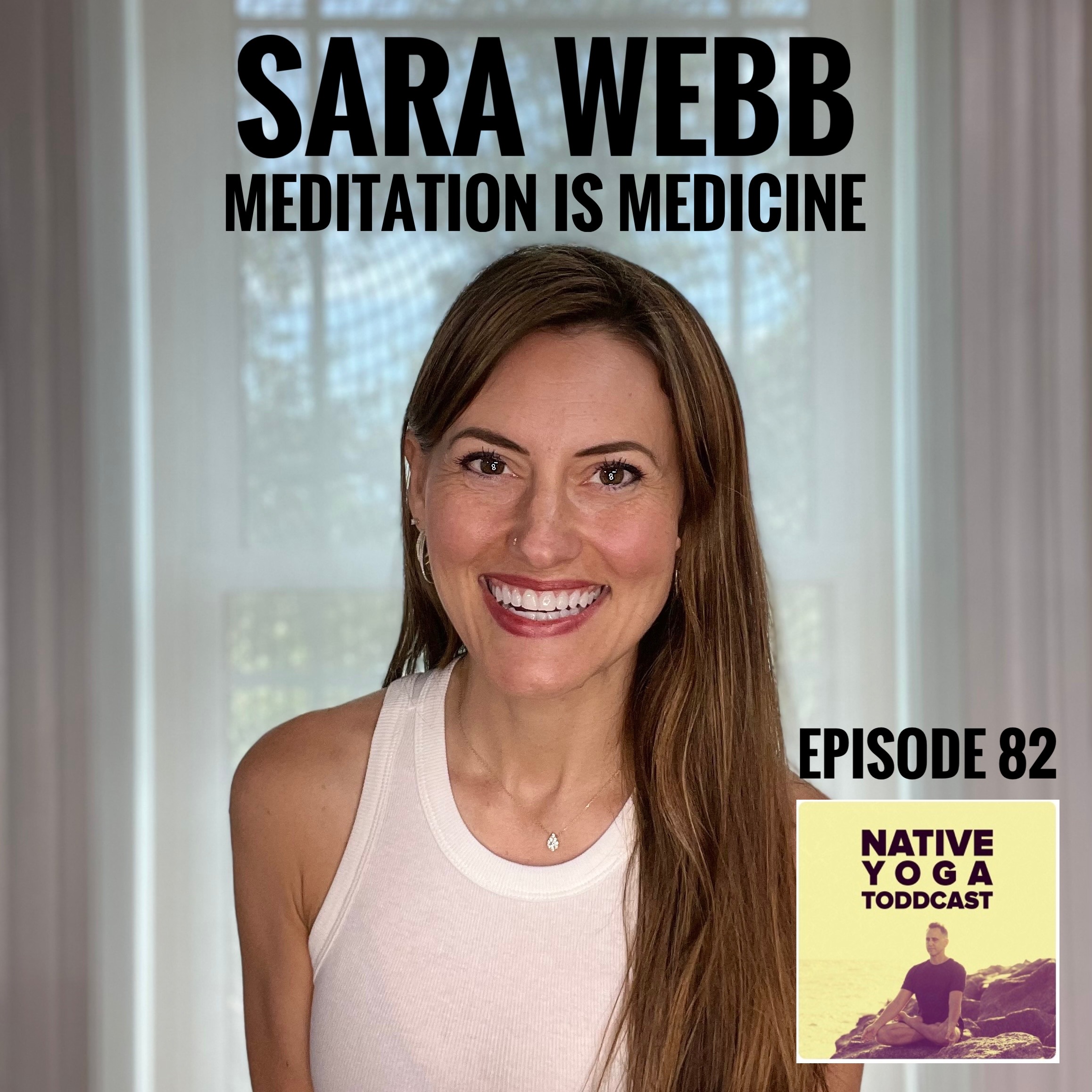
Sara Webb – Meditation is Medicine

Engage your listening senses with this conversation I had the pleasure of having with Sara Webb. Sara Webb is an author, inspirational speaker, and meditation healer empowering seekers to go from stress to success. Her life mission is to inspire people to access the power within themselves by teaching pocket-sized meditation techniques to improve daily happiness so people can bring the best versions of themselves to their own lives.

Visit Sara’s website at www.sarawebbsays.com
Check out Sara’s new book here: Amazon – Balboa Press – Barnes & Noble

Listen to the full conversation for free here.

During this conversation we discussed:

  • the importance of daily meditation
  • her passion for public speaking in the corporate environment
  • how to build trust after being harmed
  • how Sara has been able to recover from little “t” and BIG “T” trauma in her life
  • the role recovery has played in her healing journey
  • her books and her writing process
  • the importance of yoga practice in her life

And so MUCH more!

Remember to visit Sara’s website at www.sarawebbsays.com
Also don’t forget to check out Sara’s new book here: Amazon – Balboa Press – Barnes & Noble

Below is an excerpt form the conversation I had with Sara.

Todd McLaughlin

What is an example of a public speaking event that you’ve done recently.

Sara Webb

I’ve done all manner of things. I do a lot of corporate events, working directly with business owners and managers in order to help their staff deal with stress. I mean, a lot of times, we don’t realize the great power that we have with our breath. 

If we can realize that when we’re in that fight or flight mode, that we’re not breathing properly, we’re not breathing from the belly. That’s a physiological, ancient physiology that we have carried over from when we were hunters and gatherers. You know, this autonomic nervous system that we have breeds for us, and beats our hearts and controls our sweat glands and salivary glands and blinking. But when the sympathetic nervous system is activated, that’s what we typically call the “fight or flight.” We begin chest breathing from the upper part of our chest, which is really great if we need to actually fight or flee. 

But when it’s traffic and deadlines, and our bosses and our spouses and our kids, it can really build up and flood our blood with cortisol. We’ve heard some about that, and people are now pushing pills to get rid of cortisol when really, if we could just get in touch with what’s going on in our bodies, and learn how to belly breathe we can fix this problem. This is such an easy, portable, free way to tap into what’s going on in our bodies. And then people can learn how to process stress and actually ground themselves in where they are, especially in the workplace. 

We have to work around people who maybe aren’t our favorite people. And so I do a lot of corporate trainings during the week. My wife is a dentist and so I got started doing that at her corporate gatherings. I do conferences and private conferences. I’ve done sweet 16 parties. I mean, I’ve spoken at sober retreats, you name it, I’ve done it. And I really just enjoy interacting with people in that way. Where they always come away and they say, wow, I really think I learned something new. I think that there’s a couple of simple facts that most people don’t understand about meditation. 

Because as I mentioned, that’s my real passion. I kind of trick people into learning about meditation by talking about stress, because meditation is that wonderful way for us to get rid of our stress. And I am just such a seeker, I wanted to know, why is it that meditation works. And I’ll give you a couple of facts….. all around us at every single moment, it doesn’t matter if we’re on top of the hill, or in a busy street the scientists have calculated that we have access to about several billions of bits of data. And the human brain is pretty amazing and can process around 11 million bits per second. But we’re only conscious of between 40 and 50 of the 11 million bits per second that our brains and our bodies have access to. So I did the math there, that means we’re conscious of .04% of everything that’s actually being processed by our brains and our bodies. And 99.96% of everything that’s available to us is being processed by our subconscious. 

Now we have five senses. And we have 11 million sensory receptors, the 10 million or so of the sensory receptors are dedicated to one sense, our eye site. So if you want to access to 99.96% of information that’s already inside of you shut off access to 10 million of the 11 million sensory receptors, ie. close your eyes and go inside. That’s where the magic is, that’s where the subconscious can begin to bubble up. 

Because we’re literally getting into the brainwaves where our subconscious lives, if we only stay in beta and beta is stressed, then we’re not going to ever be able to have access to that. The only time during waking hours when we drop into that subconscious state, which is the theta wave in between alpha and delta, which is where most meditation is. Deep sleep is theta. 

When some people are stressed, they like to drive, or they like to go and work on something that is repetitive. That’s because when we drop into repetitive things our subconscious is in control because you don’t have to think about it anymore. That allows the subconscious to bubble up, but our eyes are still open. And so think about how much more powerful it is to actually close the eyes, and then go inside.

Todd McLaughlin

Yeah, good point. That’s interesting. Can you give me an example or an idea of when you decided or felt that you wanted to heal the trauma that you had experienced? Was there some sort of catalyst that I mean, I’m guessing that there probably was something inside that said, “Okay, I realized something has happened. But I’d prefer just not to look at it.” What was the catalyst that helped you to turn that corner and feel like you wanted to be brave and process and heal and go through the therapy to come out the other side?

Sara Webb

Great question. I mean, I’ve always known about what happened. It’s just that I repressed it, I told my sister I did not go to the police, I barely told anyone much less dealt with it myself. When I began to get sober, which started in the end of 2018, I didn’t actually succeed with continuous sobriety until the end of 2019. So it took me a little over a year, almost a year and a half to actually be sober, and then an event would happen and we have this in the general collective that like, alcohol can be used to de-stress, which is an absolute lie. It actually causes stress in the body. So it took me a little while, but once I started playing with sobriety and had bouts of sobriety, I realized most poignantly that I needed alcohol in order to be intimate with my now ex husband. And I knew what even though I was gay, through college and a little bit after college, I called myself bisexual, and I only dated women, but I repressed that because I wanted to have a baby and I knew that my very strict Southern Baptist parents would not accept me for who I am. And to this day, they do not accept me for who I am. So in answer to your question, yeah, when when we get sober a lot of people deal with anger that is kind of unexplained. They’re just not really sure why, but it’s because we have been repressing by drinking. And then we have no outlet to numb with. I didn’t have that initially. 

But what I did have was when I got re-married, and we started blending households, because I have a biological child, she has two you know, that’s, that’s no joke. And I started noticing that my go to response was anger, which, and I put out a reel on this recently, you know, usually anger is, is not actually a primary emotion, it’s a secondary emotion. And it indicates that there’s hurt underneath either sadness or fear usually. 

So I started seeing a transpersonal interpersonal hypnotherapist in order to deal with the anger. And that’s when memory surfaced. And I was able to deal with them in a really beautiful way. It wasn’t immediate, and it certainly wasn’t easy. But healing requires injury and healing hurt. The result is always worth it.

Todd McLaughlin

Wow. Well, I appreciate you being so honest and sharing your story. That’s incredible. I think it’s empowering, because I know that there’s obviously a lot of us who probably have experienced trauma. Well, I guess, like you said, there’s the “big T” and the “little t.” So would you say that everybody has had some sort of “little t” trauma? Like, for example, someone made fun of us on the playground? A million or two different things that have happened could have happened. How many of us have experienced the “big T” trauma? What do you think the percentages are? I mean, like half the world, a third of the world, one in 100? Because I just wonder that sometimes it seems like I don’t know that anybody could get through life without having some type of “big T” experience. But maybe that’s because if I do have experience, then I think well, maybe probably everyone has. Perhaps it’s a smaller minority a smaller group of people that have. Do you have any insights into that?

Sara Webb

I wish I had the statistics! I’m definitely going to look it up. But even if we just look at, like, reports of sexual trauma with women, it’s one in three. And I didn’t report and I know a lot of other people who didn’t. So if you just look at that, it’s a high percentage. And and let’s not diminish that “little T” trauma. 

Because it’s all relative, and vibrationally, if we just look at it. So everything that happens in our lives before the development of the prefrontal cortex would start around the age of 10. So everything from pretty much ages, like four to eight is when our brains are in that meditative state, we haven’t gone up into beta. Around the age of 10, is when we really fully start to inhabit beta. 

Everything before that our brains take in as beliefs, basic beliefs about how the world is so for somebody like me, I saw people drinking, I grew up outside of New Orleans. I mean, drinking is just what people do. And I’m sure that’s for a lot of the world, you know, it’s just it’s very common. And so one of the beliefs that I had is that alcohol is safe. And if you have a “little T” trauma, “big T” trauma, some uncle that habitually made fun of you, a person on the playground who did something that could be seen as traumatic when it’s done, even once or twice, we can carry that vibration that belief with us into our adulthood and continue to attract those things into our lives. Because it’s something that we need to heal.

So it doesn’t matter if it’s seemingly small, it might be perpetuating itself as to a lack of abundance in our lives or a thinking that no one likes us. Then that can continue to play out in the workplace. And, you know, social groups, it doesn’t matter where it is. Because we’re basically here to heal.

Thanks for reading this blog post from this podcast episode. Check out: 👇
Native Yoga Teacher Training – In Studio and Livestream – for info delivered to your email click this link here: https://info.nativeyogacenter.com/native-yoga-teacher-training-2023/

https://info.nativeyogacenter.com/native-yoga-teacher-training-2023/

New Student Livestream Special ~ Try 2 Weeks of Free Unlimited Livestream Yoga Classes  at Native Yoga Center. Sign into the classes you would like to take and you will receive an email 30 minutes prior to join on Zoom. The class is recorded and uploaded to nativeyogaonline.com ~ Click Here to join.

New Student FREE 30 Minute Yoga Meet & Greet ~ Are you new to Native Yoga Center and have questions that you would like us to address? Whether you are coming to In Studio, Livestream or Online Recorded Classes we offer a one time complimentary 30 minute zoom meeting to answer any questions you may have. Schedule a time that is convenient for you. Click Here

Native Yoga website: nativeyogacenter.com
Online Yoga Class Library: nativeyogaonline.com
Thai Massage info: palmbeachthaimassage.com
Native Yoga Blog: toddasanayoga.com
Instagram: @nativeyoga
YouTube channel: Native Yoga Center

Listen to the podcast here on our Podcast website: Native Yoga Toddcast

Please email special requests and feedback to info@nativeyogacenter.com
Please share this episode with your friends, rate & review and join us next time.