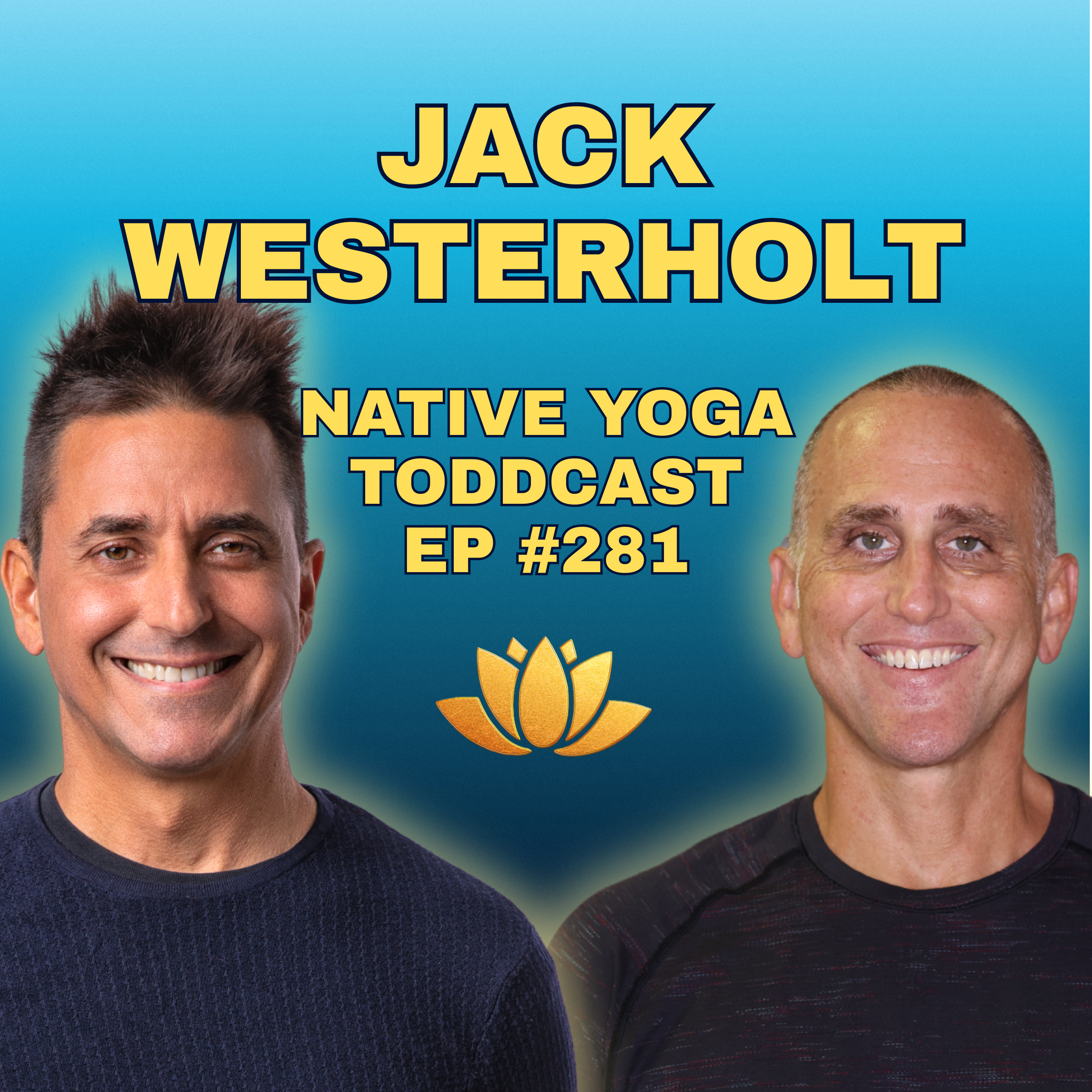
Jack Westerholt on Bhagavad Gita, Bhakti Yoga, Yamas & Holistic Practice

Listen to Toddcast with Jack for FREE here

Jack Westerholt is a dedicated yoga practitioner and instructor based in Dallas, Texas. As a passionate advocate for a holistic yoga practice inclusive of asanas, pranayamas, and meditation, Jack integrates a wealth of knowledge from spiritual texts such as the Bhagavad Gita into his teachings. He has been influenced by renowned teachers like Dharma Mittra and explores various facets of yoga, including Bhakti and Jnana paths. Jack is also actively involved in the vibrant yoga community at YogaZama and brings a rich background in marketing and advertising into his approach to yoga education.

Visit Jack here: https://www.instagram.com/jackwesterholt/

Key Takeaways:

  • Integration of Spiritual Study: Jack underscores the role of texts like the Bhagavad Gita in deepening yoga practice, emphasizing the Jnana path or the knowledge path.
  • Holistic Practice Approach: Incorporating meditation, pranayama, and asanas, Jack maintains that a balanced practice enhances spiritual and personal growth.
  • Power of Devotion: Jack discusses Bhakti Yoga and the joy of serving the divine within and outside us, highlighting how devotion removes ego and expectations.
  • Teaching Challenges and Rewards: The episode explores the diverse experiences and growth gleaned from teaching yoga in different environments, emphasizing authenticity and patience.
  • Personal Growth and Reflection: Jack shares insights on self-improvement, focusing on the continuous journey of being better each day while letting past challenges serve as lessons.

Self-Study and the Comprehensive Practice of Yoga

In the world of yoga, the seamless integration of self-study, or “Swadhyaya,” with Asana and Pranayama practice is a common pursuit. Jack Westerholt brings this theme to light by sharing his personal journey. He states, “I find it inspiring to read the words from spiritual texts like the Gita every day.” For Jack, self-study is not just an academic pursuit but a spiritual one that complements his physical yoga practice.

While some might argue that merely reading about yoga doesn’t offer the full experience, Jack and Todd highlight the profound effect of immersing oneself in these texts. Todd supports this by saying, “I think there’s something to be said for scholastic study.” This merging of scholastic study with physical exertion can bridge the gap between intellectual knowledge and spiritual wisdom.

Jack’s approach represents a holistic style of yoga, where the Gita, works by Sivananda, and the teachings of notable figures like AC Bhaktivedanta Swami are pivotal. He explains that while the words of these texts are enlightening, translating them into practical life through meditation and Asana completes the cycle. This interplay between study and practice ensures a comprehensive yoga path, guiding us to deeper self-awareness and understanding.

Encountering Challenges Through Yoga

The dialogue takes a turn towards navigating life’s inevitable difficulties using yoga as a guide. A significant point discussed is turning challenges into growth opportunities, as embodied by Jack’s approach to meditation and daily obstacles. Through his narration about transforming adversities, Jack reveals an insight: “If a memory comes up, watch it like you’re watching it in a movie theater.”

This illustrates a profound technique: observing challenges with dispassion and objectivity. Todd complements this philosophy, reflecting on the thoughts of luminaries like Ram Dass, who famously saw his stroke not as a setback but a gift. These interpretations align with the yogic view of life as a continuous path for self-improvement, where each hurdle is a potential teacher.

Jack extends this theme to psychic transmission and prayer, advocating their potential in spiritual practice. He asserts the power of thoughts, suggesting, “I absolutely believe in psychic transmission.” Through consistent dedication to these practices, both Jack and Todd illustrate a powerful narrative: yoga, seen holistically, becomes a way to transform personal struggles into advancements on the spiritual plane.

Practicing Yoga as a Holistic Lifestyle

To fully embrace yoga, Jack underscores the necessity of integrating its essence into everyday life. This approach involves practicing the principles of the Yamas and Niyamas or ethical disciplines and observances. He eloquently views them as “guidelines for the yogi to follow,” which play a pivotal role in progressing on the path of yoga.

Jack calls attention to how these principles reflect in our actions, explaining, “I find that reading helps me integrate those practices into my world outside of the yoga mat.” Here, he spells out a practice that goes beyond the physical, advocating for a lifestyle that propagates kindness, contentment, and a sense of service to others.

Moreover, Jack and Todd discuss the humble beginnings as a yoga teacher, highlighting how teaching even a single student in a session can match the impact of larger classes. Jack reflects, “Everything is happening perfectly,” emphasizing that teaching yoga, regardless of class size, is about authenticity and genuine connection. This principle of teaching parallels the universal reach of yogic wisdom, which can foster growth, not just on the yoga mat but within every fiber of daily life.

Jack’s exploration into the integration of mantra and meditation in yoga classes further emphasizes the depth of a holistic practice. By introducing aspects such as mantra recitation and extended Shavasana in his sessions, he aligns practice with tradition, illustrating yoga’s potential to resonate with students on multiple levels.

Beyond conventional yoga practice, the discussion touched lightly on yoga retreats and vacations as opportunities to deepen one’s practice in unfamiliar settings. This deviation from routine can inject new life into one’s practice, a notion supported by Jack, who sees retreats as “a fantastic way to practice yoga.”

In all, Jack Westerholt’s conversation with Todd draws a vivid picture of yoga as not only a physical or theoretical discipline but as a way of life. Through reflection on significant teachings and practical experiences, it becomes clear that yoga offers intricate pathways to navigate technology-driven, fast-paced modern life while cultivating an inner peace that transcends the boundaries of the yoga mat.

Check out: 👇
8IN8 Ashtanga Yoga for Beginners Course Online– Learn 8 Limb Yoga in 8 Days – Get FREE coupon code for a limited time only (Regular price $88) https://info.nativeyogacenter.com/8in8-ashtanga-yoga-for-beginners-8-limbs-in-8-days/

Practice with Native Yoga Online – New classes EVERY day – Use Code FIRSTMONTHFREE https://nativeyogacenter.teachable.com/p/today-s-community-class

Subscribe to Native Yoga Center and view this podcast on Youtube.

Thank you Bryce Allyn for the show tunes. Check out Bryce’s website: bryceallynband.comand sign up on his newsletter to stay in touch. Listen here to his original music from his bands Boxelder, B-Liminal and Bryce Allyn Band on Spotify.

Please email special requests and feedback to info@nativeyogacenter.com

https://info.nativeyogacenter.com/8in8-ashtanga-yoga-for-beginners-8-limbs-in-8-days

Enjoy new Native Yoga Center classes uploaded everyday on our online learning hub. Use code FIRSTMONTHFREE at checkout. https://nativeyogacenter.teachable.com/p/today-s-community-class

Support the show

Native Yoga website: here
YouTube: here
Instagram: @nativeyoga 
Twitter: @nativeyoga 
Facebook: @nativeyogacenter 
LinkedIn: Todd McLaughlin 
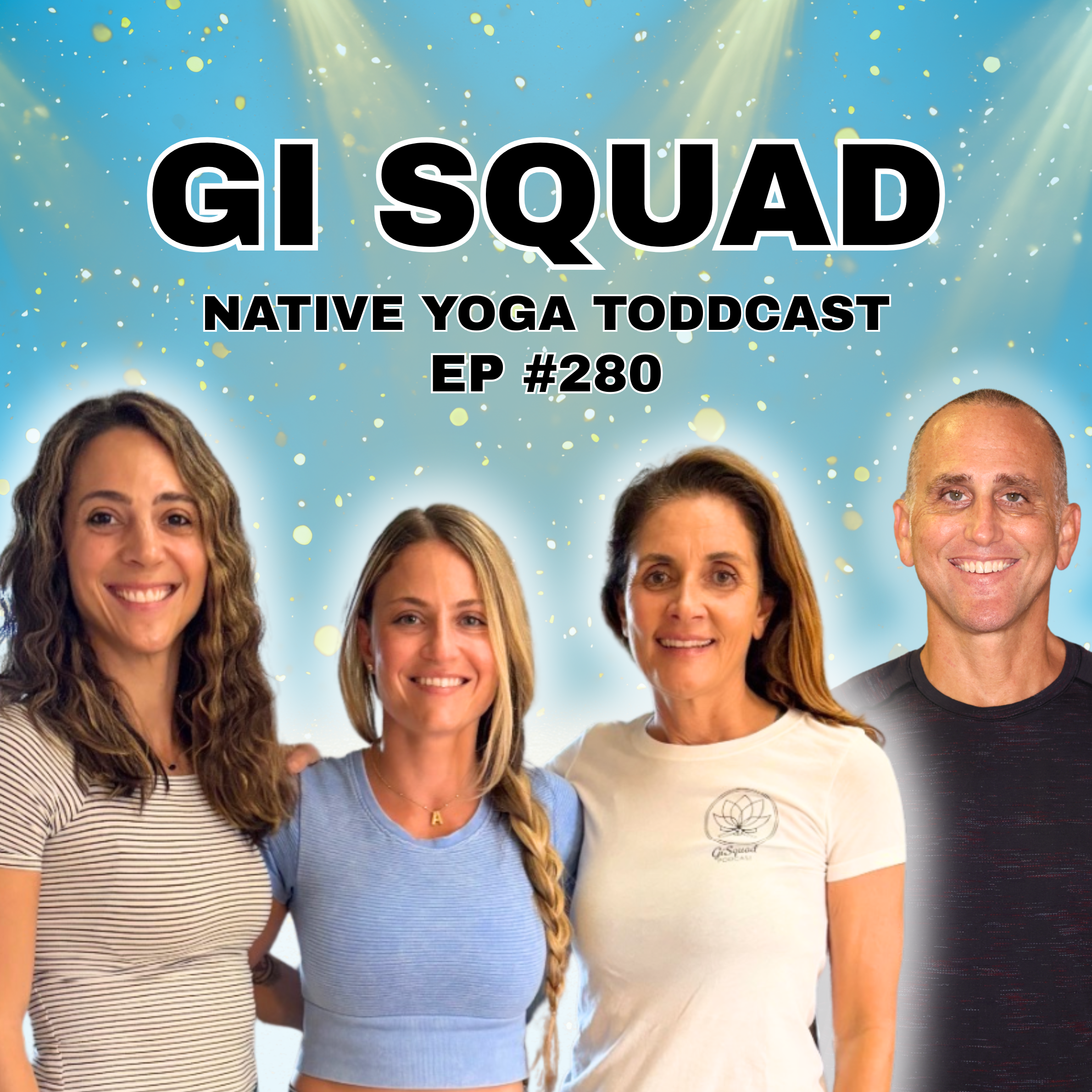
Yoga for Grapplers: Building Strength, Flexibility & Resilience on the Mat

Listen to Toddcast with the Gi Squad for FREE here

In this episode of Native Yoga Toddcast, Todd sits down with Mika Britt, Aurora Stoll, and Nati Eckersley of the Gi Squad Podcast to explore the powerful crossover between yoga and Brazilian Jiu-Jitsu. Together they unpack how these two practices share deep roots in discipline, respect, and community while offering complementary tools for body control, balance, and mental focus.

The conversation highlights the real advantages of cross-training yoga and grappling: improved flexibility and mobility for BJJ, stronger core stability, better injury prevention through clear communication on the mat, and the confidence that comes from consistent practice. The guests also share how the belt system in jiu-jitsu mirrors personal growth, teaching perseverance and resilience that transfer far beyond the gym—especially for women seeking empowerment through self-defense skills.

This episode sets the stage for an upcoming collaborative Yoga for Grapplers class designed to blend the strategic movements of Brazilian Jiu-Jitsu with the strength, flexibility, and recovery benefits of yoga.

Visit the Gi Squad here: https://www.youtube.com/@GiSquadPodcast

From the Mat: Grappling and Yoga as Complimentary Practices

For those not well-versed in martial arts or yoga, the notion that Brazilian jiu-jitsu (BJJ) and yoga might share commonalities could seem incongruent. Yet, the insightful dialogue between Todd McLaughlin and the GI Squad podcast team reveals a compelling intersection of these disciplines. The main crux of this fascinating conversation centers on how the physicality of grappling can find balance through the meditative flow and openness that comes from yoga.

Todd introduces this idea succinctly when he states, “I just want to build a little bit of a bridge between the work, the kind of physical practices that you all are involved in, and see if we can find any sort of similarities between what yoga is and what yoga presents and what grappling presents.” The conversation further unfolds to delineate how practicing yoga can support a grappler’s routine by alleviating the typical stiffness and close body movements associated with BJJ training.

As Aurora Stull aptly puts it, “We’re constantly in this kind of like a ball. We curl into a ball.” With yoga’s emphasis on extending and opening, practitioners of BJJ might find relief and balance through integrating yoga into their regimen. Similarly, Mika Britt shares her experience, “The fact that yoga opens a lot, opens your chest, your heart, and shoulders, it is amazing.”

Building Bridges: Community and Personal Growth

Grappling with controlled aggression and yoga’s emphasis on introspection seem like disparate ends of a spectrum. However, both share an underlying foundation in building community and personal growth. The environment in which one practices significantly influences the experience and the community aspect of both fields cannot be overstated.

Jiu-jitsu, as described by Mika, is “more a combination of other arts together,” demanding both mental acuity and strategic foresight. It thrives in environments where practitioners feel safe, respected, and part of something larger than themselves. Highlighting this sentiment, Todd recalls watching the community-oriented aspect in Brazil, reflected in Mika’s photos that clearly portrayed an “incredible community down there.”

Yoga similarly fosters an inclusive community, welcoming individuals from all paths of life to a collective pause and understanding. It allows people to grow, not in isolation, but amidst a tapestry of shared experiences and challenges. Todd encapsulates this, drawing parallels to his yoga classes: “There’s a camaraderie in the room that you’re talking about.”

Empowerment Through Practice: Women in Jiu-Jitsu

Perhaps one of the standout revelations in this discussion is the empowering role jiu-jitsu plays in women’s lives. It offers more than just physical self-defense techniques—it transforms confidence. Natalie Eckersley articulates this beautifully when recounting her self-defense experience, noting, “It’s given me that empowerment of knowing I can take care of myself and that I need to take care of myself, but I’m capable of it.”

Women in jiu-jitsu often start with the intent of learning self-defense but discover an avenue for profound personal empowerment. Aurora Stull’s story punctuates this realization—facing a potentially threatening situation at a gas station, she describes, “Immediately told my daughter, get in the car. And I said, you need to back away.” Her assertiveness prevented escalation, exemplifying how these practices translate directly to real-world applications for women, offering newfound strength and presence.

The intersection of yoga and jiu-jitsu also fosters this empowerment. Yoga enhances calm and mental clarity, essential components to not just surviving, but thriving in a confrontation. Aurora points to this continued growth, expressing hope for anyone hesitant to try BJJ: “I think anybody and anyone could find something somewhere in it to benefit that would transfer over into your everyday life.”

Reflecting on a Shared Journey

In discovering the complementarities between jiu-jitsu and yoga, we unearth more than just physical benefits. These practices encourage communal resilience and individual empowerment. As Mika Britt urges, “You should, if you never tried jiu-jitsu, maybe you should come for class.”

The themes unearthed in this rich dialogue—synergistic practices, community, and empowerment—remind us of the ever-present capacity for growth in our lives. Whether on the mat in a traditional dojo or a yoga studio, these disciplines offer us tools to explore our own potential, engage with others with empathy and strength, and step confidently into a world of diverse challenges.

Both yoga and jiu-jitsu, though different in many aspects, converge through a shared philosophy: commitment to personal growth, resilience through practice, and fostering an inclusive community that celebrates all stages of the journey.

Check out: 👇
8IN8 Ashtanga Yoga for Beginners Course Online– Learn 8 Limb Yoga in 8 Days – Get FREE coupon code for a limited time only (Regular price $88) https://info.nativeyogacenter.com/8in8-ashtanga-yoga-for-beginners-8-limbs-in-8-days/

Practice with Native Yoga Online – New classes EVERY day – Use Code FIRSTMONTHFREE https://nativeyogacenter.teachable.com/p/today-s-community-class

Subscribe to Native Yoga Center and view this podcast on Youtube.

Thank you Bryce Allyn for the show tunes. Check out Bryce’s website: bryceallynband.comand sign up on his newsletter to stay in touch. Listen here to his original music from his bands Boxelder, B-Liminal and Bryce Allyn Band on Spotify.

Please email special requests and feedback to info@nativeyogacenter.com

https://info.nativeyogacenter.com/8in8-ashtanga-yoga-for-beginners-8-limbs-in-8-days

Support the show

Native Yoga website: here
YouTube: here
Instagram: @nativeyoga 
Twitter: @nativeyoga 
Facebook: @nativeyogacenter 
LinkedIn: Todd McLaughlin 
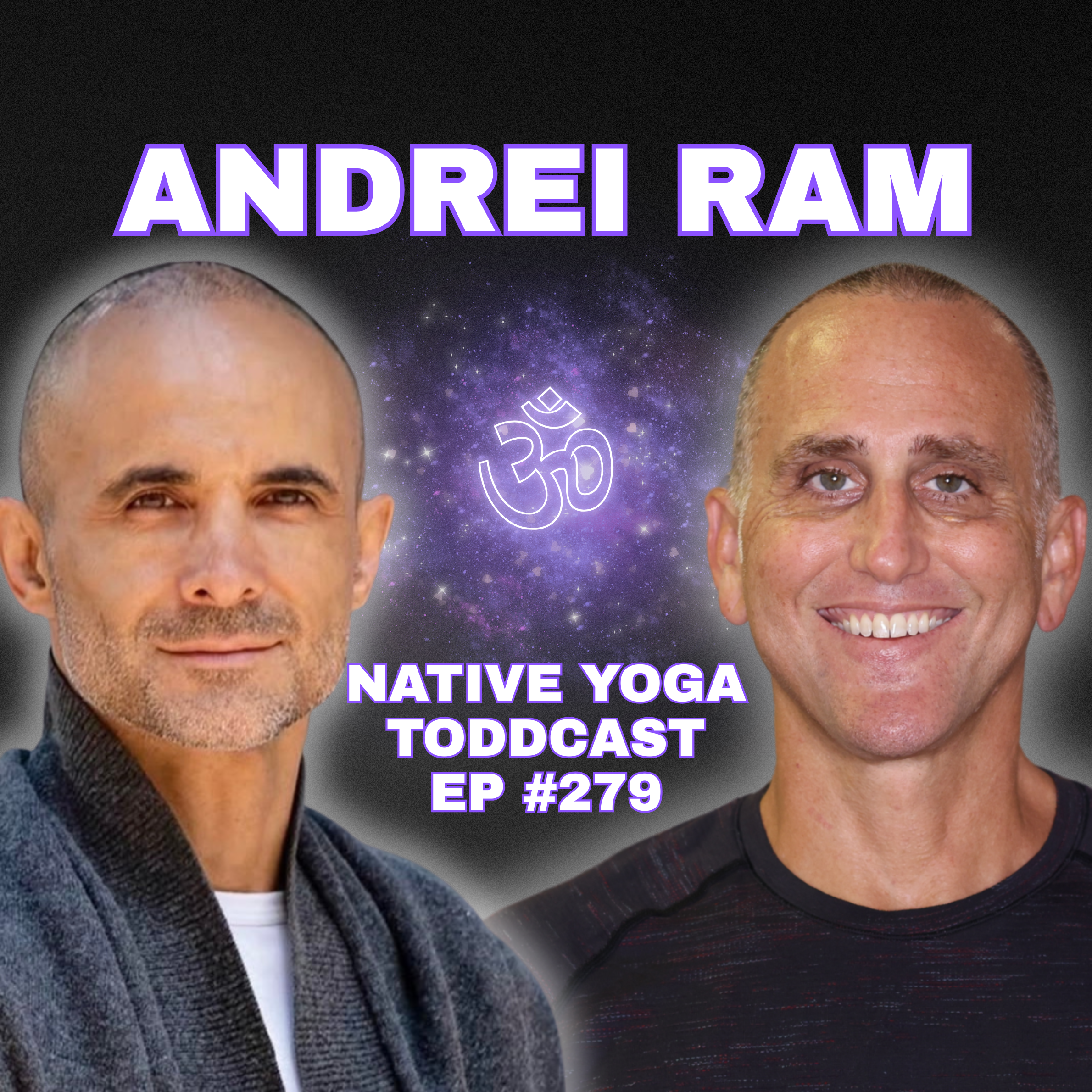
Andrei Ram | The Art of Breathing – Transforming Life Through Prana Nidra

Listen to Toddcast with Andrei for FREE here

Andrei Ram is a distinguished yoga practitioner and instructor with a rich history in both the arts and sciences. He holds a background in contemporary dance and choreography, and has studied biology. His profound journey into yoga was significantly influenced by his experiences with Native American philosophies in Colombia, where he was raised. Andrei has spent more than three decades exploring and teaching yoga, emphasizing pranayama—the art of breathing. He has been deeply influenced by Sri Dharma Mittra and has devoted himself to uncovering the essence of yoga practices and translating eastern philosophies into applicable contemporary wisdom. Andrei is currently based in Rome and is actively promoting a new book titled “Prana Nidra.”

Visit Andrei here: http://innerparadise.org/ & https://prananidra.co/

Key Takeaways:

  • Integration in Yoga: Andrei emphasizes the idea of yoga as a practice that integrates all aspects of life, from breathing to spiritual understanding, based on personal perception and context.
  • Prana Nidra Concept: He introduces “Prana Nidra” as a middle practice, providing crucial rest for the energy systems, which consequently rests the mind and body.
  • Reinterpreting Yama & Niyama: Andrei proposes a shift in understanding core yoga principles—such as seeing Yama as ‘caring’ rather than ‘restriction’, fostering a more nurturing approach.
  • Importance of Conscious Breathing: Highlighting breathing as an art form, Andrei stresses the need for caring consciousness to cultivate prana (life force), impacting a refined and artistic way of living.
  • Spiritual and Practical Coherence: Emphasizing coherence in yoga practice and life, Andrei advocates for the integration of spiritual insights into daily actions and interactions.

Integrating Yoga into Life’s Fabric

Yoga is more than a series of postures or meditative practices. It’s a continuous path and an integrated way of life. Andrei Ram eloquently captures this perspective, stating, “To me, yoga is about finding integrity in life and being able to live life in an integral way with all your capacities and different sides with what we are.” The deeper understanding of yoga goes beyond the physical aspects and draws connections with different realms such as art and science. Unlike the conventional approach, Andrei perceives math and art as interconnected disciplines that reveal the universe’s underlying geometrical patterns and beauty.

Andrei highlights the profound influence of his multicultural upbringing on his perception of yoga. Born in Massachusetts and raised in Colombia, his exposure to Native American culture enriched his understanding, ultimately leading him to view yoga as a continuous thread woven throughout his life. This comprehensive view invites a more holistic integration of yoga, emphasizing its applicability beyond the mat. He puts forth, “If you are able to refine the way you breathe, then you’re able to refine the way you live.” Thus, yoga emerges as a unifying force that harmonizes the diverse facets of life into a coherent whole.

Re-defining Yama and Niyama: A Modern Interpretation

Core to Andrei’s discussion is the reframing of traditional yogic principles, particularly Yama and Niyama. Traditionally translated as restraint and observance, Andrei presents Yama as ‘caring’ and Niyama as ‘amplification.’ This significant reinterpretation lays the groundwork for a more practical and intuitive application of yoga’s philosophical underpinnings.

The idea of non-friction, introduced by Andrei, is a testament to this paradigm shift. He explains, “Moving in life without friction… that’s how you move from conflict into synergy, from separation into integration.” This perspective emphasizes the importance of reducing conflict and fostering harmony, both internally and externally. Similarly, Satya, traditionally understood as truthfulness, is redefined as authenticity—presenting an opportunity for individuals to engage with the world from a place of genuineness and honesty.

Such reinterpretations not only demystify the ancient principles but also make them more accessible, encouraging practitioners to adopt these values in their everyday interactions and decisions. By fostering non-friction and authenticity, yoga becomes a means of refining one’s life and aligning with a higher consciousness.

The Art of Resting: Prana Nidra and Its Significance

Rest and rejuvenation are vital components of Andrei’s philosophy. Prana Nidra, a concept that he explores and expands upon, signifies a conscious state of resting the energetic system. Positioned between Yoga Nidra (soul resting) and Nidra (body resting), Prana Nidra provides a practical approach to achieving profound rest. “If you are able to rest your energy, then of course, automatically your physical body rests, the mind rests,” Andrei explains.

In a world driven by productivity and constant motion, the art of resting is an often-overlooked necessity. Andrei posits that by learning to rest consciously and reducing friction within our own energy systems, individuals can access a deeper state of renewal and alignment with the divine. This process creates the space needed for beauty and happiness to flourish within one’s life.

Thus, Prana Nidra serves as a crucial tool for fostering inner peace and balance, acting as a gateway to a more refined, harmonious existence. By valuing rest as a fundamental component of the yoga practice, practitioners can cultivate a more profound connection to both their inner selves and the universe.

The dialogue with Andrei Ram unveils new dimensions within the yoga practice, challenging preconceived notions and inviting a more nuanced interpretation of its principles. Through the interconnectedness of life, art, and spirit, Andrei encourages practitioners to embrace authenticity, integration, and rest as pathways toward enhancing one’s life and experiencing the divine. By embodying these teachings in everyday activities, individuals can navigate the complexities of modern living with clarity and grace, fostering a shared vision of unity, peace, and understanding.

Check out: 👇
8IN8 Ashtanga Yoga for Beginners Course Online– Learn 8 Limb Yoga in 8 Days – Get FREE coupon code for a limited time only (Regular price $88) https://info.nativeyogacenter.com/8in8-ashtanga-yoga-for-beginners-8-limbs-in-8-days/

Practice with Native Yoga Online – New classes EVERY day – Use Code FIRSTMONTHFREE https://nativeyogacenter.teachable.com/p/today-s-community-class

Subscribe to Native Yoga Center and view this podcast on Youtube.

Thank you Bryce Allyn for the show tunes. Check out Bryce’s website: bryceallynband.comand sign up on his newsletter to stay in touch. Listen here to his original music from his bands Boxelder, B-Liminal and Bryce Allyn Band on Spotify.

Please email special requests and feedback to info@nativeyogacenter.com

https://info.nativeyogacenter.com/8in8-ashtanga-yoga-for-beginners-8-limbs-in-8-days

Enjoy new Native Yoga Center classes uploaded everyday on our online learning hub. Use code FIRSTMONTHFREE at checkout. https://nativeyogacenter.teachable.com/p/today-s-community-class

Support the show

Native Yoga website: here
YouTube: here
Instagram: @nativeyoga 
Twitter: @nativeyoga 
Facebook: @nativeyogacenter 
LinkedIn: Todd McLaughlin 
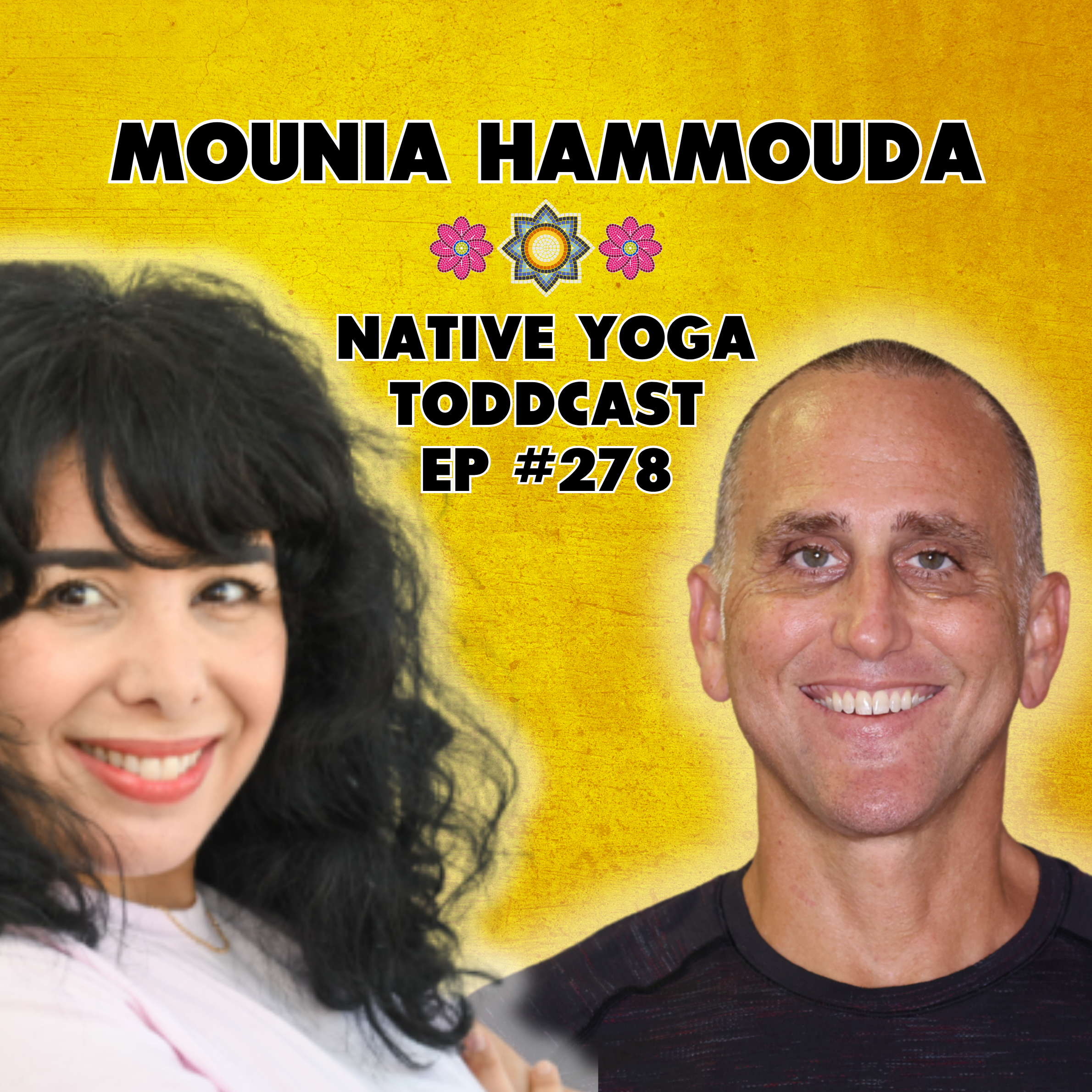
Mounia Hammouda | From Corporate Executive to Yoga & Spiritual Transformation in Morocco

Listen to Toddcast with Mounia for FREE here

Mounia Hammouda is a Moroccan yoga instructor and the founder of Shidomind Yoga, based in Casablanca. With a rich background in high-level executive roles across multinationals in Morocco, New York, Canada, and West Africa, Mounia transitioned from the corporate world to follow her passion for yoga. She possesses deep expertise in yoga philosophy, having studied extensively in India at the esteemed Yoga Institute in Mumbai. Mounia is an advocate for personal transformation, emphasizing the balance between mind, body, and spirit, and she is dedicated to promoting the depth and authenticity of yoga beyond its commercialized image.

Visit Mounia: https://shidomindyoga.com/

Key Takeaways:

  • Mounia Hammouda transitioned from a high-stress corporate life to teaching yoga, seeking deeper meaning and personal growth.
  • She believes yoga is a profound tool for cultivating spiritual and personal transformation, beyond its commercialized perception as a physical activity.
  • Morocco’s vibrant culture and rich history have played an influential role in Mounia’s spiritual exploration and teachings.
  • Yoga has deepened Mounia’s faith in God, providing her with greater insight and comfort in her spirituality.
  • Shidomind Yoga emphasizes the mental and spiritual benefits of yoga, fostering a holistic approach to personal development.

The Life-Altering Power of Yoga: A Spiritual and Personal Revolution

In a world that often equates success with a relentless chase for status and wealth, an authentic return to self-discovery and inner peace can feel revolutionary. Mounia Hammouda, a yoga teacher from Morocco, shares insights from her transformation through yoga, emphasizing the journey from career-centric existence to a life of balanced self-awareness and spirituality.

Reflecting on the transition from treating yoga as a mere physical exercise to embracing it as a tool for profound mental and spiritual growth, Mounia remarked, “I was executing roles, missions like a soldier… without at any moment in my life settling, stopping, taking a pose and questioning myself.” This revelation unveils yoga’s underestimated role as a bridge to deeper self-awareness and a richer spiritual existence.

For Mounia, the transformational journey didn’t happen overnight. Instead, it was a process of evolving understanding, deeply connected to her study of yoga’s philosophical roots. Her story underscores the vast potential of yoga to revolutionize personal and spiritual lives by offering a fresh lens through which to view one’s relationship with work, family, and the broader universe. As she eloquently puts it, “Yoga is such an amazing transformational tool and philosophy and system.”

Spiritual Roots: Yoga’s Impact on Religious Beliefs

The dialogue with Mounia revealed an unexpected, albeit significant, realization—yoga’s influence on her relationship with personal faith. As a Muslim, she found that yoga not only deepened her understanding of spirituality but also enhanced her faith in God. “Yoga has straightened my faith in God and has brought me much closer to my religion,” she confided, highlighting yoga’s universal capacity to enrich existing belief systems without contradiction.

Despite the commercialized facade that yoga often bears, its authentic practice beckons deeper spiritual connectivity for practitioners. Mounia’s practice and teaching integrate these underexplored aspects, focusing not only on physical poses but on the holistic mind-body-spirit harmony. Interestingly, in contexts where yoga could be misconstrued as opposing religious doctrines, Mounia finds it aligning and reinforcing her spiritual beliefs. Her embracing of yoga as a complementary addition to faith offers an enlightening perspective, especially in cultures where this harmony might be questioned.

Prioritizing Self-Care: The Rediscovered Importance of Time

Central to Mounia’s transformation is her realignment of priorities, notably making space for self-care—a shift too often ignored in the race for professional success. She reflects on the vital nature of personal time and awareness with an emphasis on how these foster wisdom and balance. “Time, when used in consciousness, leads to wisdom,” Mounia states, underscoring the importance of intentional living.

As someone who once prioritized corporate advancement over personal fulfillment, Mounia’s story brings to light the often-unrecognized role of comprehensive self-care in achieving holistic well-being. By stepping back and focusing on her own needs, she not only improved her relationships but also discovered a renewed sense of purpose. This component of self-love is vital, as Mounia urges others to respect their energies and nurture their internal worlds, warning against relegating personal well-being to the last priority.

By seeing the outcome of neglect as harsh on both individual mental health and relationships, Mounia sets a compelling example for how yoga can serve as a catalyst for this necessary shift. As life’s demands threaten to usurp one’s essence, yoga stands as a clarion call back to wholeness, reminding us of the importance of placing individual needs at the forefront.

Mounia’s narrative richly illustrates a truth many may resonate with: the intertwining paths of yoga, spirituality, and personal self-realization offer powerful tools for unlocking life-changing perspectives. By engaging with yoga not merely as a physical discipline, but as an integrative practice affecting all dimensions of life, individuals can access significant internal shifts. Mounia’s vision of yoga as “the seed that we nourish to reach a balanced mindset for personal growth” speaks to the potential for expansive personal evolution. Her journey reflects a broader opportunity for transformation for those willing to explore yoga’s deeper truths—shedding light on the intersection between disciplined practice, spiritual depth, and genuine self-appreciation.

Check out: 👇
8IN8 Ashtanga Yoga for Beginners Course Online– Learn 8 Limb Yoga in 8 Days – Get FREE coupon code for a limited time only (Regular price $88) https://info.nativeyogacenter.com/8in8-ashtanga-yoga-for-beginners-8-limbs-in-8-days/

Practice with Native Yoga Online – New classes EVERY day – Use Code FIRSTMONTHFREE https://nativeyogacenter.teachable.com/p/today-s-community-class

Subscribe to Native Yoga Center and view this podcast on Youtube.

Thank you Bryce Allyn for the show tunes. Check out Bryce’s website: bryceallynband.comand sign up on his newsletter to stay in touch. Listen here to his original music from his bands Boxelder, B-Liminal and Bryce Allyn Band on Spotify.

Please email special requests and feedback to info@nativeyogacenter.com

https://info.nativeyogacenter.com/8in8-ashtanga-yoga-for-beginners-8-limbs-in-8-days

Support the show

Native Yoga website: here
YouTube: here
Instagram: @nativeyoga 
Twitter: @nativeyoga 
Facebook: @nativeyogacenter 
LinkedIn: Todd McLaughlin 
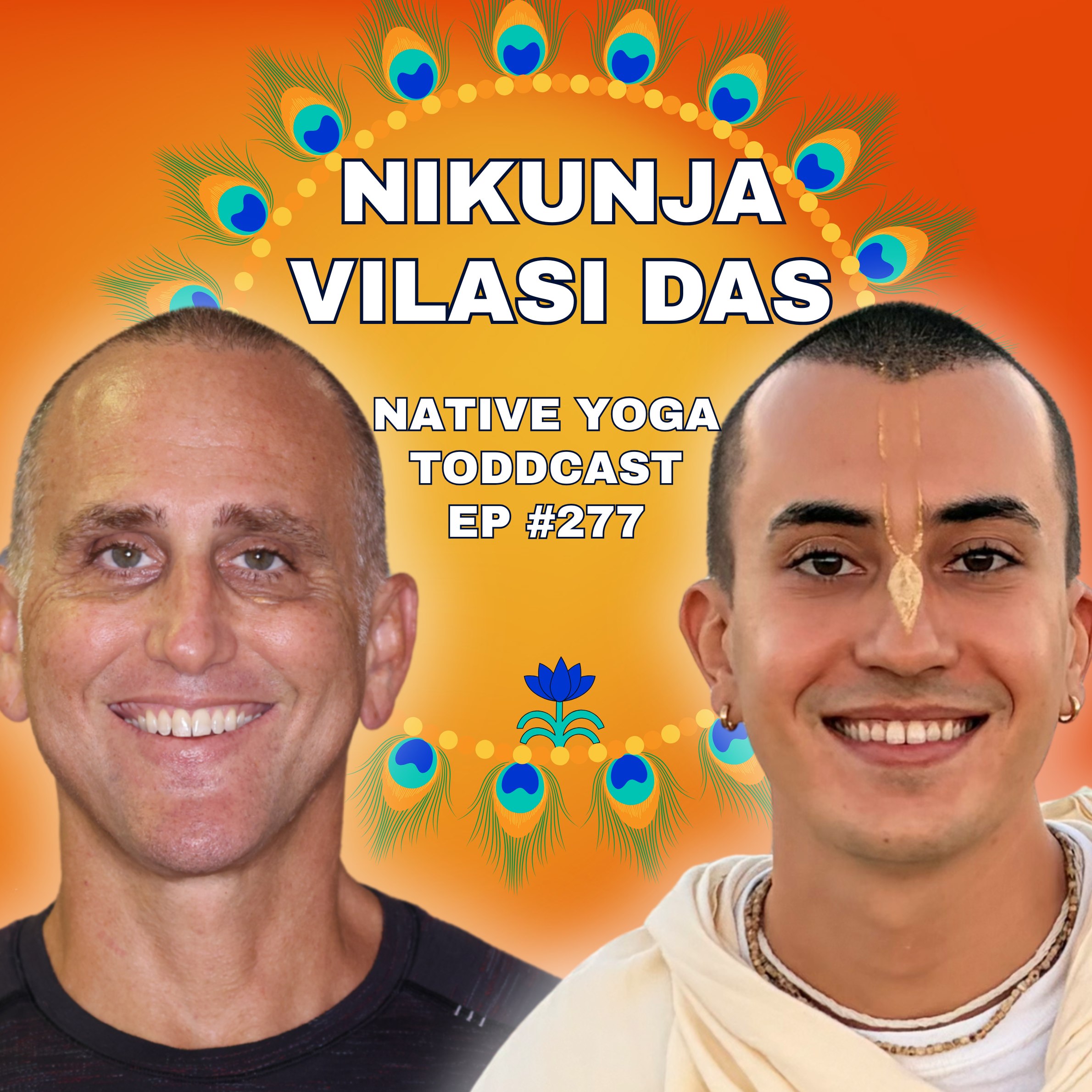
Nikunja Vilasi Das | The Heart of Yoga – Bridging Hatha Motion into Bhakti Devotion

Listen to Toddcast with Nikunja for FREE here

Nikunja Vilasi Das is a dedicated practitioner and teacher in the field of Bhakti Yoga. Born in California, he was introduced to yoga at an early age, with his mother being a yoga teacher. He currently resides in Miami, Florida, where he serves at the Sacred Vedic Arts Bhakti Yoga center. Nikunja Vilasi Das is committed to spreading the teachings of Bhakti Yoga, integrating his diverse experiences in various yoga disciplines, including Hatharaja Yoga and Kriya Yoga. He holds reverence for his spiritual masters and strives to bridge traditional yoga practices with contemporary life.

Visit Nico: https://www.nicoyoga108.com/

Key Takeaways:

  • Bhakti Yoga is centered around the devotion to Krishna and the practice of chanting the Hare Krishna Maha Mantra as a means of purification and self-realization.
  • Nikunja Vilasi Das argues that while modern yoga practices can become overly materialistic, true growth involves spiritual discipline and guidance from a realized master.
  • Understanding the role of Bhakti Yoga as the most accessible form of yoga today, particularly due to its simplicity and ability to foster a personal relationship with the divine.
  • The Hare Krishna Maha Mantra serves as a direct connection to divine consciousness, engaging all senses in spiritual practice and offering a profound experience of inner peace.
  • Being around and learning from a realized spiritual guide like Sri Dharma Mittra can profoundly impact one’s spiritual evolution, promoting authenticity in practice versus performative stereotypes.

Embracing Bhakti Yoga in a Modern World: A Journey into Divine Connection

In the vibrant landscape of modern yoga, where styles and philosophies abound, the voice of Bhakti Yoga stands distinct in its simplicity and depth. Bhakti Yoga, the yoga of love and devotion, transcends the superficial layers often associated with contemporary practices. This deep engagement offers individuals not just techniques, but a profound inner transformation that aligns the heart and mind with a higher spiritual reality. Through insightful dialogue, as reflected in the conversation between yoga teacher and podcast host, Todd McLaughlin, and Bhakti Yoga practitioner, Nikunja Vilasi Das, we explore the path of Bhakti Yoga and its unique place within today’s spiritual journey.

The Simplicity and Depth of Bhakti Yoga

Bhakti Yoga is celebrated for its simplicity and accessibility. Unlike other yoga paths that demand rigorous physical discipline or esoteric knowledge, Bhakti Yoga centers on a singular, powerful act—chanting. Nikunja highlights that the Hare Krishna Mahamantra serves as a direct bridge to divine consciousness. As he notes, “Chanting is the beginning of everything,” emphasizing the profound impact of this vocal and vibrational practice.

The practice invites individuals to engage all senses through their spiritual journey. By listening to the mantra, practitioners experience a form of intimacy with the divine. Nikunja explains, “The Lord is non-different than his names. He is there when you’re chanting.” This auditory engagement reflects a unique feedback loop, enhancing spiritual concentration and devotion. The mantra becomes a living presence, knitting together the practitioner’s external and internal world in divine harmony.

Navigating Modern Yoga Culture with Ancient Wisdom

In a world dominated by consumerism and superficial wellness trends, Bhakti Yoga offers an anchor to authenticity. The dialogue reflects a stark contrast between contemporary yoga’s commodification and the humble yet profound tenets of Bhakti. Nikunja shares his observations, mentioning, “The modern yoga culture, to be honest, is just so bogus,” pointing to the pervasive distractions that dilute yoga’s essence.

One compelling aspect of Bhakti is its inclusivity and focus on internal transformation over external achievement. Regardless of one’s external circumstances or social engagements, the practice remains centered on serving the divine. Nikunja’s experiences, particularly how bhakti weaves into daily life and social interactions, reinforce the theme of yoga as a deeply personal journey. By integrating timeless principles into public spaces and living a life of service, practitioners like Nikunja embody yoga’s true spirit, challenging the superficial paradigms often seen today.

The Transformative Power of Devotion and Service

The transcript underscores service as an integral part of the Bhakti path. Service to the divine and community defines a bhakta’s role, transcending mere ritual to become a way of life. Nikunja elucidates how living and serving within the temple structure amplifies his spiritual journey. He says, “I’m here to answer any questions you have and really be your eternal well-wisher,” placing service at the heart of his practice.

This focus on service fosters a connectivity that transcends religious boundaries, resonating with universal human aspirations for love and understanding. As Nikunja interacts with varied audiences through teaching and community involvement, he illustrates how the acts of service and devotion naturally extend beyond personal practice to influence broader society. The paradigm shift from self-centric to service-centric yoga redefines success as spiritual alignment and contribution, rather than personal accolades.

An Invitation to Inner Exploration

At its core, Bhakti Yoga invites individuals into a journey of spontaneous and sincere connection with the divine, integrating heart and spirit beyond the confines of the material world. Practitioners like Nikunja exemplify its transformative power, not only living the principles but also reaching out to enlighten and uplift others. By integrating ancient wisdom with contemporary relevance, Bhakti Yoga provides a profound blueprint for those seeking depth and authenticity in their spiritual path, reminding us all that, ultimately, it is not the complexity of the practice that brings fulfillment, but the purity of o

Check out: 👇
8IN8 Ashtanga Yoga for Beginners Course Online– Learn 8 Limb Yoga in 8 Days – Get FREE coupon code for a limited time only (Regular price $88) https://info.nativeyogacenter.com/8in8-ashtanga-yoga-for-beginners-8-limbs-in-8-days/

Practice with Native Yoga Online – New classes EVERY day – Use Code FIRSTMONTHFREE https://nativeyogacenter.teachable.com/p/today-s-community-class

Subscribe to Native Yoga Center and view this podcast on Youtube.

Thank you Bryce Allyn for the show tunes. Check out Bryce’s website: bryceallynband.comand sign up on his newsletter to stay in touch. Listen here to his original music from his bands Boxelder, B-Liminal and Bryce Allyn Band on Spotify.

Please email special requests and feedback to info@nativeyogacenter.com

https://info.nativeyogacenter.com/8in8-ashtanga-yoga-for-beginners-8-limbs-in-8-days

Support the show

Native Yoga website: here
YouTube: here
Instagram: @nativeyoga 
Twitter: @nativeyoga 
Facebook: @nativeyogacenter 
LinkedIn: Todd McLaughlin