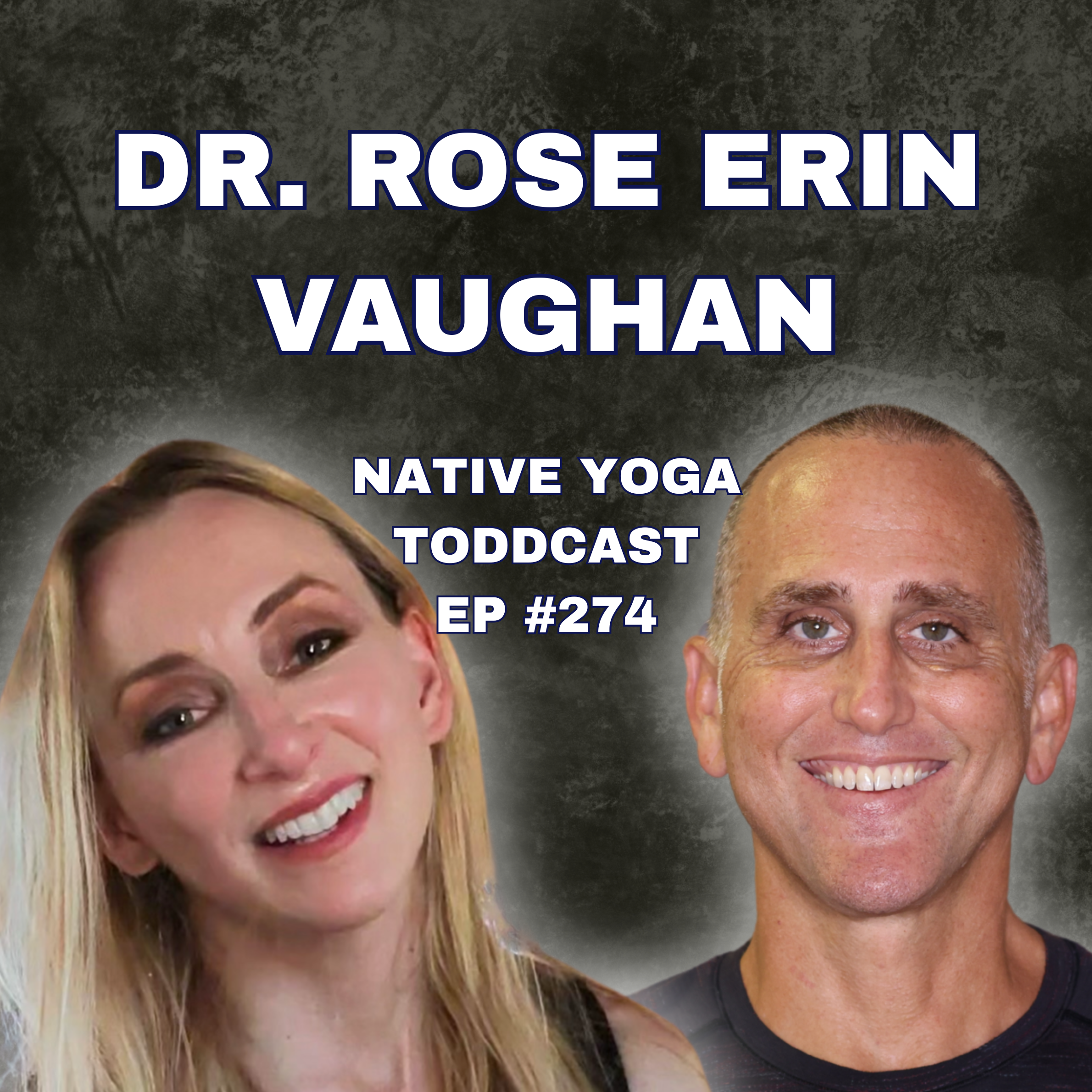
Dr. Rose Erin Vaughan | Meridian Yoga – Merging Acupuncture, Energy Channels & Ancient Wisdom

Listen to Toddcast with Dr. Rose Erin for FREE here

Dr. Rose Erin Vaughan is a prominent and multi-disciplined expert in the fields of acupuncture, yoga, and meridian therapy. With a robust background in Ashtanga and Dharma yoga, massage therapy, and acupuncture, Dr. Vaughan has masterfully integrated her deep knowledge of anatomy and energy channels into her practice and teachings. She is particularly renowned for her work in merging the practices of yoga and acupuncture, resulting in a unique therapeutic discipline focused on Yin yoga teacher trainings and advanced acupressure techniques. Dr. Vaughan is also a celebrated author of several books, including “Science of Self” and her detailed guides on energy lines and meridians.

Visit Dr. Rose Erin: https://www.scienceofselfytt.com/

Key Takeaways:

  • Dr. Vaughan’s development of the Meridian Yoga technique integrates acupuncture and yoga for a holistic therapeutic approach.
  • The importance of experiential learning in understanding and feeling energy channels like meridians and chakras is emphasized throughout Dr. Vaughan’s teachings.
  • Acupuncture and yoga practices should focus on seeking root causes of physical imbalance rather than merely addressing pain.
  • Incorporating ancient practices, such as those from the “Hatha Yoga Pradipika,” into modern yoga sequences enhances meditative and energetic experiences.
  • Regular mantra practice, like the Gayatri Mantra, can refine the practitioner’s focus and intention, grounding their yoga and meditation sessions.

The Fusion of Yoga and Acupuncture: A Synergistic Approach

As we dive into the insightful conversation between Todd and Dr. Rose Erin Vaughan, it’s clear that the melding of yoga and acupuncture is more than a novel approach; it’s a transformative practice. Dr. Vaughan brilliantly synthesizes these ancient traditions to create what can only be described as a holistic healing experience. Her method is grounded in personal experience, as she recounts how her skepticism faded as she deeply engaged with both yoga and acupuncture.

“When I did the first teacher training, I wasn’t quite clear if anyone was going to understand it or feel what I had felt. But they did, and it really inspired me to keep developing it and to make the book,” Dr. Vaughan reflects. This underscores the transformative potential of combining these disciplines. It’s not just about physical healing; it’s about understanding the interconnected anatomy and energy pathways within our bodies.

Dr. Vaughan’s narrative reveals that facilitating this blend requires more than just technical knowledge — it demands a personal and experiential relationship with the body’s energy systems. It’s not merely about memorizing meridian points; it involves feeling these pathways, turning theoretical lines into authentic, livable experiences.

Experiential Learning as a Cornerstone

Experiential learning is a cornerstone of Dr. Vaughan’s teaching practices, and this profound focus is woven throughout her narrative. By training her students to not only understand but also feel the energy lines and meridians, she fosters an authentic learning environment that transcends traditional educational methods.

Dr. Vaughan describes this experiential necessity succinctly: “I want to get people to really try to feel something instead of following the instructions.” This idea challenges the conventional approach, encouraging students to trust their intuition and bodily sensations rather than relying solely on textbook definitions. By doing so, students are empowered to discover their own interpretations and experiences, thereby personalizing their learning journey.

The transformative power of this approach is echoed in her reflections on her expansive reading and understanding of human anatomy: “I have done some cadaver dissection which I found really, really, really fascinating… you can appreciate more the complexity of the body down to the microscopic level.” The implication is clear – direct interaction deepens understanding in ways that static study cannot replicate.

Embracing Adaptation and Evolution in Practice

As the dialogue progresses, Dr. Vaughan speaks to the nuance and evolution of traditional yoga practices, integrating them into contemporary therapeutic techniques. Her commitment to education and ongoing learning is palpable, as she champions a dynamic, evolving practice that honors both historical roots and modern innovation.

Reflecting on her evolving practice, Dr. Vaughan shares, “I’ve been working with that for a few years… I think it’s really good now.” She alludes to the Master Sequence, a blend of learned traditional poses integrated with new insights from her years of practice and study. Her efforts signify a respect for tradition alongside a willingness to explore new methodologies.

The adaptation of traditional teachings, such as those found in the Hatha Yoga Pradipika, to align with contemporary needs highlights a larger trend in holistic health practices. Dr. Vaughan’s teaching methodologies encourage embracing both depth and fluidity, enabling practitioners to explore the energies within themselves and the larger world.

Moving Forward: Insight and Evolution

Throughout her conversation with Todd, Dr. Rose Erin Vaughan conveys a message of growth, integration, and profound insight. From the systematic blend of yoga and acupuncture to the prioritization of experiential learning, her approach is both comprehensive and deeply personal. Her teachings advocate for a harmony that honors historical lineage while expanding into new therapeutic horizons.

Her insights remind us that true healing stems not only from an understanding of techniques but also from a commitment to personal exploration and mindful evolution. For Dr. Vaughan, the practice of yoga coupled with the holistic power of acupuncture is less about mastering forms and more about developing an intuitive awareness that guides both healer and student toward greater self-knowledge and overall wellness.

In a world characterized by constant change, her philosophy offers a refreshing embrace of tradition while charting new paths for those eager to deepen their understanding of both body and mind. With each student she inspires and each teaching she evolves, Dr. Vaughan’s contributions pave the way for a future where these ancient practices continue to illuminate the path to health and happiness.

Check out: 👇
8IN8 Ashtanga Yoga for Beginners Course Online– Learn 8 Limb Yoga in 8 Days – Get FREE coupon code for a limited time only (Regular price $88) https://info.nativeyogacenter.com/8in8-ashtanga-yoga-for-beginners-8-limbs-in-8-days/

Practice with Native Yoga Online – New classes EVERY day – Use Code FIRSTMONTHFREE https://nativeyogacenter.teachable.com/p/today-s-community-class

Subscribe to Native Yoga Center and view this podcast on Youtube.

Thank you Bryce Allyn for the show tunes. Check out Bryce’s website: bryceallynband.comand sign up on his newsletter to stay in touch. Listen here to his original music from his bands Boxelder, B-Liminal and Bryce Allyn Band on Spotify.

Please email special requests and feedback to info@nativeyogacenter.com

https://info.nativeyogacenter.com/8in8-ashtanga-yoga-for-beginners-8-limbs-in-8-days

Support the show

Native Yoga website: here
YouTube: here
Instagram: @nativeyoga 
Twitter: @nativeyoga 
Facebook: @nativeyogacenter 
LinkedIn: Todd McLaughlin 
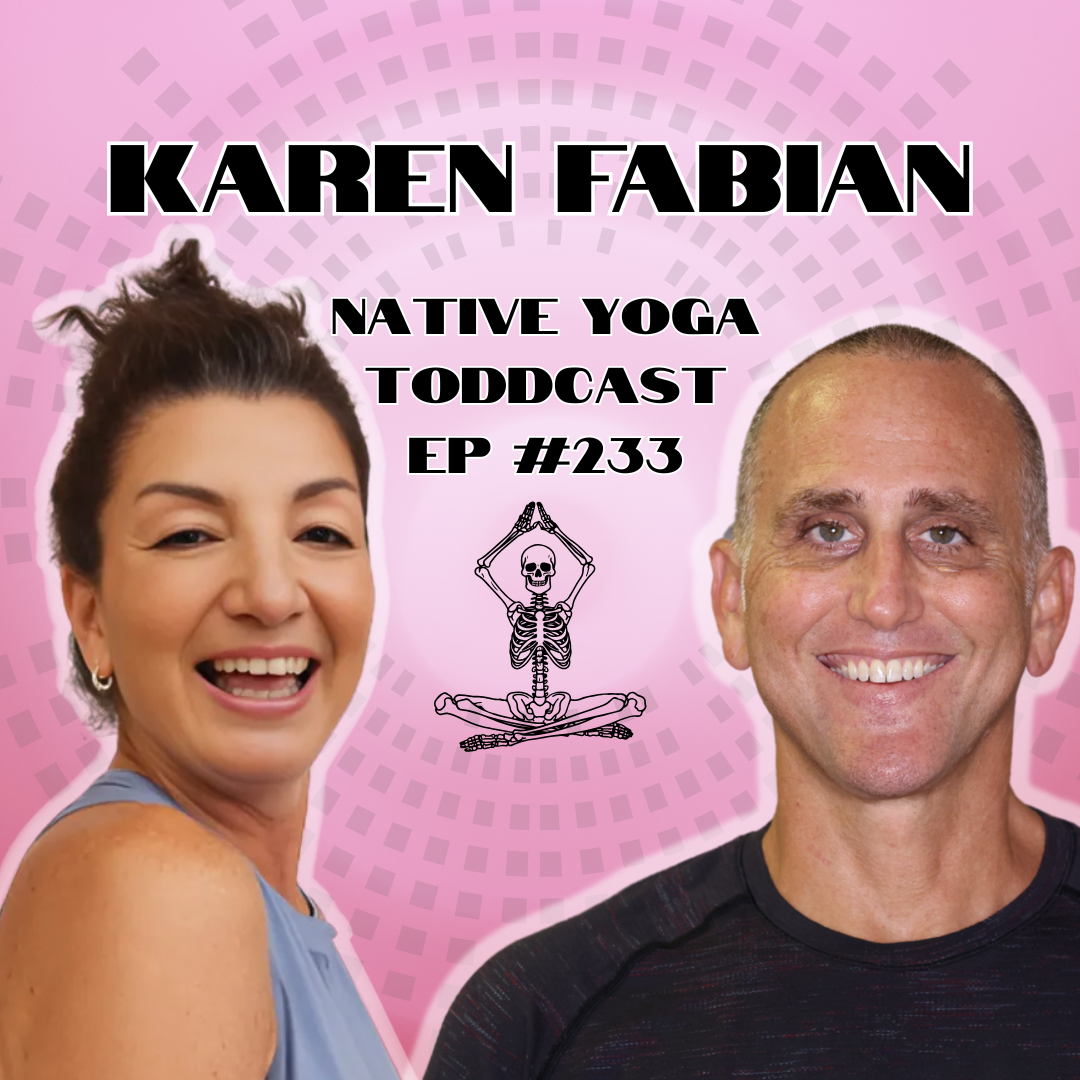
Karen Fabian ~ From Pain to Power: Mastering Yoga with Anatomy Insight

Listen to Podcast with Karen for FREE here

Karen Fabian is the founder of Bare Bones Yoga, a business blending her extensive background in anatomy with the practice and teaching of yoga. Initially pursuing a career in physical therapy, Karen shifted her focus to rehabilitation and counseling, gaining valuable experience in healthcare settings, particularly with traumatic injuries. Today, Karen leads successful yoga anatomy programs and works to empower yoga teachers with the knowledge and confidence needed to excel in their practice.

Visit Karen: https://barebonesyoga.com/

Key Takeaways:

  • Yoga teachers often carry a narrative that they need to ensure “safe” classes, but it’s crucial to focus on clear communication and observation to foster better teaching practices.
  • Karen Fabian stresses the significance of understanding anatomy as an essential part of teaching yoga effectively, offering innovative programs to aid in this educational pursuit.
  • Mindset plays a critical role in how teachers experience teaching yoga. Confidence can be significantly enhanced through practical strategies and a willingness to try new approaches.
  • Fabian’s transformative work aims to shift the perspective that accumulating hours is the sole pathway to competence, promoting a more holistic understanding of teaching.

Understanding Anatomy: The Path to Empowered Yoga Instruction

Yoga instruction has long been enveloped in tradition and structured learning. Yet Karen Fabian of Bare Bones Yoga is reshaping the dialogue by emphasizing the importance of anatomy and personal growth through mindset shifts. In an enlightening conversation, she shared her belief in an approach tailored more towards understanding than adhering to rigid hours and certifications. Karen mentions, “I help yoga teachers really build their confidence and skill… it’s really hard to feel confident if you don’t understand anatomy.”

A deep dive into anatomy provides instructors with the tools to deliver safe and accessible yoga classes. With a framework that includes action, alignment, anatomy, and somatic cues, instructors can navigate complex sequences and ensure students grasp both postural and physiological benefits. Fabian’s methodology emphasizes, “Say the cue and see what they do,” which invites a nuanced approach to observing and responding to the dynamics within a class. This connection—between instructor and student—serves to foster a robust and responsive teaching environment.

Applying a keen anatomical lens does more than just improve safety; it empowers instructors to confidently adapt their approaches to the individual needs of their students. Across varied yoga experiences, true confidence is built on a seamless blend of knowledge and communication, ensuring students feel supported and instructors operate with assuredness.

Shifting Focus from Hours to Holistic Growth

Many yoga instructors wrestle with the narrative that extensive hours equate to competency. However, Fabian challenges this notion, advocating for a mindset-focused pathway to professional growth. “Confidence is not often found in the number of hours you train,” she asserts, highlighting that teachers should focus on mindset and experimentation to transcend perceived limitations.

Traditional models, often hierarchical and rooted in guru-style authority, can stymie a teacher’s personal growth and critical thinking. The interview echoes how these entrenched beliefs may lead instructors to underestimate their agency, often feeling compelled to adhere to prescribed teaching methods rather than exploring their unique paths. As detailed in the interview, the evolution from a fixed mindset of seeking endless study to adopting a practice of experimentation can be profound. Teachers can say, “Would you be willing to try something different?” and open themselves to fresh perspectives, revealing unimagined possibilities in their instruction approach.

This shift encompasses a significant departure from yoga’s conventional paradigms, encouraging instructors to embrace their individuality and intuitive capabilities. Such changes can lead to a richer, more personally satisfying teaching journey, aligned with modern pedagogical standards while respecting traditions’ essence.

Breaking Through with Experimentation and Mindset

Mindset shifts can significantly impact an instructor’s journey and experience within the yoga teaching community. In the interview, the power of belief and a willingness to embrace experimentation is brought to light repeatedly. “When something’s not working, experiment with something different,” Fabian advises, underscoring the transformative potential of stepping out of one’s comfort zone.

This experimentation ethos directly ties into the broader themes explored in the conversation. For example, instructors’ conventional approach to complex poses can be reframed through anatomy-fueled knowledge, minimizing associated injuries and encouraging safer practices. Similarly, experimenting with sequencing, and considering feedback rather than assuming students’ expectations, opens new avenues for creative teaching.

By adopting new methods, yoga teachers can dismantle beliefs rooted in fear and inadequacy, embracing the momentum of change and innovative practices. Experimentation not only expands instructors’ technical repertoire but fosters resilience, cultivating a deeper affinity for growth and adaptation.

Reimagining Yoga Instruction for Future Generations

The conversation with Karen Fabian underscores the necessity of nurturing holistic practices centered around confidence, mindset, and anatomy. Emphasizing the need to transcend prescribed learning methodologies, Fabian highlights a future where yoga instructors readily embrace experimentation, prioritizing intentionality over rote repetition.

Her narrative calls us to envisage a vibrant yoga landscape defined by informed, confident educators who value their agency as highly as their qualifications. As she summarizes, “Your confidence is not often found in the number of hours you train.” This perspective encourages educators to explore practices that align with their unique values and intuition, fostering environments rich with both tradition and innovation. The continued evolution of yoga teaching hinges on instructors like Fabian, who bravely redefine educational norms and inspire their peers towards authentic, impactful teaching.

By reshaping their paradigms and diving into both anatomy and mindset mastery, instructors stand poised to shape the future of yoga—a future characterized by passionate, well-rounded educators prepared for everything the mat and their students may present.

Thanks for listening to this episode. Check out: 👇
8IN8 Ashtanga Yoga for Beginners Course Online– Learn 8 Limb Yoga in 8 Days – Get FREE coupon code for a limited time only (Regular price $88) https://info.nativeyogacenter.com/8in8-ashtanga-yoga-for-beginners-8-limbs-in-8-days/

Practice with Native Yoga Online – New classes EVERY day – Use Code FIRSTMONTHFREE https://nativeyogacenter.teachable.com/p/today-s-community-class

Subscribe to Native Yoga Center and view this podcast on Youtube.

Thank you Bryce Allyn for the show tunes. Check out Bryce’s website: bryceallynband.comand sign up on his newsletter to stay in touch. Listen here to his original music from his bands Boxelder, B-Liminal and Bryce Allyn Band on Spotify.

Please email special requests and feedback to info@nativeyogacenter.com

https://info.nativeyogacenter.com/8in8-ashtanga-yoga-for-beginners-8-limbs-in-8-days/

Support the show

Native Yoga website: here
YouTube: here
Instagram: @nativeyoga 
Twitter: @nativeyoga 
Facebook: @nativeyogacenter 
LinkedIn: Todd McLaughlin

Jeppe Tengbjerg ~ Building International Bridges Through Bodywork

Listen to Toddcast with Jeppe for FREE Here

Jeppe Tengbjerg is the founder and CEO of the International Massage Association and is recognized for his pioneering role in establishing the World Championship in Massage. Born and raised in Denmark, he was inspired by his grandmother, who was a massage therapist and reflexologist. Jeppe has a strong background in professional sports, being a former professional football player and coach, and a business educator before fully dedicating himself to the world of massage therapy. His passion for massage and education is reflected in his work, including the creation of international teaching programs and organizing global massage events.

Visit Jeppe at: https://tengbjerg.dk/

and: https://worldchampionship-massage.com/

Key Takeaways:

  • The World Championship in Massage serves as a platform to inspire, educate, and connect massage therapists worldwide.
  • Thai massage is highlighted for its international acclaim, particularly after being recognized by UNESCO as a cultural heritage.
  • Importance of understanding body mechanics, or ergonomics, in providing sustainable therapy without exerting strain or causing injury to therapists.
  • The role of international teaching programs in fostering a higher standard of massage education across different regions.

Global Unification through the Art of Massage: Insights into the International Massage Association and Its Impact

Celebrating the Art of Massage on a Global Stage

In the world of wellness and therapeutic practices, the concept of massage competitions might initially seem unusual. Yet, as discussed by Jeppe Tengbjerg, the visionary behind the International Massage Association, these events serve as vital platforms for showcasing and evolving the art of massage on an international scale. The IMA’s approach intertwines education, innovation, and global community, transforming how massage therapy is perceived and practiced worldwide.

The journey began when Tengbjerg recognized a need for inspiration within the massage community. “There must be many others in the world like me who need inspiration,” he noted, referencing how practicing in isolation can lead therapists to seek new ideas and connections (0:05:32). The IMA’s competitions, workshops, and international collaborations aim to bridge these gaps by uniting therapists from diverse backgrounds to learn, share, and celebrate their craft collectively.

Innovation and Ethics in Massage Therapy

Redefining Massage Competitions: Balancing Innovation with Ethics

With massage competitions, one might question how a subjective experience can be judged objectively. Tengbjerg addresses this by emphasizing categories like techniques, ergonomics, flow, and client contact, which provide a structured evaluation framework. He elaborates, “It’s about techniques, whether they are relevant and the combination of techniques, whether they are good…the giver as well as the receiver.” (0:12:16). These criteria ensure that the evaluation process remains fair and focused on meaningful skills.

The addition of innovative techniques and categories further enhances the competition’s value. As Tengbjerg mentions, “Innovation can be important…adapting, combining different methods…it’s possible and can also make sense.” (0:15:21). The freestyle category encourages therapists to push boundaries while maintaining best practices, fostering a space where creativity meets professionalism. However, ethical considerations, such as avoiding a focus on sexuality in promotional content, are equally crucial to uphold the industry’s integrity.

Building Bridges Across Cultures

International Community and Cross-Cultural Exchange

At its core, the IMA’s work exemplifies the power of international connections in strengthening local practices. Through the lens of massage therapy, an industry often practiced in solitude, Tengbjerg has facilitated a global network that transcends cultural and geographic boundaries. He reflects, “We actually try to teach what the trend is and also teach what we have been taught or learned from all the amazing therapists.” (0:35:16).

By organizing workshops and events in various countries, the IMA inspires therapists to explore new methods and build enduring professional relationships. Tengbjerg highlights the potential impact of such exchanges, “It’s about making competition…you are promoting your clinic or promoting a massage method or an event you do.” (0:25:00). These initiatives not only enhance personal careers but also contribute to the broader discourse on wellness and bodywork globally.

Promoting Inclusivity and Continuous Learning

Ethical Teaching and Ongoing Education for Massage Therapists

For Jeppe Tengbjerg and the IMA, promoting massage therapy goes beyond competition; it’s about continual professional development. Recognizing gaps in educational structures, especially in Europe, the organization has pioneered international teacher classes to elevate instructional standards. Tengbjerg notes, “We have now educated more than 150 teachers around the world…which is nice.” (0:44:48).

These programs strive to bridge disparities in teaching quality, ensuring that massage instructors are equipped to convey their expertise effectively. Emphasizing the need for adaptability and comprehension in pedagogy, Tengbjerg clarifies, “You and I, everybody learns in different ways, and we need skills to teach this way.” (0:44:07). This commitment to spreading knowledge helps maintain high standards across diverse markets and augments the skill level within the industry.

The dialogue from the podcast underlines the transformative power of collaboration and innovation in massage therapy. By showcasing the art on an international stage, embracing both tradition and modernity, the IMA paves the way for a united and enriched global community. Such efforts are pivotal as the wellness industry continues to evolve, fostering an environment where learning is as dynamic and holistic as the therapies themselves.

Thanks for listening to this episode. Check out: 👇
8IN8 Ashtanga Yoga for Beginners Course Online– Learn 8 Limb Yoga in 8 Days – Get FREE coupon code for a limited time only (Regular price $88) https://info.nativeyogacenter.com/8in8-ashtanga-yoga-for-beginners-8-limbs-in-8-days/

Practice with Native Yoga Online – New classes EVERY day – Use Code FIRSTMONTHFREE https://nativeyogacenter.teachable.com/p/today-s-community-class

Subscribe to Native Yoga Center and view this podcast on Youtube.

Thank you Bryce Allyn for the show tunes. Check out Bryce’s website: bryceallynband.comand sign up on his newsletter to stay in touch. Listen here to his original music from his bands Boxelder, B-Liminal and Bryce Allyn Band on Spotify.

Please email special requests and feedback to info@nativeyogacenter.com

https://info.nativeyogacenter.com/8in8-ashtanga-yoga-for-beginners-8-limbs-in-8-days/

Support the show

Native Yoga website: here
YouTube: here
Instagram: @nativeyoga 
Twitter: @nativeyoga 
Facebook: @nativeyogacenter 
LinkedIn: Todd McLaughlin