Pranidhi Varshney – Cultivating Community and Challenging Hierarchies in Yoga Practice

Pranidhi Varshney, owner of Yoga Shala West, discusses her journey in the world of yoga and the importance of cultivating community. She shares her experience of running a yoga studio during the pandemic and the challenges she faced. Pranidhi also emphasizes the need for inclusivity in the Ashtanga yoga community and the importance of leading with love in all aspects of life.

Key Takeaways:

  • Cultivating community is a vital aspect of running a yoga studio.
  • The financial aspect of running a studio can be challenging, but having an open fee structure can make the space more inclusive.
  • It is important to let go of attachment to specific postures or benchmarks and focus on the internal experience of the practice.
  • Leading with love and embracing diversity can create a more inclusive and supportive yoga community.

Visit Pranidhi on her website: http://yogashalawest.com/
Follow her on FB: https://www.facebook.com/yogashalawest/
Subscribe to her on YouTube: https://www.youtube.com/user/PranidhiV
Follow on IG: https://www.instagram.com/yogashalawest/

Title: Leading with Love: Cultivating Community and Inclusivity in Yoga

Introduction

In the world of yoga, creating a sense of community and inclusivity is essential. As a yoga teacher and studio owner, my goal has always been to foster an environment that welcomes individuals from all walks of life and provides a space for them to practice and grow. In this thought leadership article, we will explore the importance of leading with love and how it can contribute to the development of a supportive and inclusive yoga community. Drawing from a recent conversation with Pranidhi Varshney, a renowned yoga teacher and community cultivator, we will delve into the practical aspects of creating an inclusive space, the challenges faced, and the potential impact of such an approach.

Theme 1: The Power of Community

One of the primary roles of a yoga teacher and studio owner is to cultivate a sense of community. This involves creating an environment where individuals feel welcomed, supported, and connected. Pranidhi Varshney, in her interview, emphasized the significance of community building and how it has become her life’s mission. She believes that the pandemic has highlighted the importance of human connection and the need for spaces where people can come together and support one another. By fostering a sense of community, yoga studios can create a safe and nurturing space for individuals to explore their practice and develop meaningful relationships.

Pranidhi’s approach to community building involves actively engaging with her students and seeking their input and feedback. She believes in the power of collaboration and making decisions collectively. During the pandemic, she reached out to her core group of students to discuss the future of the studio and sought their input on important decisions. This collaborative approach not only made her students feel valued and heard but also created a sense of ownership and investment in the community. By involving the community in decision-making processes, yoga studios can create a sense of belonging and foster a supportive and inclusive environment.

Theme 2: Financial Inclusivity

Financial inclusivity is another crucial aspect of creating an inclusive yoga community. Pranidhi shared her experience of implementing a unique fee structure at her studio, which allows students to contribute based on their financial capacity. Instead of having a fixed price, she offers a suggested range and allows students to choose their monthly contribution. This approach ensures that yoga is accessible to individuals from all socio-economic backgrounds and eliminates financial barriers that may prevent people from practicing. By adopting a flexible fee structure, yoga studios can create a more inclusive space and attract a diverse range of students.

Theme 3: Redefining Success and Progress

In the traditional Ashtanga yoga system, there is often an emphasis on achieving specific aesthetic benchmarks and progressing through the series. However, Pranidhi challenges this approach and advocates for a more individualized and inclusive perspective on success and progress. She believes that the focus should be on the internal experience of the practice, rather than external appearances. By shifting the focus to breath, body awareness, and overall well-being, yoga practitioners can cultivate a more sustainable and inclusive practice. This approach allows individuals to honor their unique bodies and abilities, and encourages modifications and variations that support their individual needs.

Theme 4: Embracing Diversity and Challenging Assumptions

Diversity is a key aspect of creating an inclusive yoga community. Pranidhi highlights the importance of embracing diversity not only in terms of race and ethnicity but also in terms of life experiences and perspectives. By opening up the practice space to individuals from different backgrounds and socio-economic statuses, yoga studios can foster a rich and diverse community. This diversity brings a range of perspectives and experiences, enriching the practice and creating opportunities for growth and learning. Pranidhi also challenges the assumption that yoga studios should adhere to a specific ideology or political stance. She believes that creating a space where individuals with different viewpoints can come together and practice yoga is essential for building understanding and connection.

Conclusion

Leading with love and cultivating community and inclusivity in yoga is a continuous journey. It requires a commitment to authenticity, openness, and a willingness to challenge assumptions and norms. By creating a space that is welcoming, supportive, and inclusive, yoga studios can provide individuals with the opportunity to explore their practice, connect with others, and grow both personally and spiritually. As yoga teachers and community leaders, it is our responsibility to lead with love, foster a sense of belonging, and create an environment where all individuals feel seen, heard, and valued. Through this approach, we can contribute to the development of a more inclusive and compassionate world, one yoga practice at a time.

Thanks for listening to this episode. Check out: 👇
Free Grow Your Yoga Live Webinar – Every Thursday at 12pm EST
➡️ Click here to receive link

New Student FREE Livestream Yoga Special ~ Try 2 Weeks of Free Unlimited Livestream Yoga Classes  at Native Yoga Center. info.nativeyogacenter.com/livestream Sign into the classes you would like to take and you will receive an email 30 minutes prior to join on Zoom. The class is recorded and uploaded to nativeyogaonline.com  ➡️  Click Here to Join. 

Practice to a New Yoga Class every day with our nativeyogaonline.com course called Today’s Community Class with code FIRSTMONTHFREE.

Native Yoga Teacher Training 2024– In Studio and Livestream – for info delivered to your email click this link here: ➡️ https://info.nativeyogacenter.com/native-yoga-teacher-training-2023/

Subscribe to Native Yoga Center and view this podcast on Youtube.

Thank you Bryce Allyn for the show tunes. Check out Bryce’s website: bryceallynband.comand sign up on his newsletter to stay in touch. Listen here to his original music from his bands Boxelder, B-Liminal and Bryce Allyn Band on Spotify.

Please email special requests and feedback to info@nativeyogacSupport the show

Native Yoga website: here
YouTube: here
Instagram: @nativeyoga 
Twitter: @nativeyoga 
Facebook: @nativeyogacenter 
LinkedIn: Todd McLaughlin 

20 Minute Yoga for Back Pain: Strengthen, Soothe and Release Low Back & Hips

Todd McLaughlin is a yoga instructor and the owner of Native Yoga Center in Juno Beach, Florida. With over 20 years of experience in teaching yoga, Todd is passionate about helping people alleviate back pain and improve their overall well-being through yoga practice.

Summary: In this episode of Grow Your Yoga, Todd McLaughlin shares his favorite stretches and poses to alleviate back pain. He emphasizes the importance of consulting with a physician and understanding one’s specific condition before starting a yoga practice. Todd guides listeners through various movements, such as flexion, extension, lateral flexion, and rotation, to determine which motions provide relief and which exacerbate the pain. He then demonstrates poses like Cow and Cat, Child’s Pose, Head-to-Knee Pose, Bridge Pose, and Supine Twist, explaining how each pose targets different areas of the back and hips. Todd concludes the session with a relaxation pose, Shavasana, and encourages listeners to practice yoga regularly to cultivate peace within themselves and spread it to others.

Key Takeaways:

  • Consult with a physician and understand your specific condition before starting a yoga practice for back pain relief.
  • Determine which movements provide relief and which exacerbate the pain by exploring flexion, extension, lateral flexion, and rotation.
  • Cow and Cat poses can help alleviate back pain by opening up space between the vertebrae.
  • Child’s Pose can be modified to accommodate different levels of flexibility and comfort.
  • Head-to-Knee Pose stretches the side body and hips, providing relief for the lower back.
  • Bridge Pose strengthens the legs and opens up space around the sacrum.
  • Supine Twist can be adjusted with props to make it more comfortable and gentle.
  • Regular yoga practice can help cultivate peace within oneself and promote overall well-being.

*Grow Your Yoga: Alleviating Back Pain with Yoga

By Todd McLaughlin, Native Yoga Center

Welcome to Grow Your Yoga! In this webinar, we will be discussing 20-minute yoga routines that can help alleviate back pain. Whether you’re experiencing low back pain, thoracic pain, or neck pain, I will guide you through a series of stretches and movements that can provide relief and improve flexibility. It’s important to consult with a physician and undergo imaging tests to understand the underlying causes of your back pain. Once you have a better understanding, we can tailor the yoga movements to suit your needs.

Discovering the Right Movements

To begin, let’s explore different movements and observe how they affect your back. Start by standing with your hands on your waist. Bend your knees slightly and round your spine forward. Pay attention to how this motion feels. Does it alleviate or increase the discomfort? Next, straighten your legs, press your hips forward, and go into extension. Again, observe the sensation. Does it improve or worsen the pain? Lastly, try lateral flexion by pressing your hips to the right and leaning to the left. Repeat on the other side. Take note of how these movements affect your back.

Cow and Cat Poses

One of the key poses for alleviating back pain is the Cow and Cat poses. Start on your hands and knees, with your hands under your shoulders and knees under your hips. In Cow Pose, lift your chin and tailbone, allowing the ribcage to drop down. In Cat Pose, tuck your chin and round your spine, engaging your abdominal muscles. Coordinate your breath with the movements, inhaling in Cow Pose and exhaling in Cat Pose. Adjust the range of motion based on what provides relief for your back.

Child’s Pose

Child’s Pose is another effective stretch for the back. If you’re unable to kneel, you can lie on your back and bring your knees to your chest. In Child’s Pose, bring your hips towards your heels and rest your forehead on the floor. If flexion exacerbates your pain, come onto your elbows and maintain a neutral spine. If flexion feels good, fully extend your arms and relax into the pose.

Head-to-Knee Pose

Head-to-Knee Pose is a great stretch for the hips and lower back. Start by sitting with your right knee bent and your right heel close to your body. Reach over for your left foot, either grabbing it or using a strap. This pose opens up the space on the right side of your waistline and hip. If flexion is challenging, focus on isolating the movement at the pelvis and hips. If flexion feels good, fold forward as much as your body allows, engaging your abdominal muscles.

Bridge Pose

Bridge Pose is a strength-building pose that also helps alleviate tension in the back. Lie on your back and bend your knees. Before lifting your hips, isolate the movement of your pelvis and low back. Experiment with anterior and posterior tilts of the pelvis to find what feels best for your back. When you’re ready, press your feet into the floor and lift your hips, engaging your leg muscles. Focus on stability at the midsection and relax your neck and shoulders.

Supine Twist

The Supine Twist is a gentle twisting motion that can provide relief for back stiffness. Lie on your back and tip your knees to the right, allowing your legs to relax. If the twist is too deep, you can place a block under the outside leg for support. Explore the rocking motion of twisting from side to side, coordinating your breath with the movement. This gentle twist helps stretch and release tension in the back.

Seated Cross-Legged Position

To conclude the practice, sit in a cross-legged position. If forward bending is challenging, sit with your hands on your knees and focus on tractioning your spine by engaging your abdominal muscles. If rounding feels better, lean forward and allow your back to release and stretch. Take deep breaths in through your nose and exhale through your nose, focusing on relaxation and letting go of tension.

Implications and Future Outlook

Yoga has been proven to be an effective tool for managing and alleviating back pain. By incorporating these 20-minute routines into your daily or weekly practice, you can strengthen your legs, improve flexibility, and release tension in the back. It’s important to listen to your body and modify the movements based on your individual needs. Regular practice and self-observation will help you become more proficient in finding the movements that provide relief for your back pain.

Conclusion

Back pain can be debilitating, but with the right yoga practice, you can find relief and improve your overall well-being. The stretches and movements discussed in this webinar are just a starting point. It’s important to consult with a physician and work with a qualified yoga instructor to tailor the practice to your specific needs. Remember to listen to your body, practice self-observation, and be patient with yourself as you explore what works best for your back. With regular practice, you can find peace and freedom from back pain.

Thank you for joining me in this webinar. I hope you found these insights and tips helpful. Remember to consult with a physician and practice under the guidance of a qualified instructor. If you have any questions, feel free to leave a comment, and I will be happy to answer them. Stay tuned for more webinars and classes at Native Yoga Center. Namaste.

Check out: 👇
Free Grow Your Yoga Live Webinar – Every Thursday at 12pm EST
➡️ Click here to receive link

New Student FREE Livestream Yoga Special ~ Try 2 Weeks of Free Unlimited Livestream Yoga Classes  at Native Yoga Center. info.nativeyogacenter.com/livestream Sign into the classes you would like to take and you will receive an email 30 minutes prior to join on Zoom. The class is recorded and uploaded to nativeyogaonline.com  ➡️  Click Here to Join. 

Practice to a New Yoga Class every day with our nativeyogaonline.com course called Today’s Community Class with code FIRSTMONTHFREE.

Native Yoga Teacher Training 2024– In Studio and Livestream – for info delivered to your email click this link here: ➡️ https://info.nativeyogacenter.com/native-yoga-teacher-training-2023/

Subscribe to Native Yoga Center and view this video on Youtube.

Please email special requests and feedback to info@nativeyogacenter.com

Support the show

Native Yoga website: here
YouTube: here
Instagram: @nativeyoga 
Twitter: @nativeyoga 
Facebook: @nativeyogacenter 
LinkedIn: Todd McLaughlin
Leah Hester – Yoga, Inspiration and Finding Peace in Life

Leah Hester, a yoga teacher and influencer, joins the Native Yoga Toddcast to discuss her journey with yoga and how it has helped her find peace and improve her life. She shares her experiences living in different places, including Costa Rica and Guatemala, and how yoga has been a constant in her life during these transitions. Leah emphasizes the importance of self-love and self-care, and how it allows us to show up for others and spread kindness.

Listen to Podcast for Free Here

Follow Leah on her Instagram at @iamleahhester
Also on her YouTube channel @leahhester
You can contact her via email at iamleahhester@gmail.com

Key Takeaways:

  • Yoga is a whole lifestyle that goes beyond just the physical practice.
  • The practice of yoga helps us come back to ourselves and find peace within.
  • It’s important to be open-minded and willing to change our beliefs when new information comes our way.
  • Kindness and empathy can go a long way in creating a more peaceful world.

The Power of Yoga: Finding Peace and Connection in a Chaotic World

Welcome to Native Yoga Toddcast. So happy you are here. My goal with this channel is to bring inspirational speakers to the mic in the field of yoga, massage bodywork and beyond. Follow us @nativeyoga, and check us out at nativeyogacenter.com. All right, let’s begin.

Welcome to Native Yoga Toddcast. So happy that you’re here. If it’s your first time listening, welcome to the show. For those of you that are longtime listeners, thanks so much for your support. If you’d like to support the show, click here. Every little bit of support is greatly appreciated. This week, I have the pleasure of bringing Leah Hester on to the podcast. Leah joins me here in studio for a discussion about yoga and how she has applied yoga to her life to help improve it and create more peace. And to communicate effectively. Follow Leah on her Instagram, which is at @IamLeahHester. Follow her on her YouTube, which is at @LeahHester. And then also you can send her an email via Gmail, which is IamLeahhestor@gmail.com And for those of you that enjoy digital marketing at the end of the podcast, I went ahead and recorded another little additional segment, which is being played at the end of the closing show music. So if that’s something that interests you, I wanted to ask her a couple of in depth questions regarding her strategy. So you can stay all the way to the end and check it out. All right, thanks so much. Let’s go ahead and get get started. I’m so excited to have Leah Hester here with me today in studio. And Leah, thank you so much for joining me taking time out of your day. How are you feeling today?

Leah: Thank you for having me. I am grateful to be here. I’m feeling really good.

Host: What has been happening for you lately where I know you’re visiting here in Florida. Can you tell me a little bit about what where you are currently in your life in relation to what are you up to these days here in Juno?

Leah: So primarily I came here from Costa Rica, to just stop and pause in my travels and in life really just take like a deep inhale and exhale, and many more to come to redirect my goals and my priorities and really hone down on where I want to set up a home base and what direction I want to take, you know, all the yogic experience and experience teaching yoga that I have accumulated over the past few years.

Host: Where did you grow up?

Leah: I was born and raised in Chicago, Illinois, in a little suburb about 20 miles north of the city.

Host: Cool. What suburb? I don’t know Chicago really well, but I have people that come here that are from there. So I’m curious what what area or what suburb?

Leah: It’s called Highland Park.

Host: Nice. I just had somebody practicing today from Springfield, Illinois.

Leah: I believe that’s the capital.

Host: Right. Yeah. Yeah. That’s obvious. I would think Chicago. Chicago would be the capital of Illinois. Right. But it’s not Yeah, obviously. Yeah. Got it. And then how long were you living in Costa Rica?

Leah: I was just there for three months.

Host: Nice. What part?

Leah: I was in Dominical. Well, so it’s more south than the Osa Peninsula.

Host: Cool. What did you think? Did you enjoy it?

Leah: I love Costa Rica. The slow pace of life and the sweetness of the local ticas in the ticos and the vast amount of yoga and yoga community is amazing. Nice. Great time.

Host: Cool. What was your first introduction to yoga?

Leah: My first introduction to yoga actually began with philosophy. I went to college for one short year. For a short year, but I studied philosophy that year. And that kind of led me into being curious about yogic philosophy. And so I started reading into that I developed a meditation practice. And then shortly after, did my yoga teacher training.

Host: What was the text that you first started to read in relation to yoga philosophy?

Leah: Hmm, that’s a good question that goes so far back. I think the first texts that I truly read in and out was the Yoga Sutras.

Host: That’s awesome. That’s a classic book. Yeah. What were your thoughts? Do you remember when you first read it? What your first reaction to it was? Was it like something that you felt was easy to understand? Or was it something that you’re reading going…. what are we talking about here?

Leah: I immediately loved it, and resonated with it. There were a few passages, of course, a few sutures that I had to reread, sometimes more than twice like to really grasp and digest it. But ultimately reading through it for me, it was like enjoyable.

Host: Nice. When you did your yoga teacher training, was it at a studio in Chicago, or in Illinois?

Leah: After I went to college in San Diego for that one year. And then when I left school, I stayed there. So before Costa Rica up until Costa Rica, so just up until about six months ago, I was living in San Diego. That was really what feels like home to me. And yeah, that’s I did my yoga teacher training at a cool studio. They’re called Trilogy in La Jolla.

Host: Great. My wife and I used to live in San Diego as well. It’s such a fun city. Yeah. And did you live in La Jolla? Or did you commute to go to La Jolla for the training?

Leah: Yeah, I did live in La Jolla for about a year. After that, I moved to North County. By Encinitas and did my yoga teacher training when I was living in Encinitas. It’s about a 20 minute drive south but it was beautiful down the 101.

Host: Right! Like Encinitas, Leucadia. Del Mar. So we go a little bit south of Del Mar on the way to La Jolla at Torrey Pines. Did you go to Blacks Beach at all? Did you ever go.

Leah: I love Blacks Beach.

Host: Isn’t that amazing? I mean, I know some people would make fun of me cuz I’d love to go surfing there. Yet some folks would make fun that I liked to go because it is a nudist beach. I’m like, trust me. You know, like, I’m not going there for that. And that goat trail that goes down. Did you climb down that? Quite an adventure. So you do surf?

Leah: Yeah. That is one of my biggest passions.

Host: Nice. Cool. So obviously growing up in Illinois, that wasn’t where you started to surf, I’m guessing. And so then when you went to San Diego, that’s where you start picking it up?

Leah: Yep. Yep.

Host: When you did your yoga teacher training, what was the emphasis? Was it like a broad spectrum covering different styles and techniques? Or was it focused on a specific sort of technique or approach?

Leah: The training was mainly vinyasa, Hatha vinyasa, we dabbled in the breath work in prenatal yoga. Philosophy, and Ayurveda. So we got a lot of exposure, like a little nibble of a lot of different categories.

Host: Nice. What teaching opportunities have you had, how long ago was that? How many years ago? Was it that you were in San Diego to here?

Leah: Yeah, that was not this summer. But the last so I was in San Diego just five, six months ago. And, yeah, so just about over a year ago, around a year and a half ago. Was my yoga teacher training. Yeah, and it was a one month immersion so it was every day from like 8am to 5pm

Host: Nice. Very cool. That’s solid. Yeah, yeah. Are you currently teaching?

Leah: I actually just started a YouTube channel. I haven’t posted my flows yet but I have them recorded. So I’m in the editing process. It’s been really fun. So right now only teaching digitally Yeah, and really missing teaching in person.

Host: How did you kind of first start teaching digitally? Like, was it more like? So the timeframe makes me think this is all kind kind of post pandemic not? Not like born out of necessity, like everything shut, and now I can’t like teach or be in a studio. But do you find that you’ve gravitated toward virtual teaching out of just ease? I didn’t grow up with, like, you know, phones and technology and computers. So for me, it was a, it was a challenge to like, start to feel comfortable with integrating all this sort of technology and with teaching, but is that something that you feel like comes natural to you? Or was just like a piece of cake and have to think about it?

Leah: That’s a good question that there’s a lot to unravel there, I’d say there’s a certain energy of physically being with your students that I love, and I think can never truly be replaced. But the essence of it can’t be replaced virtually. However, I do believe that in the world we live in with all of the access, easy access to virtual studios and YouTube, that’s a free platform, that there’s so much abundance there, and that you can take advantage of these platforms and you know, share your teaching skills. So I found it to be pretty breezy transitioning to online. I think what is so appealing about making YouTube flows and meditations is just that it’s accessible to everyone. Yeah, I believe that Yoga should be accessible to everyone.

Click here to listen to rest of this interview.

Thanks for listening to this episode. Check out: 👇
Free Grow Your Yoga Live Webinar – Every Thursday at 12pm EST
➡️ Click here to receive link

New Student FREE Livestream Yoga Special ~ Try 2 Weeks of Free Unlimited Livestream Yoga Classes  at Native Yoga Center. info.nativeyogacenter.com/livestream Sign into the classes you would like to take and you will receive an email 30 minutes prior to join on Zoom. The class is recorded and uploaded to nativeyogaonline.com  ➡️  Click Here to Join. 

Practice to a New Yoga Class every day with our nativeyogaonline.com course called Today’s Community Class with code FIRSTMONTHFREE.

Native Yoga Teacher Training 2024– In Studio and Livestream – for info delivered to your email click this link here: ➡️ https://info.nativeyogacenter.com/native-yoga-teacher-training-2023/

Subscribe to Native Yoga Center and view this podcast on Youtube.

Thank you Bryce Allyn for the show tunes. Check out Bryce’s website: bryceallynband.comand sign up on his newsletter to stay in touch. Listen here to his original music from his bands Boxelder, B-Liminal and Bryce Allyn Band on Spotify.

Please email special requests and feedback to info@nativeyogacenter.comSupport the show

Native Yoga website: here
YouTube: here
Instagram: @nativeyoga 
Twitter: @nativeyoga 
Facebook: @nativeyogacenter 
LinkedIn: Todd McLaughlin

Dr. Michael Shea – The Visionary Heart

Dr. Michael Shea is an experienced manual therapist, craniosacral therapist, and Buddhist meditation practitioner. He is the author of several books and has trained with renowned teachers in various fields. Dr. Shea is also a student of the Dalai Lama and has a deep understanding of the connection between the physical and spiritual aspects of the human heart.

Visit Michael on his website: https://www.sheaheart.com/

Key Points discussed:

  • Feeling one’s own heartbeat is the starting point for developing empathy and cultivating a compassionate heart.
  • The biodynamic heart refers to the scientific embryology of the human heart and its spiritual growth.
  • Practical mysticism involves integrating visionary experiences and spiritual practices into daily life.
  • Recognizing and reframing polarizing thoughts and emotions can lead to a sense of peace and depolarization.
  • Manual therapy, such as craniosacral therapy, can be a form of ministry through the laying on of hands.

The Biodynamic Heart: Bridging the Physical and Spiritual

Dr. Shea’s book, “The Biodynamic Heart,” is a culmination of his extensive knowledge and experience in the fields of yoga, massage, and Tibetan Buddhism. Inspired by his teacher, the Dalai Lama, Dr. Shea explores the scientific embryology of the human heart and its spiritual dimensions. He emphasizes the importance of feeling one’s own heartbeat as a starting point for developing empathy and compassion. By tuning into the subtle frequency of the heart and cultivating awareness, individuals can bridge the anatomical and spiritual aspects of the heart.

The Ministry of Laying on of Hands: Healing Through Touch

Dr. Shea highlights the significance of touch in healing practices. He refers to all manual therapy as a ministry of laying on of hands, drawing parallels to religious traditions that emphasize the power of touch for healing. By consciously connecting with the heartbeat and the subtle movements of the body, therapists can bless their clients and create a space for self-transcendence. This approach goes beyond physical healing and taps into the spiritual essence that resides in the heart.

Resolving Polarity: The Path to Peace

Dr. Shea discusses the importance of resolving polarity in meditation and daily life. He emphasizes the need to recognize and reframe thoughts and concepts that lead to polarization. By shifting our attention to awareness and relaxing into the present moment, we can let go of judgment and opinion. This process allows us to rest in the heart, where there is no polarity, and experience a sense of peace and depolarization. Through meditation, we can cultivate a deep knowing and connection with the spirit that resides in our hearts.

Implications and Potential Impact

The teachings in “The Biodynamic Heart” have profound implications for personal and global healing. By developing empathy, compassion, and awareness, individuals can transform their own lives and contribute to the healing of the world. The practices outlined in the book offer a path to resolve polarity and find inner peace amidst the chaos of the external world. As more individuals embrace these teachings, a ripple effect of compassion and understanding can spread, leading to a more harmonious and compassionate society.

Conclusion and Future Outlook

“The Biodynamic Heart” offers a comprehensive guide to igniting compassion and healing the world through practical mysticism. Dr. Shea’s insights and teachings provide a roadmap for individuals to connect with their own hearts, cultivate empathy, and resolve polarity. By integrating the physical and spiritual dimensions of the heart, we can tap into our innate capacity for love and compassion. As more people embrace these practices, the potential for personal and global transformation becomes limitless. The future holds the promise of a more compassionate and interconnected world, where the power of the heart guides our actions and decisions.

In conclusion, “The Biodynamic Heart” is a groundbreaking book that invites readers to explore the depths of their own hearts and embrace the transformative power of compassion. Through practical mysticism and a deep understanding of the physical and spiritual aspects of the heart, Dr. Shea offers a path to healing and unity. By recognizing our interconnectedness and cultivating empathy, we can create a world where love and compassion prevail. The journey starts within each of us, as we tap into the wisdom of our hearts and allow it to guide us towards a brighter future.

Thanks for listening to this episode. Check out: 👇
Free Grow Your Yoga Live Webinar – Every Thursday at 12pm EST
➡️ Click here to receive link

New Student FREE Livestream Yoga Special ~ Try 2 Weeks of Free Unlimited Livestream Yoga Classes  at Native Yoga Center. info.nativeyogacenter.com/livestream Sign into the classes you would like to take and you will receive an email 30 minutes prior to join on Zoom. The class is recorded and uploaded to nativeyogaonline.com  ➡️  Click Here to Join. 

Practice to a New Yoga Class every day with our nativeyogaonline.com course called Today’s Community Class with code FIRSTMONTHFREE.

Native Yoga Teacher Training 2024– In Studio and Livestream – for info delivered to your email click this link here: ➡️ https://info.nativeyogacenter.com/native-yoga-teacher-training-2023/

Subscribe to Native Yoga Center and view this podcast on Youtube.

Thank you Bryce Allyn for the show tunes. Check out Bryce’s website: bryceallynband.comand sign up on his newsletter to stay in touch. Listen here to his original music from his bands Boxelder, B-Liminal and Bryce Allyn Band on Spotify.

Please email special requests and feedback to info@nativeyogacenter.comSupport the show

Native Yoga website: here
YouTube: here
Instagram: @nativeyoga 
Twitter: @nativeyoga 
Facebook: @nativeyogacenter 
LinkedIn: Todd McLaughlin
Mariane Pinto ~ In the Mystic Flow

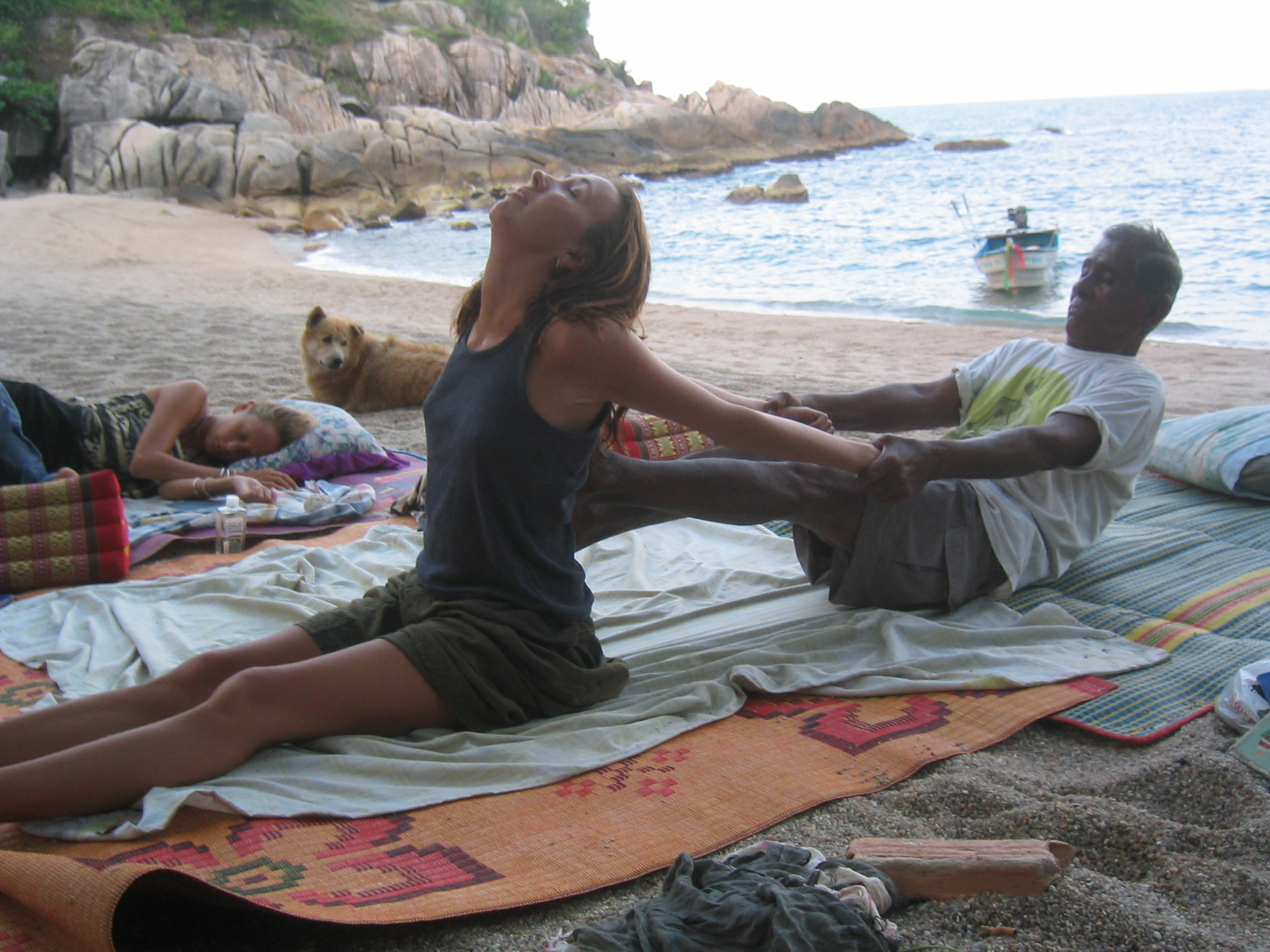
Mariane Pinto, a yoga teacher and Thai massage therapist, discusses her journey in the world of yoga and massage therapy. She shares how she discovered her passion for yoga and Thai massage, and how she incorporates both practices into her teaching and retreats. Mariane emphasizes the importance of finding a connection with your teachers and clients, and the power of non-psychedelic modalities in healing. Mariane’s upcoming retreats in Puerto Escondido, Mexico and Brazil are highlighted as transformative experiences for participants.

Visit Mariane on her website: https://www.themysticflow.com/
Follow Mariane on IG: @mari.in.the.flow https://www.instagram.com/mari.in.the.flow/
and on @the.mystic.flow https://www.instagram.com/the.mystic.flow/

Key Takeaways:

  • Mariane found her passion for yoga and Thai massage after going through a divorce and immersing herself in yoga practice.
  • She emphasizes the importance of finding a connection with your teachers and the yoga community.
  • Mariane offers unique experiences in her retreats, including surfing, sound healing, and breathwork.
  • She believes in the power of non-psychedelic modalities, such as meditation and yoga, to enhance the psychedelic experience.
  • Mariane encourages yoga teachers and massage therapists to find their niche and share their craft every day.

Native Yoga Toddcast: A Journey of Healing and Transformation

Welcome to Native Yoga Toddcast. In this episode, Todd McLaughlin sits down with Mariane Pinto, a yoga teacher, Thai massage therapist, and retreat leader. They discuss Mariane’s journey of self-discovery, her passion for yoga and Thai massage, and her upcoming retreats in Mexico and Guatemala. Join us as we delve into the world of healing and transformation.

Introduction: Embracing Your Dharma

In this episode of Native Yoga Toddcast, Todd McLaughlin welcomes Mariane Pinto, a yoga teacher, Thai massage therapist, and retreat leader. Mariane shares her excitement about fulfilling her dharma and finding her true calling in life. She reflects on her journey from practicing yoga as a means of healing after a divorce to becoming a traveling yoga teacher and Thai massage therapist. Mariane’s passion for yoga and Thai massage shines through as she discusses her upcoming retreats and the transformative power of these practices.

Exploring Yoga and Thai Massage

When asked about her journey into yoga and Thai massage, Mariane explains that yoga came first. She discovered yoga in her mid-20s during a difficult time in her life and found solace and healing through the practice. She eventually became a yoga teacher, studying under her mentor Kelly Doorly and specializing in Prana Vinyasa, a style developed by Shiva Rea. Mariane’s love for yoga led her to explore Thai massage as a way to deepen her understanding of the body and enhance her teaching skills. She embarked on a Thai massage course in Costa Rica and fell in love with the practice. Mariane describes Thai massage as a gentle and intuitive approach that combines stretching, breathwork, and relaxation. She emphasizes the importance of communication and listening to the receiver’s needs during a session.

The Power of Retreats and Sound Healing

Mariane’s passion for yoga and Thai massage extends beyond the studio. She leads retreats around the world, offering participants a transformative experience in beautiful locations. Mariane believes that retreats provide an opportunity for deep healing and self-discovery. She incorporates various modalities into her retreats, including sound healing, yoga nidra, and breathwork. Mariane explains that these practices help participants connect with their bodies, release tension, and find inner peace. She also emphasizes the importance of non-psychedelic modalities, such as meditation and yoga, in conjunction with psychedelic experiences. Mariane believes that these practices can help individuals access higher states of consciousness and facilitate personal growth.

The Challenges and Rewards of Teaching

As a yoga teacher and Thai massage therapist, Mariane faces various challenges and rewards. She acknowledges that marketing and promoting her services can be daunting, but she encourages aspiring teachers to find their niche and connect with their ideal clients. Mariane emphasizes the importance of authenticity and genuine connection in building a client base. She advises teachers to share their craft consistently, whether through social media, word of mouth, or collaborations with like-minded individuals. Mariane also highlights the importance of self-belief and resilience in the face of challenges. She encourages teachers to trust the process and have faith in their abilities.

The Future of Healing and Transformation

In conclusion, Mariane reflects on the future of healing and transformation. She believes that we all have the power to walk each other home, supporting and inspiring one another on our individual journeys. Mariane encourages individuals to show up for their own healing and embrace new experiences. She emphasizes the importance of being true to oneself and finding alignment with one’s purpose. Mariane’s retreats and teachings serve as a testament to the transformative power of yoga and Thai massage. As she continues to expand her offerings and explore new destinations, Mariane remains committed to creating meaningful experiences for her clients and helping them discover their own paths of healing and transformation.

In this thought leadership article, we have explored Mariane Pinto’s journey of healing and transformation through yoga and Thai massage. Mariane’s passion for these practices shines through as she shares her experiences and insights. We have delved into the power of retreats, sound healing, and non-psychedelic modalities in facilitating personal growth. Mariane’s advice on marketing and teaching provides valuable guidance for aspiring yoga teachers and Thai massage therapists. As we look to the future, Mariane’s commitment to authenticity and connection serves as an inspiration for all those seeking their own paths of healing and transformation.

Thanks for listening to this episode. Check out: 👇
Free Grow Your Yoga Live Webinar – Every Thursday at 12pm EST
➡️ Click here to receive link

New Student FREE Livestream Yoga Special ~ Try 2 Weeks of Free Unlimited Livestream Yoga Classes  at Native Yoga Center. info.nativeyogacenter.com/livestream Sign into the classes you would like to take and you will receive an email 30 minutes prior to join on Zoom. The class is recorded and uploaded to nativeyogaonline.com  ➡️  Click Here to Join. 

Practice to a New Yoga Class every day with our nativeyogaonline.com course called Today’s Community Class with code FIRSTMONTHFREE.

Native Yoga Teacher Training 2024– In Studio and Livestream – for info delivered to your email click this link here: ➡️ https://info.nativeyogacenter.com/native-yoga-teacher-training-2023/

Subscribe to Native Yoga Center and view this podcast on Youtube.

Thank you Bryce Allyn for the show tunes. Check out Bryce’s website: bryceallynband.comand sign up on his newsletter to stay in touch. Listen here to his original music from his bands Boxelder, B-Liminal and Bryce Allyn Band on Spotify.

Please email special requests and feedback to info@nativeyogacenter.com

Support the show

Native Yoga website: here
YouTube: here
Instagram: @nativeyoga 
Twitter: @nativeyoga 
Facebook: @nativeyogacenter 
LinkedIn: Todd McLaughlin
Frank Kappas – Embracing Vulnerability and Connection in Yoga

Frank Kappas is an Ashtanga Yoga teacher based in Finland. He has been practicing yoga since 1996 and has studied with renowned teachers such as Petri Räisänen and Lino Miele. Frank is also interested in other modalities such as Vipassana meditation and bodywork, which he incorporates into his teaching and practice.

Visit Frank on his website https://www.frankkappas.fi/
Follow Frank on IG @frank.kappas.ashtanga.yoga https://www.instagram.com/frank.kappas.ashtanga.yoga/

Key takeaways:

  • Finding a structure in yoga practice can be helpful, but it’s important to also create your own internal structure.
  • Vipassana meditation can provide valuable insights into the mind and body, but it can be challenging to apply those insights in everyday life.
  • Being present and connecting with oneself and others is a continuous practice that requires self-awareness and vulnerability.
  • Taking care of oneself is essential when taking care of others, especially as a parent.
  • Stiffness and strength can be beneficial in yoga practice and can help prevent injuries.

Exploring the Depths of Yoga and Self-Discovery: A Conversation with Frank Kappas

Welcome to the Native Yoga Toddcast, where we dive deep into the world of yoga, meditation, and self-discovery. In this episode, I had the pleasure of speaking with Frank Kappas, an Ashtanga Yoga teacher from Finland. We discussed his journey into yoga, the challenges he has faced, and the profound insights he has gained along the way. Join us as we explore the transformative power of yoga and the importance of staying present in a chaotic world.

Introduction to the Main Themes

In this thought-provoking conversation with Frank Kappas, we delve into the essence of yoga and its impact on our lives. Frank shares his personal journey into yoga, from his background as an artist to his discovery of Ashtanga Yoga. He emphasizes the importance of finding a practice that works for us and the value of staying present in our daily lives. Frank also touches on the role of vulnerability and self-care in our yoga practice, as well as the connection between yoga and other modalities such as Vipassana meditation and bodywork.

The Power of Structure and Self-Exploration

Frank highlights the significance of structure in his early yoga practice, particularly in the Ashtanga tradition. He explains how having a set sequence and a dedicated practice helped him find stability and focus. However, he also acknowledges the need for self-exploration and the maturation process that comes with it. Frank shares his own journey of discovering the balance between structure and self-discovery, and how it has shaped his approach to teaching and practicing yoga.

Embracing Vulnerability and Connection

One of the key themes that emerges from our conversation is the importance of vulnerability and connection. Frank discusses how his own experiences as a parent and his exploration of Vipassana meditation have deepened his understanding of himself and others. He emphasizes the need to be present and open, even in the face of challenges, and how this can lead to a greater sense of empathy and connection with those around us.

The Role of Sensitivity and Bodywork

Frank also shares his passion for bodywork and its connection to his yoga practice. He explains how bodywork, such as Thai massage and Alexander Technique, has enhanced his understanding of the body and its sensations. He emphasizes the importance of sensitivity and touch in his work, and how it can create a deeper connection with oneself and others.

Processing the Challenges of the World

In light of recent events in the world, Frank reflects on the challenges we face as a global community. He acknowledges the difficulty of processing the violence and suffering that exists, and the tendency to contract and protect ourselves. However, he also highlights the importance of working on ourselves and cultivating compassion and understanding. Frank encourages us to explore our own patterns and reactions, and to strive for a deeper sense of connection and empathy.

Conclusion and Future Outlook

In conclusion, my conversation with Frank Kappas has shed light on the transformative power of yoga and self-exploration. Through his own journey, Frank has discovered the value of structure, vulnerability, and connection. He reminds us of the importance of staying present and open, even in the face of challenges, and how this can lead to a greater sense of empathy and understanding. As we navigate the complexities of the world, Frank’s insights serve as a reminder to continually work on ourselves and strive for a deeper connection with ourselves and others.

As we move forward, let us embrace the teachings of yoga and the wisdom of those who have walked the path before us. Let us continue to explore, learn, and grow, both on and off the mat. And let us remember that the true power of yoga lies in its ability to transform not only ourselves but also the world around us.

Thanks for listening to this episode. Check out: 👇
Free Grow Your Yoga Live Webinar â€“ Every Thursday at 12pm EST
➡️ Click here to receive link

New Student FREE Livestream Yoga Special ~ Try 2 Weeks of Free Unlimited Livestream Yoga Classes  at Native Yoga Center. info.nativeyogacenter.com/livestream Sign into the classes you would like to take and you will receive an email 30 minutes prior to join on Zoom. The class is recorded and uploaded to nativeyogaonline.com  ➡️  Click Here to Join. 

Practice to a New Yoga Class every day with our nativeyogaonline.com course called Today’s Community Class with code FIRSTMONTHFREE.

Native Yoga Teacher Training 2024– In Studio and Livestream – for info delivered to your email click this link here: ➡️ https://info.nativeyogacenter.com/native-yoga-teacher-training-2023/

Subscribe to Native Yoga Center and view this podcast on Youtube.

Thank you Bryce Allyn for the show tunes. Check out Bryce’s website: bryceallynband.comand sign up on his newsletter to stay in touch. Listen here to his original music from his bands Boxelder, B-Liminal and Bryce Allyn Band on Spotify.

Please email special requests and feedback to info@nativeyogacenter.comSupport the show

Native Yoga website: here
YouTube: here
Instagram: @nativeyoga 
Twitter: @nativeyoga 
Facebook: @nativeyogacenter 
LinkedIn: Todd McLaughlin

Tim Feldmann – The Joys and the Challenges of Consistent Yoga Practice

Tim Feldmann, co-founder of Miami Yoga Garage, discusses his journey into yoga and the challenges and joys of being a traveling yoga teacher. He reflects on the ups and downs of consistent practice and the importance of finding balance between effort and ease. Tim also shares his thoughts on social media and the role it plays in his professional life. He emphasizes the importance of staying true to oneself and finding joy in the practice, regardless of physical abilities. Tim’s unique perspective and sense of humor make for an engaging and insightful conversation.

Visit Tim on his website: https://timfeldmann.com/
Follow him on IG: https://www.instagram.com/timfeldmannyoga/
And on YouTube: https://www.youtube.com/user/MrTimFeldmann

Tim explains:

  • Consistency in yoga practice is important, but the questions and challenges may change over time.
  • The concept of achievement in yoga is often tied to self-worth, but it’s important to find balance and enjoy the practice.
  • Social media can be a valuable platform for sharing insights and connecting with others, but it’s important to stay true to oneself and not get caught up in the pressure to conform.
  • The Ashtanga yoga practice is a form that can lead to deeper experiences and insights, but it’s important to remember the underlying philosophy and purpose behind the practice.

The Comedy and Tragedy of Yoga: A Conversation with Tim Feldman

Introduction

In a world filled with chaos and uncertainty, many people turn to yoga as a source of solace and stability. But what is it about yoga that draws us in? Is it the physical practice, the mental discipline, or something deeper? In a recent podcast interview with Tim Feldmann, a renowned yoga teacher and practitioner, we delved into these questions and explored the profound impact that yoga can have on our lives.

The Journey of a Yogi

Tim Feldmann’s journey into yoga began in his early twenties when he discovered the Jivamukti Yoga Center in New York City. As a young dancer, he was drawn to the physicality of the practice and soon found himself exchanging his daily dance classes for yoga sessions. This marked the beginning of a lifelong love affair with yoga.

But Tim’s yoga journey didn’t stop there. He soon discovered Ashtanga yoga and became enamored with its disciplined and structured approach. He traveled to Mysore, India, to study with the late Sri K. Pattabhi Jois, the founder of Ashtanga yoga, and continued to deepen his practice and understanding of the ancient tradition.

The Ups and Downs of a Nomadic Life

One of the most striking aspects of Tim’s life is his nomadic lifestyle. He travels the world, teaching workshops and sharing his passion for yoga with students from all walks of life. But this constant movement comes with its own set of challenges.

Tim admits that the life of a traveling yoga teacher can be exhausting. The constant jet lag, the unfamiliar surroundings, and the pressure to perform can take a toll on both the body and the mind. But despite the challenges, Tim finds joy in connecting with students and sharing the transformative power of yoga.

The Quest for Consistency

One of the key themes that emerged from our conversation was the importance of consistency in a yoga practice. Tim emphasized the value of showing up on the mat day after day, regardless of how we feel or what challenges we may be facing. He believes that it is through this consistency that we can truly experience the benefits of yoga.

But consistency doesn’t mean doing the same thing over and over again. Tim stressed the importance of adapting our practice to meet our ever-changing needs. As we age, our bodies change, and what once came easily may now require more effort. Tim encourages his students to listen to their bodies and modify their practice accordingly, finding a balance between challenge and ease.

The Paradox of Achievement

In our achievement-oriented society, it’s easy to get caught up in the idea that we need to constantly strive for more. But Tim challenges this notion and encourages us to find contentment in the present moment. He believes that true achievement comes from within and that the practice of yoga can help us cultivate a sense of inner peace and fulfillment.

Tim also acknowledges the paradox of achievement in yoga. While the physical practice can be challenging and demanding, it is through these challenges that we can experience moments of clarity and insight. The struggle itself becomes a catalyst for growth and self-discovery.

The Comedy and Tragedy of Yoga

Throughout our conversation, Tim often referred to the comedy and tragedy of yoga. He sees yoga as a reflection of the human experience, with all its ups and downs, joys and sorrows. Yoga can be both a source of laughter and a source of tears, a reminder of our own imperfections and a celebration of our inherent beauty.

Tim’s perspective on yoga is rooted in the teachings of Patanjali, the ancient sage who codified the principles of yoga in the Yoga Sutras. He believes that yoga is not just a physical practice but a path to self-realization and enlightenment. It is a journey of self-discovery and self-transformation, a way to connect with our true nature and find peace amidst the chaos of life.

Conclusion

In our conversation with Tim Feldmann, we explored the profound impact that yoga can have on our lives. From the challenges of a nomadic lifestyle to the quest for consistency, Tim shared his insights and wisdom gained from years of practice and teaching. He reminded us of the importance of finding joy in the present moment and embracing the comedy and tragedy of life.

As we continue on our own yoga journeys, let us remember that yoga is not just a physical practice but a way of life. It is a path to self-discovery and self-transformation, a journey of growth and self-realization. And through it all, let us find solace in the practice, knowing that we are not alone on this path, but part of a larger community of seekers and yogis.

So, whether you’re a seasoned practitioner or just beginning your yoga journey, embrace the comedy and tragedy of yoga, and let it guide you on the path to self-discovery and enlightenment. Namaste.

Thanks for listening to this episode. Check out: 👇
Free Grow Your Yoga Live Webinar â€“ Every Thursday at 12pm EST
➡️ Click here to receive link

New Student FREE Livestream Yoga Special ~ Try 2 Weeks of Free Unlimited Livestream Yoga Classes  at Native Yoga Center. info.nativeyogacenter.com/livestream Sign into the classes you would like to take and you will receive an email 30 minutes prior to join on Zoom. The class is recorded and uploaded to nativeyogaonline.com  ➡️  Click Here to Join. 

Practice to a New Yoga Class every day with our nativeyogaonline.com course called Today’s Community Class with code FIRSTMONTHFREE.

Native Yoga Teacher Training 2024– In Studio and Livestream – for info delivered to your email click this link here: ➡️ https://info.nativeyogacenter.com/native-yoga-teacher-training-2023/

Subscribe to Native Yoga Center and view this podcast on Youtube.

Thank you Bryce Allyn for the show tunes. Check out Bryce’s website: bryceallynband.comand sign up on his newsletter to stay in touch. Listen here to his original music from his bands Boxelder, B-Liminal and Bryce Allyn Band on Spotify.

Please email special requests and feedback to info@nativeyogacenter.comSupport the show

Native Yoga website: here
YouTube: here
Instagram: @nativeyoga 
Twitter: @nativeyoga 
Facebook: @nativeyogacenter 
LinkedIn: Todd McLaughlin

Jesse Gold – Balance in the Flow of Yoga, Surfing and Pranayama

Jesse Gold is a local yoga teacher in Juno Beach, Florida. He has a passion for surfing and incorporates his love for the ocean into his yoga practice.

In this episode, Todd McLaughlin interviews Jesse Gold, a local yoga teacher in Juno Beach, Florida. They discuss Jesse’s travels to Morocco and Costa Rica, his experience with teacher training, his love for surfing, and his exploration of pranayama and breathwork.

Follow Jesse on Instagram: @j_man_moves

Keys to this conversation:

  • Jesse sees surfing and yoga as two different expressions of the same thing, both allowing him to connect with his body and the present moment.
  • He believes that letting go of the need to compete and comparing oneself to others is essential in both surfing and yoga.
  • Jesse finds pranayama and breathwork to be a game changer in his daily routine, helping him feel more connected to his body and grounded.

Exploring the Intersection of Yoga, Surfing, and Life Philosophy with Jesse Gold

Introduction

In this thought-provoking article, we delve into the fascinating world of yoga, surfing, and life philosophy through the lens of Jesse Gold, a local yoga teacher in Jupiter, Florida. Drawing from a recent podcast interview, we explore the themes of finding grounding in daily routines, the parallels between yoga and surfing, the importance of breathwork and pranayama, and the concept of karma and reincarnation. Through direct quotes from the podcast transcript, we gain insights into Jesse’s personal experiences and perspectives, offering a unique and thought-provoking exploration of these topics.

Finding Grounding in Daily Routines

Jesse emphasizes the importance of following through with daily routines, even on days when we may not feel motivated or in the right headspace. He shares his own experience of waking up and going through his routine, which includes meditation, yoga, and a workout. He highlights the significance of the routine itself, rather than the specific activities, in providing a sense of grounding and well-being. Jesse’s approach to daily routines serves as a reminder that consistency and commitment can lead to a sense of stability and mental clarity.

Jesse Gold: “I think just following through with the routine in and of itself kind of gave me that grounding. I don’t think it was so much like, ‘Oh, the workout did it’ or like, ‘It was just actually following through.’ And they, ‘Oh, I did it in spite of adversity, like that mental block feeling like that was I still did it and feel good as a result of that?'”

The Parallels Between Yoga and Surfing

Jesse draws parallels between yoga and surfing, viewing them as two different expressions of the same thing. He describes his surfboard as his mat on the water, where he focuses on the mind-body connection, breath control, and efficient movement. Jesse’s experience in both yoga and surfing has taught him the importance of subtlety in practice and the realization that both activities are more than just physical exercises. He highlights the meditative and zen-like qualities of both practices, as well as the shared sense of community and connection among practitioners.

Jesse Gold: “When I’m on my mat, I feel like my surfboard is my mat on the water. And instead of going through postures, instead of going through poses, trying to get into alignment on my mat, on my board, I’m just trying to feel each paddle stroke, really just trying to make it a moving meditation… How well can I breathe out, so I can increase my efficiency on the water and get the most out of my surf session?”

The Importance of Breathwork and Pranayama

Jesse discusses his daily pranayama practice, which involves various breathing techniques and guided meditations. He shares how this practice helps him feel more connected to his body, enhances his mind-body awareness, and promotes a sense of relaxation and control. Jesse emphasizes the transformative power of intentional breathing and the ability to smooth out mental ripples and find inner peace through breathwork.

Jesse Gold: “I love how I feel, how well connected I am to my body, and how much control I have after the session… It’s just been an absolute game changer.”

Exploring the Concept of Karma and Reincarnation

Jesse reflects on the concept of karma and reincarnation, acknowledging the various perspectives and interpretations surrounding these ideas. While he appreciates the comfort and meaning that belief in an afterlife can provide, he also recognizes the limitations of human understanding. Jesse emphasizes the importance of living a peaceful life and not fearing negative consequences, focusing on personal growth and the present moment rather than worrying about future lives or karmic repercussions.

Jesse Gold: “I like to believe there is an afterlife. I find comfort in it… But empirically, to this crazy mind, I’ve gotten at it, it makes sense. No, I’m okay with that.”

Conclusion and Future Outlook

In this thought-provoking exploration of yoga, surfing, and life philosophy, we have gained insights from Jesse Gold’s experiences and perspectives. Through his journey, we have discovered the significance of grounding in daily routines, the parallels between yoga and surfing, the transformative power of breathwork and pranayama, and the complexities of understanding concepts like karma and reincarnation. Jesse’s insights remind us of the importance of finding our own path, embracing the present moment, and living a life of peace and connection.

As we continue to explore these topics, let us remain open to new perspectives and experiences, allowing ourselves to grow and evolve along the way. By integrating the wisdom of yoga, the joy of surfing, and the contemplation of life philosophy, we can cultivate a deeper understanding of ourselves and the world around us. Let us embrace the journey and find solace in the interconnectedness of all things.

Thanks for listening to this episode. Check out: 👇
Free Grow Your Yoga Live Webinar â€“ Every Thursday at 12pm EST
➡️ Click here to receive link

New Student FREE Livestream Yoga Special ~ Try 2 Weeks of Free Unlimited Livestream Yoga Classes  at Native Yoga Center. info.nativeyogacenter.com/livestream Sign into the classes you would like to take and you will receive an email 30 minutes prior to join on Zoom. The class is recorded and uploaded to nativeyogaonline.com  ➡️  Click Here to Join. 

Practice to a New Yoga Class every day with our nativeyogaonline.com course called Today’s Community Class with code FIRSTMONTHFREE.

Native Yoga Teacher Training 2024– In Studio and Livestream – for info delivered to your email click this link here: ➡️ https://info.nativeyogacenter.com/native-yoga-teacher-training-2023/

Subscribe to Native Yoga Center and view this podcast on Youtube.

Thank you Bryce Allyn for the show tunes. Check out Bryce’s website: bryceallynband.comand sign up on his newsletter to stay in touch. Listen here to his original music from his bands Boxelder, B-Liminal and Bryce Allyn Band on Spotify.

Please email special requests and feedback to info@nativeyogacenter.com

Shri Alchemy – Embracing the Journey: Exploring Yoga, Medicine, and Art

In this episode Todd McLaughlin interviews Shri Alchemy about her journey in yoga and plant medicine. They discuss her upbringing in a spiritual community, her experiences with Kambo and other plant medicines, and her current work as a yoga teacher and skincare product maker. Shri also shares insights from her practice and the importance of finding stillness and connection in yoga.

Visit Shri on Instagram: @shri.alchemy https://www.instagram.com/shri.alchemy/?hl=en
On her website: https://www.metsibotanics.com/

During this conversation Shri talks about:

  • Kambo as a powerful medicine that can help detoxify the body and provide clarity and healing.
  • Meridian yoga and Ayurveda have deepened Shri’s understanding of the subtle body and emotions.
  • It’s important to approach yoga and plant medicine with reverence and intention, creating a clear container for the experience.
  • The Hatha Yoga Pradipika emphasizes the simplicity and profound effects of yoga postures and practices.

Embracing the Journey: Exploring Yoga, Medicine, and Art with Shri Alchemy

Introduction:
In this thought-provoking article, we delve into the world of yoga, medicine, and art through the lens of Shri Alchemy, a multifaceted practitioner and teacher. Drawing from a podcast transcript, we explore the main themes that emerged during the conversation, highlighting the insights and experiences shared by Shri Alchemy. From her upbringing in a spiritual community to her exploration of various yoga practices and her work with plant medicine, we gain a deeper understanding of her journey and the wisdom she has gained along the way.

Exploring Yoga Practices:
Shri Alchemy’s journey into yoga began with a vinyasa practice, which she describes as a language she had been speaking her whole life without realizing it. She shares her experience of finding solace and familiarity in the practice, and how it sparked a deep desire to become a yoga teacher. As she continued her journey, she discovered the transformative power of restorative yoga and yin yoga, which allowed her to slow down and find stillness. She also found solace in the practice of Ashtanga yoga, which not only strengthened her body but also provided a meditative experience. Through her exploration of different yoga practices, Shri emphasizes the importance of finding what resonates with us individually and cultivating a deep connection with our own bodies and minds.

The Power of Medicine:
Shri Alchemy’s journey with plant medicine began at a young age, growing up in a community that embraced spiritual practices, including witchcraft and working with medicine. She shares her experiences with Kambo, a powerful cleansing medicine derived from the secretion of a frog. While Kambo can be intense and uncomfortable, Shri Alchemy explains that it offers a deep purification and clarity. She highlights the importance of creating a sacred container for the medicine, including prayer, intention setting, and sound healing. Through her work with Kambo, Shri Alchemy has witnessed its transformative effects on individuals, helping them release toxins and gain clarity in their lives.

Navigating Challenges and Embracing Growth:
Shri Alchemy acknowledges that life is filled with challenges and storms, but it is in the eye of the storm where we find calm and growth. She shares her personal experiences of navigating challenges, such as dealing with construction and finding a new place to live. Through these experiences, she emphasizes the importance of acceptance and surrender, allowing us to find peace amidst chaos. Shri Alchemy also reflects on the power of questioning and exploring our beliefs, recognizing that growth comes from embracing the unknown and being open to new perspectives.

The Wisdom of Stillness and Subtle Practices:
Shri Alchemy’s journey led her to explore the power of stillness and subtle practices in yoga. She discovered the profound effects of practices such as restorative yoga, yoga nidra, and pranayama, which allowed her to access deep states of relaxation and connection. She emphasizes the importance of honoring the simplicity of these practices and recognizing the profound experiences that can arise from them. Shri Alchemy also highlights the teachings of her teacher, Dharma Mitra, who instilled in her a sense of devotion and reverence for the practice. Through her own practice and teachings, she aims to create a space for others to connect with their own bodies, minds, and spirits.

Conclusion:
In this thought-provoking exploration of yoga, medicine, and art, we have gained insights from Shri Alchemy’s journey and experiences. From her early exposure to spirituality and witchcraft to her deep connection with yoga and plant medicine, Shri Alchemy has embraced a path of self-discovery and growth. Through her teachings and practices, she encourages others to find their own unique path and cultivate a deep connection with themselves. As we navigate the challenges of life, Shri Alchemy reminds us of the power of stillness, the importance of embracing our fears, and the transformative potential of art and self-expression. By honoring our own journeys and staying open to new perspectives, we can continue to grow and evolve, finding peace and clarity amidst the storms of life.

Thanks for listening to this episode. Check out: 👇
Free Grow Your Yoga Live Webinar â€“ Every Thursday at 12pm EST
➡️ Click here to receive link

New Student FREE Livestream Yoga Special ~ Try 2 Weeks of Free Unlimited Livestream Yoga Classes  at Native Yoga Center. info.nativeyogacenter.com/livestream Sign into the classes you would like to take and you will receive an email 30 minutes prior to join on Zoom. The class is recorded and uploaded to nativeyogaonline.com  ➡️  Click Here to Join. 

Practice to a New Yoga Class every day with our nativeyogaonline.com course called Today’s Community Class with code FIRSTMONTHFREE.

Native Yoga Teacher Training 2024– In Studio and Livestream – for info delivered to your email click this link here: ➡️ https://info.nativeyogacenter.com/native-yoga-teacher-training-2023/

Subscribe to Native Yoga Center and view this podcast on Youtube.

Thank you Bryce Allyn for the show tunes. Check out Bryce’s website: bryceallynband.comand sign up on his newsletter to stay in touch. Listen here to his original music from his bands Boxelder, B-Liminal and Bryce Allyn Band on Spotify.

Please email special requests and feedback to info@nativeyogacenter.com

Celest Pereira ~ Physiotherapist and Yoga Teacher Discusses the Benefits of Functional Neurology

Celest Pereira, a physiotherapist and yoga teacher, discusses the importance of focusing on one main project instead of trying to juggle multiple streams of income. She emphasizes the need to prioritize and avoid spreading oneself too thin. Celest also explains the concept of functional neurology and how it can be used to evaluate and treat various physical issues.  Celest also shares insights on breathing techniques, pain perception, and the power of positive self-talk.

Visit Celest on her website: https://www.celestpereira.com/
On Instagram here: https://www.instagram.com/celestpereiraphysio/
On YouTube here: https://www.youtube.com/c/CelestPereiraYoga

Key Takeaways:

  • Diversifying movement patterns is important for optimal brain mapping and overall physical well-being.
  • Pain is an output of the brain and can be influenced by our thoughts and beliefs.
  • Functional neurology can help improve movement and reduce pain by addressing the underlying neurological issues.

Introduction

In a world where self-employment and multiple streams of income are often glorified, it’s important to take a step back and reevaluate our approach. As a physiotherapist and yoga teacher, I have learned that focusing on one main project and giving it our full attention can lead to more success and fulfillment. In this thought leadership article, we will explore the power of functional neurology and mindful movement in promoting physical and mental well-being. We will delve into the concept of functional neurology, discuss the importance of diversifying our exercise routines, and examine the role of breathing techniques in optimizing our movement patterns. Through verbatim quotes from a recent podcast interview, we will gain insights into the mind of Celest Pereira, a renowned physiotherapist and yoga teacher, and explore the implications and potential impact of these themes.

Functional Neurology and the Power of the Brain

Functional neurology is a field that focuses on the relationship between the brain and the body. Celest Pereira, a physiotherapist and yoga teacher, explains that every process in our body is governed by the central nervous system, which includes the brain and spinal cord. She emphasizes that the brain plays a crucial role in movement and physical well-being. Pereira shares her experience of working with clients who have various physical issues and how evaluating their nervous system online has led to positive results. She highlights the importance of looking at the body holistically and understanding that seemingly unrelated problems can manifest as pain in the body. Pereira’s approach challenges the traditional allopathic model of focusing solely on the area of pain and encourages a more comprehensive evaluation of the body.

“Every single thing that you do, think, say, every process in your body, it’s all governed from the central nervous system, everything.”

Diversifying Exercise Routines for Optimal Results

Pereira challenges the myth that having multiple streams of income is necessary for success as a self-employed professional. She shares her personal experience of trying to juggle multiple projects and realizing that it is not sustainable in the long run. Pereira explains that focusing on one main project and letting that be the main thing you work on can lead to better results. She encourages individuals to evaluate their exercise routines and diversify their training schedules. Pereira emphasizes the importance of exploring different movements and not getting stuck in a rigid routine. She uses the example of climbing and how she enjoys incorporating various activities like yoga, dancing, and weightlifting into her fitness regimen. Pereira’s approach highlights the need for individuals to find what works best for their bodies and to listen to their own needs and preferences.

“We should be working extremely hard and we should be able to pause and step away from it and think, okay, now time to get inspiration. So that when I go back to the thing, there is something left in the tank.”

The Power of Breathing Techniques and Mindful Movement

Pereira challenges the notion that the feet should always be parallel in yoga poses. She explains that while finding a neutral alignment can be useful, it is important to explore different movements and positions to allow the brain to map all the possibilities. Pereira emphasizes the importance of lunging, both in yoga and in the gym, and encourages individuals to move their feet out of parallel positions. She shares her own experience of teaching yoga and the shift to online platforms during the pandemic. Pereira highlights the benefits of connecting with people from around the world and the importance of finding inspiration and rest to maintain a sustainable practice.

“We can also shorten the time it takes to achieve things in the body by going to the neural tissue first.”

Implications and Potential Impact

The insights shared by Celest Pereira shed light on the power of functional neurology and mindful movement in promoting physical and mental well-being. By understanding the relationship between the brain and the body, individuals can optimize their movement patterns and address underlying issues that may contribute to pain or discomfort. Pereira’s approach challenges traditional notions of exercise and encourages individuals to listen to their bodies, diversify their routines, and find what works best for them. By incorporating breathing techniques and mindful movement, individuals can enhance their overall well-being and improve their physical performance.

The implications of these concepts are significant, as they offer a new perspective on how we approach movement and exercise. By focusing on the brain-body connection and understanding the role of the nervous system, individuals can make more informed choices about their fitness routines. This knowledge can empower individuals to take control of their physical health and explore new possibilities for movement and self-expression.

Conclusion and Future Outlook

In conclusion, the power of functional neurology and mindful movement lies in their ability to optimize physical and mental well-being. By understanding the brain-body connection and incorporating breathing techniques and mindful movement into our routines, we can enhance our overall health and performance. The insights shared by Celest Pereira highlight the importance of listening to our bodies, diversifying our exercise routines, and challenging traditional notions of movement. As we continue to explore the potential of functional neurology and mindful movement, we can expect to see a shift in how we approach fitness and well-being. By embracing these concepts, we can unlock our full potential and live healthier, more fulfilling lives.

Thanks for listening to this episode. Check out: 👇
Free Grow Your Yoga Live Webinar – Every Thursday at 12pm EST
➡️ Click here to receive link

New Student FREE Livestream Yoga Special ~ Try 2 Weeks of Free Unlimited Livestream Yoga Classes  at Native Yoga Center. info.nativeyogacenter.com/livestream Sign into the classes you would like to take and you will receive an email 30 minutes prior to join on Zoom. The class is recorded and uploaded to nativeyogaonline.com  ➡️  Click Here to Join. 

Practice to a New Yoga Class every day with our nativeyogaonline.com course called Today’s Community Class with code FIRSTMONTHFREE.

Native Yoga Teacher Training 2024– In Studio and Livestream – for info delivered to your email click this link here: ➡️ https://info.nativeyogacenter.com/native-yoga-teacher-training-2023/

Subscribe to Native Yoga Center and view this podcast on Youtube.

Thank you Bryce Allyn for the show tunes. Check out Bryce’s website: bryceallynband.comand sign up on his newsletter to stay in touch. Listen here to his original music from his bands Boxelder, B-Liminal and Bryce Allyn Band on Spotify.

Please email special requests and feedback to info@nativeyogacenter.com