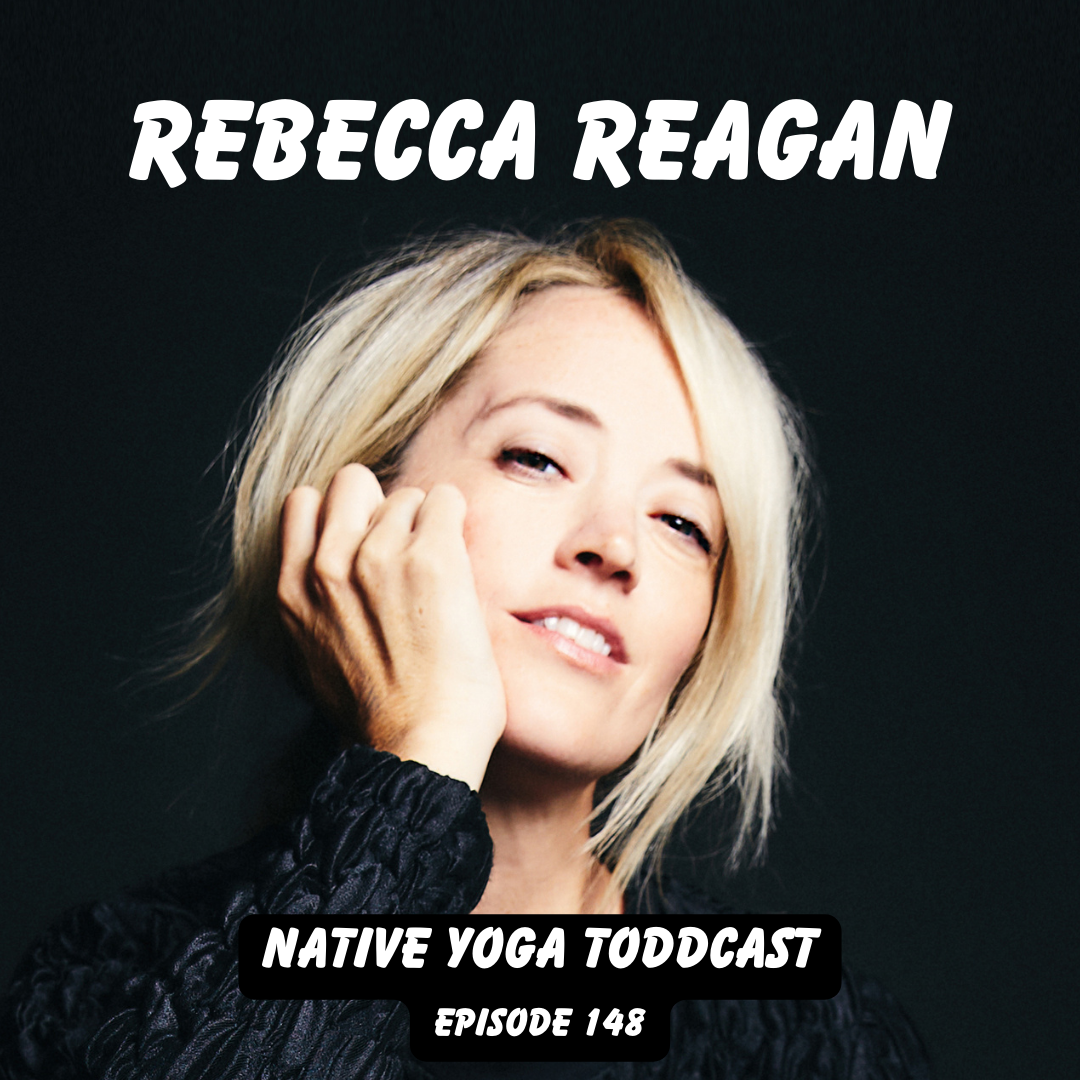
Rebecca Reagan, founder of Bunnyhawk, shares her journey into meditation and mindfulness. She discusses her early experiences with meditation and how it became a natural instinct for her. Rebecca also talks about her formal training in mindfulness meditation and transcendental meditation. She highlights the importance of daily practice and the benefits of meditation in navigating challenging life events. Rebecca also touches on her passion for tea and her involvement in regenerative agriculture and environmental activism.
Meditation is a natural instinct that can be cultivated through formal training and daily practice.
Mindfulness meditation helps cultivate awareness in the present moment and brings a sense of calm and non-judgment.
Transcendental meditation uses a mantra to anchor the mind and create a deeper sense of peace.
Meditation can be a valuable tool in navigating challenging life events and finding inner peace.
Tea and meditation are complementary practices that promote mindfulness and connection with nature.
Beyond organic farming practices, such as permaculture, prioritize biodiversity and healthy soil.
The yin and yang of nature, where predators and prey coexist, reflect the interconnectedness of all beings.
Exploring the Intersection of Meditation, Permaculture, and Sustainable Living
Note: This article is based on a conversation with Rebecca Reagan, founder of Bunnyhawk and an executive producer, creative consultant, integrated life coach, and meditation teacher. The article delves into the main themes discussed in the conversation, highlighting the significance of meditation, permaculture, and sustainable living. All quotes are verbatim from the transcript.
Introduction
In a world filled with chaos and uncertainty, many individuals are seeking ways to find inner peace and create a more sustainable future. This quest has led to the exploration of practices such as meditation and permaculture, which offer unique perspectives on personal well-being and environmental stewardship. In a recent conversation with Rebecca Reagan, we delved into the intersection of these practices and their potential impact on our lives and the planet.
The Power of Meditation
Rebecca Reagan, a certified meditation teacher, shared her personal journey with meditation and its profound impact on her life. She described how meditation has always been a natural instinct for her, even from a young age. Through formal training and certification, she has deepened her practice and now shares her knowledge with others.
“Meditation is a way of bringing our awareness into the present moment with the breath. It is a secular tradition rooted in Buddhism, but it can be practiced by anyone, regardless of their religious or spiritual beliefs,” Rebecca explained.
She emphasized the importance of daily meditation practice in cultivating inner peace and finding balance in a fast-paced, hyper-connected world. Rebecca believes that meditation helps us navigate life’s challenges with more compassion and understanding.
“When we can create space for daily practice and cultivate our own inner peace, we can bring more joy and connection to our lives and the world around us,” she said.
Permaculture and Sustainable Living
Rebecca also shared her passion for permaculture, a holistic approach to agriculture and land management that aims to create sustainable and regenerative systems. She highlighted the work of organizations like the Ecology Center, which demonstrates permaculture principles and promotes sustainable living practices.
“Permaculture is about working in harmony with nature and creating healthy ecosystems. It emphasizes biodiversity, healthy soil, and regenerative practices,” Rebecca explained.
She emphasized the importance of understanding the interconnectedness of all living beings and the need to cultivate a more harmonious relationship with the Earth. Rebecca believes that permaculture offers a practical and achievable solution for feeding communities while minimizing the negative impact on the environment.
The Intersection of Meditation and Permaculture
Rebecca drew parallels between meditation and permaculture, highlighting their shared focus on mindfulness, presence, and balance. She explained how both practices encourage us to observe and understand the natural world, fostering a deeper connection with ourselves and the environment.
“Just as permaculture requires us to observe and work in harmony with nature, meditation invites us to observe and cultivate inner peace. Both practices teach us to be present and embrace the interconnectedness of all things,” Rebecca said.
She emphasized the importance of finding balance in our lives and aligning our actions with our values. By integrating meditation and permaculture principles, we can create a more sustainable and harmonious existence.
Implications and Future Outlook
The implications of combining meditation and permaculture are far-reaching. By cultivating inner peace and mindfulness, individuals can develop a deeper sense of empathy and compassion for the natural world. This, in turn, can inspire them to take action and make conscious choices that promote sustainability and environmental stewardship.
Rebecca believes that as more people embrace meditation and permaculture, a shift in consciousness will occur. This shift will lead to a greater understanding of our interconnectedness and a collective commitment to creating a more sustainable future.
“By integrating meditation and permaculture into our lives, we can become agents of positive change. We can contribute to the well-being of the planet and foster a more harmonious relationship with nature,” Rebecca said.
As we move forward, it is essential to continue exploring the intersection of meditation, permaculture, and sustainable living. By incorporating these practices into our daily lives, we can create a ripple effect of positive change that extends beyond ourselves and into the world.
Conclusion
The conversation with Rebecca Reagan shed light on the transformative power of meditation and permaculture. By cultivating inner peace and mindfulness, individuals can develop a deeper connection with themselves and the natural world. Through the principles of permaculture, we can create sustainable and regenerative systems that promote biodiversity and environmental stewardship.
As we navigate the challenges of the modern world, it is crucial to embrace practices that foster balance, compassion, and sustainability. By integrating meditation and permaculture into our lives, we can contribute to a more harmonious existence and create a brighter future for ourselves and future generations.
In the words of Rebecca Reagan, “We are here to love and learn to love. By embracing meditation and permaculture, we can cultivate inner peace and create a more sustainable and compassionate world.”
Note: This article is based on a conversation with Rebecca Reagan, founder of Bunnyhawk and an executive producer, creative consultant, integrated life coach, and meditation teacher. The article delves into the main themes discussed in the conversation, highlighting the significance of meditation, permaculture, and sustainable living. All quotes are verbatim from the transcript.
Thanks for listening to this episode. Check out: 👇 Free Grow Your Yoga Live Webinar – Every Thursday at 12pm EST ➡️ Click here to receive link
New Student FREE Livestream Yoga Special ~ Try 2 Weeks of Free Unlimited Livestream Yoga Classes at Native Yoga Center. info.nativeyogacenter.com/livestream Sign into the classes you would like to take and you will receive an email 30 minutes prior to join on Zoom. The class is recorded and uploaded to nativeyogaonline.com ➡️ Click Here to Join.
Subscribe to Native Yoga Center and view this podcast on Youtube.
Thank you Bryce Allyn for the show tunes. Check out Bryce’s website: bryceallynband.comand sign up on his newsletter to stay in touch. Listen here to his original music from his bands Boxelder, B-Liminal and Bryce Allyn Band on Spotify.
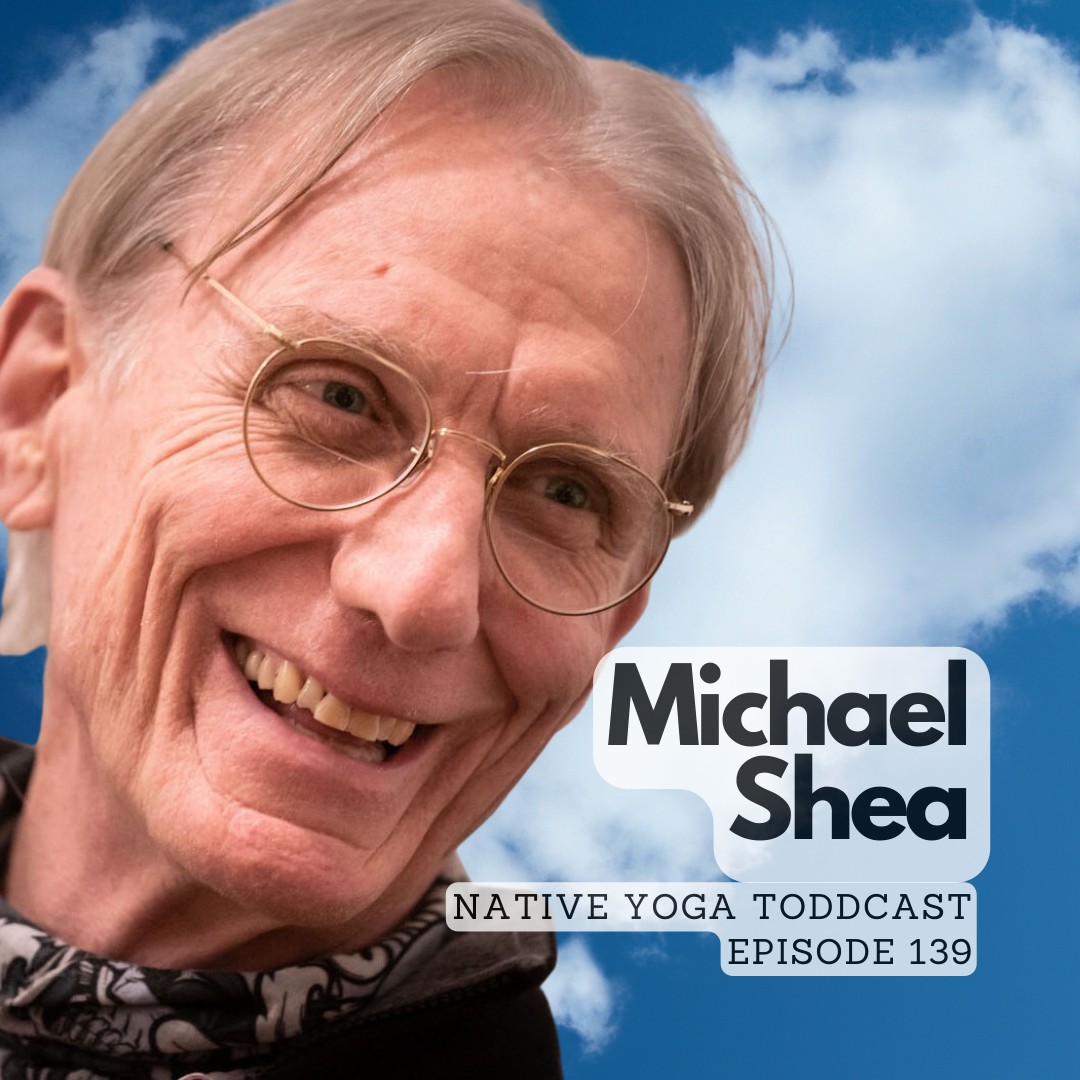
Dr. Michael Shea is an experienced manual therapist, craniosacral therapist, and Buddhist meditation practitioner. He is the author of several books and has trained with renowned teachers in various fields. Dr. Shea is also a student of the Dalai Lama and has a deep understanding of the connection between the physical and spiritual aspects of the human heart.
Feeling one’s own heartbeat is the starting point for developing empathy and cultivating a compassionate heart.
The biodynamic heart refers to the scientific embryology of the human heart and its spiritual growth.
Practical mysticism involves integrating visionary experiences and spiritual practices into daily life.
Recognizing and reframing polarizing thoughts and emotions can lead to a sense of peace and depolarization.
Manual therapy, such as craniosacral therapy, can be a form of ministry through the laying on of hands.
The Biodynamic Heart: Bridging the Physical and Spiritual
Dr. Shea’s book, “The Biodynamic Heart,” is a culmination of his extensive knowledge and experience in the fields of yoga, massage, and Tibetan Buddhism. Inspired by his teacher, the Dalai Lama, Dr. Shea explores the scientific embryology of the human heart and its spiritual dimensions. He emphasizes the importance of feeling one’s own heartbeat as a starting point for developing empathy and compassion. By tuning into the subtle frequency of the heart and cultivating awareness, individuals can bridge the anatomical and spiritual aspects of the heart.
The Ministry of Laying on of Hands: Healing Through Touch
Dr. Shea highlights the significance of touch in healing practices. He refers to all manual therapy as a ministry of laying on of hands, drawing parallels to religious traditions that emphasize the power of touch for healing. By consciously connecting with the heartbeat and the subtle movements of the body, therapists can bless their clients and create a space for self-transcendence. This approach goes beyond physical healing and taps into the spiritual essence that resides in the heart.
Resolving Polarity: The Path to Peace
Dr. Shea discusses the importance of resolving polarity in meditation and daily life. He emphasizes the need to recognize and reframe thoughts and concepts that lead to polarization. By shifting our attention to awareness and relaxing into the present moment, we can let go of judgment and opinion. This process allows us to rest in the heart, where there is no polarity, and experience a sense of peace and depolarization. Through meditation, we can cultivate a deep knowing and connection with the spirit that resides in our hearts.
Implications and Potential Impact
The teachings in “The Biodynamic Heart” have profound implications for personal and global healing. By developing empathy, compassion, and awareness, individuals can transform their own lives and contribute to the healing of the world. The practices outlined in the book offer a path to resolve polarity and find inner peace amidst the chaos of the external world. As more individuals embrace these teachings, a ripple effect of compassion and understanding can spread, leading to a more harmonious and compassionate society.
Conclusion and Future Outlook
“The Biodynamic Heart” offers a comprehensive guide to igniting compassion and healing the world through practical mysticism. Dr. Shea’s insights and teachings provide a roadmap for individuals to connect with their own hearts, cultivate empathy, and resolve polarity. By integrating the physical and spiritual dimensions of the heart, we can tap into our innate capacity for love and compassion. As more people embrace these practices, the potential for personal and global transformation becomes limitless. The future holds the promise of a more compassionate and interconnected world, where the power of the heart guides our actions and decisions.
In conclusion, “The Biodynamic Heart” is a groundbreaking book that invites readers to explore the depths of their own hearts and embrace the transformative power of compassion. Through practical mysticism and a deep understanding of the physical and spiritual aspects of the heart, Dr. Shea offers a path to healing and unity. By recognizing our interconnectedness and cultivating empathy, we can create a world where love and compassion prevail. The journey starts within each of us, as we tap into the wisdom of our hearts and allow it to guide us towards a brighter future.
Thanks for listening to this episode. Check out: 👇 Free Grow Your Yoga Live Webinar – Every Thursday at 12pm EST ➡️ Click here to receive link
New Student FREE Livestream Yoga Special ~ Try 2 Weeks of Free Unlimited Livestream Yoga Classes at Native Yoga Center. info.nativeyogacenter.com/livestream Sign into the classes you would like to take and you will receive an email 30 minutes prior to join on Zoom. The class is recorded and uploaded to nativeyogaonline.com ➡️ Click Here to Join.
Subscribe to Native Yoga Center and view this podcast on Youtube.
Thank you Bryce Allyn for the show tunes. Check out Bryce’s website: bryceallynband.comand sign up on his newsletter to stay in touch. Listen here to his original music from his bands Boxelder, B-Liminal and Bryce Allyn Band on Spotify.
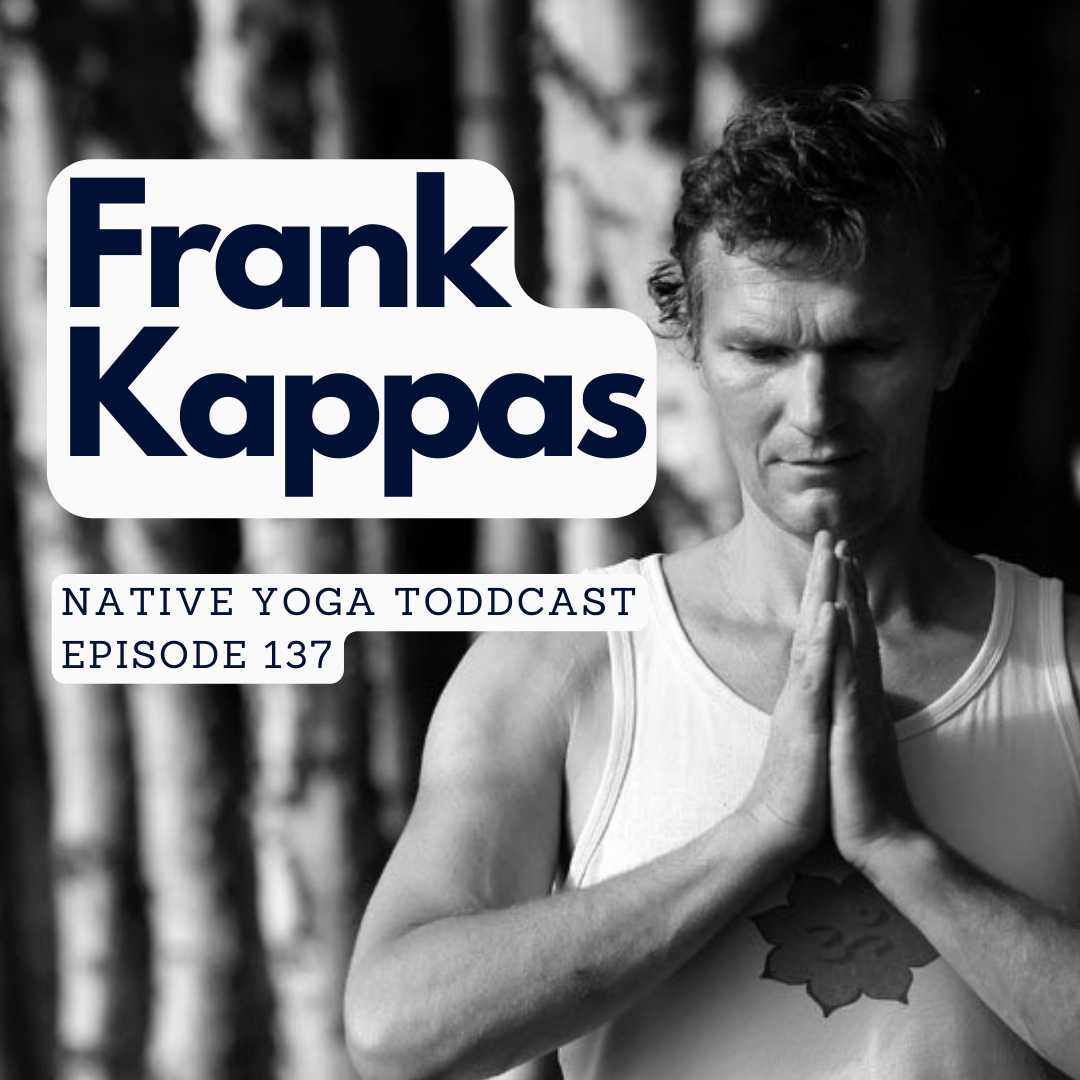
Frank Kappas is an Ashtanga Yoga teacher based in Finland. He has been practicing yoga since 1996 and has studied with renowned teachers such as Petri Räisänen and Lino Miele. Frank is also interested in other modalities such as Vipassana meditation and bodywork, which he incorporates into his teaching and practice.
Finding a structure in yoga practice can be helpful, but it’s important to also create your own internal structure.
Vipassana meditation can provide valuable insights into the mind and body, but it can be challenging to apply those insights in everyday life.
Being present and connecting with oneself and others is a continuous practice that requires self-awareness and vulnerability.
Taking care of oneself is essential when taking care of others, especially as a parent.
Stiffness and strength can be beneficial in yoga practice and can help prevent injuries.
Exploring the Depths of Yoga and Self-Discovery: A Conversation with Frank Kappas
Welcome to the Native Yoga Toddcast, where we dive deep into the world of yoga, meditation, and self-discovery. In this episode, I had the pleasure of speaking with Frank Kappas, an Ashtanga Yoga teacher from Finland. We discussed his journey into yoga, the challenges he has faced, and the profound insights he has gained along the way. Join us as we explore the transformative power of yoga and the importance of staying present in a chaotic world.
Introduction to the Main Themes
In this thought-provoking conversation with Frank Kappas, we delve into the essence of yoga and its impact on our lives. Frank shares his personal journey into yoga, from his background as an artist to his discovery of Ashtanga Yoga. He emphasizes the importance of finding a practice that works for us and the value of staying present in our daily lives. Frank also touches on the role of vulnerability and self-care in our yoga practice, as well as the connection between yoga and other modalities such as Vipassana meditation and bodywork.
The Power of Structure and Self-Exploration
Frank highlights the significance of structure in his early yoga practice, particularly in the Ashtanga tradition. He explains how having a set sequence and a dedicated practice helped him find stability and focus. However, he also acknowledges the need for self-exploration and the maturation process that comes with it. Frank shares his own journey of discovering the balance between structure and self-discovery, and how it has shaped his approach to teaching and practicing yoga.
Embracing Vulnerability and Connection
One of the key themes that emerges from our conversation is the importance of vulnerability and connection. Frank discusses how his own experiences as a parent and his exploration of Vipassana meditation have deepened his understanding of himself and others. He emphasizes the need to be present and open, even in the face of challenges, and how this can lead to a greater sense of empathy and connection with those around us.
The Role of Sensitivity and Bodywork
Frank also shares his passion for bodywork and its connection to his yoga practice. He explains how bodywork, such as Thai massage and Alexander Technique, has enhanced his understanding of the body and its sensations. He emphasizes the importance of sensitivity and touch in his work, and how it can create a deeper connection with oneself and others.
Processing the Challenges of the World
In light of recent events in the world, Frank reflects on the challenges we face as a global community. He acknowledges the difficulty of processing the violence and suffering that exists, and the tendency to contract and protect ourselves. However, he also highlights the importance of working on ourselves and cultivating compassion and understanding. Frank encourages us to explore our own patterns and reactions, and to strive for a deeper sense of connection and empathy.
Conclusion and Future Outlook
In conclusion, my conversation with Frank Kappas has shed light on the transformative power of yoga and self-exploration. Through his own journey, Frank has discovered the value of structure, vulnerability, and connection. He reminds us of the importance of staying present and open, even in the face of challenges, and how this can lead to a greater sense of empathy and understanding. As we navigate the complexities of the world, Frank’s insights serve as a reminder to continually work on ourselves and strive for a deeper connection with ourselves and others.
As we move forward, let us embrace the teachings of yoga and the wisdom of those who have walked the path before us. Let us continue to explore, learn, and grow, both on and off the mat. And let us remember that the true power of yoga lies in its ability to transform not only ourselves but also the world around us.
Thanks for listening to this episode. Check out: 👇 Free Grow Your Yoga Live Webinar – Every Thursday at 12pm EST ➡️ Click here to receive link
New Student FREE Livestream Yoga Special ~ Try 2 Weeks of Free Unlimited Livestream Yoga Classes at Native Yoga Center. info.nativeyogacenter.com/livestream Sign into the classes you would like to take and you will receive an email 30 minutes prior to join on Zoom. The class is recorded and uploaded to nativeyogaonline.com ➡️ Click Here to Join.
Subscribe to Native Yoga Center and view this podcast on Youtube.
Thank you Bryce Allyn for the show tunes. Check out Bryce’s website: bryceallynband.comand sign up on his newsletter to stay in touch. Listen here to his original music from his bands Boxelder, B-Liminal and Bryce Allyn Band on Spotify.
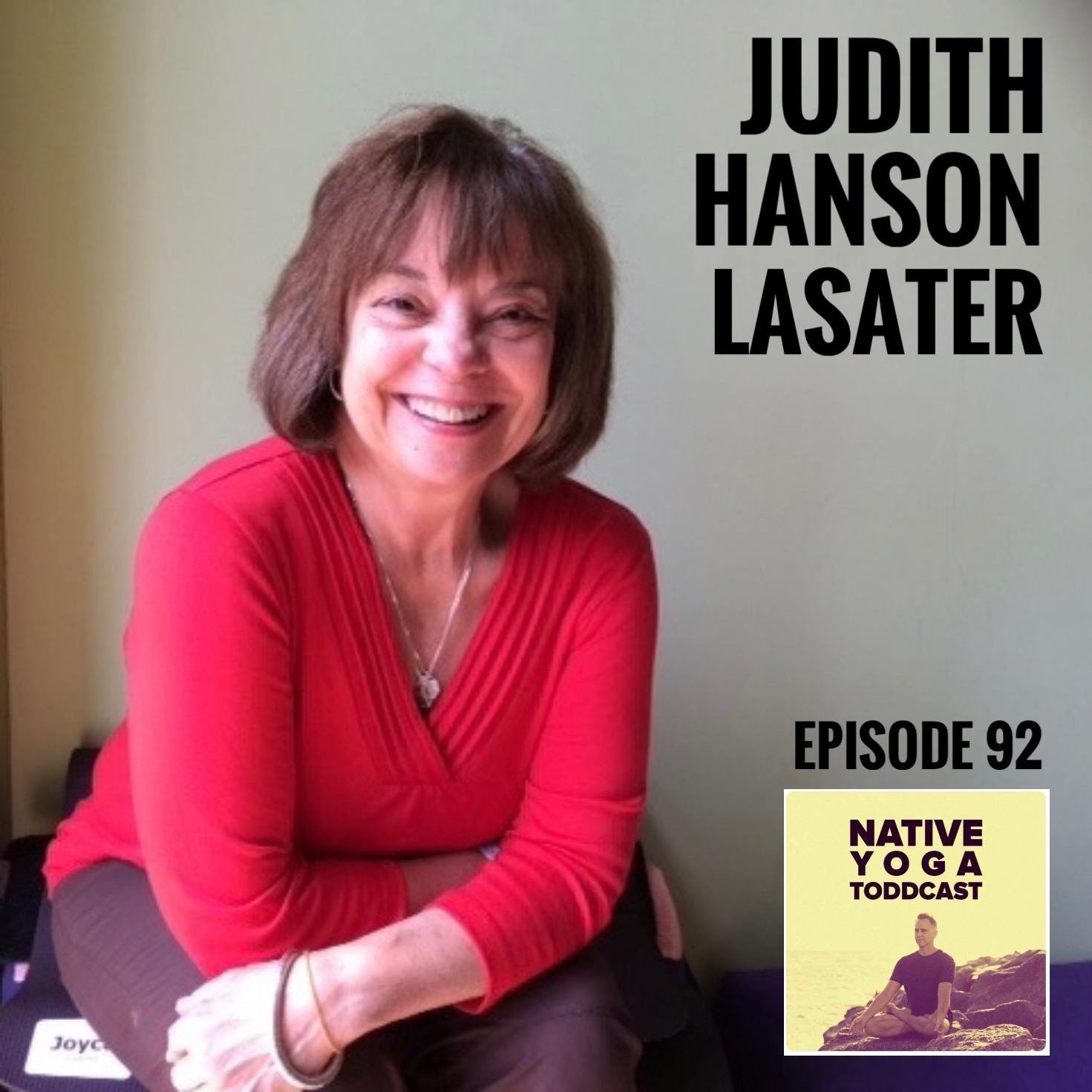
It is with great pleasure I can bring to you Judith Hanson Lasater, PhD, PT. Judith has taught yoga around the world since 1971. Judith offers numerous live events, digital courses, and has published ten books. Including Yoga Myths, and her most recent book, Teaching Yoga with Intention.
Judith Hanson Lasater is an American yoga teacher and writer in the San Francisco Bay Area, recognized as one of the leading teachers in the country. She helped to found The California Yoga Teachers Association, the Iyengar Yoga Institute in San Francisco, and Yoga Journal magazine.
During this conversation I have the chance to ask Judith questions about her new book, Teaching Yoga with Intention andthe importance of cultivating non violent communication as a yoga teacher.
Welcome to Native Yoga Toddcast. My name is Todd McLaughlin. I’m so happy you’re here. If you’re a first time listener, welcome. And for those of you that have been with me all along, your support means the world to me. I’m so pleased! I feel that my next guest here does not need an introduction. She is a famous yoga teacher, and I have utmost respect for her. Her name is Judith Hanson Lasater, and you can find her at www.judith.yoga.
Judith Hanson Lasater is a PhD. She’s a Physical Therapist. She’s taught yoga around the world since 1971. She offers numerous live events, digital courses, she’s published 10 books. And today the focus of our conversation is speaking about her most recent book called Teaching Yoga with Intention. So I want to express a huge thank you to Judith because she was so kind and accepting my invitation to be here on this podcast. And without any further ado, let’s get started.
Todd McLaughlin
I am so thrilled to have Dr. Judith Hanson Lasater here today. Judith is a PhD and Physical Therapist and a yoga teacher since 1971. Judith, how are you?
Judith Hanson Lasater
I’m doing well. Thank you very much. I hope the same for you.
Todd McLaughlin
I am really excited about this. I actually couldn’t sleep last night because I was so excited for this.
Judith Hanson Lasater
Oh, tell my children that! Or can you tell my grandchildren that? That they could be equally as excited when I call and talk to them.
Todd McLaughlin
Yeah, you can you can tell them that. I hope they’ll listen to you and appreciate that. Well, this is a great opportunity! I got a chance to read your most recent book called Teaching Yoga with Intention, The Essential Guide to Skillful Hands on Assist and Verbal Communication. I’m really excited to get a chance to talk to you about this today. Before we even go down that track though, I’m curious if you can just tell me a little bit about how and what you’re doing these days? Like what does your yoga practice and teaching like these days?
Judith Hanson Lasater
Well, one of the exciting things is beginning to teach live again. Traditionally yoga courses were taught one on one. And it was BKS Iyengar in the modern era who really began, initiated and created this whole idea of classes. But it’s still live, you can still feel the room. When you teach, you can still make eye contact with each person, if that’s appropriate. And so what I’m finding is this huge thirst, to be in community. To be in Sangha. To be with other people and just their presence. Practicing with you in the room is a nonverbal but very powerful support. And we all need that right now. So that’s what I’m liking. And that’s what’s alive for me. I’m very excited about this new book, because I wrote it during the pandemic. It flowed out of me. And that’s always a good sign for a writer.
Todd McLaughlin
I hear you! I think it’s an amazing book. I enjoyed reading it immensely. I found so many great points. I feel like you really honed in on some of the things that when I think, “how would I explain this to somebody?” And I have a loss of words. You did a great job of really laying out the foundation for healthy communication with us both verbally and if we use the power of touch in our in our teaching. So I think you did an amazing job.
Judith Hanson Lasater
Thank you. But before we go into the book, I really would like to follow, I’m all excited, of course to talk to you about, I’d like to follow my tradition of when I speak from the mat, or from the cushion, or in this place from my office chair, that I speak about what I think is, for us, all of us are listening, a really important part of our lives, which is our practice, I’d like to start with a moment of silence,
Todd McLaughlin
That’d be great.
Judith Hanson Lasater
So I’m going to ring my bell. And what I suggest you do is to sit and sit in front of your sitting bones, which brings your pelvis forward and then brings the pelvis under the spine to be like a pot to support this curvy, winding, fine, normal curve. So the brain in the head can float on the top of it. And that physical alignment will resonate through us energetically as well. And then my suggestion is that during that moment, if you find it interesting, useful and or pleasant, just imagine the very center of your brain geographically from the sides of your head from the top and the bottom and the front of the back, the deep center of the gray and just like a wave moving away from the shore, you stay rooted in that not ringing the bells and about a minute I’ll ring them again.
Todd McLaughlin
Wonderful.
Judith Hanson Lasater
All right, fire away with your questions.
Todd McLaughlin
First of all, I love the visual of wave pulling away from shore. That’s, that’s a really beautiful visual that works with that sensation of trying to put your attention right in the center of the brain. Is that something that has came to you? When a while practicing meditation? What made you think of that?
Judith Hanson Lasater
That’s a good question. It just popped into my consciousness one day, and I actually find that I can do that. With my eyes open. And I do it in conversation. I’ll be doing it a lot through our talk. It’s just a very, it takes you away from thinking. Did you notice that? Yeah. Because I have this word I’ve made up. You know, we all know the word mindfulness. But I really liked the word, body fullness. And when we can have, whenever we have the space that we can become aware of sensation, like the weight of our body on the chair, the floor. The sensations of the breath, is when we can cultivate our attention to be aware of the sensation of the moment. We step out of thought, because it’s we stepped from that space into into the present, into the present moment because sensation only occurs in the present moment. You can remember that yesterday you stubbed your toe and it hurt, but you can’t recreate that sensation in the present. So sensation lives in the moment. And when we put our awareness on the body, bodily sensation, we must then not be dancing with thought.
So here’s another technique that arose in me. And it was this idea of the tongue. So let’s try this for a second. Go back to the center of your brain.
And release your tongue from its roots, and let it lie flat in the mouth. Now, when I do that, that deepens the silence for me. Did you find that?
Todd McLaughlin
Yeah, to bring the attention to it or to even just put it right into the mouth, but then try to actually get my tongue to relax? That’s a good one.
Judith Hanson Lasater
No, no, don’t try.
Todd McLaughlin
Don’t try?
Judith Hanson Lasater
Invite. Invite. So here’s what I’ve reasoned out about that is the tongue is not just an organ of digestion, a muscle. It’s also an organ of speech. And so it’s neurologically connected to the speech centers. So we have parts of our brain that are very connected with speech and writing. And thinking because we think in words, have you ever seen a little kid? Or maybe you did this yourself? I remember doing it. When I was learning to write. Sometimes my tongue would be outside my mouth or writing the letter? Yeah, yeah. Because it’s the tongue, you have motor skills. Yeah, babies, infants have to learn how to swallow. They have to learn to swallow. Meaning that with the tongue, and how they nurse and all of that. So I think that when we relax the tongue, and there is some evidence to this, we affect the neural pathways to the brain. And so when I combined, for me, the center of the brain, release the top. Let the heart, expand to its truth. Then descend to the pelvis and feel the pulse of life of being in the pelvis. Thank you, we are then radically present in the being of the body, which lives in the moment. Did you find anything of that in this moment?
Todd McLaughlin
I did! Two things I love right off the bat is the language you used around, don’t try….. instead invite. That’s amazing. That’s a big shift. And then I started thinking, Well, we really don’t have anything to talk about now. Because you got to the heart of it all already.
Judith Hanson Lasater
All will be well.
Todd McLaughlin
You got to the heart of the matter right off the bat.
Judith Hanson Lasater
Can I tell you a story about that?
Todd McLaughlin
Yes, please.
Judith Hanson Lasater
So my second time that I went to Russia, I think I went the first time in ’89. When the wall was coming down, and then again in ’91. And the first time I went, there were just a couple of, two or three Americans there. But then there were a larger group that went and we were in a big cafeteria in one of the big hotels, where we were all staying and then a group of Russian yoga teachers came walking towards us. They came in, you know, and I because I’d been there before. Got up, everyone was like, what did we do what we do? And so I got up and walked towards them. And pretty soon other people started coming and we started introducing ourselves and I remember distinctly talking to a woman and I was doing this southern girl, chatty, chatty. Your city is beautiful, I got it that you know, whatever. And she reached over and she grabbed me by the upper arm. And she leaned into me and she said, No, let us talk a real thing. I love that. That’s what you, that’s what you and I are about I think right now.
Todd McLaughlin
Yeah. Let’s get right to the to the heart of it. That’s amazing. Judith. Well, in your book, you mentioned the importance of language. And you mapped it into like three different stages. Can you please define and explain the three levels or stages of learning about language and the teaching of yoga?
Judith Hanson Lasater
Would you prompt me on that, please?
Todd McLaughlin
I will. Because the first one is how you talked about how first as a yoga teacher, we transfer info “about the pose.” Like the first level of conversation is kind of like, okay, Triangle Pose. And let me just convey some words to help you get from point A to point B.
Judith Hanson Lasater
Yeah, it’s just information. Yeah, it’s like, it’s technique, which is very important, because technique affects energy and organs and state of mind, the nervous system, and we’re very complex. In fact, you know, years ago, people used to say, body, and mind and body were completely separate. That was the western view. And then it started hyphenating, that term. MInd-body. Interesting. You know, and then there was a period, you’d see it written as one word, I see it a lot. Now mindbody is one word. So I’ve made up a word, which is mody. Mody. Because the body and the mind on are so one.
Todd McLaughlin
Yeah, that’s a great word.
Judith Hanson Lasater
Mody. So yeah, I mean, we should get it, we should get it in the dictionary, another word I made up, it’s not just multi-tasking, it is hyper-tasking. So you know, if there, so I want uni-tasking to be in the dictionary. And we, this spiritual practice asked the question, “Can we do one thing at a time?” And usually, the answer is no way Jose. So, yes, the first part of communication is, of course nonverbal. But if we get past that, we’re giving them information. Because if someone comes in and says, teach me how to do yoga, and we just say, do Triangle Pose, we need to tell them turn the left foot in the right foot out, stretch the arm, etc. But that’s not our most important job. So number two?
Todd McLaughlin
The beginning of the personalization of instructions.
Judith Hanson Lasater
Yeah, so a leader in yoga is someone who leads the class. I’ve even seen people turn their back and just do their practice, and people follow them. Which surprises me, so you’re leading. But then teaching begins When you can say to this person, please put your feet wider apart into this next person, would you bring them closer together, when there’s an individuation, of how we can support each pupil expressing the beauty of their Trikonasana in this moment. In ways that keep them safe, and open their heart and mind the same time and bring them into their body into their own self. So that’s a deeper, that’s a real teacher. The teacher sees both the difference and the absolute unity among all people, and to help them help the students. What’s the third one?
Todd McLaughlin
I think you’re correct! You answered that really well, thank you. That when the teacher is able to communicate in such a way that their words evoke, or conjure the pose from the student, or how the student can discover the pose already exists within them. And I love how you wrote as an ancient archetype. That’s so cool. Like the thought of…..
Judith Hanson Lasater
A pyramid. Which is a three dimensional triangle. Yeah, so that presupposes the understanding that we could never teach anybody anything. We can only create an environment in which people choose to learn.
So the question is, how are we going to create that environment with our language? So I make intentional choices. I don’t say good or bad, right or wrong. Oh, I might say to a student, I really liked the way your knee is in that pose, or I’m concerned about placement of your knee, would you try this and see what you think how it feels to you. So because if I come, you know, stomping in the class, and say, do this, do this, do this. And then I learned something and I wanted to change my mind, I’ve painted myself in a corner. So what I want to teach in that part of the of the pose is twofold. The second stage, is like I want to teach them technique in a way that underscores trusting that they trust themselves. First, I want to use my words in a class, to create an environment in which people are trusting themselves and at the same time they’re willing to try something new. And I’m not there to impose the pose to fit them in a cookie cutter. So I like to say to my students, I don’t want to teach you rules, I want to teach you principles. Because that’s a bigger, bigger idea. There are anatomical principles about how the pelvis can move over the femoral heads, in Trikonasana that will relieve the lower back and create a sense of ease and dynamism at the same time. You know that in Patanjali’s yoga sutra, chapter two verse 46, Sthira Sukham Asanam. It’s a definition of Asana. So abiding in ease is asana. So an Asana is that which we can be in which we can be still, and at ease. And it’s really ironic, we think of as movements that are difficult.
Todd McLaughlin
Good point!
Judith Hanson Lasater
How can I create an environment in which people find their Trikonasana? And often it’s not airy fairy? I mean, there are boundaries, there are alignment principle. You could be, you know, hyperextending your knee or whatever, that guidance. But the asana, Todd, the asana isn’t the yoga. It’s the residue, that the asana leaves in the nervous system that is the yoga. Because Yoga is not just, you know, to paint with a broad brush, Asana, Pranayama, meditation. Those point to the potential of presence, which is the state of yoga. So we confuse them. People say I am going to do yoga, like, what? When are we all going to say I’m going to go in my own? Right? And bring that into the world. And bring that. That state of presence. Compassion.
Todd McLaughlin
Great point, Judith. Was there a point in your transformation through your yoga journey where maybe you were practicing a yoga pose and thinking about that yoga sutra, where it’s mentioning that the asana should be stable and comfortable. And thinking, “how in the world could this be comfortable?” I’m in this really like, uncomfortable position right now. And has that informed your teaching and evolution of your practice over the years?
Judith Hanson Lasater
Yes, but it wasn’t a thought. It was an experience, which I’m happy to share with you. So I was taking a class from another teacher. And I was doing what it at that time, for me was my favorite pose, which was Paschimottanasana, which is just sitting on the floor, leg straight and bending forward. Which I think is the hardest forward bend because there’s nowhere to hide. Like, if you’ve bend one knee, if you’ve bend one day like Janusirsana, you can cheat all over the place. But you cannot cheat in Paschimottanasana. It’s you and your hamstrings baby that it is no getting away from it. And it’s also true I think in Urdhva Dhanurasana, and it’s the most difficult backbend. Because when you’re doing one side, Raja Kapotasana, or you’re doing one side of another posture, there is a way to work off to the one side of something in there. Alright, so that was my favorite pose. And I was I like to say I had my hamstrings surgically removed at birth. I just felt like for a long time, and I’m, you know, just sort of naturally a little loose. And so it’s just flat down, you know, forehead on the shins. I mean, I felt a little bit of stretch. But not much, you know, I was pretty comfortable there. And my mind was spinning like what are we going to how long are we gonna be here? What’s happening with that other person doing what I’m going to have for lunch after class, you know, the normal, useless brain chatter. And then there was experience and I want to treat this story with humility, gratitude, and wonder. And I had the sense that something just kind of flew out of me. And I still felt the stretch but I wasn’t doing anything. And I just stayed there. It wasn’t like I even stayed. It was like, there was no deep reason to move. There was no discomfort, there was no agitation. I just stayed there. And finally the teacher said, come up, and I didn’t come up. Because I didn’t know what that meant. Literally, it was so bizarre. He said, come up, and I’m like, what does that mean? Because he was, it would be as if I were saying to you stop jumping up and down. Yeah. And you know what? I’m not jumping. Yeah. So he said, stop doing the pose. And I’m like, what is he talking about? And then this little ego stuck it’s head out behind the tree and my consciousness and said, Wow, that was cool. I started, you know, then it shifted again. But I thought to myself afterwards, well, I’d finally practiced one pose. It was my first pose, you know, it was years into my practice, but…. So, does that answer your question does?
Todd McLaughlin
Yes. Perfectly. Since I’ve read your book, I’ve been extra thoughtful about my speech and my touch, in a good way. In a really good way. Like, maybe I was just on autopilot for a little bit. I kind of forgot how important it is. And you made mention, in your book, this is quoting you “we speak to manipulate the world around us” end quote. Can you explain that? It makes sense to me. It makes sense to me, but love it. I thought it was actually kind of profound when I heard that. We speak to manipulate the world around us. I might think, “I’m not trying to manipulate the world.” I’m just getting through the world here. So I love that sentence.
Judith Hanson Lasater
Okay. So first, let’s look at the word manipulate, because that has a negative connotation. But if we’re truthful, Todd, you are manipulating the world around you all day long. You go for a run, you’re manipulating your consciousness, right? Go for a run, you smoke a funny cigarette, you smoke a real cigarette. Not that you do these things. You have coffee, you want your caffeine which manipulates your nervous system. You do your Pranayama or your yoga. You stand on your head, all this manipulate your nervous system. You go to sleep and that manipulates your nervous system. We’re always seeking homeostasis. In fact, you are choosing, you know, when you eat, you feel different. You manipulate your nervous system. That’s what human beings do. And there are two kinds of manipulation. There’s the unconscious one and the conscious one. And so to me, that’s what yoga is about is paying attention to how doing Savasana. Savasana manipulates your nervous. Does it not?
Todd McLaughlin
It does.
Judith Hanson Lasater
Okay, so that’s a conscious manipulation. So the question is not, should I not manipulate, it’s am I doing it consciously, to live my highest values. And that’s what yoga makes us aware of. And this speech that I’ve that I’ve studied this technique of nonviolent communication has radically changed my relationship, in my interaction with my children as they were growing up, and in intimate relationships and in teaching.
And the best way we can do that. Well, let me let me let me back up a second.
Every time I go to teach, whether it’s online or in person. The first thing I do is have the one minute. And during that one minute I connect with myself. This is the first rule of teaching. When I sit there in front of you today or in class. The first thing I do is I ask myself this question. What is alive in me right now? Am I anxious? Am I happy? Am I sleepy? Am I irritated by the discussion I just had with someone? It doesn’t really matter what is arising in me but when I get connected with that. Oh right now I’m tired or right now I’m excited. Right now I’m worried about one of my children. It was always one of the three was at the top of the worry list, you know, over the years. Whatever, whatever is arising in me when I notice it. That when I bring it into the light. It connects me with the present moment. And I go, Ah, yes, I’m feeling excited. Ah, I don’t judge it. I don’t try to make it different. I don’t try to fix it. I just notice it. Because, and name it to myself. Right now I’m sad. Because my uncle died. I’m just sad right now. Okay. That’s what’s alive in me, then I’m firmly present. Radically present I call it because we’re very rarely there. So the next thing I want to do is I want to be able to see you. And I can’t see you and or connect with you if I’m not connected with myself. So when I see you, and it’s really tricky, because I’ve taught for 51 years. I have students who’ve been with me for 45 years.
Todd McLaughlin
Wow, that is amazing!
Judith Hanson Lasater
You know everything about them. You know them before they met their husband, before they got married, when they got divorced, and they had these kids, and they had this surgery, then this. And so it blurs in a way, your objectivity. So when I go to teach somewhere where I don’t know, most of the people, I sometimes feel that my best teaching. Because I don’t see my friend. I see a human being, you know what I’m saying? You may know what I am saying. So that. Yeah, so the second part of this is I want to see the person standing in front of me. They may have been there for many weeks, or never again, but can I be present with that person in this moment?
New Student Livestream Special ~ Try 2 Weeks of Free Unlimited Livestream Yoga Classes at Native Yoga Center. Sign into the classes you would like to take and you will receive an email 30 minutes prior to join on Zoom. The class is recorded and uploaded to nativeyogaonline.com ~ Click Here to join.
New Student FREE 30 Minute Yoga Meet & Greet ~ Are you new to Native Yoga Center and have questions that you would like us to address? Whether you are coming to In Studio, Livestream or Online Recorded Classes we offer a one time complimentary 30 minute zoom meeting to answer any questions you may have. Schedule a time that is convenient for you. Click Here



 Native Yoga Blog