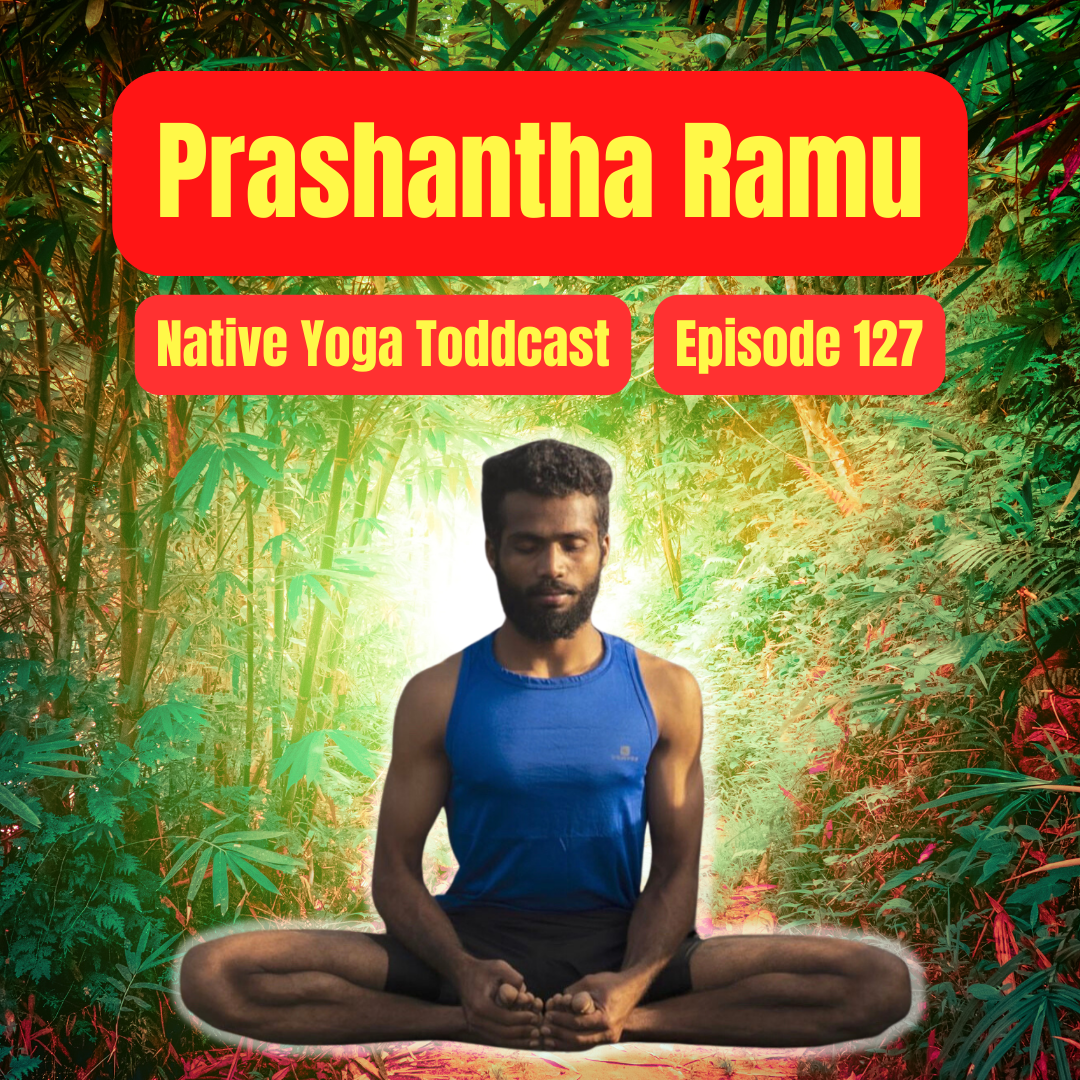
I am honored to present Prashantha Ramu on this week’s episode! Prashantha is a yoga teacher living in Mysuru, India who is passionate about the power of yoga to heal and transform lives. Listen as he shares his life as a yogi and feel the positive vibrations he has to give.
Myself Prashanth from Kadavadara Gudi Village, Mysore. Working with IT corporate culture so many years I never left my love towards yoga.
Yoga is not just part of my life, it travels with me in my entire span of life in every step of My life. Yoga is introduced to me in my childhood from my father. Since then I have practiced Yoga under guidance of my father for two years. Yes, My father is my first yoga guru. Any knowledge that is introduced in childhood has special impact on life.
Since 2013 I have been practicing vinyasa yoga and Ashtanga Vinyasa Yoga. After a long self practice went for TTC in Mysore, and I’ve been teaching for four years.
Today I stand in front of you all as a person who emerged different because of Yoga. Practice should never end in the yoga whether it is teacher or student, Practice is the key to the success. Believing strongly in this, I expect the same from the students. Dedicated, determined, passionate and confidence in learning and also be hardworking so the success can reach you and make you new person. Yoga has different dimensions of learning, I help you with understanding Yoga in your own way, which is my unique way of teaching Yoga. Depending on the student requirements the sequence will be built/created and will be used and can modified again based on the student learning. This methodology is very important as every human being is unique with their strength and flexibility. I’m specialised in different styles like Ashtanga Vinyasa Yoga, Vinyasa Yoga, Handstands, and many more different sequences in a yogic Way.
New Student Livestream Special ~ Try 2 Weeks of Free Unlimited Livestream Yoga Classes at Native Yoga Center. Sign into the classes you would like to take and you will receive an email 30 minutes prior to join on Zoom. The class is recorded and uploaded to nativeyogaonline.com ~ Click Here to join.
Join my special guest Susy Markoe Schieffelin for a discussion on sound baths and the healing effects they inspire. Hear Susy talk about her journey to self discovery and how she is helping others join globally in sharing positive sound vibrations.
How the different bowls are associated with the chakras.
How to start a sound bath.
Dealing with emotional reactions during a sound bath.
Shifting the focus to developing your personal experience.
The difference between a sound bath and a concert.
Susy Markoe Schieffelin of The Copper Vessel is a Los Angeles-based sound healer, reiki master, Kundalini yoga teacher, and inspirational speaker who has led sound baths viewed or attended by millions of people all over the world. Susy has brought healing to employees at companies such as Google, Pandora, and Nordstrom, has played crystal bowls with notable artists including Leann Rimes and the Los Angeles Philharmonic, and has been featured in publications such as WSJ, VOGUE, USA TODAY, and Los Angeles Times. Susy is known for her light-filled presence and ability to guide people towards radiant and empowered lives characterized by self-love, serenity, abundance, and joy. She is the founder of the Sound Healer’s Academy, an innovative Crystal Alchemy Sound Healing and Spiritual Business Mentorship training, serves as a self-love advocate for brands, has created custom product lines, and offers deeply restorative crystal alchemy sound bath ceremonies and healing rituals both in person and online. Learn more and follow Susy on Instagram @thecoppervessel.
New Student Livestream Special ~ Try 2 Weeks of Free Unlimited Livestream Yoga Classes at Native Yoga Center. Sign into the classes you would like to take and you will receive an email 30 minutes prior to join on Zoom. The class is recorded and uploaded to nativeyogaonline.com ~ Click Here to join.
Join this week’s special guest, Federico Blardone. Federico is a talented and passionate yoga teacher from Italy. He combines his knowledge of yoga asana with vedantic studies to facilitate meaningful yoga practices.
How did you become interested in embodied movement?
The utility of Virabhadrasana & backbending.
The definition of madness in yoga.
Learning and teaching embodied movement classes.
Using the mind to teach the body and the body to teach the mind.
Yoga’s role in building character.
Being reasonable and living in the moment.
Knowledge of the body and meditation.
Federico learnt the traditional way of ashtanga Yoga through the guidance of the great Yogini Eileen Hall.
He shares this discipline focusing on the alignment of the body to understand and optimize introspection and injury prevention.
His Embodied movement Yoga classes are based on understanding the natural body movements and how to integrate them in Yoga asana.
His process of teaching is based on observing progressive patterns, moving from the preliminary lines of the postures towards the big picture represented by the asana.
He has been teaching around the world since 2015 and has taught regularly in Italy, China, India, Switzerland, Mexico, and shares workshops abroad regularly.
New Student Livestream Special ~ Try 2 Weeks of Free Unlimited Livestream Yoga Classes at Native Yoga Center. Sign into the classes you would like to take and you will receive an email 30 minutes prior to join on Zoom. The class is recorded and uploaded to nativeyogaonline.com ~ Click Here to join.
New podcast with Christina Martini of Shala Santosha Ashtanga & Ayurveda Yoga Holistic Practice available now!
Senior Teacher and Owner, Founder of Shala Santosha Ashtanga Yoga & Ayurveda Wellness . A direct student of Manju Jois, the oldest son of K. Pattabhi Jois, recognised worldwide as the foremost authority on Ashtanga yoga. Christina has devoted her healing journey to trusting the Traditional Lineage of Ashtanga Vinyasa Yoga and Ayurveda from her mid 20’s to present as not only a way of living but her medicine for optimal health and healing.
Looking out for the best interest of your students.
How did you get started with Ayurveda and yoga?
Working in palliative care.
She is honored to be part of a special family being Blessed, Certified, Authorized for All Level of Practice by her Guru Manju Jois which her ongoing lifelong studies and training with him is deep in the approach of Holistic Ashtanga & Ayurveda Yoga Therapy. In addition, Christina honors the knowledge passed onto her by mentorship, guidance, trainings and teachings of other master teachers, David Williams, Nancy Gilgoff, Tim Miller, David Swenson, Maty Ezraty, Ken Harukuma and Jo Ichihara.
Christina enjoyed the path to offering the world a healthier lifestyle and is Certified in Ayurveda Wellness, Perfect Health, Total Wellbeing Educator from Deepak Chopra Center. “ With deep gratitude I bow before ALL the teachers who have paved the path before us With our devotion and dedication as forever students, devoted practitioner, authorized teachers, the practice of yoga itself is the true teacher and to honor the knowledge, teachings, traditions transmitted from teacher to students, Parampara.
Christina’s experiences of 20+ years in Ashtanga Yoga Therapy Self Practice and Teaching have touched many walks of lives including practitioners with acute, chronic illness, pre existing conditions, injuries and post operative recovery. She is highly experienced with conditions from Infertility, Pregnancy, MS, Parkinson, Cancer, Cholesterol, Hypertension, Seizures, Obesity, Insomnia, Cardiovascular, PTSD, Diabetes, Stress Management, Substance and Alcohol cessation and Lifestyle changes. Read some of her Testimonials here.Reviews from her Clients
Christina received her Certified Ayurveda Health Practitioner, Perfect Total Health Education with Deepak Chopra Center , and continuing studies with the Ayurveda Institute for Health & Lifestyle. In addition she has worked 15+years as a licensed nurse and Certified Cancer Patient Health Advocate through Harold P. Freeman Patient Nurse Navigator Institute, holds an active nursing license in California, Hawaii. She remains active in advocacy for excellence in care as a member with the Association Oncology of Nurse Navigation, American College of Lifestyle Medicine, American Holistic Nurses Association,Yoga Alliance Registered School and Educator, Donor to Yoga Gives Back Foundation. Seva to Yoga for Veterans and Yoga for Cancer.
New Student Livestream Special ~ Try 2 Weeks of Free Unlimited Livestream Yoga Classes at Native Yoga Center. Sign into the classes you would like to take and you will receive an email 30 minutes prior to join on Zoom. The class is recorded and uploaded to nativeyogaonline.com ~ Click Here to join.
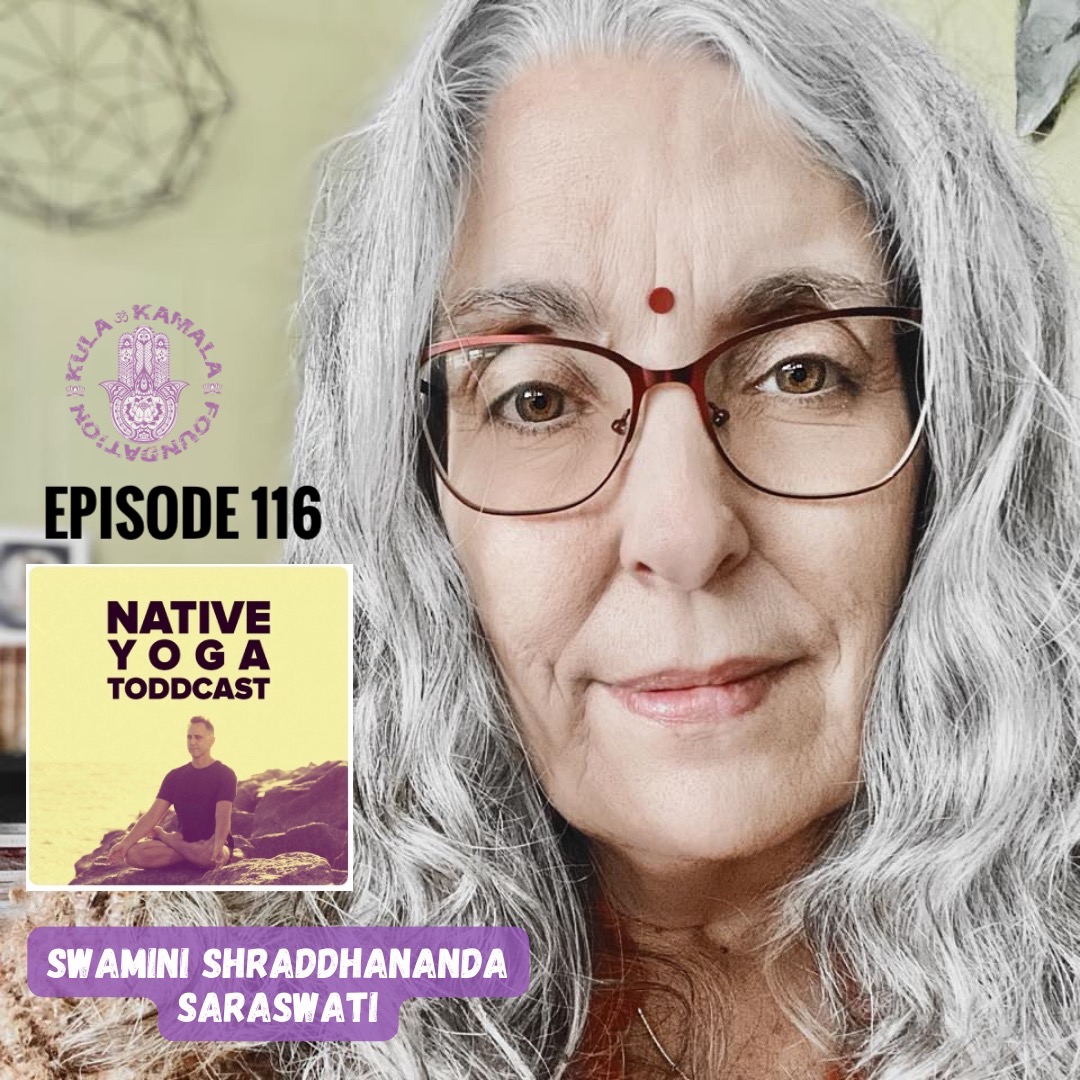
I am proud to introduce to you Swamini Shraddhananda Saraswati. SwaminiJi is the founder and primary teacher of Kula Kamala Foundation & Yoga Ashram, a 501c3 nonprofit organization. She is a monk in the Sivananda Order of Sannyasins and a 500E-RYT registered with Yoga Alliance. She began practicing yoga in her early twenties and has found it to be a continually transformative, reaffirming and uplifting lifestyle, one which continues to help her integrate and connect more deeply.
When you put your mind to something, you get the job done. (2:19)
What gave her the drive to follow through on her dream? (7:43)
How did you become a yoga therapist? (18:12)
Mantras as a way to learn. (23:35)
Yoga as a solution to violence. (28:56)
Conservation of the environment and the local ecology. (35:12)
Everything is brahman and everything is god. (40:36)
What do you think when you think about Gandhi? (46:25)
How did you build your own temple? (52:50)
Understanding vs. intellectual knowledge. (58:34)
Meeting people where they’re at. (1:03:47)
With thousands of hours of advanced study in Yoga and its adjuncts, SwaminiJi authored and directs 200YTT, 300YTT, 870PYT, hospital based Yoga Therapy programs, and curriculum for Yoga in primary schools, in addition to other specialty training curriculum such as Goddess Based Wisdom and Tantra as a Practical Healing Methodology.
For over 12 years, SwaminiJi has worked with abused and neglected children, at-risk teens, women in crisis, and individuals seeking spiritual clarity in their life and relationships.
SwaminiJi’s experience and knowledge as a teacher, guide and advisor are grounded in decades of education, application, experience, research, and reflection. Personally and professionally, SwaminiJi abides in principals and guidelines that are grounded in non-harming, empathy, compassionate discipline, and the acquisition of meaningful life skills.
In addition to her skill and education in Yoga and Yoga Therapy, SwaminiJi holds a PhD in Anthropology and has held the position of Professor of Yoga and Meditation (Georgian Court University) and Professor of Cultural and Evolutionary Anthropology (Temple University and Monmouth University). She has published scholarly articles on ancient human diet and its relationship to health and socio-political issues.
SwaminiJi enjoys self expression and creativity. An artist in several mediums, she writes daily and has published books of poetry and reflection.
SwaminiJi is available to provide satsangs, blessings and trainings at local and regional centers, yoga studios, retreat centers, and events. To request SwaminiJi speak at one of your events, please contact the Ashram office at 484-509-5073 or email casey@kulakamalafoundation.org
New Student Livestream Special ~ Try 2 Weeks of Free Unlimited Livestream Yoga Classes at Native Yoga Center. Sign into the classes you would like to take and you will receive an email 30 minutes prior to join on Zoom. The class is recorded and uploaded to nativeyogaonline.com ~ Click Here to join.
New Student FREE 30 Minute Yoga Meet & Greet ~ Are you new to Native Yoga Center and have questions that you would like us to address? Whether you are coming to In Studio, Livestream or Online Recorded Classes we offer a one time complimentary 30 minute zoom meeting to answer any questions you may have. Schedule a time that is convenient for you. Click Here
Join me for this fascinating conversation I had the chance to have with Alexandria Crow titled The Physics of Yoga. Alexandria is an inspirational and thoughtful yoga teacher. She has years of experience challenging her body and mind. Listen as she shares some of the wisdom she has found along her journey.
Alexandria’s Bio My daily yoga practice has shown me how to approach my life with eyes wide open, allowing me to achieve a sense of ease and acceptance I never thought possible. Choosing to walk down this path has changed my life completely and left me more accepting of myself and the nature of reality than I ever thought possible. Challenges will always exist, but I see them clearly and quickly now, and thanks to my yoga practice, I have the tools to act with great skill.
Transitioning from competitive gymnastics to yoga.
New Student Livestream Special ~ Try 2 Weeks of Free Unlimited Livestream Yoga Classes at Native Yoga Center. Sign into the classes you would like to take and you will receive an email 30 minutes prior to join on Zoom. The class is recorded and uploaded to nativeyogaonline.com ~ Click Here to join.
New Student FREE 30 Minute Yoga Meet & Greet ~ Are you new to Native Yoga Center and have questions that you would like us to address? Whether you are coming to In Studio, Livestream or Online Recorded Classes we offer a one time complimentary 30 minute zoom meeting to answer any questions you may have. Schedule a time that is convenient for you. Click Here
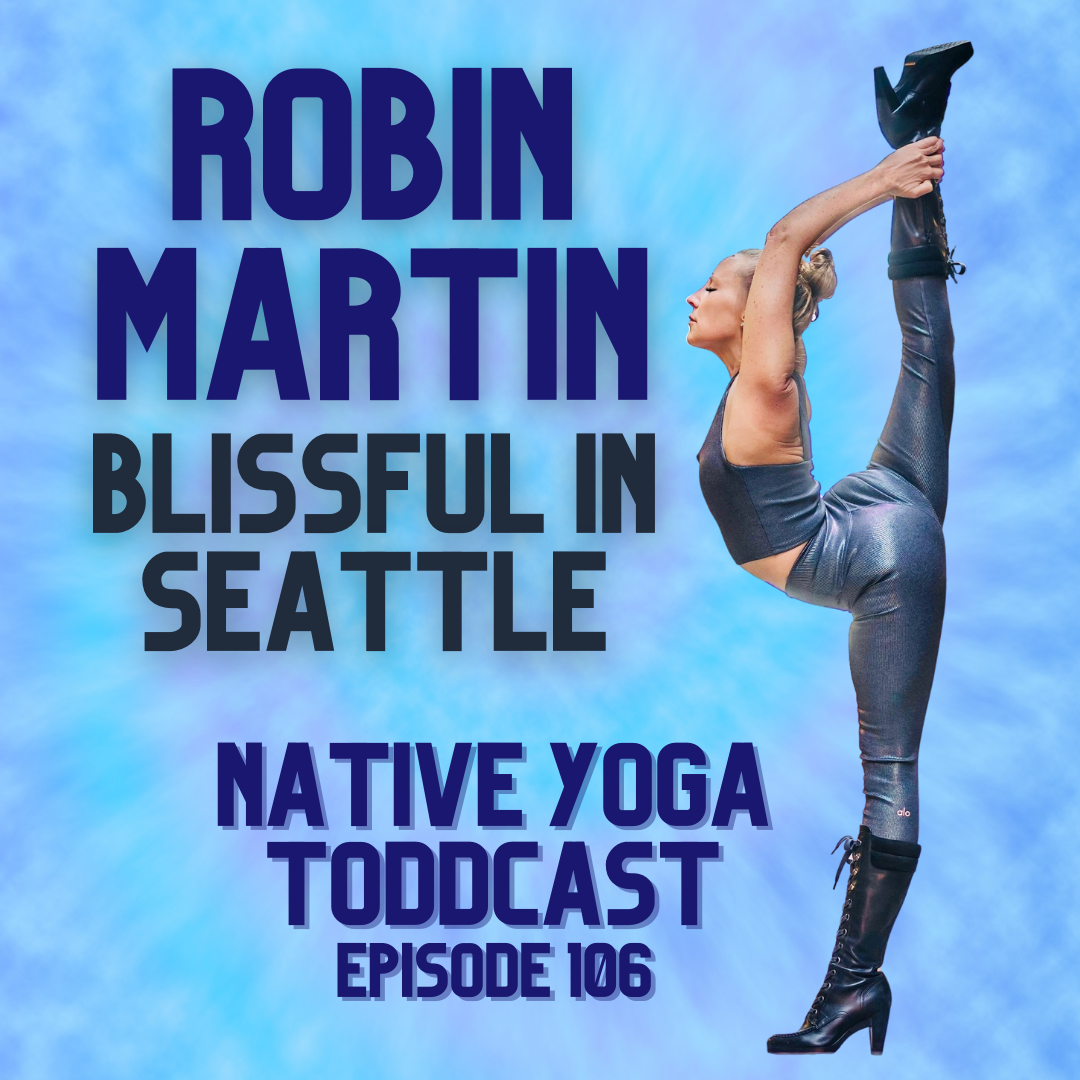
I am so delighted to bring Robin Martin on the podcast. During this conversation we discuss topics like:
How she got into yoga.
The decision to become a yoga teacher.
Balancing social media pressure and social media stardom.
Passive flexibility vs active mobility.
Advice for budding yoga teachers.
About Robin I’m Robin Martin, a certified yoga teacher based in Seattle, WA, USA. My practice and my teaching are ever evolving. While vinyasa yoga is my favorite style of yoga to both practice and teach, I have studied many different methods of yoga with numerous master teachers and appreciate the beauty in all styles. I earned my 200 Yoga Alliance certification through Tiffany Cruikshank of Yoga Medicine. Additionally, I have 4 advanced training certifications in shoulder, hip, spine and myofascial release through Yoga Medicine. I am also certified to teach paddleboard yoga.
Welcome to Native Yoga Toddcast. I’m so excited to have the opportunity to interview Robin Martin. Robin Martin is a yoga teacher that lives in Seattle, Washington. She teaches locally in studios around where she lives. She teaches on Zoom and she also leads international retreats where you can join her. One of them’s coming up in Greece actually. Check her out on her website, RobinMartinyoga.com. And also follow her on Instagram at @RobinMartinyoga. All right, let’s begin. I’m so excited to have this opportunity to speak with Robin Martin and Robin, how are you? How are you doing today?
Robin Martin
I’m doing well. Thanks so much for having me on your pod…..on your Toddcast, if you will.
Todd Mclaughlin
Thank you so much. My wife, when I said I was gonna do a podcast, said you have to do a Toddcast. I couldn’t argue with her. So thank you.
Robin Martin
It’s very cute.
Todd Mclaughlin
Thank you. I appreciate that. And where are you joining us from Robin?
Robin Martin
Seattle, Washington. Northwest Coast USA.
Todd Mclaughlin
Are you born and raised there?
Robin Martin
I actually am. I’m one of the few natives I think of the area. I was born in Seattle. I grew up in Olympia, which is the state capitol. It’s about 90 minutes south of the city. Both of my parents grew up in the city. But my dad got a job for the State Department of Fisheries. And that was located in the Capitol area. So that’s where I grew up. And then I headed right back to Seattle. I went to University of Washington, and I’ve stayed in the area ever since. I travel a lot. I travel all over the world. But Seattle is home.
Todd Mclaughlin
Wonderful. Are you in downtown Seattle?
Robin Martin
Actually, no, I’m on the east side. I did live in the city. For a while after college, I lived on an area called Queen Anne, which is right in the city. And that’s actually where my mom grew up. And then I moved to the east side, which is for those who know the area Bellevue, Washington. It’s on the east side of Lake Washington.
Todd Mclaughlin
Nice.
Robin Martin
I am about 30 minutes outside of the city.
Todd Mclaughlin
Awesome. I’ve never been but my sister used to live there. And she loved it and just always raved about it. I wish I had gone and visited her while she was there.
Robin Martin
Where was she living when she was there?
Todd Mclaughlin
Oh, that’s a great question. You stumped me. I don’t remember the suburb they were in to be honest.
Robin Martin
Yeah. I am always curious.
Todd Mclaughlin
That’s cool. Do you teach yoga in a studio? Or are you teaching more on a retreat basis?
Robin Martin
Oh, I teach all of it. And everywhere. I teach retreats, I teach in several studios in the city, and I teach at home. I have regular zoom classes leftover from the COVID era when they all kind of started but I have a relationship with iHeartMedia. So I teach for those guys a couple days a week and then I have privates that actually come to my home. So yeah, it’s a pretty full and and interesting schedule. And I really like it because it’s such a variety of places, temperatures, vibes, you know, all of that. And traveling, I have taught at lots of festivals and workshops around. I taught in Saudi Arabia in October of this past year. It was a wonderful opportunity to teach at an event that they were hosting there. The Crown Prince was hosting. So yeah, I have a very colorful teaching history and hopefully going forward, it will continue.
Todd Mclaughlin
Yes, that’s amazing how many years have you been teaching?
Robin Martin
I’ve been teaching for about 12 years I think.
Todd Mclaughlin
Cool. Yeah. And how about practicing? When did you start practicing?
Robin Martin
May of the year 2000? So it’ll be it’ll be 23 years in May. Yeah. Hard to believe considering I’m only 24 years old. (laughter)
Todd Mclaughlin
Yes. A miracle. That is incredible, right?
Robin Martin
My mother practiced yoga when she was pregnant with me in utero.
Todd Mclaughlin
Yes.
Robin Martin
Don’t you love that one? That’s like the best yoga answer.
Todd Mclaughlin
Right. I’ve been practicing since in utero. Have you heard the theory that while in utero, we practice every yoga pose that’s ever been created?
Robin Martin
I’ve never heard that. No,
Todd Mclaughlin
I’ve heard someone say that. This idea that 84 number and that there’s 84,000 different yoga poses or Shiva practiced something within the realm of 84 million yoga poses. And that in utero, we actually go through all of those positions before we actually come out. I don’t know how true that could be?
Robin Martin
And, you know, I mean, then as the baby is forming in the uterus, it is changing and moving around and right. Who knows? I don’t know.
Todd Mclaughlin
That’s a good point. I know. It’s kind of fun to think about.
Robin Martin
However, I do have to question that one. Because, like Padmasana for example, Lotus Pose would require a lot of maneuvering to get into. It’s the one where your heels are tucked up by the creases of your hips. So I don’t know. I can’t really imagine that.
Todd Mclaughlin
Yeah, yeah, I think it’s a myth. It’s a fun myth.
Robin Martin
Yeah, it’s interesting. I mean. They’re not gonna be grabbing their foot doing a Dancer Pose.
Todd Mclaughlin
Are you a mom?
Robin Martin
I am.
Todd Mclaughlin
How many children do you have?
Robin Martin
I have two.
Todd Mclaughlin
Nice, awesome. Do you mind me asking how old they are?
Robin Martin
No, I don’t. They’re 16 and 18.
Todd Mclaughlin
Oh, cool. I have a 16 year old and a nine year old.
Robin Martin
Okay.
Todd Mclaughlin
Yeah, is your 16 year old driving?
Robin Martin
Well, I have two daughters. And, and it’s funny, they just didn’t seem to be in any rush to get their driver’s licenses. My 18 year old finally got hers at some point. But she also had the whole issue where she did her driving school during COVID. And so she had to wait till the drivers were available to do her drives. And they were very backlogged. And my younger one is kind of in the same situation, though, she was done with her whole driving school while still 15 And she’s just anxiously waiting to do her drives and she wants to get a driver’s license. My older one just didn’t seem to be in any hurry. And same with my nephew. I was just reading an article just today, oddly about how how kids today don’t have this sense of urgency or drive. I mean, I couldn’t get mine fast enough. I mean, it was like, the day I turned 16 I think was at the DMV getting my driver’s license.
Todd Mclaughlin
100% What would you, if you had to take a stab in the dark, the reason is that kids at age 16 aren’t chomping at the bit the way we were?
Robin Martin
You know, well, I don’t know. I mean, it doesn’t make any sense to me. I know that I lived a bit out in the sticks. And for me, it was freedom to be able to drive. When my daughter and her closest friend drives drives her around so maybe that’s the reason why she’s not in such a hurry. It’s easier to get around now. They can Uber. They’re just closer to everything than I was to anything where I grew up. I can’t really explain it because I think it’s crazy.
Todd Mclaughlin
I hear you. I kind of pushed my son. I was like, when you are 15 you are getting your learner’s on the day. Because you’re gonna want your license when you’re 16. Let’s go.
Robin Martin
Does he have his license?
Todd Mclaughlin
He does. Yeah, he’s cruising. So far. So good. Knock on wood.
Robin Martin
When did he turn 16?
Todd Mclaughlin
July 11. So he’s been going now like eight months already. Yeah.
Robin Martin
Yeah, mine just turned 16 last month, but she’s just waiting to do the drives with the driving school. When when I was 16 we had driver’s ed in high school. I think I had to pay extra for it. But it was like it was something you could do. Right, and like teachers volunteered to do the drives with the students. It’s different.
New Student Livestream Special ~ Try 2 Weeks of Free Unlimited Livestream Yoga Classes at Native Yoga Center. Sign into the classes you would like to take and you will receive an email 30 minutes prior to join on Zoom. The class is recorded and uploaded to nativeyogaonline.com ~ Click Here to join.
New Student FREE 30 Minute Yoga Meet & Greet ~ Are you new to Native Yoga Center and have questions that you would like us to address? Whether you are coming to In Studio, Livestream or Online Recorded Classes we offer a one time complimentary 30 minute zoom meeting to answer any questions you may have. Schedule a time that is convenient for you. Click Here
I am so delighted to bring to you Adam Keen. Adam is an amazing Ashtanga Yoga teacher who is constantly seeking answers and finding the big questions. He has his own podcast called Keen on Yoga and offers instruction via his online teaching platform. During this conversation we discuss topics like:
how to investigate yoga practice from the angle of self care
the true purpose of yoga and how to access it
Ashtanga Yoga in the modern world
the benefits of Yoga on mental health
and so much more
Visit Adam on his website: keenonyoga.com Find him on Youtube here: ADAM ON YOUTUBE Follow him on Instagram: Keen_on_Yoga Enroll in his upcoming Yoga and Mental Health Workshop here.
I’m so happy to have Adam Keen here today. Adam, how are you?
Adam Keen
Fine, lovely to be here. Thanks for inviting me. It’s really always a pleasure to be the guest rather than the interviewee. I’ve always said to people that it is actually easier to be a guest than it is to be an interviewee. To be the interviewer is challenging. When I hear people critique my interviewing style, I always say, well, I’ll set you up with the podcast next time you have a go. Because it’s really not easy, you know, to get that balance, right. And I’ve done over 100 on the Keen on Yoga podcast. Yeah, maybe 150 interviews now, and I’m still still working at it.
Todd McLaughlin
Oh, definitely. Well, on that note, you have your own podcast Keen On Yoga. I’m curious, who are your inspirations if you are to listen to another interviewer? Or who have you gained a lot of inspiration from other interviewing styles?
Adam Keen
Yeah. It’s a good question. I only listened to the older ones. I mean, obviously, you know, we’ve got a shout out to Peg Mulqueen at Ashtanga Yoga Dispatch. She has been out there for several years now. I’ve gained a lot of inspiration from from Peg obviously. I have a lot of respect for Peg for doing and you know, starting what she did so early and getting it out there with all those teachers so early. So I listened to that over the years from when she started. You know, I listen to Harmony and Russell’s podcast. I find Russell hilarious. You know Russell is a very funny guy and a friend and I’ve had him on the podcast, I find him very funny. Yeah, I know, bits and bobs. I look at stuff, at different interviews on YouTube. Yeah. Is that alright?
Todd McLaughlin
That is all right. Good answer. I was just curious. Sometimes I think that if I want to learn something here, let me let me listen to some of the greats. So that is why I am curious if there’s some people that that inspire you?
Adam Keen
Yeah. I mean, the thing is, and I don’t want to derail this to a talk about podcasts or the kind of ins and outs of being an interviewer. It is really hard thing. And you never know how hard it is until you actually do it, you know, because you want to try and get out of the way. And the difficulty is, if you’ve got something to say, like me, you end up getting too much in the way. So people I admire are able to ask the questions and somehow get out of the way enough. Because when you come in tune into someone, I know as well as anyone else, you don’t want to hear the interviewer. You want to hear the guest. Nevertheless, I tend to still speak too much in the podcast, and I always berate myself for this afterwards. I just wish I’d shut up more, you know. And so I suppose the people I respect are the people that have managed to kind of corral the interview and conduct it in such a manner that it feels they’ve guided it. Interviewers are like a great waiter, you know, seamlessly at the table. They’re never hanging at the table, and you don’t want them there. But they’re always on hand when you need them. I mean, in England one you probably don’t know, maybe do? Do you know Jonathan Ross?
Todd McLaughlin
I don’t.
Adam Keen
He’s a famous interviewer. Yeah, he’s a famous English interviewer. He’s been around many years, and he’s quite good in terms of giving people space. These are on the BBC on television.
Todd McLaughlin
Nice. Nice.
Adam Keen
Yeah. So yeah, that’s cool. You go, oh, I appreciate that.
Todd McLaughlin
When did you start practicing yoga?
Adam Keen
Yeah, straight into that one. When did I start practicing? It was in 1999, I think when I started I was at university. And I’ve told this story many times, but I’ll tell again, the obvious backdrop of how I started is that I was depressed. I was studying philosophy, as most students of philosophy are. Probably, I don’t know, what comes first? The chicken or the egg? You know, like, whether the propensity is there with a philosophy student to be depressed. It ends up you know, they call it a counselor, the therapy area of the university. So I was in therapy. And then the teacher said, the therapist said, well, you know, you and everyone else in philosophy here is depressed as well. So, I find that kind of funny, but I also found that kind of concerning. The people that come into philosophy, obviously, are the people that had questions about life. We’re using the vehicle of lucid thinking, you know, rational thinking, to work those big questions out, and it didn’t work out. And that was what shocked me. Because, you know, as an 18 year old, when I went to uni, you know, I thought it would work out. I really thought that you could think your way out of your problems in life, you know. And what I realized is that you couldn’t do that. And so I started with movement practice. I thought I was going to be tai chi but that conflicted with my night life at uni. That class was on a good drinking night and so I didn’t do the tai chi. And there was a yoga class that was on a different night, there was, you know, it was a free night, you know, non drinking. So I thought I’d go on to that. But there’s something in maybe I intuitively thought there’s something in the body, right? If it can’t be done through the mind, it must be something in the energy of the body, that’s throwing up these negative thought patterns that I’m suffering from. I thought that could maybe be changed, like a, you know, rewiring a, you know, electrical thing or, you know, like reconditioning a car engine or something. There’s something wrong with the engine, you know, that’s making these thoughts happen, rather than the other way around. Thinking that if you could think more clearly, you know, then then everything would be okay. So, I stumbled into yoga classes. Most people do. It was a hatha yoga class. It was slow, but it was challenging at the time, I was not really in good shaper. You know, as you’re not when you’re in that that period of time when you’re kind of late teens and early 20’s. You generally kind of suddenly fall off the bandwagon. You know when you’re a bit younger. I was into football, I was into martial arts, at that certain age, you kind of you just let it go. I think when women get involved we’re not really, not that it’s their fault, but they come on the scene and then that encourages bad behavior on your part. Then more drinking and reducing the the things you should do so. So that was my life at that time. Outside of philosophy, and I was not in good shape. And I found yoga to be incredibly challenging even in the easier class. I remember doing bow pose, Dhanurasana. And finding that was very, very painful. Same with forward folds. That also was incredibly challenging, almost unbearably painful. Yes. So I wasn’t flexible. I wasn’t flexible at all. It just kind of struck me though that after the first class yoga was something that I had to do. Just for my own mental health, it felt like it was definitely the right thing to do. In terms of the responsible thing to do. To take care of myself, you know, because at that time, I was also prescribed antidepressants, I was on them, you know, and I’m not gonna say anything about medication. There’s a whole lot of debate out there about medication. So I felt though that I didn’t want to be on it forever. I felt that it wasn’t something I wanted. Maybe I felt I could maybe do without them. But I couldn’t maybe just come off it just like that. So that was a really another really fundamental reason to get to that yoga class and try and do something for myself. Rather than just, you know, go to the therapy and get the prescription. With that method I felt rather disempowered. I felt like I was out of control. And the yoga made me think, basically, on a basic fundamental level that I was doing something that put me back in control. Taking control of the situation, you know. But then on my plan to get into Ashtanga Yoga or, or become good at it, you know, the asanas, that kind of happened. Just because I had to be dedicated for the mental health reasons to be quite honest with you. Yeah, I did it every day. From 15 minutes a day, and expanded to 30 minutes a day. And then I expanded it a bit longer. At that time in England, yoga was the generally the domain of like, a certain middle aged lady. At this time, you know, not necessarily the case now, but at the time, it was, like an older lady who made the mainstay of these classes. They basically kicked me out in the end. The attitude at the time was that yoga was not really for a young guy. I was 19 or 20 as a bit feisty, you know. I was pushing buttons with the questions I was asking.
New Student Livestream Special ~ Try 2 Weeks of Free Unlimited Livestream Yoga Classes at Native Yoga Center. Sign into the classes you would like to take and you will receive an email 30 minutes prior to join on Zoom. The class is recorded and uploaded to nativeyogaonline.com ~ Click Here to join.
New Student FREE 30 Minute Yoga Meet & Greet ~ Are you new to Native Yoga Center and have questions that you would like us to address? Whether you are coming to In Studio, Livestream or Online Recorded Classes we offer a one time complimentary 30 minute zoom meeting to answer any questions you may have. Schedule a time that is convenient for you. Click Here
I am happy to share this discussion I had with Tai Chi & Qi Gong teacher, Sufi Rubia. Rubia teaches a unique form of Tai Chi and we have the chance to share idea about the connections between the ancient practice of Qi Gong and Yoga. During this conversation she shares how she infuses Tai Chi movement into her daily living.
Hello, welcome to Native Yoga Toddcast. Today I have a special guest named Sifu Rubia. And she is a Tai Chi & Qi Gong instructor. She also practices yoga. She’s based out of California. I recommend that you check out her website, taichiwellnwess.online. Check out her courses. She has Tai Chi courses, which are amazing, she gave me an opportunity to take her Tai Chi Fundamentals course of which I was able to participate and I enjoy immensely. Tai Chi is an incredible art form. I really think it goes well with yoga. She is also offering for those of you that would like to try a free course with her. There’s a promo code FREEQI. That’s for her course called Short QiGong Course. On that note, let’s go ahead and get started. I hope you enjoy this conversation as much as I did. I’m so delighted to have Sifu Rubia here with me today. Rubia, how are you doing?
Sifu Rubia
Hi, good. Good morning, or it’s afternoon for you. I’m well Todd, how are you?
Todd McLaughlin
I’m doing really well. I’m so excited to have a chance to speak with you. And I feel like I you said you just finished teaching a class. Is that true? Yeah, private class, private class. And you are a Tai Chi and Qi Gong practitioner and teacher?
Sifu Rubia
Correct.
Todd McLaughlin
Wonderful. Can you help me understand the difference between Tai Chi and Chi Gong?
Sifu Rubia
Oh, well, Tai Chi is the martial expression of your Qigong practice, essentially. So Chi Gong is, for your Yogi listeners, is the equivalent to prana and Gong simply means to work, to cultivate, to toil. So a chi gong practice is just that. So you’re working on your lifeforce, your vital energy, through specific movements. There are many different system. Qigong systems out there that target different things. And so that’s the cultivation of your of your prana. And then the Tai Chi is the martial expression of that cultivation. And that’s a simple way to understand the difference between the two.
Todd McLaughlin
When you say martial expression, meaning the actual physical movements.
Sifu Rubia
Yeah, correct. So Tai Chi is also known as the Grand Ultimate for martial artists. And usually a typical path to your Tai Chi is a kung fu practice. So people evolve into their Tai Chi, but every Tai Chi movement has a martial expression to it. I don’t typically teach martial expressions just because the venue actually requires, often times, requires me to, to teach it more as a meditation, which it also is, so I teach it primarily as a moving meditation.
Todd McLaughlin
Nice. Can you give me some insight into how you got started? And what your first introduction to Tai Chi was?
Sifu Rubia
Sure, sure. The first Tai Chi class I went to I literally went and walked out?
Todd McLaughlin
Have you felt weirded out by that first? Like, what was it like that? Sorry? What was it that that made you want to walk out like you were frustrated, or you thought it was weird or….
Sifu Rubia
All of that. It was a combination of a few things. And I remember the feeling very vividly. And by then I’d already had maybe a five year yoga practice. So I was familiar with mind body movement. But the Tai Chi just brought it to another level of being really, really present and uncomfortable. And I just, it was uncomfortable. And your ego gets in the way. And you know, like, there are layers to spiritual practice and your spiritual evolution. And that’s where I was at that moment in time. Struggling with with that part of myself, so yeah, I walked out of class. 15 years later, here we are, yes.
Todd McLaughlin
Can I ask you where that was?
Sifu Rubia
Where was it? I think it was here in California. So I’m not from here. I’m from Canada. And from the East Coast, and the I was visiting or traveling here in California. And the person I was with was actually a teacher. And he brought me to class. And that’s how that started. And then it took me a couple of years after that before taking another class. Just because the experience was…. I was just so weirded out that I never even considered going back. And then the second time, I can’t even say that it’s stuck, but it wasn’t as uncomfortable. And then the third time is when it stuck.
Todd McLaughlin
Nice. What do you think about the third time that made it stick? What was it that caused you to feel that way?
Sifu Rubia
So I don’t know. I think I was in a much different place. I was, you know, a little more seasoned. I transcended my ego a little bit more and I was a little more open and receptive to the practice. So I guess that’s what made the difference. And I see that in people who show up to class. You always have to meet as a teacher, you know, you have to meet people where they are. It has to come from within. The first time I was not forced into a situation. But it wasn’t something I was willingly going into, I think that’s part of the breakdown that happened. So by the third time it was a willingness from me. So I have to answer that question. That’s really the difference.
Todd McLaughlin
What do you think intrigued you about it when you had that switch to where you were going from being pulled into class versus let me seek it out? You already had a yoga practice? So it sounds like you had cultivated a passion for movement and mind body awareness? What was it about tai chi that caused you to want to try it again? Was it that initial kind of pushback that you felt from being uncomfortable in that really focused space? Or do you think there was something about watching the movement and watching people practice that you that got you intrigued you? Can you put your finger on that?
Sifu Rubia
I love how you put that…. it’s actually the latter. So to really observe people doing tai chi, just watching them it’s meditative. So I think yes, that was definitely the pull back. Yeah. In that space. Yeah, I love that you brought that up.
Todd McLaughlin
Oh, that’s cool. Well, it’s funny, because the first time I saw Tai Chi was on a video. And I remember I was with a group of people. And I had a massage teacher that was really into tai chi, and he put the video on and I think, because the reaction of the other people in the room, they started to giggle and laugh a little bit, kind of like, what is this? What is this person doing? Because the person was moving so slow. And so I feel like my first impression got formed by the reaction of the others around me. I was intrigued. I thought, well, that looks really interesting? But I remember that everyone else is wanting to make fun so it didn’t let me form my own first initial experience. Then my second chance getting to come across Tai Chi, was in Thailand. I was studying Thai massage and my Thai massage teacher would go and teach Tai Chi. Really early in the morning in Chiang Mai, Thailand. I remember going to a big soccer field. And more than 100 people would show up to practice. And I was blown away by the energy. I thought it looked so easy, but then to try to actually follow was another story. I remember people saying, Wow, that guy, he’s a real Tai Chi master. Like he really knows what he’s doing. And so I’d sit back and just kind of watch him and but I still didn’t have that eye yet for being able to detect who the master at the art was.
Can you? When you watch people practice? Is there something that you pick up on? When you watch their practice that gives you that indication? Obviously, you study it, and you teach it. So you have some understanding of these nuances. But can you clue me in a little bit as to what you look for?
New Student Livestream Special ~ Try 2 Weeks of Free Unlimited Livestream Yoga Classes at Native Yoga Center. Sign into the classes you would like to take and you will receive an email 30 minutes prior to join on Zoom. The class is recorded and uploaded to nativeyogaonline.com ~ Click Here to join.
New Student FREE 30 Minute Yoga Meet & Greet ~ Are you new to Native Yoga Center and have questions that you would like us to address? Whether you are coming to In Studio, Livestream or Online Recorded Classes we offer a one time complimentary 30 minute zoom meeting to answer any questions you may have. Schedule a time that is convenient for you. Click Here
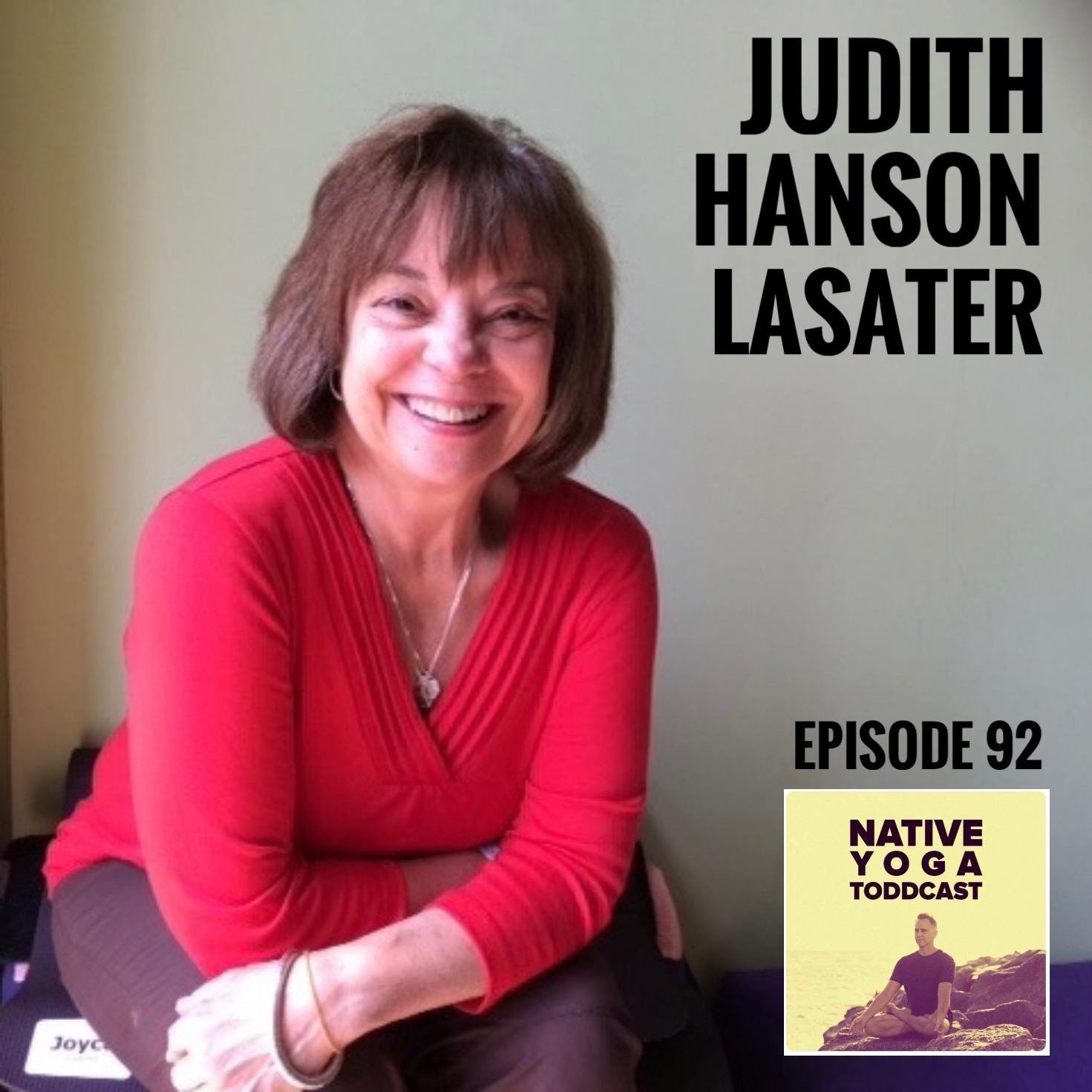
It is with great pleasure I can bring to you Judith Hanson Lasater, PhD, PT. Judith has taught yoga around the world since 1971. Judith offers numerous live events, digital courses, and has published ten books. Including Yoga Myths, and her most recent book, Teaching Yoga with Intention.
Judith Hanson Lasater is an American yoga teacher and writer in the San Francisco Bay Area, recognized as one of the leading teachers in the country. She helped to found The California Yoga Teachers Association, the Iyengar Yoga Institute in San Francisco, and Yoga Journal magazine.
During this conversation I have the chance to ask Judith questions about her new book, Teaching Yoga with Intention andthe importance of cultivating non violent communication as a yoga teacher.
Welcome to Native Yoga Toddcast. My name is Todd McLaughlin. I’m so happy you’re here. If you’re a first time listener, welcome. And for those of you that have been with me all along, your support means the world to me. I’m so pleased! I feel that my next guest here does not need an introduction. She is a famous yoga teacher, and I have utmost respect for her. Her name is Judith Hanson Lasater, and you can find her at www.judith.yoga.
Judith Hanson Lasater is a PhD. She’s a Physical Therapist. She’s taught yoga around the world since 1971. She offers numerous live events, digital courses, she’s published 10 books. And today the focus of our conversation is speaking about her most recent book called Teaching Yoga with Intention. So I want to express a huge thank you to Judith because she was so kind and accepting my invitation to be here on this podcast. And without any further ado, let’s get started.
Todd McLaughlin
I am so thrilled to have Dr. Judith Hanson Lasater here today. Judith is a PhD and Physical Therapist and a yoga teacher since 1971. Judith, how are you?
Judith Hanson Lasater
I’m doing well. Thank you very much. I hope the same for you.
Todd McLaughlin
I am really excited about this. I actually couldn’t sleep last night because I was so excited for this.
Judith Hanson Lasater
Oh, tell my children that! Or can you tell my grandchildren that? That they could be equally as excited when I call and talk to them.
Todd McLaughlin
Yeah, you can you can tell them that. I hope they’ll listen to you and appreciate that. Well, this is a great opportunity! I got a chance to read your most recent book called Teaching Yoga with Intention, The Essential Guide to Skillful Hands on Assist and Verbal Communication. I’m really excited to get a chance to talk to you about this today. Before we even go down that track though, I’m curious if you can just tell me a little bit about how and what you’re doing these days? Like what does your yoga practice and teaching like these days?
Judith Hanson Lasater
Well, one of the exciting things is beginning to teach live again. Traditionally yoga courses were taught one on one. And it was BKS Iyengar in the modern era who really began, initiated and created this whole idea of classes. But it’s still live, you can still feel the room. When you teach, you can still make eye contact with each person, if that’s appropriate. And so what I’m finding is this huge thirst, to be in community. To be in Sangha. To be with other people and just their presence. Practicing with you in the room is a nonverbal but very powerful support. And we all need that right now. So that’s what I’m liking. And that’s what’s alive for me. I’m very excited about this new book, because I wrote it during the pandemic. It flowed out of me. And that’s always a good sign for a writer.
Todd McLaughlin
I hear you! I think it’s an amazing book. I enjoyed reading it immensely. I found so many great points. I feel like you really honed in on some of the things that when I think, “how would I explain this to somebody?” And I have a loss of words. You did a great job of really laying out the foundation for healthy communication with us both verbally and if we use the power of touch in our in our teaching. So I think you did an amazing job.
Judith Hanson Lasater
Thank you. But before we go into the book, I really would like to follow, I’m all excited, of course to talk to you about, I’d like to follow my tradition of when I speak from the mat, or from the cushion, or in this place from my office chair, that I speak about what I think is, for us, all of us are listening, a really important part of our lives, which is our practice, I’d like to start with a moment of silence,
Todd McLaughlin
That’d be great.
Judith Hanson Lasater
So I’m going to ring my bell. And what I suggest you do is to sit and sit in front of your sitting bones, which brings your pelvis forward and then brings the pelvis under the spine to be like a pot to support this curvy, winding, fine, normal curve. So the brain in the head can float on the top of it. And that physical alignment will resonate through us energetically as well. And then my suggestion is that during that moment, if you find it interesting, useful and or pleasant, just imagine the very center of your brain geographically from the sides of your head from the top and the bottom and the front of the back, the deep center of the gray and just like a wave moving away from the shore, you stay rooted in that not ringing the bells and about a minute I’ll ring them again.
Todd McLaughlin
Wonderful.
Judith Hanson Lasater
All right, fire away with your questions.
Todd McLaughlin
First of all, I love the visual of wave pulling away from shore. That’s, that’s a really beautiful visual that works with that sensation of trying to put your attention right in the center of the brain. Is that something that has came to you? When a while practicing meditation? What made you think of that?
Judith Hanson Lasater
That’s a good question. It just popped into my consciousness one day, and I actually find that I can do that. With my eyes open. And I do it in conversation. I’ll be doing it a lot through our talk. It’s just a very, it takes you away from thinking. Did you notice that? Yeah. Because I have this word I’ve made up. You know, we all know the word mindfulness. But I really liked the word, body fullness. And when we can have, whenever we have the space that we can become aware of sensation, like the weight of our body on the chair, the floor. The sensations of the breath, is when we can cultivate our attention to be aware of the sensation of the moment. We step out of thought, because it’s we stepped from that space into into the present, into the present moment because sensation only occurs in the present moment. You can remember that yesterday you stubbed your toe and it hurt, but you can’t recreate that sensation in the present. So sensation lives in the moment. And when we put our awareness on the body, bodily sensation, we must then not be dancing with thought.
So here’s another technique that arose in me. And it was this idea of the tongue. So let’s try this for a second. Go back to the center of your brain.
And release your tongue from its roots, and let it lie flat in the mouth. Now, when I do that, that deepens the silence for me. Did you find that?
Todd McLaughlin
Yeah, to bring the attention to it or to even just put it right into the mouth, but then try to actually get my tongue to relax? That’s a good one.
Judith Hanson Lasater
No, no, don’t try.
Todd McLaughlin
Don’t try?
Judith Hanson Lasater
Invite. Invite. So here’s what I’ve reasoned out about that is the tongue is not just an organ of digestion, a muscle. It’s also an organ of speech. And so it’s neurologically connected to the speech centers. So we have parts of our brain that are very connected with speech and writing. And thinking because we think in words, have you ever seen a little kid? Or maybe you did this yourself? I remember doing it. When I was learning to write. Sometimes my tongue would be outside my mouth or writing the letter? Yeah, yeah. Because it’s the tongue, you have motor skills. Yeah, babies, infants have to learn how to swallow. They have to learn to swallow. Meaning that with the tongue, and how they nurse and all of that. So I think that when we relax the tongue, and there is some evidence to this, we affect the neural pathways to the brain. And so when I combined, for me, the center of the brain, release the top. Let the heart, expand to its truth. Then descend to the pelvis and feel the pulse of life of being in the pelvis. Thank you, we are then radically present in the being of the body, which lives in the moment. Did you find anything of that in this moment?
Todd McLaughlin
I did! Two things I love right off the bat is the language you used around, don’t try….. instead invite. That’s amazing. That’s a big shift. And then I started thinking, Well, we really don’t have anything to talk about now. Because you got to the heart of it all already.
Judith Hanson Lasater
All will be well.
Todd McLaughlin
You got to the heart of the matter right off the bat.
Judith Hanson Lasater
Can I tell you a story about that?
Todd McLaughlin
Yes, please.
Judith Hanson Lasater
So my second time that I went to Russia, I think I went the first time in ’89. When the wall was coming down, and then again in ’91. And the first time I went, there were just a couple of, two or three Americans there. But then there were a larger group that went and we were in a big cafeteria in one of the big hotels, where we were all staying and then a group of Russian yoga teachers came walking towards us. They came in, you know, and I because I’d been there before. Got up, everyone was like, what did we do what we do? And so I got up and walked towards them. And pretty soon other people started coming and we started introducing ourselves and I remember distinctly talking to a woman and I was doing this southern girl, chatty, chatty. Your city is beautiful, I got it that you know, whatever. And she reached over and she grabbed me by the upper arm. And she leaned into me and she said, No, let us talk a real thing. I love that. That’s what you, that’s what you and I are about I think right now.
Todd McLaughlin
Yeah. Let’s get right to the to the heart of it. That’s amazing. Judith. Well, in your book, you mentioned the importance of language. And you mapped it into like three different stages. Can you please define and explain the three levels or stages of learning about language and the teaching of yoga?
Judith Hanson Lasater
Would you prompt me on that, please?
Todd McLaughlin
I will. Because the first one is how you talked about how first as a yoga teacher, we transfer info “about the pose.” Like the first level of conversation is kind of like, okay, Triangle Pose. And let me just convey some words to help you get from point A to point B.
Judith Hanson Lasater
Yeah, it’s just information. Yeah, it’s like, it’s technique, which is very important, because technique affects energy and organs and state of mind, the nervous system, and we’re very complex. In fact, you know, years ago, people used to say, body, and mind and body were completely separate. That was the western view. And then it started hyphenating, that term. MInd-body. Interesting. You know, and then there was a period, you’d see it written as one word, I see it a lot. Now mindbody is one word. So I’ve made up a word, which is mody. Mody. Because the body and the mind on are so one.
Todd McLaughlin
Yeah, that’s a great word.
Judith Hanson Lasater
Mody. So yeah, I mean, we should get it, we should get it in the dictionary, another word I made up, it’s not just multi-tasking, it is hyper-tasking. So you know, if there, so I want uni-tasking to be in the dictionary. And we, this spiritual practice asked the question, “Can we do one thing at a time?” And usually, the answer is no way Jose. So, yes, the first part of communication is, of course nonverbal. But if we get past that, we’re giving them information. Because if someone comes in and says, teach me how to do yoga, and we just say, do Triangle Pose, we need to tell them turn the left foot in the right foot out, stretch the arm, etc. But that’s not our most important job. So number two?
Todd McLaughlin
The beginning of the personalization of instructions.
Judith Hanson Lasater
Yeah, so a leader in yoga is someone who leads the class. I’ve even seen people turn their back and just do their practice, and people follow them. Which surprises me, so you’re leading. But then teaching begins When you can say to this person, please put your feet wider apart into this next person, would you bring them closer together, when there’s an individuation, of how we can support each pupil expressing the beauty of their Trikonasana in this moment. In ways that keep them safe, and open their heart and mind the same time and bring them into their body into their own self. So that’s a deeper, that’s a real teacher. The teacher sees both the difference and the absolute unity among all people, and to help them help the students. What’s the third one?
Todd McLaughlin
I think you’re correct! You answered that really well, thank you. That when the teacher is able to communicate in such a way that their words evoke, or conjure the pose from the student, or how the student can discover the pose already exists within them. And I love how you wrote as an ancient archetype. That’s so cool. Like the thought of…..
Judith Hanson Lasater
A pyramid. Which is a three dimensional triangle. Yeah, so that presupposes the understanding that we could never teach anybody anything. We can only create an environment in which people choose to learn.
So the question is, how are we going to create that environment with our language? So I make intentional choices. I don’t say good or bad, right or wrong. Oh, I might say to a student, I really liked the way your knee is in that pose, or I’m concerned about placement of your knee, would you try this and see what you think how it feels to you. So because if I come, you know, stomping in the class, and say, do this, do this, do this. And then I learned something and I wanted to change my mind, I’ve painted myself in a corner. So what I want to teach in that part of the of the pose is twofold. The second stage, is like I want to teach them technique in a way that underscores trusting that they trust themselves. First, I want to use my words in a class, to create an environment in which people are trusting themselves and at the same time they’re willing to try something new. And I’m not there to impose the pose to fit them in a cookie cutter. So I like to say to my students, I don’t want to teach you rules, I want to teach you principles. Because that’s a bigger, bigger idea. There are anatomical principles about how the pelvis can move over the femoral heads, in Trikonasana that will relieve the lower back and create a sense of ease and dynamism at the same time. You know that in Patanjali’s yoga sutra, chapter two verse 46, Sthira Sukham Asanam. It’s a definition of Asana. So abiding in ease is asana. So an Asana is that which we can be in which we can be still, and at ease. And it’s really ironic, we think of as movements that are difficult.
Todd McLaughlin
Good point!
Judith Hanson Lasater
How can I create an environment in which people find their Trikonasana? And often it’s not airy fairy? I mean, there are boundaries, there are alignment principle. You could be, you know, hyperextending your knee or whatever, that guidance. But the asana, Todd, the asana isn’t the yoga. It’s the residue, that the asana leaves in the nervous system that is the yoga. Because Yoga is not just, you know, to paint with a broad brush, Asana, Pranayama, meditation. Those point to the potential of presence, which is the state of yoga. So we confuse them. People say I am going to do yoga, like, what? When are we all going to say I’m going to go in my own? Right? And bring that into the world. And bring that. That state of presence. Compassion.
Todd McLaughlin
Great point, Judith. Was there a point in your transformation through your yoga journey where maybe you were practicing a yoga pose and thinking about that yoga sutra, where it’s mentioning that the asana should be stable and comfortable. And thinking, “how in the world could this be comfortable?” I’m in this really like, uncomfortable position right now. And has that informed your teaching and evolution of your practice over the years?
Judith Hanson Lasater
Yes, but it wasn’t a thought. It was an experience, which I’m happy to share with you. So I was taking a class from another teacher. And I was doing what it at that time, for me was my favorite pose, which was Paschimottanasana, which is just sitting on the floor, leg straight and bending forward. Which I think is the hardest forward bend because there’s nowhere to hide. Like, if you’ve bend one knee, if you’ve bend one day like Janusirsana, you can cheat all over the place. But you cannot cheat in Paschimottanasana. It’s you and your hamstrings baby that it is no getting away from it. And it’s also true I think in Urdhva Dhanurasana, and it’s the most difficult backbend. Because when you’re doing one side, Raja Kapotasana, or you’re doing one side of another posture, there is a way to work off to the one side of something in there. Alright, so that was my favorite pose. And I was I like to say I had my hamstrings surgically removed at birth. I just felt like for a long time, and I’m, you know, just sort of naturally a little loose. And so it’s just flat down, you know, forehead on the shins. I mean, I felt a little bit of stretch. But not much, you know, I was pretty comfortable there. And my mind was spinning like what are we going to how long are we gonna be here? What’s happening with that other person doing what I’m going to have for lunch after class, you know, the normal, useless brain chatter. And then there was experience and I want to treat this story with humility, gratitude, and wonder. And I had the sense that something just kind of flew out of me. And I still felt the stretch but I wasn’t doing anything. And I just stayed there. It wasn’t like I even stayed. It was like, there was no deep reason to move. There was no discomfort, there was no agitation. I just stayed there. And finally the teacher said, come up, and I didn’t come up. Because I didn’t know what that meant. Literally, it was so bizarre. He said, come up, and I’m like, what does that mean? Because he was, it would be as if I were saying to you stop jumping up and down. Yeah. And you know what? I’m not jumping. Yeah. So he said, stop doing the pose. And I’m like, what is he talking about? And then this little ego stuck it’s head out behind the tree and my consciousness and said, Wow, that was cool. I started, you know, then it shifted again. But I thought to myself afterwards, well, I’d finally practiced one pose. It was my first pose, you know, it was years into my practice, but…. So, does that answer your question does?
Todd McLaughlin
Yes. Perfectly. Since I’ve read your book, I’ve been extra thoughtful about my speech and my touch, in a good way. In a really good way. Like, maybe I was just on autopilot for a little bit. I kind of forgot how important it is. And you made mention, in your book, this is quoting you “we speak to manipulate the world around us” end quote. Can you explain that? It makes sense to me. It makes sense to me, but love it. I thought it was actually kind of profound when I heard that. We speak to manipulate the world around us. I might think, “I’m not trying to manipulate the world.” I’m just getting through the world here. So I love that sentence.
Judith Hanson Lasater
Okay. So first, let’s look at the word manipulate, because that has a negative connotation. But if we’re truthful, Todd, you are manipulating the world around you all day long. You go for a run, you’re manipulating your consciousness, right? Go for a run, you smoke a funny cigarette, you smoke a real cigarette. Not that you do these things. You have coffee, you want your caffeine which manipulates your nervous system. You do your Pranayama or your yoga. You stand on your head, all this manipulate your nervous system. You go to sleep and that manipulates your nervous system. We’re always seeking homeostasis. In fact, you are choosing, you know, when you eat, you feel different. You manipulate your nervous system. That’s what human beings do. And there are two kinds of manipulation. There’s the unconscious one and the conscious one. And so to me, that’s what yoga is about is paying attention to how doing Savasana. Savasana manipulates your nervous. Does it not?
Todd McLaughlin
It does.
Judith Hanson Lasater
Okay, so that’s a conscious manipulation. So the question is not, should I not manipulate, it’s am I doing it consciously, to live my highest values. And that’s what yoga makes us aware of. And this speech that I’ve that I’ve studied this technique of nonviolent communication has radically changed my relationship, in my interaction with my children as they were growing up, and in intimate relationships and in teaching.
And the best way we can do that. Well, let me let me let me back up a second.
Every time I go to teach, whether it’s online or in person. The first thing I do is have the one minute. And during that one minute I connect with myself. This is the first rule of teaching. When I sit there in front of you today or in class. The first thing I do is I ask myself this question. What is alive in me right now? Am I anxious? Am I happy? Am I sleepy? Am I irritated by the discussion I just had with someone? It doesn’t really matter what is arising in me but when I get connected with that. Oh right now I’m tired or right now I’m excited. Right now I’m worried about one of my children. It was always one of the three was at the top of the worry list, you know, over the years. Whatever, whatever is arising in me when I notice it. That when I bring it into the light. It connects me with the present moment. And I go, Ah, yes, I’m feeling excited. Ah, I don’t judge it. I don’t try to make it different. I don’t try to fix it. I just notice it. Because, and name it to myself. Right now I’m sad. Because my uncle died. I’m just sad right now. Okay. That’s what’s alive in me, then I’m firmly present. Radically present I call it because we’re very rarely there. So the next thing I want to do is I want to be able to see you. And I can’t see you and or connect with you if I’m not connected with myself. So when I see you, and it’s really tricky, because I’ve taught for 51 years. I have students who’ve been with me for 45 years.
Todd McLaughlin
Wow, that is amazing!
Judith Hanson Lasater
You know everything about them. You know them before they met their husband, before they got married, when they got divorced, and they had these kids, and they had this surgery, then this. And so it blurs in a way, your objectivity. So when I go to teach somewhere where I don’t know, most of the people, I sometimes feel that my best teaching. Because I don’t see my friend. I see a human being, you know what I’m saying? You may know what I am saying. So that. Yeah, so the second part of this is I want to see the person standing in front of me. They may have been there for many weeks, or never again, but can I be present with that person in this moment?
New Student Livestream Special ~ Try 2 Weeks of Free Unlimited Livestream Yoga Classes at Native Yoga Center. Sign into the classes you would like to take and you will receive an email 30 minutes prior to join on Zoom. The class is recorded and uploaded to nativeyogaonline.com ~ Click Here to join.
New Student FREE 30 Minute Yoga Meet & Greet ~ Are you new to Native Yoga Center and have questions that you would like us to address? Whether you are coming to In Studio, Livestream or Online Recorded Classes we offer a one time complimentary 30 minute zoom meeting to answer any questions you may have. Schedule a time that is convenient for you. Click Here







 Native Yoga Blog