Rebecca Reagan – The Power of Presence: How Mindfulness Can Transform Your Life

Rebecca Reagan, founder of Bunnyhawk, shares her journey into meditation and mindfulness. She discusses her early experiences with meditation and how it became a natural instinct for her. Rebecca also talks about her formal training in mindfulness meditation and transcendental meditation. She highlights the importance of daily practice and the benefits of meditation in navigating challenging life events. Rebecca also touches on her passion for tea and her involvement in regenerative agriculture and environmental activism.

Visit her on her site for life coaching and meditation teaching:  https://bunnyhawk.life/
Visit her bio site: https://rayonthebae.com/
Co-founder, new foundation in Ecuador helping farmers & forests https://amazonhealing.love/ 
Co-founder, recently nominated for a grammy: https://www.thebirdsongproject.com/ Guided meditations here: https://insighttimer.com/bunnyhawk
The Ecology Center: https://theecologycenter.org/ 

Key Takeaways:

  • Meditation is a natural instinct that can be cultivated through formal training and daily practice.
  • Mindfulness meditation helps cultivate awareness in the present moment and brings a sense of calm and non-judgment.
  • Transcendental meditation uses a mantra to anchor the mind and create a deeper sense of peace.
  • Meditation can be a valuable tool in navigating challenging life events and finding inner peace.
  • Tea and meditation are complementary practices that promote mindfulness and connection with nature.
  • Beyond organic farming practices, such as permaculture, prioritize biodiversity and healthy soil.
  • The yin and yang of nature, where predators and prey coexist, reflect the interconnectedness of all beings.

Exploring the Intersection of Meditation, Permaculture, and Sustainable Living

Note: This article is based on a conversation with Rebecca Reagan, founder of Bunnyhawk and an executive producer, creative consultant, integrated life coach, and meditation teacher. The article delves into the main themes discussed in the conversation, highlighting the significance of meditation, permaculture, and sustainable living. All quotes are verbatim from the transcript.

Introduction

In a world filled with chaos and uncertainty, many individuals are seeking ways to find inner peace and create a more sustainable future. This quest has led to the exploration of practices such as meditation and permaculture, which offer unique perspectives on personal well-being and environmental stewardship. In a recent conversation with Rebecca Reagan, we delved into the intersection of these practices and their potential impact on our lives and the planet.

The Power of Meditation

Rebecca Reagan, a certified meditation teacher, shared her personal journey with meditation and its profound impact on her life. She described how meditation has always been a natural instinct for her, even from a young age. Through formal training and certification, she has deepened her practice and now shares her knowledge with others.

“Meditation is a way of bringing our awareness into the present moment with the breath. It is a secular tradition rooted in Buddhism, but it can be practiced by anyone, regardless of their religious or spiritual beliefs,” Rebecca explained.

She emphasized the importance of daily meditation practice in cultivating inner peace and finding balance in a fast-paced, hyper-connected world. Rebecca believes that meditation helps us navigate life’s challenges with more compassion and understanding.

“When we can create space for daily practice and cultivate our own inner peace, we can bring more joy and connection to our lives and the world around us,” she said.

Permaculture and Sustainable Living

Rebecca also shared her passion for permaculture, a holistic approach to agriculture and land management that aims to create sustainable and regenerative systems. She highlighted the work of organizations like the Ecology Center, which demonstrates permaculture principles and promotes sustainable living practices.

“Permaculture is about working in harmony with nature and creating healthy ecosystems. It emphasizes biodiversity, healthy soil, and regenerative practices,” Rebecca explained.

She emphasized the importance of understanding the interconnectedness of all living beings and the need to cultivate a more harmonious relationship with the Earth. Rebecca believes that permaculture offers a practical and achievable solution for feeding communities while minimizing the negative impact on the environment.

The Intersection of Meditation and Permaculture

Rebecca drew parallels between meditation and permaculture, highlighting their shared focus on mindfulness, presence, and balance. She explained how both practices encourage us to observe and understand the natural world, fostering a deeper connection with ourselves and the environment.

“Just as permaculture requires us to observe and work in harmony with nature, meditation invites us to observe and cultivate inner peace. Both practices teach us to be present and embrace the interconnectedness of all things,” Rebecca said.

She emphasized the importance of finding balance in our lives and aligning our actions with our values. By integrating meditation and permaculture principles, we can create a more sustainable and harmonious existence.

Implications and Future Outlook

The implications of combining meditation and permaculture are far-reaching. By cultivating inner peace and mindfulness, individuals can develop a deeper sense of empathy and compassion for the natural world. This, in turn, can inspire them to take action and make conscious choices that promote sustainability and environmental stewardship.

Rebecca believes that as more people embrace meditation and permaculture, a shift in consciousness will occur. This shift will lead to a greater understanding of our interconnectedness and a collective commitment to creating a more sustainable future.

“By integrating meditation and permaculture into our lives, we can become agents of positive change. We can contribute to the well-being of the planet and foster a more harmonious relationship with nature,” Rebecca said.

As we move forward, it is essential to continue exploring the intersection of meditation, permaculture, and sustainable living. By incorporating these practices into our daily lives, we can create a ripple effect of positive change that extends beyond ourselves and into the world.

Conclusion

The conversation with Rebecca Reagan shed light on the transformative power of meditation and permaculture. By cultivating inner peace and mindfulness, individuals can develop a deeper connection with themselves and the natural world. Through the principles of permaculture, we can create sustainable and regenerative systems that promote biodiversity and environmental stewardship.

As we navigate the challenges of the modern world, it is crucial to embrace practices that foster balance, compassion, and sustainability. By integrating meditation and permaculture into our lives, we can contribute to a more harmonious existence and create a brighter future for ourselves and future generations.

In the words of Rebecca Reagan, “We are here to love and learn to love. By embracing meditation and permaculture, we can cultivate inner peace and create a more sustainable and compassionate world.”

Note: This article is based on a conversation with Rebecca Reagan, founder of Bunnyhawk and an executive producer, creative consultant, integrated life coach, and meditation teacher. The article delves into the main themes discussed in the conversation, highlighting the significance of meditation, permaculture, and sustainable living. All quotes are verbatim from the transcript.

Thanks for listening to this episode. Check out: 👇
Free Grow Your Yoga Live Webinar – Every Thursday at 12pm EST
➡️ Click here to receive link

New Student FREE Livestream Yoga Special ~ Try 2 Weeks of Free Unlimited Livestream Yoga Classes  at Native Yoga Center. info.nativeyogacenter.com/livestream Sign into the classes you would like to take and you will receive an email 30 minutes prior to join on Zoom. The class is recorded and uploaded to nativeyogaonline.com  ➡️  Click Here to Join. 

Practice to a New Yoga Class every day with our nativeyogaonline.com course called Today’s Community Class with code FIRSTMONTHFREE.

Native Yoga Teacher Training 2024– In Studio and Livestream – for info delivered to your email click this link here: ➡️ https://info.nativeyogacenter.com/native-yoga-teacher-training-2023/

Subscribe to Native Yoga Center and view this podcast on Youtube.

Thank you Bryce Allyn for the show tunes. Check out Bryce’s website: bryceallynband.comand sign up on his newsletter to stay in touch. Listen here to his original music from his bands Boxelder, B-Liminal and Bryce Allyn Band on Spotify.

Please email special requests and feedback to info@nativeyogacenter.comSupport the show

Native Yoga website: here
YouTube: here
Instagram: @nativeyoga 
Twitter: @nativeyoga 
Facebook: @nativeyogacenter 
LinkedIn: Todd McLaughlin

Marko Mikkilä – Non-Dual Philosophy and Mystical Experiences in Yoga

Marko Mikkilä is a PhD student in philosophy at Turku University in Finland. He is also a yogi and a practitioner of Eastern philosophy. Marko has been practicing yoga for many years and has a deep understanding of non-dual philosophy.

During this conversation Marko  delves into the concept of non-dualism and its application in everyday life. He explains how non-dualism can help individuals heal from trauma and find a sense of liberation. Overall, Marko emphasizes the importance of integrating awakening experiences into all aspects of life and the need for a philosophical framework to understand and navigate these experiences.

Key Takeaways:

  • Non-dualism is the belief that everything is made of one substance, often referred to as consciousness.
  • Non-dualism can be understood as the collapsing of the subject-object separation, where there is just perceiving happening.
  • Awakening to one’s essence nature involves recognizing that we are not identified with the body-mind and that trauma can be observed without clinging to it.
  • Non-dualism can help individuals let go of the story and experience uncomfortable feelings or sensations without attachment.

Native Yoga Toddcast: Exploring Non-Dualism and Awakening with Marko Mikkilä

Welcome to Native Yoga Toddcast, where we bring you inspirational speakers in the field of yoga, massage, bodywork, and beyond. In this episode, host Todd McLaughlin sits down with Marko Mikkilä, a yogi, philosopher, and PhD student from Finland. Together, they delve into the concept of non-dualism and its implications for personal growth and healing. Join us as we explore the depths of awakening and the power of presence.

Introduction: The Beauty of Non-Dualism

In this episode of Native Yoga Toddcast, we have the pleasure of speaking with Marko Mikkilä, a yogi, philosopher, and PhD student from Finland. Marko shares his journey into yoga and philosophy, and how he discovered the transformative power of non-dualism. He explains that non-dualism is the belief that everything is made of one substance, often referred to as consciousness. It is a worldview that challenges the notion of separation and invites us to see the interconnectedness of all things. Marko emphasizes that non-dualism is not just a philosophy, but a way of experiencing life.

The Path to Awakening: From Martial Arts to Yoga

Marko’s journey into yoga began in his 20s when he started practicing Japanese and Chinese martial arts. As he delved deeper into the internal practices of martial arts, he became interested in Eastern philosophy, particularly Taoism and Zen Buddhism. This led him to explore yoga as a means of deepening his understanding of the mind-body connection. Marko initially practiced Ashtanga yoga, but over time, he realized that the prescribed practice was creating more agitation in his nervous system. He began experimenting with different approaches, such as incorporating resting poses into his practice, and eventually found a more balanced and sustainable way of practicing.

The Non-Dual Movement: Awakening to Our True Nature

Marko introduces us to the concept of the non-dual movement, which encompasses various non-dual religious philosophies from around the world. These philosophies share the belief that there is no separation between self and other, and that everything is ultimately connected. Non-dualism can be understood in different ways, such as the idea that everything is made of consciousness or the collapsing of the subject-object separation. Marko explains that non-dualism can also be applied to our relationship with a higher power, where we recognize that we are not separate from the divine, but rather a part of it.

Mystical Experiences and the Awakening Process

Marko discusses the role of mystical experiences in the awakening process. He explains that mystical experiences can range from profound paradigm shifts to subtle moments of intuition or telepathy. These experiences can be transformative, but they are not the ultimate goal of awakening. The goal is to recognize our true nature as awareness or consciousness and to integrate this realization into all aspects of our lives. Marko emphasizes that awakening is not about seeking new experiences or powers, but about letting go of identification with the body-mind and embracing the present moment.

Healing Trauma through Non-Dualism

Marko explores how non-dualism can be applied to the healing of trauma. He explains that when we awaken to our true nature, we no longer identify with the body-mind, including the trauma stored within it. This shift in identification allows us to observe our traumatic experiences without getting caught up in them. We can approach trauma with a sense of detachment and acceptance, allowing it to move through us without resistance. Marko acknowledges that healing trauma is a complex process, but non-dualism can provide a framework for understanding and integrating these experiences.

The Integration of Awakening: From Mystical Experiences to Liberation

Marko highlights the importance of integrating awakening experiences into all spheres of life. He explains that the initial awakening is just the beginning of the journey, and the real challenge lies in embodying that awakening in our everyday lives. This integration involves letting go of attachment to experiences, pleasant or unpleasant, and recognizing the underlying awareness that remains constant amidst the ever-changing phenomena. Marko shares examples of awakened beings who have fully integrated their awakening and live ordinary lives without seeking power or recognition.

Conclusion: Embracing Non-Dualism for Personal Growth

In this thought-provoking conversation, Marko Mikkilä invites us to explore the depths of non-dualism and its potential for personal growth and healing. He emphasizes that non-dualism is not just a philosophy, but a way of experiencing life. By recognizing our true nature as awareness or consciousness, we can let go of identification with the body-mind and embrace the present moment. Marko’s insights remind us of the interconnectedness of all things and the transformative power of awakening. As we continue on our own journeys, may we embrace the beauty of non-dualism and cultivate a deeper sense of presence and connection in our lives.

Note: This article is based on a conversation with Marko Mikkilä on the Native Yoga Toddcast. All quotes are verbatim and direct from the transcript of the episode.

Thanks for listening to this episode. Check out: 👇
Free Grow Your Yoga Live Webinar – Every Thursday at 12pm EST
➡️ Click here to receive link

New Student FREE Livestream Yoga Special ~ Try 2 Weeks of Free Unlimited Livestream Yoga Classes  at Native Yoga Center. info.nativeyogacenter.com/livestream Sign into the classes you would like to take and you will receive an email 30 minutes prior to join on Zoom. The class is recorded and uploaded to nativeyogaonline.com  ➡️  Click Here to Join. 

Practice to a New Yoga Class every day with our nativeyogaonline.com course called Today’s Community Class with code FIRSTMONTHFREE.

Native Yoga Teacher Training 2024– In Studio and Livestream – for info delivered to your email click this link here: ➡️ https://info.nativeyogacenter.com/native-yoga-teacher-training-2023/

Subscribe to Native Yoga Center and view this podcast on Youtube.

Thank you Bryce Allyn for the show tunes. Check out Bryce’s website: bryceallynband.comand sign up on his newsletter to stay in touch. Listen here to his original music from his bands Boxelder, B-Liminal and Bryce Allyn Band on Spotify.

Please email special requests and feedback to info@nativeyogacenter.comSupport the show

Native Yoga website: here
YouTube: here
Instagram: @nativeyoga 
Twitter: @nativeyoga 
Facebook: @nativeyogacenter 
LinkedIn: Todd McLaughlin
Kassandra Reinhardt – Mastering the Art of Teaching Yoga Online: Tips and Strategies

Kassandra Reinhardt is a renowned yoga instructor and the founder of Yoga with Kassandra. With over 2.3 million subscribers on YouTube, Kassandra has built a successful online yoga community and is known for her accessible and inclusive approach to yoga.

Visit Kassandra on her website: https://www.yogawithkassandra.com/
Follow her on YouTube: https://www.youtube.com/@yogawithkassandra
Follow her on IG: https://www.instagram.com/yoga_with_kassandra/

Key Takeaways:

  • Teaching yoga online requires more than just yoga skills; it involves learning videography, editing, graphic design, marketing, and more.
  • Finding your niche and focusing on a specific style or target audience can help establish your online presence and attract a dedicated following.
  • The online yoga community is generally positive and supportive, with fewer negative comments and criticism compared to other online platforms.
  • Starting small and gradually adding elements like a website, mailing list, and social media platforms can help you grow your online presence over time.

Kassandra shares her journey of teaching yoga online. She discusses the challenges she faced in the early years, the importance of finding a niche, and the gradual growth of her channel. Kassandra emphasizes the need to start small and learn as you go, rather than waiting for everything to be perfect. She also talks about the positive impact of the pandemic on the online yoga community and the increasing acceptance of teaching yoga online. Kassandra offers advice for aspiring online yoga teachers and highlights the importance of staying true to oneself and finding joy in the process.

The Journey of an Online Yoga Teacher: Insights from Kassandra Reinhardt

Introduction

In this thought-provoking interview, I had the pleasure of speaking with Kassandra Reinhardt, a renowned online yoga teacher with a massive following on YouTube. We delved into her journey as a yoga teacher, the challenges she faced in the online space, and the impact of the pandemic on the yoga industry. Kassandra shared valuable insights and advice for aspiring online yoga teachers, emphasizing the importance of finding your niche, embracing the entrepreneurial spirit, and staying true to your purpose.

Exploring the Themes

  1. The Evolution of Online Yoga Teaching
    Kassandra discussed her introduction to yoga and how she gradually discovered the richness and depth of the practice beyond its physical benefits. She highlighted the importance of finding a teaching style that resonates with you and connects with your audience. Kassandra also shared her experience of transitioning from in-person teaching to online platforms, emphasizing the need to adapt and learn new skills such as videography, editing, and marketing.

According to Kassandra, “I started in person, but very quickly added online as well. I put some classes up on YouTube to bulk up my resume and give hiring managers an idea of my style. The online yoga landscape was different back then, but I was naive and thought it would just be a few videos. Little did I know that it would become a significant part of my life.”

  1. The Challenges of Being an Online Yoga Teacher
    Kassandra candidly discussed the challenges she faced as an online yoga teacher, particularly in the early stages. She highlighted the need to learn various skills beyond teaching yoga, such as videography, sound editing, graphic design, and marketing. She also mentioned the difficulties of managing customer service requests and navigating the ever-changing landscape of taxes and ecommerce regulations.

Kassandra shared, “Teaching yoga online is just one of the 20 skills you need to make it happen. It’s hard to be confronted with the fact that you have to learn all these skills. But I knew that I wanted to teach online, so I persevered and learned as I went along.”

  1. The Rise of Online Yoga Teaching During the Pandemic
    The conversation shifted to the impact of the COVID-19 pandemic on the yoga industry. Kassandra acknowledged the challenges faced by many yoga teachers and studios during this time but also highlighted the opportunities that arose for online yoga teachers. She discussed the increased interest in online yoga classes and the growing acceptance of online teaching as a legitimate and valuable form of yoga instruction.

Kassandra reflected, “I had been advocating for online yoga for years, but there was a stigma attached to it. Now, with the pandemic, more people are open to it, and there’s a greater demand for online classes. It’s a time when people need their wellness practices more than ever, and online teachers are best skilled at offering them.”

Implications and Future Outlook

The interview shed light on the evolving landscape of online yoga teaching and the potential impact of AI and technology in the future. While Kassandra acknowledged the possibility of AI-generated yoga classes, she emphasized the enduring value of human connection and the unique experience of practicing yoga with a live teacher. She also encouraged aspiring online yoga teachers to embrace collaboration rather than competition, fostering a sense of community and support within the industry.

Kassandra concluded, “A rising tide lifts all boats. We shift from competition to collaboration. Even though there are more teachers online now, there are also more students than ever before. It’s never too late to start, and there’s still room for growth and success.”

Conclusion

In this thought-provoking interview, Kassandra Reinhardt shared her insights and experiences as an online yoga teacher. She highlighted the importance of finding your niche, embracing the entrepreneurial spirit, and staying true to your purpose. Kassandra’s journey serves as an inspiration for aspiring online yoga teachers, reminding them that success is possible with persistence, adaptability, and a genuine passion for sharing the practice of yoga. As the online yoga industry continues to evolve, it is crucial to stay open to new possibilities and maintain a sense of community and collaboration.

Thanks for listening to this episode. Check out: 👇
Free Grow Your Yoga Live Webinar – Every Thursday at 12pm EST
➡️ Click here to receive link

New Student FREE Livestream Yoga Special ~ Try 2 Weeks of Free Unlimited Livestream Yoga Classes  at Native Yoga Center. info.nativeyogacenter.com/livestream Sign into the classes you would like to take and you will receive an email 30 minutes prior to join on Zoom. The class is recorded and uploaded to nativeyogaonline.com  ➡️  Click Here to Join. 

Practice to a New Yoga Class every day with our nativeyogaonline.com course called Today’s Community Class with code FIRSTMONTHFREE.

Native Yoga Teacher Training 2024– In Studio and Livestream – for info delivered to your email click this link here: ➡️ https://info.nativeyogacenter.com/native-yoga-teacher-training-2023/

Subscribe to Native Yoga Center and view this podcast on Youtube.

Thank you Bryce Allyn for the show tunes. Check out Bryce’s website: bryceallynband.comand sign up on his newsletter to stay in touch. Listen here to his original music from his bands Boxelder, B-Liminal and Bryce Allyn Band on Spotify.

Please email special requests and feedback to info@nativeyogacenter.comSupport the show

Native Yoga website: here
YouTube: here
Instagram: @nativeyoga 
Twitter: @nativeyoga 
Facebook: @nativeyogacenter 
LinkedIn: Todd McLaughlin

John Denney – Enhancing Athletic Performance With Meditation And The Harmony Exercises

John Denney is the Minister of Unity of Jupiter and a coach for Olympic-level athletes. He has been practicing The Harmony Exercise, a meditation technique, since 1985. John is also a paddleboarding enthusiast and has had the opportunity to surf with some of the world’s best surfers, including Laird Hamilton and Kelly Slater.

Visit John on his website: https://theharmonyexercise.com/
Also on his website: https://john-denney.com/

Key Takeaways:

  • Unity Church is a metaphysical Christian church that focuses on practical Christianity and the application of spiritual principles in daily life.
  • The Harmony Exercise is a meditation technique that helps control the body’s physiology through conscious breathing and positive thinking.
  • Most athletes struggle with controlling their temper and tension, but learning to regulate their breath and thoughts can improve their performance.
  • In surfing and other sports, being in a state of flow and surrendering to the power of nature can lead to peak performance.
  • Daily practice and finding inner peace are essential for personal growth and making a positive impact on the world.

Native Yoga Toddcast: A Journey to Harmony and Self-Improvement

Welcome to Native Yoga Toddcast, where we bring you inspirational speakers in the field of yoga, massage, bodywork, and beyond. In this episode, we have the pleasure of hosting John Denney, the Minister of Unity of Jupiter. John is a dedicated practitioner of the Harmony Exercise, a meditation technique he has been practicing for over seven years. He is also a paddleboarding enthusiast and a coach for Olympic-level athletes. Join us as we delve into John’s journey, his insights, and the strategies he employs to help individuals achieve their highest potential.

The Path to Unity Church

John’s journey to becoming the Minister of Unity of Jupiter began with a vision he had for the position. He had been a guest speaker at the church for about a year and had always been drawn to its teachings. After serving on the board for many years and receiving positive feedback from the congregation, he decided to give it a try. Unity Church is a metaphysical Christian denomination that focuses on practical Christianity and the application of spiritual principles in everyday life. John believes that religion should help individuals navigate their relationships, business, and personal challenges, and Unity Church provides a platform for this practical approach to spirituality.

The Harmony Exercise: A Path to Self-Improvement

John’s daily meditation practice, known as the Harmony Exercise, has been a cornerstone of his life since 1985. This meditation technique was taught to him by a man named Carl Writer, who was an astrologer to the stars. The Harmony Exercise involves a 12-minute meditation that focuses on physical and mental relaxation, conscious breathing, and the cultivation of positive thoughts. John and his wife, Barry, have been practicing this meditation together since they first learned it, and it has become a foundation of their marriage.

The Harmony Exercise has had a profound impact on John’s life. He has experienced significant improvements in his physical and mental health, including weight loss and reduced stress levels. He has also noticed a shift in his relationship with alcohol, as his focus on health and well-being became more important than his desire for alcohol. Through his daily practice, John has cultivated a sense of inner peace and happiness that has positively influenced every aspect of his life.

Coaching Olympic-Level Athletes: Controlling Temper and Tension

As a coach for Olympic-level athletes, John has observed a common stumbling block that many athletes face: the inability to control their temper and tension. He believes that most people have never learned how to control their emotions and thoughts effectively. Through his coaching, John teaches athletes the importance of conscious breathing, positive thinking, and emotional regulation. By learning to control their physiology and redirect their thoughts, athletes can perform at their peak and achieve greater success.

John emphasizes the power of conscious breathing in controlling tension and temper. By taking slow, deep breaths, individuals can activate their parasympathetic nervous system, which promotes relaxation and reduces stress. This simple technique can have a profound impact on an athlete’s performance and overall well-being. John also encourages athletes to replace negative thoughts with positive affirmations, as this can shift their mindset and improve their mental state.

The Power of Choice and Unity

John believes that unity and common ground are essential in today’s divided world. He emphasizes the importance of recognizing that we are all moving in the same direction, regardless of our religious or cultural backgrounds. Unity Church incorporates teachings from various religions and emphasizes the common principles found in all faiths. John encourages individuals to choose love over hate and to focus on creating harmony in their relationships and interactions with others.

The Legacy of Harmony and Self-Improvement

As John embarks on his role as the Minister of Unity of Jupiter, he hopes to inspire individuals to cultivate inner peace, happiness, and harmony. His goal is to help individuals become light bearers who radiate positivity and make a difference in the world. John believes that by focusing on personal growth and self-improvement, individuals can create a ripple effect that positively impacts their families, communities, and the world at large.

In conclusion, John Denney’s journey to harmony and self-improvement is a testament to the power of daily practice and the pursuit of inner peace. Through his dedication to the Harmony Exercise and his coaching of Olympic-level athletes, John has witnessed the transformative effects of conscious breathing, positive thinking, and emotional regulation. His role as the Minister of Unity of Jupiter allows him to share these teachings with a wider audience and inspire individuals to live a life of harmony and happiness. By choosing love over hate and focusing on personal growth, individuals can create a positive impact on the world and leave a lasting legacy of unity and self-improvement.

Note: This article is based on a transcript from the Native Yoga Toddcast episode featuring John Denney. All quotes are verbatim and directly from the transcript.

Thanks for listening to this episode. Check out: 👇
Free Grow Your Yoga Live Webinar – Every Thursday at 12pm EST
➡️ Click here to receive link

New Student FREE Livestream Yoga Special ~ Try 2 Weeks of Free Unlimited Livestream Yoga Classes  at Native Yoga Center. info.nativeyogacenter.com/livestream Sign into the classes you would like to take and you will receive an email 30 minutes prior to join on Zoom. The class is recorded and uploaded to nativeyogaonline.com  ➡️  Click Here to Join. 

Practice to a New Yoga Class every day with our nativeyogaonline.com course called Today’s Community Class with code FIRSTMONTHFREE.

Native Yoga Teacher Training 2024– In Studio and Livestream – for info delivered to your email click this link here: ➡️ https://info.nativeyogacenter.com/native-yoga-teacher-training-2023/

Subscribe to Native Yoga Center and view this podcast on Youtube.

Thank you Bryce Allyn for the show tunes. Check out Bryce’s website: bryceallynband.comand sign up on his newsletter to stay in touch. Listen here to his original music from his bands Boxelder, B-Liminal and Bryce Allyn Band on Spotify.

Please email special requests and feedback to info@nativeyogacenter.comSupport the show

Native Yoga website: here
YouTube: here
Instagram: @nativeyoga 
Twitter: @nativeyoga 
Facebook: @nativeyogacenter 
LinkedIn: Todd McLaughlin
Janne Kontala – Is Contemporary Yoga at a Dead End?

Janne Kontala discusses the state of contemporary yoga and its potential dead end. He explores the historical development of modern yoga and its focus on physicality and individual practice. Janne emphasizes the importance of integrating yoga into all aspects of life and suggests studying the Bhagavad Gita for a deeper understanding of yoga philosophy.

Visit Janne on his website: https://www.jayananda.info/
Contact him on his email at: janne.kontala@gmail.com
Email Janne to learn more about his upcoming Bhagavad Gita course.

Key Takeaways:

  • Contemporary yoga often focuses on physicality and individual practice, which can lead to a disconnect from the rest of life.
  • The Bhagavad Gita offers valuable insights into how to integrate yoga into all aspects of life and engage in selfless action.
  • Yoga is not just a private practice but can be applied in daily life through karma yoga and bhakti yoga.
  • The goal of yoga is to overcome suffering, achieve liberation, and understand one’s true essence as pure consciousness.

Janne Kontala is a yoga teacher and scholar with a PhD in religious studies. He has been practicing and studying yoga since 1986 and has a deep understanding of yoga philosophy and its application in daily life.

The Evolution and Future of Yoga: Exploring the Themes of Contemporary Yoga

Introduction

In recent years, the practice of yoga has gained immense popularity worldwide. From physical fitness to mental well-being, people are turning to yoga as a holistic approach to improve their overall health. However, as the popularity of yoga grows, there is a need to examine the direction in which contemporary yoga is heading. Is it at a dead end? In this thought-provoking article, we will explore the main themes discussed in a conversation with Janne Kontala, a renowned yoga teacher and scholar. By delving into the transcript of the conversation, we will analyze the implications and potential impact of these themes on the future of yoga.

The Evolution of Yoga

The conversation with Janne Kontala sheds light on the evolution of yoga over the years. He explains that contemporary yoga has seen a shift from its traditional roots to a more commercialized and market-driven approach. The emergence of various yoga brands and styles has led to a diversification of the practice, making it more accessible to a wider audience. However, this diversification has also led to a dilution of the original teachings and philosophy of yoga. Janne emphasizes the importance of understanding the traditional texts and incorporating them into modern yoga practices to maintain the authenticity and depth of the practice.

Janne also highlights the influence of photography and marketing in shaping the perception of yoga. The emphasis on physical appearance and the need to project a certain image has become prevalent in contemporary yoga. This focus on the external aspects of yoga has led to a disconnect between the practice on the mat and its integration into daily life. Janne suggests that a more holistic approach is needed, where yoga is not just a private exercise but a way of life that encompasses all aspects of our being.

The Role of Yoga Philosophy

Yoga philosophy plays a crucial role in understanding the deeper meaning and purpose of the practice. Janne emphasizes the importance of studying the traditional texts, such as the Bhagavad Gita, to gain a deeper understanding of yoga philosophy. He explains that the Bhagavad Gita offers valuable insights into how to apply yoga in the midst of everyday life and society. The text explores various paths of yoga, including Karma Yoga (the yoga of selfless action), Bhakti Yoga (the yoga of devotion), and Jnana Yoga (the yoga of knowledge). These paths provide different approaches to spiritual growth and self-realization, catering to individuals with different inclinations and temperaments.

Janne suggests that incorporating yoga philosophy into our daily lives can help us cultivate mindfulness, detachment from results, and a sense of service to others. By practicing Karma Yoga, we can learn to perform our duties and engage in the world without attachment to the outcomes. Bhakti Yoga teaches us to cultivate love and devotion in our actions, recognizing the divine presence in all beings. Jnana Yoga encourages us to seek knowledge and develop a deeper understanding of ourselves and the nature of reality. By integrating these philosophical teachings into our yoga practice, we can transform our lives and create a more meaningful and purposeful existence.

The Goal of Yoga

The ultimate goal of yoga, as discussed in the conversation, is to overcome suffering and attain liberation. Janne explains that all strands of yoga share the common aim of freeing oneself from the cycle of rebirth and achieving a state of permanent bliss and enlightenment. This goal is often described in different ways, such as union with the divine, self-realization, or the realization of one’s true nature. While the paths to this goal may vary, the underlying aspiration remains the same.

Janne highlights three key components of the goal of yoga: freedom from suffering, liberation from the cycle of rebirth, and understanding one’s deepest essence. The practice of yoga is seen as a means to overcome ignorance and selfishness, leading to a state of profound peace and self-realization. While the path to this goal may be challenging and require dedicated practice, it is attainable for those who are committed to the journey.

Conclusion and Future Outlook

In conclusion, the conversation with Janne Kontala sheds light on the current state of contemporary yoga and its potential future. While modern yoga has made the practice more accessible and popularized it on a global scale, there is a need to reconnect with the deeper teachings and philosophy of yoga. By incorporating yoga philosophy into our practice and daily lives, we can cultivate mindfulness, detachment, and a sense of service to others. The Bhagavad Gita, with its emphasis on Karma Yoga, Bhakti Yoga, and Jnana Yoga, provides valuable guidance for integrating yoga into all aspects of our lives.

Moving forward, it is essential to strike a balance between the physical aspects of yoga and its spiritual and philosophical dimensions. By embracing the holistic nature of yoga, we can experience the transformative power of the practice and create a more harmonious and fulfilling existence. As the popularity of yoga continues to grow, it is crucial to maintain the authenticity and depth of the practice, ensuring that it remains a powerful tool for personal growth and self-realization.

The future of yoga lies in our ability to integrate its teachings into our daily lives and to share its wisdom with others. By embracing the principles of mindfulness, selflessness, and knowledge, we can navigate the challenges of the modern world and find inner peace and fulfillment. As we embark on this journey, let us remember that yoga is not just a physical exercise but a path to self-discovery and spiritual awakening.

Thanks for listening to this episode. Check out: 👇
Free Grow Your Yoga Live Webinar – Every Thursday at 12pm EST
➡️ Click here to receive link

New Student FREE Livestream Yoga Special ~ Try 2 Weeks of Free Unlimited Livestream Yoga Classes  at Native Yoga Center. info.nativeyogacenter.com/livestream Sign into the classes you would like to take and you will receive an email 30 minutes prior to join on Zoom. The class is recorded and uploaded to nativeyogaonline.com  ➡️  Click Here to Join. 

Practice to a New Yoga Class every day with our nativeyogaonline.com course called Today’s Community Class with code FIRSTMONTHFREE.

Native Yoga Teacher Training 2024– In Studio and Livestream – for info delivered to your email click this link here: ➡️ https://info.nativeyogacenter.com/native-yoga-teacher-training-2023/

Subscribe to Native Yoga Center and view this podcast on Youtube.

Thank you Bryce Allyn for the show tunes. Check out Bryce’s website: bryceallynband.comand sign up on his newsletter to stay in touch. Listen here to his original music from his bands Boxelder, B-Liminal and Bryce Allyn Band on Spotify.

Please email special requests and feedback to info@nativeyogacenter.comSupport the show

Native Yoga website: here
YouTube: here
Instagram: @nativeyoga 
Twitter: @nativeyoga 
Facebook: @nativeyogacenter 
LinkedIn: Todd McLaughlin
Leah Hester – Yoga, Inspiration and Finding Peace in Life

Leah Hester, a yoga teacher and influencer, joins the Native Yoga Toddcast to discuss her journey with yoga and how it has helped her find peace and improve her life. She shares her experiences living in different places, including Costa Rica and Guatemala, and how yoga has been a constant in her life during these transitions. Leah emphasizes the importance of self-love and self-care, and how it allows us to show up for others and spread kindness.

Listen to Podcast for Free Here

Follow Leah on her Instagram at @iamleahhester
Also on her YouTube channel @leahhester
You can contact her via email at iamleahhester@gmail.com

Key Takeaways:

  • Yoga is a whole lifestyle that goes beyond just the physical practice.
  • The practice of yoga helps us come back to ourselves and find peace within.
  • It’s important to be open-minded and willing to change our beliefs when new information comes our way.
  • Kindness and empathy can go a long way in creating a more peaceful world.

The Power of Yoga: Finding Peace and Connection in a Chaotic World

Welcome to Native Yoga Toddcast. So happy you are here. My goal with this channel is to bring inspirational speakers to the mic in the field of yoga, massage bodywork and beyond. Follow us @nativeyoga, and check us out at nativeyogacenter.com. All right, let’s begin.

Welcome to Native Yoga Toddcast. So happy that you’re here. If it’s your first time listening, welcome to the show. For those of you that are longtime listeners, thanks so much for your support. If you’d like to support the show, click here. Every little bit of support is greatly appreciated. This week, I have the pleasure of bringing Leah Hester on to the podcast. Leah joins me here in studio for a discussion about yoga and how she has applied yoga to her life to help improve it and create more peace. And to communicate effectively. Follow Leah on her Instagram, which is at @IamLeahHester. Follow her on her YouTube, which is at @LeahHester. And then also you can send her an email via Gmail, which is IamLeahhestor@gmail.com And for those of you that enjoy digital marketing at the end of the podcast, I went ahead and recorded another little additional segment, which is being played at the end of the closing show music. So if that’s something that interests you, I wanted to ask her a couple of in depth questions regarding her strategy. So you can stay all the way to the end and check it out. All right, thanks so much. Let’s go ahead and get get started. I’m so excited to have Leah Hester here with me today in studio. And Leah, thank you so much for joining me taking time out of your day. How are you feeling today?

Leah: Thank you for having me. I am grateful to be here. I’m feeling really good.

Host: What has been happening for you lately where I know you’re visiting here in Florida. Can you tell me a little bit about what where you are currently in your life in relation to what are you up to these days here in Juno?

Leah: So primarily I came here from Costa Rica, to just stop and pause in my travels and in life really just take like a deep inhale and exhale, and many more to come to redirect my goals and my priorities and really hone down on where I want to set up a home base and what direction I want to take, you know, all the yogic experience and experience teaching yoga that I have accumulated over the past few years.

Host: Where did you grow up?

Leah: I was born and raised in Chicago, Illinois, in a little suburb about 20 miles north of the city.

Host: Cool. What suburb? I don’t know Chicago really well, but I have people that come here that are from there. So I’m curious what what area or what suburb?

Leah: It’s called Highland Park.

Host: Nice. I just had somebody practicing today from Springfield, Illinois.

Leah: I believe that’s the capital.

Host: Right. Yeah. Yeah. That’s obvious. I would think Chicago. Chicago would be the capital of Illinois. Right. But it’s not Yeah, obviously. Yeah. Got it. And then how long were you living in Costa Rica?

Leah: I was just there for three months.

Host: Nice. What part?

Leah: I was in Dominical. Well, so it’s more south than the Osa Peninsula.

Host: Cool. What did you think? Did you enjoy it?

Leah: I love Costa Rica. The slow pace of life and the sweetness of the local ticas in the ticos and the vast amount of yoga and yoga community is amazing. Nice. Great time.

Host: Cool. What was your first introduction to yoga?

Leah: My first introduction to yoga actually began with philosophy. I went to college for one short year. For a short year, but I studied philosophy that year. And that kind of led me into being curious about yogic philosophy. And so I started reading into that I developed a meditation practice. And then shortly after, did my yoga teacher training.

Host: What was the text that you first started to read in relation to yoga philosophy?

Leah: Hmm, that’s a good question that goes so far back. I think the first texts that I truly read in and out was the Yoga Sutras.

Host: That’s awesome. That’s a classic book. Yeah. What were your thoughts? Do you remember when you first read it? What your first reaction to it was? Was it like something that you felt was easy to understand? Or was it something that you’re reading going…. what are we talking about here?

Leah: I immediately loved it, and resonated with it. There were a few passages, of course, a few sutures that I had to reread, sometimes more than twice like to really grasp and digest it. But ultimately reading through it for me, it was like enjoyable.

Host: Nice. When you did your yoga teacher training, was it at a studio in Chicago, or in Illinois?

Leah: After I went to college in San Diego for that one year. And then when I left school, I stayed there. So before Costa Rica up until Costa Rica, so just up until about six months ago, I was living in San Diego. That was really what feels like home to me. And yeah, that’s I did my yoga teacher training at a cool studio. They’re called Trilogy in La Jolla.

Host: Great. My wife and I used to live in San Diego as well. It’s such a fun city. Yeah. And did you live in La Jolla? Or did you commute to go to La Jolla for the training?

Leah: Yeah, I did live in La Jolla for about a year. After that, I moved to North County. By Encinitas and did my yoga teacher training when I was living in Encinitas. It’s about a 20 minute drive south but it was beautiful down the 101.

Host: Right! Like Encinitas, Leucadia. Del Mar. So we go a little bit south of Del Mar on the way to La Jolla at Torrey Pines. Did you go to Blacks Beach at all? Did you ever go.

Leah: I love Blacks Beach.

Host: Isn’t that amazing? I mean, I know some people would make fun of me cuz I’d love to go surfing there. Yet some folks would make fun that I liked to go because it is a nudist beach. I’m like, trust me. You know, like, I’m not going there for that. And that goat trail that goes down. Did you climb down that? Quite an adventure. So you do surf?

Leah: Yeah. That is one of my biggest passions.

Host: Nice. Cool. So obviously growing up in Illinois, that wasn’t where you started to surf, I’m guessing. And so then when you went to San Diego, that’s where you start picking it up?

Leah: Yep. Yep.

Host: When you did your yoga teacher training, what was the emphasis? Was it like a broad spectrum covering different styles and techniques? Or was it focused on a specific sort of technique or approach?

Leah: The training was mainly vinyasa, Hatha vinyasa, we dabbled in the breath work in prenatal yoga. Philosophy, and Ayurveda. So we got a lot of exposure, like a little nibble of a lot of different categories.

Host: Nice. What teaching opportunities have you had, how long ago was that? How many years ago? Was it that you were in San Diego to here?

Leah: Yeah, that was not this summer. But the last so I was in San Diego just five, six months ago. And, yeah, so just about over a year ago, around a year and a half ago. Was my yoga teacher training. Yeah, and it was a one month immersion so it was every day from like 8am to 5pm

Host: Nice. Very cool. That’s solid. Yeah, yeah. Are you currently teaching?

Leah: I actually just started a YouTube channel. I haven’t posted my flows yet but I have them recorded. So I’m in the editing process. It’s been really fun. So right now only teaching digitally Yeah, and really missing teaching in person.

Host: How did you kind of first start teaching digitally? Like, was it more like? So the timeframe makes me think this is all kind kind of post pandemic not? Not like born out of necessity, like everything shut, and now I can’t like teach or be in a studio. But do you find that you’ve gravitated toward virtual teaching out of just ease? I didn’t grow up with, like, you know, phones and technology and computers. So for me, it was a, it was a challenge to like, start to feel comfortable with integrating all this sort of technology and with teaching, but is that something that you feel like comes natural to you? Or was just like a piece of cake and have to think about it?

Leah: That’s a good question that there’s a lot to unravel there, I’d say there’s a certain energy of physically being with your students that I love, and I think can never truly be replaced. But the essence of it can’t be replaced virtually. However, I do believe that in the world we live in with all of the access, easy access to virtual studios and YouTube, that’s a free platform, that there’s so much abundance there, and that you can take advantage of these platforms and you know, share your teaching skills. So I found it to be pretty breezy transitioning to online. I think what is so appealing about making YouTube flows and meditations is just that it’s accessible to everyone. Yeah, I believe that Yoga should be accessible to everyone.

Click here to listen to rest of this interview.

Thanks for listening to this episode. Check out: 👇
Free Grow Your Yoga Live Webinar – Every Thursday at 12pm EST
➡️ Click here to receive link

New Student FREE Livestream Yoga Special ~ Try 2 Weeks of Free Unlimited Livestream Yoga Classes  at Native Yoga Center. info.nativeyogacenter.com/livestream Sign into the classes you would like to take and you will receive an email 30 minutes prior to join on Zoom. The class is recorded and uploaded to nativeyogaonline.com  ➡️  Click Here to Join. 

Practice to a New Yoga Class every day with our nativeyogaonline.com course called Today’s Community Class with code FIRSTMONTHFREE.

Native Yoga Teacher Training 2024– In Studio and Livestream – for info delivered to your email click this link here: ➡️ https://info.nativeyogacenter.com/native-yoga-teacher-training-2023/

Subscribe to Native Yoga Center and view this podcast on Youtube.

Thank you Bryce Allyn for the show tunes. Check out Bryce’s website: bryceallynband.comand sign up on his newsletter to stay in touch. Listen here to his original music from his bands Boxelder, B-Liminal and Bryce Allyn Band on Spotify.

Please email special requests and feedback to info@nativeyogacenter.comSupport the show

Native Yoga website: here
YouTube: here
Instagram: @nativeyoga 
Twitter: @nativeyoga 
Facebook: @nativeyogacenter 
LinkedIn: Todd McLaughlin

Dr. Michael Shea – The Visionary Heart

Dr. Michael Shea is an experienced manual therapist, craniosacral therapist, and Buddhist meditation practitioner. He is the author of several books and has trained with renowned teachers in various fields. Dr. Shea is also a student of the Dalai Lama and has a deep understanding of the connection between the physical and spiritual aspects of the human heart.

Visit Michael on his website: https://www.sheaheart.com/

Key Points discussed:

  • Feeling one’s own heartbeat is the starting point for developing empathy and cultivating a compassionate heart.
  • The biodynamic heart refers to the scientific embryology of the human heart and its spiritual growth.
  • Practical mysticism involves integrating visionary experiences and spiritual practices into daily life.
  • Recognizing and reframing polarizing thoughts and emotions can lead to a sense of peace and depolarization.
  • Manual therapy, such as craniosacral therapy, can be a form of ministry through the laying on of hands.

The Biodynamic Heart: Bridging the Physical and Spiritual

Dr. Shea’s book, “The Biodynamic Heart,” is a culmination of his extensive knowledge and experience in the fields of yoga, massage, and Tibetan Buddhism. Inspired by his teacher, the Dalai Lama, Dr. Shea explores the scientific embryology of the human heart and its spiritual dimensions. He emphasizes the importance of feeling one’s own heartbeat as a starting point for developing empathy and compassion. By tuning into the subtle frequency of the heart and cultivating awareness, individuals can bridge the anatomical and spiritual aspects of the heart.

The Ministry of Laying on of Hands: Healing Through Touch

Dr. Shea highlights the significance of touch in healing practices. He refers to all manual therapy as a ministry of laying on of hands, drawing parallels to religious traditions that emphasize the power of touch for healing. By consciously connecting with the heartbeat and the subtle movements of the body, therapists can bless their clients and create a space for self-transcendence. This approach goes beyond physical healing and taps into the spiritual essence that resides in the heart.

Resolving Polarity: The Path to Peace

Dr. Shea discusses the importance of resolving polarity in meditation and daily life. He emphasizes the need to recognize and reframe thoughts and concepts that lead to polarization. By shifting our attention to awareness and relaxing into the present moment, we can let go of judgment and opinion. This process allows us to rest in the heart, where there is no polarity, and experience a sense of peace and depolarization. Through meditation, we can cultivate a deep knowing and connection with the spirit that resides in our hearts.

Implications and Potential Impact

The teachings in “The Biodynamic Heart” have profound implications for personal and global healing. By developing empathy, compassion, and awareness, individuals can transform their own lives and contribute to the healing of the world. The practices outlined in the book offer a path to resolve polarity and find inner peace amidst the chaos of the external world. As more individuals embrace these teachings, a ripple effect of compassion and understanding can spread, leading to a more harmonious and compassionate society.

Conclusion and Future Outlook

“The Biodynamic Heart” offers a comprehensive guide to igniting compassion and healing the world through practical mysticism. Dr. Shea’s insights and teachings provide a roadmap for individuals to connect with their own hearts, cultivate empathy, and resolve polarity. By integrating the physical and spiritual dimensions of the heart, we can tap into our innate capacity for love and compassion. As more people embrace these practices, the potential for personal and global transformation becomes limitless. The future holds the promise of a more compassionate and interconnected world, where the power of the heart guides our actions and decisions.

In conclusion, “The Biodynamic Heart” is a groundbreaking book that invites readers to explore the depths of their own hearts and embrace the transformative power of compassion. Through practical mysticism and a deep understanding of the physical and spiritual aspects of the heart, Dr. Shea offers a path to healing and unity. By recognizing our interconnectedness and cultivating empathy, we can create a world where love and compassion prevail. The journey starts within each of us, as we tap into the wisdom of our hearts and allow it to guide us towards a brighter future.

Thanks for listening to this episode. Check out: 👇
Free Grow Your Yoga Live Webinar – Every Thursday at 12pm EST
➡️ Click here to receive link

New Student FREE Livestream Yoga Special ~ Try 2 Weeks of Free Unlimited Livestream Yoga Classes  at Native Yoga Center. info.nativeyogacenter.com/livestream Sign into the classes you would like to take and you will receive an email 30 minutes prior to join on Zoom. The class is recorded and uploaded to nativeyogaonline.com  ➡️  Click Here to Join. 

Practice to a New Yoga Class every day with our nativeyogaonline.com course called Today’s Community Class with code FIRSTMONTHFREE.

Native Yoga Teacher Training 2024– In Studio and Livestream – for info delivered to your email click this link here: ➡️ https://info.nativeyogacenter.com/native-yoga-teacher-training-2023/

Subscribe to Native Yoga Center and view this podcast on Youtube.

Thank you Bryce Allyn for the show tunes. Check out Bryce’s website: bryceallynband.comand sign up on his newsletter to stay in touch. Listen here to his original music from his bands Boxelder, B-Liminal and Bryce Allyn Band on Spotify.

Please email special requests and feedback to info@nativeyogacenter.comSupport the show

Native Yoga website: here
YouTube: here
Instagram: @nativeyoga 
Twitter: @nativeyoga 
Facebook: @nativeyogacenter 
LinkedIn: Todd McLaughlin

Wendy Posillico – The Power of Mindset and Embracing Your Uniqueness

Wendy Posillico is a Performance Mindset Coach and former professional golfer. She is the founder of Live Your June and the host of the Journey to June podcast. Wendy is passionate about helping individuals discover their true potential and live a life aligned with their values and passions.

Visit Wendy on her website: https://www.liveyourjune.com/
Sign up for her retreat here: https://www.liveyourjune.com/soulstigator-retreat
Follow her on Instagram here: https://www.instagram.com/liveyourjune/
Listen to her podcast here: https://podcasts.apple.com/us/podcast/journey-to-june/id1665777594

  • Wendy emphasizes the importance of connecting with oneself and understanding one’s values and personal philosophy.
  • She believes that everyone has a unique gift to bring to the world and it is their responsibility to live into that potential.
  • Wendy encourages individuals to explore their own journey and embrace the challenges and opportunities that come their way.

Exploring the Power of Mindset and Embracing Your Uniqueness

Introduction

In this thought-provoking article, we delve into the power of mindset and the importance of embracing our uniqueness. Inspired by a conversation with Wendy Posillico, a Performance Mindset Coach and former professional golfer, we explore the key themes discussed in our interview. Wendy shares her insights on the role of mindset in performance, the importance of self-discovery, and the impact of our imprints on future generations. Through her work and personal experiences, Wendy encourages individuals to live into their true selves and make a positive imprint on the world.

The Power of Mindset

According to Wendy, mindset is the foundation for high performance and personal growth. She believes that in order to perform at our best, we must first understand and connect with our own unique qualities and values. Wendy emphasizes the importance of self-discovery and exploring who we are at our core. By gaining clarity on our character, values, and personal philosophy, we can align our mindset with our true selves and unlock our full potential.

Wendy’s approach to mindset coaching goes beyond the technical aspects of performance. She believes that true performance comes from a deep understanding of oneself and the ability to tap into our inner wisdom. Through practices like HeartMath and meditation, Wendy helps individuals cultivate a state of presence and flow, allowing them to access their full potential in any given moment.

Embracing Your Uniqueness

One of the central themes in Wendy’s work is the importance of embracing our uniqueness. She believes that each of us has a gift to bring to the world and a responsibility to live into that gift. Wendy encourages individuals to explore their own character, values, and personal philosophy to discover what makes them come alive. By embracing our uniqueness, we can make a bold imprint on future generations and shift the world in a meaningful way.

Wendy’s own journey of self-discovery and embracing her uniqueness is a testament to the power of living authentically. As a former professional golfer, Wendy defied societal norms and pursued her passion for coaching and performance mindset. Through her work with clients and her podcast, Journey to June, Wendy shares the stories of individuals who have walked the harder path and lived into their true selves. These stories inspire others to explore their own uniqueness and live a life aligned with their values and passions.

The Dance of Push and Being

In our conversation, Wendy highlights the importance of finding a balance between pushing ourselves and being present. As an athlete, Wendy understands the value of pushing beyond our perceived limits and challenging ourselves to grow. However, she also recognizes the need for moments of stillness and reflection. Wendy encourages individuals to listen to their own needs and find a rhythm that allows for both push and being.

Wendy’s recent experience at a workshop in Utah reinforced this idea of the dance between push and being. Through nature exploration and self-reflection, Wendy discovered the power of embracing her light and finding grace in her journey. She realized that she didn’t always have to push and strive for success, but could instead allow herself to shine and trust in the process.

The Importance of Connection and Giving Back

Another key theme in Wendy’s work is the power of connection and giving back. She believes that we are all interconnected and that our relationships with others play a significant role in our personal growth and fulfillment. Wendy encourages individuals to cultivate safe and supportive communities where they can be vulnerable and explore their true selves.

Wendy also emphasizes the importance of giving back and making a positive impact on the world. She believes that by serving others and showing compassion, we not only help those around us but also deepen our own understanding of ourselves. Wendy encourages individuals to find ways to give back, whether through acts of kindness, volunteering, or supporting causes that align with their values.

Conclusion and Future Outlook

In conclusion, Wendy Posillico’s insights on mindset and embracing our uniqueness offer a powerful framework for personal growth and fulfillment. By connecting with our true selves, exploring our values, and nurturing our own light, we can unlock our full potential and make a positive imprint on the world. Wendy’s work reminds us of the importance of self-discovery, the power of connection, and the value of giving back. As we continue on our own journeys, let us embrace our uniqueness, find the balance between push and being, and strive to make a meaningful impact on the world around us.

Thanks for listening to this episode. Check out: 👇
Free Grow Your Yoga Live Webinar – Every Thursday at 12pm EST
➡️ Click here to receive link

New Student FREE Livestream Yoga Special ~ Try 2 Weeks of Free Unlimited Livestream Yoga Classes  at Native Yoga Center. info.nativeyogacenter.com/livestream Sign into the classes you would like to take and you will receive an email 30 minutes prior to join on Zoom. The class is recorded and uploaded to nativeyogaonline.com  ➡️  Click Here to Join. 

Practice to a New Yoga Class every day with our nativeyogaonline.com course called Today’s Community Class with code FIRSTMONTHFREE.

Native Yoga Teacher Training 2024– In Studio and Livestream – for info delivered to your email click this link here: ➡️ https://info.nativeyogacenter.com/native-yoga-teacher-training-2023/

Subscribe to Native Yoga Center and view this podcast on Youtube.

Thank you Bryce Allyn for the show tunes. Check out Bryce’s website: bryceallynband.comand sign up on his newsletter to stay in touch. Listen here to his original music from his bands Boxelder, B-Liminal and Bryce Allyn Band on Spotify.

Please email special requests and feedback to info@nativeyogacenter.comSupport the show

Native Yoga website: here
YouTube: here
Instagram: @nativeyoga 
Twitter: @nativeyoga 
Facebook: @nativeyogacenter 
LinkedIn: Todd McLaughlin
Victoria Davis ~ Mental Balance for High Performing Minds

Join my special guest, Victoria Davis, on this week’s episode of Native Yoga Toddcast. Victoria spent twenty years searching for answers, applying remedies & integrating practices, and have taken all she has learned & packaged it in a way that works. How does she know it works? Because it’s worked for her. And here’s why she knows it’ll work for you.

Visit Victoria on her websites: 
Personal guidance, programs, and mentorship info are here:  www.victoriadavis.co
For corporate guidance, mindset training & work with teams: www.wellspringmind.com
Costa Rica Retreat: www.mindbodyliferetreat.com
Find her on Instagram: https://www.instagram.com/victoriadavisyoga/

You can listen to the full episode for free here: https://nativeyogacenter.buzzsprout.com

Free Grow Your Yoga Live Webinar – Every Thursday at 12pm EST
➡️ Click here to receive link


Native Yoga Teacher Training – In Studio and Livestream – for info delivered to your email click this link here: https://info.nativeyogacenter.com/native-yoga-teacher-training-2023/

https://info.nativeyogacenter.com/native-yoga-teacher-training-2023/

New Student Livestream Special ~ Try 2 Weeks of Free Unlimited Livestream Yoga Classes  at Native Yoga Center. Sign into the classes you would like to take and you will receive an email 30 minutes prior to join on Zoom. The class is recorded and uploaded to nativeyogaonline.com ~ Click Here to join.

Native Yoga website: nativeyogacenter.com
Online Yoga Class Library: nativeyogaonline.com
Thai Massage info: palmbeachthaimassage.com
Native Yoga Blog: toddasanayoga.com
Instagram: @nativeyoga
YouTube channel: Native Yoga Center

Listen to the podcast here on our Podcast website: Native Yoga Toddcast

Please email special requests and feedback to info@nativeyogacenter.com

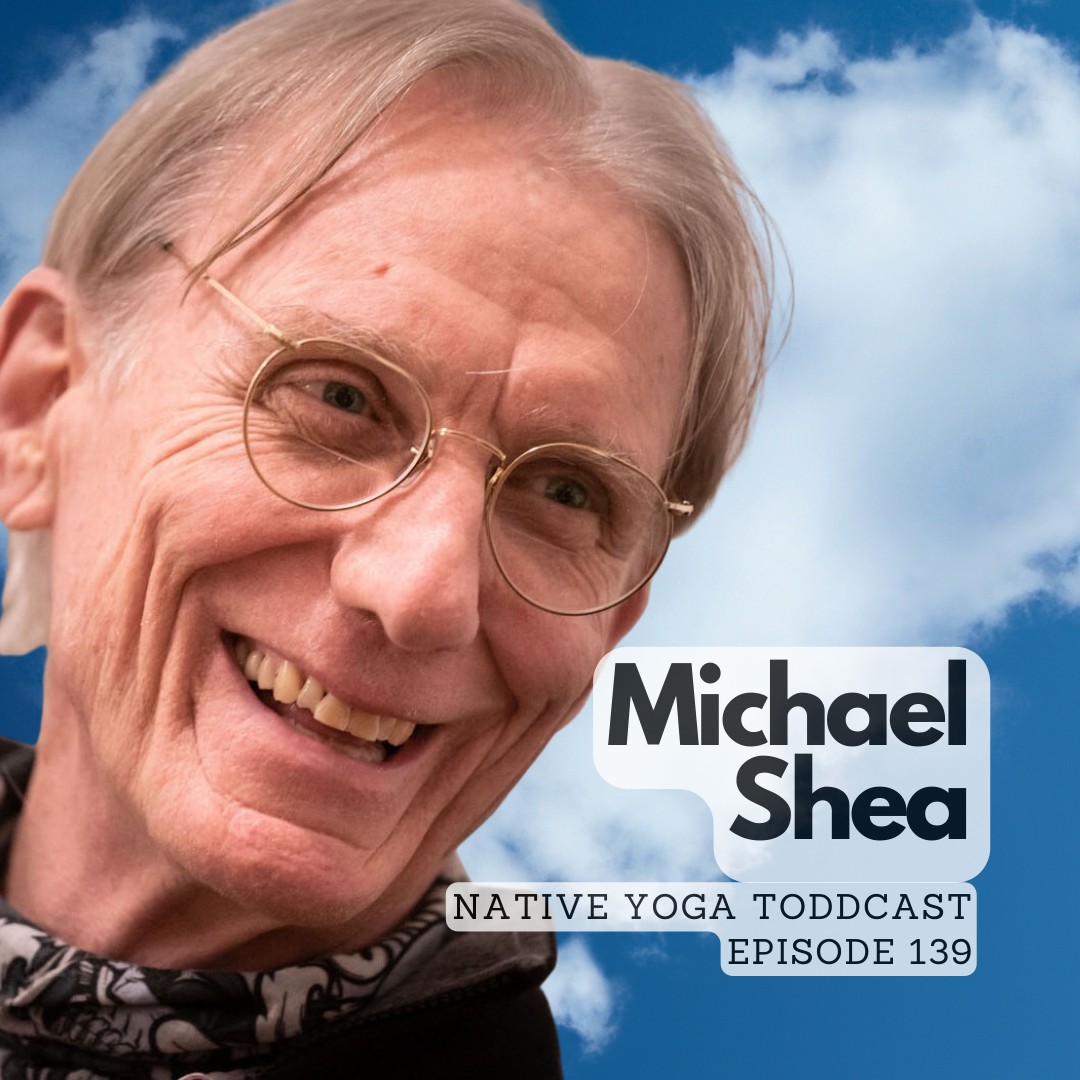
Dr. Michael Shea – Embodiment of the Senses Through Yoga & Meditation

Join my special guest, Michael Shea PhD, for a discussion titled Embodiment of the Senses Through Yoga & Meditation. During this conversation we discussed Michael’s new book titled, The Biodynamics of the Immune System: Balancing the Energies the of the Body with the Cosmos. You can preorder his new book on Amazon by clicking here.

Michael and I are pleased to announce the launch of our new course called All Levels Meditation & Yoga Course.Check out this new course by clicking here.

Visit Michael on his website here sheaheart.com

You can listen to the full podcast here for free.

Todd McLaughlin

Wow! I’m really excited to have Dr. Michael Shea again here in person at Native Yoga Center for today’s episode of Native Yoga Toddcast, which is titled Embodiment of the Senses Through Yoga and Meditation. Michael, how are you doing today?

Dr. Michael Shea

Well, it’s been a busy day because I spent the morning at the car dealership and looking at their giant aquarium waiting for the tires to be rotated and for an oil change to happen. So an entire morning at a car dealership gave me a really good opportunity to meditate on an aquarium.

Todd McLaughlin

Nice. Do you have any profound realizations in the process of staring at the fish?

Dr. Michael Shea

Always the profound realization is how wonderful space is, you know, when I get caught up and you know, not wanting to be where I’m at, at a car dealership, because I got better things to do, of just releasing my attention out into space. But in this case, it was the biggest aquarium I’ve ever seen. And just releasing my attention to the aquarium and then looking out into space as well. 

Todd McLaughlin

That’s cool. You know, we have two really big announcements to share today. Number one, I’m so excited to have a copy of your brand new book called the Biodynamics of the Immune System: Balancing the Energies of the Body with the Cosmos. Whoa, that’s a lot. 

Dr. Michael Shea

Yeah, he’s a big, thick steak if you’re a meat eater, but it’s also a big soy burger if you’re a vegetarian.

Todd McLaughlin

And so I’m really excited to have the chance to ask you some questions about your most recent publication. Also, you and I have created a course and today on the launch of this podcast are launching our course together called All Levels Yoga & Meditation Course. And so you know, I had a lot of fun filming this with you. And I’m excited to release it today. And it’s available on our platform nativeyogaonline.com. The link for that is in the description below for anyone listening would like to check it out. Michael, from us filming that course do you have any takeaways from the experience? What are you excited to share with people that are interested in taking that course.

Dr. Michael Shea

I think meditation in general, and yoga, is constantly evolving in our culture. And when you study yoga and meditation, because I’ve been studying it now for 45 years, something like that, is just realizing like it’s so highly nuanced. And the next teacher says, Well, have you tried this? And the next teacher well why don’t you try this to refine your practice? So there’s never really an end game. That’s the one thing I learned. But there’s a continual opening, you know, as long as you have that willingness to be open to a teacher and to a new class. And as I said, you know, earlier when we were just talking, before we started, I just like to stay with what I know versus what is trending and what’s current. I have to tell you just a short story. I’ve been studying all year with with a Lama from Tibetan medical background. But he was in Sikkim, and then in Bhutan in the summer, and he was broadcasting from there. And he was at a very high level. It’s called advisory on a tantric Buddhist conference in the capital city of Bhutan, in which all the heavy hitter Lamas from Tibet and that area of the world you know, we’re coming together for this conference, and the one thing he said is that because it was going on our planet these days, the veil of secrecy of all of these different meditation practices need to be lifted, and the secrecy needs to be taken away because we are in such an important time on this planet right now with the intensity of the polarization and duality. So, you know, one of the things I share in my book is, not necessarily sharing secrets, but sharing the techniques that can help. But I understand why some of that knowledge, some of the mystical knowledge, or the meditation knowledge, or yogic knowledge, in general, is secret. It’s just because teachers want to have you go through a progression. Because of your aptitude. Some students can’t go to the end game right away. They can’t, you know, go right out into space, you know, and stay grounded at the same time. So, at any rate, it’s exciting because I feel liberated in wanting to share more and more and that book is one vehicle of sharing more, in terms of what was formerly considered to be secret knowledge. And again, that veil has been lifted. I’ve never been good at holding secrets anyway, even my mother knew that. 

Todd McLaughlin

There is a term in a book that you had given me a while back ago called the phenomenon of basic space. Can you explain that?

Dr. Michael Shea

Well, my teacher who was originally the Dalai Lama wanted all of his students to do Buddha scholarships. So I spent 10 years doing very intense Buddhist scholarship. And now I’ve even lost track of the question, explaining basic space and phenomenon. Yeah, see, I went into basic space just now.

Todd McLaughlin

I’ll pull you back in if you drift too far over there. 

Dr. Michael Shea

I’ll thank you. 

Todd McLaughlin

I’ll reel you in.

Dr. Michael Shea

Right, right. So it was because I want my answer to link to, you know, this discussion of, of yoga and meditation. And so as a scholar of Tibetan Buddhist literature, there’s really the two highest level people that you know, those are the writers you go for, in the Kyagu and the Nyingma, tradition, or sometimes it’s known as the Xhosa tradition. It is from the book The Precious Treasury of The Basic Space of Phenomena by Longchenpa. It’s also called Yoga. But he’s considered to be like the most incredible Lama that could give words to the ineffability of the infinite nature of our mind, and so forth, and all those things that we hear about and that we’re trying to achieve. And that’s one of his books. So that was recommended to me and I gave you a copy. And it basically explains the view of Tibetan Buddhism, before you get to meditation, it’s helpful to understand the view. And I think that’s also an important thing to understand about Buddhist meditation, you don’t just jump on a cushion and sit in cross legged position, and so forth. But it’s an understanding that there’s a view here, and the view is basically that all phenomena is infinitely equal. And we hear that as no self, you know, that we don’t have a solid self, and so forth, and that we’re all interconnected. And it’s described as being empty and other metaphors, you know, that are used, but he explains it the best. He explains it the best of how you rest into the element of space. And I’m talking about the element of space from Indo Tibetan point of view, you know, space, wind, fire, water, earth, and so forth. So how you rest your mind. That’s the sea, this is yoga and meditation, how do you rest your mind and body into the element of space where it all began?

Todd McLaughlin

So when you were talking about being at the Toyota dealership today, and staring at the fish tank, and being able to let your mind go into space, is there a way to explain a technique that allows one to achieve that release into space?

Dr. Michael Shea

Yeah, the basic technique is, well, again, you know, it’s relatively simple. And it’s one of these things it’s been secret for a while. It’s called looking into the wisdom of the universe, or looking into the center of the universe or looking into the center of space. All these are metaphors for the same thing, the infinite nature of the totality of life, and the universe. In general, so, but the technique is actually quite simple. And you know, you’re a yogi. And as a practicing yogi, I’m kind of a want to be yogi. I call myself a bogey, you know, kind of indulgent yogi. But the posture is always the first thing, you know, you said, You’ve got to embody your senses. And that means not labeling what you’re seeing, not labeling what you’re hearing, not labeling what you’re feeling, you come into a posture that allows you to sit still, and just be with your senses. Because you have to notice if you’re labeling a lot, oh, this is that, that is that, this is that. Labeling takes us into the head and out of our body and out of the experience of meditation and yoga.

You can listen to the full episode for free here: https://nativeyogacenter.buzzsprout.com

Thanks for reading this blog post from this YouTube video. Check out: 
Native Yoga Teacher Training – In Studio and Livestream – for info delivered to your email click this link here: https://info.nativeyogacenter.com/native-yoga-teacher-training-2023/

https://info.nativeyogacenter.com/native-yoga-teacher-training-2023/

New Student Livestream Special ~ Try 2 Weeks of Free Unlimited Livestream Yoga Classes  at Native Yoga Center. Sign into the classes you would like to take and you will receive an email 30 minutes prior to join on Zoom. The class is recorded and uploaded to nativeyogaonline.com ~ Click Here to join.

New Student FREE 30 Minute Yoga Meet & Greet ~ Are you new to Native Yoga Center and have questions that you would like us to address? Whether you are coming to In Studio, Livestream or Online Recorded Classes we offer a one time complimentary 30 minute zoom meeting to answer any questions you may have. Schedule a time that is convenient for you. Click Here

Native Yoga website: nativeyogacenter.com
Online Yoga Class Library: nativeyogaonline.com
Thai Massage info: palmbeachthaimassage.com
Native Yoga Blog: toddasanayoga.com
Instagram: @nativeyoga
YouTube channel: Native Yoga Center

Listen to the podcast here on our Podcast website: Native Yoga Toddcast

Please email special requests and feedback to info@nativeyogacenter.com