
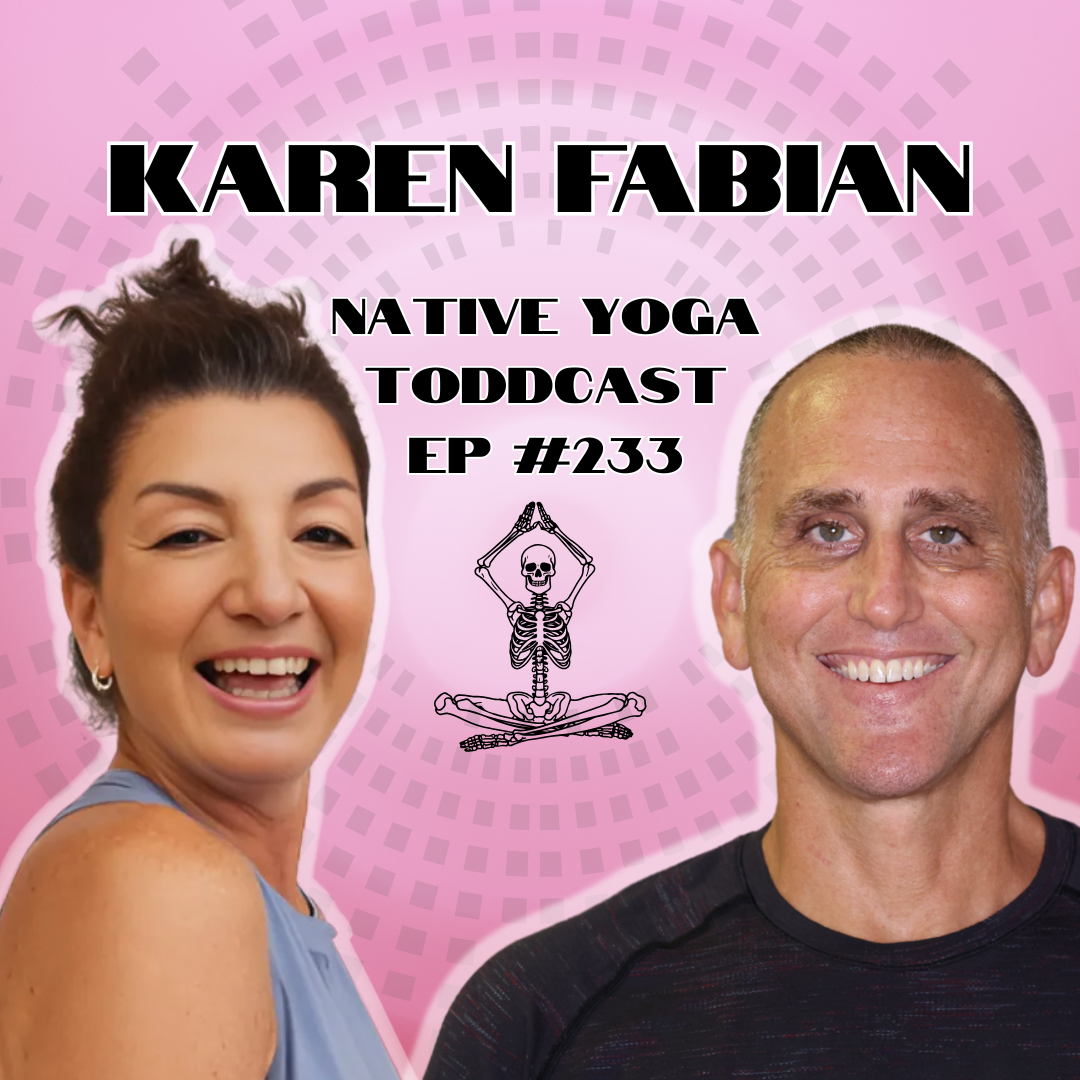
Listen to Podcast with Karen for FREE here
Karen Fabian is the founder of Bare Bones Yoga, a business blending her extensive background in anatomy with the practice and teaching of yoga. Initially pursuing a career in physical therapy, Karen shifted her focus to rehabilitation and counseling, gaining valuable experience in healthcare settings, particularly with traumatic injuries. Today, Karen leads successful yoga anatomy programs and works to empower yoga teachers with the knowledge and confidence needed to excel in their practice.
Visit Karen: https://barebonesyoga.com/
Key Takeaways:
- Yoga teachers often carry a narrative that they need to ensure “safe” classes, but it’s crucial to focus on clear communication and observation to foster better teaching practices.
- Karen Fabian stresses the significance of understanding anatomy as an essential part of teaching yoga effectively, offering innovative programs to aid in this educational pursuit.
- Mindset plays a critical role in how teachers experience teaching yoga. Confidence can be significantly enhanced through practical strategies and a willingness to try new approaches.
- Fabian’s transformative work aims to shift the perspective that accumulating hours is the sole pathway to competence, promoting a more holistic understanding of teaching.
Understanding Anatomy: The Path to Empowered Yoga Instruction
Yoga instruction has long been enveloped in tradition and structured learning. Yet Karen Fabian of Bare Bones Yoga is reshaping the dialogue by emphasizing the importance of anatomy and personal growth through mindset shifts. In an enlightening conversation, she shared her belief in an approach tailored more towards understanding than adhering to rigid hours and certifications. Karen mentions, “I help yoga teachers really build their confidence and skill… it’s really hard to feel confident if you don’t understand anatomy.”
A deep dive into anatomy provides instructors with the tools to deliver safe and accessible yoga classes. With a framework that includes action, alignment, anatomy, and somatic cues, instructors can navigate complex sequences and ensure students grasp both postural and physiological benefits. Fabian’s methodology emphasizes, “Say the cue and see what they do,” which invites a nuanced approach to observing and responding to the dynamics within a class. This connection—between instructor and student—serves to foster a robust and responsive teaching environment.
Applying a keen anatomical lens does more than just improve safety; it empowers instructors to confidently adapt their approaches to the individual needs of their students. Across varied yoga experiences, true confidence is built on a seamless blend of knowledge and communication, ensuring students feel supported and instructors operate with assuredness.
Shifting Focus from Hours to Holistic Growth
Many yoga instructors wrestle with the narrative that extensive hours equate to competency. However, Fabian challenges this notion, advocating for a mindset-focused pathway to professional growth. “Confidence is not often found in the number of hours you train,” she asserts, highlighting that teachers should focus on mindset and experimentation to transcend perceived limitations.
Traditional models, often hierarchical and rooted in guru-style authority, can stymie a teacher’s personal growth and critical thinking. The interview echoes how these entrenched beliefs may lead instructors to underestimate their agency, often feeling compelled to adhere to prescribed teaching methods rather than exploring their unique paths. As detailed in the interview, the evolution from a fixed mindset of seeking endless study to adopting a practice of experimentation can be profound. Teachers can say, “Would you be willing to try something different?” and open themselves to fresh perspectives, revealing unimagined possibilities in their instruction approach.
This shift encompasses a significant departure from yoga’s conventional paradigms, encouraging instructors to embrace their individuality and intuitive capabilities. Such changes can lead to a richer, more personally satisfying teaching journey, aligned with modern pedagogical standards while respecting traditions’ essence.
Breaking Through with Experimentation and Mindset
Mindset shifts can significantly impact an instructor’s journey and experience within the yoga teaching community. In the interview, the power of belief and a willingness to embrace experimentation is brought to light repeatedly. “When something’s not working, experiment with something different,” Fabian advises, underscoring the transformative potential of stepping out of one’s comfort zone.
This experimentation ethos directly ties into the broader themes explored in the conversation. For example, instructors’ conventional approach to complex poses can be reframed through anatomy-fueled knowledge, minimizing associated injuries and encouraging safer practices. Similarly, experimenting with sequencing, and considering feedback rather than assuming students’ expectations, opens new avenues for creative teaching.
By adopting new methods, yoga teachers can dismantle beliefs rooted in fear and inadequacy, embracing the momentum of change and innovative practices. Experimentation not only expands instructors’ technical repertoire but fosters resilience, cultivating a deeper affinity for growth and adaptation.
Reimagining Yoga Instruction for Future Generations
The conversation with Karen Fabian underscores the necessity of nurturing holistic practices centered around confidence, mindset, and anatomy. Emphasizing the need to transcend prescribed learning methodologies, Fabian highlights a future where yoga instructors readily embrace experimentation, prioritizing intentionality over rote repetition.
Her narrative calls us to envisage a vibrant yoga landscape defined by informed, confident educators who value their agency as highly as their qualifications. As she summarizes, “Your confidence is not often found in the number of hours you train.” This perspective encourages educators to explore practices that align with their unique values and intuition, fostering environments rich with both tradition and innovation. The continued evolution of yoga teaching hinges on instructors like Fabian, who bravely redefine educational norms and inspire their peers towards authentic, impactful teaching.
By reshaping their paradigms and diving into both anatomy and mindset mastery, instructors stand poised to shape the future of yoga—a future characterized by passionate, well-rounded educators prepared for everything the mat and their students may present.
Thanks for listening to this episode. Check out: 👇
8IN8 Ashtanga Yoga for Beginners Course Online– Learn 8 Limb Yoga in 8 Days – Get FREE coupon code for a limited time only (Regular price $88) https://info.nativeyogacenter.com/8in8-ashtanga-yoga-for-beginners-8-limbs-in-8-days/
Practice with Native Yoga Online – New classes EVERY day – Use Code FIRSTMONTHFREE https://nativeyogacenter.teachable.com/p/today-s-community-class
Subscribe to Native Yoga Center and view this podcast on Youtube.
Thank you Bryce Allyn for the show tunes. Check out Bryce’s website: bryceallynband.comand sign up on his newsletter to stay in touch. Listen here to his original music from his bands Boxelder, B-Liminal and Bryce Allyn Band on Spotify.
Please email special requests and feedback to info@nativeyogacenter.com
https://info.nativeyogacenter.com/8in8-ashtanga-yoga-for-beginners-8-limbs-in-8-days/
Native Yoga website: here
YouTube: here
Instagram: @nativeyoga
Twitter: @nativeyoga
Facebook: @nativeyogacenter
LinkedIn: Todd McLaughlin







 Native Yoga Blog