Meredith Fogg Liebross – Digging Deeper: The Endless Quest in Yoga Practice

In this episode of the Native Yoga Toddcast, host Todd interviews Meredith Fogg Liebross, an Ashtanga yoga teacher based in Los Angeles. They discuss the unique path of becoming a yoga teacher and the stereotypes surrounding it. Meredith shares her experience studying with renowned teacher Annie Carpenter and the importance of finding a teacher who can pass down the wisdom of the tradition. They also touch on the challenges and joys of parenting and the constant pressure to be present in a world filled with distractions. Tune in for an insightful conversation on the deeper aspects of yoga and the journey of self-discovery.

Follow Meredith on IG at: https://www.instagram.com/meredith_fogg_liebross/?igsh=MXVraWxoamF3NmI2Yw%3D%3D

Key Takeaways:

  • Choosing to become a yoga teacher is a unique and often unconventional career choice, driven by a deep connection to the practice and a sense of dharma.
  • The role of a yoga teacher is to be a conduit of knowledge and experience, passing down the teachings and practices to the next generation.
  • Ashtanga yoga is a method that requires dedication and consistency, with the goal of achieving ego death and non-dualism.

The Joy and Challenges of Parenting: Insights from a Yoga Teacher

Introduction

Parenting is a journey filled with both joy and challenges. As a yoga teacher and mother of three, Meredith Fogg Liebross understands the unique experiences and struggles that come with raising children. In this thought leadership article, we will explore the insights shared by Meredith in a recent podcast interview. We will delve into the themes of finding balance, the role of a teacher, and the impact of technology on parenting. Through her candid reflections, Meredith offers valuable perspectives on the joys and challenges of being a parent.

Key Takeaways

  • Parenting is a journey that brings both joy and challenges, and it is important to embrace both aspects.
  • The role of a teacher in yoga and parenting is to provide guidance and support, but ultimately, the individual must find their own path.
  • The constant presence of technology and the pressure to stay connected can be overwhelming for parents, making it difficult to find moments of solitude and presence with their children.

Finding Balance: The Joy and Challenges of Parenting

Parenting is often described as a journey filled with both joy and challenges. Meredith Fogg Liebross, a yoga teacher and mother of three, understands this firsthand. She acknowledges that while parenting brings immense joy, it is not always easy. In fact, she describes parenting as a constant state of being beholden to her children, a responsibility that can be both rewarding and overwhelming.

As a parent, Meredith finds herself constantly striving to strike a balance between being present for her children and maintaining her own sense of self. She recognizes the importance of being there for her children, but also acknowledges the need for personal space and time. This delicate balance is a challenge that many parents face, and it requires constant self-reflection and adjustment.

The Role of a Teacher: Guiding and Supporting

In the world of yoga, the role of a teacher is to guide and support students on their journey. Similarly, in parenting, parents serve as teachers to their children. Meredith believes that the role of a teacher is to provide a framework and guidance, but ultimately, the individual must find their own path.

Meredith draws parallels between her role as a yoga teacher and her role as a parent. She sees herself as a conduit, passing on the wisdom and knowledge she has gained, while also allowing her children the freedom to explore and discover their own paths. This approach emphasizes the importance of individual growth and self-discovery, both in yoga and in parenting.

The Impact of Technology: Finding Solitude in a Connected World

In today’s digital age, technology plays a significant role in our lives. As parents, it can be challenging to find moments of solitude and presence with our children amidst the constant distractions and pressures of technology. Meredith acknowledges the struggle of staying connected while also being fully present for her children.

She describes the pressure to be constantly available and connected as oppressive, and she finds it difficult to keep up with the expectations of constant communication. This challenge is not unique to Meredith; many parents today struggle to find a balance between technology and quality time with their children. It is a constant battle to resist the pull of technology and create meaningful connections with our loved ones.

Conclusion

Parenting is a journey that brings both joy and challenges. As a yoga teacher and mother, Meredith Fogg Liebross offers valuable insights into the joys and struggles of parenting. She emphasizes the importance of finding balance, the role of a teacher, and the impact of technology on parenting. Through her candid reflections, Meredith reminds us that parenting is a constant learning experience, and that it is okay to embrace both the joy and the challenges that come with it.

Thanks for listening to this episode. Check out: 👇
Free Grow Your Yoga Live Webinar – Every Thursday at 12pm EST
➡️ Click here to receive link

New Student FREE Livestream Yoga Special ~ Try 2 Weeks of Free Unlimited Livestream Yoga Classes  at Native Yoga Center. info.nativeyogacenter.com/livestream 
Sign into the classes you would like to take and you will receive an email 30 minutes prior to join on Zoom. The class is recorded and uploaded to nativeyogaonline.com  ➡️  Click Here to Join. 

Practice to a New Yoga Class every day with our nativeyogaonline.com course called Today’s Community Class with code FIRSTMONTHFREE.

Native Yoga Teacher Training 2024– In Studio and Livestream – for info delivered to your email click this link here: ➡️ https://info.nativeyogacenter.com/native-yoga-teacher-training-2023/

Subscribe to Native Yoga Center and view this podcast on Youtube.

Thank you Bryce Allyn for the show tunes. Check out Bryce’s website: bryceallynband.comand sign up on his newsletter to stay in touch. Listen here to his original music from his bands Boxelder, B-Liminal and Bryce Allyn Band on Spotify.

Please email special requests and feedback to info@nativeyogacenter.comSupport the show

Native Yoga website: here
YouTube: here
Instagram: @nativeyoga 
Twitter: @nativeyoga 
Facebook: @nativeyogacenter 
LinkedIn: Todd McLaughlin

Robin Samples – Yoga Studio Owner Explores New Frontiers in Chicago and Beyond

Robin Samples is the vibrant owner of Bare Feet Power Yoga located in Chicago. With a rich history of travel and residency across various states in the U.S., Robin eventually found her home in the Midwest. 
Starting her journey in yoga through a Bikram class and later branching into power yoga, she founded her studio in 2012. Her business has thrived for over a decade, evolving with the community and the changing yoga scene. 
Beyond her role as a studio owner, Robin passionately leads retreats, emphasizing integration with culture and ceremony, and continues to expand her offerings in wellness and spirituality.

Robin’s website: https://www.barefeetpoweryoga.com/
Follow Robin on IG: https://www.instagram.com/BAREFEETPOWERYOGA/

Key Takeaways:

  • Robin Samples details her evolution from teaching 17 classes a week to focusing on special workshops and retreats that emphasize heart-centered experiences.
  • She stresses the importance of maintaining a sense of community and human connection within her studio, valuing the simple joys of interaction and mutual growth.
  • Robin candidly discusses the double-edged sword of competition and collaboration within the yoga community.
  • The conversation highlights the importance of simplicity, returning to elemental and traditional practices for grounding.
  • Robin reveals her participation in a corporate wellness app initiative, bringing yoga and wellness to wider audiences.

Embracing Simplicity and Expansion in the Yoga Community: Insights from Robin Samples

In the bustling city of Chicago, amongst the towering skyscrapers and the expansive waters of Lake Michigan, lies a small yoga studio that’s a sanctuary of peace and empowerment. Bare Feet Power Yoga, led by the vibrant owner, Robin Samples, is not just a place for physical practice, but a conduit for personal and communal growth. In an insightful conversation, Robin shares her experiences and visions, revealing the essence of her journey as a yoga teacher and studio owner.

Key Takeaways:

  • Simplicity in Practice: Embracing simple pleasures like watching birds or moving to the rhythm of a song can offer profound mental shifts and enhance well-being.
  • Expansion and Collaboration: Pursuing expansion through community-based workshops, retreats, and embracing innovative opportunities like wellness apps can foster growth and connection.
  • Navigating Competitiveness: Adopting a mindset of collaboration over competition in the yoga industry enriches both personal fulfillment and community development.

The Pursuit of Simplicity amidst Complexity

The modern world, with its unceasing demand for attention and action, can often lead us away from the fundamental experiences that ground us. Robin Samples highlights the importance of returning to simplicity, whether through observing nature, engaging in dance, or sharing moments of connection. These acts serve as a reminder that at the core of our bustling lives, serenity can be found in the elemental and the everyday.

Yes, simple living. Are my basic needs met? And is the sun shining? – Robin Samples

To delve deeper, the conversation between Robin and her interviewer illustrates that despite the myriad changes introduced by technological advancements, some aspects of human existence remain timeless and unaltered. Emotions like love and joy, experiences of togetherness, and even the consistent nature of the elements like fire, continue to anchor us in a world that is ever-evolving.

Expanding Horizons through Collaboration and New Ventures

Robin’s journey from teaching an array of weekly yoga classes to focusing on specialty workshops and immersive retreats is a testament to her philosophy of expansion. By branching out to global retreat locations such as Oaxaca and embracing collaborative platforms like wellness apps, she’s extending her reach and inviting others to explore diverse aspects of wellness and personal growth.

Continuing on this path of doing more workshops less often, reaching bigger groups of people, collaborating with other fantastic teachers here in Chicago… – Robin Samples

The implications of such expansions are vast, hinting at a world where the wellness industry can transcend borders and cultural limitations. The sharing of knowledge through retreats and digital means not only democratizes wellness practices but also infuses them with the rich tapestry of global traditions and perspectives.

The Delicate Dance of Competition and Community

In the discussion, a critical theme that surfaces is the dichotomy between competition and collaboration. Robin admits to the personal struggle of oscillating between the two, ultimately finding solace in the belief that elevating others serves the greater good and fosters a sense of unity within the yoga community.

…we’re all part of the human race. We all want to see one another succeed because when we do, then it only expands from there. – Robin Samples

The broader implications of this philosophy are particularly relevant in an age where individual success is often lauded above collective achievements. By shifting the focus to mutual support and cross-pollination of ideas, there’s a potential for a more cohesive and compassionate community that thrives on shared success.

The dialogue between Robin and her interviewer transcends the specifics of yoga and touches upon universal questions about the essence of simplicity, the nature of expansion, and the power of collective upliftment. Each quote and reflection serves as a beacon, guiding us toward a future where mindfulness, gratitude, and unity take precedence over solitary achievement and competition. Through her experiences and insights, Robin Samples not only shapes the fabric of the yoga community in Chicago but also adds her voice to the global conversation on wellness and interconnectedness.

Thanks for listening to this episode. Check out: 👇
Free Grow Your Yoga Live Webinar – Every Thursday at 12pm EST
➡️ Click here to receive link

New Student FREE Livestream Yoga Special ~ Try 2 Weeks of Free Unlimited Livestream Yoga Classes  at Native Yoga Center. info.nativeyogacenter.com/livestream 
Sign into the classes you would like to take and you will receive an email 30 minutes prior to join on Zoom. The class is recorded and uploaded to nativeyogaonline.com  ➡️  Click Here to Join. 

Practice to a New Yoga Class every day with our nativeyogaonline.com course called Today’s Community Class with code FIRSTMONTHFREE.

Native Yoga Teacher Training 2024– In Studio and Livestream – for info delivered to your email click this link here: ➡️ https://info.nativeyogacenter.com/native-yoga-teacher-training-2023/

Subscribe to Native Yoga Center and view this podcast on Youtube.

Thank you Bryce Allyn for the show tunes. Check out Bryce’s website: bryceallynband.comand sign up on his newsletter to stay in touch. Listen here to his original music from his bands Boxelder, B-Liminal and Bryce Allyn Band on Spotify.

Please email special requests and feedback to info@nativeyogacenter.com

Support the show

Native Yoga website: here
YouTube: here
Instagram: @nativeyoga 
Twitter: @nativeyoga 
Facebook: @nativeyogacenter 
LinkedIn: Todd McLaughlin

Marko Mikkilä – Non-Dual Philosophy and Mystical Experiences in Yoga

Marko Mikkilä is a PhD student in philosophy at Turku University in Finland. He is also a yogi and a practitioner of Eastern philosophy. Marko has been practicing yoga for many years and has a deep understanding of non-dual philosophy.

During this conversation Marko  delves into the concept of non-dualism and its application in everyday life. He explains how non-dualism can help individuals heal from trauma and find a sense of liberation. Overall, Marko emphasizes the importance of integrating awakening experiences into all aspects of life and the need for a philosophical framework to understand and navigate these experiences.

Key Takeaways:

  • Non-dualism is the belief that everything is made of one substance, often referred to as consciousness.
  • Non-dualism can be understood as the collapsing of the subject-object separation, where there is just perceiving happening.
  • Awakening to one’s essence nature involves recognizing that we are not identified with the body-mind and that trauma can be observed without clinging to it.
  • Non-dualism can help individuals let go of the story and experience uncomfortable feelings or sensations without attachment.

Native Yoga Toddcast: Exploring Non-Dualism and Awakening with Marko Mikkilä

Welcome to Native Yoga Toddcast, where we bring you inspirational speakers in the field of yoga, massage, bodywork, and beyond. In this episode, host Todd McLaughlin sits down with Marko Mikkilä, a yogi, philosopher, and PhD student from Finland. Together, they delve into the concept of non-dualism and its implications for personal growth and healing. Join us as we explore the depths of awakening and the power of presence.

Introduction: The Beauty of Non-Dualism

In this episode of Native Yoga Toddcast, we have the pleasure of speaking with Marko Mikkilä, a yogi, philosopher, and PhD student from Finland. Marko shares his journey into yoga and philosophy, and how he discovered the transformative power of non-dualism. He explains that non-dualism is the belief that everything is made of one substance, often referred to as consciousness. It is a worldview that challenges the notion of separation and invites us to see the interconnectedness of all things. Marko emphasizes that non-dualism is not just a philosophy, but a way of experiencing life.

The Path to Awakening: From Martial Arts to Yoga

Marko’s journey into yoga began in his 20s when he started practicing Japanese and Chinese martial arts. As he delved deeper into the internal practices of martial arts, he became interested in Eastern philosophy, particularly Taoism and Zen Buddhism. This led him to explore yoga as a means of deepening his understanding of the mind-body connection. Marko initially practiced Ashtanga yoga, but over time, he realized that the prescribed practice was creating more agitation in his nervous system. He began experimenting with different approaches, such as incorporating resting poses into his practice, and eventually found a more balanced and sustainable way of practicing.

The Non-Dual Movement: Awakening to Our True Nature

Marko introduces us to the concept of the non-dual movement, which encompasses various non-dual religious philosophies from around the world. These philosophies share the belief that there is no separation between self and other, and that everything is ultimately connected. Non-dualism can be understood in different ways, such as the idea that everything is made of consciousness or the collapsing of the subject-object separation. Marko explains that non-dualism can also be applied to our relationship with a higher power, where we recognize that we are not separate from the divine, but rather a part of it.

Mystical Experiences and the Awakening Process

Marko discusses the role of mystical experiences in the awakening process. He explains that mystical experiences can range from profound paradigm shifts to subtle moments of intuition or telepathy. These experiences can be transformative, but they are not the ultimate goal of awakening. The goal is to recognize our true nature as awareness or consciousness and to integrate this realization into all aspects of our lives. Marko emphasizes that awakening is not about seeking new experiences or powers, but about letting go of identification with the body-mind and embracing the present moment.

Healing Trauma through Non-Dualism

Marko explores how non-dualism can be applied to the healing of trauma. He explains that when we awaken to our true nature, we no longer identify with the body-mind, including the trauma stored within it. This shift in identification allows us to observe our traumatic experiences without getting caught up in them. We can approach trauma with a sense of detachment and acceptance, allowing it to move through us without resistance. Marko acknowledges that healing trauma is a complex process, but non-dualism can provide a framework for understanding and integrating these experiences.

The Integration of Awakening: From Mystical Experiences to Liberation

Marko highlights the importance of integrating awakening experiences into all spheres of life. He explains that the initial awakening is just the beginning of the journey, and the real challenge lies in embodying that awakening in our everyday lives. This integration involves letting go of attachment to experiences, pleasant or unpleasant, and recognizing the underlying awareness that remains constant amidst the ever-changing phenomena. Marko shares examples of awakened beings who have fully integrated their awakening and live ordinary lives without seeking power or recognition.

Conclusion: Embracing Non-Dualism for Personal Growth

In this thought-provoking conversation, Marko Mikkilä invites us to explore the depths of non-dualism and its potential for personal growth and healing. He emphasizes that non-dualism is not just a philosophy, but a way of experiencing life. By recognizing our true nature as awareness or consciousness, we can let go of identification with the body-mind and embrace the present moment. Marko’s insights remind us of the interconnectedness of all things and the transformative power of awakening. As we continue on our own journeys, may we embrace the beauty of non-dualism and cultivate a deeper sense of presence and connection in our lives.

Note: This article is based on a conversation with Marko Mikkilä on the Native Yoga Toddcast. All quotes are verbatim and direct from the transcript of the episode.

Thanks for listening to this episode. Check out: 👇
Free Grow Your Yoga Live Webinar – Every Thursday at 12pm EST
➡️ Click here to receive link

New Student FREE Livestream Yoga Special ~ Try 2 Weeks of Free Unlimited Livestream Yoga Classes  at Native Yoga Center. info.nativeyogacenter.com/livestream Sign into the classes you would like to take and you will receive an email 30 minutes prior to join on Zoom. The class is recorded and uploaded to nativeyogaonline.com  ➡️  Click Here to Join. 

Practice to a New Yoga Class every day with our nativeyogaonline.com course called Today’s Community Class with code FIRSTMONTHFREE.

Native Yoga Teacher Training 2024– In Studio and Livestream – for info delivered to your email click this link here: ➡️ https://info.nativeyogacenter.com/native-yoga-teacher-training-2023/

Subscribe to Native Yoga Center and view this podcast on Youtube.

Thank you Bryce Allyn for the show tunes. Check out Bryce’s website: bryceallynband.comand sign up on his newsletter to stay in touch. Listen here to his original music from his bands Boxelder, B-Liminal and Bryce Allyn Band on Spotify.

Please email special requests and feedback to info@nativeyogacenter.comSupport the show

Native Yoga website: here
YouTube: here
Instagram: @nativeyoga 
Twitter: @nativeyoga 
Facebook: @nativeyogacenter 
LinkedIn: Todd McLaughlin
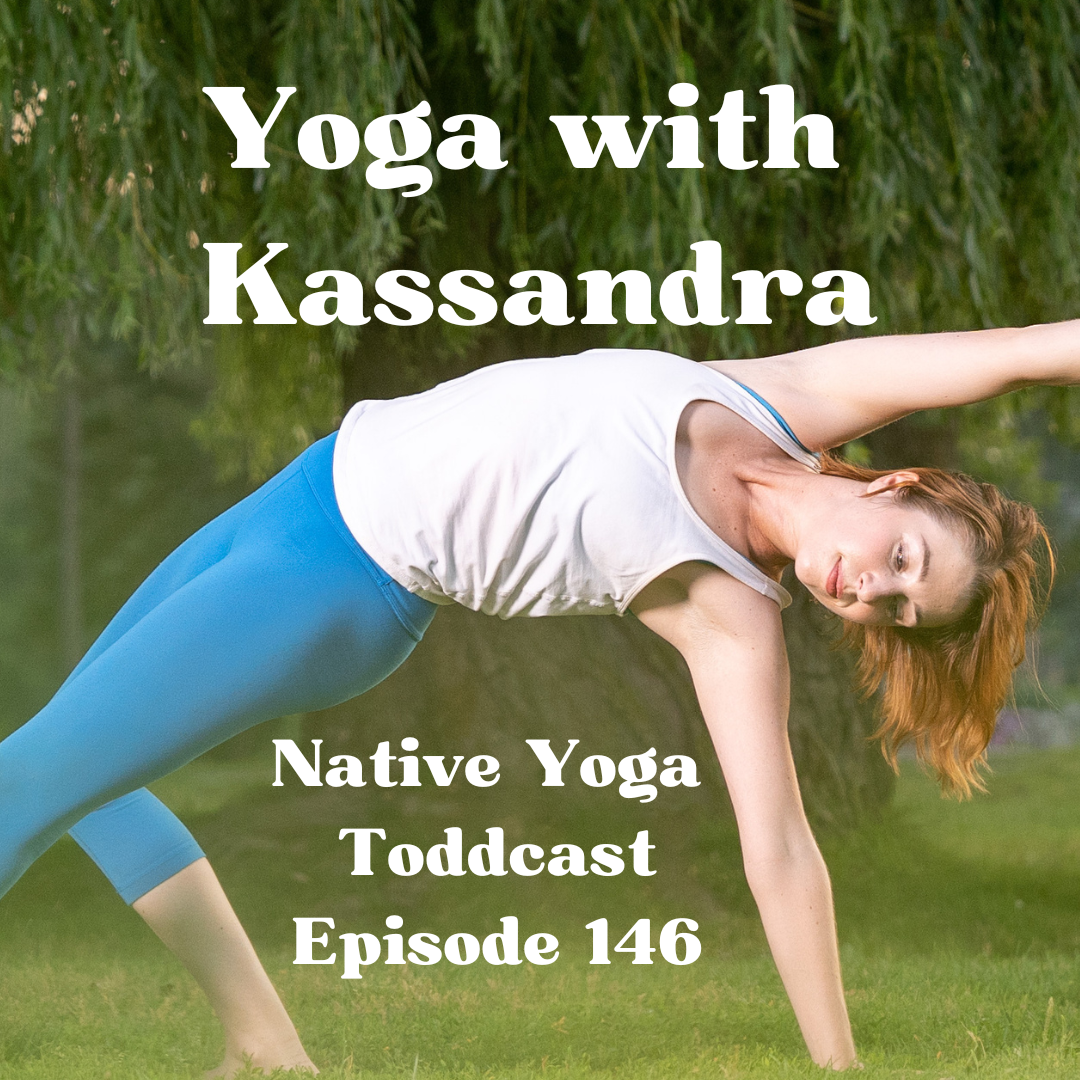
Kassandra Reinhardt – Mastering the Art of Teaching Yoga Online: Tips and Strategies

Kassandra Reinhardt is a renowned yoga instructor and the founder of Yoga with Kassandra. With over 2.3 million subscribers on YouTube, Kassandra has built a successful online yoga community and is known for her accessible and inclusive approach to yoga.

Visit Kassandra on her website: https://www.yogawithkassandra.com/
Follow her on YouTube: https://www.youtube.com/@yogawithkassandra
Follow her on IG: https://www.instagram.com/yoga_with_kassandra/

Key Takeaways:

  • Teaching yoga online requires more than just yoga skills; it involves learning videography, editing, graphic design, marketing, and more.
  • Finding your niche and focusing on a specific style or target audience can help establish your online presence and attract a dedicated following.
  • The online yoga community is generally positive and supportive, with fewer negative comments and criticism compared to other online platforms.
  • Starting small and gradually adding elements like a website, mailing list, and social media platforms can help you grow your online presence over time.

Kassandra shares her journey of teaching yoga online. She discusses the challenges she faced in the early years, the importance of finding a niche, and the gradual growth of her channel. Kassandra emphasizes the need to start small and learn as you go, rather than waiting for everything to be perfect. She also talks about the positive impact of the pandemic on the online yoga community and the increasing acceptance of teaching yoga online. Kassandra offers advice for aspiring online yoga teachers and highlights the importance of staying true to oneself and finding joy in the process.

The Journey of an Online Yoga Teacher: Insights from Kassandra Reinhardt

Introduction

In this thought-provoking interview, I had the pleasure of speaking with Kassandra Reinhardt, a renowned online yoga teacher with a massive following on YouTube. We delved into her journey as a yoga teacher, the challenges she faced in the online space, and the impact of the pandemic on the yoga industry. Kassandra shared valuable insights and advice for aspiring online yoga teachers, emphasizing the importance of finding your niche, embracing the entrepreneurial spirit, and staying true to your purpose.

Exploring the Themes

  1. The Evolution of Online Yoga Teaching
    Kassandra discussed her introduction to yoga and how she gradually discovered the richness and depth of the practice beyond its physical benefits. She highlighted the importance of finding a teaching style that resonates with you and connects with your audience. Kassandra also shared her experience of transitioning from in-person teaching to online platforms, emphasizing the need to adapt and learn new skills such as videography, editing, and marketing.

According to Kassandra, “I started in person, but very quickly added online as well. I put some classes up on YouTube to bulk up my resume and give hiring managers an idea of my style. The online yoga landscape was different back then, but I was naive and thought it would just be a few videos. Little did I know that it would become a significant part of my life.”

  1. The Challenges of Being an Online Yoga Teacher
    Kassandra candidly discussed the challenges she faced as an online yoga teacher, particularly in the early stages. She highlighted the need to learn various skills beyond teaching yoga, such as videography, sound editing, graphic design, and marketing. She also mentioned the difficulties of managing customer service requests and navigating the ever-changing landscape of taxes and ecommerce regulations.

Kassandra shared, “Teaching yoga online is just one of the 20 skills you need to make it happen. It’s hard to be confronted with the fact that you have to learn all these skills. But I knew that I wanted to teach online, so I persevered and learned as I went along.”

  1. The Rise of Online Yoga Teaching During the Pandemic
    The conversation shifted to the impact of the COVID-19 pandemic on the yoga industry. Kassandra acknowledged the challenges faced by many yoga teachers and studios during this time but also highlighted the opportunities that arose for online yoga teachers. She discussed the increased interest in online yoga classes and the growing acceptance of online teaching as a legitimate and valuable form of yoga instruction.

Kassandra reflected, “I had been advocating for online yoga for years, but there was a stigma attached to it. Now, with the pandemic, more people are open to it, and there’s a greater demand for online classes. It’s a time when people need their wellness practices more than ever, and online teachers are best skilled at offering them.”

Implications and Future Outlook

The interview shed light on the evolving landscape of online yoga teaching and the potential impact of AI and technology in the future. While Kassandra acknowledged the possibility of AI-generated yoga classes, she emphasized the enduring value of human connection and the unique experience of practicing yoga with a live teacher. She also encouraged aspiring online yoga teachers to embrace collaboration rather than competition, fostering a sense of community and support within the industry.

Kassandra concluded, “A rising tide lifts all boats. We shift from competition to collaboration. Even though there are more teachers online now, there are also more students than ever before. It’s never too late to start, and there’s still room for growth and success.”

Conclusion

In this thought-provoking interview, Kassandra Reinhardt shared her insights and experiences as an online yoga teacher. She highlighted the importance of finding your niche, embracing the entrepreneurial spirit, and staying true to your purpose. Kassandra’s journey serves as an inspiration for aspiring online yoga teachers, reminding them that success is possible with persistence, adaptability, and a genuine passion for sharing the practice of yoga. As the online yoga industry continues to evolve, it is crucial to stay open to new possibilities and maintain a sense of community and collaboration.

Thanks for listening to this episode. Check out: 👇
Free Grow Your Yoga Live Webinar – Every Thursday at 12pm EST
➡️ Click here to receive link

New Student FREE Livestream Yoga Special ~ Try 2 Weeks of Free Unlimited Livestream Yoga Classes  at Native Yoga Center. info.nativeyogacenter.com/livestream Sign into the classes you would like to take and you will receive an email 30 minutes prior to join on Zoom. The class is recorded and uploaded to nativeyogaonline.com  ➡️  Click Here to Join. 

Practice to a New Yoga Class every day with our nativeyogaonline.com course called Today’s Community Class with code FIRSTMONTHFREE.

Native Yoga Teacher Training 2024– In Studio and Livestream – for info delivered to your email click this link here: ➡️ https://info.nativeyogacenter.com/native-yoga-teacher-training-2023/

Subscribe to Native Yoga Center and view this podcast on Youtube.

Thank you Bryce Allyn for the show tunes. Check out Bryce’s website: bryceallynband.comand sign up on his newsletter to stay in touch. Listen here to his original music from his bands Boxelder, B-Liminal and Bryce Allyn Band on Spotify.

Please email special requests and feedback to info@nativeyogacenter.comSupport the show

Native Yoga website: here
YouTube: here
Instagram: @nativeyoga 
Twitter: @nativeyoga 
Facebook: @nativeyogacenter 
LinkedIn: Todd McLaughlin

Keith Cini – Chinese Medicine Doctor Shares His Healing Journey

Keith Cini shares his journey into the world of healing arts, starting with his introduction to organ massage therapy through one of his kung fu teachers. He discusses his transition from martial arts to yoga and meditation, and how that eventually led him to pursue acupuncture school. Keith also talks about his experiences working at various wellness centers and his focus on concussions and migraines in his practice.

Visit Keith on his website: https://www.agapehealingarts.com/
Follow him on IG:  @agapehealingarts https://www.instagram.com/explore/locations/263970042/agape-healing-arts/

Key Takeaways:

  • Keith’s introduction to healing arts came through organ massage therapy, which had a profound impact on his life.
  • He transitioned from martial arts to yoga and meditation, and eventually pursued acupuncture school.
  • Keith’s practice focuses on concussions, migraines, and the gut-brain axis.
  • He believes that the body knows how to heal itself, and his role as a practitioner is to teach people how to heal themselves.

Exploring the Healing Arts: A Journey of Transformation

Welcome to the Native Yoga Toddcast, where we delve into the world of healing arts and beyond. In this episode, we have the pleasure of speaking with Keith Cini, a Chinese Medicine doctor and the owner of Agape Healing Arts in Tequesta, Florida. Keith takes us on a journey through his introduction to the world of healing arts, his experiences in New York City, his path to becoming an acupuncturist, and his deep dive into the practices of organ massage therapy and cranial sacral therapy. Through his story, we gain insights into the power of Chinese medicine, the importance of emotional well-being, and the role of self-care in our overall health.

The Path to Healing Arts

Keith’s journey into the world of healing arts began with his introduction to organ massage therapy, known as Chi Nei Tsang. He was initially drawn to this practice through his martial arts training and the guidance of his kung fu teacher, Renee Navarro. Keith’s passion for martial arts eventually led him to explore other practices such as yoga, meditation, and acupuncture. He made the decision to attend acupuncture school in Santa Fe, New Mexico, where he further deepened his understanding of Chinese medicine and its principles.

The Philosophy of Chinese Medicine

Chinese medicine is based on the concept of balance and harmony within the body. It recognizes the interconnectedness of the body, mind, and spirit, and seeks to restore balance when there is disharmony. Keith explains that Chinese medicine focuses on the flow of energy, or chi, through the body’s meridians, which are energetic pathways. These meridians are connected to the body’s organs, and each organ has its own responsibilities and emotions associated with it. For example, the liver is associated with anger, the heart with love and joy, the spleen with worry and anxiety, the lungs with grief, and the kidneys with fear.

The Role of Acupuncture and Organ Massage Therapy

Acupuncture and organ massage therapy are two powerful modalities within Chinese medicine that help restore balance and promote healing. Acupuncture involves the insertion of thin needles into specific points along the body’s meridians to stimulate the flow of chi and restore balance. Organ massage therapy, or Chi Nei Tsang, focuses on the abdominal area and helps release blockages and tension in the organs, allowing for the free flow of energy. These practices work together to address physical, emotional, and spiritual imbalances, promoting overall well-being.

The Power of Cranial Sacral Therapy

In addition to acupuncture and organ massage therapy, Keith has also trained in cranial sacral therapy, which focuses on the subtle movements of the cranial bones and the flow of cerebrospinal fluid. This therapy helps release tension and restore balance in the central nervous system, promoting relaxation and healing. Keith’s interest in cranial sacral therapy stems from his own experiences with concussions and post-concussion syndrome. He has found this therapy to be effective in addressing issues related to concussions, migraines, and mild traumatic brain injuries.

Cultivating Health and Wellness

Throughout his journey, Keith emphasizes the importance of self-care and cultivating health and wellness. He encourages individuals to take responsibility for their own well-being and to make conscious choices that support their physical, emotional, and spiritual health. This includes adopting a healthy diet, engaging in regular exercise, practicing meditation or prayer, and seeking out holistic therapies that promote balance and healing. Keith believes that true healing comes from within and that by addressing the root causes of imbalance, we can achieve lasting health and well-being.

Conclusion and Future Outlook

As we conclude our exploration of Keith’s journey in the healing arts, we are reminded of the power of Chinese medicine and its holistic approach to health and wellness. Through practices such as acupuncture, organ massage therapy, and cranial sacral therapy, we can tap into the body’s innate healing abilities and restore balance on physical, emotional, and spiritual levels. Keith’s story serves as an inspiration for those seeking to embark on their own healing journey and reminds us that true healing begins with self-care and self-awareness. As we move forward, let us embrace the wisdom of Chinese medicine and continue to explore the vast potential of the healing arts.

Thanks for listening to this episode. Check out: 👇
Free Grow Your Yoga Live Webinar – Every Thursday at 12pm EST
➡️ Click here to receive link

New Student FREE Livestream Yoga Special ~ Try 2 Weeks of Free Unlimited Livestream Yoga Classes  at Native Yoga Center. info.nativeyogacenter.com/livestream Sign into the classes you would like to take and you will receive an email 30 minutes prior to join on Zoom. The class is recorded and uploaded to nativeyogaonline.com  ➡️  Click Here to Join. 

Practice to a New Yoga Class every day with our nativeyogaonline.com course called Today’s Community Class with code FIRSTMONTHFREE.

Native Yoga Teacher Training 2024– In Studio and Livestream – for info delivered to your email click this link here: ➡️ https://info.nativeyogacenter.com/native-yoga-teacher-training-2023/

Subscribe to Native Yoga Center and view this podcast on Youtube.

Thank you Bryce Allyn for the show tunes. Check out Bryce’s website: bryceallynband.comand sign up on his newsletter to stay in touch. Listen here to his original music from his bands Boxelder, B-Liminal and Bryce Allyn Band on Spotify.

Please email special requests and feedback to info@nativeyogacenter.comSupport the show

Native Yoga website: here
YouTube: here
Instagram: @nativeyoga 
Twitter: @nativeyoga 
Facebook: @nativeyogacenter 
LinkedIn: Todd McLaughlin
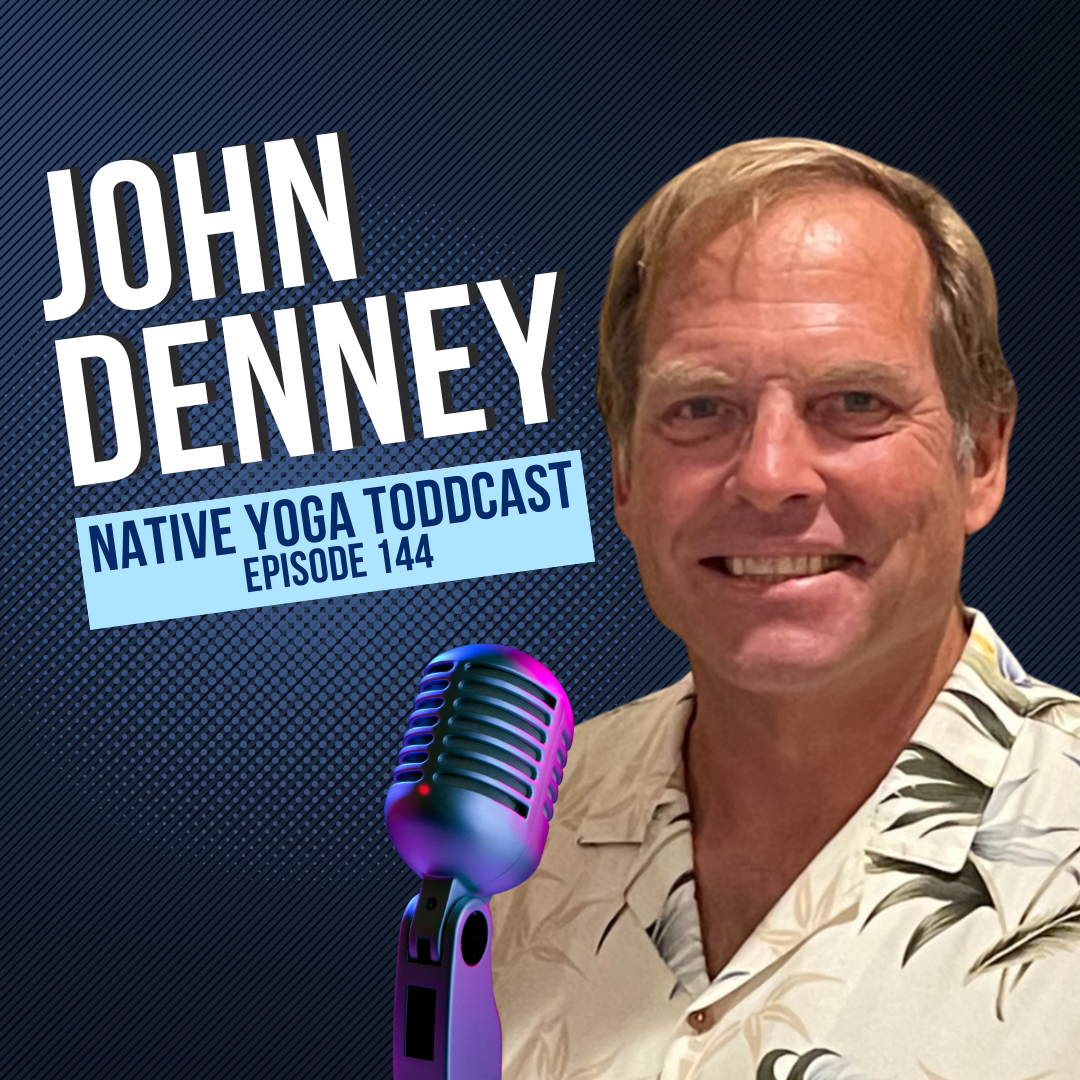
John Denney – Enhancing Athletic Performance With Meditation And The Harmony Exercises

John Denney is the Minister of Unity of Jupiter and a coach for Olympic-level athletes. He has been practicing The Harmony Exercise, a meditation technique, since 1985. John is also a paddleboarding enthusiast and has had the opportunity to surf with some of the world’s best surfers, including Laird Hamilton and Kelly Slater.

Visit John on his website: https://theharmonyexercise.com/
Also on his website: https://john-denney.com/

Key Takeaways:

  • Unity Church is a metaphysical Christian church that focuses on practical Christianity and the application of spiritual principles in daily life.
  • The Harmony Exercise is a meditation technique that helps control the body’s physiology through conscious breathing and positive thinking.
  • Most athletes struggle with controlling their temper and tension, but learning to regulate their breath and thoughts can improve their performance.
  • In surfing and other sports, being in a state of flow and surrendering to the power of nature can lead to peak performance.
  • Daily practice and finding inner peace are essential for personal growth and making a positive impact on the world.

Native Yoga Toddcast: A Journey to Harmony and Self-Improvement

Welcome to Native Yoga Toddcast, where we bring you inspirational speakers in the field of yoga, massage, bodywork, and beyond. In this episode, we have the pleasure of hosting John Denney, the Minister of Unity of Jupiter. John is a dedicated practitioner of the Harmony Exercise, a meditation technique he has been practicing for over seven years. He is also a paddleboarding enthusiast and a coach for Olympic-level athletes. Join us as we delve into John’s journey, his insights, and the strategies he employs to help individuals achieve their highest potential.

The Path to Unity Church

John’s journey to becoming the Minister of Unity of Jupiter began with a vision he had for the position. He had been a guest speaker at the church for about a year and had always been drawn to its teachings. After serving on the board for many years and receiving positive feedback from the congregation, he decided to give it a try. Unity Church is a metaphysical Christian denomination that focuses on practical Christianity and the application of spiritual principles in everyday life. John believes that religion should help individuals navigate their relationships, business, and personal challenges, and Unity Church provides a platform for this practical approach to spirituality.

The Harmony Exercise: A Path to Self-Improvement

John’s daily meditation practice, known as the Harmony Exercise, has been a cornerstone of his life since 1985. This meditation technique was taught to him by a man named Carl Writer, who was an astrologer to the stars. The Harmony Exercise involves a 12-minute meditation that focuses on physical and mental relaxation, conscious breathing, and the cultivation of positive thoughts. John and his wife, Barry, have been practicing this meditation together since they first learned it, and it has become a foundation of their marriage.

The Harmony Exercise has had a profound impact on John’s life. He has experienced significant improvements in his physical and mental health, including weight loss and reduced stress levels. He has also noticed a shift in his relationship with alcohol, as his focus on health and well-being became more important than his desire for alcohol. Through his daily practice, John has cultivated a sense of inner peace and happiness that has positively influenced every aspect of his life.

Coaching Olympic-Level Athletes: Controlling Temper and Tension

As a coach for Olympic-level athletes, John has observed a common stumbling block that many athletes face: the inability to control their temper and tension. He believes that most people have never learned how to control their emotions and thoughts effectively. Through his coaching, John teaches athletes the importance of conscious breathing, positive thinking, and emotional regulation. By learning to control their physiology and redirect their thoughts, athletes can perform at their peak and achieve greater success.

John emphasizes the power of conscious breathing in controlling tension and temper. By taking slow, deep breaths, individuals can activate their parasympathetic nervous system, which promotes relaxation and reduces stress. This simple technique can have a profound impact on an athlete’s performance and overall well-being. John also encourages athletes to replace negative thoughts with positive affirmations, as this can shift their mindset and improve their mental state.

The Power of Choice and Unity

John believes that unity and common ground are essential in today’s divided world. He emphasizes the importance of recognizing that we are all moving in the same direction, regardless of our religious or cultural backgrounds. Unity Church incorporates teachings from various religions and emphasizes the common principles found in all faiths. John encourages individuals to choose love over hate and to focus on creating harmony in their relationships and interactions with others.

The Legacy of Harmony and Self-Improvement

As John embarks on his role as the Minister of Unity of Jupiter, he hopes to inspire individuals to cultivate inner peace, happiness, and harmony. His goal is to help individuals become light bearers who radiate positivity and make a difference in the world. John believes that by focusing on personal growth and self-improvement, individuals can create a ripple effect that positively impacts their families, communities, and the world at large.

In conclusion, John Denney’s journey to harmony and self-improvement is a testament to the power of daily practice and the pursuit of inner peace. Through his dedication to the Harmony Exercise and his coaching of Olympic-level athletes, John has witnessed the transformative effects of conscious breathing, positive thinking, and emotional regulation. His role as the Minister of Unity of Jupiter allows him to share these teachings with a wider audience and inspire individuals to live a life of harmony and happiness. By choosing love over hate and focusing on personal growth, individuals can create a positive impact on the world and leave a lasting legacy of unity and self-improvement.

Note: This article is based on a transcript from the Native Yoga Toddcast episode featuring John Denney. All quotes are verbatim and directly from the transcript.

Thanks for listening to this episode. Check out: 👇
Free Grow Your Yoga Live Webinar – Every Thursday at 12pm EST
➡️ Click here to receive link

New Student FREE Livestream Yoga Special ~ Try 2 Weeks of Free Unlimited Livestream Yoga Classes  at Native Yoga Center. info.nativeyogacenter.com/livestream Sign into the classes you would like to take and you will receive an email 30 minutes prior to join on Zoom. The class is recorded and uploaded to nativeyogaonline.com  ➡️  Click Here to Join. 

Practice to a New Yoga Class every day with our nativeyogaonline.com course called Today’s Community Class with code FIRSTMONTHFREE.

Native Yoga Teacher Training 2024– In Studio and Livestream – for info delivered to your email click this link here: ➡️ https://info.nativeyogacenter.com/native-yoga-teacher-training-2023/

Subscribe to Native Yoga Center and view this podcast on Youtube.

Thank you Bryce Allyn for the show tunes. Check out Bryce’s website: bryceallynband.comand sign up on his newsletter to stay in touch. Listen here to his original music from his bands Boxelder, B-Liminal and Bryce Allyn Band on Spotify.

Please email special requests and feedback to info@nativeyogacenter.comSupport the show

Native Yoga website: here
YouTube: here
Instagram: @nativeyoga 
Twitter: @nativeyoga 
Facebook: @nativeyogacenter 
LinkedIn: Todd McLaughlin

Janne Kontala – Is Contemporary Yoga at a Dead End?

Janne Kontala discusses the state of contemporary yoga and its potential dead end. He explores the historical development of modern yoga and its focus on physicality and individual practice. Janne emphasizes the importance of integrating yoga into all aspects of life and suggests studying the Bhagavad Gita for a deeper understanding of yoga philosophy.

Visit Janne on his website: https://www.jayananda.info/
Contact him on his email at: janne.kontala@gmail.com
Email Janne to learn more about his upcoming Bhagavad Gita course.

Key Takeaways:

  • Contemporary yoga often focuses on physicality and individual practice, which can lead to a disconnect from the rest of life.
  • The Bhagavad Gita offers valuable insights into how to integrate yoga into all aspects of life and engage in selfless action.
  • Yoga is not just a private practice but can be applied in daily life through karma yoga and bhakti yoga.
  • The goal of yoga is to overcome suffering, achieve liberation, and understand one’s true essence as pure consciousness.

Janne Kontala is a yoga teacher and scholar with a PhD in religious studies. He has been practicing and studying yoga since 1986 and has a deep understanding of yoga philosophy and its application in daily life.

The Evolution and Future of Yoga: Exploring the Themes of Contemporary Yoga

Introduction

In recent years, the practice of yoga has gained immense popularity worldwide. From physical fitness to mental well-being, people are turning to yoga as a holistic approach to improve their overall health. However, as the popularity of yoga grows, there is a need to examine the direction in which contemporary yoga is heading. Is it at a dead end? In this thought-provoking article, we will explore the main themes discussed in a conversation with Janne Kontala, a renowned yoga teacher and scholar. By delving into the transcript of the conversation, we will analyze the implications and potential impact of these themes on the future of yoga.

The Evolution of Yoga

The conversation with Janne Kontala sheds light on the evolution of yoga over the years. He explains that contemporary yoga has seen a shift from its traditional roots to a more commercialized and market-driven approach. The emergence of various yoga brands and styles has led to a diversification of the practice, making it more accessible to a wider audience. However, this diversification has also led to a dilution of the original teachings and philosophy of yoga. Janne emphasizes the importance of understanding the traditional texts and incorporating them into modern yoga practices to maintain the authenticity and depth of the practice.

Janne also highlights the influence of photography and marketing in shaping the perception of yoga. The emphasis on physical appearance and the need to project a certain image has become prevalent in contemporary yoga. This focus on the external aspects of yoga has led to a disconnect between the practice on the mat and its integration into daily life. Janne suggests that a more holistic approach is needed, where yoga is not just a private exercise but a way of life that encompasses all aspects of our being.

The Role of Yoga Philosophy

Yoga philosophy plays a crucial role in understanding the deeper meaning and purpose of the practice. Janne emphasizes the importance of studying the traditional texts, such as the Bhagavad Gita, to gain a deeper understanding of yoga philosophy. He explains that the Bhagavad Gita offers valuable insights into how to apply yoga in the midst of everyday life and society. The text explores various paths of yoga, including Karma Yoga (the yoga of selfless action), Bhakti Yoga (the yoga of devotion), and Jnana Yoga (the yoga of knowledge). These paths provide different approaches to spiritual growth and self-realization, catering to individuals with different inclinations and temperaments.

Janne suggests that incorporating yoga philosophy into our daily lives can help us cultivate mindfulness, detachment from results, and a sense of service to others. By practicing Karma Yoga, we can learn to perform our duties and engage in the world without attachment to the outcomes. Bhakti Yoga teaches us to cultivate love and devotion in our actions, recognizing the divine presence in all beings. Jnana Yoga encourages us to seek knowledge and develop a deeper understanding of ourselves and the nature of reality. By integrating these philosophical teachings into our yoga practice, we can transform our lives and create a more meaningful and purposeful existence.

The Goal of Yoga

The ultimate goal of yoga, as discussed in the conversation, is to overcome suffering and attain liberation. Janne explains that all strands of yoga share the common aim of freeing oneself from the cycle of rebirth and achieving a state of permanent bliss and enlightenment. This goal is often described in different ways, such as union with the divine, self-realization, or the realization of one’s true nature. While the paths to this goal may vary, the underlying aspiration remains the same.

Janne highlights three key components of the goal of yoga: freedom from suffering, liberation from the cycle of rebirth, and understanding one’s deepest essence. The practice of yoga is seen as a means to overcome ignorance and selfishness, leading to a state of profound peace and self-realization. While the path to this goal may be challenging and require dedicated practice, it is attainable for those who are committed to the journey.

Conclusion and Future Outlook

In conclusion, the conversation with Janne Kontala sheds light on the current state of contemporary yoga and its potential future. While modern yoga has made the practice more accessible and popularized it on a global scale, there is a need to reconnect with the deeper teachings and philosophy of yoga. By incorporating yoga philosophy into our practice and daily lives, we can cultivate mindfulness, detachment, and a sense of service to others. The Bhagavad Gita, with its emphasis on Karma Yoga, Bhakti Yoga, and Jnana Yoga, provides valuable guidance for integrating yoga into all aspects of our lives.

Moving forward, it is essential to strike a balance between the physical aspects of yoga and its spiritual and philosophical dimensions. By embracing the holistic nature of yoga, we can experience the transformative power of the practice and create a more harmonious and fulfilling existence. As the popularity of yoga continues to grow, it is crucial to maintain the authenticity and depth of the practice, ensuring that it remains a powerful tool for personal growth and self-realization.

The future of yoga lies in our ability to integrate its teachings into our daily lives and to share its wisdom with others. By embracing the principles of mindfulness, selflessness, and knowledge, we can navigate the challenges of the modern world and find inner peace and fulfillment. As we embark on this journey, let us remember that yoga is not just a physical exercise but a path to self-discovery and spiritual awakening.

Thanks for listening to this episode. Check out: 👇
Free Grow Your Yoga Live Webinar – Every Thursday at 12pm EST
➡️ Click here to receive link

New Student FREE Livestream Yoga Special ~ Try 2 Weeks of Free Unlimited Livestream Yoga Classes  at Native Yoga Center. info.nativeyogacenter.com/livestream Sign into the classes you would like to take and you will receive an email 30 minutes prior to join on Zoom. The class is recorded and uploaded to nativeyogaonline.com  ➡️  Click Here to Join. 

Practice to a New Yoga Class every day with our nativeyogaonline.com course called Today’s Community Class with code FIRSTMONTHFREE.

Native Yoga Teacher Training 2024– In Studio and Livestream – for info delivered to your email click this link here: ➡️ https://info.nativeyogacenter.com/native-yoga-teacher-training-2023/

Subscribe to Native Yoga Center and view this podcast on Youtube.

Thank you Bryce Allyn for the show tunes. Check out Bryce’s website: bryceallynband.comand sign up on his newsletter to stay in touch. Listen here to his original music from his bands Boxelder, B-Liminal and Bryce Allyn Band on Spotify.

Please email special requests and feedback to info@nativeyogacenter.comSupport the show

Native Yoga website: here
YouTube: here
Instagram: @nativeyoga 
Twitter: @nativeyoga 
Facebook: @nativeyogacenter 
LinkedIn: Todd McLaughlin

20 Minute Yoga for Back Pain: Strengthen, Soothe and Release Low Back & Hips

Todd McLaughlin is a yoga instructor and the owner of Native Yoga Center in Juno Beach, Florida. With over 20 years of experience in teaching yoga, Todd is passionate about helping people alleviate back pain and improve their overall well-being through yoga practice.

Summary: In this episode of Grow Your Yoga, Todd McLaughlin shares his favorite stretches and poses to alleviate back pain. He emphasizes the importance of consulting with a physician and understanding one’s specific condition before starting a yoga practice. Todd guides listeners through various movements, such as flexion, extension, lateral flexion, and rotation, to determine which motions provide relief and which exacerbate the pain. He then demonstrates poses like Cow and Cat, Child’s Pose, Head-to-Knee Pose, Bridge Pose, and Supine Twist, explaining how each pose targets different areas of the back and hips. Todd concludes the session with a relaxation pose, Shavasana, and encourages listeners to practice yoga regularly to cultivate peace within themselves and spread it to others.

Key Takeaways:

  • Consult with a physician and understand your specific condition before starting a yoga practice for back pain relief.
  • Determine which movements provide relief and which exacerbate the pain by exploring flexion, extension, lateral flexion, and rotation.
  • Cow and Cat poses can help alleviate back pain by opening up space between the vertebrae.
  • Child’s Pose can be modified to accommodate different levels of flexibility and comfort.
  • Head-to-Knee Pose stretches the side body and hips, providing relief for the lower back.
  • Bridge Pose strengthens the legs and opens up space around the sacrum.
  • Supine Twist can be adjusted with props to make it more comfortable and gentle.
  • Regular yoga practice can help cultivate peace within oneself and promote overall well-being.

*Grow Your Yoga: Alleviating Back Pain with Yoga

By Todd McLaughlin, Native Yoga Center

Welcome to Grow Your Yoga! In this webinar, we will be discussing 20-minute yoga routines that can help alleviate back pain. Whether you’re experiencing low back pain, thoracic pain, or neck pain, I will guide you through a series of stretches and movements that can provide relief and improve flexibility. It’s important to consult with a physician and undergo imaging tests to understand the underlying causes of your back pain. Once you have a better understanding, we can tailor the yoga movements to suit your needs.

Discovering the Right Movements

To begin, let’s explore different movements and observe how they affect your back. Start by standing with your hands on your waist. Bend your knees slightly and round your spine forward. Pay attention to how this motion feels. Does it alleviate or increase the discomfort? Next, straighten your legs, press your hips forward, and go into extension. Again, observe the sensation. Does it improve or worsen the pain? Lastly, try lateral flexion by pressing your hips to the right and leaning to the left. Repeat on the other side. Take note of how these movements affect your back.

Cow and Cat Poses

One of the key poses for alleviating back pain is the Cow and Cat poses. Start on your hands and knees, with your hands under your shoulders and knees under your hips. In Cow Pose, lift your chin and tailbone, allowing the ribcage to drop down. In Cat Pose, tuck your chin and round your spine, engaging your abdominal muscles. Coordinate your breath with the movements, inhaling in Cow Pose and exhaling in Cat Pose. Adjust the range of motion based on what provides relief for your back.

Child’s Pose

Child’s Pose is another effective stretch for the back. If you’re unable to kneel, you can lie on your back and bring your knees to your chest. In Child’s Pose, bring your hips towards your heels and rest your forehead on the floor. If flexion exacerbates your pain, come onto your elbows and maintain a neutral spine. If flexion feels good, fully extend your arms and relax into the pose.

Head-to-Knee Pose

Head-to-Knee Pose is a great stretch for the hips and lower back. Start by sitting with your right knee bent and your right heel close to your body. Reach over for your left foot, either grabbing it or using a strap. This pose opens up the space on the right side of your waistline and hip. If flexion is challenging, focus on isolating the movement at the pelvis and hips. If flexion feels good, fold forward as much as your body allows, engaging your abdominal muscles.

Bridge Pose

Bridge Pose is a strength-building pose that also helps alleviate tension in the back. Lie on your back and bend your knees. Before lifting your hips, isolate the movement of your pelvis and low back. Experiment with anterior and posterior tilts of the pelvis to find what feels best for your back. When you’re ready, press your feet into the floor and lift your hips, engaging your leg muscles. Focus on stability at the midsection and relax your neck and shoulders.

Supine Twist

The Supine Twist is a gentle twisting motion that can provide relief for back stiffness. Lie on your back and tip your knees to the right, allowing your legs to relax. If the twist is too deep, you can place a block under the outside leg for support. Explore the rocking motion of twisting from side to side, coordinating your breath with the movement. This gentle twist helps stretch and release tension in the back.

Seated Cross-Legged Position

To conclude the practice, sit in a cross-legged position. If forward bending is challenging, sit with your hands on your knees and focus on tractioning your spine by engaging your abdominal muscles. If rounding feels better, lean forward and allow your back to release and stretch. Take deep breaths in through your nose and exhale through your nose, focusing on relaxation and letting go of tension.

Implications and Future Outlook

Yoga has been proven to be an effective tool for managing and alleviating back pain. By incorporating these 20-minute routines into your daily or weekly practice, you can strengthen your legs, improve flexibility, and release tension in the back. It’s important to listen to your body and modify the movements based on your individual needs. Regular practice and self-observation will help you become more proficient in finding the movements that provide relief for your back pain.

Conclusion

Back pain can be debilitating, but with the right yoga practice, you can find relief and improve your overall well-being. The stretches and movements discussed in this webinar are just a starting point. It’s important to consult with a physician and work with a qualified yoga instructor to tailor the practice to your specific needs. Remember to listen to your body, practice self-observation, and be patient with yourself as you explore what works best for your back. With regular practice, you can find peace and freedom from back pain.

Thank you for joining me in this webinar. I hope you found these insights and tips helpful. Remember to consult with a physician and practice under the guidance of a qualified instructor. If you have any questions, feel free to leave a comment, and I will be happy to answer them. Stay tuned for more webinars and classes at Native Yoga Center. Namaste.

Check out: 👇
Free Grow Your Yoga Live Webinar – Every Thursday at 12pm EST
➡️ Click here to receive link

New Student FREE Livestream Yoga Special ~ Try 2 Weeks of Free Unlimited Livestream Yoga Classes  at Native Yoga Center. info.nativeyogacenter.com/livestream Sign into the classes you would like to take and you will receive an email 30 minutes prior to join on Zoom. The class is recorded and uploaded to nativeyogaonline.com  ➡️  Click Here to Join. 

Practice to a New Yoga Class every day with our nativeyogaonline.com course called Today’s Community Class with code FIRSTMONTHFREE.

Native Yoga Teacher Training 2024– In Studio and Livestream – for info delivered to your email click this link here: ➡️ https://info.nativeyogacenter.com/native-yoga-teacher-training-2023/

Subscribe to Native Yoga Center and view this video on Youtube.

Please email special requests and feedback to info@nativeyogacenter.com

Support the show

Native Yoga website: here
YouTube: here
Instagram: @nativeyoga 
Twitter: @nativeyoga 
Facebook: @nativeyogacenter 
LinkedIn: Todd McLaughlin

Leah Hester – Yoga, Inspiration and Finding Peace in Life

Leah Hester, a yoga teacher and influencer, joins the Native Yoga Toddcast to discuss her journey with yoga and how it has helped her find peace and improve her life. She shares her experiences living in different places, including Costa Rica and Guatemala, and how yoga has been a constant in her life during these transitions. Leah emphasizes the importance of self-love and self-care, and how it allows us to show up for others and spread kindness.

Listen to Podcast for Free Here

Follow Leah on her Instagram at @iamleahhester
Also on her YouTube channel @leahhester
You can contact her via email at iamleahhester@gmail.com

Key Takeaways:

  • Yoga is a whole lifestyle that goes beyond just the physical practice.
  • The practice of yoga helps us come back to ourselves and find peace within.
  • It’s important to be open-minded and willing to change our beliefs when new information comes our way.
  • Kindness and empathy can go a long way in creating a more peaceful world.

The Power of Yoga: Finding Peace and Connection in a Chaotic World

Welcome to Native Yoga Toddcast. So happy you are here. My goal with this channel is to bring inspirational speakers to the mic in the field of yoga, massage bodywork and beyond. Follow us @nativeyoga, and check us out at nativeyogacenter.com. All right, let’s begin.

Welcome to Native Yoga Toddcast. So happy that you’re here. If it’s your first time listening, welcome to the show. For those of you that are longtime listeners, thanks so much for your support. If you’d like to support the show, click here. Every little bit of support is greatly appreciated. This week, I have the pleasure of bringing Leah Hester on to the podcast. Leah joins me here in studio for a discussion about yoga and how she has applied yoga to her life to help improve it and create more peace. And to communicate effectively. Follow Leah on her Instagram, which is at @IamLeahHester. Follow her on her YouTube, which is at @LeahHester. And then also you can send her an email via Gmail, which is IamLeahhestor@gmail.com And for those of you that enjoy digital marketing at the end of the podcast, I went ahead and recorded another little additional segment, which is being played at the end of the closing show music. So if that’s something that interests you, I wanted to ask her a couple of in depth questions regarding her strategy. So you can stay all the way to the end and check it out. All right, thanks so much. Let’s go ahead and get get started. I’m so excited to have Leah Hester here with me today in studio. And Leah, thank you so much for joining me taking time out of your day. How are you feeling today?

Leah: Thank you for having me. I am grateful to be here. I’m feeling really good.

Host: What has been happening for you lately where I know you’re visiting here in Florida. Can you tell me a little bit about what where you are currently in your life in relation to what are you up to these days here in Juno?

Leah: So primarily I came here from Costa Rica, to just stop and pause in my travels and in life really just take like a deep inhale and exhale, and many more to come to redirect my goals and my priorities and really hone down on where I want to set up a home base and what direction I want to take, you know, all the yogic experience and experience teaching yoga that I have accumulated over the past few years.

Host: Where did you grow up?

Leah: I was born and raised in Chicago, Illinois, in a little suburb about 20 miles north of the city.

Host: Cool. What suburb? I don’t know Chicago really well, but I have people that come here that are from there. So I’m curious what what area or what suburb?

Leah: It’s called Highland Park.

Host: Nice. I just had somebody practicing today from Springfield, Illinois.

Leah: I believe that’s the capital.

Host: Right. Yeah. Yeah. That’s obvious. I would think Chicago. Chicago would be the capital of Illinois. Right. But it’s not Yeah, obviously. Yeah. Got it. And then how long were you living in Costa Rica?

Leah: I was just there for three months.

Host: Nice. What part?

Leah: I was in Dominical. Well, so it’s more south than the Osa Peninsula.

Host: Cool. What did you think? Did you enjoy it?

Leah: I love Costa Rica. The slow pace of life and the sweetness of the local ticas in the ticos and the vast amount of yoga and yoga community is amazing. Nice. Great time.

Host: Cool. What was your first introduction to yoga?

Leah: My first introduction to yoga actually began with philosophy. I went to college for one short year. For a short year, but I studied philosophy that year. And that kind of led me into being curious about yogic philosophy. And so I started reading into that I developed a meditation practice. And then shortly after, did my yoga teacher training.

Host: What was the text that you first started to read in relation to yoga philosophy?

Leah: Hmm, that’s a good question that goes so far back. I think the first texts that I truly read in and out was the Yoga Sutras.

Host: That’s awesome. That’s a classic book. Yeah. What were your thoughts? Do you remember when you first read it? What your first reaction to it was? Was it like something that you felt was easy to understand? Or was it something that you’re reading going…. what are we talking about here?

Leah: I immediately loved it, and resonated with it. There were a few passages, of course, a few sutures that I had to reread, sometimes more than twice like to really grasp and digest it. But ultimately reading through it for me, it was like enjoyable.

Host: Nice. When you did your yoga teacher training, was it at a studio in Chicago, or in Illinois?

Leah: After I went to college in San Diego for that one year. And then when I left school, I stayed there. So before Costa Rica up until Costa Rica, so just up until about six months ago, I was living in San Diego. That was really what feels like home to me. And yeah, that’s I did my yoga teacher training at a cool studio. They’re called Trilogy in La Jolla.

Host: Great. My wife and I used to live in San Diego as well. It’s such a fun city. Yeah. And did you live in La Jolla? Or did you commute to go to La Jolla for the training?

Leah: Yeah, I did live in La Jolla for about a year. After that, I moved to North County. By Encinitas and did my yoga teacher training when I was living in Encinitas. It’s about a 20 minute drive south but it was beautiful down the 101.

Host: Right! Like Encinitas, Leucadia. Del Mar. So we go a little bit south of Del Mar on the way to La Jolla at Torrey Pines. Did you go to Blacks Beach at all? Did you ever go.

Leah: I love Blacks Beach.

Host: Isn’t that amazing? I mean, I know some people would make fun of me cuz I’d love to go surfing there. Yet some folks would make fun that I liked to go because it is a nudist beach. I’m like, trust me. You know, like, I’m not going there for that. And that goat trail that goes down. Did you climb down that? Quite an adventure. So you do surf?

Leah: Yeah. That is one of my biggest passions.

Host: Nice. Cool. So obviously growing up in Illinois, that wasn’t where you started to surf, I’m guessing. And so then when you went to San Diego, that’s where you start picking it up?

Leah: Yep. Yep.

Host: When you did your yoga teacher training, what was the emphasis? Was it like a broad spectrum covering different styles and techniques? Or was it focused on a specific sort of technique or approach?

Leah: The training was mainly vinyasa, Hatha vinyasa, we dabbled in the breath work in prenatal yoga. Philosophy, and Ayurveda. So we got a lot of exposure, like a little nibble of a lot of different categories.

Host: Nice. What teaching opportunities have you had, how long ago was that? How many years ago? Was it that you were in San Diego to here?

Leah: Yeah, that was not this summer. But the last so I was in San Diego just five, six months ago. And, yeah, so just about over a year ago, around a year and a half ago. Was my yoga teacher training. Yeah, and it was a one month immersion so it was every day from like 8am to 5pm

Host: Nice. Very cool. That’s solid. Yeah, yeah. Are you currently teaching?

Leah: I actually just started a YouTube channel. I haven’t posted my flows yet but I have them recorded. So I’m in the editing process. It’s been really fun. So right now only teaching digitally Yeah, and really missing teaching in person.

Host: How did you kind of first start teaching digitally? Like, was it more like? So the timeframe makes me think this is all kind kind of post pandemic not? Not like born out of necessity, like everything shut, and now I can’t like teach or be in a studio. But do you find that you’ve gravitated toward virtual teaching out of just ease? I didn’t grow up with, like, you know, phones and technology and computers. So for me, it was a, it was a challenge to like, start to feel comfortable with integrating all this sort of technology and with teaching, but is that something that you feel like comes natural to you? Or was just like a piece of cake and have to think about it?

Leah: That’s a good question that there’s a lot to unravel there, I’d say there’s a certain energy of physically being with your students that I love, and I think can never truly be replaced. But the essence of it can’t be replaced virtually. However, I do believe that in the world we live in with all of the access, easy access to virtual studios and YouTube, that’s a free platform, that there’s so much abundance there, and that you can take advantage of these platforms and you know, share your teaching skills. So I found it to be pretty breezy transitioning to online. I think what is so appealing about making YouTube flows and meditations is just that it’s accessible to everyone. Yeah, I believe that Yoga should be accessible to everyone.

Click here to listen to rest of this interview.

Thanks for listening to this episode. Check out: 👇
Free Grow Your Yoga Live Webinar – Every Thursday at 12pm EST
➡️ Click here to receive link

New Student FREE Livestream Yoga Special ~ Try 2 Weeks of Free Unlimited Livestream Yoga Classes  at Native Yoga Center. info.nativeyogacenter.com/livestream Sign into the classes you would like to take and you will receive an email 30 minutes prior to join on Zoom. The class is recorded and uploaded to nativeyogaonline.com  ➡️  Click Here to Join. 

Practice to a New Yoga Class every day with our nativeyogaonline.com course called Today’s Community Class with code FIRSTMONTHFREE.

Native Yoga Teacher Training 2024– In Studio and Livestream – for info delivered to your email click this link here: ➡️ https://info.nativeyogacenter.com/native-yoga-teacher-training-2023/

Subscribe to Native Yoga Center and view this podcast on Youtube.

Thank you Bryce Allyn for the show tunes. Check out Bryce’s website: bryceallynband.comand sign up on his newsletter to stay in touch. Listen here to his original music from his bands Boxelder, B-Liminal and Bryce Allyn Band on Spotify.

Please email special requests and feedback to info@nativeyogacenter.comSupport the show

Native Yoga website: here
YouTube: here
Instagram: @nativeyoga 
Twitter: @nativeyoga 
Facebook: @nativeyogacenter 
LinkedIn: Todd McLaughlin
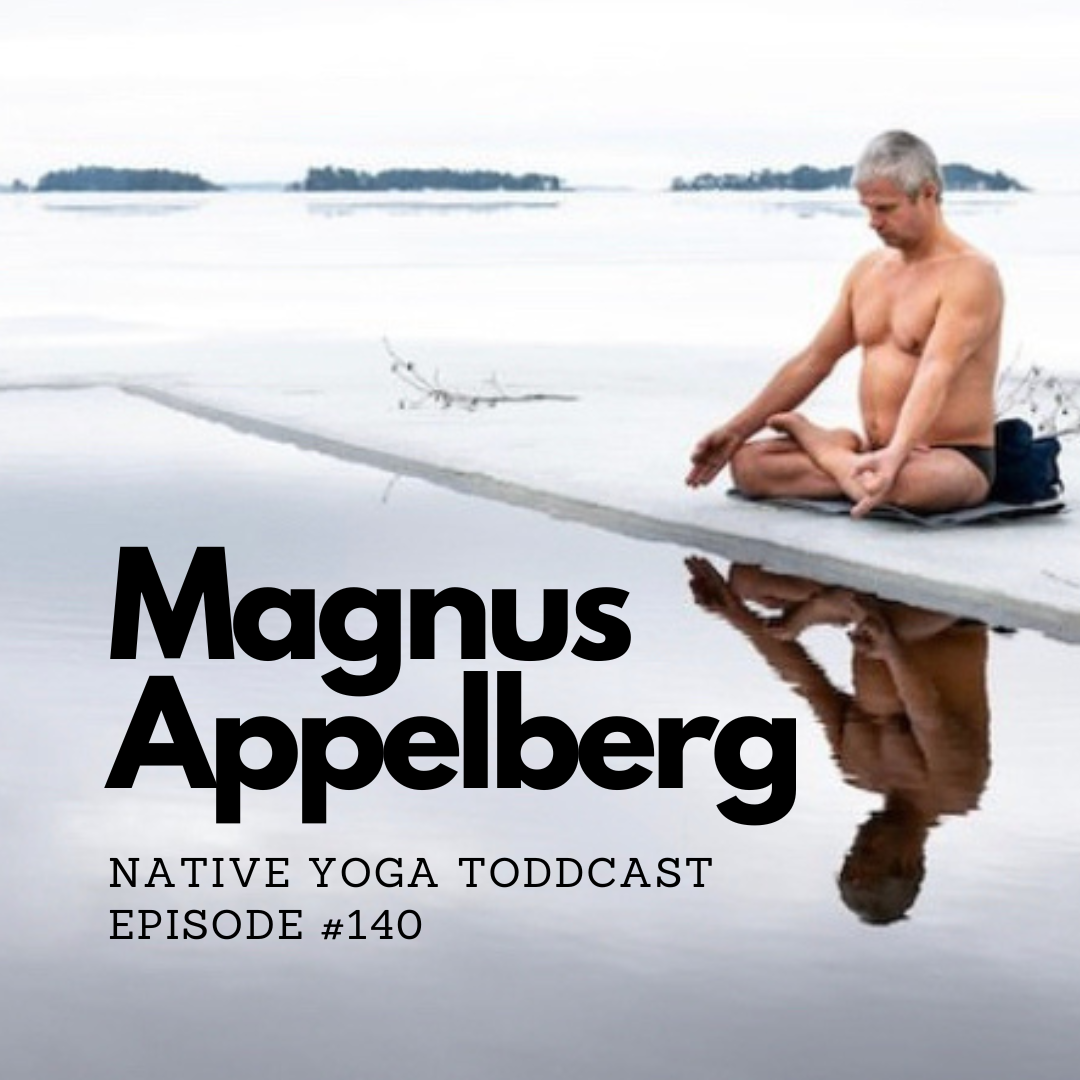
Magnus Appelberg – Discover the Power of Cold Water Plunging

Magnus Appelberg is a yoga practitioner and cold exposure enthusiast based in Finland. He has been practicing Ashtanga Yoga for 23 years and has a deep understanding of breath control and its effects on the body. Magnus is known for his ability to withstand extreme cold temperatures and has even set a personal record of staying in ice-cold water for one hour. He shares his knowledge and experiences through his website and courses, helping others eliminate stress and pain and reach a new level of focus and well-being.


Visit Magnus on his website: https://www.coldexposurecourse.com/
Follow him on IG at: @icelabmethod https://www.instagram.com/icelabmethod/

Key Takeaways:

  • Cold exposure can have physiological and mental benefits, including increased dopamine levels and reduced anxiety.
  • Breath control plays a crucial role in adapting to cold temperatures and maintaining a relaxed state.
  • The practice of cold exposure can help cultivate a sense of curiosity and openness to uncomfortable situations.

Exploring the Power of Cold Water Plunging: A Conversation with Magnus Appelberg

Welcome to Native Yoga Toddcast. In this episode, we have the pleasure of speaking with Magnus Appelberg, a resident of Finland who has delved deep into the world of cold water plunging, Ashtanga yoga, and Vipassana meditation. Magnus shares his experiences and insights on how these practices have transformed his life and offers valuable lessons on adaptation, breath control, and mental resilience. Join us as we dive into the world of cold therapy and discover the incredible benefits it can bring.

Introduction to the Main Themes

In this thought-provoking conversation with Magnus Appelberg, we explore the fascinating world of cold water plunging and its impact on physical and mental well-being. Magnus, who lives on an island in the archipelago of Finland, shares his journey of practicing Ashtanga yoga, Vipassana meditation, and cold exposure. He discusses the process of adaptation to cold water, the importance of breath control, and the mental resilience required to face the challenges of extreme temperatures. Magnus also highlights the connection between cold exposure and mental health, shedding light on the potential benefits of this practice for anxiety and depression.

The Power of Adaptation and Breath Control

Magnus emphasizes the importance of adaptation when it comes to cold water plunging. He explains that while it may seem impossible to stay in freezing water for an extended period, the body can adapt to the cold over time. By gradually increasing exposure and practicing breath control, individuals can build up their tolerance and stay in the cold water for longer durations. Magnus shares his personal experience of increasing his cold water immersion from 30 minutes to an impressive one hour. He attributes his success to slow, long exhalations and the cultivation of a relaxed state in the face of extreme temperatures.

The Bohr Effect and the Role of Carbon Dioxide

One of the key concepts Magnus explores is the Bohr effect, which he describes as the relationship between carbon dioxide and oxygen in the blood. He explains that breathing less and exhaling for longer periods can increase carbon dioxide levels, leading to a greater release of oxygen to the cells. This understanding challenges the common belief that breathing deeper and more vigorously increases oxygenation. Magnus suggests that by breathing less and cultivating a higher tolerance for carbon dioxide, individuals can achieve a more relaxed state and improve their overall well-being.

Mental Resilience and the Power of Cold Exposure

Magnus highlights the mental resilience required to face the challenges of cold water plunging. He explains that the extreme conditions force individuals to stay present and confront their fears and anxieties. By practicing breath control and staying calm, individuals can adapt to the discomfort and find a sense of stillness in the midst of the cold. Magnus shares his own experience of overcoming fear-based emotions and becoming more comfortable in uncomfortable situations. He suggests that the practice of cold exposure can help individuals develop a greater sense of curiosity and openness, allowing them to approach challenging situations with a more positive mindset.

The Intersection of Yoga and Cold Exposure

As an avid practitioner of Ashtanga yoga, Magnus discusses the intersection of yoga and cold exposure. He explains that his yoga practice has evolved over the years, with a focus on breath control and core movement. By incorporating breath control techniques into his cold exposure practice, Magnus has found a deeper connection between the two disciplines. He suggests that breath control can serve as a portal to meditation, allowing individuals to cultivate a sense of stillness and presence in both yoga and cold exposure. Magnus encourages individuals to find their own unique approach to practice, emphasizing that there is no one-size-fits-all solution.

Conclusion and Future Outlook

In conclusion, our conversation with Magnus Appelberg has shed light on the transformative power of cold water plunging, breath control, and mental resilience. Magnus’s personal experiences and insights offer valuable lessons for individuals seeking to explore the benefits of cold exposure. By embracing discomfort, cultivating curiosity, and staying present, individuals can tap into their inner strength and adapt to challenging situations. As the field of cold therapy continues to gain popularity, it is important to approach it with an open mind and a willingness to explore the limits of our physical and mental capabilities. With further research and understanding, cold exposure may hold the key to unlocking new levels of well-being and personal growth.

Note: This thought leadership article is based on a transcript from the Native Yoga Toddcast episode featuring Magnus Appelberg. All quotes used in this article are verbatim and direct quotes from the transcript.

Thanks for listening to this episode. Check out: 👇
Free Grow Your Yoga Live Webinar – Every Thursday at 12pm EST
➡️ Click here to receive link

New Student FREE Livestream Yoga Special ~ Try 2 Weeks of Free Unlimited Livestream Yoga Classes  at Native Yoga Center. info.nativeyogacenter.com/livestream Sign into the classes you would like to take and you will receive an email 30 minutes prior to join on Zoom. The class is recorded and uploaded to nativeyogaonline.com  ➡️  Click Here to Join. 

Practice to a New Yoga Class every day with our nativeyogaonline.com course called Today’s Community Class with code FIRSTMONTHFREE.

Native Yoga Teacher Training 2024– In Studio and Livestream – for info delivered to your email click this link here: ➡️ https://info.nativeyogacenter.com/native-yoga-teacher-training-2023/

Subscribe to Native Yoga Center and view this podcast on Youtube.

Thank you Bryce Allyn for the show tunes. Check out Bryce’s website: bryceallynband.comand sign up on his newsletter to stay in touch. Listen here to his original music from his bands Boxelder, B-Liminal and Bryce Allyn Band on Spotify.

Please email special requests and feedback to info@nativeyogacenter.com

Support the show

Native Yoga website: here
YouTube: here
Instagram: @nativeyoga 
Twitter: @nativeyoga 
Facebook: @nativeyogacenter 
LinkedIn: Todd McLaughlin